
Conservation, Old Royal Naval College
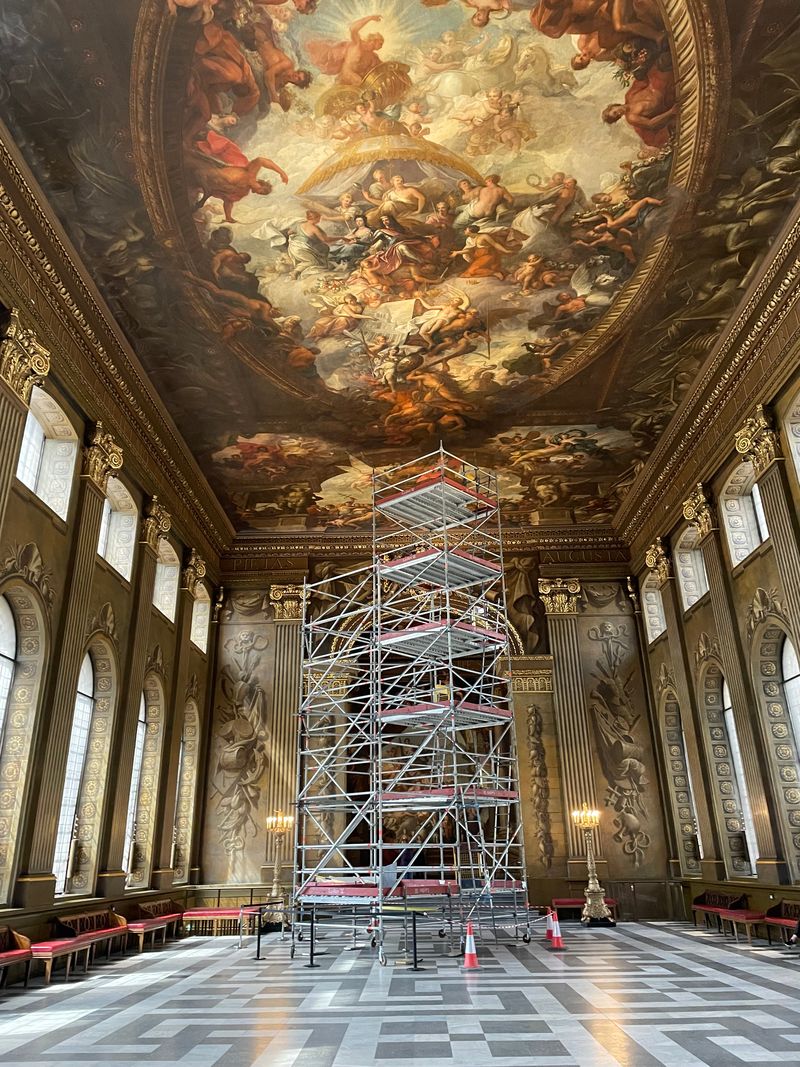
I was lucky to visit the Painted Hall seven years ago, when this magnificent Baroque masterpiece was covered in scaffolding, as part of a major conservation project. The scaffolding was important, because we were allowed to view the ceiling from 2 metres distance and could see the various ‘in jokes’ and graffiti that the painters 250 plus years earlier, assumed that no one would ever see, including the signature of one artist on the chest of one of the ladies portrayed.
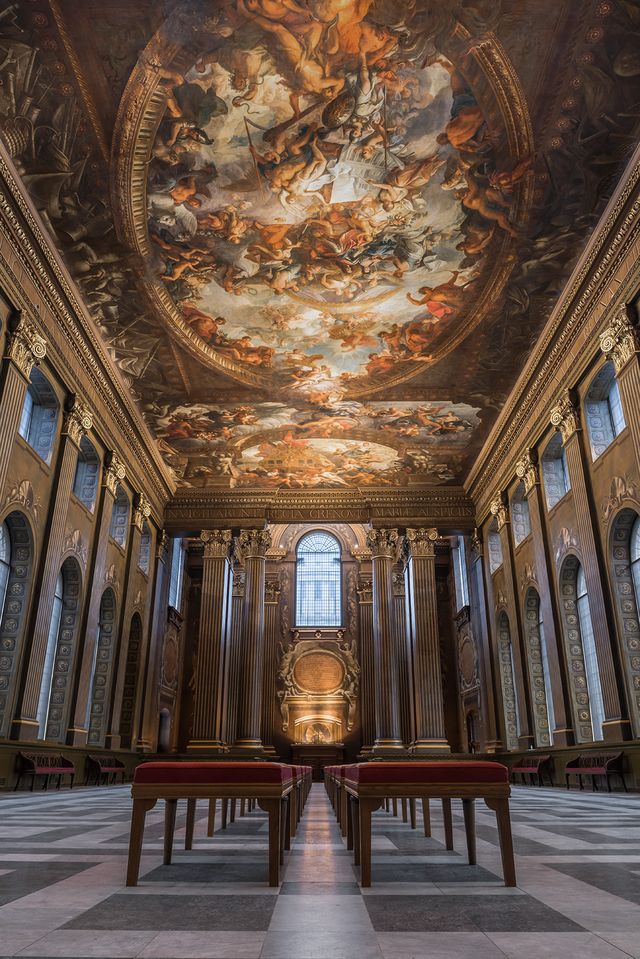
Painted Hall, Sir James Thornhill, 1726, Old Royal Naval College, courtesy of the Old Royal Naval College
So, I was intrigued to see it again post conservation, and to view the ceiling as it was intended from the floor. If you have visited the Sistine Chapel doubtless you were impressed by the painting, but I suspect that your abiding memory is one of been jostled by the other tourists, and shouted at and prodded by the guards who urged you to move through the space. The contrast with the Painted Hall could not be greater, peaceful and calm, with helpful guides (of which more later) and space and time to enjoy the ceiling, they even provide a number of wide seats from which to appreciate the art.
Audio guides are available, but I prefer a human guide, one with whom you can check understanding, and ask supplementary questions as they arise. I am sure that all the guides are well trained and friendly, but if you get a guide called Salvatore you are guaranteed a treat, he makes it feel like he is sharing gossip with you, and really brings the historic to life. The other advantages of the guides, is that they each have a torch and can highlight things of interest on the ceiling.
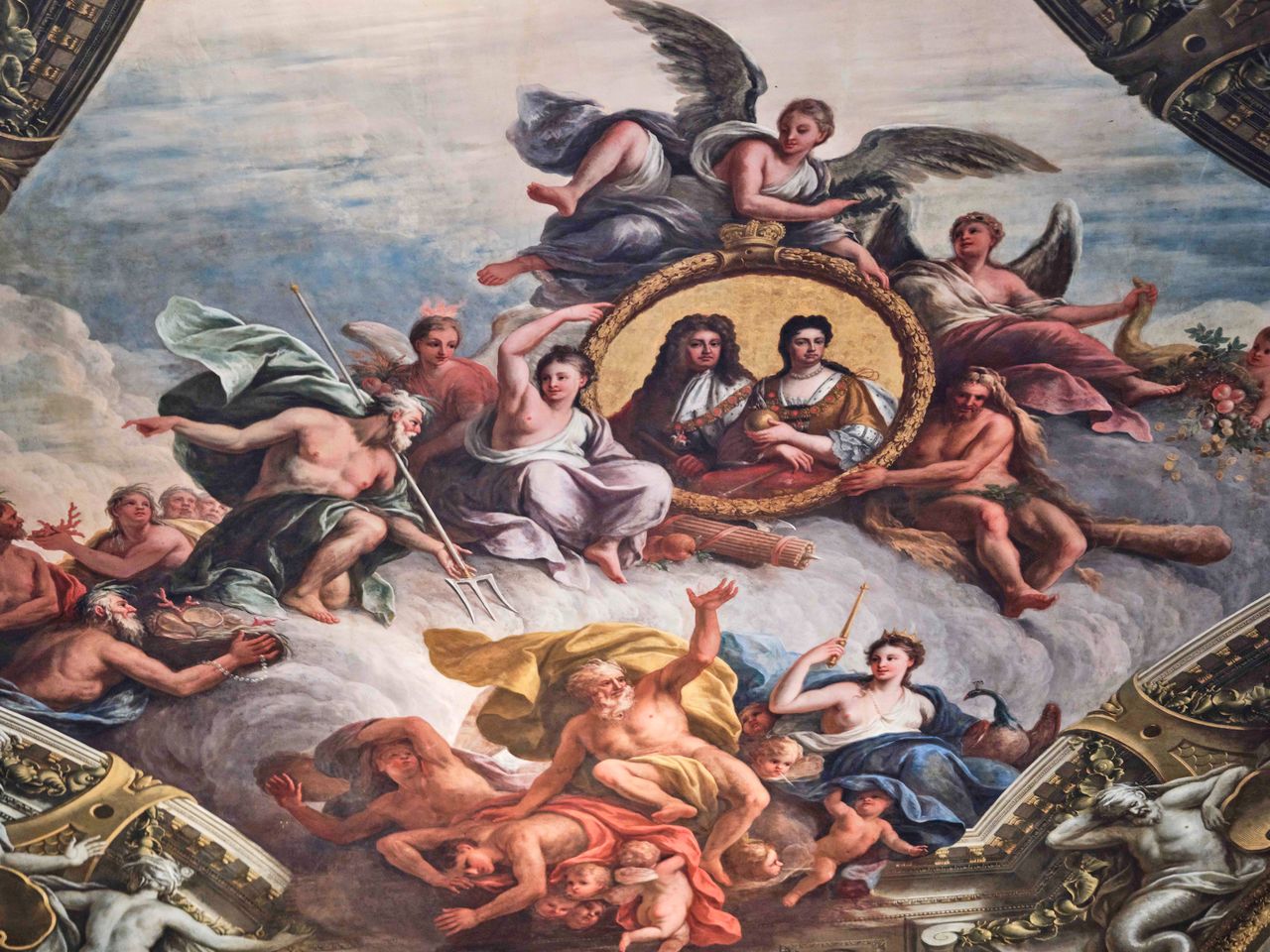
Old Royal Naval College copyright Hugh Fox.
The Painted Hall was painted by James Thornhill from 1707 to1726 and, unlike Michelangelo in the Sistine Chapel, painted the ceiling standing up.The Hall came about after Queen Mary (of William and Mary fame) declared that men who had served their country in the navy and returned injured and destitute, deserved to be treated with respect and dignity. This main hall would become the dining hall of the sailors, the images overhead designed to inspire.
A donations board records the Queen’s contribution, though in fact it came from the booty of Captain Kidd’s captured pirate ship. Another donor exceeded the donation made by the Queen, which was considered bad form, so the artist skilfully painted an arm of one of the peripheral figures, so that it obscures part of the amount donated. Various luminaries of the time including Copernicus, Issac Newton and Sir Edmond Halley (Halley’s Comet) are depicted, as is John Flamsteed, who predicted the first recorded full solar eclipse 2 years before it happened, and within 30 minutes of the actual occurrence. He is shown holding a map with a large black dot in the middle.
Around the periphery of the ceiling are the signs of the zodiac and I defy anyone not to try to pick out their own, regardless of how sceptical the viewer.
My personal favourite is one John Worley, a resident sailor at the time that the ceiling was being painted. His long white hair and beard give him something of a biblical look, and John Thornhill felt that Worley would be the perfect model, but was advised that he was a dissolute character, renowned for drunkenness, gambling and womanising, and worst of all, he never went to chapel on a Sunday. Undeterred, Thornhill struck a deal with John Worley: if he would reform his ways, he would be immortalised in the painted ceiling, and so he is.
The Upper Hall celebrates the Hanoverian dynasty and is no less full of surprise and intrigue. To the right is a fireplace, if you stand beside the wall to look along the fireplace you can detect reality from trompe l’oeil. On the far wall the entire Hanoverian family is depicted and to the right the artist James Thornhill, arm outstretched, palm open as if requesting payment for all his work.
The real intrigue is not who is represented but who is not. Sophia, the wife of George 1st had a scandalous affair with a Swedish Count. The Count was murdered and Queen Sophia banished to a remote castle. James Thornhill was presented with a problem. His work was to be the permanent record of the Hanoverians, how could he omit Queen Sophia? It is alleged that he sought the advice of the King, who told him to sweep her under the carpet. In the foreground of the painting is a carpet and below on the marble step is the very faint image of a woman’s hand. This is only one of several theories, but I would like to think that it is true.
These are but a few of the stories from the Painted Hall, and I left fascinated, entertained, and resolved to return soon. Greenwich is full of interesting spaces and great places to eat. You can travel there by boat or water taxi, or by more conventional means, but there is enough to do to make a full day of it. Whatever you choose to do, you should most definitely visit the Painted Hall, oh, and take the guided tour, you won’t regret it.
Adults £17.50 First Sunday of the Month admission £5.00 Children are welcome at the Painted Hall. Children aged 16 or under go free (up to four children per paying adult) https//ornc.org