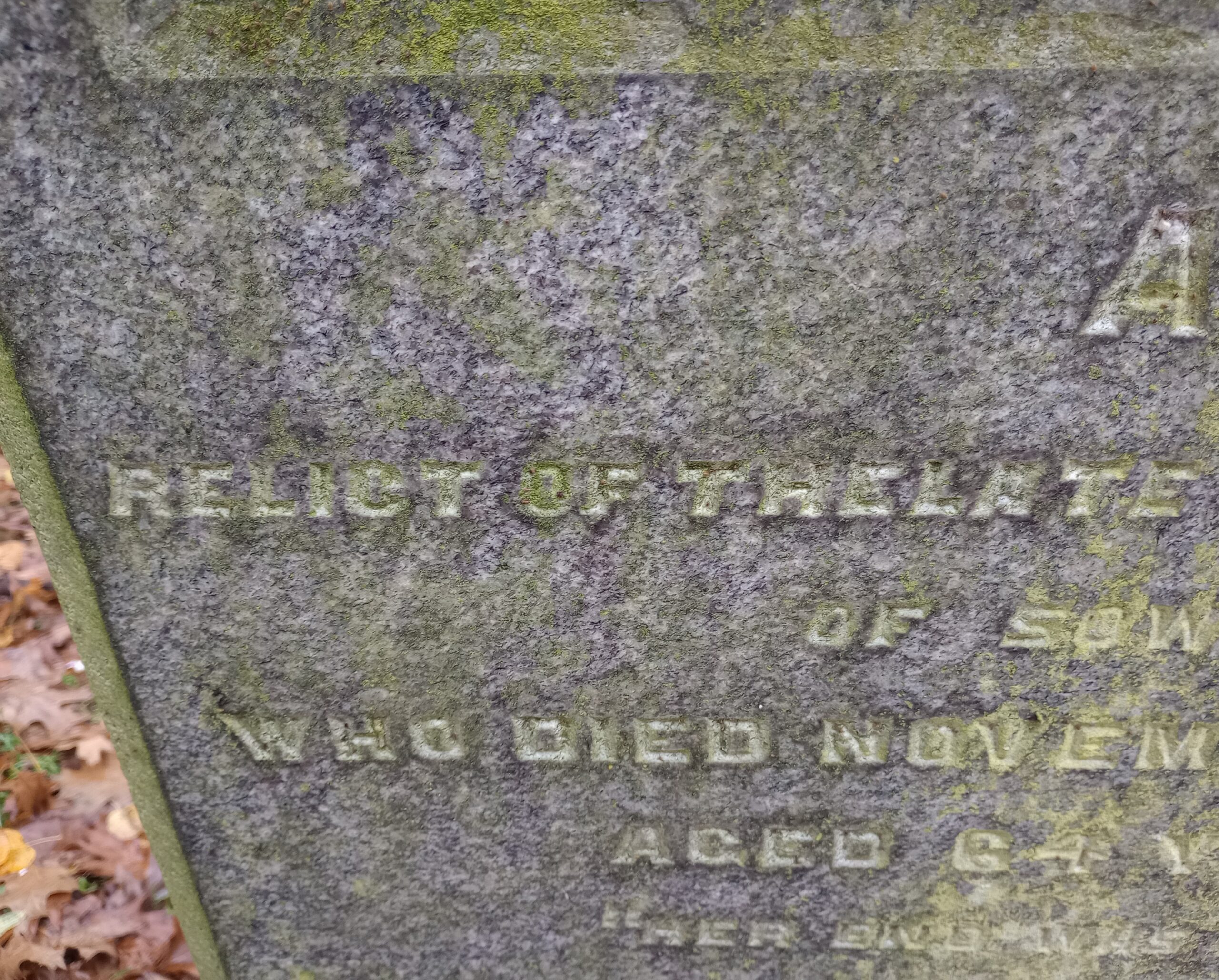
When we were walking Polly over golden leaves in Sowerby churchyard looking for squidgies (which everyone knows are squirrels for Polly to chase) we saw this 1902 headstone for a lady – who was …. Relict of her husband.
I was intrigued. Relict? I nipped home and researched: relict means ‘left behind’. relicts are widows, and the term was in common use between the 17th and 19th centuries. It became obvious the more I thought about it, that the term underlined the fact that a woman’s social standing was dependent on the context of her marriage, so, on the death of her husband, and the start of her emergence as a relict or widow meant – what now?

Just think, widowhood, or relic-hood was a highly precarious situation. Not only did the relict, face grief – if in fact love existed in the marriage, which was so often arranged – but also the social and financial vulnerability as laws governing property and inheritance frequently left widows dependent on the goodwill of their children or other family members. Perhaps a brother, or a cousin. The word Relict was far too often the reminder of a life that had been fundamentally altered by loss.
But… many relicts played pivotal roles in their families, and even communities. As time passed some found themselves navigating complicated inheritance law to secure dosh for their children. Or even gave them time to think, and become determined to change the scenario for their daughters and grand-daughters. After all, the female suffrage movement was stirring.
All so interesting. Or is it just me finding it so? Lord, I do go on.
Milly Adams is the author of the three book Waterways Girls series available in ebook. https://www.amazon.co.uk/s?k=milly+adams+kindle+books