
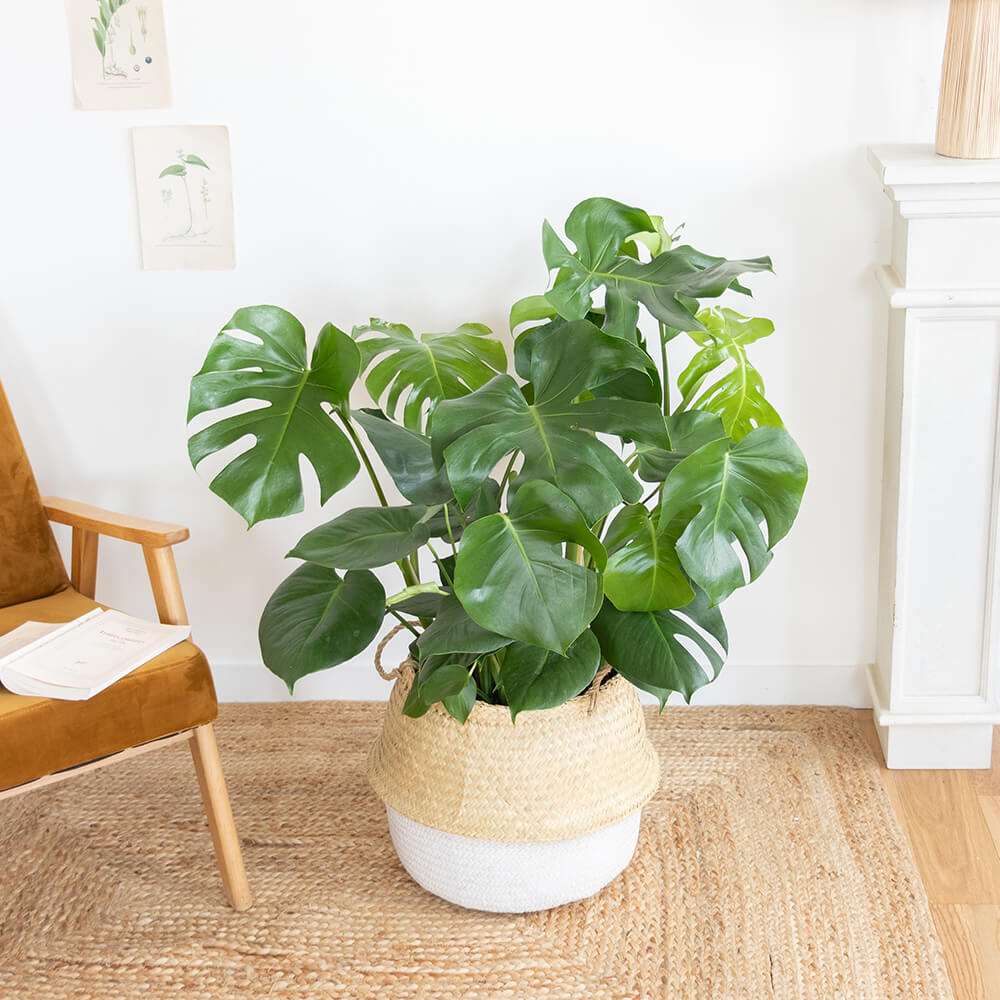
Monstera: credit courtesy of Bloom & Wild
We are not the only ones feeling the heat – our houseplants and fresh flowers are panting too. With soil drying out faster and stems starting to droop, keeping greenery thriving indoors is becoming a bit of a challenge. Recent search trends show a 170% increase in phrases like “preserve wedding bouquet”, but there’s good news.. With just a few seasonal care tweaks, plants and flowers can stay fresh, flourishing, and fabulous, or so Bloom and Wild assure us. Read on, and let Lucy Hook, Plant Expert at Bloom & Wild, share her top five reasons to switch to bottom watering this summer, and how to revive bouquets and greenery during in the heat.
The Plant Expert’s Secret Weapon, Lucy tells us, is Bottom Watering which avoids water runoff and shallow watering. You see, in hot weather, soil can become compacted or hydrophobic – meaning it repels water. Top watering often results in runoff, missing the roots entirely. Bottom watering also draws water up through the drainage holes, ensuring the entire root ball gets a deep, even soak. It’s especially useful for thirsty plants like Monstera and Bird of Paradise.
Bottom Watering supports root strength and development as it encourages roots to grow downward, strengthening the plant overall. Fast-growing summer favourites like Philodendrons, Pothos and Peace Lilies especially, benefit from this deep-rooting support. It also prevents leaf damage and reduces mould risk as splashing water on leaves can encourage mildew, pests and even rot, particularly in heat. Sensitive varieties, therefore, like Calatheas, Fiddle Leaf Figs. African Violets stay healthier when watered from below as their leaves remain dry and undisturbed.
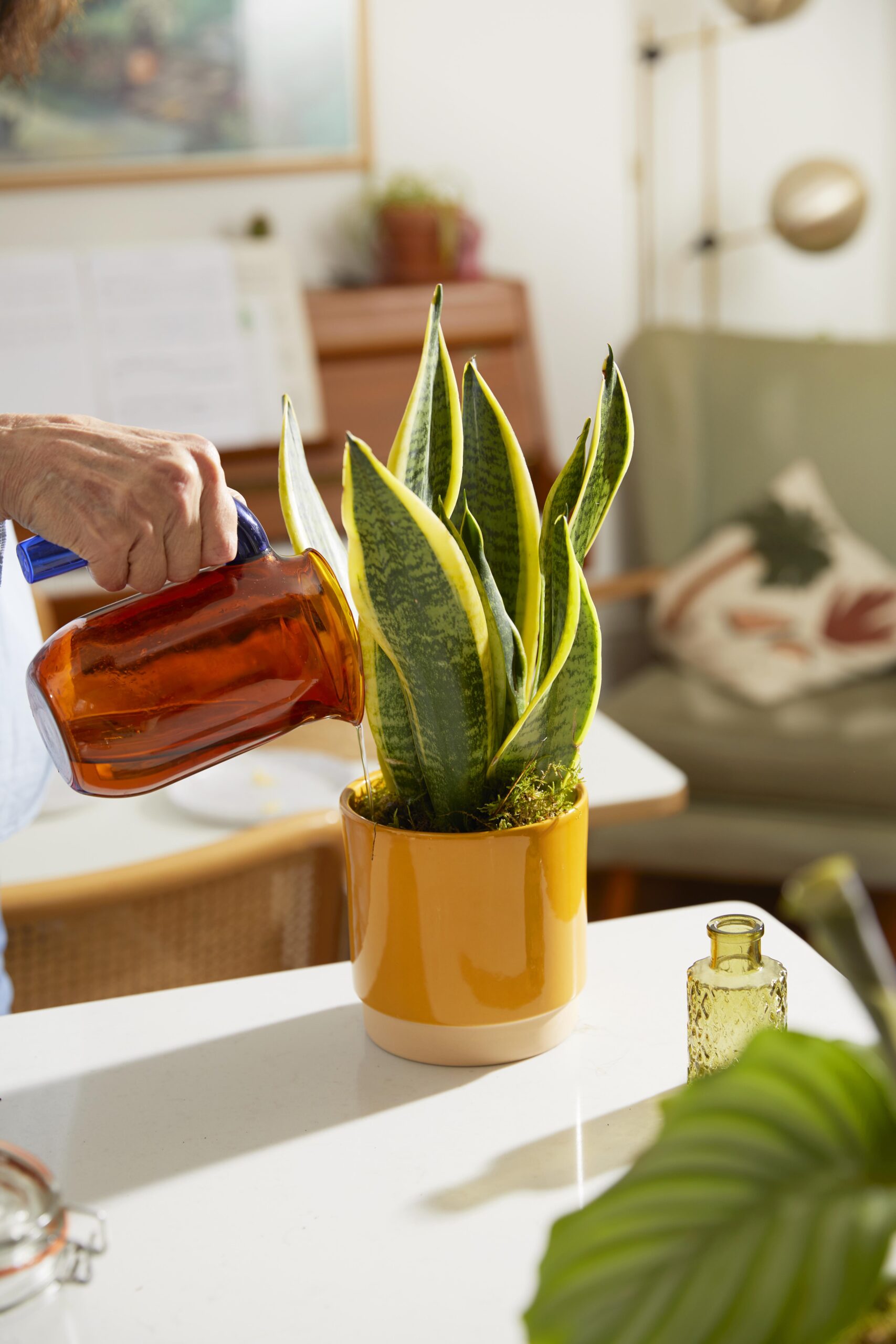
Snake Plant: image courtesy of Bloom & Wild
Bottom Watering also reduces shock and temperature stress because pouring cold water onto warm soil can shock roots, so it’s important to let plants hydrate more gradually, making it a gentler option for delicate varieties like Ferns, Peperomia, and Maidenhair Ferns. It also builds a better watering rhythm as bottom watering soaks the soil more thoroughly, and extends the time between waterings – ideal for heatwaves or holidays. Succulents, ZZ Plants and Snake Plants especially thrive on this kind of consistent, root-friendly routine.
Now let’s look at: how to Bottom Water Your Houseplants. Place your plant (in a pot with drainage holes) into a shallow bowl or sink with 2–3 inches of water: and leave it for 15–30 minutes or until the topsoil feels damp: Empty any excess water from the saucer to prevent root rot and make sure to water every 2–3 weeks or alternate with top watering if needed.
How to Revive Bouquets from the Heat: even cut flowers can suffer in summer. “Just like us, flowers get floppy when they’re hot and dehydrated,” explains Lucy. “Luckily, they bounce back quickly with the right care.” Here are four expert tips to revive wilted bouquets:
Trim stems at an angle: cut 3–5cm off each stem at a diagonal before placing them in water. This increases the surface area for water absorption and helps flowers perk up fast. Give them a big drink which will rehydrate tired stems in cool, clean water straight away. Check vase water levels daily—bouquets drink more in the heat, as we should. Refresh vase water regularly as warm temperatures encourage bacterial growth, which shortens vase life. So, change the water every two days and trim stems by 1cm to keep them fresh. Importantly, keep them cool Avoid sunny windowsills or direct heat sources. Flowers last longer in cooler spots like a shaded table or sideboard.
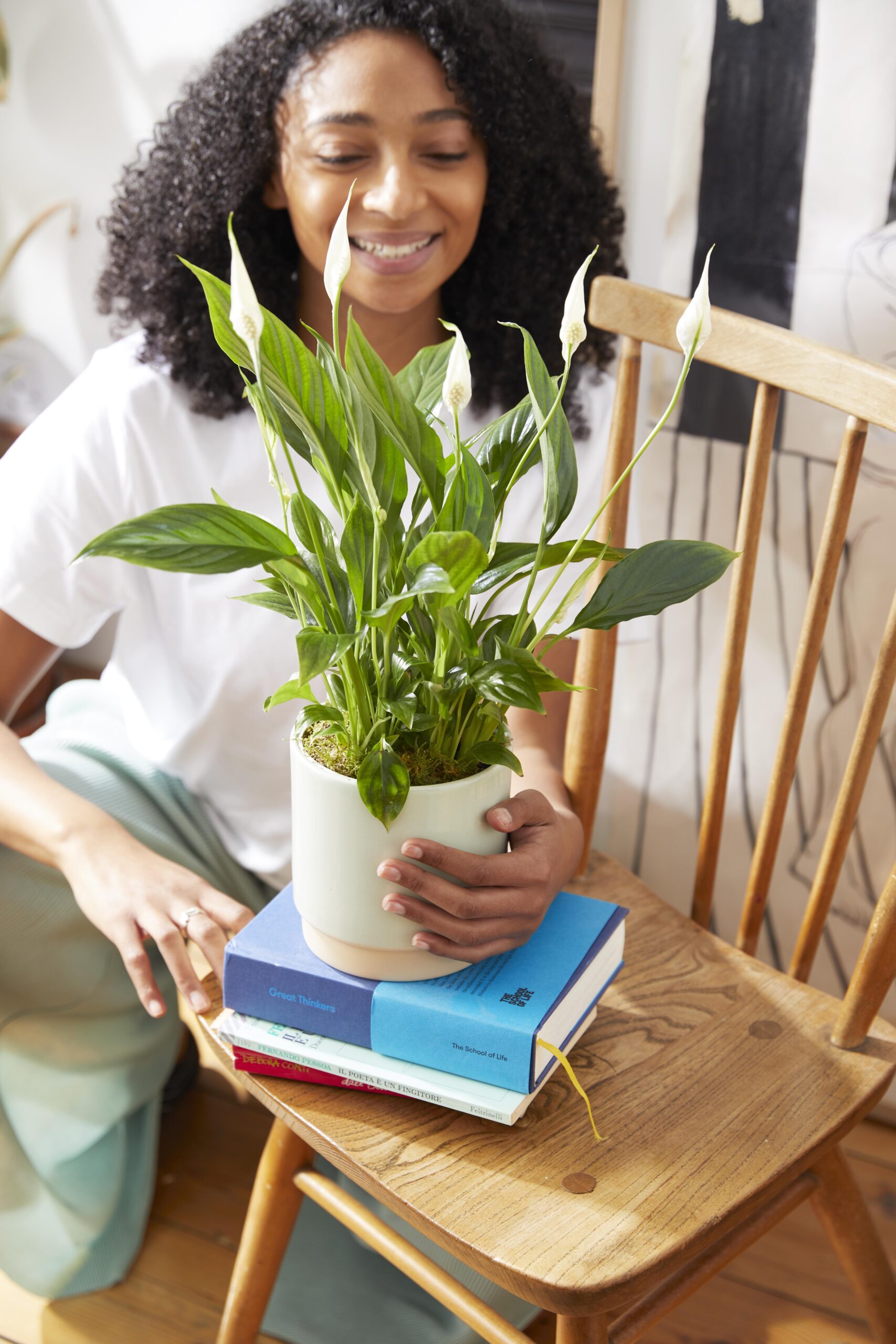
Peace Lily: image courtesy of Bloom & Wild.
Finally let’s look at: keeping greenery happy in a heatwave: in addition to bottom watering and flower revival tricks, Bloom & Wild recommends these general plant-care strategies for hot weather. Water early or late but avoid watering at midday, when evaporation is highest. Avoid harsh sun so move plants out of direct sunlight, or use sheer curtains. It’s a good idea to Create humidity by grouping plants together or place a tray of water nearby. Mist lightly as this helps tropical plants, but try to avoid misting fuzzy leaves. Lastly, go easy on the feed so dilute fertiliser or pause feeding if plants seem stressed.
Finally, Good Luck! More information on Bloom & Wild and their fabulous selection of plants and other delightful gifts here: