Period pains can be so very unpleasant, and they really do make one wonder what God was thinking when he created periods. However if you have endometriosis, they can be much worse. Endometriosis happens when the cells which should only be found lining the uterus, attach themselves to various other locations in the abdomen, such as the ovaries or even bowel. These cells behave as if they were still in the uterus, thickening and breaking down during menstruation, which, because they’re in the wrong place, can cause severe abdominal pain, not to mention internal scarring and adhesions, and infertility.
Incredibly, endometriosis is thought to affect 1 in 10 women and can lead those women to dread their monthly period, some relying on large amounts of pain killers just to cope.
It’s always a concern when someone is needing regular high-dose pain-relief, as no medication is without side-effects and that’s why I’m delighted that Wuku have developed a special heat patch which can really help, and it’s particularly good to talk about this now, as March is Endometriosis Awareness Month.
Wuku heat patches are very slim and discrete, and you simply stick one to the OUTSIDE of your underwear over the painful area – be it the lower abdomen, or the back. Pealing the protective cover off the patch automatically activates it to produce heat for, guess what, up to twelve hours. This prolonged action makes this heat patch so much more useful than other similar ones and means you can carry on with your day with that constant comforting warmth.
Personally, I’m of an age where period pains are happily a long-forgotten memory, however I’m suffering with troublesome back pain at the moment, so I was keen to test the heat patches. Small and neat, around 4 inches by 3 inches, you simply remove the cover to reveal the adhesive surface. The heat then starts in around 30 seconds. Please be patient – 30 seconds can seem a long time when you’re watching for something to happen, but once it does starts, the temperature increases steadily, reaching a very comfortable level over a few more minutes. The heat then stays at that level for a long, long time, I’ve been wearing the patch for hours and it’s still emitting a very pleasant heat which is really easing my pain.
So if you suffer from bad period pains, or even if you just have a bad back like me, I can truly recommend Wuku Heat Patches. At £12.99 for four patches they’re a great price and very effective. It’s well worth taking a look at the Wukuwebsite for other great period and women’s health products too. They clearly have a mission to make a difference.
Note: These articles express personal views. No warranty is made as to the accuracy or completeness of information given and you should always consult a doctor if you need medical advice.
As music is so subjective, Frost Magazine is delighted to present the views of two of their reviewers on this concert – Paul Vates, yesterday, and now Michael Rowan . Enjoy.
Piano Concerto in A minor: Francesco Piemontesi, a native of Locarno, has gained a reputation as one of the leading interpreters of the German classical and romantic repertoire, little wonder that he was invited to perform here.
Francesco Piemontesi: image credit. Camille Blake
Schuman’s Piano Concerto is one of his finest large -scale creations and is one of his most daring and romantically delightful works. Undoubtedly challenging for the pianist, but Piemontesi was well up to the challenge. Grabbing the attention with an explosive start, then the piano comes in quietly to begin with, then the strings, blissfully swelling, demonstrating the skills of the full orchestra. Joyful and uplifting and finally the stunning piano solo transforming the Festival Hall into and intimate Salon, before returning us to the concert hall.
It is hard to describe the music, the nearest I came to it is, ‘gorgeous gorgeosity,’ a quote from an Anthony Burgess novel, that sums up this piece, joyful and all consuming. It is the music that could lead me into the best sleep that I could ever imagine, or if I could choose some music to listen to before the anaesthetic kicks in this would be it, and at the very end I cannot imagine a more beautiful piece to finally leave the planet.
The finale launches into an exhilarating waltz – the ending sounds like an outpouring of unbridled joy. Much of the audience were on their feet and everybody cheering demanding an encore. And what an encore, the orchestra and audience held its breath in rapt attention scared of missing a single note. More thunderous applause ensued, leaving no doubt how much we valued the talent of Francesco Piemontesi.
Following the interval, we sat back to enjoy Mahler’s Symphony No 5
It is impossible not to think of the film ‘Death in Venice’ when listening to Mahler’s Symphony No 5 and the scene with Dirk Bogarde as he views Venice from the Grand Canal.
Little wonder then that this music fits so perfectly with the film, which looks through the eyes of a lonely old man, towards the end of his life, appreciating fleeting beauty and mortality all of which can be drawn from the music.
Conductor Robin Ticciati (image credit Mark Allan) regularly collaborates with the London Philharmonic Orchestra. Ticciati was born in London and trained as a violinist, pianist, and percussionist. Receiving his OBE in 2019. As a conductor Mahler was a strict taskmaster and attracted plenty of adverse criticism and whilst Ticciati has to demand much of this orchestra, there is no denying that the musicians liked and respected him, and that the feeling was mutual. We were in very good hands.
The first part, Funeral March, opens with a trumpet fanfare, quiet to begin with but growing to a magnificent crescendo, at first brooding and finally ecstatic, sweeping the audience before it. The second movement plunged us into a turbulent, furious, and manic fray, broody and dark giving way to lighter moments.
And then the famous Adagietto forever linked to Death in Venice. Beautiful, haunting and filmic. Uplifting, rousing,, rhythmic comes to a frenzied end, which left the conductor, orchestra and the audience exhausted. It had been quite a journey, but so very worthwhile. A special mention to Robin Ticciati who had the unenviable task of keeping the energy up for an orchestra already giving their all.
Dirk Bogarde when on Desert Island Discs, told the story of taking the film, ‘Death in Venice,’ to Warner Brothers in Hollywood, hoping to sell the film to the American Market. The screening was attended by all the top executives, but the end of the film was met with total silence. Bogarde’s first thought was that they couldn’t move for emotion until one of them said ‘I think that the music was just great, who did the theme music?’ Visconti, the director, realised that the film had bombed and said ‘it’s by Gustave Mahler,’ at which point the Hollywood bigwig turned to the assembled audience and said, ‘I think that we should sign him.’
Upcoming Concerts
Alina Ibragimova plays Prokofiev Wednesday 26 March 2025, 6.30pm – Royal Festival Hall In a time of revolution, Prokofiev’s First Violin Concerto wove fairytale magic – and no-one makes it dance like Alina Ibragimova.
Tan Dun’s Water Concerto Saturday 29 March 2025, 7.30pm – Queen Elizabeth Hall. Eva Ollikainen rediscovers two modern classics, and Colin Currie – in the words of one critic, ‘surely the world’s finest and most daring percussionist’ – explores new ways of listening, with the extraordinary, culture-crossing Water Concerto by Crouching Tiger, Hidden Dragon composer Tan Dun.
Repertoire Pärt – Symphony No. 1 (Polyphonic). Tan Dun – Water Concerto. Lutosławski – Symphony No. 3
Re. Easter, these are the April events until the end of the season:
Jurowski conducts Lyatoshynsky Wed 2 April 2025, 7.30pm – Royal Festival Hall ‘Peace Shall Defeat War’ wrote Boris Lyatoshynsky on the score of his Third Symphony, and the message of this great 20th-century Ukrainian composer has never felt more urgent or compelling. Vladimir Jurowski presents a programme of uncompromising emotional power.
The music. Prokofiev – Selection from Semyon Kotko. Mussorgsky (arr. Denisov) – Songs and Dances of Death. Lyatoshynsky – Symphony No. 3
Tragedy to Triumph Sat 5 April 2025, 7.30pm – Royal Festival Hall. Schubert’s unstoppable Ninth Symphony is known as ‘the Great’ – and with Vladimir Jurowski bringing all his insight and imagination, you’ll hear why.
The music Beethoven – Coriolan Overture. R Schumann – Violin Concerto. Schubert – Symphony No. 9 (The Great)
Jan Lisiecki plays Beethoven Sat 12 April 2025, 7.30pm – Royal Festival Hall. There are few experiences in classical music more invigorating, or more stirring than Sibelius’s Second Symphony. For the young Finnish conductor Tarmo Peltokoski, Sibelius is a national hero. There’s another tale about memory to be told here, as Canadian pianist Jan Lisiecki takes centre stage to showcase the grandeur and glory of Beethoven’s mighty ‘Emperor’ Concerto.
The music Sibelius – Pohjola’s Daughter. Beethoven – Piano Concerto No. 5 (Emperor) Sibelius – Symphony No. 2
Daphnis and Chloé Wed 23 April 2025, 6.30pm – Royal Festival Hall. Wed 23 April 2025, 8.30pm – Royal Festival Hall. Ravel’s orchestral masterpiece is a ballet that resists staging, rarely being performed as a ballet. Enter Circa’s powerful acrobatics and aerials.
The music Ravel – Daphnis et Chloé. Ravel – La valse
Mahler 8 Sat 26 April 2025, 7.30pm – Royal Festival Hall is sold out.
A breath-taking evening at the Royal Festival Hall is quite normal for the eager audiences. It’s not that they are easily impressed – far from it. It’s the quality of musicianship on display that takes the breath away.
This evening’s highlight was Gustav Mahler’s Fifth Symphony. Almost 100 musicians filled the stage and, under the flamboyant batonship of Robin Ticciati, the London Philharmonic Orchestra rose to the occasion. From the opening solo trumpet fanfare (take a bow Paul Beniston) to the ups and downs of the whole piece, I felt the musical journey was more than worth it.
Robin Ticciati – ⓒ LPO
Ticciati’s gusto and sheer force of character urged the orchestra through the funeral march, the drama, the waltz, the love-song and the vigorous climax of the symphony’s five movements. The whole work – written in 1901 and 1902 – has been labelled as ‘schizophrenic’ and the changes in rhythm and pace at times are a shock to the system. But I left feeling uplifted and enthralled by the sheer power of Mahler’s music.
Francesco Piemontesi – ⓒ Camille Blake
The evening began with Robert Schumann’s Piano Concerto in A minor (written between 1841 and 1845), played by special guest Francesco Piemontesi. The smaller chamber orchestra, still under Ticciati’s control, complemented Piemontesi’s wonderful interpretation – but, for me, the piece lacked any real cohesion. I am not sure why it was placed with Mahler’s symphony, which outshone it in almost all areas. It was good, but I wasn’t moved in the way some audience members were. But you can’t enjoy everything and it doesn’t stop me being enthralled by the skills on display.
The London Philharmonic Orchestra has a vast range of events at various venues around the country. Check out their website for details – https://lpo.org.uk/whats-on/ .
Principal Conductor Edward Gardner Artistic Director Elena Dubinets
Dates until Saturday 31st May 2025 Check with the LPO website for details
As a keen ballroom and latin dancer I’m constantly scanning for the best makeups and applicators, all to make me look young and gorgeous in the dance competitions (always a challenge, frankly, and not getting any easier as the years take their toll). Good quality makeup products are a must – they should not only achieve aforementioned miracle, but also stay in place all day, despite repeated rounds of cha cha and jive and forced beaming at judges, and ideally they should provide the perfect mask, hiding the fact that the dancer is exhausted, has screaming quads and is wondering why she didn’t taken up a sensible hobby, like birdwatching.
However even the best makeup needs to be applied smoothly and evenly, and without good brushes, a Mona Lisa can descend all too quickly into Van Gogh’s Sunflowers – beautiful in their own way of course, but those thick brush strokes just won’t cut it when one is trying to win a nice shiny trophy.
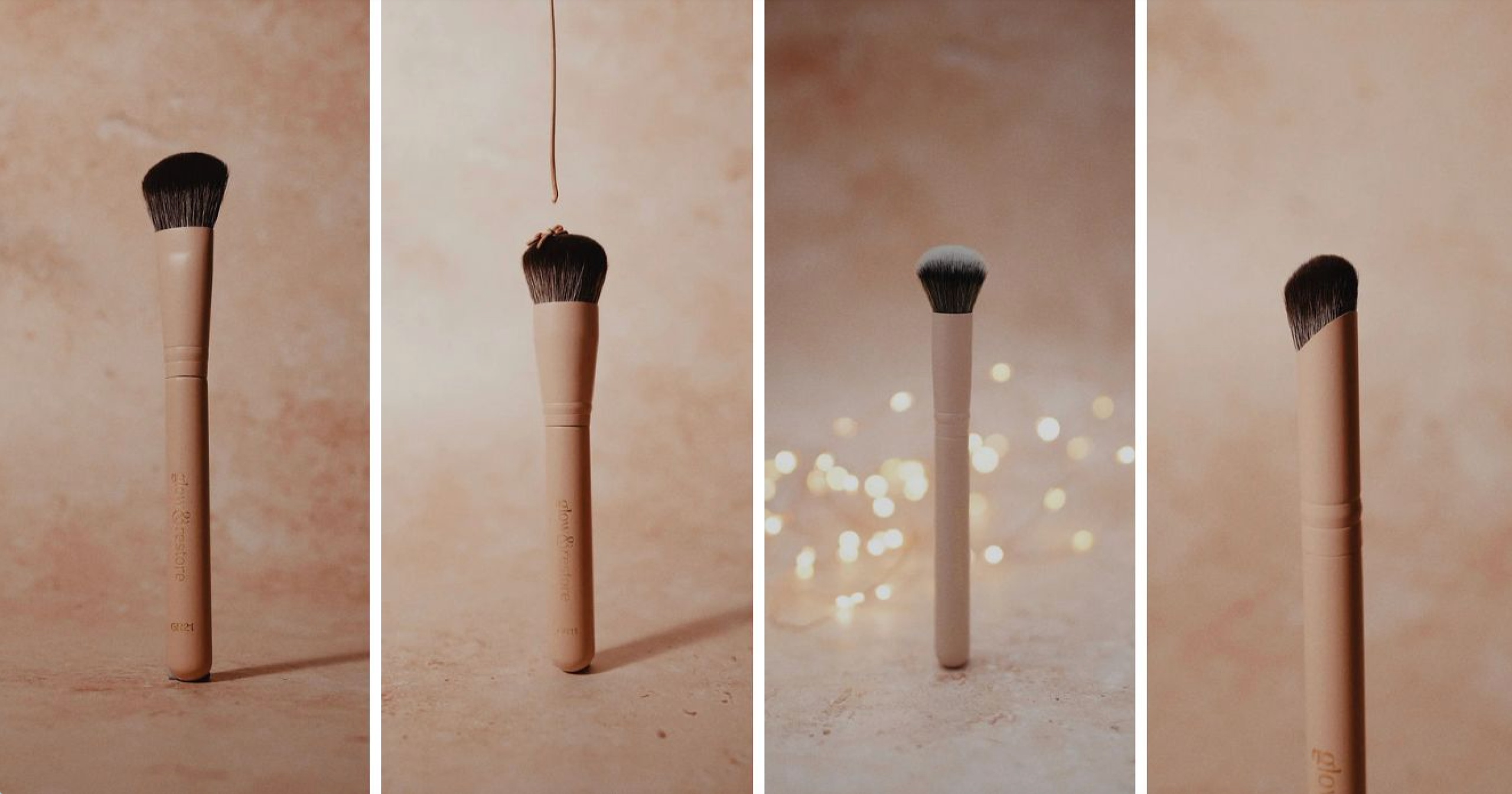
So I’m super excited to discover Glow & Restore makeup brushes. They’re designed by beauty influencer and MUA Lucinka Hodnett (@bylucinka) and really are rather special. As a professional makeup artist, Lucinka understands exactly how to design the perfect, high quality brush for a beautiful finished look.
All the Glow & Restore brushes are 100% vegan, with bio-responsive, precision gradient bristles. The round and slightly curved angle of the bristles enables the brush head to get around the contours of the face for a professional flawless finish and they feel so soft on the skin it’s like a gentle caress. They’re advertised to work in harmony with the skin’s natural elasticity for seamless buffing, sculpting, and blending, reducing irritation and micro-damage while maximising all-important glow – and they really do.
The range has a large range of brushes, of all shapes and sizes, for applying both cream/wet products and powder. A clever feature is the colour-coding – cream-coloured for wet products and cappuccino-coloured for powders, so it’s super easy to grab the right brush.
Having tried them I can confirm that the finish is so smooth – you can’t see any lines or flaws – just pure perfection. I tested the powder brush set – a large, a small and a blush brush, plus a really useful flat triangular powder puff and a sponge, worth £54 but currently on offer together at £40 the set which is excellent for such fabulous-quality brushes.
I really love that the Glow & Restore website has great information and advice on each of the different brushes – how and when to use them, so if you’re new to makeup, or even if you’re not, do take a look.
With Mother’s Day around the corner, these would make a fantastic treat for Mum. But don’t forget to treat yourself too – you deserve it – do head to the website.
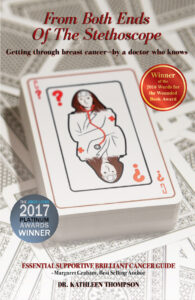
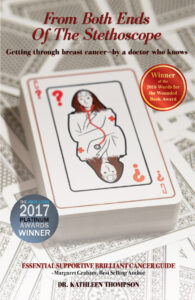
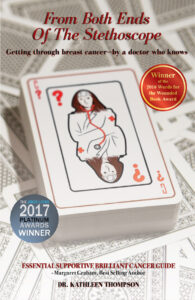
By Dr K Thompson, award-winning author of From Both Ends of the Stethoscope: Getting through breast cancer – by a doctor who knows
Note: These articles express personal views. No warranty is made as to the accuracy or completeness of information given and you should always consult a doctor if you need medical advice
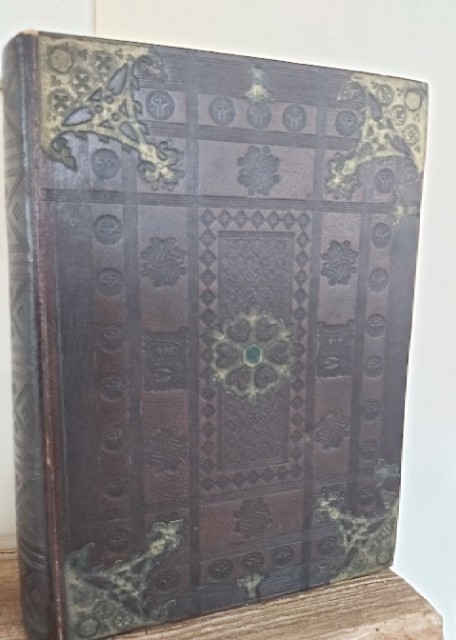
With rising temperatures and increasingly unpredictable weather patterns, book collectors are facing new challenges in preserving their treasured special editions. Rare books and limited editions are particularly vulnerable to environmental damage, with elements like humidity, heat, and insects posing serious threats to their condition and value.
“Collectors often don’t realise how quickly environmental factors can permanently damage special edition books,” explains Taskeen Ahmed, Founder ofAwesome Books, “The materials used in premium editions—from leather bindings to specialty papers—usually require more careful protection than standard books.”
So let’s move on to the Why and How of it: Why Special Editions Need Extra Protectionagainst insects, humidity, and extreme weather conditions.
Unlike mass-produced paperbacks, special edition books typically contain materials that are particularly susceptible to damage.
“Limited editions frequently include elements like handmade paper, leather bindings, specialty inks, and sometimes even fabric components,” Ahmed explains. “These materials can be magnets for various insects and are more sensitive to humidity and temperature fluctuations.”
The value of special editions can decrease significantly with even minor damage. Small insect holes, water stains, or warped covers can reduce a collector’s item from mint condition to fair or poor, potentially decreasing its value by 50% or more.
And now the How: Ahmed’s Tips For Protecting Your Special Editions
1. Control Temperature and Humidity. “The ideal environment for storing valuable books is cool, dry, and stable,” says Ahmed. “Aim for temperatures between 65-70°F (18-21°C) and relative humidity between 30-50%.” Fluctuations in temperature and humidity cause paper and binding materials to expand and contract, leading to warping and deterioration over time. Consider using a dehumidifier in damp areas or a humidifier in overly dry environments to maintain optimal conditions.
2. Shield From Direct Light. UV light causes fading and deterioration of book covers and pages, particularly affecting colorful dust jackets and illustrated pages. “Never display your valuable books in direct sunlight,” Ahmed advises. “Even artificial light can cause damage over time, so consider UV-filtering glass for display cases or protective book covers for items on open shelves.”
3. Use Acid-Free Materials. Regular cardboard boxes and standard plastic bags can release chemicals that damage books over time. “Always store special editions with acid-free materials,” recommends Ahmed. “Acid-free boxes, archival sleeves, and unbleached cotton or linen cloths are best for wrapping or storing valuable books. Avoid plastic containers, which can trap moisture and accelerate mould growth.”
4. Implement Pest Prevention Strategies. Insects like silverfish, booklice, and carpet beetles are attracted to the starch in book bindings and the protein in leather covers. “Regular inspection is your first line of defense,” Ahmed notes. “Look for small holes, tiny droppings, or shed insect skins. Keep food away from your collection area and consider natural deterrents like cedar blocks or lavender sachets, which many insects dislike but won’t damage your books.”
5. Create Air Circulation. Stagnant air creates conditions where mould can thrive, particularly in closed bookcases pushed against walls. “Position bookcases a few inches from walls and avoid overcrowding books on shelves,” says Ahmed. “This simple step improves air circulation and reduces the risk of mould growth, which can quickly spread through an entire collection.”
6. Use Proper Shelving Techniques. How books are positioned on shelves impacts their structural integrity over time. “Store books of similar size together and use bookends to keep them upright without leaning,” Ahmed advises. “Very large or heavy books should lie flat, but don’t stack too many on top of each other as this creates pressure on the bottom books. For particularly valuable editions, consider individual archival boxes that protect from light, dust, and physical damage.”
7. Prepare For Weather Emergencies. With extreme weather events becoming more common, collectors need emergency plans to protect their investments. “Keep valuable books on higher shelves to protect from potential flooding, and consider waterproof containers for your most precious items during storm seasons,” says Ahmed. “If you live in an area prone to extreme humidity or temperature fluctuations, investing in climate control equipment isn’t just a luxury—it’s essential protection for your collection.”
Taskeen Ahmed, Founder of Awesome Books, continued: “The preservation challenges facing book collectors are increasing as our climate changes. Higher average temperatures create more favourable conditions for book-damaging insects, while extreme weather events put collections at greater risk of water damage and humidity fluctuations. Taking preventative steps now is much more effective than trying to restore damaged books later.
“What many collectors don’t realise is that prevention doesn’t need to be complex or expensive. Simple measures like keeping books away from external walls, using proper shelving techniques, and implementing basic pest monitoring can dramatically extend the life of special editions. The key is consistency—regularly checking your collection for early signs of problems and maintaining stable environmental conditions.
“For those with particularly valuable collections, I recommend creating a preservation plan that includes both everyday care and emergency procedures. Knowing exactly what to do if you spot insect activity or face a sudden climate event can mean the difference between preserving your literary treasures and losing them forever.”
As the author of over 25 books, your editor should know these facts. Trust me, she didn’t, and thanks to Taskeen Ahmed (https://www.awesomebooks.com/) for tips that will serve for looking after books in general, but your precious collections in particular.
The concert began with a personal favourite of mine, namely the hauntingly beautiful, Prelude from Wagner’s Tristan and Isolde, the romanic tale of would be lovers, leaving Ireland by boat, the crashing of waves symbolising passion, as the waves rise and fall, ebb and flow, and the London Philharmonic did the piece justice. So much so, that I could happily have left at this point and counted the evening a success.
Thank goodness I didn’t, because Renee Fleming singing Four Last Songs, by Richard Strauss was an occasion not to miss.
Strauss sketched a setting for a poem, ‘At Sunset’ depicting an old couple, staring into the sunset, looking back over their long lives, and wondering ‘Can this perhaps be death’. He promptly wrote ‘At Sunset’ following up with three other songs, ‘Spring’, ‘September’ and ‘Going to Sleep.’ The songs were published posthumously as the ‘Four Last Songs.’
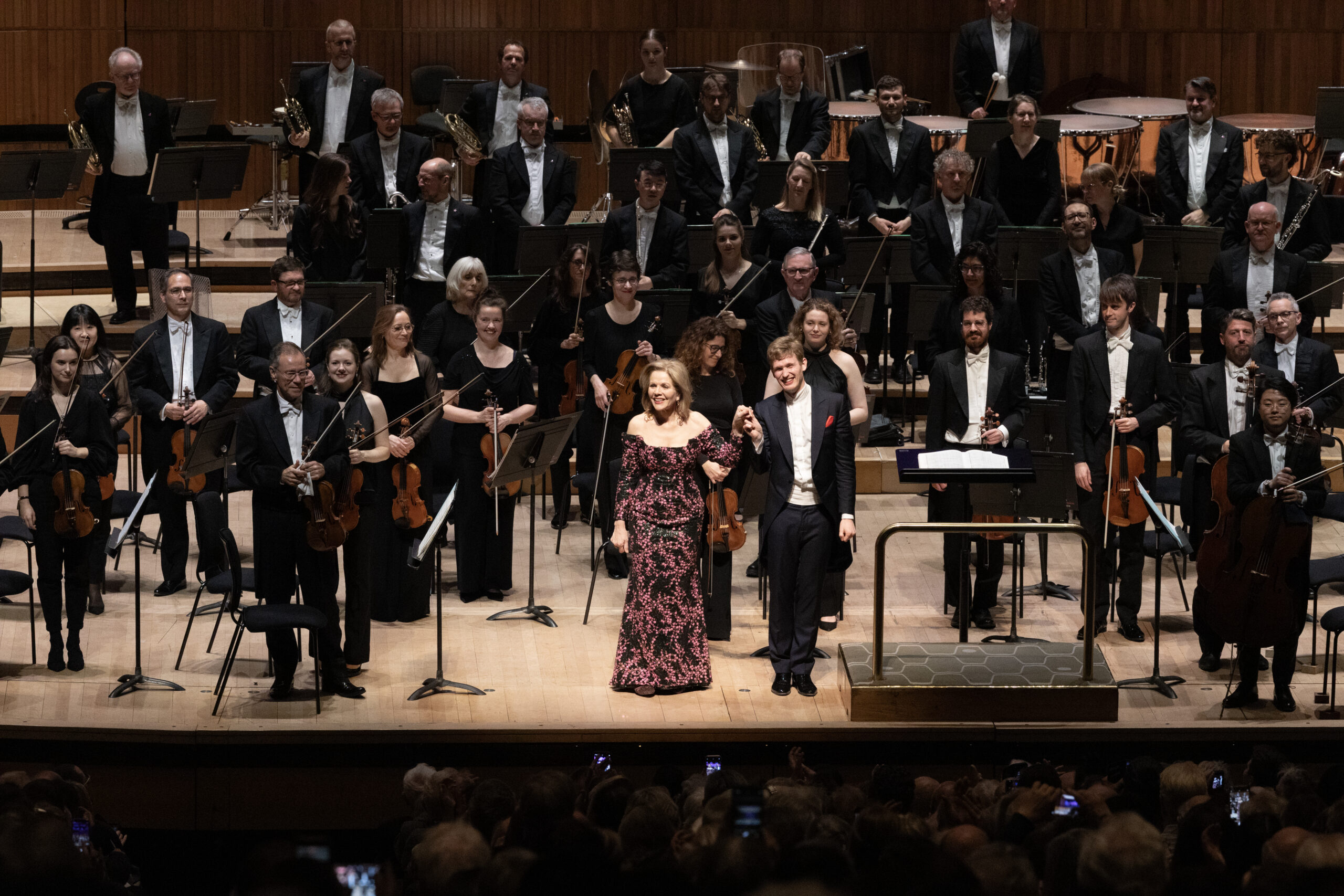
Renee Fleming, one of the most highly acclaimed singers of our time, graced the stage in a fitted pink and turquoise dress, subtly sparkling in the house lights. The dress may have sparkled, but could not compete with the thrilling voice of Miss Fleming, which captivated the audience from the outset. Each song seemed more beautiful than the last, and once or twice I could feel myself welling up. Put simply, this was a sublime performance, and we listened in awe to Fleming’s voice which cut like crystal – showing exactly why she is so revered.
We listened in worshipful silence to all four songs, but at the end of the last song, ‘At Sunset’ which is particularly poignant, such pent-up admiration for what we had just heard could not constrain the applause and cheers, which threatened to lift the roof. The applause would not die down quickly and it took three returns to the stage before we were treated to a final song, ‘Morgen’ – a perfect piece on which to leave the stage.
The conductor, Thomas Guggeis, was making his debut with the London Philharmonic Orchestra, and his youthful looks belied his skill, or perhaps that says more about me and my age. Oh for a scintilla of his talent. Guggeis conducts with dramatic energy, wielding his baton like a magic wand, urging the orchestra to ever new heights.
Wagner is something of a Marmite Composer, and people either love him or hate him. Fortunately, I fall into the former group, and so awaited the second part of the concert with great anticipation.
The Overture and Venusberg Music from Tannhauser is one of the most popular Wagnerian extracts in the concert hall and gloriously familiar. Venusberg incidentally is the underground realm of the Goddess Venus. The music transported us to a magical realm, about which the music pulsed and swirled in a frenzied orgiastic maelstrom.
The Prelude to Act 1 of Lohengrin is based on the Holy Grail, carried by a host of angels as it gradually materialises out of nowhere, and was summoned up in our imaginations by the violins and later the brass. The London Philharmonic Orchestra on top form, thrilling.
Finally the Overture to Die Meistersinger von Nurnberg, sumptuous. Magnificent brass and tympani dominated briefly but to great affect before giving way once again to the strings creating a sense of urgency. Utterly brilliant.
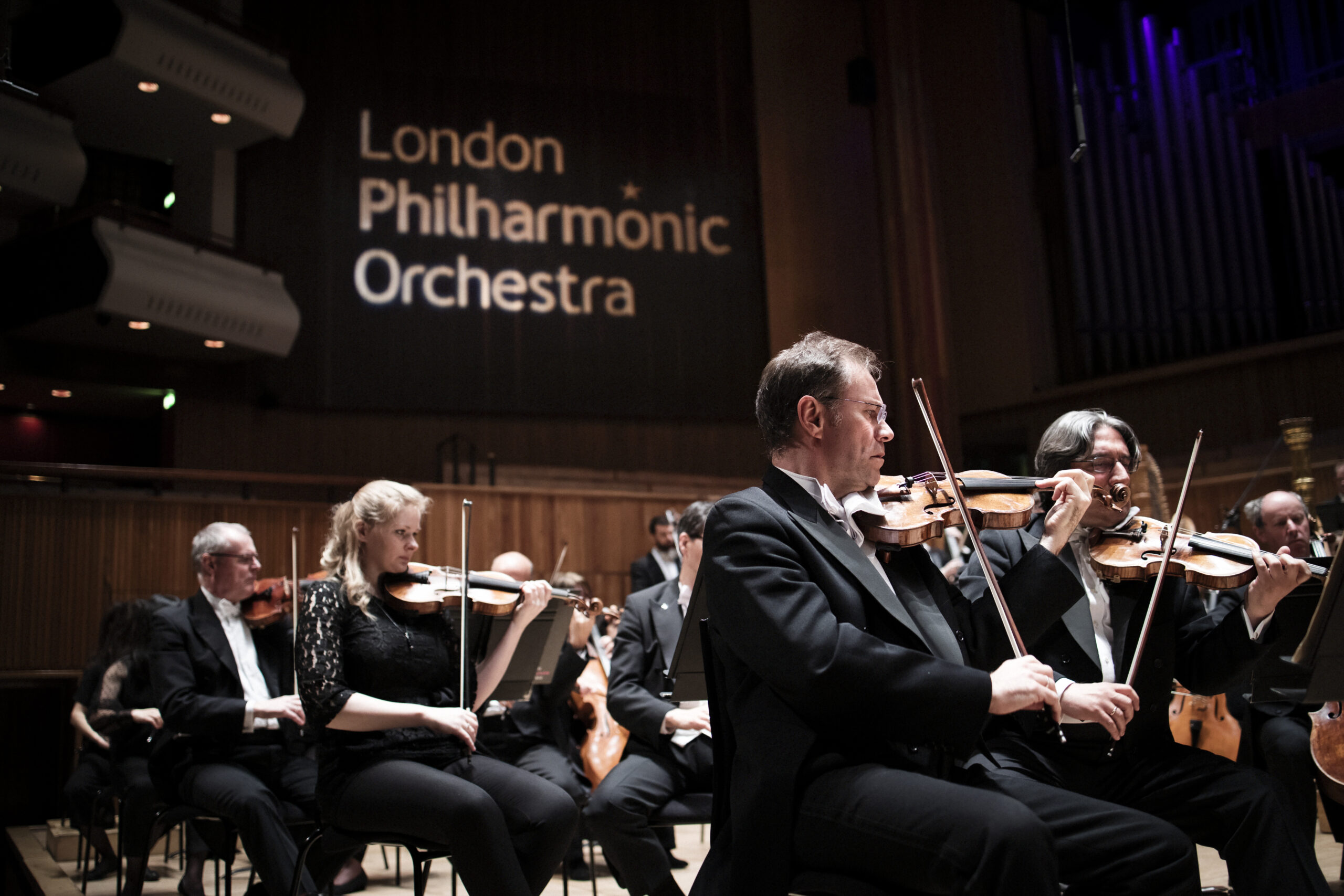
Image courtesy of London Philharmonic Orchestra.
Upcoming Concerts
Crossing Generations Wednesday 12 March 2025, 7.30pm – Queen Elizabeth Hall. Kevin John Edusei presents Zappa, Martinů and a new clarinet concerto with phenomenal Syrian clarinettist Kinan Azmeh.
Repertoire
Zappa – The Dog Breath Variations/Uncle Meat; Outrage at Valdez; G-Spot Tornado. Dinuk Wijeratne – Clarinet Concerto (European premiere). Martinů – Symphony No. 6 (Fantaisies symphoniques).
Mahler’s Fifth Wednesday 19 March 2025, 7.30pm – Royal Festival Hall. Robin Ticciati presents Mahler’s blockbuster journey from darkness to light.
Repertoire
R Schumann – Piano Concerto. Mahler – Symphony No. 5
Alina Ibragimova plays Prokofiev Wednesday 26 March 2025, 6.30pm – Royal Festival Hall. In a time of revolution, Prokofiev’s First Violin Concerto wove fairytale magic – and no-one makes it dance like Alina Ibragimova.
Tan Dun’s Water Concerto Saturday 29 March 2025, 7.30pm – Queen Elizabeth Hall. Eva Ollikainen rediscovers two modern classics, and Colin Currie – in the words of one critic, ‘surely the world’s finest and most daring percussionist’ – explores new ways of listening, with the extraordinary, culture-crossing Water Concerto by Crouching Tiger, Hidden Dragon composer Tan Dun.
Repertoire
Pärt – Symphony No. 1 (Polyphonic). Tan Dun – Water Concerto. Lutosławski – Symphony No. 3. Re. Easter, these are our April events up until the end of the season:
Jurowski conducts Lyatoshynsky Wednesday 2 April 2025, 7.30pm – Royal Festival Hall. ‘Peace Shall Defeat War’ wrote Boris Lyatoshynsky on the score of his Third Symphony, and the message of this great 20th-century Ukrainian composer has never felt more urgent or compelling. Vladimir Jurowski presents a programme of uncompromising emotional power.
The music: Prokofiev – Selection from Semyon Kotko. Mussorgsky (arr. Denisov) – Songs and Dances of Death. Lyatoshynsky – Symphony No. 3
Schubert’s unstoppable Ninth Symphony is known as ‘the Great’ – and with Vladimir Jurowski bringing all his insight and imagination, you’ll hear why.
The music. Beethoven – Coriolan Overture. R Schumann – Violin Concerto. Schubert – Symphony No. 9 (The Great)
Jan Lisiecki plays Beethoven Saturday12 April 2025, 7.30pm – Royal Festival Hall. There are few experiences in classical music more invigorating, or more stirring than Sibelius’s Second Symphony. For the young Finnish conductor Tarmo Peltokoski, Sibelius is a national hero. There’s another tale about memory to be told here, as Canadian pianist Jan Lisiecki takes centre stage to showcase the grandeur and glory of Beethoven’s mighty ‘Emperor’ Concerto.
The music. Sibelius – Pohjola’s Daughter. Beethoven – Piano Concerto No. 5 (Emperor).Sibelius – Symphony No. 2.
Daphnis and Chloé Wednesday 23 April 2025, 6.30pm – Royal Festival Hall. Wednesday 23 Apr 2025, 8.30pm – Royal Festival Hall. Ravel’s orchestral masterpiece is a ballet that resists staging, rarely being performed as a ballet. Enter Circa’s powerful acrobatics and aerials.
The music. Ravel – Daphnis et Chloé. Ravel – La valse
Mahler 8 Saturday 26 April 2025, 7.30pm – Royal Festival Hall is sold out.
Professional chefs will tell you that a correctly sharpened knife is crucial in the kitchen, and that blunt knives can be hazardous. So, whether cooking is your passion, your career, or both, you absolutely must get your hands on a Tormek T-1 Kitchen Knife Sharpener. It’s the first real knife sharpener for the home chef and, unlike simpler sharpeners or honing steels, it sharpens the entire bevel of the knife, achieving professional sharpness in minutes.
This Swedish company is well-known for absolute top quality – clearly illustrated by the T-1’s fine-grained diamond grinding wheel. And if you’re not an expert, do check out this fabulous short video, where Tormek’s CEO , Samuel Stenhem, (also Innovation Team member), and Head of Sales, Sébastien Ehnevid show you simply how to use the sharpener and take advantage of all the clever technical features. I love their use of a black marker pen (even included with your sharpener in case you don’t have one to hand) to make sharpening simple for everyone.
The T-1 can handle knives with blades 12–60 millimeters (0.5–2.4 inches) high and up to 5 millimeters (0.2 inches) thick, with unlimited length. Deeper blades and cleavers can be accommodated too, simply by removing the plastic clip from the angle guide (see the linked video).
My T-1 is Carbon-black. I love the quiet understated elegance, and it’s in pride of place on my work surface (carefully positioned to be the first thing any visitor spots). RRP is £335.
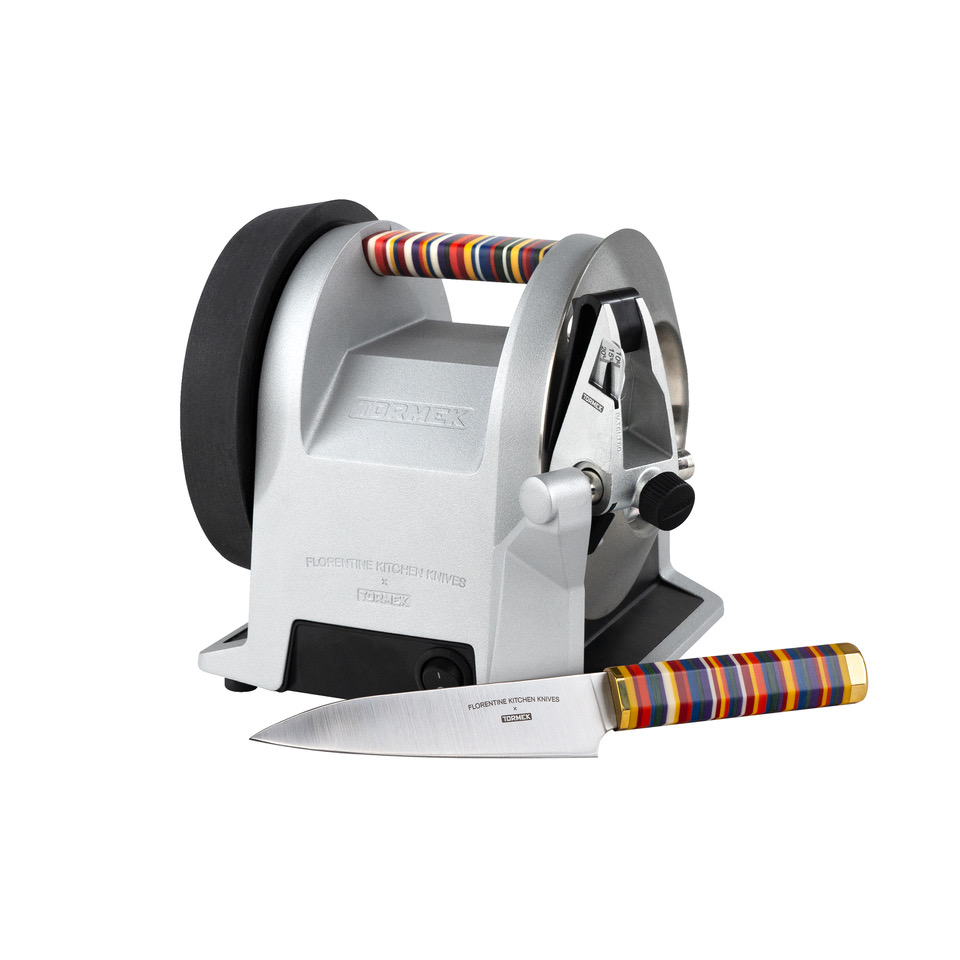
However the new limited edition Tormek T-1 Florentine Vibrant, the result of an exciting collaboration between Tormek and Florentine Kitchen Knives is stunning. It features a playfully colourful handle designed by Tomer Botner, founder of the Barcelona-based knife-making studio and it speaks for itself in the illustration below. Each handle is randomly assembled from a shared colour palette, meaning no two machines are identical – each one has its own unique “fingerprint.” RRP £370 from shop.tormek.co.uk. T-1 Kitchen Knife Sharpeners carry an 8 year warranty. Treat yourself – you deserve it.
Note: These articles express personal views. No warranty is made as to the accuracy or completeness of information given and you should always consult a doctor if you need medical advice.
Let me explain, but first for those of you who haven’t been to Blenheim Palace it is set in over 2,000 acres of ‘Capability’ Brown landscaped parkland and designed by Vanbrugh in the Baroque style, it was financed by Queen Anne, on behalf of a grateful nation, following the first Duke of Marlborough’s triumph over the French in the War of the Spanish Succession. Today it houses one of the most important and extensive collections in Europe, which includes portraits, furniture, sculpture and tapestries.
Frankly, it is stunning. I was fortunate to live fairly close by and loved going and it is worth remembering that Blenheim Palace is also the birthplace of one of Britain’s most famous leaders, Sir Winston Churchill, and it was his father who described the vista on entering the Estate from the village of Woodstock as the ‘finest view in England’.
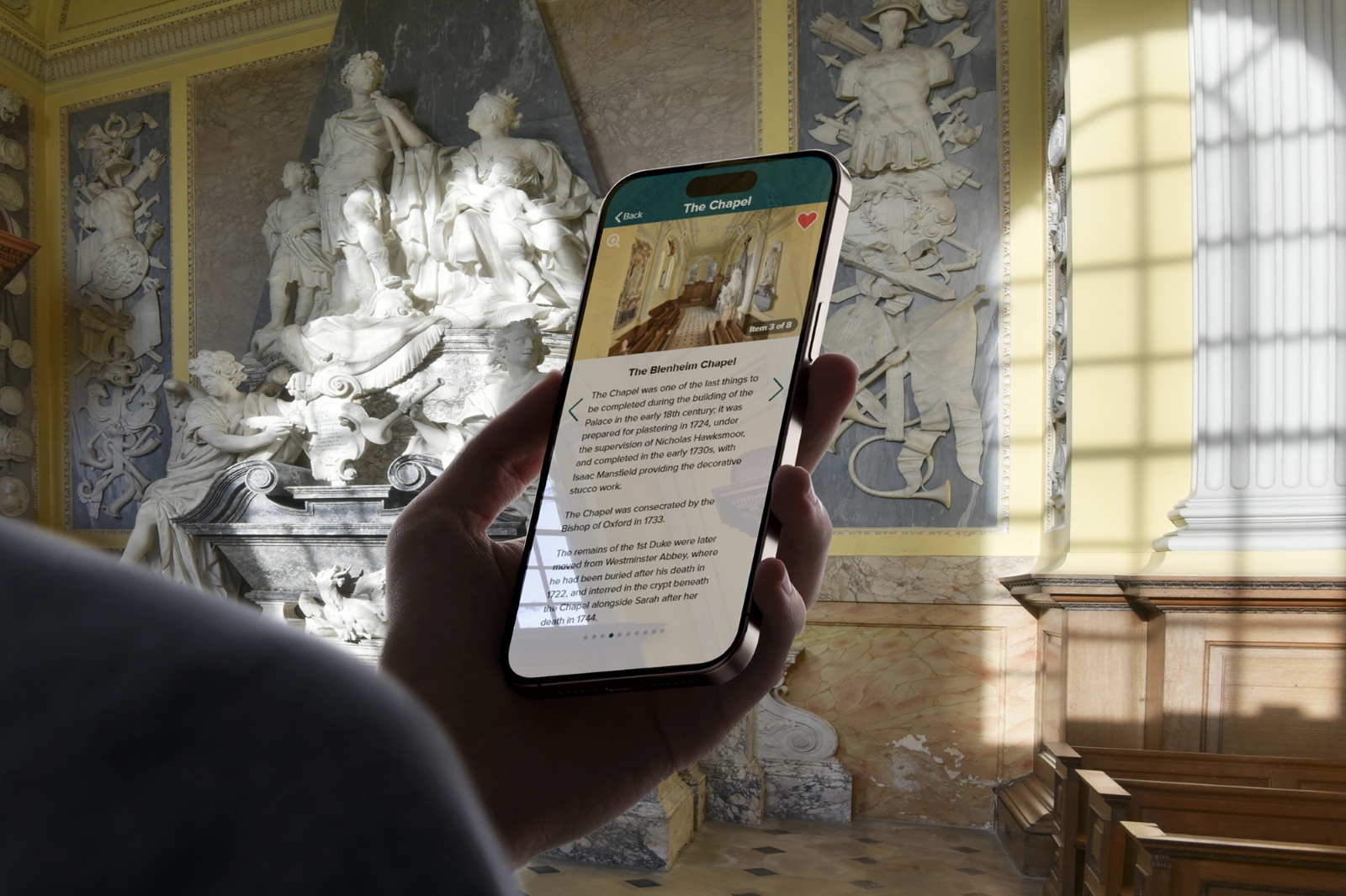
And the good news is… roll of drums…. Visitors to Blenheim Palace can now enjoy personally tailored tours, thanks to a new state of the art app, ‘Archie – your interactive guide’, named in honour of the Palace’s former Administrator and first Chief Guide, Archie Illingworth, (such a touching tribute) , who worked there from 1950 to 1972, and retired after the death of the 10th Duke.
The new multimedia platform has been created through Culturati, a groundbreaking Horizon Europe RIA project, for which Britain’s Greatest Palace is the UK pilot site.
‘Archie – your interactive guide’ allows visitors to choose exactly what they would like to see and hear, and allows them to delve into over 300 years’ worth of stories – many of which have never been told before – with several of the narratives shared directly by staff members, giving authenticity and depth to the cultural heritage experience.
Some of the fascinating stories contained within the interactive guide include:
Learn how the Long Library was used as a convalescence hospital during World War I, for soldiers recovering from a variety of ailments and injuries, from gunshot and shrapnel wounds, to shock, pneumonia, and dyspepsia. It must have been a touch of heaven after the brutality of the Front.
Hear how the grounds of Blenheim Palace were used during World War II to test Spitfire fighter aircraft guns.
Imagine what it was like as Archie Illingworth shares his own memories of welcoming the House of Dior to Blenheim in 1954, for the first of two fundraising fashion shows organised by the 10th Duchess in aid of the Red Cross
The app not only harnesses cutting-edge digital technologies to deliver personalised content; it also uses sophisticated sensors at Blenheim Palace to monitor and manage visitor flow, helping to optimise the guest experience through strategic crowd management.
David Green, Head of Innovation at Blenheim Palace, who is also Culturati Project Manager, commented: “It is a real honour for Blenheim Palace to be the UK pilot site for this unique collaboration, which retells stories using the latest digital technologies with elements of AI.
“This innovative initiative aims to revolutionise how cultural heritage and arts content is collectively created and shared across Europe. With the more traditional audio guide, our visitors were able to listen to a description of what they saw before their eyes – and that description would be the same for everyone. With ‘Archie – your interactive guide’, every visitor can enjoy a bespoke, unique experience.”
Culturati is a collaboration between 14 European partners, bringing together an interdisciplinary consortium of computer scientists, cultural and creative industries professionals, academics from various disciplines including social sciences, SMEs, public authorities, and non-profit community organisations. The project is funded by the European Commission and coordinated by Bilkent University, with additional UK partner funding through Innovate UK. Blenheim Palace has also been working closely with Oxford Brookes University, which conducts comprehensive user research to enhance the platform’s effectiveness.
To experience ‘Archie – your interactive guide’, and tailor your own visit to Blenheim Palace, go to: culturati.blenheimpalace.com/ You will enjoy it immensely, and return often.