UNDER  THE  HEN’S  BOTTOM  by WENDY  BRECKON  


Review by Frances Colville

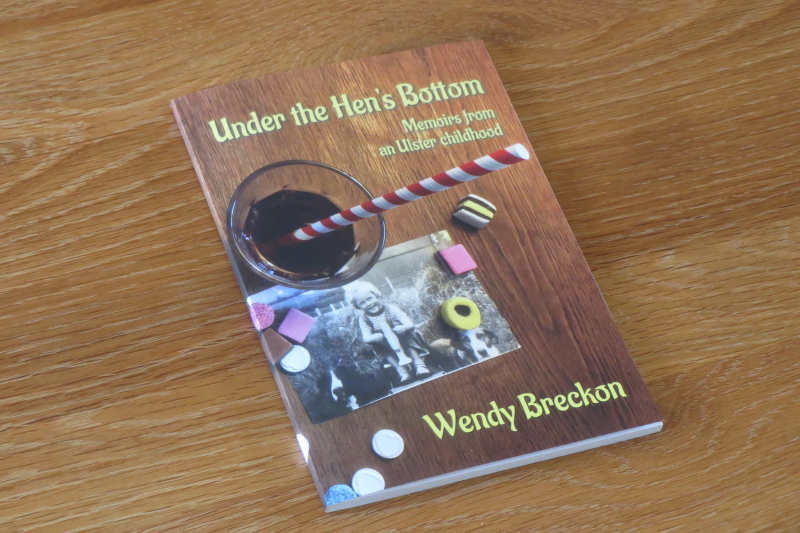
Under the Hen’s Bottom is a wonderful collection of short stories by author Wendy Breckon, detailing her memories of growing up in Northern Ireland in the 1950s and 1960s.  As the title suggests, these stories are witty, quirky and so engaging that the reader is immediately drawn into the author’s childhood experiences – from almost being born under a hedge, through holidays with her grandparents on their farm, to the building of friendships and early aspirations to be a writer and actress.


Wendy is a storyteller with a gentle touch and is particularly adept at bringing her characters to life.  The descriptions of time spent with her eccentric grandmother will make you smile, but there is poignancy here too, nostalgia for days gone by and some thought-provoking questions about the religious divide which existed at the time in Ireland.  As it says on the back cover of the book, the reader will be captivated from the moment they first turn the pages and start to share the experiences of this small child.


I was going to pick a favourite, but I actually can’t. Every time I think I have settled on ‘Voulez-vous’, I remember ‘Two Squares of Chocolate and a Floral Gazunda’ or ‘The Russian Princess’ or ‘The Lost Sheep’ or ‘An Honorary Catholic’ and the task becomes impossible.   So there is absolutely no substitute for buying the book and reading them all.


Under the Hen’s Bottom was published by Magic Oxygen on 6th July 2017 and is available (priced at £7) from Amazon or by emailing Wendy herself at wendybreckon@outlook.com

Disco Pigs reviewed by Paul Vates

Disco Pigs:

The Trafalgar Studios, London


“a visceral, in-your-face, angry play”


There comes a point, once in awhile, when you’re watching a play and you realise you’ve been daydreaming and you glance at those around you for reassurance – are they still rapt by the show or are they slightly dazed, too?


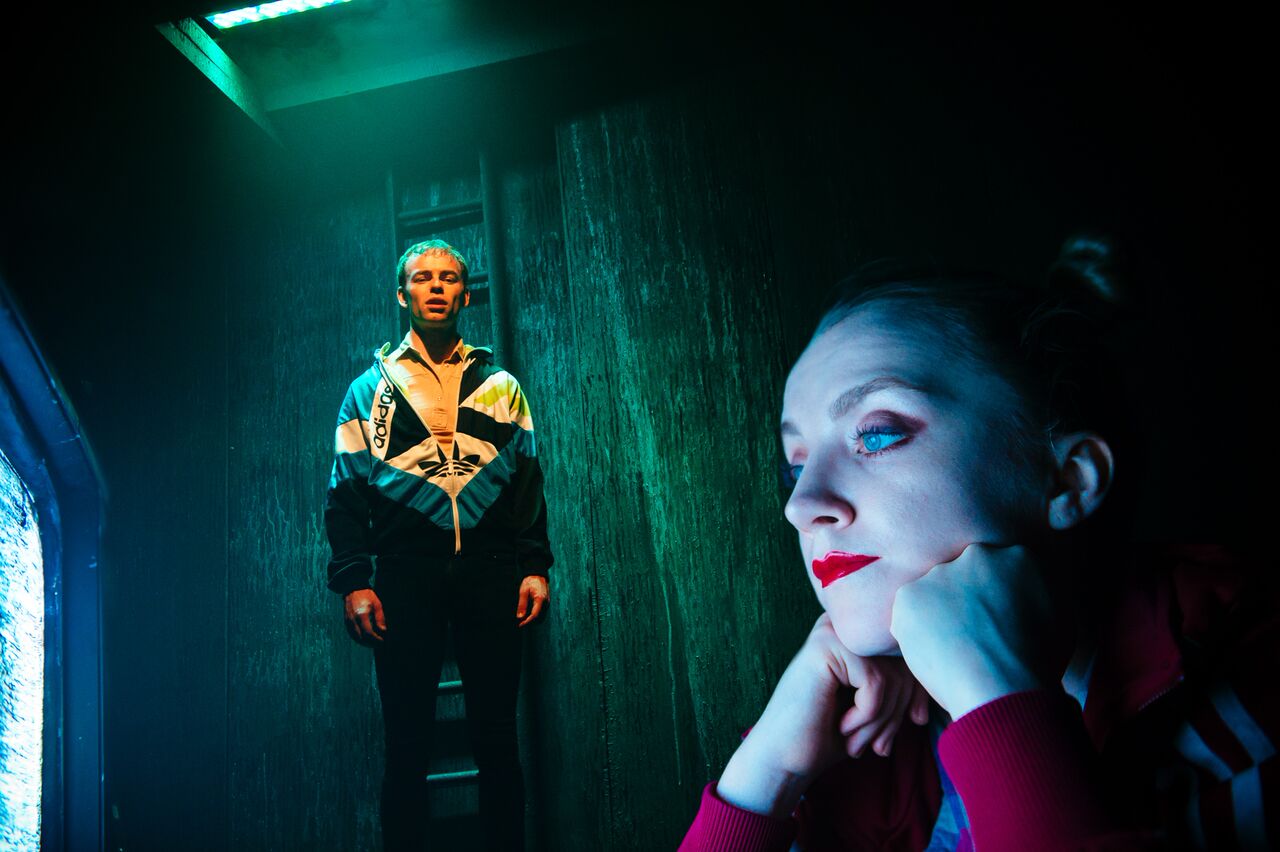
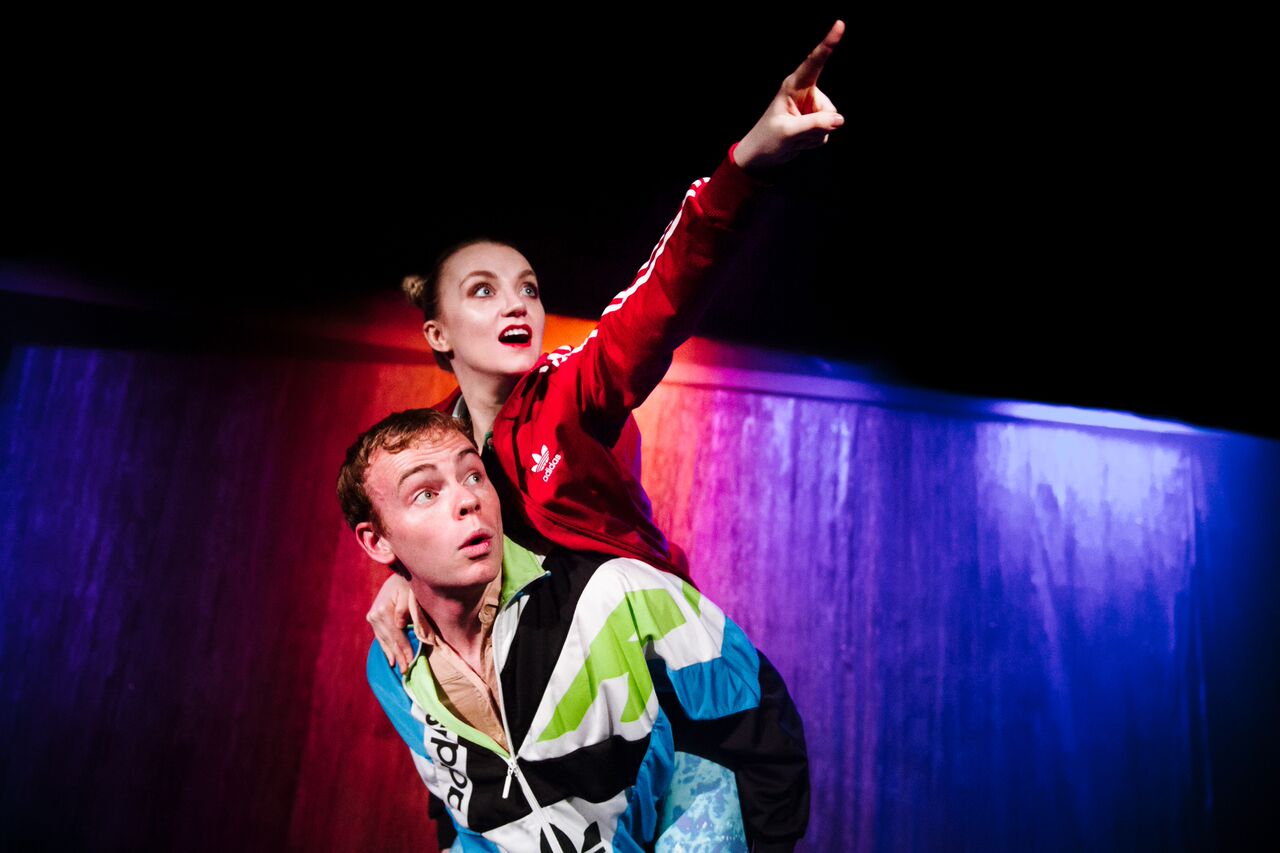
Evanna Lynch and Colin Campbell play Runt and Pig, two characters born at the same time on the same day in the same hospital. A lifelong friendship begins and they grow up together, even creating their own language – which is almost English and once the ear tunes into it, one senses the cleverness of Enda Walsh’s script.

They grow into teenagers and move around the stage with enormous energy, miming props and creating situations that channel their youthful energies until it spills over into violence and its awful consequences. All very well, but this raw recklessness produces a couple of surprisingly unlikeable people and I began to wonder why the play was being performed again. This is the 20th anniversary production and, never having seen it before, I considered whether it has dated well. John Haidar’s direction is precise and physical within the black box staging (designed by Richard Kent) and, although Lynch and Campbell don’t hold back in their performances, the abiding memory of the play for me is the technical side – a stunning soundtrack from Giles Thomas and a constantly evolving lighting design by Elliot Griggs.

Disco Pigs is a visceral, in-your-face, angry play that leaves subtlety behind. It felt like we were being shouted at. Tender moments were fleeting, but when they did occur, they were brilliant and left me craving for more.


Production Photographs are by Alex Brenner


Performances until 19th August 2017

Monday – Saturday at 7.45pm

Thursday and Saturday matinees at 3pm


Running time is 70 minutes (no interval)


Location: Trafalgar Studios, Whitehall, London

Tickets: www.atgtickets.com/venues/trafalgar-studios

or in person from the Box Office or by calling 0844 871 7632


Produced by Tara Finney Productions

Twitter: @tara_finney, @TrafStudios, #DiscoPigs20


Notes: Age recommendation is 14+


EasyJet’s new initiative: the Flybrary campaign. by Milly Adams


This welcome initiative follows new research that suggests that the number of children reading for pleasure is at an all-time low.

So how will the Flybrary work? This summer EasyJet will fly 750,000 families out of UK airports on their holidays. That means it has a unique opportunity to get kids hooked on a book while they’re on the plane.


Former Children’s Laureate Dame Jacqueline Wilson, who is supporting the Flybrary campaign designed to promote literacy and encourage kids to read, has selected a range of classic children’s books to be stocked on board that encompass the spirit of travel and adventure. Dame Jacqueline unveiled her selection at the official launch of the Book Club at Gatwick Airport.

Seven thousand copies of children’s classics including Peter Pan, Alice’s Adventures In Wonderland, The Wizard Of Oz, and The Railway Children will be made available on easyJet’s UK fleet of 147 aircraft as the new holiday reading campaign takes flight today across European destinations for free. Kids can start reading them on the flight and then when they land download free samples of other classics to try, plus a sample of Wilson’s latest bestseller, Wave Me Goodbye, from easyjet.com/bookclub. Children will leave the books on board for the next passenger to enjoy.

Frost is in favour of highlighting anything that encourages children back to books, so it sounds like a cracking idea over this long summer break.

Gatwick Airport’s Head of Terminals & Passenger Services Nikki Barton said: “We are right behind this brilliant summer initiative by easyJet and were honoured to welcome Dame Jacqueline to Gatwick to launch the Book Club and sign some of her books for our younger passengers. There’s nothing like a great book, and kids heading off to the many holiday destinations served by easyJet from Gatwick this summer will certainly have plenty to keep them amused on-board.”


The Secret Diary of Hendrik Groen, 83¼ Years Old reviewed by Milly Adams


I have just visited an older friend who has moved into an assisted living complex. I stayed in the guest room for the weekend – and swam amongst the community, each with their own apartments, but with a restaurant, and lounges. There are also clubs run by the ‘inmates’ as my friend calls them within the complex which is in the centre of town. (She is an artist and runs an art group for them.)

Each day we trotted across the road for breakfast in one of the many enormously reasonable cafes in the town – and find lunch and dinner too , or had it within the complex. We never had a dull moment. I was exhausted, played out with the joy of it all. My friend keeps me in hysterics with her tales of life as an old ‘un because after a settling in period she is thriving. She lets me know when another has dropped off her perch. Too much riotous living I think as they live, live, live, though not expensively.

What’s more, she’s not used her cooker yet.

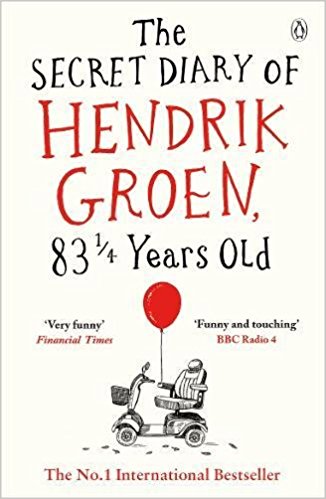
So yes, I couldn’t wait to read The Secret Diary of Hendrik Groen, 83¼ Years Old

Be still my beating heart – what a belter, what a joy, or is it just me who loves quirky, funny, moving stories.

Dear old Hendrik keeps a diary as the days go by in his old folks home, noting on page one a plate of buns placed for a moment on a chair, a plate which is sat upon by the bearer of an over large bottom, said buns then decorate said bottom when it rises – not necessarily fetchingly, but certainly impressively , and so it goes on. He thinks it amusing, others do not. Eager to please he grovels.

However steadily the worm turns.

He sets up the anarchic Old-But-Not -Dead-Club, and lives up to the name… pursuing the lost love of his life, who turns up at the same home. Will he, won’t he live life to the full, with her?

Set in Amsterdam, it is becomes clear that Hendrik locates a whiff of Dylan Thomas about himself, and has no intention of going  gentle into that dark night, but will rage, rage at the dying of the light. But he doesn’t rage, he reports, he lives, worries, loves, shows us glorious characters and their behaviour, and generally, increasingly finds himself, and makes things happen.

I strongly advise you to laugh, weep a little, recognise yourself or others – we all know his fellow ‘inmates’ – take a glass of something deeply alcoholic, and join in the romp because with luck we’ll all be 83¼ one day and should use this as our guide.

You will love it.

The Secret Diary of Hendrik Goren 83¼ Years Old:  pub by in pb Penguin. £7.99 and ebook.

Author? Anonymous – how intriguing.


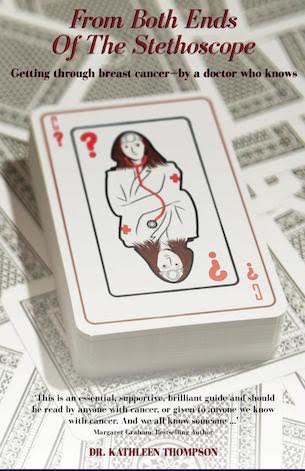
More award winning success for From Both Ends of the Stethoscope author Dr Kathleen Thompson


Honestly, there’s no stopping this amazing author. First Dr Kathleen Thompson won The Words for the Wounded Independent Author Book Award, judged by literary agent, Felicity Trew of the Caroline Sheldon Literary Agency last year, and now news is just in  that she has won a Platinum Award for From Both Ends of the Stethoscope in the book category of the The Janey Loves 2017 Platinum Natural Products and Services Awards

Frost Magazine is not in the least surprised at Dr Kathleen Thompson’s success. Not only is Dr Kathleen the medical correspondent for Frost Magazine but the book is extraordinary. It is wise, funny and honest. Dr Kathleen has experienced breast cancer, and has turned the whole episode into a positive journey through the minefield of emotional turbulence, fear, hope, loneliness.

She reaches out and takes hold of her readers’ hands, and answers the questions that patients don’t even know they want to ask. It is accessible, compassionate, wise. This woman needs to write a novel because with her turn of phrase and insights it would be a similar corker.

If you have a friend, or are on the cancer journey yourself, this will be the present that will be of most value.

The Janey Loves 2017 Platinum Natural Products and Services Awards have a multitude of categories from Health and Well-being, Remedies, Food and Drink, Garden and Pet products, to books and apps. The judges are high calibre and include Zoe Ball, Carrie Grant and Janey Lee Grace who as you all know is a Radio 2 DJ.

Frost Magazine sends congratulations, bravos, whoop whoops to our lovely and talented friend Dr Kathleen Thompson. Great great news to see us through the week. Glasses of fizz raised all round.

From Both Ends of the Stethoscope: by Dr Kathleen Thompson.  Paperback and download.

Available from Amazon.co.uk

www.faitobooks.co.uk

www.wordsforthewounded.co.uk


The Cottage Garden Society by Kate Hutchinson

I was a young fledgling gardener when I first came across The Cottage Garden Society. I can’t even remember where now. Maybe a magazine article or a piece on the telly box? I was in East London, in a tiny city garden, desperately dreaming of blowsy borders, gnarled old apple trees and roses around the door, and The Cottage Garden Society seemed like a place to plant my dreams.


Of course I soon found out that The hardly anybody has the ideal cottage around which to place their cottage garden, and most people are making do in narrow city spaces or dodgy plots around new builds. It turns out you don’t have to live in a cottage, or even in the country. The traditional, informal style lends itself to any situation, rural or urban, large or small. What we cottage gardeners all share is the same desire for colour and beauty, a love of plants and a certain sense of informality. (Possibly too much in my case, according to my husband).


The Cottage Garden Society (CGS) was founded in 1982 when cottage garden plants were becoming ‘unfashionable’. Those starting the Society wanted to protect this vanishing planting style.  They were concerned that, in the move towards easily maintained gardens, hard landscaping was becoming more important than the plants, still a potential worry today.

Interest in the Society soon grew and from small beginnings with the founders based in North Wales and Cheshire,  there are now about 3,000 members, and over 35 regional groups spread throughout the UK.  Most of these groups meet monthly for talks, garden visits, seed swaps and plant sales and to enjoy the extra benefits of mixing with like-minded gardeners in their own area. Some groups also have stalls at major shows.


The Society also has a great quarterly magazine full of inspiring (and often funny) articles and book reviews. Always a great joy the day it plops through the letterbox and everything is put aside for a cup of tea and a read. The Society also runs a seed exchange. There is something very special in sowing seeds generously collected by a fellow member you may never meet from hundreds of miles away, and then growing the flowers in one’s own garden.


I may never have a cottage in the country with roses round the door, but I am definitely a Cottage Gardener. Are you??


Join now and get two months free membership (renewal Oct 18).

thecgs.org.uk

https://www.facebook.com/cottagegardensociety/

https://twitter.com/CottageGardenSo


Now I am Alone – review  by Michael Rowan


Michael Rowan ventures South to The Bread and Roses Theatre, 68 Clapham Manor St, London SW4 6DZ,   in pursuit of the Bard


Not that easy to find and with soaring summer temperatures it has to be something special to get me to venture south of the River Thames. Fortunately, ‘Now I Am Alone’ was well worth the effort.’

50 minutes running time with no interval, there is plenty of time for a drink and perhaps a meal in the bar below. Special mention to the Bread and Roses bar which is trying to do something different.

This one man play is definitely one for us Shakespeare lovers – what a treat.

The simple set has the actor, Dori Engel running through his lines before his dressing room mirror as the audience take their seats. Over the sound system various lines from Shakespeare percolate, overlapping and running into each other, like the thoughts in the actor’s mind.


Shakespeare’s metre was clear in every speech and my main problem was trying to recognise each speech as they came thick and fast. Edmund railing against his illegitimacy, Helena debasing herself for love and Shylock pointing out Christian hypocrisy, lost none of their power as Engel stepped seamlessly between the characters, bringing them to life.

The common thread is that the characters are all outsiders and in a break from the Bard the actor steps down from the stage and addresses the audience explaining how Shakespeare was himself an outsider and for some time he lived amongst outsiders.

The show tells the story of these people and proffers up their unique viewpoint on life and as a result suggests the viewpoint of Shakespeare himself.

The show is a delight for any who love the poetry of Shakespeare, beautifully delivered even if like me you can’t place all the speeches.

The show ends on Saturday July 8th and will hopefully reappear but in the meantime if you can make it to Clapham – get thee hence.

The Bread and Roses Theatre, 68 Clapham Manor St, London SW4 6DZ

info@breadandrosestheatre.co.uk


Ah… Brilliant…. More about Idle Women of the Waterways.  by Milly Adams  


Idle  Women? When the 2nd World War came upon us, blokes signed up and women did their bit too. In time some robust women were recruited to join the Inland Waterways to help run the narrowboats and deliver supplies.


Inland Waterways badges were awarded once the girls were trained. IW was the basis for the ironic name, Idle Women, because of course they were anything but.


Instead they slogged in all weathers up and down the waterways delivering loads of coal, wood, wheat – whatever was needed, breaking through ice in the winter, shielding their eyes from glaring sun which beat off the cabin roof in the summer, lock-wheeling, eating at the tiller, loading, unloading then clearing out after the cargo, and generally earning their place in the closed and private boating community. Let’s not even mention the bucket, as loo facilities were a pipe-dream.


The original boating community had been forced from their houses by poverty, to live on the boats which provided their living. This boating community still lived and worked in this way.. They didn’t have time for education as they moved from pillar to post, living in their tiny back cabins because the hold must be as big as possible to allow as much of a load as possible.


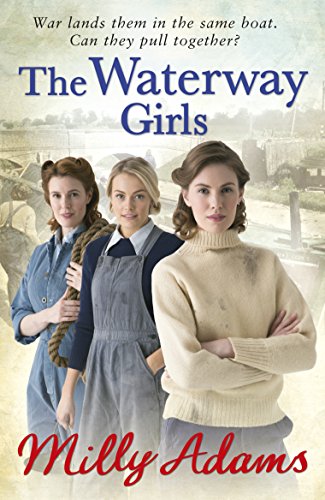
How do I know so much about this world? Because I am writing a series of novels about The Waterway Girls for Arrow publishers  which is out on 7th September..
 

This is why I was so delighted to attend the launch of:


Idle Women of the Wartime Waterways with Frost Magazine’s drama critic, Paul Vates, some while ago at the Cruising Association at Limehouse. It was written and performed by Heather Wastie and Kate Saffin who  told the story of these women before  embarking on a tour along the Grand Union Canal in their narrowboat – to perform at canalside venues along the way. Paul and I had a fabulous evening: it was huge fun, and most informative too.


Heather has sent her latest blog on their progress along the canal. If you get the chance, you must see them in performance. So, over to Heather who is talking about The Bottom Road, which Verity, a character in my book, called the Brum Bum.


The women who hated The Bottom Road by Heather Wastie


When I was a child we owned a 70 foot narrow boat which was registered in 1913 and used to carry cargo for Fellows Morton & Clayton. My parents restored the tiny back cabin to its original state, with roses and castles on the doors, a stove to be blacked, brasses to be polished and a bed stored in a cupboard, and Dad built and fitted out a long modern cabin at the front, over the hold where the cargo would have been. As a family we started our boating adventures in the West Midlands in the 1960s and 70s when many of the canals were in a dreadful state, neglected, unloved and in many cases derelict. I remember what it was like travelling through Birmingham on a canal which was closed off with high walls – dirty, smelly and dark.


I have written poems and songs since I was very young, and remember writing a humorous song about all the rubbish you could find in the canal in those days. Little did I know that many years later I would write and perform a show about the canals, touring by narrow boat to canalside venues. The show is called Idle Women of the Wartime Waterways and is a double bill with writer and actor, Kate Saffin. Kate already had a theatre company, Alarum Theatre, and we met on Twitter in February 2016, quickly realising that we each had half a show. Within 2 months we had started our first tour.


During World War 2, cargo boats travelled from London to Birmingham to Coventry and back to London, and part way through the war, a new breed of boater joined the workforce. Women from mainly middle class backgrounds were trained up to operate pairs of boats – a motor boat towing an unpowered ‘butty’, each 70 feet long – carrying 50 tons of cargo from London up to Birmingham. Once the cargo had been unloaded, the boats travelled empty to pick up coal from the Coventry coalfields. ‘The Bottom Road’ is the nickname that was given to the route they took in the early days of the scheme, a route hated by trainees and working families alike. Up to that point, they had been operating wide locks into which motor boat and butty could fit side by side. Now they were faced with narrow locks which could only take one boat at a time, so they had to work the boats through separately and pull the butty by hand – known as bow-hauling. It was tough, dirty work. Here’s the chorus of a song I wrote for the show, all about The Bottom Road:


We all hate The Bottom Road,

Oil and grease and soot and muck.

We’d rather go back the way we came

Than work through dirt and single locks.


There was an alternative route which involved going back through the double locks but all the working boats were told to use The Bottom Road in order to save water. Towards the end of 1944 there was a sit down strike after which the boats were allowed to ‘go back the way they came’. The Idle Women tour (‘Idle Women’ is a nickname given to the trainees after the war) has been travelling since the end of April with two boats – a modern one and a historic boat very similar to the boats the women used. We decided we should include The Bottom Road in our tour in order to take the show to more places through which the trainees would have passed. It is no longer the filthy route it was; in fact much of it is in beautiful countryside.


Though I have been boating for most of my life, I struggle to remember which canal goes through which places. I remember The Bottom Road though, because I turned the place names into a section of the song! I will sing it at shows until we leave the Bottom Road next week and head back towards London where our tour ends on 5th August. As I write this, we have completed 34 out of 50 shows, having performed in pubs, pub gardens, a hay loft, an abbey, a church, community centres, historic waterside buildings, marquees, a cafe, a museum … in a variety of weather, from heatwave to rainstorm, and have developed a deep empathy for the wartime women whose stories we tell.


See www.alarumtheatre.co.uk for tour dates and further info.


The Waterway Girls by Milly Adams: pub Arrow. Out in pb on 7th September 2017