CARIADS’ CHOICE: SEPTEMBER 2022 BOOK REVIEWS

Lynne Francis’ A Maid’s Ruin reviewed by Susanna Bavin

This thoroughly engaging and enjoyable story follows the fortunes of young Molly Goodchild, a dairymaid whose life is one of unrelenting hard work. She dreams of better things, but this doesn’t mean she isn’t a practical person, well versed in the demands of everyday life and family responsibilities.

I was enormously fond of Molly. She is a naturally strong character who shows both determination and tenacity in the face of adversity, but at the same time, her youth and inexperience make her vulnerable. I found her utterly believable and I rooted for her all the way.

This emotional and dramatic story is set in Georgian times and Lynne Francis has filled the pages with period detail and beautifully written descriptions of the various settings. A lot of research has gone into this book, adding vibrancy, immediacy and depth to the telling.

This is the coming-of-age story at its best.
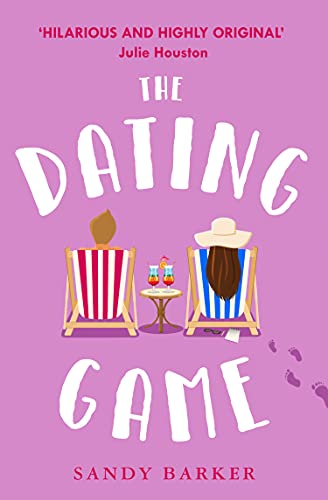
 

Sandy Barker’s The Dating Game, reviewed by Jessie Cahalin

What happens when a journalist goes undercover on a reality show?

I absolutely loved The Dating Game. Abby is a wonderful character guiding the reader through her hilarious observations of the world of reality television. This smart, witty character exposes the micro-politics behind the scenes. This is a romance novel with so many twists and turns you’ll be dizzy, and you’ll giggle your way to the end. Besides entertaining me, this was an astute observation on reality TV culture. The novel is jam packed with wit, sensitivity and humour. I could not put this novel down! A perfect beach read, and I wanted to book a holiday in Sydney by the end.


Jules Wake’s The Wednesday Morning Wild Swim reviewed by Carol Thomas

This was a fun, feel-good read with a cast of wonderful characters. I enjoyed the setting and the unfolding romance between Ettie and Dominic. There was plenty of humour; I even laughed out loud at times. I loved Ettie for her moments of candour, albeit she was also prone to the odd little white lie. The characters were from a broad age range, leading to realistic and funny interactions and a community feel. I enjoyed the blossoming friendship of the wild swimmers and getting to know what spurred them to need their swim. It was also great to check in with returning characters from The Saturday Morning Park Run, a book I also greatly enjoyed. While I was a little unsure about the set-up for the penultimate scene, I welcomed the happy ending. Overall, it is escapism that will make you smile!
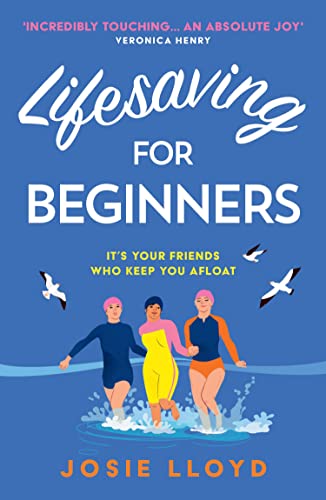
 

Josie Lloyd’s Lifesaving for Beginners reviewed by Jane Cable

There was nothing I didn’t love about this book. How often do you read that in a review, but it isn’t a phrase I use often and I really mean it.

The stories of the five women who meet on Brighton beach to swim during the pandemic are wound seamlessly together to make a cohesive whole. Maddy, whose marriage and Instagram-perfect lifestyle have fallen apart; Helga the elder stateswoman who refuses to accept the limitations of her advancing years; Claire, the wife and mother who feels she has become invisible; Dominica struggling with grief; and Tor who is afraid to tell her family about the woman she loves.

This is a book about the power of friendship and the ability to move on. There is no one central shared ‘quest’ and really no central character. Their stories blend and twist together in such a powerful way I found it impossible to put down.




Devika Shallivan’s tips for first time writers of erotica genre

Don’t be stumped: Most writers do not even attempt to write erotica as they are lost as to how they would write it? What words they would use? Whether a sex scene is good or bad? How would a reader react? Previously written books may be for a previous generation. You can write something new and unique.

Sex scenes aren’t about sex only:  A good sex scene is about the exchange of emotions, not bodily fluids. There can be emotions from rage or desolation to exultation, tenderness, or surprise.

Increase your vocabulary according to your book era: If you are attempting to write contemporary sex scenes try to find current slang or words. If you are trying to write in the Georgian or Victorian era then know more about the words current at the time. You can very easily do this by googling words and finding which centuries they were used.


Show the exchange of emotions:  The best way to show exchange of emotions is by dialogue, expression or action. Dialogue is by far the most flexible and powerful tool a writer has. What people say reveals the essence of their characters. A good sex scene is usually a dialogue scene with physical details.

Use all senses: Many writers and authors use only sight and sound. You can make a vivid scene by including smell, taste, touch.

Do not use ambiguous words: Do not leave too much to imagination. Try to fill in the blanks in the mind of your reader.

Use appropriate trigger warnings : If your story includes violence, sexual harassment, sex trafficking, coercion, rape, make up sex, sexual assault, childhood sexual abuse, sexual fantasy, BDSM, fetish, etc put appropriate trigger warnings.

These stories need to be written and be heard rather being labelled as pornographic or too rude.

Get Feedback: If you are writing a sex scene and are unsure if it would be something your readers would like. Join a writers’ community or group who would be happy to tell you what works and what doesn’t work.

As a writer or author write your story and have a distinct voice. Tell your story!


Devika Shallivan Services: https://www.facebook.com/rgrprt/services

Resources

Wikipedia: Erotica Genre
Game of Thrones – George R. R. Martin (1996) Books
Bridgerton – Julia Quinn  (2000) Books
Nymphomaniac Volume I (2013) Film
Nymphomaniac Volume II (2013) Film
Fifty Shades of Grey (2015) – E L James
Sex Education (2019) TV Series

As with all articles in Frost, the opinions expressed are the contributor’s own.


SUNDAY SCENE: SUZANNE SNOW ON HER FAVOURITE SCENE FROM SNOWFALL OVER HALESMERE HOUSE

Inspiration for me often begins with the setting and I knew I had found my characters’ home when I visited this gorgeous house and garden in Cumbria. Soon I could envision Ella and Max here and picture their story unfolding around me. The scene I’ve chosen to share is set on a Sunday evening when Ella is feeling tense and alone in the house on her first weekend at Halesmere. Active by nature, she heads out into the frosty night for a walk in the grounds to settle herself before bed:


Not a thing seemed to be stirring when Ella reached the empty lane; she felt like the only person awake and watching the world at this hour. She really ought to go back to bed; midnight would soon be past, and she couldn’t spend the night marching up and down the drive.

She heard Prim before she saw her as she neared the house. She saw the dog freeze, then her tail shot up and Prim barked once, cautiously, then let out a volley of noise that had Max running after her.

‘Prim, shut up, there’s nothing there,’ he hissed. ‘Be quiet, you’ll wake the kids up.’

Ella had been looking for a tree or convenient spot where she might hide, but it was too late. Prim had found her and immediately swapped the barking for a madly wagging tail and a desperate wish to put her paws on Ella’s shoulders.

‘Who’s there?’ Max called sharply.

‘It’s me.’ She stepped forward, offering a quick smile she wasn’t sure Max would see through the dark. ‘Sorry, I didn’t mean to set Prim off like that.’

‘Ella! You had me worried for a minute, Prim’s never barked like that before.’

‘Just doing her job, aren’t you, girl.’ Ella stroked the dog leaning against her legs.

‘I suppose.’ Max was wearing a T shirt over lounging trousers, and he shivered. ‘It’s pretty late to be out for a stroll. Couldn’t sleep?’

‘No,’ she admitted. ‘Walking usually helps.’

‘I work rather than walk when I can’t sleep.’ He wrapped his arms across his body. ‘Not so easy for me to leave the house.’

‘Of course.’ She thought of his children, cosy in their beds. ‘But doesn’t working too many hours late at night just make you more tired?’

‘Yeah.’ She saw the gleam of his smile. ‘But I’ve got two excellent alarm clocks who like crashing on my head first thing, so there’s not much danger of me sleeping in.’

A gorgeous new image jumped into Ella’s mind, one featuring Max being woken with cuddles and love every morning by Lily and Arlo tumbling over him. ‘You’re not still working?’

‘Just finished. I let Prim out last thing before I head up.’ Max stamped his feet, blew out a breath. ‘It’s freezing. You don’t fancy a hot drink, do you?’

Not wise, Ella, she told herself. Not wise at all. But exactly what she wanted and quite possibly just what she needed. ‘I’d love one. Maybe not coffee though.’

‘No problem. I do a mean hot chocolate, and I could throw in a shot of brandy to warm us up.’

‘Perfect.’ It was, and Prim seemed delighted to be escorting Ella safely into the cottage instead of seeing her back to the silent house.


I loved writing this scene as it marks a change in Ella and Max’s relationship as they begin to understand one another and the circumstances which have led them to Halesmere House in search of new beginnings.


Sign up to Suzanne’s newsletter here: https://bit.ly/DownloadOpeningChapter


Devika Shallivan’s tips for readers who would like to dip a toe into the erotica genre

Understand erotica genre: Erotica is literary or artistic work that deals with sex and physical descriptions. There is a thin line between vulgar, raunchy, sensual and sexual. There is also a thinner line between pornographic and erotica.

Erotica genre is not for everyone: The characters will be adults and young adults now. Readers would be 16+ or 18+ depending internationally on the country’s age limit. The sex will be integral to the plot and/or the development of the romance. There will be no fade to black sex scenes. The sex scenes in the book will be explicit and frequent, as in recent Netflix TV series like Sex Education and Fifty Shades of Grey. We are just starting to get used to talking about sex in an easy to understand language.

Desensitized by violence, guns, bombs, cheating, rape and sex: Many Hollywood movies we see have such high stakes which sometimes isn’t true. It makes us desensitize and make us think this all is “normal”. The difference between fantasy and reality is grave.

Be sympathetic to erotica writers: Despite erotica writers trying very hard to not offend but there are so many words that can be used for penis and vagina. Many erotica writers struggle to put the right words as they do not want to offend their readers and even books from E L James were criticized.

Be open to rude words: Some writers write to please a different audience and leave lots to imagination or use words that some regular readers of erotica may find outdated.

Erotica genre is sometimes going to trigger:  When a writer is trying to tell a story they might trigger readers, so be aware of trigger warnings where they exist. Alternatively these stories could resonate with the reader and they would be able to empathize with the writer or characters.

Writer voice shouldn’t be shushed: We live in the diverse world. Just because readers haven’t experienced it doesn’t mean it becomes taboo.

Erotica genre isn’t for glamourising sad stories or to encourage bad fantasies: There are sometimes stories about violence, sexual harassment, sex trafficking, coercion, rape, make up sex, sexual assault, childhood sexual abuse, sexual fantasy, BDSM, fetish, etc. These stories need to be read and be heard rather than being labelled as pornographic or too rude.

Readers should be open to Erotica Genre for all the aspects of sex rather than limited written in the traditional language of romance.

Devika Shallivan Services: https://www.facebook.com/rgrprt/services


Resources

Wikipedia: Erotica Genre
Game of Thrones – George R. R. Martin (1996) Books
Bridgerton – Julia Quinn  (2000) Books
Nymphomaniac Volume I (2013) Film
Nymphomaniac Volume II (2013) Film
Fifty Shades of Grey (2015) – E L James
Sex Education (2019) TV Series

As with all articles in Frost, the opinions expressed are the contributor’s own.

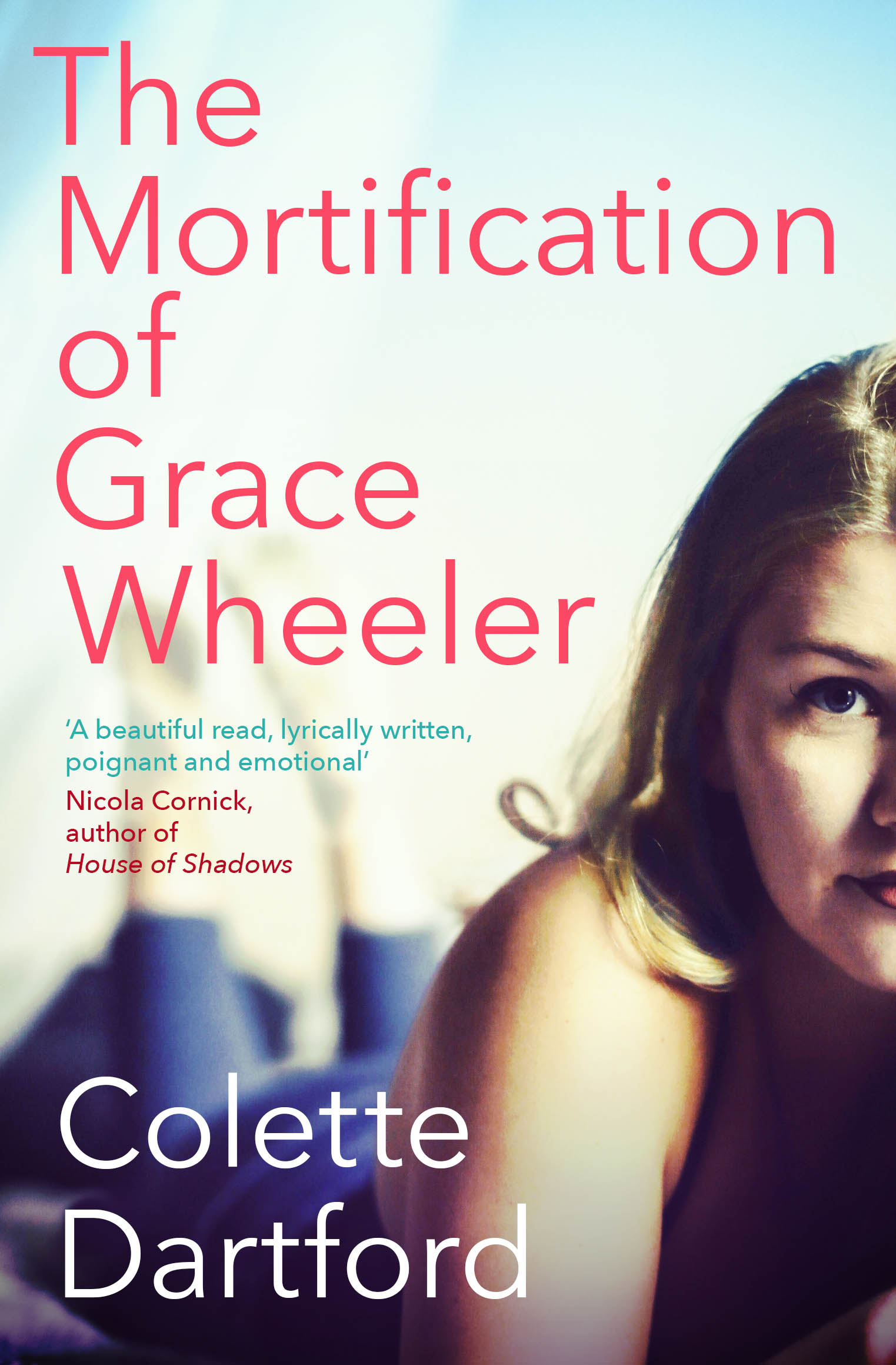
SUNDAY SCENE: COLETTE DARTFORD ON HER FAVOURITE SCENE FROM THE MORTIFICATION OF GRACE WHEELER

At the heart of my novels are relationships at a point of turmoil or crisis, because that is when they are most interesting. In Learning To Speak American, Duncan and Lola Drummond try to celebrate their twentieth wedding anniversary in sun-drenched California, while still grieving the loss of their daughter two years earlier. In An Unsuitable Marriage, Geoffrey Parry loses his business, his family home and his dignity. He is forced to move in with his elderly mother, testing their relationship, while his wife Olivia, takes a position at houseparent at their son’s prep school, testing their relationship too. In my third novel, The Mortification of Grace Wheeler, Grace is faced with a lonely empty nest when her only child, Josh, goes to university. For eighteen years they have been a family – Cal, Grace and Josh – but now Grace and Cal are a couple again, and she can’t see how that will work. The story begins the day before Josh – a keen fisherman – leaves home. Grace has taken him to one of his favourite fishing spots and watches wistfully from the grassy bank.

In many ways it was a perfect day. Late summer sun, buttery and low, showered gold dust on the river as it rippled over shallow rocks. A riot of insects flitted over the deeper water, tempting unsuspecting fish to the surface. Josh stood knee-deep in his waders and cast out with a long swish of his rod.

Grace sat on the riverbank, a tartan blanket spread out beneath her. The book her mother, Ruth, had given her lay face down on the picnic hamper – The Empty Nest: A Survival Guide. Ruth meant well, but even the title troubled Grace. It foreshadowed the vacuum Josh’s absence would create, and the spotlight it would shine on her marriage. From tomorrow, Grace’s own nest would be empty, and reading about it wasn’t how she wanted to spend this last day with her son.

Grace misses Josh terribly and is upset that Cal doesn’t. For him it’s a case of ‘job done’, an attitude that only highlights the distance between them. When she is advised to take up a hobby, Cal suggests she join his golf club, but she wants to spend less time with him, not more. Instead, she has fly-fishing lessons as a surprise for Josh when he comes home. Her instructor is a chilled and charming millennial, a complete contrast to Cal, more than twenty years her senior and unrepentantly set in his ways. Despite having always been true to her marriage vows, Grace finds herself drawn into a brief affair that has devastating consequences not just for her, but her entire family.

Rivers and lakes are the setting for some of the book’s more poignant scenes. As the story began by a riverbank, I wanted it to finish there too. ‘Bookend all the bad stuff’ is how Grace put it. I can’t say any more about what happens between these two excerpts, or how this particular day’s fishing will end.

Josh strode out into the gin-clear water and made his first cast. Grace watched from the bank and remembered the empty-nest book Ruth had given her. She had dumped it into the recycling, unread. No great loss, she told herself. Nothing could have prepared her for the trauma of her empty nest. Even now, she could hardly believe everything that had happened.


A SAFE PAIR OF HANDS


Jane Cable reviews three books from authors from whom quality is a given

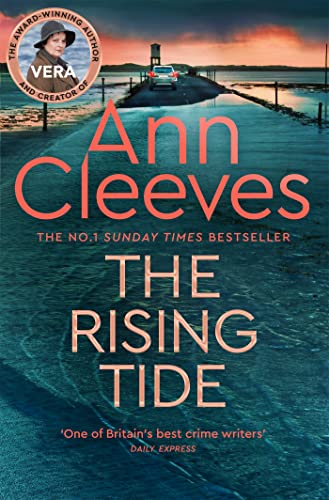
The Rising Tide by Ann Cleeves

I love it when you pick up a book and you know you’re in safe hands; seamless writing you cease to notice within minutes, credible characters, a beautifully bound together plot. I know it sounds strange to say so for a writer of Ann Cleeves’ experience, but not every author stays on top of their game in such an emphatic way.

This is the tenth Vera book and the first I have read. I don’t like crime books in general as I find them terribly formulaic and predictable, but, encouraged by my husband, I hoped for more. And The Rising Tide delivered in spades.

Fifty years ago a group of teenagers spent a retreat weekend on Lindisfarne and although their lives diverged, most of them return every five years, even though the first reunion was blighted by tragedy.  Now they are in their late sixties and make unlikely murder suspects, but when one of their number is killed they are all in the spotlight. Their backstories make them fascinating characters with so much depth, which is one of the things I enjoyed most about this fabulous book.


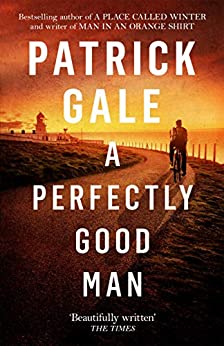
A Perfectly Good Man by Patrick Gale

It’s a long time since I read Notes From on Exhibition and I had forgotten what a convincing writer Gale is. His characters spring quietly from the page and somehow seep into your life so that you believe in their existence almost without knowing it. And for this book the setting was my adopted county of Cornwall and the author’s own home; the real Cornwall too, and not the sugar-coated touristy one.

The book opens with a young man’s suicide, and it isn’t hard to guess there is more than meets the eye to his relationship with the priest he calls to pray for him as he dies. Their stories, and the stories of those close to them, are then unwound, backwards and forwards, forwards and back in time, in a way that could feel disjointed, yet in fact makes perfect sense. This is a book I will remember for a long time.


Ordinary Thunderstorms by William Boyd

This was a book club pick and not the sort of thing I normally read. But that was my reason for joining a book club – to try new things. And guess what? I loved it.

A thriller set in the underbelly of London that most of us hope not to see, it follows the world of middle class academic Adam Kindred from the moment his world unravels when he’s accused of murder. At first one poor decision follows another and within days he is homeless and hungry, pursued not only by police, but by a ruthless hitman.

The story is told from multiple points of view that weave seamlessly together. Adam, the hitman, the boss of a pharmaceutical company that may be at the centre of it all, a policewoman and a prostitute. An unlikely cast of compelling characters who create a faultless narrative only a really skilled an experienced novelist could pull off.


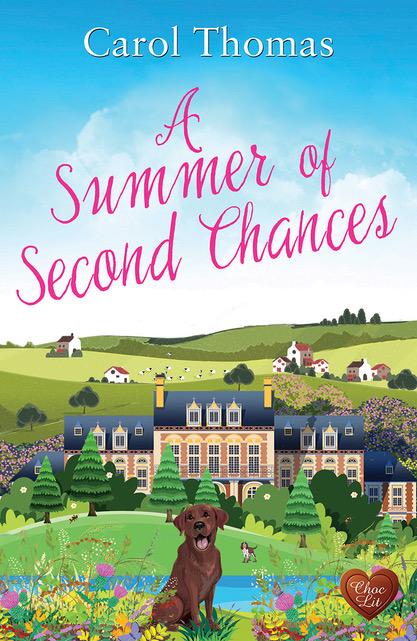
SUNDAY SCENE: CAROL THOMAS ON HER FAVOURITE SCENE FROM A SUMMER OF SECOND CHANCES

Ava Flynn, the heroine of my novel, A Summer of Second Chances, feels the clothes donated to the charity shop she manages have seen more life than her. Yet maximum dedication is what it takes to keep her late mother’s beloved wildlife charity, All Critters Great and Small, running.

But when Ava’s first love, Henry Bramlington, returns to the village, life suddenly becomes a little too eventful. As the heir to Dappleburry House and estate, Henry, has the power to make or break the village he left behind – All Critters Great and Small included.

In the scene I am sharing, Ava is running with her spaniel, Myrtle, in the grounds of Dapplebury House. Unaware that Henry has returned, but well aware she is trespassing (especially as she was banned from the estate many years ago), Ava is releasing the tension she has felt building inside as she encounters Henry for the first time in over a decade.


The trees went by in a blur. The sensation was freeing. Ava was running too fast for rational thought. Too fast to think about all that she would like to say to her mum; too fast to think about the weight of burden she felt at keeping All Critters Great and Small afloat; too fast to think about the never-ending mountain of donations at the shop, and – Oh God! – too fast to do anything to avoid the man stepping out from the line of trees just feet ahead of her.

With the deft agility that came from being half a metre from the ground, and in possession of four paws, Myrtle darted out of the way, while Ava braced herself for impact. Seeing the alarm in the man’s green eyes as if she were registering the situation in slow motion, Ava slammed into him, knocking him to the ground as the breath left them both.

Shocked at the abrupt stop as much as the fall, cushioned only by the fact she had landed on top of the man, it took Ava a moment to regain her faculties. Embarrassment taking over, she cursed and began scrabbling up from the horribly awkward situation. Myrtle ran around the unexpected scene in a frenzy of excitement as Ava and the man disentangled their bodies.

Ava stood. ‘Are you crazy? What are you thinking just stepping out like that?’

Slowly getting to his feet, the man laughed, the unexpected response doing nothing to ease Ava’s anger.

‘Seriously?’ She felt the beads of sweat on her temples prickle.

‘I’m sorry—’ The man, still doubled over with his hands on his hips, sounded winded. ‘I heard a scream … and came to see if everything was all right. I had no idea you were about to come … like a banshee, hurtling along from nowhere, on what is …’

‘Private property, I know,’ Ava retorted, flailing her arms in the direction of the woods.

She inhaled in readiness to continue, but as the man stood to his full height, flicking his fringe from his eyes, and offering the hint of a smile, no words came. Instead, Ava stood transfixed – recognition slowly dawning upon her.


I greatly enjoyed writing all of the scenes between Henry and Ava. While this marks a new beginning for them, all does not run smoothly, especially as Henry inadvertently leaves a donation at the shop that reveals secrets with far reaching consequences for them both.

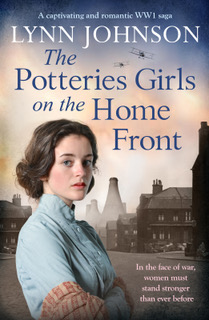
SUNDAY SCENE: LYNN JOHNSON ON HER FAVOURITE SCENE FROM THE POTTERIES GIRLS ON THE HOME FRONT

Would you have been ready to leave home to become a live-in servant in a posh country house – when you were twelve? That’s what happens to Potteries Girl, Betty Dean. She knows her life will be very different, but is she ready for the loneliness of being in two worlds and not being settled in either? In the following extract, Betty is about to leave home and all her sister, Mary-Ellen is worried about is taking over the housework.


‘I’m glad I’m going.’ Betty jumped to her feet. ‘You’ll all have to do some things for yerselves and about time too. I’ll come back to see yer on me day off each month, like I said.’ She glared at Mary-Ellen. ‘But I’ll not be coming back to do the washing, ironing, cooking or anything else, I’ll tell yer that for nowt.’

There was silence round the table. The faces looking up at her brought home the enormity of what was happening. Betty had to take a stand right from the outset.

Her annoyance soon fizzled out. It was beginning to hit her – from this point onwards, she wouldn’t know what her brothers and sisters were up to, whether someone was ill, happy, or sad. All she would have would be letters, if they could be bothered to send them. They would live in different worlds, with different things to talk about, and she would be a train ride away. She would come to know less and less about her own family, be the odd one out, living alone. She had wanted space to be herself in their crowded home, but it came with a heavy cost. When she put it like that, it sounded lonelier than she had ever imagined.

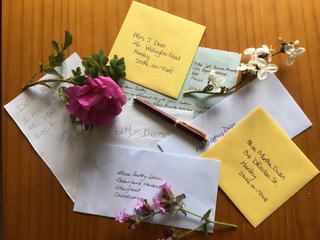
It would be up to her to make sure she didn’t lose touch. She would insist everyone, even little Tommy, with a bit of help, write her a letter each month. That way she could begin to bear it, she hoped.


It’s only when you are parted from the family and friends that you realise how much you have taken them for granted over the years – a hard lesson to learn at so young an age. And it’s difficult to think about others when you are hurting too.


That night, she lay in bed, curled up with Mary-Ellen and Lily, eyes wide open, unable to sleep.

‘Betty?’

The hiss of a voice came from the doorway. A young voice. Tommy.

Betty sat up, careful not to bump against Mary-Ellen ‘Are you all right, Tommy?’

He let himself into the room. ‘I conner sleep knowing as you’ll be gone soon. Conner get it out of me mind.’

‘I won’t be far away. And I’ll come back regular. I promise.’

‘Why d’yer have to go?’

‘We need the money and now we’re all growing up, there’s no room for all of us here.’

‘I’m going ter miss yer.’

Betty put her arms around him. ‘And I’ll miss you so much. You know I will.’

‘Can I stay in here? Just for tonight.’

‘There’s no room, Tommy,’ muttered Lily.

‘Course there is, just for tonight, said Betty, on the verge of tears.

‘Yes, but you’ll have ter get up early.’

‘Dunner care.’

As he huddled against her, Betty put her arms around her brother and sisters. Would this be the way of it all from now on? Always saying goodbye. She had to be strong. To think for herself. To be herself.


Staying in touch – is at the heart of Betty’s story.


Website: www.lynnjohnsonauthor.com