Brooklands Concorde Technical Flight by Penny Gerrard


What to buy for the husband who has everything? A Concorde Technical Flight at the famous Brooklands Race Track and centre of British aviation fitted the bill and for only £30 each.

Our experience started in the nostalgic club house – unchanged since Brooklands was opened by Hugh Locke-King at in Surrey in 1907 as a banked oval racetrack.   It thrived for 30 years and I remember tales of my father riding the circuit in the 1930s on his Velocette motorcycle.

The original Clubhouse at Brooklands – now a listed building

Vic, one of the many passionate  volunteers who keep Brooklands going today, gave us a fascinating talk about the Brookland’s history.  He spoke about its life as a race track – now only discernable in the sad remnants of the track which appear in small sections on the perimeter – often covered by weeds.


Then he described its history as one of the most significant places in the development of British Aviation.  This saw 18600 planes built there through the years when aviation progressed from planes which looked like bicycles with rudimentary fabric wings to Concorde and the Harrier Jump Jet.

Harrier Jump Jet

We were led to the glossy white Concorde which stands in pride of place on the tarmac – looking as if it could take off at any minute.   The last Concorde flew in 2003 having become economically unviable.   We climbed the steps and walked along the cabin which, in comparison with the wide bodied jets most of us are familiar with these days, rather resembles a toothpaste tube!   Once in our seats our imaginary flight began – the seats vibrating and the Mach indicators climbing to more than twice the speed of sound while the captain talked us through the flight.   The experience went a way towards showing us what an adventure it would have been to set off, knowing that you would be in New York in a matter of three hours or so.

Concorde

The highlight was being taken the cockpit where I chose the Captain’s seat, relegating the birthday boy to the status of co-pilot and we had fun moving what our guide called the “tiller” and generally marvelling at how anyone could ever get their heads round the mass of instruments – still analogue in those days of course.

 Concorde’s Cockpit

Once we had mastered the intricacies of how to fly the thing, we visited the flight simulator used to train Concorde pilots – really something.    Now the simulator does not move, but the display through the windscreen does such a good job of moving that you would swear you were flying, climbing, banking, coming in to land.  A marvellous experience and a great birthday present.

The Concorde Simulator

Our main visit complete, we had the afternoon to visit the Art Deco Café for lunch and then explore what else was on offer at Brooklands.  The highlights?   The first was visiting the Sultan of Oman’s VC 10 with its wealth of mustard coloured Dralon (even the TV was upholstered in it).   That certainly took us back to the early days of our married life when you were nobody unless you had a Dralon “settee”.


 The Sultan of Oman’s vintage VC 10

The main museum was set up as an aircraft factory.   I clocked in and out for the first time in my life, constructed a model aeroplane, and looked into a Wellington Bomber (particularly poignant as it gave me an insight into what it was like for my father lying in the belly of a Stirling Bomber as a Bomb Aimer in the war).

Bomb Aimer area of Wellington Bomber

And lastly, we had the treat of climbing into the cockpit of the Harrier Jump Jet.    Being instructed not to press any buttons created the illusion that we were moments from firing the ejector seat and being shot through the roof.      We enjoyed a fascinating time with the Harrier volunteer – endlessly knowledgeable about aviation and able to bring things to life brilliantly.

Francis Gerrard in the Harrier Cockpit

We recommend a visit to Brooklands an excellent place for a fascinating day out -see www.brooklandsmuseum.com

Images with the permission of P. Gerrard


Stranger than fiction: Q&A with ‘bio-fiction’ creator, Giuseppe Cafiero

The acclaimed Italian author Giuseppe Cafiero has created a new literary genre that weaves traditional fiction with real-life biography. In this exclusive interview, he tells Frost Magazine what inspired his unique style of ‘bio-fiction’.

Frost Magazine (FM): Your novel, Gustave Flaubert: The Ambiguity of Imagination, describes in detail the life and writing of the famous 19th century author. What is the importance and lasting fascination of Flaubert?

Giuseppe Cafiero (GC): Flaubert’s attention to writing. He was very careful in choosing words. He was very scrupulous in the composition of the sentences. He was very much looking forward to the balance of dialogues.

FM: You are clearly a fan of Flaubert’s writing. Which of your novels or stories would you recommend as the best to read first, and why?

GC: An incomplete book: Bouvard and Pecuchet. This is the book that inspired me to write Gustave Flaubert: The Ambiguity Of Imagination.

FM: Your work is part of the surreal genres and metafictions. Why do you find these genres as satisfying as an author? What can the reader take from these genres that are not offered by other types of writing?

GC: Because it’s suggestive to talk about ambiguity. Because it is very suggestive to speak in a surreal way about the ambiguity of a writer. It’s necessary to engage the reader in different readings by looking at an author under another aspect that intrigues with the surreal

FM: You are the inventor of a literary genre that you have dubbed ‘bio-fiction’. What do you mean by this term and how does it differ from biography or fiction?

GC: My literary genre is neither fiction nor biography. I try to tell a story about the life of a writer in which a surreal element intervenes that modifies reality. This is only an interpretative ambiguity of events that changes what was considered an absolute truth

FM: In your novel, Flaubert presents himself as a rather flawed individual. Do you think that his sexual and mental obsessions were an essential factor in allowing him to write the great works of literature for which he is famous?

GC: Undoubtedly. It is precisely these obsessions that have made Flaubert a particular writer. Without these pathological obsessions Flaubert would have been perhaps an insignificant writer

FM: Which authors have had more influence on your writing and why?

GC: My writing was influenced very much by Jorge Luis Borges, because if Borges has viewed the world and influenced his writings through the use of duplicity, I have believed that ambiguity would be deciphering in the world in a different but also very suggestive way

FM: How do you decide which historical figures to give biofocus treatment? Are there any character traits you are looking for that make an ideal subject?

GC: There are some characters (writers, painters, musicians) that interest me a lot. Certainly these characters have had adventures or have had friends or loves that lend themselves very well to the game of ambiguity

FM: What other authors do you think to give to the “bio-fiction” treatment in the future and why?

GC: The Portuguese poet Mario de Sa Carneiro for the ambiguity of his suicide. Virginia Woolf for the ambiguity of her lesbian love. James Joyce for the ambiguity of the epiphanies. Edgar Allan Poe for the ambiguity of his death for alcoholism.

FM: Your novels address the main theme of “ambiguity”. Why does this concept fascinate you and how does this idea link to what we can hope to understand as “truth” from literature and history?

GC: The theme of ambiguity fascinates me because it’s possible to look at the life and works of an artist in a different way through a keyhole that deforms things just because this keyhole is ambiguity. It is an ambiguity that can show another truth.

Gustave Flaubert: The Ambiguity Of Imagination and Mário De Sá-Carneiro: The Ambiguity Of A Suicide, both by Giuseppe Cafiero, are out now.


Two great books just launched. Milly Adams reviews them.

Ladies first on this occasion, as Frost Magazine has a look at two novels just launched.

Homecoming by Iona Carroll is the third in the series about Oisin Kelly, but is quite definitely a stand alone story too, so don’t be put off if you haven’t read the first two.

It is written with lyricism – about memories I suppose. How they sneak into our minds and lurk ready to ambush us. Memories we have to address, comes to terms with.

Oisin Kelly has embedded himself in the outback Queensland town of Kilgoolga when a Vietnam veteran enters his life. Both men suffer from post traumatic stress, and it asserts itself  sometimes similarly, sometimes not. As the memories surface, always carried on a lyrical wave or writing, Oisin Kelly begins to wonder, or so I though, what is the point of life? But more – where is his true home? And is love or submission to darkness the answer to the path he must follow.

Evocative lyrical writing, creating an environment you can smell and see, and with an eye to the traditional structure of a novel. With author Iona Carroll we feel we are in safe hands and tackling a subject that Frost Magazine supports, in its association withthe charity  Words for the Wounded.

Homecoming by Iona Carroll.

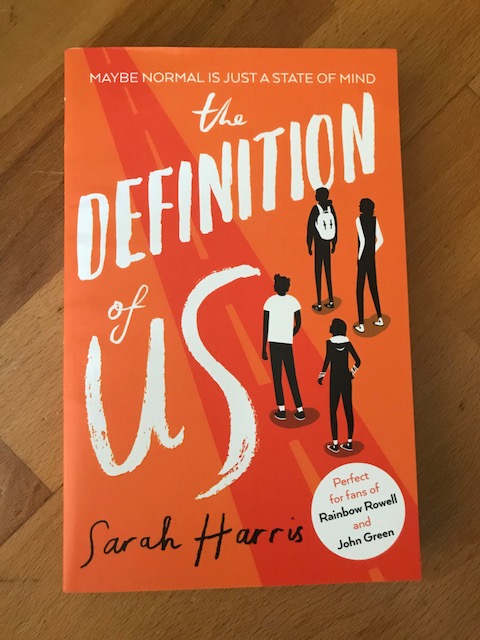
Launching also is The Parth Path by Oliver Eade

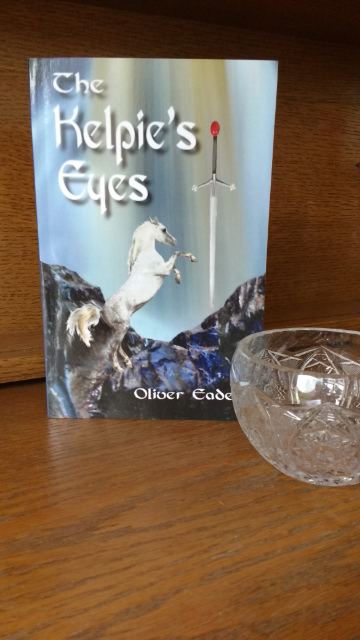
Oliver Eade won the Words for the Wounded Georgina Hawtrey-Woore Award Fiction for Yong Adults category with The Kelpie’s Eyes, and here is his latest novel for young adults.

Set in a post-apocalyptic Scotland dominated by women, Peter escapes from a mancamp, hoping to reach the island with Rea, a beautiful clonie. The dastardly truth is…  Should I tell you?

Oh, well, I’ll spill just a few beans, for you need to read The Part Path in all its glory to find out what really happens. Is this journey something that Peter and Rea  have really decided upon,  or are they being manipulated? If so, by whom?  Who to trust in other words? A real teaser.

As with The Kelpie’s Eyes, this has a firm plot, an imaginative grasp of concepts which I would struggle to conjure up. Clever, clever. Written with pace and verve.

The Parth Path by Oliver Eade

5 Reasons Why You Should Begin Saving After Landing a Job

When you land your first job out of college, it’s tempting to want to live large. Especially if you’re living with family or have a few roommates, you may have some funds to play around with. Or save. 

But even though the draw is strong to have fun while you’re young, it’s much better to start saving. Here are five reasons why you should save instead of spend after landing a new job. 

  1. Time goes faster than you think

What does every older person tell you? It’s like a broken record that plays on repeat: The years go by fast. Before you know it, you may be approaching fifty without a decent savings or retirement account. And what do you do then? People who find themselves in that position may end up working for the rest of their lives. 

Even if it’s five dollars a week, get in the habit of saving while you’re young. As you get older and make more money, you can save more. It really adds up. And since time goes faster than we’d like, before you know it, you’ll have a good chunk of change in the bank. 

  1. Interest adds up over time

Let’s say you save five dollars a week for five years. With 1.5 percent interest, you can make $20 on the $1,300 saved. That may not sound like a lot, but remember that it increases exponentially as you save more money. Whenever you can stash away $100 per week, you’ll make close to $400 in interest in that same 5-year period. Of course, interest rates can change based on market values and savings options. If you choose a high-yield savings account, you may make a higher percentage. 

  1. Rainy-day expenses are real

Imagine you’re living paycheck-to-paycheck and you get two flat tires. That could easily end up costing $200 that you don’t have. What do you do? You need your car and only have one donut (not that you’re supposed to put mileage on those anyway). Without a good safety net, you could get stuck in some pretty precarious situations that aren’t easy to get out of. On the other hand, if you have even a thousand dollars in savings, you can get back on the road in no time. 

  1. You can avoid a lifetime of debt

If you start your career by spending every penny you get, you’re more likely to rely on credit cards and loans to get out of sticky situations. Once you do this, you’re setting a pattern that can hold you down for the rest of your life. Remember the example of how much you can earn through interest? Well, it works overtime in reverse. Interest rates on loans and credit cards are much higher than they are on savings accounts. You could end up paying 25 percent or more every time you use your credit card. And if you don’t have the money to pay it off, you’ll pay even more over time. 

  1. You may want to make a big purchase

From the moment you start your new job, it’s time to start thinking like an adult. This means that you may want to consider buying a house or condo. At the very least, you’ll probably want a decent car. Some of the pricey yet still great European vehicles may catch your eye. Or you may opt for a luxury American-made model. Either way, it’s best if you can make sizable down payments to avoid getting strapped down with a massive amount of debt. 

Saving is never the “fun” option, but ironically, having a decent savings account can help you get more out of your life. It may not sound like fun to work instead of going on vacation, but making the smart decision can save you stress in the long run. Start saving now and enjoy peace of mind for years to come. 


The Golden Fleece by Shelagh Mazey. A book review by Milly Adams

The Golden Fleece, by Shelagh Mazey – the Fourth novel in the Heart of Stone Saga. 

Frost Magazine has enjoyed Shelagh Mazey’s first three historical novels in the Heart of Stone Saga, and the first, Brandy Row, was admired by the judges of the Words for the Wounded Indie Author Award.

And here is the  fourth in the series. Such an evocative read, which hauls the reader straight in with a vicious murder that later enmeshes the lives of those who live on the Alvington Estate in the vicious criminal underworld. As with a good saga, it leads to an innocent man being imprisoned. So, will he, won’t he obtain justice?

Ah…

Let us tell you a little more: Billy Riddick is a stable boy who was at the Poor House until he found employment at Alvington Manor. When Lucy Warren, the love of his life from Home Farm, marries the arrogant Ashleigh Seymour, Billy is devastated and moves away to Wincanton. He finds work and a new home at Hatherleigh Farm, the original site of Wincanton Races. How interesting that is. However, his nemesis, Ashleigh Seymour turns up at the racecourse and Billy inadvertently becomes embroiled in his unsavoury drinking and gambling lifestyle.

Lucy begins to regret her marriage, but when Ashleigh’s gambling debts threaten to bring about his downfall, the good hearted Billy tries to help him. This leads to disturbingconsequences.

At the heart of all this is the continuing  life at Alvington Manor with its pulsing love stories, plus a few tragedies set amongst the local traditions, celebrations and customs. There are murders and weddings, a voyage to Australia and journeys to Europe, as this epic family saga continues in the way we have become used to.

Author Shelagh Mazey is based in the West Country and her knowledge of local history makes this series fascinating and illuminating. Written with pace and verve, it works. Enjoy just as much as we at Frost Magazine did.

Hopefully there will be a fifth?

The Golden Fleece   by Shelagh Mazey, available on Amazon.co.uk

A stand alone title which follows on from the earlier trilogy: ‘Brandy Row’ (9781780882451),’Dawn To Deadly Nightshade’ (9781783060238) and ‘Legacy of Van Diemen’s Land’ (9781784623067).


A Day in the Life of Sarah Roux – author of A Painted Samovar

After my husband and son have left the house, the day is mine and is generally full of books and words; also neglected housework and uncooked recipes.

Somehow, I have negotiated for myself ownership of the spare room, which now houses my desk and shelves of books, papers and research. Large amounts of the day are spent there, with varying degrees of output. At the moment, I’m editing my second novel (set in Regency/modern day  times) A painful and protracted undertaking, when it’s all too much, I remind myself that a historical novelist is perfectly justified in spending a bit of time reading and browsing the internet for future research…especially if that means halting the edit at say, page 197, having realised I need to rewrite five of the existing seven paragraphs.


I’m compelled to write about people and events that have been lost or forgotten over time. When I discovered my maternal grandfather was one of four thousand Jewish immigrants expelled to Russia in 1917, I was inspired to write A Painted Samovar to memoralise this little-known episode. Of course, it is a work of fiction; my grandfather never spoke a word about his experiences, but it’s important to me that the history should not be forgotten.

I do have days away from my desk and on those I will most likely be doing something for our community library of which I am a passionate supporter, volunteer and trustee. I love pretty much all aspects of my various roles in the library – whether I’m on shift and serving customers, making a list of new books to purchase for the library shelves, constructing a themed book display or doing some committee work. I also love the free biscuits.


In the library, I run The Chalfont Writers’ Hub, a social gathering of local writers who meet once a month for encouragement. We are generally either moaning about rejections and writer’s block or celebrating our successes. In 2016, we were proud to produce an anthology of short fiction stories (St Peter’s Shorts) and have sold over 100 copies so far – all proceeds to the library.

After a day at my desk or in the library, of course I settle down with a book late at night, always hoping that somewhere, somebody else is settling down with mine. I am an Indie Author but I can always dream…

A Painted Samovar by Sarah Roux: https://www.amazon.co.uk/Painted-Samovar-Sarah-Roux/dp/1999795709/ref=sr_1_1?ie=UTF8&qid=1528377700&sr=8-1&keywords=A+painted+samovar+by+sarah+roux

A Painted Samovar by Sarah Roux gained 2nd place in The WforW’s Georgina Hawtrey-Woore Award

www.wordsforthewounded.co.uk


Frost’s Favourite… MASCARA

The segment that brings you the lowdown on what we’re absolutely LOVING each week!

What’s wonderful this week?

Oh My How High mascara by butter LONDON


Prove it…

OK, so hear us out. Mascara can be your best friend or your worst enemy – we rarely find that it’s the ‘middle ground mate’. We can confirm, that Butter’s OMHH mazzy will be the yin to your yang, the Holly to your Fern and the Beyoncé of your make up bag (sorry ‘chelle and Kel’).

Its thick bristles helps to make your lashes really dense. Perfect if you’re a volume seeker.

The piece de resistance of this beauty though, is absolutely the length it brings to your flutterers. The curved wand can really connect with your lashes and helps to dramatically pull them up and the traditional thickness of them collects enough of the product to apply a generous coating in just a few sweeps.

Like any mascara, best results come once lashes are curled and primed however if you don’t have time for these steps, you’ll still get great results from OMHH only.

Hook me up!

Purchase this beauty essential here: https://www.feelunique.com/brands/butter-london/Eyes

NOTE: Frost’s Favourite is not influenced by any sponsor or gifting


LK Bennett branches into fragrance

London based LK Bennett, mostly known for its clothes and beautiful handbags, has decided to take a slice of the fragrance market with the launch of Signature. At Frost, we can’t get enough of its fresh, citrus scent and stunning art-deco inspired glass bottle, dressed with the iconic LK Bennett branding.

Unlike some of our favourite perfumes, Signature’s distinct tones will be noticeable long after application and everything about this product screams luxury. If you buy just a 30ml bottle, you’re getting that luxury at a fraction of the price too!

Scents apparently include ‘hypnotic’ top notes of citrus, pepper and rhubarb. Heart notes of rose, jasmine and ylang ylang add a floral flavour, with base notes of warm woods, dry amber, musk and vetiver.

Signature is available in three sizes (30ml – £35, 50ml – £49 and 100ml – £69 and is available to buy on www.lkbennett.com