
Currently in the UK there are around 13 million women who are in the peri or menopausal stages of their life. That’s around a third of the entire UK female population.[1] But, this significant life change, which is the consequence of huge hormonal shifts, often makes itself very known. In fact, there are more than 30 recognised symptoms of menopause and three in four women will experience symptoms.[2]
But, while there are several symptoms such as hot flushes, anxiety, mood swings and sleep disruptions which are commonly known, there are in fact, many other, often debilitating symptoms, which can be caused by menopause.
Women’s health specialist GP Dr Janine David, advisor to Berkeley Health says: “With October marking World Menopause Awareness Month, there’s no time like now to increase awareness around this key life change. Menopause, marked as the time when there have been no periods for 12 consecutive months and no other biological or physiological cause can be identified, tends to occur between the ages of 45 and 55. Perimenopause, the period leading up to menopause, is when you have symptoms of menopause but your periods have not necessarily stopped. Perimenopause can go on for several years, as can the symptoms of perimenopause.”[3]
In other research, more than a third of UK women admitted that menopause affected their work life while 36% said that symptoms impacted their social life. Plus, a high 42% said their menopause symptoms were worse or much worse than they suspected.[4]
Explaining the hormonal shifts during menopause, Dr Gill Jenkins says: “Oestrogen is a hormone which will have been present in a woman’s life for the entirety of her reproductive years, but it starts to decline pretty rapidly during perimenopause, which usually fuels the menopausal symptoms.
But menopause does not have to be a difficult stage of a woman’s life. It’s all about good symptom management and self-awareness to help make it a fulfilling and satisfying time.
Dr Janine David continues: “To empower women and allow them to feel more in control of their health, Berkeley Health – the smart brains behind clinically backed self-care medical device testing solutions – has released a range of at-home tests which offer answers in minutes. This means women can better understand what’s driving their symptoms and discover if they are in fact menopausal. The Berkeley Health tests are all accredited by GenM too which means they are menopause friendly, trusted by retailers and they meet the MTick criteria on the grounds that the products are backed by authorised health claims under the medical device law.”
The Berkeley Health range of self-care tests for women going through the menopause include:
- Berkeley Health Menopause FSH
- Berkeley Health Vaginal PH
- Berkeley Health Urinary Tract Infection
- Berkeley Health Thyroid TSH
- Berkeley Health Vitamin D
50% of women don’t seek medical advice about their menopausal symptoms
A high 50% of women aged 45 to 65 who have experienced the menopause in the past 10 years, had not consulted a healthcare professional about their menopause symptoms[5].
Dr Gill Jenkins adds: “This could indicate that women are unsure about what’s happening in their body or perhaps they’re unsure if help is even available. Although the Berkeley Health tests are not a replacement for medical advice, they can give women information to take to their GP or specialist. It allows them to advocate for their own health, rather than waiting years for symptoms to be recognised, whether they’re cause by menopause or not.”
The Berkeley Health Menopause FSH is the main menopause test offered by Berkeley Health.
Dr Janine David explains: “If you’re beginning to experience symptoms related to menopause such as a lack of menstrual cycles, hot flashes, sleep irregularities and obvious mood changes, this test is a great way to gain an understanding as to whether you’re entering menopause.
“Essentially, this simple urine test helps to identify levels of Follicle Stimulating Hormone (FSH). Menopause, which is the consequence of the end of ovary follicle lifecycle, leads to an increase of FSH, with values less than 20 mUl/mL going up to approximately 80 mUl/mL.”[6]
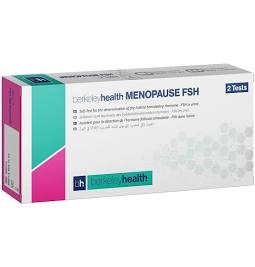
If the Berkeley Health Menopause FSH test indicates an increased FSH level, the onset of menopause is likely to have started.
The lesser-known signs of menopause
The menopause is more than just hot flushes and as a result brings with it so many other, often unknown, symptoms. These include:
- A change in the vaginal pH: Vaginal pH is a measure of how acidic or alkaline the vaginal environment is. An acidic vaginal pH helps keep harmful bacteria, fungi and infections (such as UTIs or bacterial vaginosis) at bay.
A healthy vagina typically sits within the acidic range of 3.8 to 4.5 but hormonal shifts during menopause can cause this pH to change.
A 2020 study of 173 women found that a vaginal pH greater than 4.5 had an 84.9% sensitivity for diagnosing menopause.[7]
This change in the vaginal pH can lead to problems, for example, an increased risk of infection which can lead to symptoms such as itching, a strong odour and uncomfortable discharge.
Explaining why menopause can lead to change in pH, Dr Gill Jenkins explains: “During the reproductive years, oestrogen supports the vaginal lining and encourages the growth of Lactobacillus bacteria. These bacteria produce lactic acid, which keeps the vaginal environment acidic, between around 3.8 to 4.5. But, during menopause, oestrogen levels drop and vaginal cells can thin. There’s less lactic acid production and the acidity of the vagina can weaken, which can cause the pH to rise, often into the 5.0 to 7.5 range, which is more alkaline.”
Testing the vaginal pH can be an indicator of menopausal status. The Berkeley Health Vaginal PH test can identify any pH change; it’s an easy vaginal swab test which can be done in the privacy of home.
- Increased risk of Urinary Tract Infections (UTIs): UTI symptoms are common for perimenopausal and menopausal women to experience even without having an actual infection.
Explaining why, Dr Gill Jenkins says: “The sharp decline in oestrogen levels during and after menopause can cause thinning and reduced elasticity of the vaginal and urethral tissues. This makes it easier for bacteria to enter and cause infection. However, many UTI symptoms, such as burning, urgency, pain with urination and pelvic discomfort, may not indicate a UTI at all as these symptoms are often due to the decline in oestrogen.”
As well as this, the decline of oestrogen raises vaginal pH and reduces Lactobacillus, which normally protect the urinary tract, so without this, women may experience dryness, irritation, and discomfort without any infection present[8].
A test, such as the Berkeley Health Urinary Tract Infection test helps to identify whether your uncomfortable symptoms are an infection or a sign of menopause.
Dr Gill Jenkins adds: “This at-home test means women can be in the know and on top of their health. No matter what’s causing their symptoms, they are at least armed with knowledge, which they can bring forward to their GP.”

- Vitamin D deficiency risk: Vitamin D deficiency becomes more common after menopause as oestrogen, which declines during menopause, normally helps the body metabolise vitamin D.
But a vitamin D deficiency can cause problems, particularly with bones. Research has even confirmed lower vitamin D levels in postmenopausal women and a strong association with reduced bone mineral density[9].
The Berkeley Health Vitamin D test can identify a vitamin D deficiency if present.
Dr Gill Jenkins says: “Low vitamin D increases the risk of osteoporosis, fractures, muscle weakness and low mood, so it’s vital to know if you’re deficient. Some of the symptoms are common for menopausal women anyway, so a test can clarify if there’s a further problem.”
- A higher chance of thyroid disorders: Your thyroid is a small, butterfly shaped gland found in the neck. It’s responsible for producing and releasing certain hormones, predominantly T3 and T4, which control how fast or slow your body uses energy.
Dr Janine David says: “This affects your metabolism, weight, mood and even your body temperature. Problems can arise when your thyroid stops working as it should.”
Dr Gill Jenkins adds to this, saying: “TSH (Thyroid Stimulating Hormone) is made by your brain and it acts pretty much like a thermostat signal. If your thyroid is underactive and isn’t making enough hormones (known as hypothyroidism), your brain sends out more TSH. If your thyroid is overactive and making too much hormone (known as hyperthyroidism), your brain sends out less TSH to slow it down.”
A high TSH level equals hypothyroidism, while a low TSH level equals hyperthyroidism.
Ageing and hormonal shifts, such as those seen in menopause, can increase the risk of thyroid issues, especially hypothyroidism.
So much so, that research has found that thyroid disorders are significantly more coming in perimenopausal and postmenopausal women compared with premenopausal women.[10]
The Berkeley Health Thyroid TSH tests can test for hypothyroidism and give women an indication of whether they may be entering menopause.
Dr Janine David adds: “Many of the symptoms of hypothyroidism can be frustrating and many overlap with symptoms of peri menopause symptoms such as fatigue, weight gain, mood changes and irregular periods. Doing the Berkeley Health Thyroid TSH test is a quick and easy way to test your TSH.”
Last word:
Dr Janine David adds: “Menopause brings with it a vast array of symptoms and many are well known. But there are also lesser-known symptoms, which can be confused with menopause or simply be a standalone health problem.
“The Berkeley Health tests can test various elements of health. From measuring FSH, a rise of which can signal the approach of menopause, to screening for health- related health issues that commonly arise at this stage of life, including thyroid problems and vitamin D deficiency, women can feel empowered as they learn about their health.”
Testing allows women to take action early, so their GP can help them with the relevant diet, supplement or lifestyle changes.
To learn more about Berkeley Health visit: https://www.berkeleyhealth.com/
Note to editors: The following Berkley Health test kits are available at Waitrose.
- Berkeley Health Menopause FSH
- Berkeley Health Vaginal PH
- Berkeley Health Urinary Tract Infection
- Berkeley Health Thyroid TSH
- Berkeley Health Vitamin D