One More Chapter escapes to the Highlands with four new romantic mysteries from Kindle bestselling author Julie Shackman

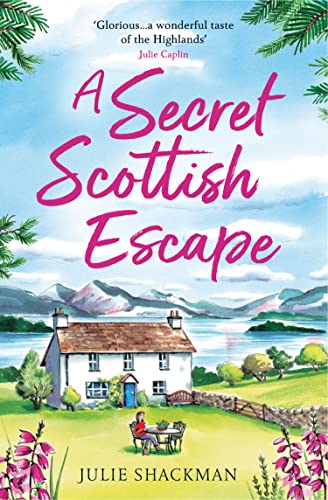
HarperCollins division One More Chapter has acquired four new titles in Julie Shackman’s bestselling Scottish Escapes series. 

Senior commissioning editor Jennie Rothwell acquired World All Language rights from Selwa Anthony at Selwa Anthony Literary Agnecy in a four-book deal, that sees The Bookshop by the Loch publish in Spring 2024.

The first title in the series, A Secret Scottish Escape, published in 2021 and has been a bestselling novel for the division. Collectively the series has now sold over 100k across all formats, with The Cottage in the Highlands having published on 1st December.

The Bookshop by the Loch follows book lover Lexie who is bereft when she discovers that her beloved local bookshop is up for sale. Desperate to save the shop, she takes things into her own hands, but not everyone is happy with her enthusiasm. And when the owner’s nephew Tobias arrives on the scene with some ideas of his own, the two are not happy at the prospect of having to work together…

Jennie Rothwell says: “I absolutely love working with Julie, her writing is uplifting and provides much needed escapism, and I love the balance of romance and mystery that she brings to her readers. I’m incredibly proud of what Julie has achieved in such a short space of time and can’t wait to continue working with her and watching her brand grow as she continues to find new readers.”

Julie Shackman says: “I am thrilled and delighted to be continuing my writing journey with the amazing One More Chapter. They are a first-rate team and it really is just like being part of one big happy family. I can’t wait to bring more romance and mystery to the readers with my Scottish Escapes series!”


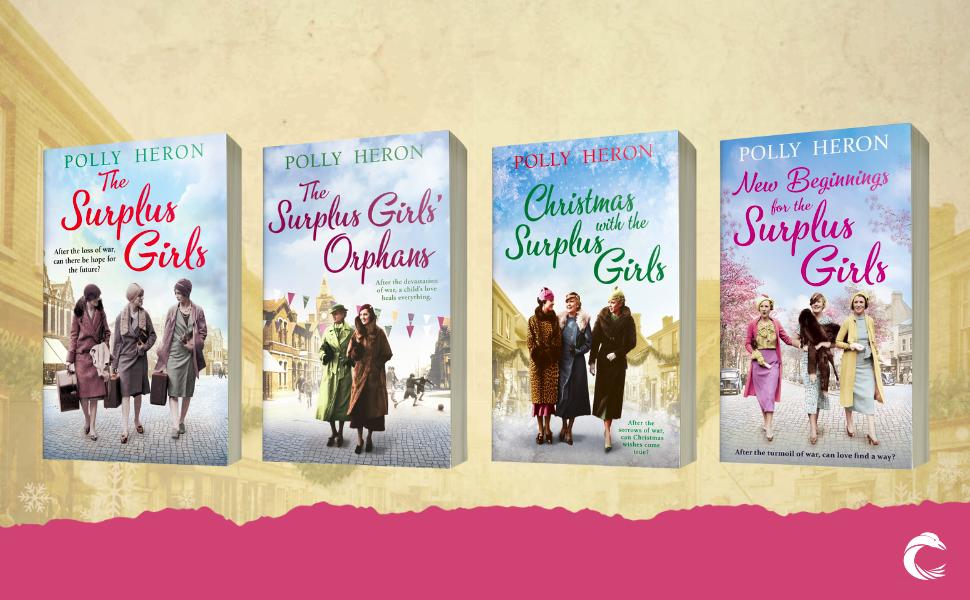
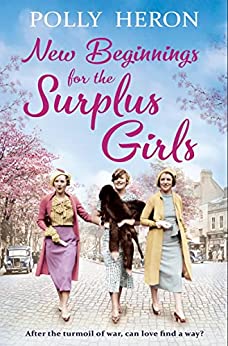
PUBLICATION SPECIAL: NEW BEGINNINGS FOR THE SURPLUS GIRLS BY POLLY HERON

I have loved every Surplus Girls book and New Beginnings is no exception. I was drawn into Jess’s story from the moment she appeared on the page. Her position as a working woman with a responsible job, but absolutely no security of tenure when a man came along, made me really think what pioneers the career girls of the 1920s were. The suffragettes may have won us the vote, but the ability of women to prove themselves at work was just as important, although of course we had to wait another fifty years for the Equal Pay Act and even now do not have true equality in every workplace.

The history behind The Surplus Girls books is expertly and meticulously researched, from the big issues like these to the slang names for particular cakes. Each and every detail sings from the page, which is why you feel you are actually there, sitting on the slightly worn sofas of Wilton Road in a suitably genteel manner, chatting to old friends and new.

This is the book that pulls all the strands of the Hesketh sisters’ stories together into a really satisfying ending. No graduate of their school is forgotten in the final chapters, and Jess’s seemingly impossible dilemma is solved as well. A fabulous read.


The backdrop to the whole series is the place of women in the world of work, so I asked Polly Heron what sort of research went into it in order to create a variety of different employments in such rich detail.


The Surplus Girls series explores the predicament faced by many young women in the aftermath of the Great War. They had grown up expected by society to marry and become housewives and mothers. Then came the war – and a generation of young men perished. Many women lost their sweethearts or fiancés while others, without knowing it, lost the men they would have married had they ever had the chance to meet. This meant that many girls now faced a future in which they would have to provide for themselves, while being regarded as ‘on the shelf’ or ‘old maids’.

The world of work offered women far fewer opportunities than came the way of men. Moreover, a woman doing the same job as a man would typically earn one third less. It was legal to refuse to employ a woman simply because she was a woman and it was considered patriotic to employ a former soldier even if a female candidate would have been more suited to the job. During an interview, an unmarried woman could expect to be grilled about her marriage prospects, because should she marry, the expectation would be that she would leave in order to be a housewife. In plenty of jobs, marriage automatically meant dismissal.

In The Surplus Girls series, I have explored various jobs that would have been open to girls and women in the early 1920s. Each book has a different heroine whom the story centres around, but one of the things that links the books together is that each heroine attends a business school to learn secretarial skills.

I loved delving into the social history of the time and seeking out suitable roles for my characters – ‘suitable’ meaning appropriate to the time, not necessarily the right job for the character personally – as Nancy finds out to her cost in Christmas with the Surplus Girls. In the newly published fourth book, New Beginnings for the Surplus Girls, Jess makes a particularly interesting heroine, as she sees herself as a career woman, not an unfortunate surplus girl. She dreams of creating a successful working life for herself but has to cope with all the disadvantages that women faced at the time.


JANE CABLE’S BOOKS OF THE YEAR 2022


Books of the year are always so hard to choose, aren’t they? Sometimes I really don’t know why I put myself through it, but as an author I do know how good it feels when a book appears on such a list, so here goes.

This year I have two. They are so very different I couldn’t put a piece of paper between them.


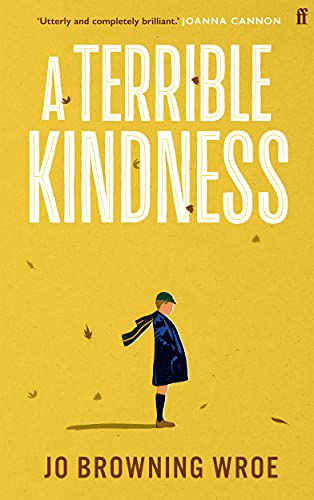
A Terrible Kindness by Jo Browning Wroe

What a stunning book. I was drawn to it because it starts at Aberfan, and which cast a long shadow for any child growing up in South Wales in the 1960s and 70s, and because it wasn’t screaming a genre at me. It intrigued me and I wanted to dive in.

William Lavery is a newly qualified embalmer who volunteers his skills to help in the immediate aftermath of Aberfan. It is a part of disaster recovery we rarely consider and the flavour of the book is quickly revealed as it focuses just a little on the mechanics and a great deal on the emotions. You learn just enough of the nuts and bolts to be drawn into William’s world but perhaps it isn’t for the over-squeamish.

William’s is not a world shaped only by the terrible nightmares and flashbacks born from his experiences working on those children’s bodies and we soon learn his past holds its own mysteries and traumas. Piece by piece they are cleverly revealed, building William into one of the most fascinating fictional characters I have come across in recent years, always on a knife edge between genuine happiness and self-destruction.

It is a remarkable debut, full of clever intricacies and memorable characters, but never so over worked that William’s story is not centre stage. I hesitate to use the phrase ‘must read’, but I think losing yourself in this book would be time well spent.


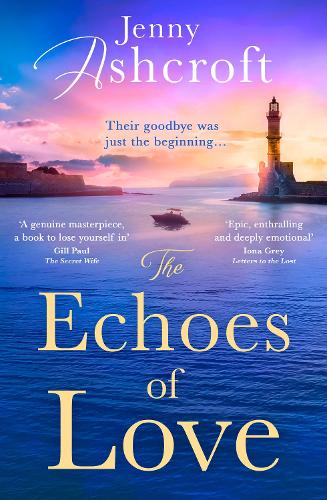
The Echoes of Love by Jenny Ashcroft

Where do I begin with this incredible book? With the sweeping love story at its gripping heart, or the impeccable historical research, or the phenomenal sense of place and time that had me living and breathing Crete in 1936 and during the Second World War? Or shall I just cut to the chase and tell you this will most likely be my book of the year.

In 1936, eighteen year old Eleni Adams returns from England to Crete to spend the summer with her Greek grandfather, something she has done every year since her mother died when she was a baby. But this summer is different; this summer she falls in love with Otto, the German boy staying in the villa next door, and I was as captivated by the breathlessness of young love, the intensity of feeling, as I was by the setting that made me feel as though I was really sitting above that cove near sun-drenched Chania.

But we all know our history, and in 1941 Crete was captured by the Germans. By that time Eleni is an SOE agent based in the country, and rather than leave she goes underground in the bombed out ruins of the port, to help to support the resistance. Meanwhile Otto was one of the first wave of fighters to be parachuted in; a reluctant Nazi, a man against cruelty and reprisals, and of course their paths cross once again.

Also running through the book is the transcript of an interview from 1974, given by the man who, it becomes apparent, betrayed Eleni. A man who knew her well. A man who she trusted.

This book transported me absolutely, haunted my dreams, tore me apart, and put me back together again. An absolute triumph.


Honourable mentions:

The Postcard from Italy – Angela Petch
Hidden in the Mists – Christina Courtenay
Lifesaving for Beginners – Josie Lloyd


CARIADS’ CHOICE: DECEMBER BOOK REVIEWS

Catherine Miller’s The Crash, reviewed by Carol Thomas

It has been a while since I have read a book by Catherine Miller and so it was a treat to pick up The Crash and read it over a weekend. Despite its title and the tragedy that occurs, it is an uplifting read. The author deals with sensitive issues well, her characters are well-drawn and realistic.

The Crash is an emotional story of love, old and new, found in the most expected and unexpected of circumstances. The story is a reminder to seize every moment and enjoy time with those around you. I wanted all of the characters to be happy and to fulfil their dreams, and while this is not entirely possible, the author cleverly ensures the reader is left satisfied as a happy ending is achieved. If you are looking for an emotional page-turner, then I recommend this or any of Catherine Miller’s books.


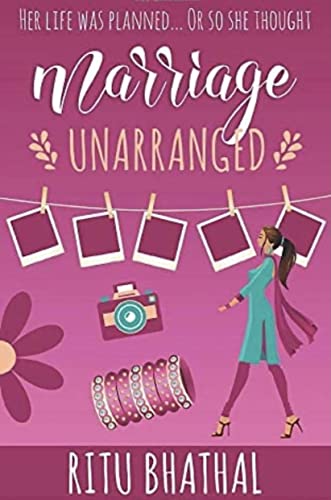
Ritu Bhathal’s Marriage Unarranged, reviewed by Kitty Wilson

This book had so much more to it than a simple love story, it taught me things. It taught me a little more about Sikh culture (the novel is jam-packed with domestic detail that gave it such warmth) and as the characters travel from Birmingham to India, it taught me about their destination in a way that made me want to explore in a lot more depth. The author’s settings were was all so evocative, all my senses were stimulated at the vivid descriptions of sights, sounds, smells, tastes.

Two things really stood out for me, the insightful, wise way that the author wove the family relationships, the love between these characters and the pressures that expectations can bring. I loved the relationships in this book; all were written in a way that you could really relate to and that drew you in.

I truly enjoyed Marriage Unarranged so am very pleased to know there is a second on the way.


Olivia Waite’s The Lady’s Guide to Celestial Mechanics reviewed by Jane Cable

I chose this book because I wanted to read a Regency lesbian romance for research purposes. I have to say the heat level was a little more than I would have liked, but that is a personal opinion and it certainly didn’t spoil my enjoyment of the book as I was able to skim over the passages I found at the same time over-steamy and a little bit tedious.

As well as being a love story, the book revolves around a young astronomer trying to make her way in the scientific world in Regency London. Of course a female undertaking serious academic work is way ahead of her time (Girton College, Cambridge was still more than fifty years away) and Lucy’s path is beset by problems, most of them created by powerful men, and I liked this feminist aspect of this story in particular.


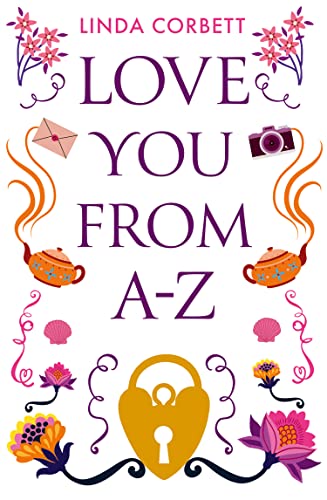
Linda Corbett’s Love You from A-Z reviewed by Natalie Normann

I was in the hospital for three days, and this book was the perfect companion. I loved it from start to finish. The story is entertaining and easy to fall in love with. Jenna is such a strong character, working so hard to overcome a troubled childhood and keeping her dreams realistic. And then Henry comes into her life and Jenna begins to question her life choices. Perhaps she deserves better than what she has settled for.

It’s a well-written story that evolves quietly, but keeps you interested to the end. This also introduced me to a pet I’ve never had or met: guinea pigs. I see now that I have missed out on something special. This book gets full marks from me. I love romance novels like this, and I’m looking forward to the next book from this author.


Whisked Away at Christmas by Mahi Cheshire Review

Whisked Away at Christmas gives you everything you want in a Christmas tale, and a whole lot more you didn’t realise you needed.

Set during a bakery competition in Vienna, The Golden Whisks, Nick and Gina have a history that might get in the way of their ambitions.

With mouth-watering descriptions of cake, a formidable and flawed female protagonist, Gina, and a handsome, yet insecure, chef in Nick, Whisked You Away at Christmas is fun and exciting.

It’s original and whisks (sorry, had to) you away to a world you don’t want to leave. I couldn’t love it more. Christmassy perfection.

Whisked away at Christmas by Mahi Cheshire
A Delicious Christmas Romance

Love. Success. Baking. Some things are all about timing.

Set against a backdrop of glamorous balls and designer fashion in beautiful, fairy-tale-like Vienna, the Golden Whisk competition promises everything for Gina Rajasinghe: it’s her big break, a chance to prove herself and win international recognition in the culinary world. The opulent concert halls and charming Christmas markets are a far cry from her humble café in Hackney, where she’s been working hard to perfect her baking skills. If only she could relax and enjoy herself, instead of worrying about her application, and the one or two tiny lies on there. Such as the professional training she never had.

And then there’s Nick Barradine to worry about, fellow competitor and media darling who seems to have it all: money, success, and his own patisserie cafés that have been heralded on both sides of the Atlantic. Oh, and he used to work with Gina. In fact, they used to be close: Nick helped train Gina at his family’s prestigious Barradine’s café back in London, until she disappeared three years ago without an explanation.

It seems they must learn how to work together again, but more than sparks fly when Nick confronts Gina about their shared past. And now there’s a video of the two of them on social media…

Whisked Away at Christmas is the perfect festive romance for listeners with a sweet tooth: a must-listen for fans of Jasmine Guillory or Jessica Redland.


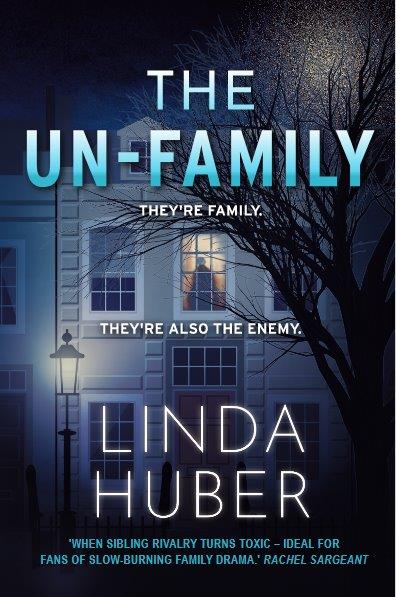
SUNDAY SCENE: LINDA HUBER ON HER FAVOURITE SCENE FROM THE UN-FAMILY

I write psychological suspense, which isn’t well known for being a ‘cheerful’ genre. Although my books have their fair share of tension, I feel it’s important to include some warmer, happy moments too, whether it’s a touch of humour about something a child says, or an incident to do with a character’s relationship, or – as in my new release The Un-Family – their job. I think this helps to make the characters more real. Psychological suspense is basically about bad things happening to people, and readers are much more likely to sympathise with a character and cheer them on if they come across as realistic, rounded people, in spite of the tense plot and darker moments in the books.

In The Un-Family, Holly is a vet, having huge problems with her husband Dylan’s behaviour as well as smaller (she thinks) ones with his family. One day, however, she goes to look round a wildlife centre where she’ll be taking on some work from then on. Adam, the centre head, shows her round:


Holly looked in on a deer with a torn shoulder, a swan with an infected wound on one foot, and a hedgehog, who’d been stuck down a drain and needed fattening up. They walked on round the enclosures, which included two ponds, a home-made badger sett and a row of pens. Holly heaved a happy sigh – this would be such a great place to work.

A gaggle of teenagers on bikes was approaching as they arrived back at the main building, and Adam gave them a wave. ‘The after-school brigade.’

Holly watched as the teenagers dispersed around the buildings. ‘My niece Megan would love this. I’ll suggest she does a stint in the summer holidays.’

‘We always need volunteers. Okay, let’s go back in and sort out when you’ll be here next week. Then I’m heading down to the river to release a duck, now the water level has fallen again. Want to tag along? We’ll release you into the weekend when we’re done.’ He gave her his lop-sided grin.

Good, she’d be home well before Dylan arrived. With him away on his course, tonight would be their only opportunity to spend time with each other all weekend. Holly arranged her first shift for the following Monday and joined Adam in the centre’s green van, the duck in a pet carrier in the back.

He drove the short distance to the river, which was still full, but much less violent now. They walked along the bank to the place the duck had been rescued, and Adam stood back with Fred on his lead while Holly crouched down and opened the pet carrier. What a special moment this was, the first time she’d released a wild creature back into its natural environment.

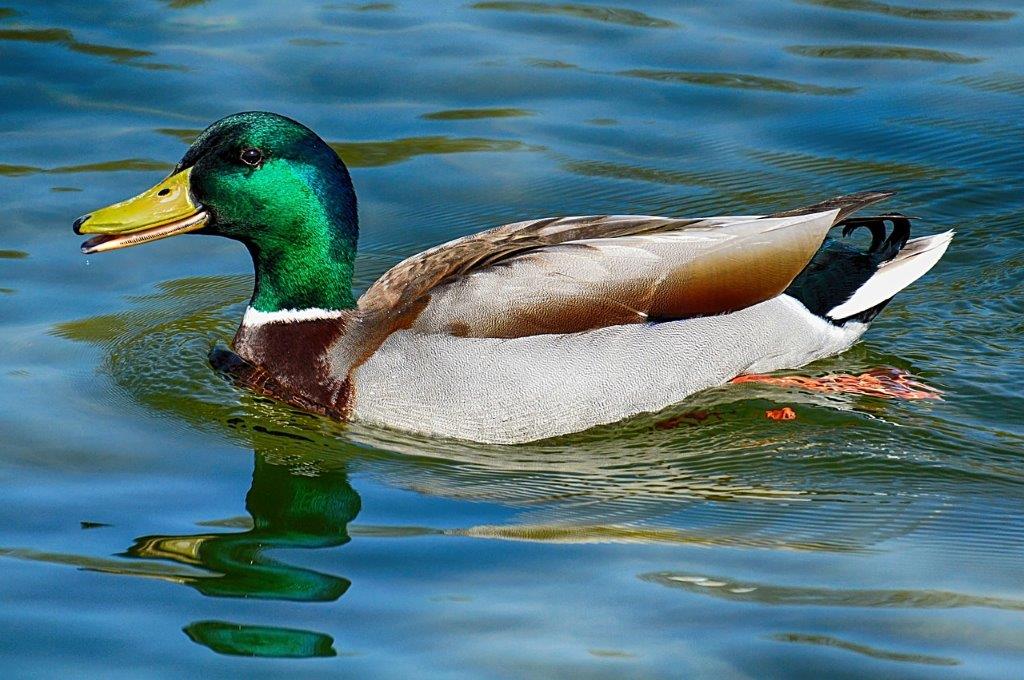
She waited, motionless, then a yellow beak emerged from the carrier, followed by a beady eye, and three seconds’ flurry later, the mallard was swimming down the river, quacking loudly. Warm satisfaction spread through Holly. This was perfect.


Holly’s job turns into her main consolation as the plot develops, and as you can imagine, the wildlife centre provides many such lighter, human moments, and it also provides sanctuary for Holly later in the book. Does everything work out for her and Dylan in the end? You can find out more about The Un-Family on my website www.lindahuber.net


SUNDAY SCENE: SUE MOORCROFT ON CREATING HER FICTIONAL MIDDLEDIP

Imagine a tiny village in Cambridgeshire, England…

It boasts one pub, one shop, one café and a garage. Just outside the boundaries stand a performing arts college and a posh hotel, and the Carlysle Estate and home farm snuggle around the village like arms.

I say ‘imagine’ because that’s what I did.

It began on a family car journey when I had a road atlas open on my lap. I loved the place names I was reading…Crowland…Eye…Whaplode Drove. For fun, I filled the gap between them by creating Middledip village and the nearby town of Bettsbrough. As we passed through the real-life village of Eye, I spotted a garage forecourt full of classic cars and mentally transferred it to Middledip village as MAR Motors, Ratty’s garage. A short, black, peacefully grazing pony in a roadside field became Snobby, Gabe’s cantankerous equine buddy. A few miles on, a stone pub looked just right to be The Three Fishes. A shop with one of everything in its window was perfect for Middledip, too, as was the village hall and playing field I borrowed. So Middledip took shape.

As we waited at traffic lights, I watched two women chatting. One, with long, strawberry blonde hair, looked awkward until children joined the conversation, and then suddenly she relaxed, smiling and laughing. That was when Tess Riddell was born – the first character to arrive in Middledip feeling lost and looking for a new beginning. (See Starting Over.)

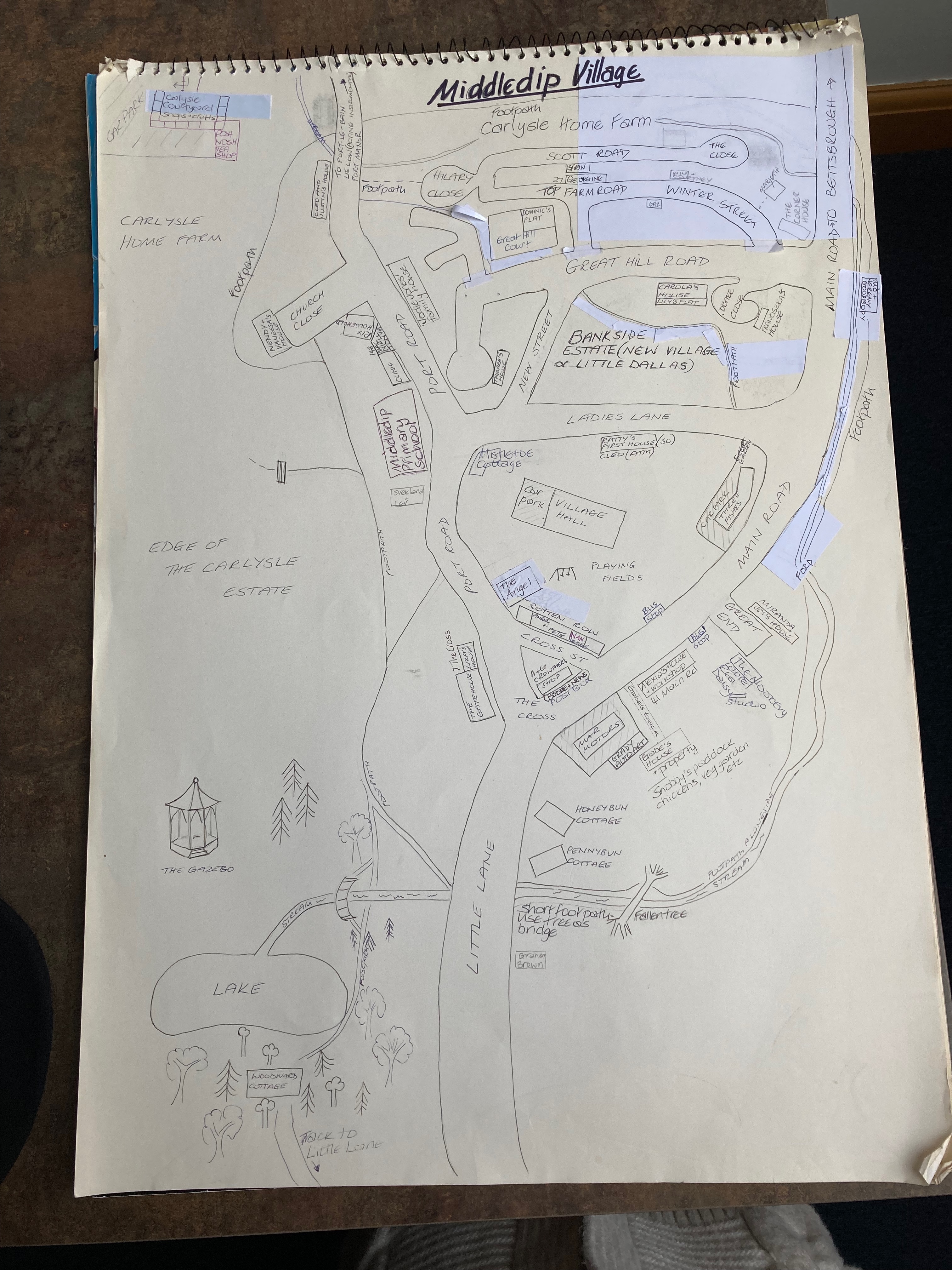
Ten books on, I have a spreadsheet of characters that my brother maintains for me, because, although every visit to Middledip is a standalone story, I let earlier characters pop up so readers can see how they’re doing. There’s a spreadsheet for places, too, but I rarely need to refer to it because I just know that the cottages are stone, and there are also red-brick Victorian houses, like the neglected property that became The Angel Community Café. My hand-drawn map of Middledip (pictured) is probably the one item I’d try to save if my house burned down! A version can be found on my website here and you can click on the markers to discover where characters from various books live.

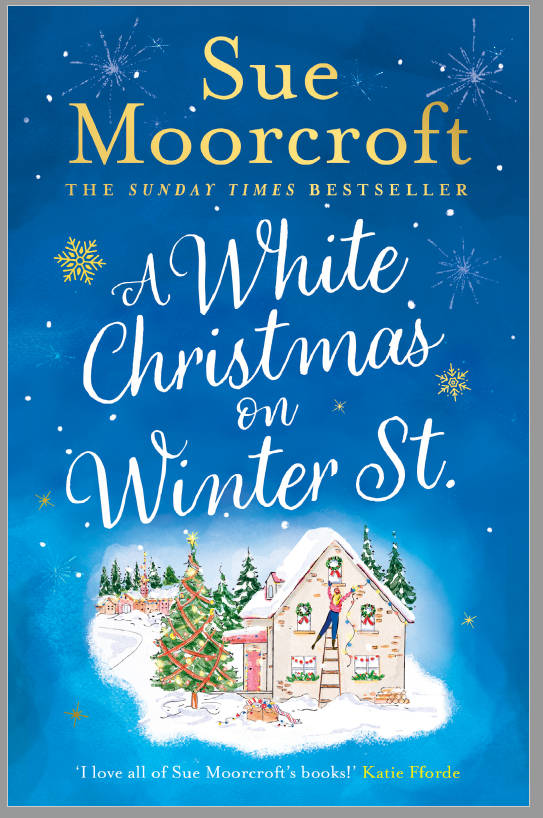
This year’s winter story is A White Christmas on Winter Street. As there was a foster carer in the village, Nan Heather, I wanted to bring back one of the children she had fostered – Sky Terran. I give Sky an overwhelming wish not just to visit the village but to truly be part of it, so let her buy a house on the corner of Winter Street. The Corner House has been neglected for so long that it can scarcely be seen behind an explosion of conifers and shrubs. Sky has the task of restoring it to order as part of the process of sorting out her life.

As ‘make friends’ is written at the top of her wish list, I provide her with every opportunity to find them, not just in Winter Street but via the pub quiz or grabbing a coffee at the community café where Christmas shortbread is in the shape of angels. I’ve been told by readers that reading a Middledip novel is like being in a Christmas movie – but I think it must be more like living in a snow globe because the village certainly sees an inordinate amount of snow and frosty wintry weather!


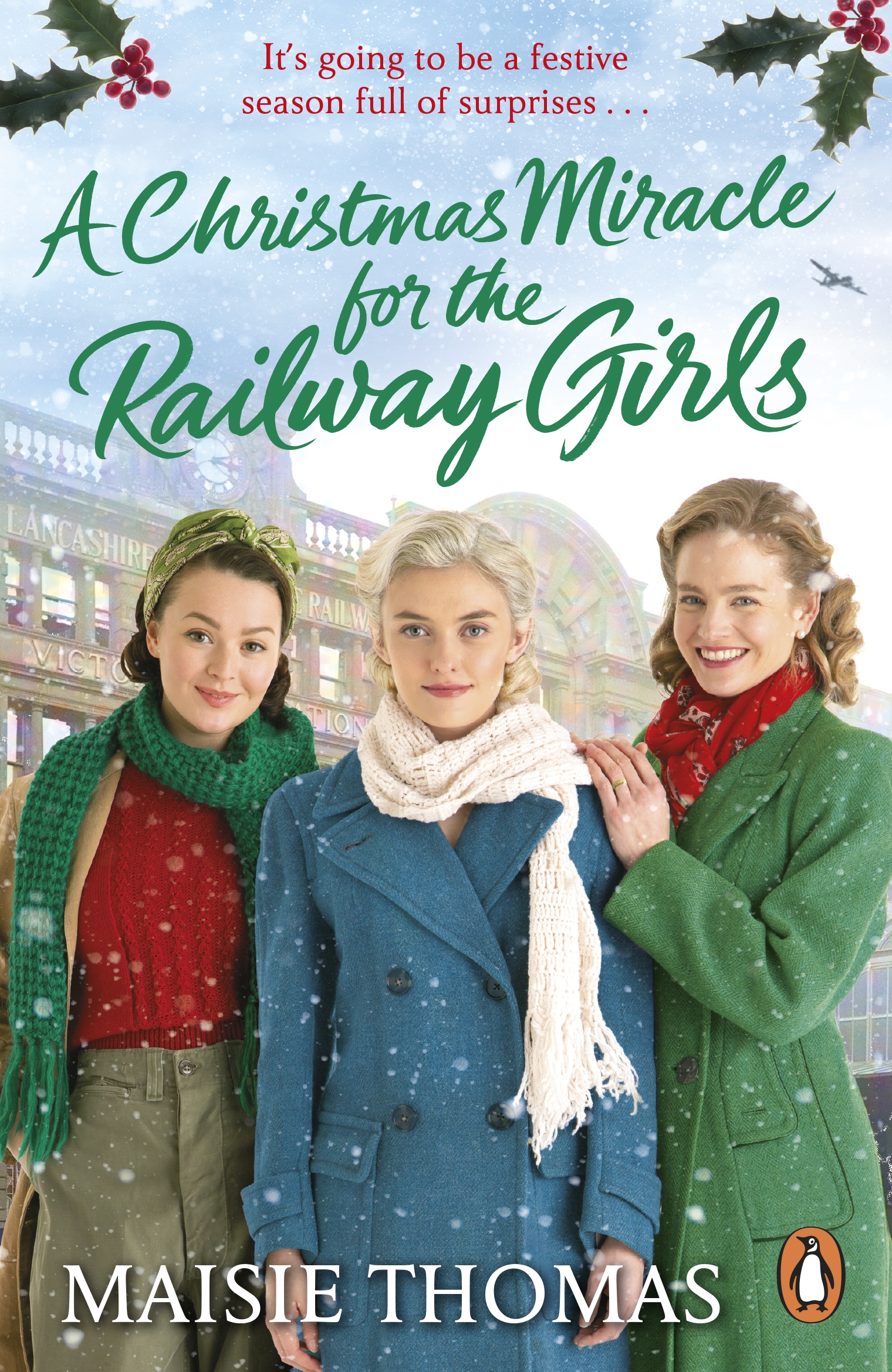
SUNDAY SCENE: MAISIE THOMAS ON HER FAVOURITE SCENE FROM A CHRISTMAS MIRACLE FOR THE RAILWAY GIRLS

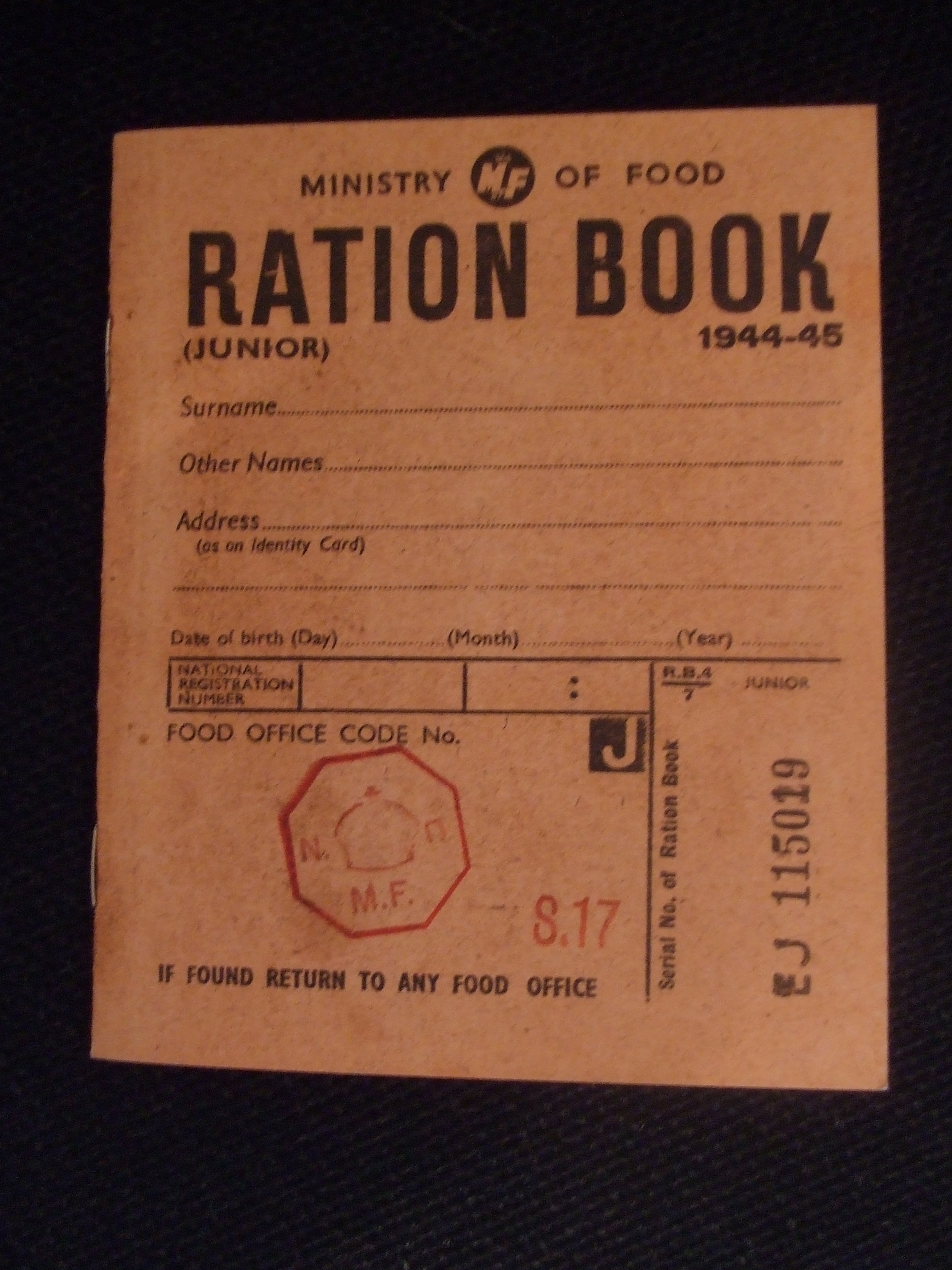
What could be more Christmassy than a children’s party? In the latest book in The Railway Girls saga series, the friends organise a series of parties to make Christmas extra special. By Christmas 1942, following the victory at El-Alamein, there was a new sense of hope in the air, but there were still severe shortages to contend with at home.

At Miss Brown’s suggestion, some ancient curtains had been borne down from the attics and the WVS had cut them up and sewn them into velvet and chintz sashes for the children.

‘Some will have party clothes and others won’t,’ said Miss Brown. ‘This way, everyone gets something special to wear and afterwards it can all go to salvage.’

One set of red velvet curtains had been used to make a Father Christmas suit for Kenneth. One of the WVS ladies produced a curly white wig, which she allowed Cordelia to chop up and turn into a beard. Last year, Kenneth would never have offered to dress up in this way. He had been far too much of a stuffed shirt. It brought home to Cordelia that she wasn’t the only one who had changed.

She couldn’t have been more delighted with how the party went. From the moment she saw the children walk into Darley Court’s grand entrance hall, where their eyes popped open at the sight of the holly-bedecked bannisters, mantelpiece and hearth, and the two huge flags hanging proudly symbolising the friendship of two great nations, she knew the afternoon was going to be everything she’d hoped for.

She had asked if a piano could be provided.

‘But I never expected a baby grand,’ she whispered to Persephone.

Persephone grinned. ‘This is Darley Court, you know. Only the best for our guests.’
Persephone and Alison took turns to belt out popular tunes, ‘Run, Rabbit, Run’ for musical chairs, ‘It’s a Hap-Hap Happy Day’ for pass the parcel and ‘(We’re Gonna Hang Out) The Washing on the Siegfried Line’ for railway stations.

The Americans, bless their generous hearts, had provided heaps of chocolate bars. Not only could every game have first, second and thirds prizes, but there were going to be enough left over for every child to have one to take home.

While hunt the thimble was in progress, to the accompaniment of ‘Bless ’Em All’, Cordelia and her team of helpers put out the sandwiches and fairy cakes in the next room. The food might not be Christmassy, but the room was decorated and one of the land girls was going to play carols while the children tucked in.

Once all the sandwiches and little cakes had been demolished, there was a loud knock on the door.

‘Who’s that?’ asked the children, looking round.

‘Is it Father Christmas?’ asked one tot.

‘No, honey, it’s the US Army,’ announced a handsome young American soldier, walking in, followed by more soldiers, much to the delight of the children – and also, Cordelia noticed, to the delight of the women helping. Cordelia’s heart sank. Yes, the arrival of the soldiers was exciting, but was Kenneth in his guise as Father Christmas going to be upstaged?

Persephone called for silence.

‘In a moment, I’m going to ask all the children to stand up and tuck their chairs under, so we can walk outside in a nice line, because we’ve got a special visitor.’
Cordelia frowned. This wasn’t part of her plan.

Everybody trooped outside and there, coming up the drive, was an American jeep in the back of which was a big chair and sitting on it was –

‘Father Christmas!’ shouted the children, jumping up and down in excitement. ‘It’s Father Christmas.’

A little girl tugged at Cordelia’s hand. ‘Is he the American Father Christmas? Is he different to our Father Christmas?’

But Cordelia was too choked with tears of pride to answer.