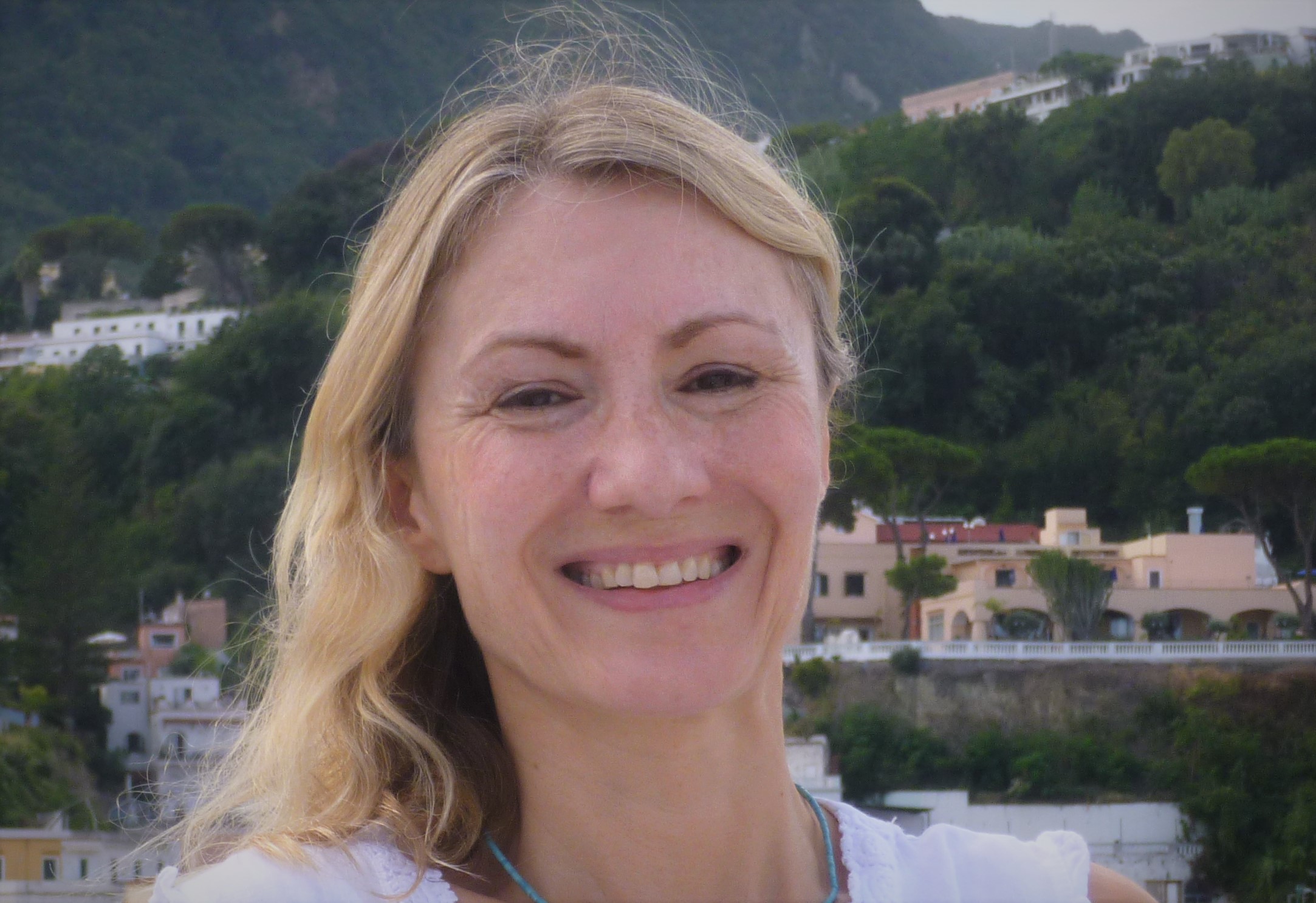
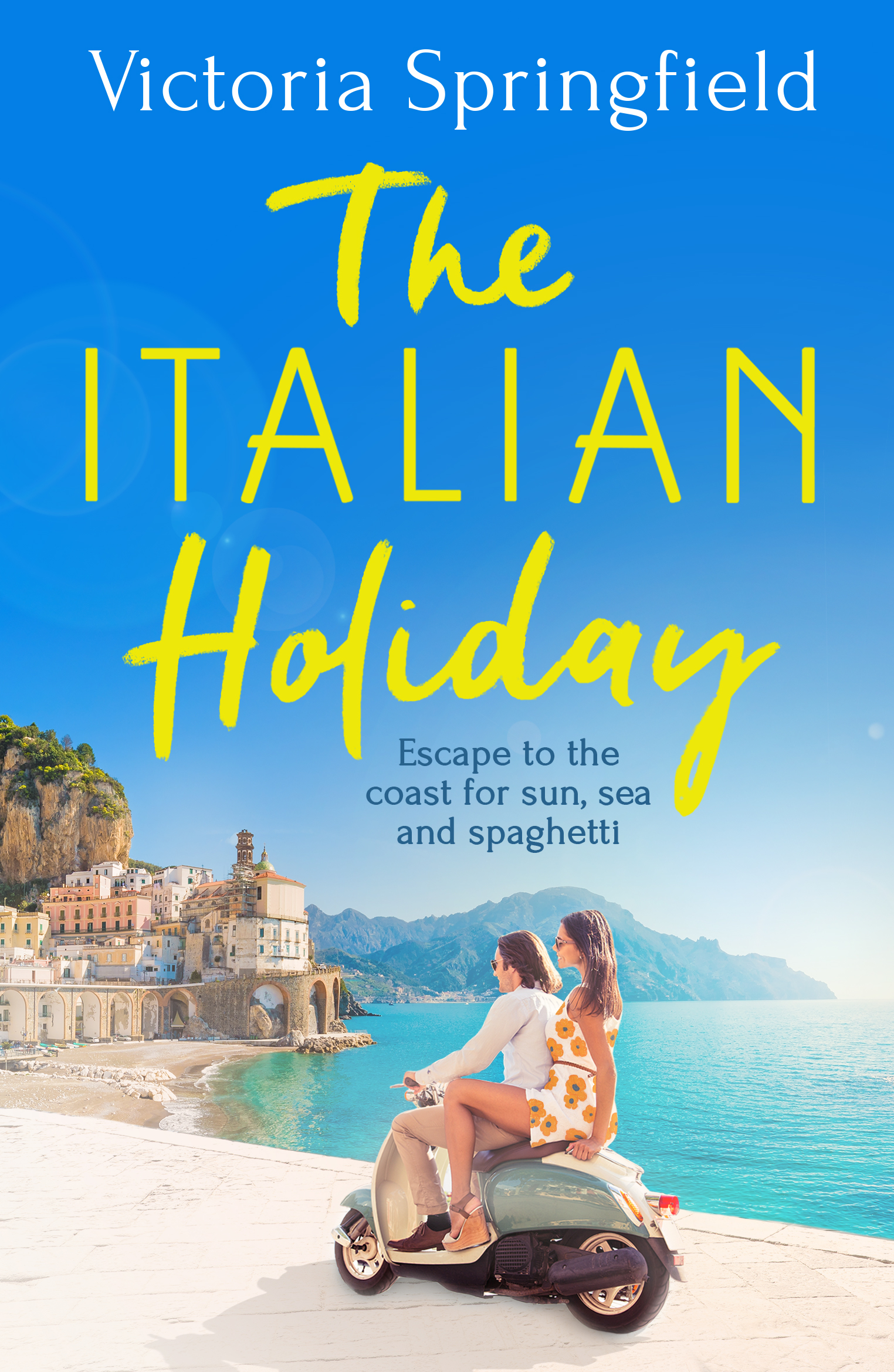
SUNDAY SCENE: VICTORIA SPRINGFIELD ON HER FAVOURITE SCENE FROM THE ITALIAN HOLIDAY

Choosing a favourite scene from my debut novel The Italian Holiday was rather like choosing a favourite pasta sauce or flavour of Italian gelati – impossible not to keep changing my mind!  My unlucky-in-love heroine, Bluebell has always wanted to visit Italy but taking her granny’s place on Loving and Knitting magazine’s trip isn’t quite what she had in mind.  When she realises she has picked up the wrong suitcase at Naples airport, Bluebell is horrified – until she discovers the colourful, confidence boosting dresses inside fit like a glove.

Bluebell and her unlikely new pals stay at the fictional Hotel Sea Breeze in Minori, a charming seaside town just along the coast from Amalfi.  I first visited Minori in 2015, and my then-boyfriend and I loved it so much we ‘eloped’ there to get married two years later.  Exploring the area whilst on honeymoon, I knew that it would make the perfect setting for a story of unusual friendships, finding love when you least expect it – and how the right dress can change your life.
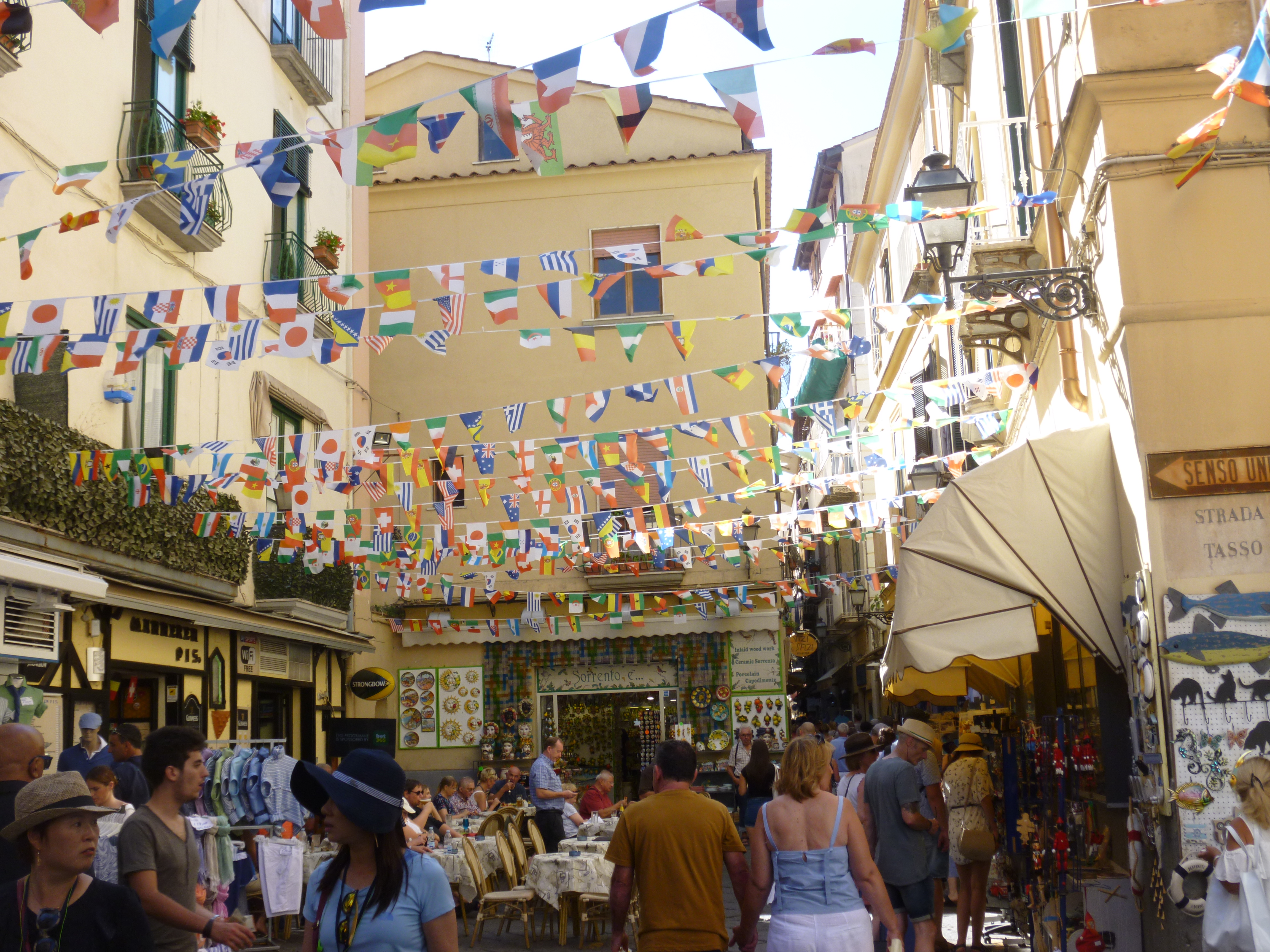
My protagonists explore the gardens in Ravello, take a boat trip to Positano and visit unforgettable Capri but I have chosen a day trip to Sorrento, in the first part of the book, as my favourite scene.  The women are up early ‘despite their late night dancing on the seafront’ and assemble ‘by the reception desk, chatting away, clutching a mixture of sun hats and cardigans just in case the fine June day turned out to be too hot or too cold.’  Bluebell and her new friend, 72-year-old Miriam, holidaying abroad for the first time since her husband’s death, swap stories at the back of the coach whilst little Evie is busy with her ‘top-secret knitting project.’

When the guide they are due to meet in Sorrento is taken ill, down-to-earth Brenda comes to the rescue and leads the others on her own tour, exploring the via San Cesareo where ‘boxes of soft peaches and oversized knobbly lemons were piled up beneath canopies hung with waxy red chillies…Italian mothers bargained with stall holders and remonstrated with recalcitrant children.  Overhead, strings of colourful flags criss-crossed the narrow street.’  Down in the marina, they feast on ‘bruschette fragrant with oil and garlic, topped by the brightest chopped tomatoes with shredded basil…peppers and aubergines cooked until they were soft and velvety.’
The women, near strangers until now, begin to gel and the reader gets a hint of the adventures that lie ahead.  Spotting a wedding in the cloisters where the glamorous outfits are a far cry from ‘the sturdy pastel two-pieces worn at a typical English wedding for fear of upstaging the bride,’ Bluebell wonders if she is quite as cynical about love as she likes to think she is.  Meanwhile Miriam gets a ‘faraway look in her eyes’ perhaps thinking of handsome Tommaso who runs Minori’s Trattoria di Napoli where the women ate the previous night.

After their busy day in Sorrento, the ladies are looking forward to an early night except for Bluebell who has a date with ‘tight-trousered’ hotel waiter Andrea.  Bluebell plans to wear a special outfit from the mystery suitcase: ‘the prettiest dress of them all.’  Later that evening, the ‘orange, full-skirted number covered in big white poppies’ will attract the attention of an intriguing young man, sending Bluebell and Miriam on the trail of the mysterious girl in the poppy-print dress.


The Italian Holiday and A Farmhouse in Tuscany are published by Orion Dash.  Victoria’s new book, set in Lucca, The Italian Fiancé is out August 2022.

Twitter: @VictoriaSWrites



SUNDAY SCENE: MISA BUCKLEY ON HER FAVOURITE SCENE FROM ARCHANGEL

I love writing romance. Throwing two people who are often poles apart and watching the sparks fly. In my novella ARCHANGEL, my leads are as different as you can get. Gabriel is an ex-criminal who used to deliver questionable packages, while Abigail is a sculptor selling her art in a L.A. shop. Gabe is practical, level-headed man who doesn’t believe in much. Abigail is a medium and believes in heaven and hell, and all that entails.

So how do two such opposing people even meet? Well, ARCHANGEL is a paranormal romance. The antagonist has sold his soul to the devil for power, sealing the deal with a series of grisly murders – that Abigail “sees” happen. Gabriel is the guy sent to protect her… though it ends up being a lot more.

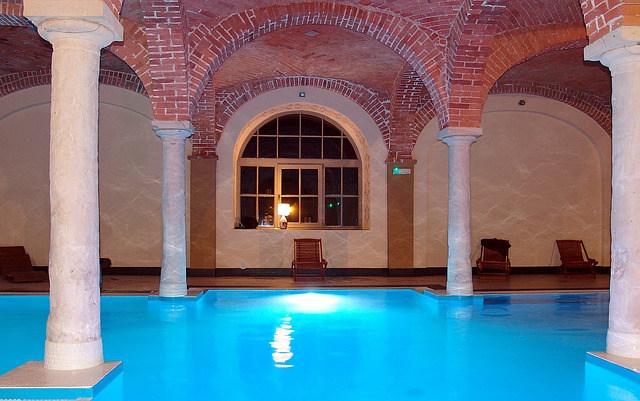
In the following scene, Gabe has taken Abigail for dinner, then a stroll around the hotel they’re staying at. At the pool side, they’ve gotten talking about his sketchy past, and Abigail decides to move things along. Not only is this their first kiss, but here we see her absolute belief that Gabe can be a better man.


“I trust you, Gabriel,” she said, her voice soft but earnest. “I know you think I’ve every reason not to, and perhaps you’re right. But I didn’t ask for good. I didn’t ask for perfect. I asked for someone to protect me, and you have. You will.”

“You need more than that.”

“You are more than that. You just don’t give yourself enough credit.”

I told hold of her wrists and pulled her hands from my face. “With good reason. You’ve no idea what’s going on in my head.”

Her laugh shocked me. It bounced off the tiled walls of the pool room, rich and pure. Still laughing, she tugged her wrists free and then wrapped her arms around my neck. Her floral scent filled my senses. Her body against mine shut my brain down.

“It’s probably similar to what I’m thinking,” she murmured, then her lips were on mine, firm yet sweet.

 The temptation to taste her overwhelmed me, and I gave in with very little resistance, if any. Her lips were fruity from the wine we’d drunk. I licked them and they parted, giving me access to her mouth. I slid my tongue in and her groan vibrated against my teeth, sending shocks of desires though my bones.

 My determination to keep things professional evaporated like dew in the desert. I carded the fingers of my right hand into the thick silk of her hair. My left hand found her hip. I pulled her close, and she moulded against me, her arms tightening.

 Warning bells rang. I told them to go to hell. For once I just wanted to lose myself in someone who wasn’t being paid to make me feel good. In someone who believed in me, even when I couldn’t.


What I really love about this scene is Gabe’s shift from cynical disbeliever, opening up – even if it’s just a little – to someone else and the possibility of being loved. I think most people deserve that in their lives.


5 Books that Changed Me KM Kelly

  1. 1.Nightfall 1 by Isaac Asimov


This volume of short stories by Isaac Asimov opens with perhaps his most famous, Nightfall, the story that started his career. My father had bought it and left it lying around and I picked it up and started to read. I was perhaps eleven at the time. Up until that point I had read only children’s books, but the stories in those pages introduced me, quite literally, to two new worlds – the world of adult literature and the world of science fiction. This marked a transition for me as a reader, from children’s fiction to adult fiction and I don’t think I ever looked back.


  1. 1.The Kraken Wakes by John Wyndham


This is a pivotal book for me because it steered the way for my future career in oceanography. Reading science fiction had already instilled in me a fascination for science, but this story led me to the sea. In many ways it is a book ahead of its time. An alien intelligence is melting Earth’s icecaps and the descriptions of the impact on our drowning world are both powerful and, in many ways, prophetic. Only we don’t need any alien influences to melt the icecaps. We’re managing that all on our own.


  1. 1.Rogue Male by Geoffrey Household


This is the novel that first introduced me to the thriller genre, but the added fascination for me was the Dorset setting. An area I know all too well. I still get a thrill when I’m out exploring and I walk along one of the Holloways and I think of the un-named character hiding out in such a place. It’s an exciting story of pursuit and survival, one man against the odds.


  1. 1.The Last Days of Pompeii by Lord Lytton


Whenever people saw me reading this they would say “Ah, I know how it ends.” But it is this knowledge that adds to the brooding sense of foreboding. I read this before I actually visited Pompeii, saw it for myself, walked the streets, visited the villas and saw the bodies described in the novel. I loved the way the people of that ill-fated city had been brought to life by this book. I visited Pompeii during my honeymoon which was a turning point in my life and Lytton’s novel will always be part of that.


  1. 1.Wide Sargasso Sea by Jean Rhys


This is a book that I should have read a long time ago, but somehow it slipped through the cracks. Then I started researching my family history and came to my Antiguan Great Grandfather, Ernest. I had always suspected that his story was an interesting one and when my DNA showed up a cluster of West African countries – something I suspected but never knew for sure – I realised I had to know more about this part of my heritage. Research is slow because records are sparse and to try to learn more about where Ernest came from I sought out literature. That was when I realised I had never read this book. I soon put that right. It’s a powerful story of passion and not truly belonging, feminism and post-colonialism, written as a backstory for Mr Rochester’s first wife. I can see why people say it is such an important book.


Buy The Sleepers by K M Kelly here

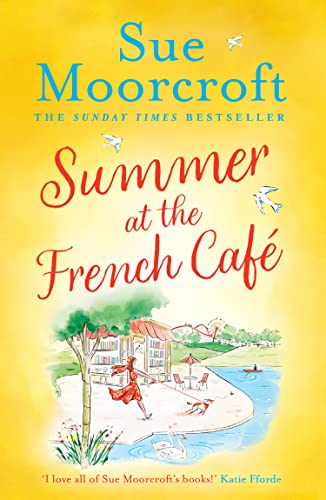
PUBLICATION SPECIAL: SUMMER AT THE FRENCH CAFE BY SUE MOORCROFT

As the saying goes, this is the first Sue Moorcroft book I have read, but it won’t be the last. On the face of it, Summer at the French Café is a happy ever after holiday read, but actually the book is far more.

So, what makes it stand out? The sense of place, certainly, and I love that. As I read I could actually see every place the author described; Parc Lemmel, the bookshop café at the story’s heart, the local villages… and without a single sentence of overblown description. All I needed to know was dropped seamlessly into the narrative in an exceptionally skilful way.

But more than the quality of the writing, I love the fact there is a very serious issue at the heart of the book, one that isn’t squashed or skimmed over in the search for a happy ending, one that is dealt with in a sensitive and realistic manner. That issue is emotional control; how it can be used in relationships, the reasons people accept it, and the dangerous patterns that mean it can echo across generations and years.

I asked Sue Moorcroft why she decided to tackle this insidious form of coercion…

“I’m interested in human behaviour, so when I read about control within relationships, I wanted to write about it. It provided the perfect secret behind central character Noah giving up his life in Dordogne and moving across France to Alsace. I write love stories, so the mystery had to be nuanced rather than a simple jeopardy.

I remembered someone who, when she lost her husband, refurnished and redecorated her home. I’d never come across that reaction to widowhood. She explained, ‘He liked to be the one to choose. But now I can.’ To me, this put their relationship in a whole new light. When we’d invited her out and she’d said, ‘I’ll have to check,’ had she meant with her diary? Or with her husband? When we’d picked her up, he escorted her to the car and looked inside to say, ‘Good evening’. How old-fashioned and courtly, I’d thought. But was he checking she was going out with who she’d said she was? If so, did this behaviour make her feel cherished?

Or did she resent it and feel controlled?

She also once mentioned that she’d married young and that her (by then deceased) dad had been a similar man to her husband…

I’ll never know if I jumped to conclusions, but my suspicions informed the background I gave Noah’s ex, Florine. When Florine’s controlling father died, she felt adrift. Attentive Yohan came along, telling her what she looked best in what he liked so that she could like it too, and she felt secure again. But leaving Noah for Yohan pitched her into a very different relationship.

The interesting thing about control, and which provided the nuances I was after, is that it doesn’t have to involve a traditional bully. Yohan doesn’t hit Florine or her daughter Clémence – he loves them. In fact, he almost suffocates them with his love, wanting constant knowledge of where they are or to have them with him, using his anxieties over them to cut them off from others, so he can bask in their undivided attention. His behaviour stems from his own insecurity and immaturity. Mix in a little self-importance and selfishness, and you have a controlling man. Yohan isn’t a main character, which means that Summer at the French Café is not his story – but the plot around Noah won’t work without him.”


Jane Cable


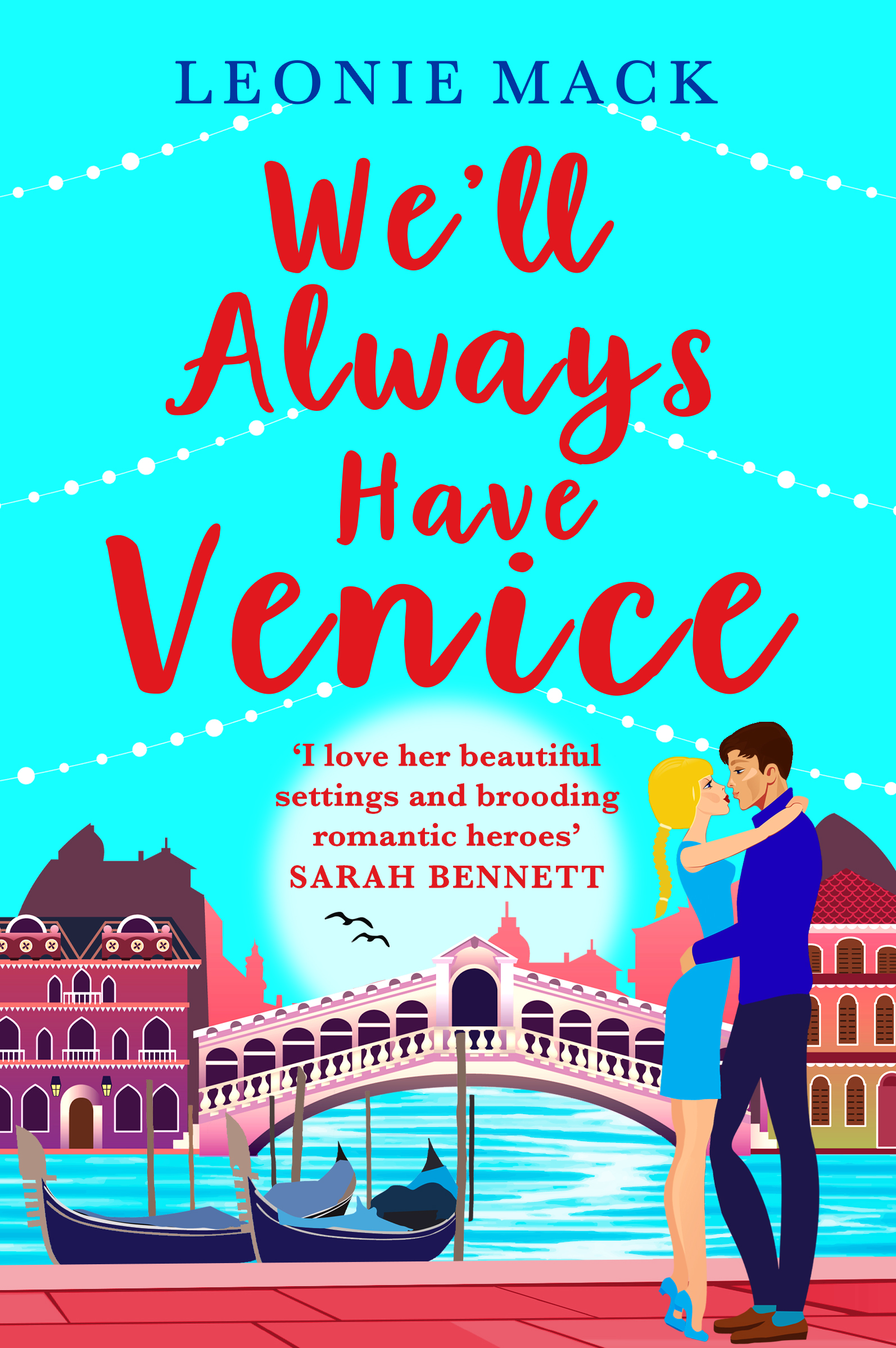
SUNDAY SCENE: LEONIE MACK ON HER FAVOURITE SCENE FROM WE’LL ALWAYS HAVE VENICE

My latest book, We’ll Always Have Venice, is my second romantic comedy set in Venice and is a summer love story, following the winter adventure of A Match Made in Venice. Whereas the first book explored Murano and the ancient art of glassmaking, as well as the old city itself, the second book features the idyllic lagoon and the further islands, including Burano.

The main character, Norah, is a marine microbiologist exploring the lagoon to collect samples every weekend with her guide, rower and oarmaker Gianluca. Every weekend is an adventure, taking refuge in an island monastery during a storm, picnicking with flamingos and dodging cruise ships.

One of my favourite scenes is where they accidentally disturb some fishing nets and bump into the fisherman and his son. But they’re not catching fish. The nets contain a local delicacy only available in May. And with true Burano hospitality, they end up pleasantly tipsy on Prosecco with stomachs full of delicately fried crab.


Gianluca squinted at the net. ‘Moeche,’ he said, a grin breaking out. He dropped her hand and strode over to the fishermen. He beckoned to Norah with quick fingers. ‘It’s crabs. Look!’

At the word ‘crabs’, she shrank back. Crustaceans were her least favourite form of marine life, coming in after gelatinous zooplankton and ectoparasitic flukes. She shook her head fiercely at Gianluca.

‘These aren’t just any crabs,’ said Gianluca with enthusiasm.

‘These,’ explained the fisherman grandly, ‘are nude crabs. Or they will be in some days, I hope.’

‘Did he say “nude crabs”?’ Reluctantly curious, she approached and inspected the specimen in the palm of the older man’s hand. ‘That’s carcinus aestuarii, the common green crab. And it’s about to moult. Natural behaviour for this species in spring, I believe.’

‘But have you ever eaten it, fried lightly in oil?’ Gianluca said, his face lit up. He turned to the older man and spoke in rapid dialect. A moment later, they were shaking hands and clapping each other on the shoulder like long-lost friends.

Norah watched with a smile tugging on one side of her mouth. Her brain filled in the blanks of the conversation:

‘For your nòna, I will give you a good price – and because you can speak my dialect!’

‘I have always wanted to meet a nude crab fisherman!’

‘Lucky for you the crabs are nude and not the fisherman – bahahaha.’

They followed Emiliano and Daniele back to the island of Mazzorbo, where they sorted the crabs into submerged baskets according to the imminence of their moulting and retrieved the jelly-like specimens that had already shed their shells and were crawling around nude.

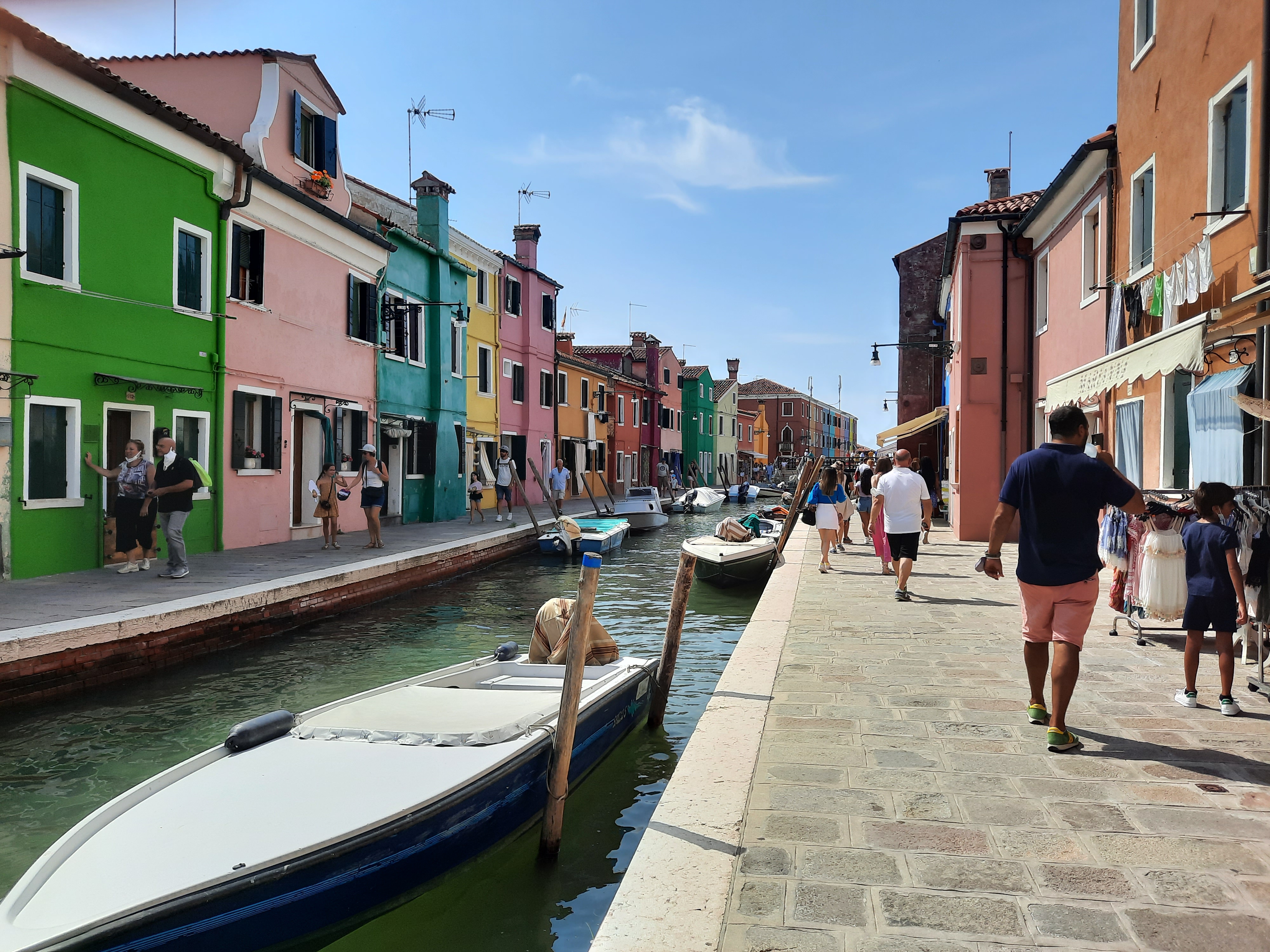
Norah’s stomach rumbled as Gianluca rowed up to Burano. Earlier that day, they’d stopped for lunch at an osteria on the eastern side of the island, but she hadn’t seen the main canal. The fondamenta was bustling with tourists visiting the lace ateliers or stopping at market stalls, and locals wandering to their favourite spots for their evening aperitivo. The brightly coloured houses – sky blue, hot pink and lime green – were a shock after the graduating greens, blues and browns of the lagoon. Flapping laundry hung from ropes under the upper windows. The buildings were only two or three storeys high, making the island feel like a village in comparison to its grand old sister to the south.

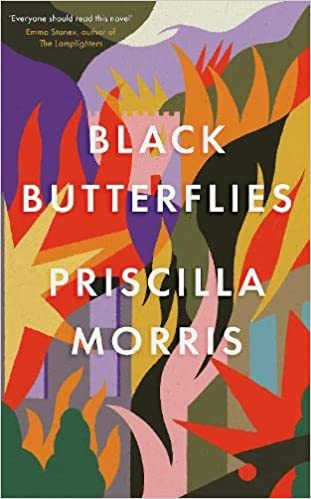
EVA GLYN’S PUBLICATION DAY REVIEW OF PRISCILLA MORRIS’S BLACK BUTTERFLIES

When the Netgalley notification came through of a novel set in Sarajevo during the conflict of the 1990s, I had to read it. My interest in the war had been sparked by a conversation with then tour guide, now friend, Darko Barisic, who as a child had lived through the same conflict in Mostar. I knew what he’d gone through and I greatly respected his resilience. I also knew I had to tell his story, which I did through the medium of The Olive Grove, my first women’s fiction title set in Croatia.

Black Butterflies is completely different to my own book, it’s literary fiction but reads almost like a memoir. It takes you to Sarajevo in 1992 real time through the eyes of Zora, an artist and tutor who along with her neighbours experiences the brunt of the siege. A siege that occurred when an army of Serbs surrounded what was a wonderful multi-ethic, highly cultured society. A society none expected would turn into a war zone.

The language the author uses is incredible in both its beauty and its harshness. It’s also immersive. I was in Sarajevo, and it is rare a book has so much power to transport me in such a multi-sensory way. The horror, the moments of lightness, the unremitting awfulness of losing almost everything… no work, no food, no power, no water… while being under fire. It all became absolutely real and that is an incredible talent.

I guessed early on that the author had access to first hand accounts and this proved to be the case. Although fictional, Black Butterflies is a melding of two family stories, and the experiences of a larger number of people, but skilfully woven together they make a unified whole.

A word of warning though; if you are particularly anxious about the situation in Ukraine, this isn’t the time to read this book. However if you would prefer to think on how conflicts do end, how people come out of the other side and go on to lead normal lives, then do.


Publisher’s blurb for Black Butterflies:

Sarajevo, spring 1992. Each night, nationalist gangs erect barricades, splitting the diverse city into ethnic enclaves; each morning, the residents – whether Muslim, Croat or Serb – push the makeshift barriers aside.

When violence finally spills over, Zora, an artist and teacher, sends her husband and elderly mother to safety with her daughter in England. Reluctant to believe that hostilities will last more than a handful of weeks, she stays behind while the city falls under siege. As the assault deepens and everything they love is laid to waste, black ashes floating over the rooftops, Zora and her friends are forced to rebuild themselves, over and over. Theirs is a breathtaking story of disintegration, resilience and hope.

Publisher’s blurb for The Olive Grove:

Antonia Butler is on the brink of a life-changing decision and a job advert looking for a multilingual housekeeper at a beautifully renovated Croatian farmhouse, Vila Maslina, is one she can’t ignore.

Arriving on the tiny picturesque island of Korčula, Antonia feels a spark of hope for the first time in a long time. This is a chance to leave the past behind.

But this island, and its inhabitants, have secrets of their own and a not-too-distant past steeped in tragedy and war. None more so than Vila Maslina’s enigmatic owner Damir Maric. A young man with nothing to lose but everything to gain…

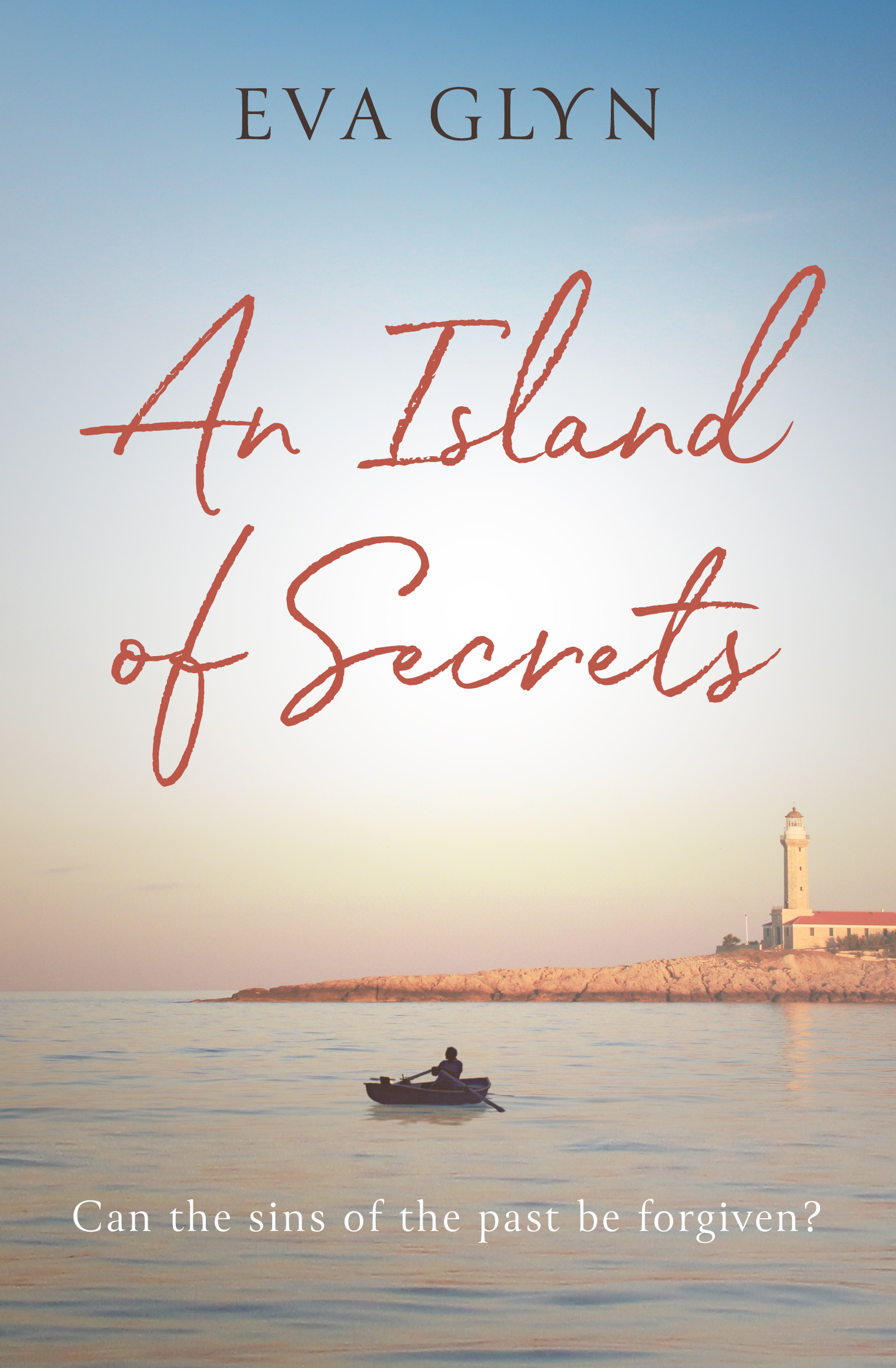
SUNDAY SCENE: EVA GLYN ON HER FAVOURITE SCENE FROM AN ISLAND OF SECRETS

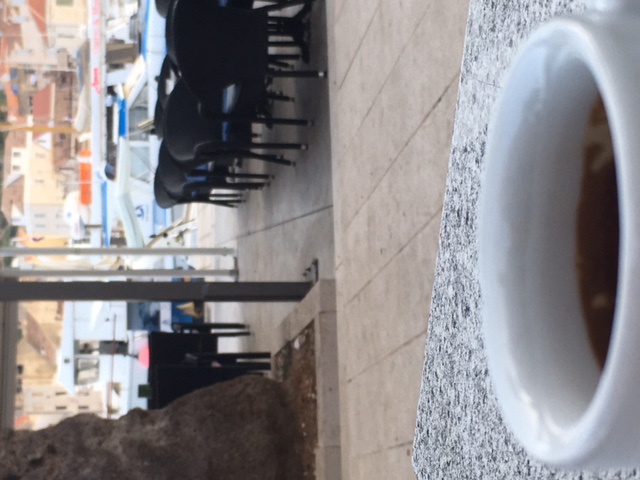
It’s every writer’s dream, isn’t it? To sit in the exotic location where you’ve set your book and actually write the scene. From exactly the same place as your character; to see what they see, hear what they hear, smell what they smell. Well, one morning when I was on the Croatian island of Vis researching An Island of Secrets, I made it happen when early one morning I picked up my notebook and strolled down to the harbour…


Although a few cafés were open at this hour Leo had chosen one in front of a broad flight of steps in a corner of the harbour, its tables tucked back into a narrow space between a pizzeria and a bakery. Not the one where she usually bought her bread, but today that might change too. Or it might not. If she was to stay in Komiža then something damn well had to – she’d been here a month and she couldn’t go on as she was.

Cigarette smoke drifted around her and music was playing from a radio further down the quay. A few local people were about and the crew of one of the holiday yachts moored on the mole had settled at a table somewhere behind her, but generally there was an air of peace about the place and she felt herself relax. A scrawny black and white cat with the swagger of a prize-fighter strolled past, but the tiny tabby cleaning itself under one of the chairs seemed unimpressed.

There were two reasons she had chosen this place to have her coffee. The first was that she could see The Fishermen’s House from here, and the second that yesterday she had found a photo from 1944 in the online archive of a museum in Split and she was pretty sure she recognised where it had been taken.

She pulled out her phone and looked again. Yes, that was definitely the narrow building where the tobacco shop now was, and the distinctive carved lintels above the windows of the property directly to her right were in the picture too. The palm trees were in the correct places, although in the photo they were barely taller than the men and now they towered more than four storeys high.

She had scanned the faces of the commandos in vain for anyone who looked vaguely like Grandad. But although she had been disappointed, she knew he might recognise some of the men and the thought made her tingle with excitement; she had already emailed the photo to Auntie Mo so she could show it to him. It was progress of a sort and there was pitifully little else to say. How the hell did you find out about some random woman who lived sixty years ago in a foreign land? Especially when you weren’t entirely sure who that woman was.


Leo is in Komiza to try to find out what happened to the woman her grandfather, Guy Barclay, had to leave behind when his commando unit pulled out in 1944. When Guy first arrived on Vis, the only part of Yugoslavia not occupied by the Germans, his mission had seemed straight forward, but then he stumbled across a brutal execution on a remote hillside that changed everything.

These executions – of female partisan fighters who had fraternised with their male colleagues – really happened, and at the time their British allies were powerless to do anything about it. But it made me wonder, what if one of them had tried? I had my hero and I had my story.


Find out more about my books set in Croatia at evaglynauthor.com


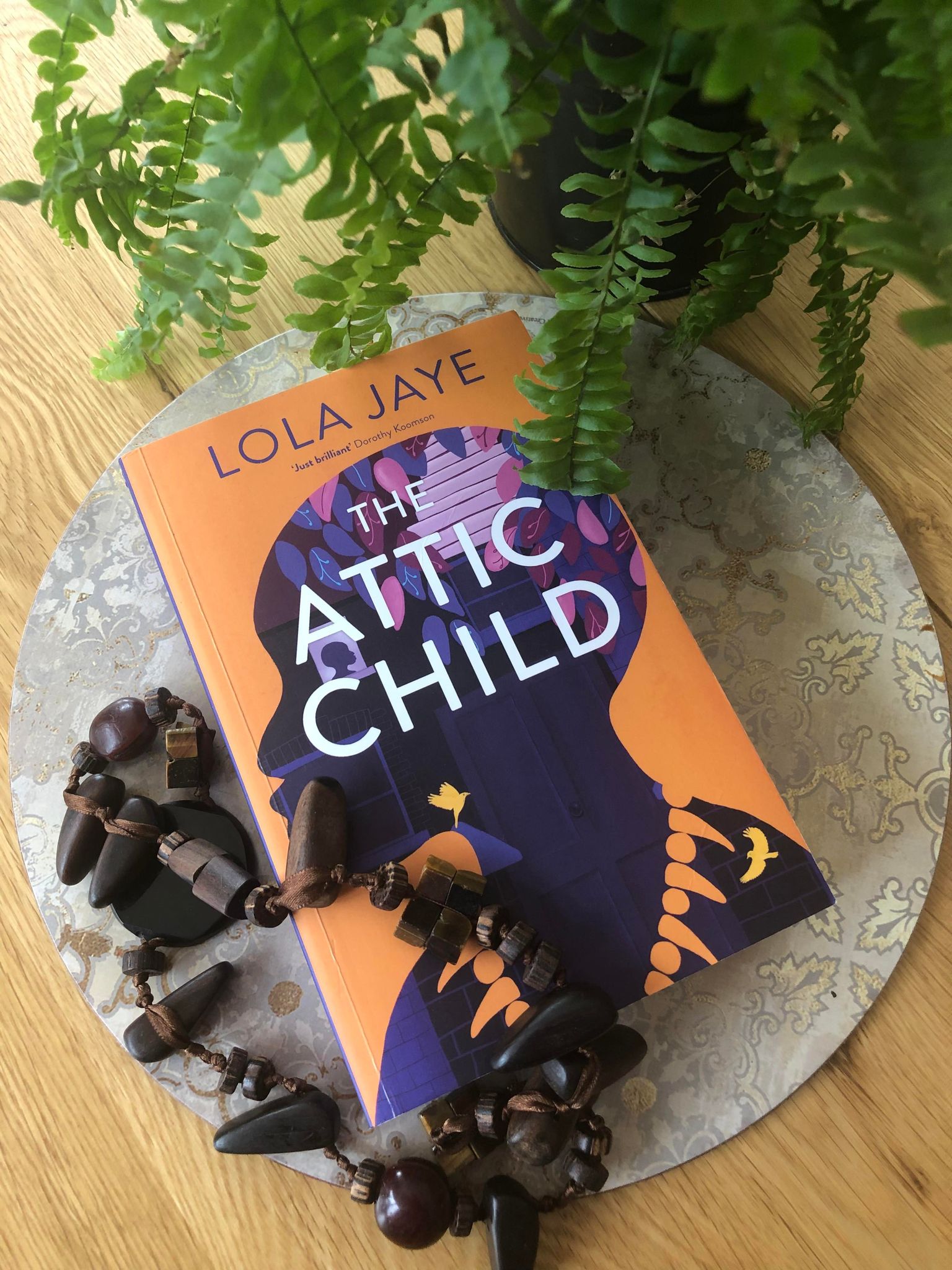
The Attic Child by Lola Jaye

the attic child lola jaye

Here’s the book for the weekend – and it’s a long bank holiday so you’ll have plenty of time to indulge yourself and be swept away by the wonderful The Attic Child by Lola Jaye.

This was such a powerful, if at times uncomfortable, read. A dual timeline novel telling the stories of two children trapped in an attic almost one hundred years apart.

From the opening lines, I was desperate to discover what happened to Dikembe, a young African boy who is taken from his family in the Congo at the tender age of ten and travels to England as a companion to explorer, Richard Babbington. Lola Jaye takes you by the hand and leads you on a journey that interweaves the lives of Dikembe and Lowra as they navigate their path through the terrible circumstances in which they find themselves.  It was at times a dark and disturbing read but a story of the redemptive power of friendship.

Lola Jaye’s inspiration for this novel was triggered by a photograph she saw at the National Portrait Gallery – part of an exhibition on Black British Victorians.

One of the photographs was of a young African boy, Ngudu M’hali, pictured alongside the explorer Henry Stanley. The boy had a short and tragic life, taken from his family and either sold or given to Stanley as either a slave, servant or companion. Accounts differ and the truth may never come to light. Ngudu M’hali drowned in a canoeing accident on the River Congo in 1877 when he was twelve years old but The Attic Child explores what might have happened to a boy in similar circumstances had he lived. This is not Ngudu’s story – but inspired by the photograph Lola Jaye began to craft a wonderful tale of one such boy, Dikembe. Oh, my heart broke for that small child, torn from his loving family and thrust into an unfamiliar life in an unfamiliar land.

A timely book and one that has stayed with me long after I reached the final page.

Two children trapped in the same attic, almost a century apart, bound by a secret.

1907: Twelve-year-old Celestine spends most of his time locked in an attic room of a large house by the sea. Taken from his homeland and treated as an unpaid servant, he dreams of his family in Africa even if, as the years pass, he struggles to remember his mother’s face, and sometimes his real name . . .

Decades later, Lowra, a young orphan girl born into wealth and privilege, will find herself banished to the same attic. Lying under the floorboards of the room is an old porcelain doll, an unusual beaded claw necklace and, most curiously, a sentence etched on the wall behind an old cupboard, written in an unidentifiable language. Artefacts that will offer her a strange kind of comfort, and lead her to believe that she was not the first child to be imprisoned there . . .


The Attic Child is published by  Pan and is available from all good bookstores and online retailers.