SUNDAY SCENE: NANCY PEACH ON HER FAVOURITE SCENE FROM LOVE LIFE

My debut novel Love Life is set in and around a hospice (admittedly an unusual choice for a romantic comedy) but one of my favourite moments in the book is when the heroine, Tess Carter (a palliative care doctor) visits the home of her patient, Mary Russel. Tess has a complicated relationship with the Russel family. Mary’s son Edward is in denial about his mother’s terminal illness and remains conflicted about the hospice and everything it stands for, including Tess. On this occasion she is visiting the house to return a scarf to Edward but is not sure what to expect. She knows that the Russel family are wealthy, but the family home is a bit more substantial than she’d anticipated.

‘Tess was entirely unprepared for the view of the Russell residence, which was indeed just up the hill from the vet’s practice. As she cornered round the leafy lane that circumnavigated the estate she caught a glimpse of the main house, a Georgian manor in mellow stone nestled amongst smaller outbuildings, including a carriage house and stable block. She pulled to a stop on the gravel drive, half expecting a butler from a Merchant Ivory production to emerge from the main portico and open her passenger door. She sat for a moment in the car just gazing in awe at her surroundings; the lawn rolling down away from the house towards a thicket of trees, the neatly trimmed box hedges that bordered the drive, the sash windows reflecting the early sunlight and lending a cheerful openness to the façade.’

The novel is set in Bristol and has a Pride and Prejudice theme, featuring a Jane Austen character as one of Tess’s internal narrators, and a hero with hints of Mr Darcy. I love the architecture of this period and the Russel house combines elements of Georgian splendour with the warmth of a family home, complete with canine companions.

‘She made her way round to the back of the house, where she found a weathered rear door with iron boot scrapers at either side. She knocked hard against the door panel and found that it was ajar. With some trepidation she nudged it open and called out “Hello?” Almost immediately there was a cacophony of noise from within the house, barking and the scrabbling of claws across tiles, and she was nearly knocked off her feet by a pack of dogs hurtling into her, tails wagging. The first three dogs were rangy setters, their knobbly heads knocking into her thighs as she fussed over them. A few moments later an elderly cocker spaniel with cloudy eyes shuffled into view and the setters backed off to allow the senior member of the party to greet the visitor.

“Hello?” Edward’s familiar voice shouted through from the next room, “I’m just in here, come through.”

Tess made her way into the kitchen accompanied by the enthusiastic canines and discovered Edward, clad in damp running gear holding his ankle behind him with one hand to stretch out his quads whilst supporting himself on the back of a chair with his other hand. He looked up at her in surprise.

“Dr Carter! How nice.” He was smiling, although she couldn’t tell if it was genuine pleasure at seeing her or more of a grimace as his muscles relaxed into the stretch. He released his right ankle and repeated the move with the left whilst trying to fend off the dogs who were all trying to get involved in the warm down. Tess was mortified.’


www.nancy-peach.com

My Writing Process Tetyana Denford

I remember when my mother called me, because the weather had been mild and the air smelled of the coming Spring. It was 2015, and we were living in the UK, so the 5 hour time difference meant that it was already late in New York when I heard her voice on the phone. Her tone was tender, and not a little bit numb and distant, and I would soon understand why: a family secret.

I had grown up in a relatively standard Ukrainian family: I was raised within the language, the traditions, and as I was an only child, my parents would make sure Ukrainian was the world that I knew and flourished within. We lived with my maternal grandmother, Yulia, and whilst her stories of wartime Ukraine were harrowing, nothing was ever out of the ordinary.

And then, we all learned something about her past that seemed more like a movie script than anything we’d ever imagined in real life. For me, my status as an only child, and a writer, meant that it was up to me to write the story down, for the family, for myself, and for my children to know our family story in detail. But could I do it justice? The impostor syndrome was very real, as most writers can attest to on their best days.

The first thing that I learned about writing a book is that the first few drafts are always the story, not the ‘book’; chronological, sometimes painful, but always the purest form. Once I started researching Ukraine, World War II, passenger lists on post-war ships heading to Australia, and New York in the 1960s… the book started coming to life. I’ll admit it felt like it took a solid two years to finish the first few drafts because at the time, my three children were all under eight years old, and my husband was travelling for work constantly, so I had very little time to write apart from very early in the morning or very late at night. It wasn’t easy, but I knew in my bones that this story was an important one to memorialize, because if I didn’t, it would disappear with the passage of time, like so many other family stories.
My grandmother was still alive and still had a semblance of memories stitching her life together in her mind whilst I was writing this, so old photographs and conversations were priceless for me to be able to place myself in her mindset when she was living through all of these painful periods in her life, and what fascinates me now, looking back, is that the current newsreel detailing the war in Ukraine runs in stark parallel to what she and generations of her family had lived through and fought against in the early 1900s and all through the second world war. And we are reminded now that history has a long pattern of repeating itself, because no one seems to remember how hard people fought for their sovereignty.

And now, now I feel proud of knowing that as a younger generation Ukrainian, I have written a story, a whole book, of what people are discovering about Ukraine and its people: their pride, their loyalty to the country that made them, their generosity in standing up for any people who are marginalized and forgotten, their fierce love for their family and friends, and their stubborn refusal to ever back down in their music, their art, their willingness to hope.

I am not an anomaly: there are so many Ukrainian writers and authors and translators who are now taking up the fight and using their voices as a war effort, when they are living all across the world worrying about their friends and their families in danger. We are the future, our stories begin with emotional phone calls, our writings are stitched together with anger and hope, and our platforms are flooded with calls to action from not only Ukrainians but anyone who chooses to stand on the right side of humanity and amplify the stories that make us who we are.

Our words are the weapons we choose to affect the hearts and minds of the entire world, not just to support Ukraine but to remember that all of our family stories are the threads that bind us and remind us to wish for a better future. 

Author Bio

Tetyana Denford grew up in a small town in New York, and is a Ukrainian-American author, translator, and freelance writer. She grew up with her Ukrainian heritage at the forefront of her childhood, and it led to her being fascinated with how storytellers in various cultures passed down their lives to future generations; life stories are where we learn about ourselves, each other, and are the things that matter most, in a world where things move so quickly.

Her debut novel, Motherland was self-published in March 2020 to critical success and longlisted for The Readers Digest Self Published Book Awards. It was based on an incredible family secret that was revealed by her maternal grandmother, Julia, only recently, and has been described by people as ‘haunting’, ‘powerful and devastating’, and ‘a fragile and hopeful story of an immigrant family’. In March 2022, Tetyana signed a 2-book deal with Bookcouture, an imprint of Hachette, and Motherland will be re-released in July 2022 with a new title and cover.

She also works with Frontline News as a translator, has been featured in The New York Times, The Telegraph, The Flock Magazine and Mother Tongue Magazine, and speaks several languages. She also hosts a YouTube show called ‘The Craft and Business of Books’ that helps writers understand both the creative side and the business side of the book world. Her series of ‘conversation books’, collections of poetry and prose about Grief, Motherhood, and Love, were published in 2021.

Tetyana currently lives in New York with her husband and three children.

About the Book

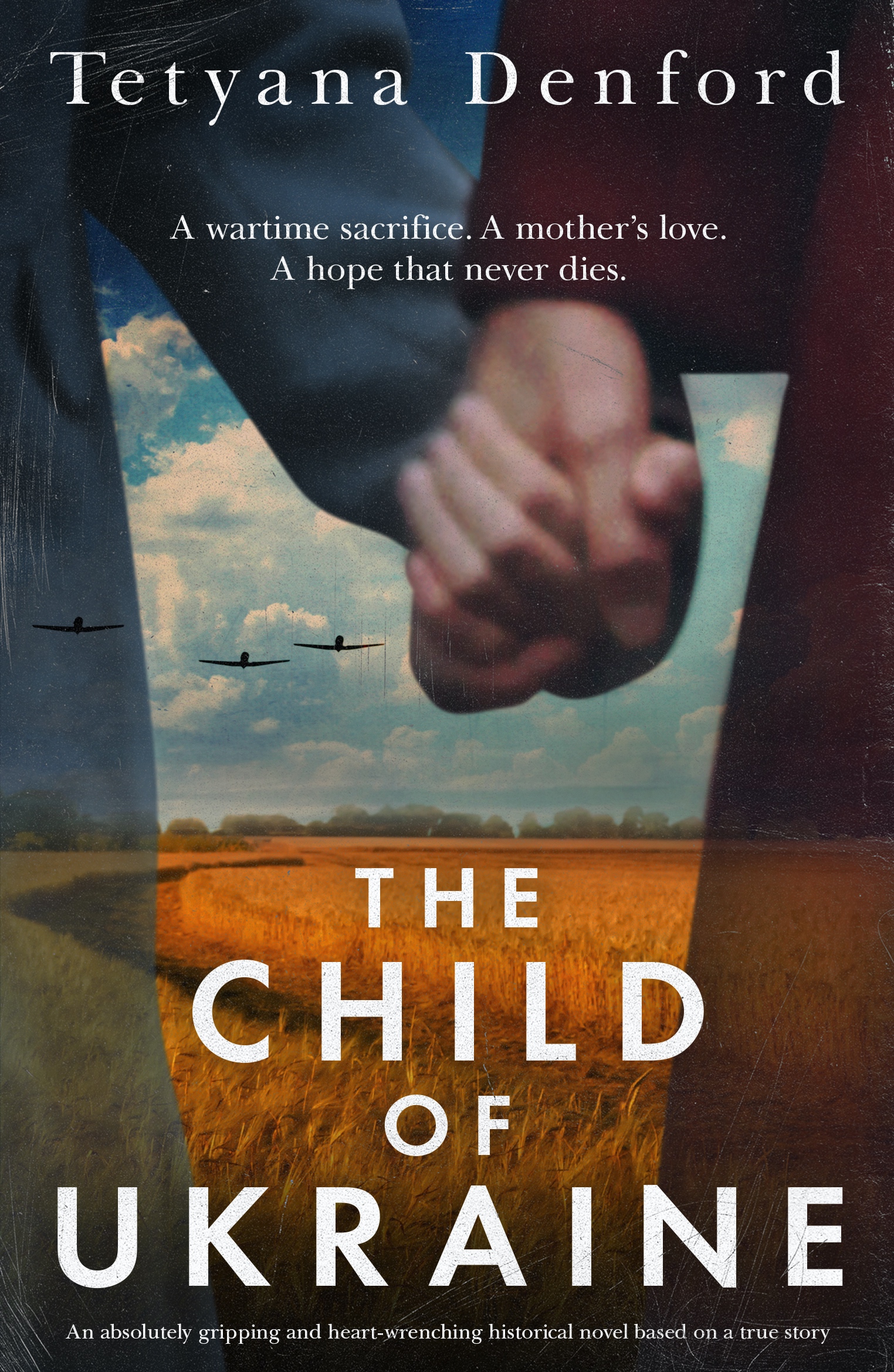
Ukraine, 1940. She cups her daughter’s face with her trembling hands, imprinting it on her mind. ‘I love you. Be brave, ’she whispers through her tears, her heart breaking into a thousand pieces. Sending her child away is the only way to keep her safe. But will she ever see her again?

When war rips their country apart, Julia is sent away by her tearful parents in the dead of night, clutching her mother’s necklace and longing for one last embrace. But soon she is captured by Nazi soldiers and forced into a German labour camp, where behind a tall fence topped with cruel barbed wire, she has never felt more alone.

Just as she begins to give up on all hope, Julia meets Henry, a young man from her village who shares her heart full of dreams. And when she feels a fluttering in her belly that grows and grows, she longs to escape the camp and begin a new life with their child. But then Julia is forced to make a terrible choice. A choice no mother should have to make.

New York2011. With her heart shattered and her life changed forever by the shadows of war, as the years go by Julia thinks she will never be whole again. For decades she has been carrying a terrible secret with her, her every moment tainted by tragedy and loss since those dark days of the war.

But when she receives a phone call in the middle of the night, far away from the home and family she lost in the war, will Julia finally be reunited with the missing piece of her heart? Or is it too late for her wounds to heal?

Based on the incredible true story of the author’s grandparents, The Child of Ukraine is a breathtakingly powerful tale of love, loss and family secrets, perfect for fans of The Four WindsThe Last Green Valley, and The Nightingale.

 
This novel was previously published under the name Motherland.

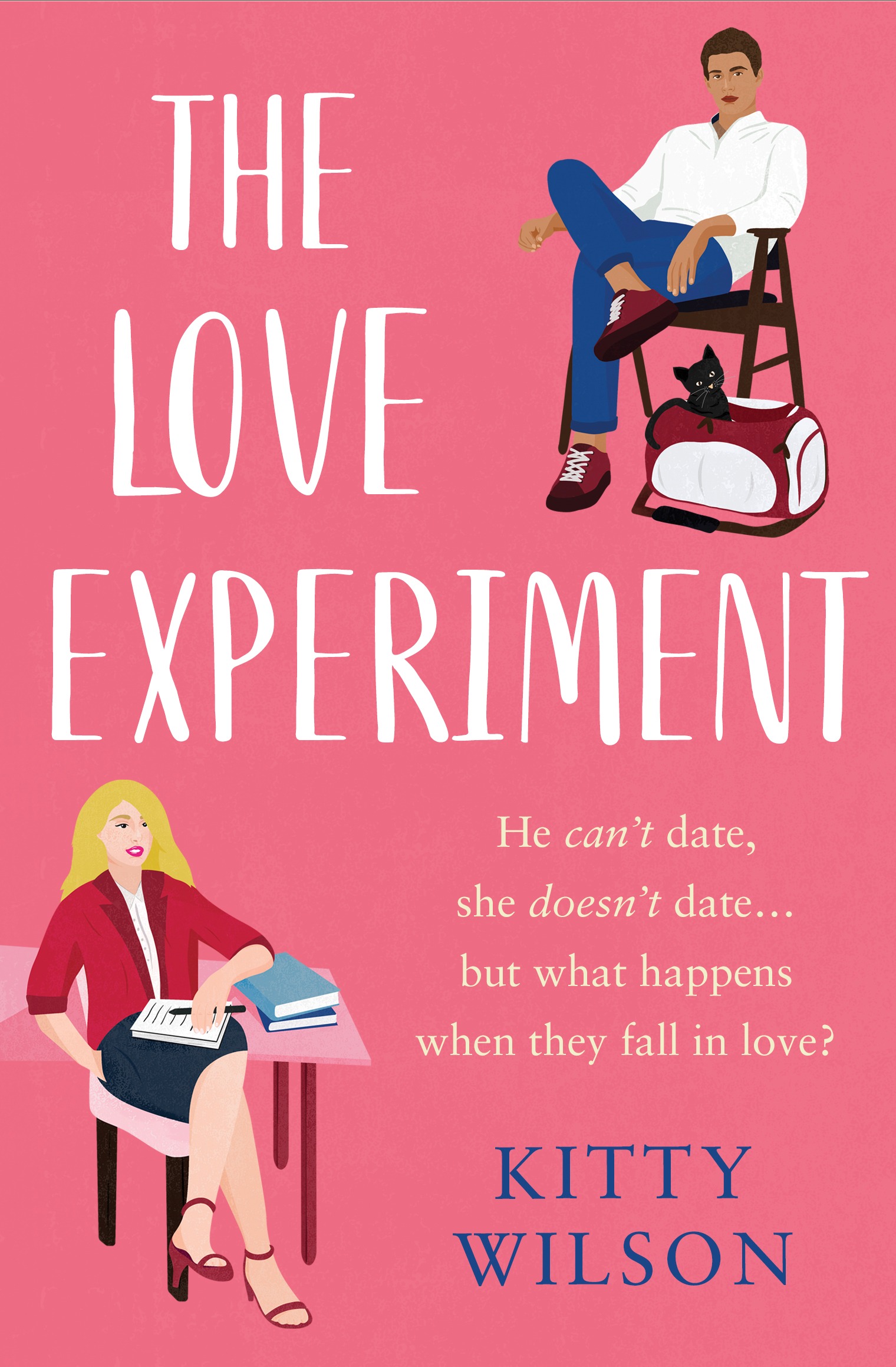
PUBLICATION DAY SPECIAL: THE LOVE EXPERIMENT BY KITTY WILSON

Sometimes I fall in love with a book instantly, and sometimes it takes a little while. This was one of the latter, but let me tell you, by the final chapters I was laughing and sobbing at more or less the same time, which isn’t the best of looks in a busy Starbucks branch.

The premise of The Love Experiment is deceptively simple; Lily won’t date – even staying the night after a hook up is too much like commitment, and Jay can’t date – he’s promised his sister he won’t in an attempt to show her that changing the habits of a lifetime is possible. But there the cliches end.

All the characters, large and larger than life, are drawn with an incredible eye for detail and a roundness that is often missing in romantic comedy. They were real and will stay with me for a very long time. And laugh? Did I mention a fair chunk of the action is set in a drag club? The names of the artists alone was enough to make me cackle. And don’t even get me started on the harpist…

This book is laugh out loud funny while at the same time dealing with serious issues and the horrendous scars they leave. The more I came to know about Lily’s past the more I ached for her to be able to move forwards. The more I understood what made her the way she is. The more I wanted to be her friend.

Lily’s backstory and what happened to her as a teenager really got to me. So much so I had to ask Kitty Wilson why she decided to shape her character that way:

Thank you. Lily is far from my usual heroine and is polished, successful and on the surface has it all but, underneath, is a scared young girl desperate for a sense of control.

When I was creating her, I initially wanted to highlight women’s health, I know so many women with periods that are completely incapacitating[1] and yet I haven’t seen it mentioned often in novels. That was my starting point but, as an author, it is hard not to be shaped by the things around you. As I wrote the first draft, the discussion of women’s safety was at its peak with the subsequent growth of Everybody’s Invited illustrating how schools and universities were often far from the places of safety that every parent hopes. This awareness worked its way into Lily’s story and when her body changes as a teen, things take a dark turn as name-calling in school morphs into something more sinister.

I did consider carefully whether these themes should be included but they are so frequent in women’s lives it felt wrong to cut them, so Lily was born, a high achiever who is privately carrying the weight of gynaecological issues and a related history of childhood bullying. These two things then shape all her life decisions; decisions that on the surface look like they are healthy, empowered choices but are actually indicators of deep-rooted scars.

But I love a happy ending – I write romance after all – and adore weaving through the joys in our lives, and hopefully The Love Experiment brings many, many moments of light and laughter to brighten Lily’s path as she learns to defeat the dark and open herself to life and love at its fullest.


[1] One in ten women in the UK have endometriosis and another one in ten have PCOS. https://www.endometriosis-uk.org/information

https://www.nhs.uk/conditions/polycystic-ovary-syndrome-pcos/


SUNDAY SCENE: AUDREY HARRISON ON HER FAVOURITE SCENE FROM THE SPINSTER’S CAPTAIN

I have been writing and publishing Regency romances since 2011, being fortunate enough to be a finalist in the Amazon Kindle Storyteller competition and the Romantic Novelists Association Award. I never thought I would write anything other than my regencies, but there was a story in my husband’s family history which has niggled in the background as I wrote in my genre. I had resisted it as it was set in the Victorian era and although close to the Regency, there were still differences which could be stumbling blocks for me.

The story was that In 1846, a spinster travelled to America from Scotland to be a housekeeper for her brother. Domestic staff were hard to come by, so what was more perfect than a spinster sister? Unfortunately for the brother in America, there was also a handsome captain on the ship which was to bring his sister to him.

Researching the story was fascinating, when I (finally) gave in to family requests to write it. Most of the action had to take part onboard ship and so I started down the rabbit hole which was seafaring life.

We consider history as a different world, the language, manners, and rules, but throw in life on the water and there is even more to contend with! In my view sailors were so brave stepping aboard ship, let alone spending their lives onboard. Even within the family history, there is more than one shipwreck. It was a harsh life, but one which could reap rewards, as in the case of our captain.

I do love research, it is the part that I have to contain myself, only so much factual detail can be put into a romance before it becomes a non-fiction book! It doesn’t matter that readers don’t know the hours of research which can go into one sentence.

My resources were hundreds of books I own, and visits to various Maritime Museums all give me the buzz to create the little snapshots of life onboard ship as in this extract:

The call “Who’s for the shore?” had rung out across the ship and through the levels below deck. There had been a final scurry of activity before Robert was approached by David as he stood at the helm.
“We’re ready, Capt’n.”
“Without a moment to spare,” Robert responded.
“Perfect timing then.”
“I was beginning to think we would be stuck in port another day.”
“Oh ye of little faith. As if I would be so tardy.”
“In that case, all hands to weigh anchor and make sail,” Robert instructed.
“Aye, aye, Capt’n.”

The story turned into a trilogy, using two of the other siblings of the spinster. In a family of eleven, they were at the forefront of moving because of the real changes caused by the industrial revolution and it was fascinating enough to keep my research flowing.

The final in the trilogy is set in America, when land was being developed and for the first time men could own the land they worked on, rather than be tenants. So, although I was hesitant to start these stories, I loved writing them.

I have now returned to my regencies, I love taking a snippet of history, whether the Foundling Hospital, the Napoleonic Wars or how they dealt with injuries and disabilities and weaving a romance around that. Always being one who has hovered on the edge of society because of shyness and chronic illness, I will always fight for the underdog to get their happy ever after. It just has to be set in the time in history that I love.


www.audreyharrison.co.uk


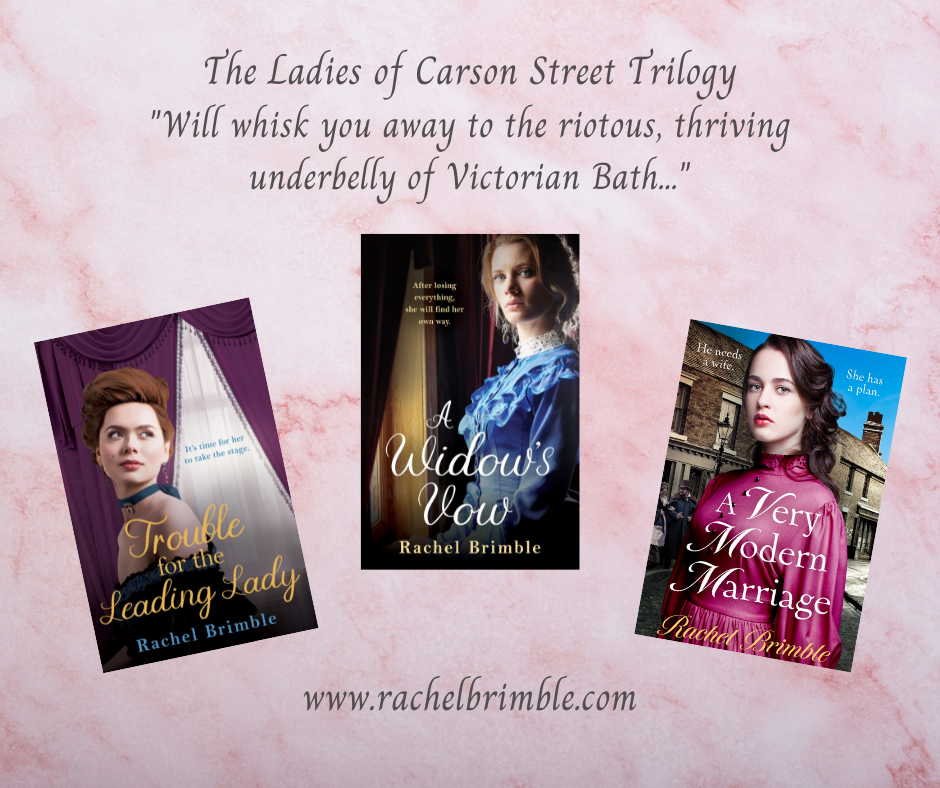
SUNDAY SCENE: RACHEL BRIMBLE ON THE SETTING FOR HER LADIES OF CARSON STREET TRILOGY

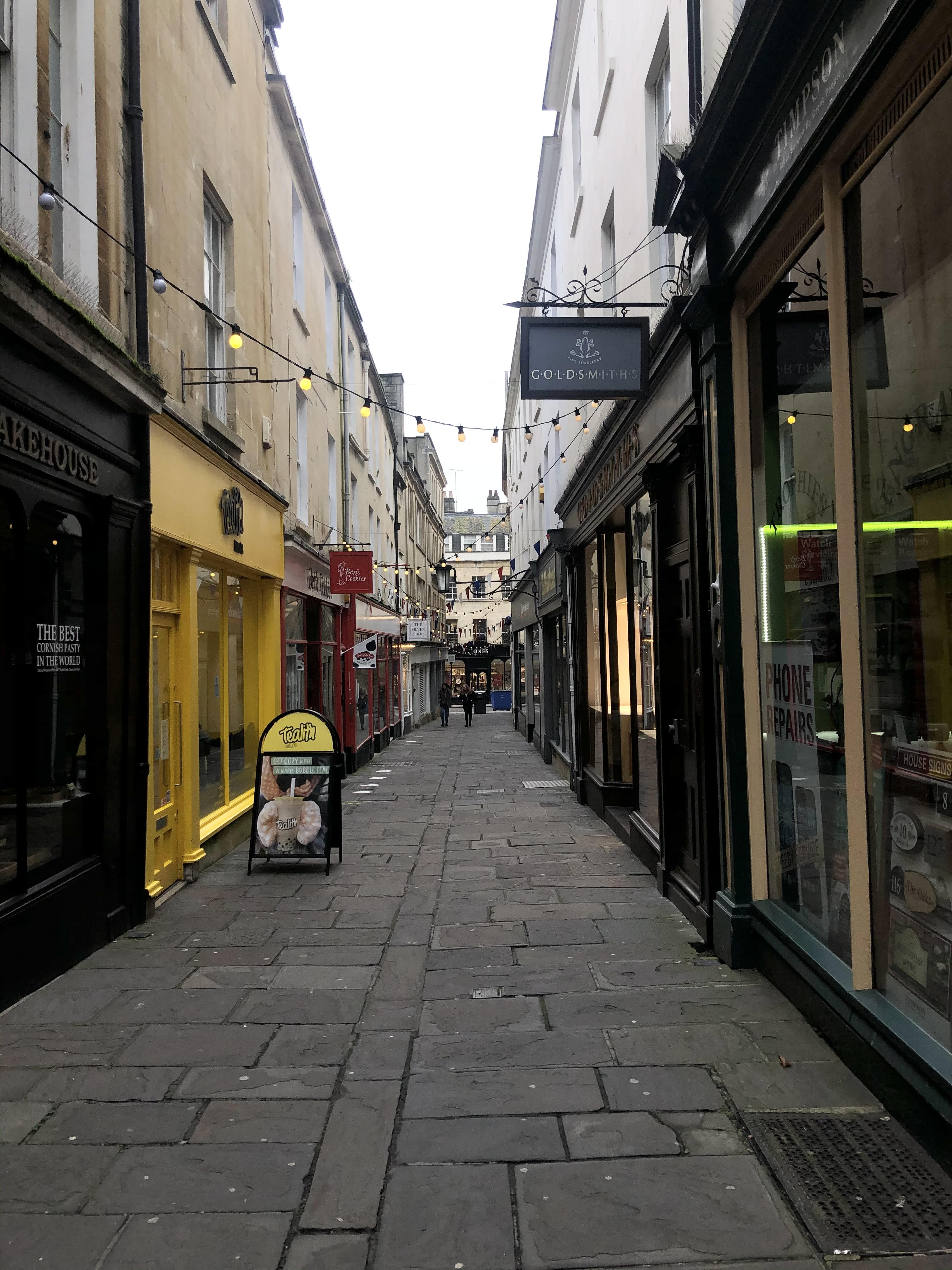
There are two reasons I have set all my historical romances in the wonderful city of Bath, England – one) I live just a short 30 minute drive away and 2) it is filled with the most beautiful Roman, Georgian and Victorian architecture, the most amazing side streets as well as a plethora of grand (and not so grand) buildings that I pretty much use as my imagination dictates.

As Bath is obviously a real place, you might be wondering how I can use some of its buildings however I see fit. The explanation is simple – I don’t tell readers which buildings are imaginary! Thankfully, unless I use famous Bath buildings like the Abbey, the Pump Room or Royal Crescent, my audience seem to be happy to follow my lead.

For my latest series, the Ladies of Carson Street, I once again return to Bath.

However, rather than spending time enjoying high tea in the Pump Room or dancing in the Assembly Rooms, you will find the heroines of the trilogy, Louisa, Nancy and Octavia, either living and working from their house on Carson Street, frequenting the backstreet taverns or watching an act at the Theatre Royal.

In book 1, A Widow’s Vow, Louisa and Nancy arrive in Bath from Bristol to start anew after Louisa is unexpected widowed and left with nothing more than the keys to a Bath property she had no idea existed…

They walked along the sweeping curved wall surrounding the gushing waters of the River Avon and a beautifully landscaped area known as, according to Louisa’s map, the Parade Gardens. The barren trees were interspersed with evergreens, the soil beds empty of flowers in winter but imaginings of how the gardens might look in the summer months gave Louisa a flicker of optimism.

Continuing to walk along the cobbled street, she and Nancy neared the row of terrace houses.

‘Carson Street.’ Nancy pointed to a sign bolted to one of the corner houses adjacent to a busy thoroughfare filled with carriages, horses and pedestrians. ‘This is it.’

Locating the right house wasn’t difficult as Louisa had memorised the deeds so often and so intensely, the pencilled sketch of Anthony’s property was clearly drawn in her mind. ‘Anthony’s house is—’

‘Ahem, your house.’ Nancy grinned.

‘My house is about halfway along the street.’ Louisa inhaled a shaky breath. ‘Come on. I want this over with.’

She marched ahead of Nancy, pulling a brass front door key from her purse. Purposefully, Louisa drew forth her anger at Anthony’s lies, betrayal and cowardice. Lord knew, she would have to take strength from somewhere if she was ever to believe such a property was now hers to do with as she would. Lifting her chin, she shrouded herself in an invisible layer of protection against whatever further hurts were to come in her uncertain future.

But once she was standing outside the residence, her bravado floundered.

The house was beautiful. Built in a butter-coloured stone, its sash windows were flanked with velvet drapery, the front door painted a dark grass-green, complete with brass knocker and a stone ornament decorating its step. The longer Louisa stared, the more strongly inevitability enveloped her. She had survived this long and she would continue to survive, come what may.


This extract perfectly introduces you to the tone of the series and to two of the main three characters in the trilogy. Gritty, sometimes tough, sometimes hilarious, the Ladies of Carson Street are an unforgettable trio!


Rachel’s Website: https://rachelbrimble.com/


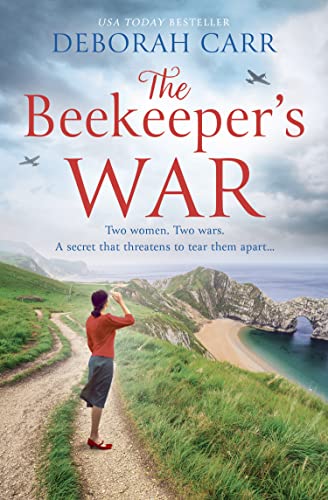
SUNDAY SCENE: DEBORAH CARR ON HER FAVOURITE SCENE FROM THE BEEKEEPER’S WAR

I’ve always dreamt of owning a folly and specifically to have one as my writing space. I’ve also always loved the thought of having a walled garden where I could grow vegetables, fruit trees and flowers. I don’t have either of these and doubt that I ever will but there was nothing stopping me putting both of them in a book. It had to be the right book though and when I was writing my latest historical novel, The Beekeeper’s War I knew this was that book.

The Beekeeper’s War is set during the First and Second World Wars when Pru Le Cuirot, a young Jersey girl and her friend go to work as nurses in a beautiful manor house in Dorset being used as a hospital for recuperating injured soldiers. Later in the book Pru’s daughter Emma goes to stay at the manor and discovers an unfriendly beekeeper tending to his beehives in a beautiful walled garden. When Emma arrived she was told to enjoy the grounds but stay away from the folly, which is why she went looking for someone to speak to and ask where the folly is so she that could avoid it.

Not wishing to go where she shouldn’t, Emma decided to ask someone so that she could avoid the folly. She spotted a walled area to her right with a painted wooden door, so she doubled back on herself and went to look inside. It was slightly open so she entered, relieved to see someone working at the far corner. It was a beekeeper. He would know where the folly was, surely.

‘Hello?’ Emma called. He didn’t seem to hear her as he stood pointing a metal container with smoke coming out of it at one of the hives. She walked closer to him and called out to him once again. ‘Excuse me?’

The next thing she knew, she was being pushed roughly from behind. Emma shrieked as she fell forward, landing hard on the stone pathway. She gritted her teeth as pain shot through her right knee, and, sitting up, she turned to see who had attacked her.

‘Buddy!’ the man bellowed. ‘Get down, now!’

Emma saw a large bouncy dog that looked like a cross between a Labrador and something else.

The man tapped his thigh and the dog loped over to him. ‘Are you hurt?’ he asked, hurrying over to her.

Emma raised her hand. ‘I’m fine,’ she insisted, not sure that she was, and rubbed her sore knee. She got to her feet.

The man stared at her. At least she presumed he was staring at her. It was a little difficult to see though the beekeeper’s hat with the black mesh obscuring his face.

‘Did you want something?’ He didn’t seem all that friendly all of a sudden, which was odd, seeing as it was his dog that had pushed her over. Maybe he was simply surprised to see a stranger in the garden.

‘Um, I was wondering if you could help me.’

‘Should you be in here?’

‘Yes.’ She realised that entering the walled garden hadn’t been the clever idea she had imagined it to be.

‘Really?’

She wasn’t sure what business it was of his but, wanting his help locating the folly, decided to appeal to his friendlier side. If indeed he possessed one.


The Beekeeper’s War is out on July 21st. Find out more about my books at deborahcarr.org.

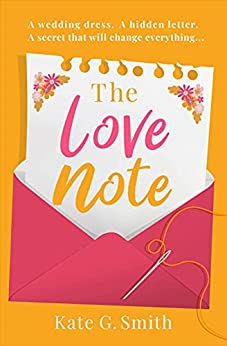
SUNDAY SCENE: KATE G SMITH ON HER FAVOURITE SCENE FROM THE LOVE NOTE

I grew up in Norfolk, so setting The Love Note here felt natural to me. It’s a beautiful county with rural villages and easy access to the vast stretches of glorious coastline.

Based in a fictional Norfolk village, The Love Note follows my main character, Maggie, as she sets about sorting the family home after her mother’s death. There, Maggie finds her mother’s wedding dress—which she’d been told was missing—and hidden inside are love letters written in French.

Maggie enlists the help of Nick, an old school crush, to help her decipher the letters and hopefully find her missing father. And one of my favourite scenes is where Nick asks for a favour in return.

He picks Maggie up in a battered old Volvo

‘So,’ I say, clicking my belt on, ‘where are we heading and what’s the big secret?’

Nick laughs and throws his arm over my seat to reverse back out onto the quiet country lane.

‘No secret,’ he says, his tongue between his teeth as he concentrates, ‘If there’s one thing you need to know about me, Maggie, it’s that I’m not a massive social communicator. No social media, very few texts.’

Nick winds down his window and I do the same. It’s the first week of September and the air is thick with the dust left behind from the combine harvesters. It whips through the car, sending my hair flapping all over the place.

As they drive on, Nick explains to Maggie that it’s his mum’s birthday, he needs help with the preparations, and they’re off to check out the venue.

He shifts gears and indicates to turn into an even smaller country lane where the grass verges seep onto the road and attack from both sides with long spindly fingers of soft wild wheat.

We park in front of an old barn with traditional Norfolk flint and red bricks which are somehow managing to hold themselves up despite their jaunty angle. A modern addition of floor-to-ceiling windows down one side give a view of the rustic interior.

When they head inside, Maggie gets carried away with ideas.

‘I can just imagine it lit up with a million fairy lights along the back wall, reflected in the window; tables with freshly picked wildflower bunches and candles in jars. I can picture your mum in a flower headdress like a giant daisy chain or a . . .’

I stop talking because in all my excitement of picturing the barn how I would love to see it, I realise I have no idea if Nick’s mum even likes flowers or if she gets bouts of hay fever that would mean she’d look like she was crying through her whole party if I cover the place in floral displays. Nick is staring at me, his face giving nothing away.

‘Sorry,’ I say, digging the toe of my ballet flat into a worn dip in the brick.

‘No, no that’s perfect. That’s exactly why you’re here.’ He is still watching me, and for a beat I watch him back.

He reaches into his pockets and hands me a small bag of pistachios.

He remembers.

I take them and thank him warily, remembering how I used to always have a bag of these with me at school to pick on throughout the day.


I love this scene, not only because I can lose myself in the Norfolk countryside, but also for the glimpse into the blossoming friendship between Nick and Maggie.


Find me in my Facebook group for writers https://www.facebook.com/groups/writingittoday

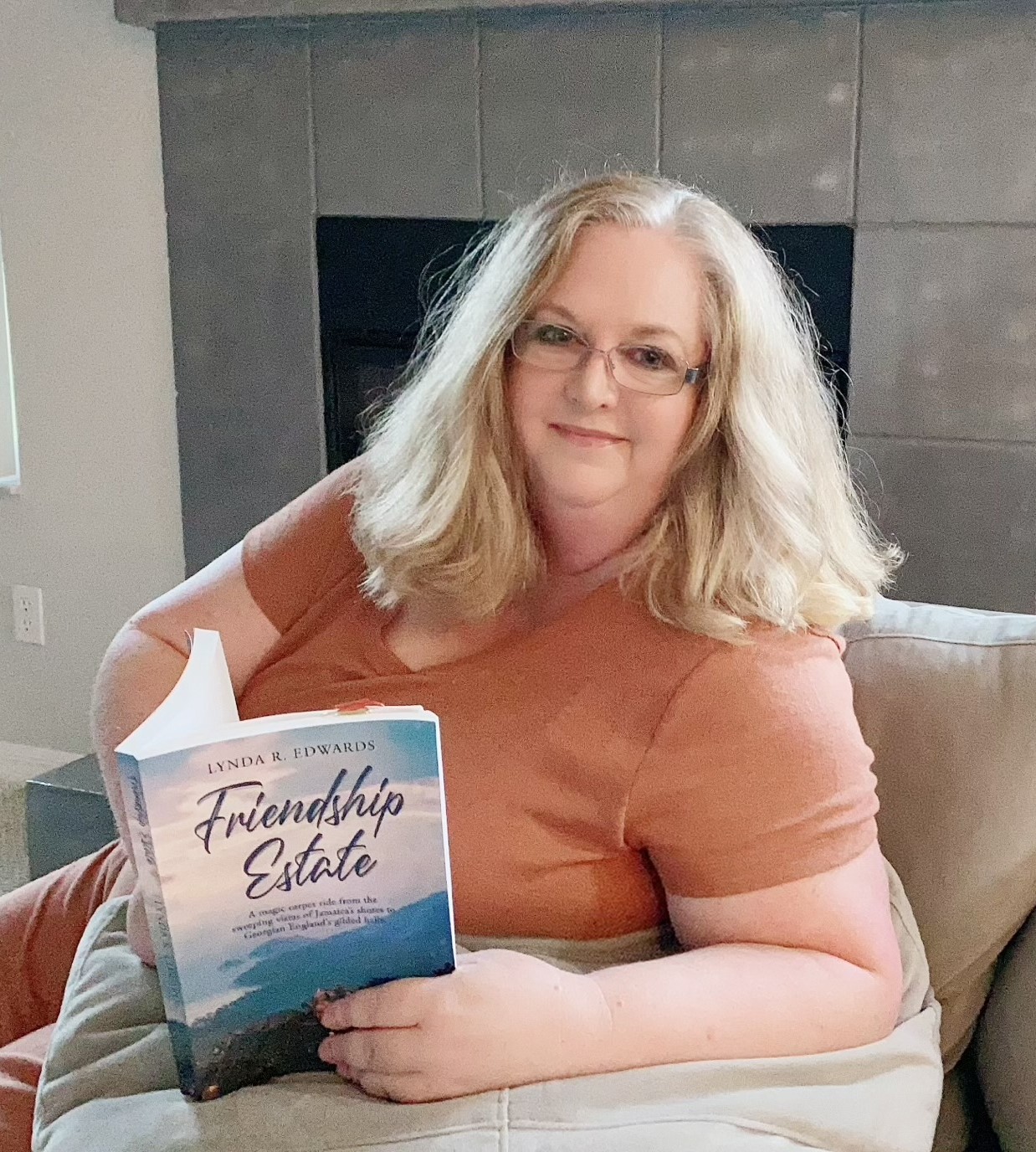
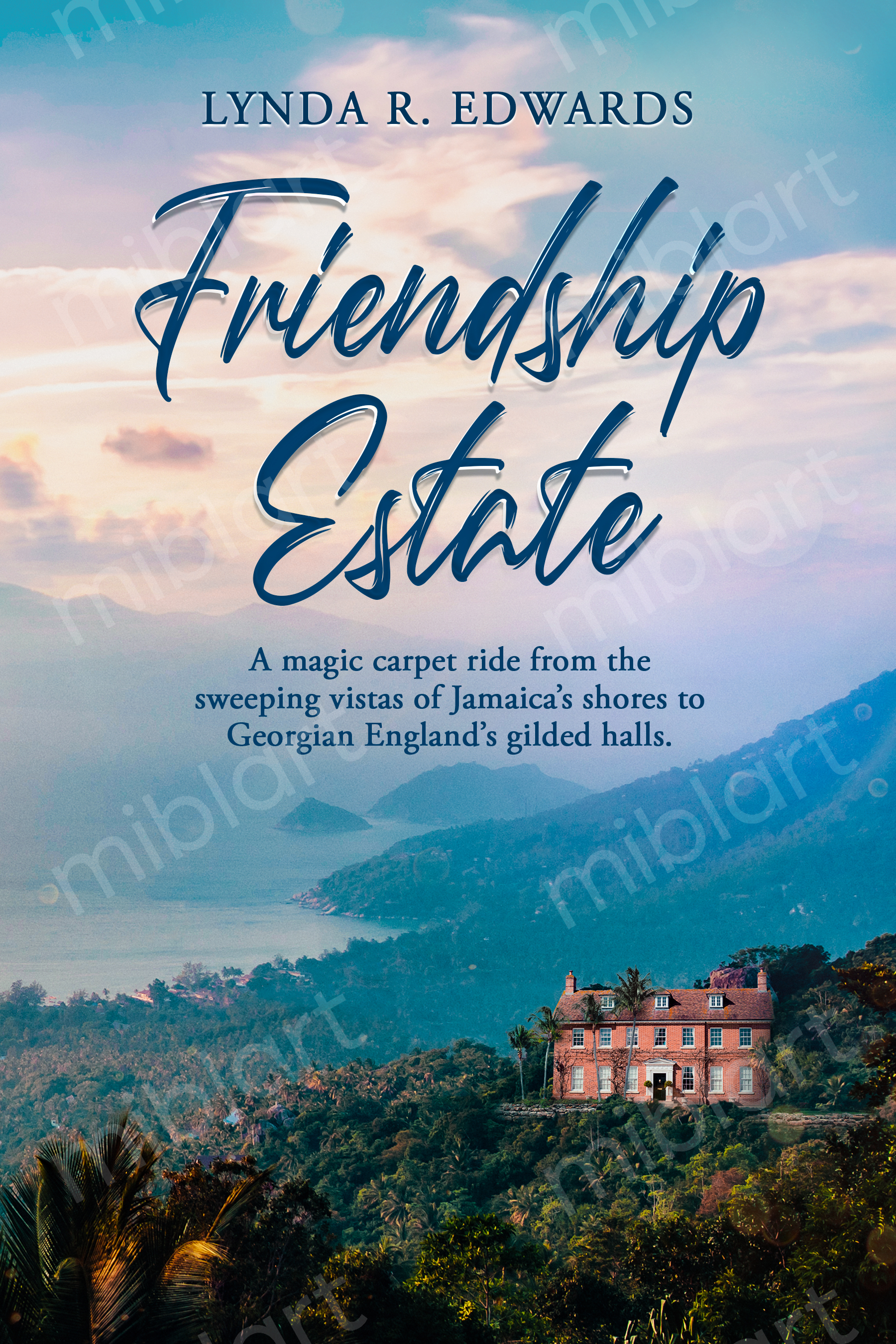
SUNDAY SCENE: LYNDA EDWARDS ON HER FAVOURITE SCENE FROM FRIENDSHIP ESTATE

My latest book, Friendship Estate, is set on the island of Jamaica, where I was born and raised.  In the late 1700s and early 1800s, the Caribbean Islands were at a crossroads.  The abolition of slavery was on the horizon.  In the colonies, the white and black races had been mixing for generations.  They had formed a new society with a culture born of oppression, harboring a deep desire to mix freely while charting a new course for themselves.  In Friendship Estate, we witness the intricate romances and elegant customs of a bygone age while meeting a captivating array of characters.

The story is very personal because eight generations of my family are buried on the island.  The story is based on one of many passed down through the generations.  But this one has always intrigued me, causing my imagination to take flight.

I loved writing this scene because I saw the scene unfolding in my mind’s eye.  I envisioned Sabine’s anger and felt her pain as she looked out at the beautiful scene unfolding in front of her, marred by the hatred she felt.  Sabine’s father is dying.  She is hurting and comes across her nemesis Brixton as he is swimming in the sea.

Sabine Holborn stood alone on the hill overlooking the white sand below her.  She watched as the sea turned from turquoise to dark blue.  The wind picked up the waves and crashed them against the shore, matching the anguish in her heart.  Her father was dying.  It was no longer if but when, and the unshed tears made the scene in front of her shimmer.  The loud sobs that racked her body had subsided as she rode to her favorite spot overlooking the endless expanse of the Caribbean Sea.  She loved Mount Sion, but it belonged to that hateful Brixton Dunbarton.

She had known Brixton Dunbarton all her life.  A few years older than she was, she watched as he flirted his way through all the eligible girls on the island.  All except her.  She had listened as her friends prattled on about how handsome he was, his blond hair kissed by the sun, they romanticized.  He was lean with long legs, hardened by years of riding and working his estate.  No one seemed to care that his clothes were last year’s fashions, slightly frayed and worn, or that his shoes were scuffed, and his dress stockings all had runs in them.  He was so beautiful; everyone overlooked his financial shortcomings.  As they grew older, a few girls had whispered of their romantic escapades with him.  He was always polite but never flirted with her and had proposed no romantic assignations.  It hadn’t taken long for her friends to notice.  They did not comment to her face, but she knew her standing with some of them had fallen, all because Brixton Dunbarton did not think she was important enough to flirt with her.  She hated him for it.

She watched as Brixton frolicked in the waves, not a care in the world.  He swam and splashed around, secure in his place in this world.  She did not have that luxury now, and it shook her natural confidence to its core.  She watched Brixton, and her resentment grew.  Why was his hateful father still enjoying his life while hers clung to his? 

Lynda Edwards is a Jamaican writer. To date, she has written two novels, Redemption Songs and her latest release, Friendship Estate.

Find out more about Lynda and her other books at www.lyndaredwards.com