
|
||||||
|
||||||
|
||||||
Category Archives: Featured
Grow Healthy Babies: The Evidence-Based Guide to a Healthy Pregnancy
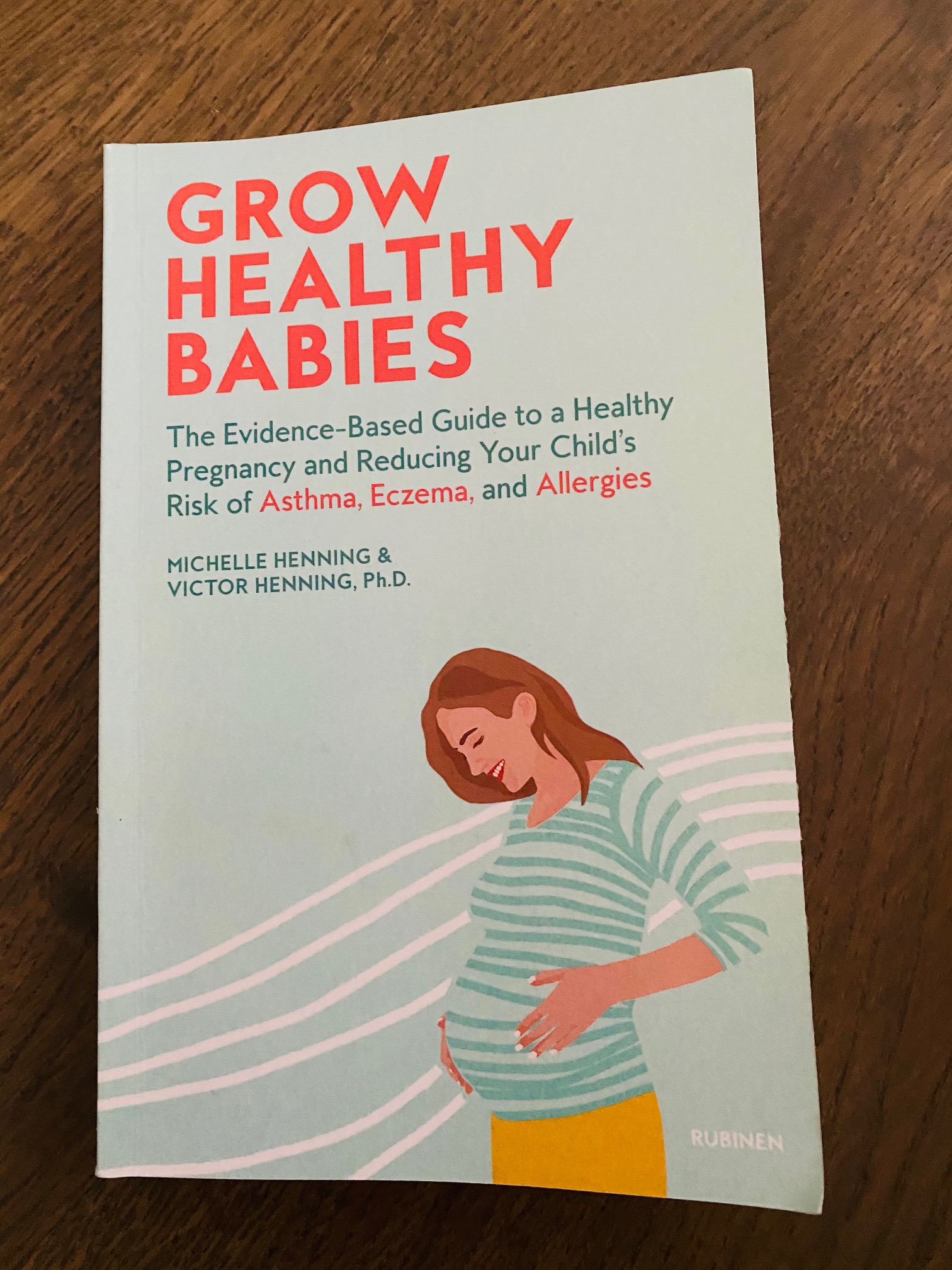 Being pregnant can feel like a minefield. Knowing what to eat and what to avoid can feel overwhelming. With allergies on the rise it adds more pressure. So I was excited to see the Grow Healthy Babies book. It is an evidence-based guide to reducing your child’s risk of asthma, eczema and allergies.
I was hoping it would not be a hippy-dippy book preaching to others what to eat and do, and I am happy to report it is not. It is a fantastic, well-researched book which backs up everything it says in droves. This book shows that you can make a huge difference to the health of your child, and it all starts in pregnancy. Pregnant women have more power than they realise.
While some of the research is not helpful to everyone- eating organic food is not within everyone’s range- I found the advice in this book invaluable. I would recommend it to anyone who is having a baby, or even thinking about getting pregnant. It is a truly great book and a triumph for the authors.
When lifelong asthma, eczema, and allergy sufferers Michelle Henning, a certified Nutrition & Health Coach, and her husband Dr. Victor Henning decided to become parents, they were well aware that half of all babies born today will develop allergies and up to a third will become asthmatic or suffer from eczema. Using their combined backgrounds in nutrition and science, they began investigating a mountain of medical literature on how to prevent chronic illness so that their baby would grow up healthy.
In their honest and enlightening new book Grow Healthy Babies, the Hennings share their research by distilling the latest medical evidence into a practical, easy to read guide that provides expecting parents with clear and simple steps to lower a baby’s risk of developing a chronic condition by up to 90%. With the goal of empowering parents-to-be or those planning to get pregnant with information about simple choices that improve their health and their child’s health, they cover a multitude of topics including:
- You can make a difference: By making different choices during/after pregnancy, you have the power to shape your baby’s health for life
- How your baby’s immune system develops, and how you can strengthen it to prevent chronic illness
- How friendly bacteria, your microbiome, shape both your and your baby’s health, and how to protect and improve your microbiome
- Which food choices and supplements during and after pregnancy make a real difference to your baby’s health, according to scientific studies
- Why environmental factors and certain household products can trigger chronic disease, and how to choose healthier alternatives
- How birth choices and breastfeeding can influence your baby’s long-term health
Grow Healthy Babies: The Evidence-Based Guide to a Healthy Pregnancy and Reducing Your Child’s Risk of Asthma, Eczema, and Allergies is available for pre-order at bookstores nationwide and online retailers such as Amazon.
Women can’t catch men’s earnings, even after any children have left home
- In 2018/19, women earned an average of £22,200 and men £27,400 (median).
- Men earned more than women at every age. At 20-24, men averaged £19,100 and women £17,700.
- On average, income before tax peaked at age 40-44 at £30,200. However, it peaked for men between the ages of 45-49, at an average of £34,100, and for women at age 40-44 at £26,000.
Now is the time for us ladies to take charge of our finances. Check your state pension entitlement and make sure there are no gaps in National Insurance contributions. Also consider taking out a LISA.
HMRC has issued a range of tax and income statistics: https://www.gov.uk/government/
Sarah Coles, personal finance analyst, Hargreaves Lansdown:
“Women are out-earned by men at every stage of their career, so if women are waiting for a better time to get started with their financial plans, they could be in for a very long wait.
Despite the fact that on average female students get better results at school, are more likely to go to university, and get more first class and upper second degrees, when they emerge from the education system, men are paid more. Between the ages of 20 and 24, women earn 7% less.
The official pay gap – which measures people doing the same work – is close to zero below the age of 40, so the difference is likely to owe much to the careers dominated by women being lower paid than those dominated by men, and how we value particular skills as a society. It’s also influenced by more women working part time from the outset, and some starting families at younger ages.
The gap between the average pay of women and men widens dramatically when people reach the age when they typically start a family. By their early 30s the gap is 13%, and by their early 40s it’s 22%. This is partly because women are overwhelmingly more likely to take career breaks in their children’s early lives, and make compromises over working hours and commutes in order to have more flexibility during their children’s school years.
There’s no time to catch up afterwards either, because not only are women paid far less later in their career, but they reach their peak earning years well before men too – at the age of 40-44 rather than 45-50. This owes something to the fact that senior management roles tend to have a later pay peak, so women continue to pay for missing out on promotions during key childcare years.
Women are also paid less later in their careers partly because once they have taken a financial hit relatively early on, they’re in the frame for any caring responsibilities that come along – including caring for elderly parents. This may mean they have to move into working part-time once again.
A solution to unequal pay requires a combination of an awful lot of things – from changing the way different skills are rewarded, to altering the balance of caring responsibilities in the home, and building workplaces that allow equality of flexibility. The pandemic may help accelerate some of this change, by revealing just how many jobs can be effectively completed with a much higher degree of flexibly, but this kind of societal change tends to be slow and incremental.
It means women can’t afford to wait for pay to equalise, they need to protect themselves now. These figures show the risk of putting off saving and investing, or building up your pension, until you’re in a better place financially. If you postpone it because you’re on a starting salary, or going on maternity leave or working part-time, then you could find yourself putting it off forever.”
Look What You Made Me Do by Nikki Smith


I love getting my teeth into a good psychological thriller and Look What You Made Me Do did not disappoint. The story is based around two sisters and what happens after their father dies and there is an inheritance up for grabs. But all is not as it seems and this books leads you through a gripping plot while your feet never touch the ground. The characters are all fabulously written. This book is outstanding and entertaining, what more could anyone want?
Two people can keep a secret . . . if one of them is dead.
Sisters Jo and Caroline are used to hiding things from each other. They’ve never been close – taking it in turns to feel on the outside of their family unit, playing an endless game of favourites.
Jo envies Caroline’s life – things have always come so easy to her. Then a family inheritance falls entirely to Jo, and suddenly now Caroline wants what Jo has. Needs it, even.
But just how far will she go to get it?
The Art of Repair by Molly Martin
 This is the book we all need in lockdown. Never have we had more time on our hands, and never have we appreciated the value of things more. This book show you how to mindfully mend and breathe new life into the things that you already have. It is also beautifully illustrated. Truly wonderful.
For Molly Martin, it all started with a pair of socks. Her favourite pair. When the heels became threadbare, her mother got out her darning mushroom and showed her how to reinforce the thinning stitches and bring them back to life. She has been stitching and darning ever since.
In The Art of Repair, Molly explores the humble origins of repair and how the act of mending a cherished item carefully by hand offers not just a practical solution but nourishment for the soul. Using her own beautiful illustrations, she guides us through the basics of the craft – from piecing and patching to the ancient Japanese art of Sashiko.
This book will stay with you long after you put down your needle and thread. It offers an antidote to our increasingly disposable lifestyle, encouraging us to reconnect not just with the everyday objects in our environment but also with ourselves.
Frost’s Mindfulness Series Week 4: Using your body as your anchor by Alex Bannard
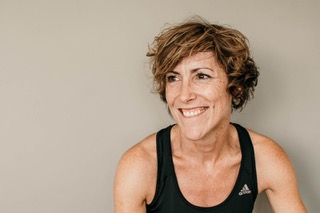
Last time we explored how we can use the breath as our anchor. In the same way that we are always with our breath, which is why it is such a powerful anchor, we are also always in your body. Our body is a power anchor into the present moment because, like the breath, it is both a guide & a tool.
We manifest stress with tightness & tension in our body. Being more mindful will help you recognise these physical manifestations & even if you can’t solve the mental anguish if you can ease the physical signs that can help stress to subside.
There are 3 typical areas of our body that generally hold a lot of tension & we are often oblivious to them: the shoulders, the jaw & our brow – I refer to them as the triangle of stress.
When we are triggered our body naturally flex’s in preparation to fight or fly & our body goes into survival mode. This protected us in cavemen days when there were actual life or death dangers.Nowadays, modern days stress: being late for work; being bombarded by emails; arguing with a loved one pose an emotional threat that is as real to our body & mind as a physical threat.
The shoulders are one of the most common areas of tension. It is believed that there is a motor nerve attached to the muscles in our shoulders & the back of the neck that is linked to breathing. Once we get stressed & start to shallow breathe, our shoulders tense up. Just being able to recognise this tension in our body gives us an opportunity to ease this & thereby create some space in our mind. Gently rotating the shoulders forwards or backwards or shrugging them up towards to your ears as you breathe in & as you breathe out shrugging them dramatically away from the ears can shift this tension. And it is surprising how just easing the physical signs of stress can relieve the mental anguish.
Another part of our body that we tend to hold tension in our jaw. When we are stressed we often clench our jaw. When we notice we are doing this we can simply release our jaw. You can also open your mouth & just in front of your ears is an indentation. Press it & hold for 6 seconds & repeat 3 times. Finally you make a scissor shape with your index & middle finger, placing your jawline in the hook of the fingers & sweep firmly from the chin to the hairline 6 times.
Finally that spot between our eyes: the furrowed brow. Pent up emotions & stress can fester between your eyebrows and become visible lines over time. You can ease this tension away by placing your first 3 fingers in the space between your eye brows around the third eye & rotate the fingers first in a circle in one direction 6 times & then the other. Noticing tightness & tension in our body is a sign or a guide, relieving that tightness & tension becomes the tool to relieving the mental anguish.
Another reason we can use our body to anchor us in the moment is that for many, being physically active, they become more mindfully aware of the present moment. Practising yoga is a great way to practice mindful movement & become more in tune with your body.
Practicing a body scan meditation is another way to ground our self in the present moment, as we scan through the body we become mindful of the sensations in our body, any tightness, becoming aware what we may need to do to alleviate this tension & in doing so alleviate any mental distress we may be experiencing.
To try a body scan meditation for yourself, simply email Alex to the email address below quoting Frost body scan. Next time we will be exploring the many benefits from practicing mindfulness & meditation. So by becoming more aware of the signs of tension in our body & we can help alleviate the affects of stress by mitigating the physical manifestations.
Alex is based on the edge of the stunning Cotswolds & has been sharing her love for all things yoga & mindfulness for the last 8 years, not just in the UK but also around the world. Her mission is to help everyone discover a sense of peace & calm within & to encourage them to embrace regular self-care practices.
If you would like more information on how to practice mindfulness, meditation & yoga message her at alex@myananda.co.uk.
For free resources check out her Facebook group: Mindfulness & Yoga for Self-Care, here is the link: https://www.facebook.com/groups/MindfulnessYoga4Relationships
Alternatively please check out her website: www.myananda.co.uk
The Joy in You by Cat Deeley | Book Reviews.
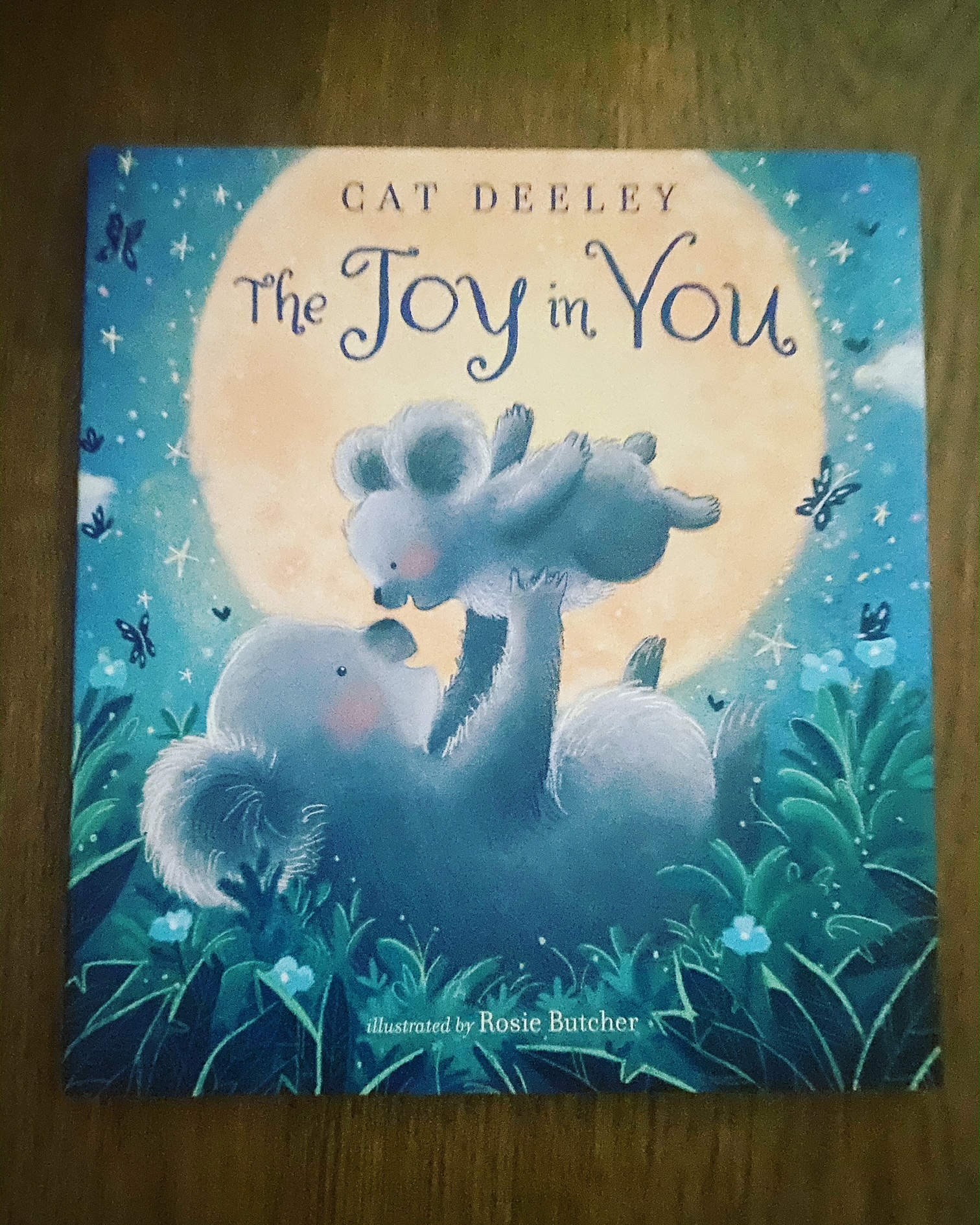
I really loved this book. It has beautiful illustrations which are matched with lovely, inspiring words to let children know that it is okay to be themselves, and also go after their dreams. A great book from TV presenter Cat Deeley. My children loved it. Inspiring and positively affirming.
Encourage kids to live out loud and be their truest selves with this picture book from media personality, national treasure and mum, Cat Deeley.
Dream big, as big as the night sky full of stars.
When you discover the things you love, you’ll find true joy.
Journey through a magical world, filled with a colourful cast of animals, where readers have endless opportunities to be themselves and find freedom in expression. They will delight in the silly humour and undeniable spirit of this rhythmic and beautifully illustrated picture book-and take to heart the message that they are enough exactly as they are!
Cat Deeley’s debut is an ideal bedtime book that you can read to your little one over and over again and is the perfect gift for birthdays and baby showers.
An Award-Winning Refill and Recycling Initiative from PureLakes
One of the most annoying things about finding good skincare is sustainability. The search for good, environmentally-friendly, products can seem endless. Well, it is time to call it off: Pure Lakes has won a National Recycling Award, and rightly so. They have a revolutionary refill initiative which also gives customers 30% off the price when they return the packaging and reorder.
The products are natural and made in the beautiful Lake District. The packaging itself it biopolymer which is made with sugarcane. I have tried their products and they are fantastic and they smell amazing. I cannot recommend this brand enough. They are truly amazing.
“Why should loyal customers be out of pocket for doing the right thing…”
Natural skincare brand Pure Lakes has won a National Recycling Award for its revolutionary refill initiative. Their pioneering progress towards ‘closing the loop’ has been recognised in the Circular Economy category at the National Recycling Awards.
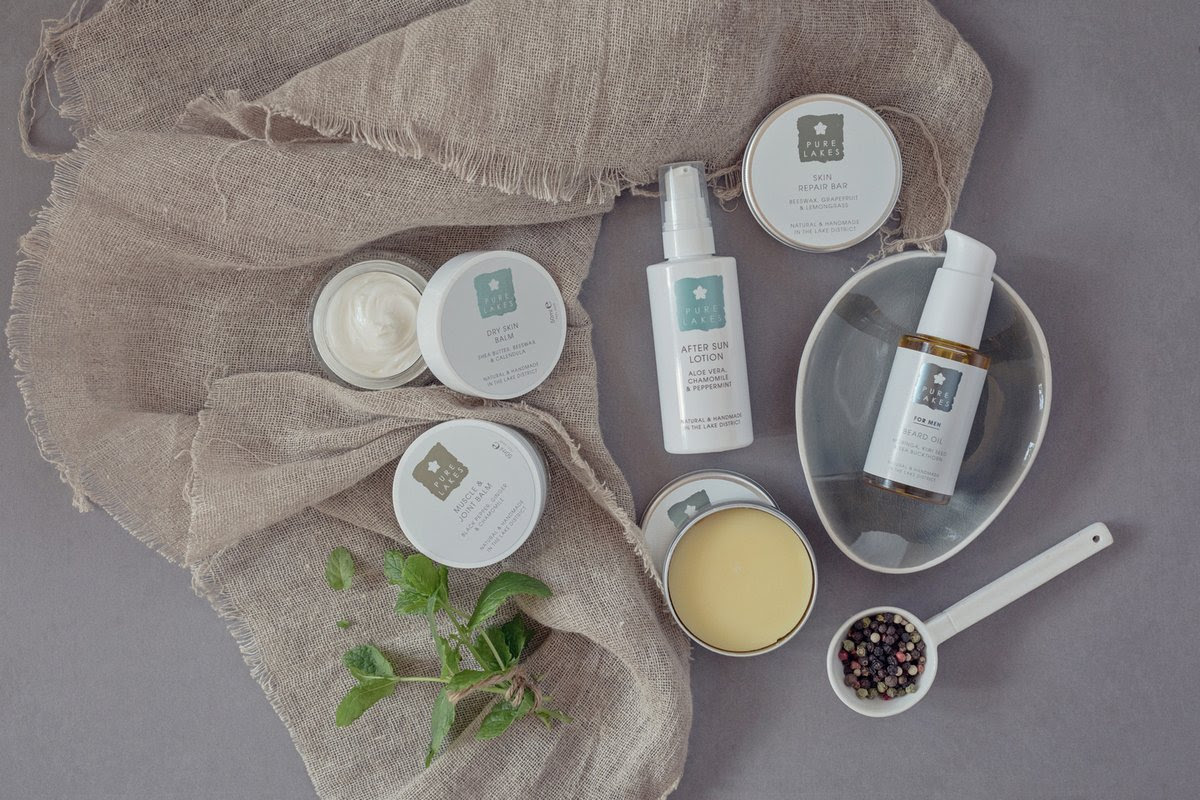
Owners Claire and Gareth McKeever ask customers to return their original, sugar-based biopolymer bottles to be refilled, rather than being sent refills in additional pouches as is available with many brands.
“Having researched the options,” Gareth said, “we realised that despite using less plastic than new bottles, pouches are not easily or widely recyclable. We have made Reduce, Reuse, Recycle a big part of our business but have gone two steps further and given the entire Refill process a Rethink.”
Pure Lakes Skincare are pioneering this new return and refill process and are the first brand to offer such a comprehensive service. Unlike other brands, the refills are available across the entire Pure Lakes range, with 30% off the cost price to help cover the return postage.
Gareth continued: “From a manufacturing business perspective it is not the most efficient process as all batches are handmade, perhaps one of the reasons other brands don’t offer it. However, we don’t want our loyal customers to be out of pocket for doing the right thing, they should be rewarded for refilling and reusing, and the more people that do it the easier it becomes for us to carry it out.”
Having consciously sourced all their packaging, a refill service that went one step further seemed like the obvious next step for Pure Lakes, which already has a strong reputation for being ethical and sustainable.
On receiving the empties, they are washed and refilled from small batches the team handmakes themselves in Staveley, adding a new date and batch number before returning them to the customer as good as new.
Since launching in 2006, the brand has been using 100% traceable, natural and biodegradable raw ingredients to make their products and all the formulas are free from synthetics, parabens and SLS.
This initiative is just one of many choices they’ve made towards carbon neutrality. They’re in the process of raising finance to build a new workshop which if successful will be powered by air source heat pumps and solar panels, where they’ll be able to grow their own ingredients.