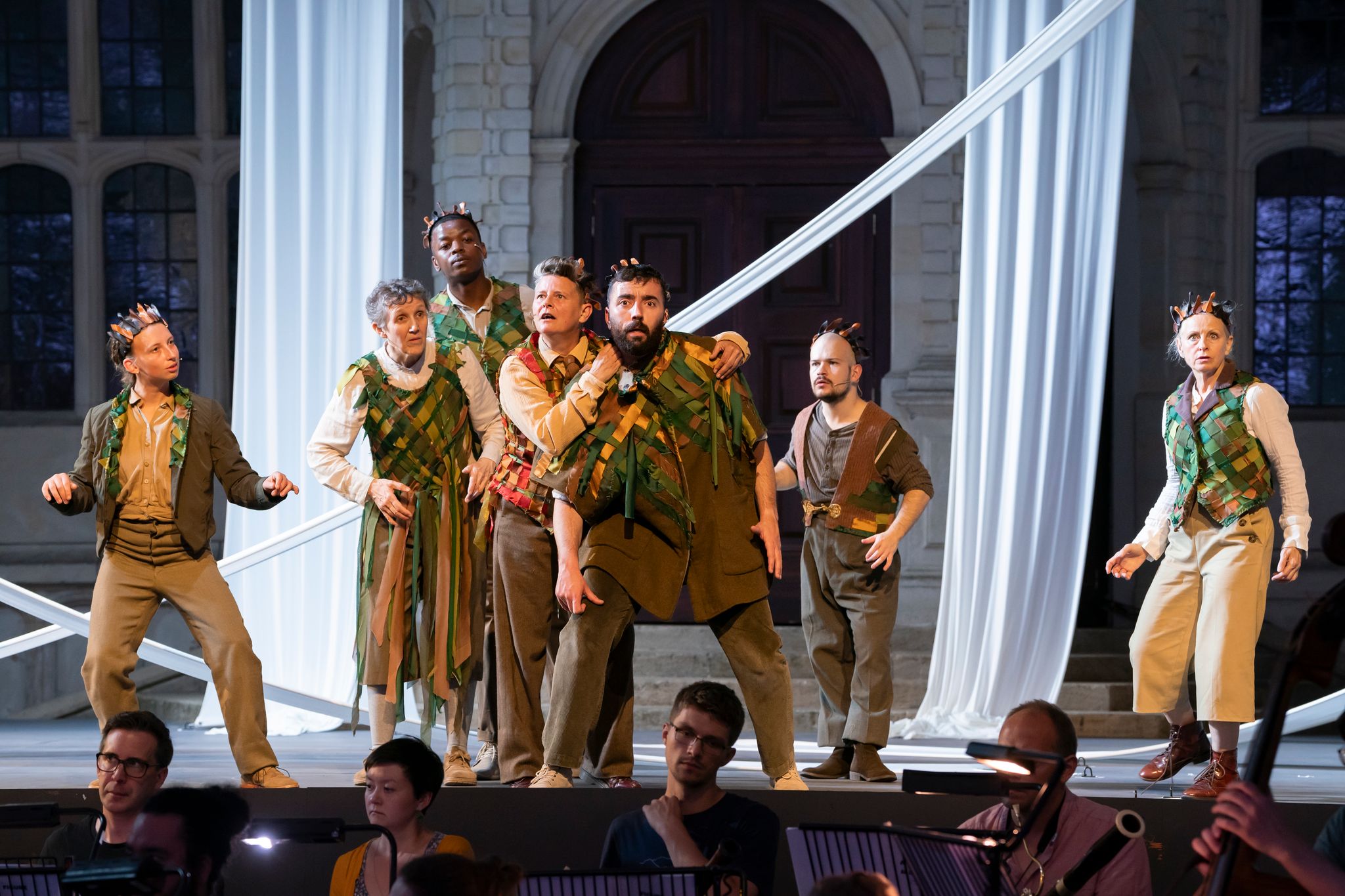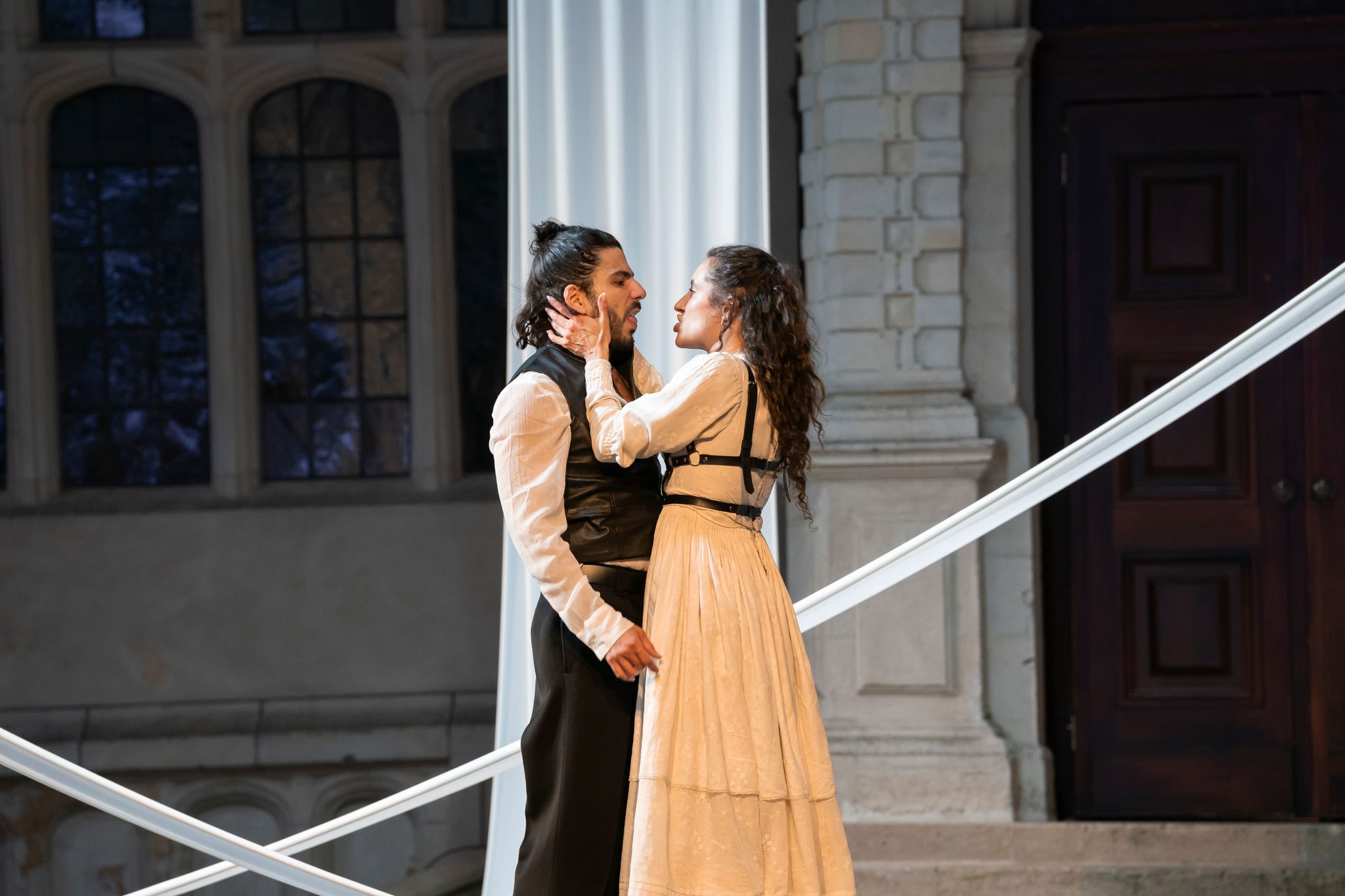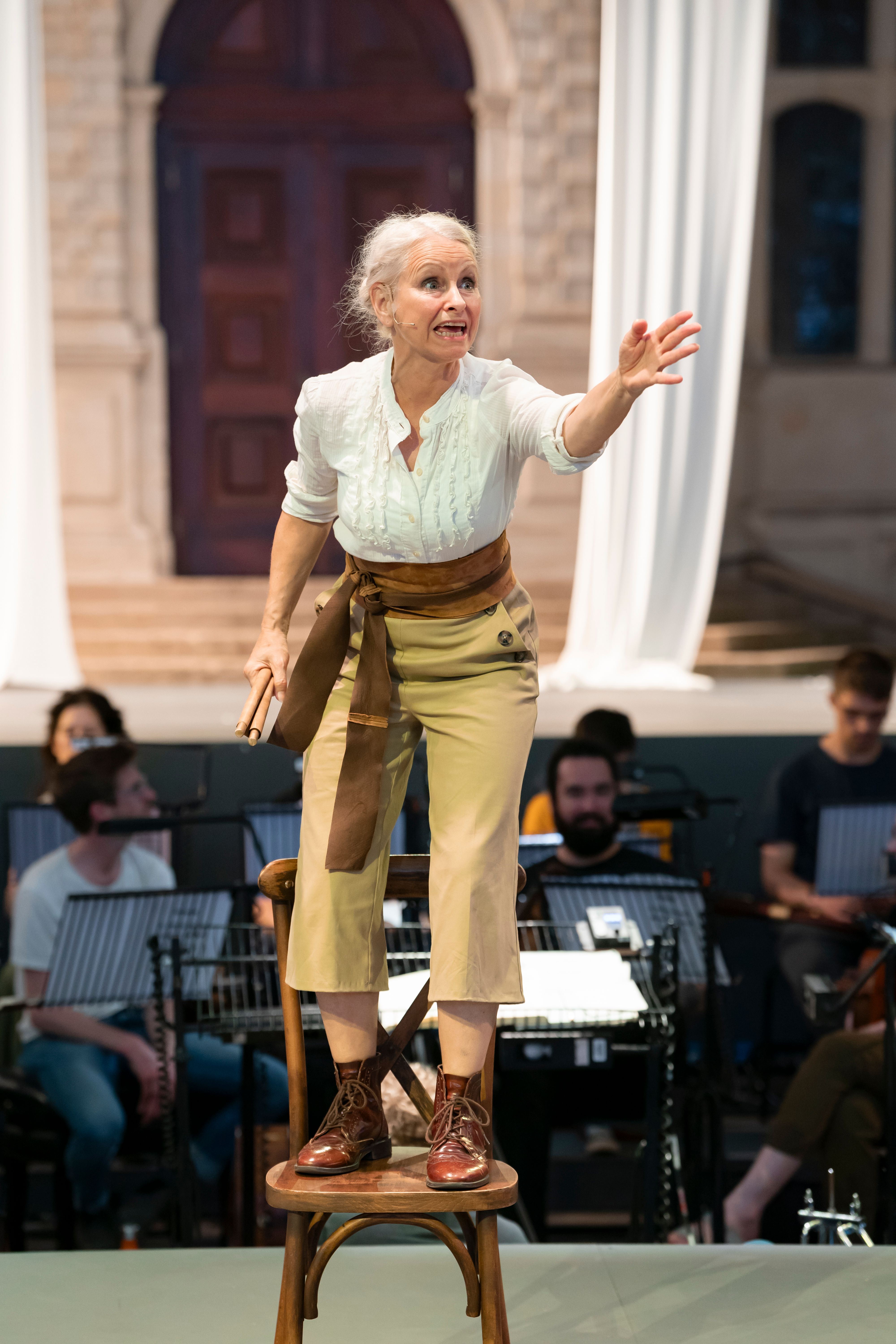
Michael Rowan is counting down the days to his visit to Opera Holland Park to enjoy one of his favourite Shakespeare plays set to the music of Mendelssohn at the Holland Park Theatre, Ilchester Place, London W8 6LU

If, like me, you find it annoying to read a great review, start making plans, only to discover that all the tickets have been sold – read on…

I am writing this without (as yet) having seen the production, but all the elements are present for an excellent evening’s entertainment. However, if you prefer to wait until the review, feel free to come back and read my thoughts, but if that means that you can’t the get a ticket, don’t blame me.

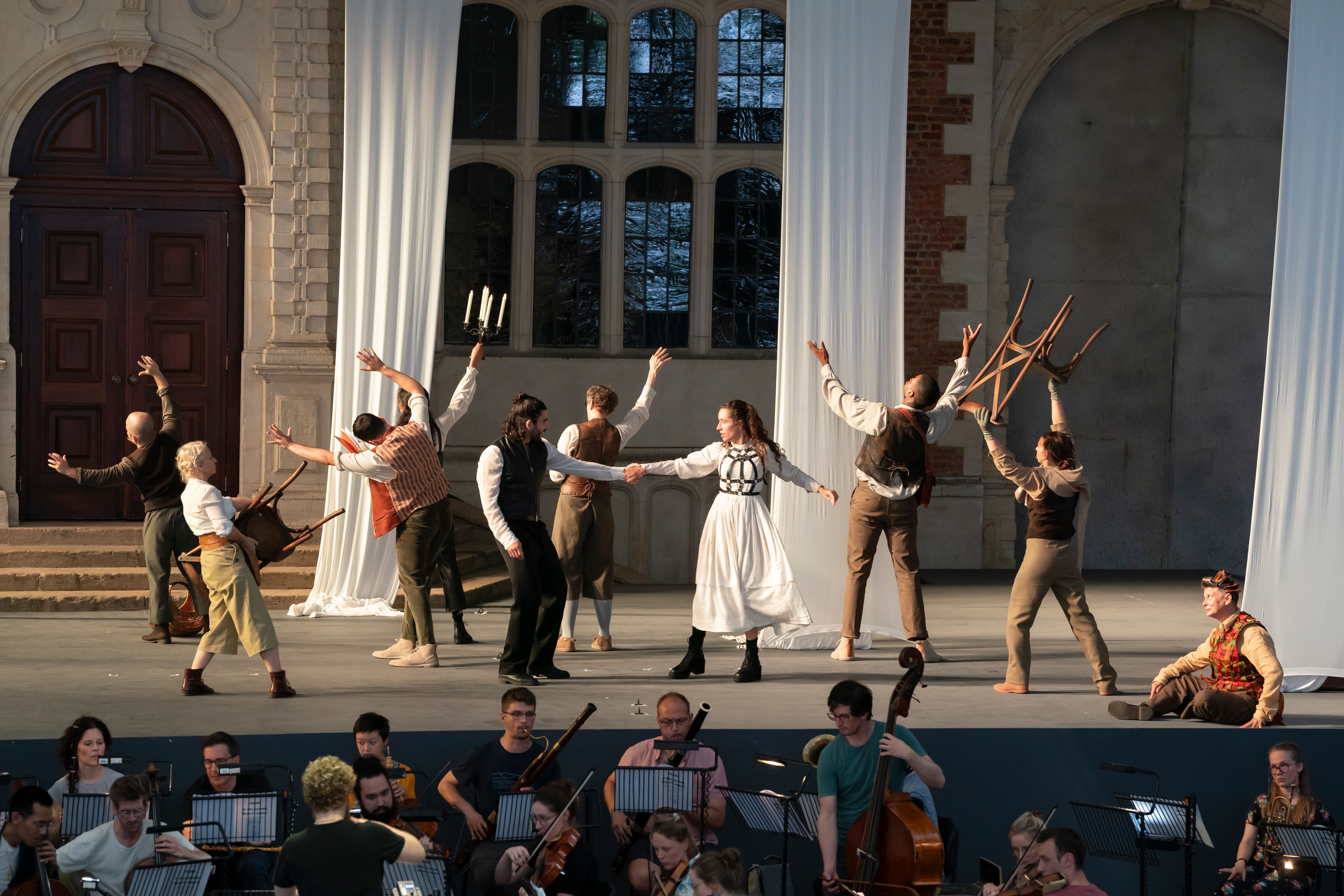
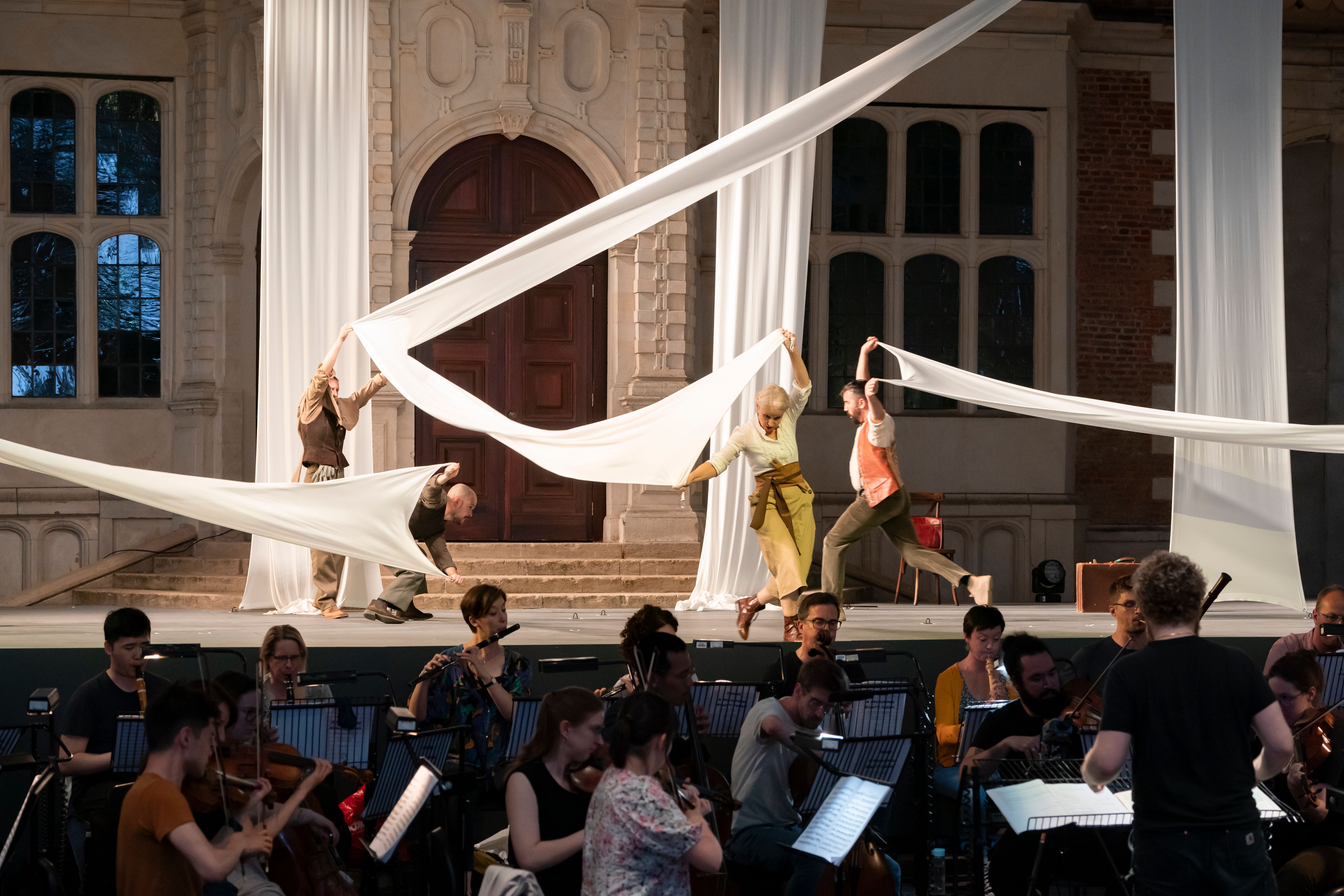
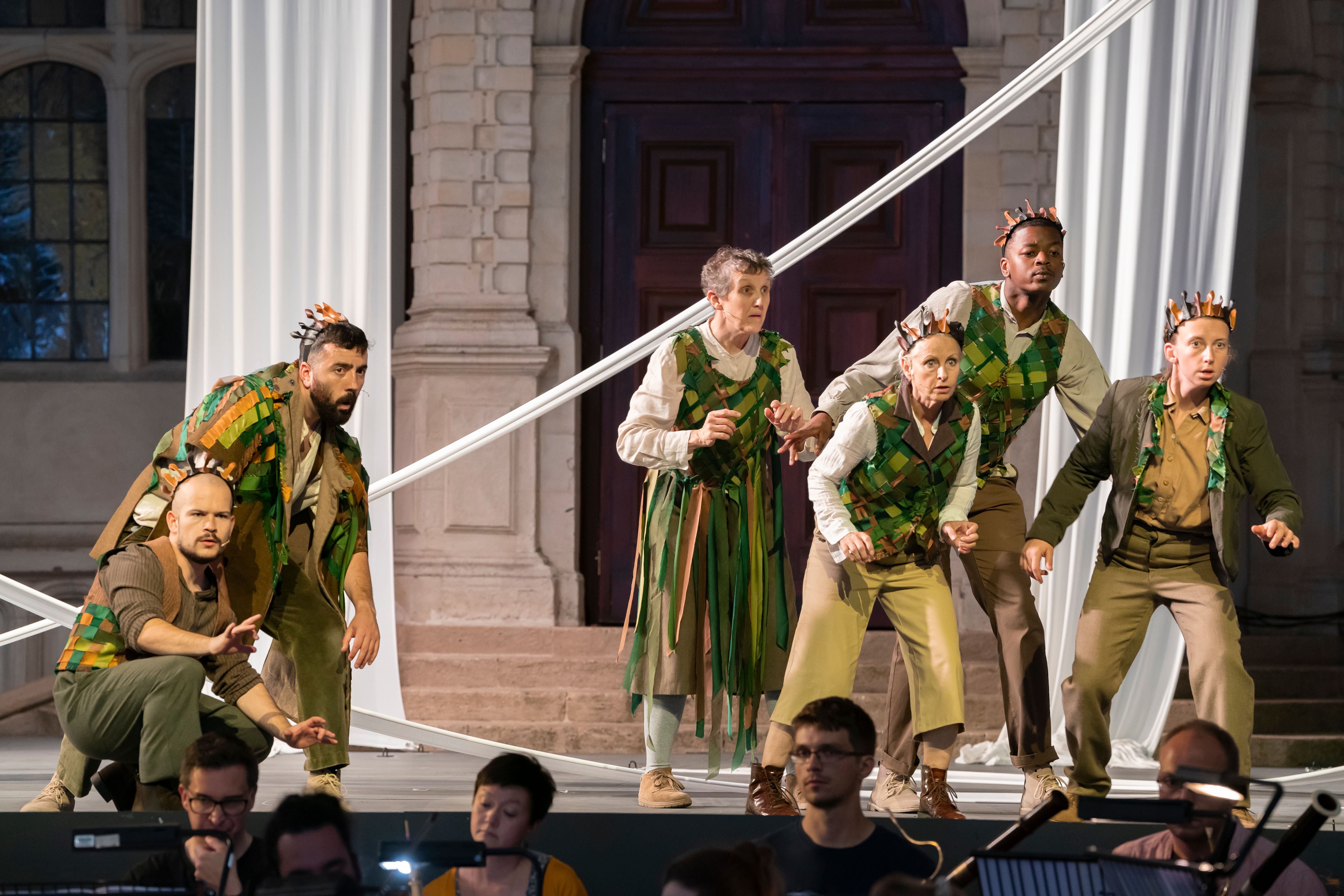
Could there be a more perfect setting of Midsummer Night’s Dream, the latest offering at Holland Park Opera?

This summer, sensational historical performance ensemble Figure return with a fresh staging of Shakespeare’s classic comedy, A Midsummer Night’s Dream.

Unbridled desire meets magic as Figure stages Shakespeare’s celebrated play, accompanied by Mendelssohn’s enchanting orchestral score.

Figure’s performance of A Midsummer Night’s Dream will feature Mendelssohn’s famous incidental music. Mendelssohn wrote the extended ‘Overture’, followed by numbers such as the ‘Wedding March’.

Reuniting the play with this glorious music, Figure’s musicians will be playing instruments modelled on those from Mendelssohn’s time, including the rarely heard ophicleide.

As Midsummer’s Eve approaches, four young lovers and a troupe of am-dram artisans venture deep into the woods, but little do they know about the amorous antics about to ensue … In the enchanted forest, fairies rule and mischief- maker Puck is on hand to ensure the course of true love is anything but smooth. With trickery, havoc, and chaos afoot, it isn’t long until love triangles, mistaken identities and magical transformations begin to unfold.

A Midsummer Night’s Dream: A play by William Shakespeare with orchestral, vocal, and choral music by Felix Mendelssohn. Dates Thursday 29th June – Saturday 1st July 2023 Running time

2 hours, 45 mins (including interval)

Location Opera Holland Park Theatre, Ilchester Place, London W8 6LU

Tickets are priced £20 – £100 and can be purchased at https://operahollandpark.com/productions/a-midsummer-nights-dream/

How To Write A Lens Essay

A lens essay is a type of comparative paper that, instead of comparing two subjects, compares two different interpretations of one subject. When writing a lens essay, it is important to choose a text that has two different interpretations. These interpretations can be from different time periods, different authors, or even different schools of thought. The key to writing a successful lens essay is to use your own critical analysis of the texts to argue for the validity of one interpretation over the other.

There are a few steps you can take to ensure your lens essay is successful. First, it is important to have a clear understanding of both interpretations of the text. Second, you need to develop a thesis that takes a position on which interpretation is more valid. Finally, you must use evidence from the texts to support your position.

When writing your lens essay, be sure to:

1. Choose a text that has two different interpretations.

2. Develop a thesis that takes a position on which interpretation is more valid.

3. Use evidence from the texts to support your position.

Enhance your essay writing skills and boost your academic success with Trust Essay Writers. Our blog is dedicated to providing valuable tips, insights, and resources to help you become a confident and effective essay writer. Whether you’re struggling with essay structure, researching techniques, or polishing your writing style, our expert advice is here to guide you. Visit https://trustessaywriters.biz/ to access our wealth of knowledge and elevate your essay writing to new heights. Trust Essay Writers for all your essay writing needs.

Understanding the Purpose of a Lens Essay

A lens essay is a type of critical writing that focuses on a single text, poem, play, or work of art through the perspective of a particular idea, theory, or lens. The purpose of a lens essay is twofold: to explore the significance of the text under analysis and to articulate your own argument about that text.

When approaching a lens essay, it is important to keep in mind that you are not writing a traditional research paper. In a research paper, you would typically present a series of evidence to support your argument. In a lens essay, however, your goal is not to simply present evidence, but to critically engage with the text under analysis. This means that you will need to bring your own interpretation to the text and use evidence from the text to support your claims.

There is no one right way to approach a lens essay, but there are a few things that you should keep in mind as you write. First, it is important to select a text that you can find interesting and that you can find evidence to support your claims about. Second, you will need to develop a clear thesis statement that articulates your argument about the text. And finally, you will need to support your claims with evidence from the text itself.

If you are having trouble getting started on your lens essay, try brainstorming a few possible ideas. Once you have selected a text and a lens, you can begin to develop a thesis statement. Remember, your goal is not simply to summarize the text or to provide evidence, but to critically engage with the text and to develop your own argument.

Once you have developed a thesis statement, you can begin to gather evidence from the text to support your claims. As you read, take note of passages or quotes that you think could be helpful in supporting your argument. When you have gathered enough evidence, you can begin to organize your essay.

When organizing your lens essay, it is important to keep your argument in mind. Begin by introducing your text and your lens, and then present your thesis statement. After your thesis statement, you can provide evidence from the text to support your claims. Finally, conclude your essay by reaffirming your argument and showing how your evidence supports your claims.

Remember, a lens essay is not a research paper. You are not simply presenting evidence, but critically engaging with the text under analysis. By approaching the text from a particular perspective, you can bring new insights and interpretations to the text. By developing a clear argument and supporting it with evidence, you can write a successful lens essay.

Selecting a Primary Text and Secondary Source

A lens essay is a type of comparative paper that, instead of comparing two subjects, compares a single subject against a secondary text. The purpose of a lens essay is twofold: to demonstrate your critical reading and writing skills, and to reveal your ability to analyze a complex text through the lens of another text.

In order to write a successful lens essay, you must first choose an appropriate primary text and secondary source. The primary text is the work that you will be using as your lens; it is the work through which you will interpret the secondary source. The secondary source is the work that you will be using as your main point of reference; it is the work that you will be interpreting through the lens of the primary text.

When choosing your primary and secondary texts, there are a few things to keep in mind. First, the texts should be from different genres (e.g., you wouldn’t want to compare a novel to a non-fiction work). Second, the texts should be of different lengths; a short story would not be an appropriate primary text if your secondary source is a full-length novel. Third, the texts should be from different time periods; it would be difficult to compare a contemporary work to a work from the Victorian era, for example.

Once you have selected your primary and secondary texts, you are ready to begin writing your lens essay. The first step is to read both texts carefully, taking note of any passages or ideas that stand out to you. As you read, you should also be thinking about how the two texts might be connected; what are the similarities and differences between them? What is it about the lens text that makes it a good tool for interpreting the secondary text?

After you have finished reading both texts, it is time to start writing your essay. The first step is to write a thesis statement; this should be a single sentence that sums up the overall point you will be trying to make in your essay. For example, your thesis statement might be “In ‘The Great Gatsby,’ Fitzgerald uses the character of Jay Gatsby as a lens through which to critique the empty materialism of the 1920s.”

Once you have written your thesis statement, you can start to develop your argument. In your body paragraphs, you will want to discuss how the lens text sheds light on the secondary text. What does the lens text reveal about the secondary text that we might not have been able to see otherwise? How does the lens text help us to understand the themes and ideas of the secondary text in a new way?

When you are writing your essay, be sure to support your claims with evidence from both texts. Quotations from the texts will help to illustrate your points, and will also show that you have read both texts closely. In addition, you should also make sure to explain how your evidence supports your thesis statement; simply quoting a passage from the text is not enough, you must also explain why that passage is significant.

A lens essay can be a challenging, but ultimately rewarding, assignment. By carefully selecting your texts and developing a well-supported argument, you can use the lens essay to reveal new insights into familiar works.

Analyzing and Interpreting the Primary Text

A lens essay is a type of close reading that focuses on a single text or group of texts. Unlike other forms of close reading, a lens essay requires that you not only analyze the text (or texts) in question, but also interpret it in light of another text, typically one that is considered to be a classic or canonical work.

The idea behind a lens essay is that you take a single text and use it as a lens through which to view another text. In other words, you use the first text to shed light on the second text. The lens text can be either shorter or longer than the target text, but it should be of a similar genre (e.g., if you’re writing about a novel, you would use another novel as your lens).

To write a successful lens essay, you’ll need to do the following:

1. Choose a target text and a lens text.

2. Read both texts closely, taking careful notes.

3. Develop a thesis about how the lens text illuminates the themes, ideas, or characters in the target text.

4. Write an essay in which you analyze the target text using the lens text as a guide.

When choosing a target and lens text, look for works that share common themes, ideas, or characters. For example, if you’re interested in the theme of love in Romeo and Juliet, you could use another Shakespeare play, like A Midsummer Night’s Dream, as your lens. Or, if you’re interested in the character of Hamlet, you might use another character-driven play, like Macbeth, as your lens.

Once you’ve chosen your texts, read them both closely, taking careful notes. As you read, think about how the lens text sheds light on the target text. What themes, ideas, or characters do they share? How do they differ? What does the lens text reveal about the target text that you might not have noticed otherwise?

Once you’ve considered these questions, you should be ready to develop a thesis about how the lens text illuminates the target text. Your thesis should be specific, and it should make an argument about how the lens text helps us to understand the target text in a new or different way.

Finally, write an essay in which you analyze the target text using the lens text as a guide. In your essay, be sure to discuss both the similarities and the differences between the two texts. How do they illuminate each other? What can we learn from looking at the target text through the lens of the other?

A lens essay can be a challenging, but ultimately rewarding, exercise in close reading and interpretation. By using one text to shed light on another, you can gain a deeper understanding of both.

Exploring the Lens or Theoretical Framework

When you are asked to write a lens essay, you will be asked to analyze a particular text through a specific lens. This may be a literary work, a film, a political document, or anything else that can be looked at in different ways. In order to write a successful lens essay, you will need to have a strong understanding of the text you are analyzing and the lens through which you will be viewing it.

There are a few steps you can take to ensure that your essay is successful. First, it is important that you have a clear thesis statement that outlines the main argument of your paper. Next, you will need to provide a detailed analysis of the text, using evidence from the work itself to support your claims. Finally, you will need to discuss the implications of your analysis and how the work can be interpreted in different ways.

If you follow these steps, you will be well on your way to writing a successful lens essay. Remember to stay focused on your argument and to use evidence from the text to support your claims. With a little practice, you will be able to write a lens essay that explores the different ways a text can be interpreted.

Identifying Points of Convergence and Divergence

In a lens essay, two texts are brought into conversation with one another in order to shed new light on each. The lens essay typically employs a theoretical text as a lens and uses it to examine a more concrete text. In this way, the lens essay brings together two texts that may initially seem quite different in order to explore a larger issue.

There are a few things to keep in mind when writing a lens essay. First, it is important to identify the points of convergence and divergence between the two texts. Convergence occurs when the texts share something in common, while divergence occurs when the texts differ from one another. It is important to note both the points of convergence and divergence, as they will inform your reading of the texts.

Next, it is important to situate the texts within a larger context. What is the historical moment in which the texts were written? What are the larger issues at play that the texts address? By situating the texts within a larger context, you can begin to see how they speak to one another.

Finally, it is important to bring your own critical lens to the texts. What are you hoping to learn by bringing these texts into conversation with one another? What new insights can you glean from this conversation?

By keeping these things in mind, you can write a strong lens essay that brings two texts into conversation with one another in order to explore a larger issue.

Crafting a Clear Thesis Statement

A thesis statement is a sentence or two that states the main argument of your essay. It tells your readers what you’re going to be discussing in the paper and helps to keep your writing focused. In a lens essay, your thesis statement will typically be located at the end of your introduction.

There are a few things to keep in mind when crafting your thesis statement for a lens essay:

1. Make sure that your thesis statement is clear and concise.

2. Be sure to take a position on the issue at hand. A lens essay is not simply a summary of another text.

3. Be sure that your thesis statement is arguable. In other words, it should be something that someone could reasonably disagree with.

4. Keep in mind that your thesis statement will likely be one of the first things that your readers encounter in your paper. As such, it’s important to make sure that it is well-crafted and pack a punch.

With these things in mind, let’s take a look at a few examples of thesis statements for lens essays.

Example 1:

“In ‘The Great Gatsby,’ F. Scott Fitzgerald uses the lens of Jay Gatsby to explore the issue of the American dream.”

In this thesis statement, we can see that the author has taken a position on the issue at hand (the American dream) and that they are using the character of Jay Gatsby as a lens through which to examine it. This is a strong thesis statement that is arguable and provides a clear focus for the rest of the essay.

Example 2:

“Though ‘The Catcher in the Rye’ is often seen as a coming-of-age story, Holden Caulfield’s lens reveals a much darker view of adolescence.”

This thesis statement also takes a position on the interpretation of the novel, in this case arguing that it should be seen as a darker story than is typically assumed. Again, the use of Holden Caulfield as a lens is key to this interpretation.

Example 3:

“Through the lens of Scout Finch, Harper Lee’s ‘To Kill a Mockingbird’ challenges the idea that justice is always served.”

This thesis statement argues that the novel is not a simple story of justice being served, as is often assumed, but instead uses the character of Scout Finch to challenge this idea.

These are just a few examples of thesis statements for lens essays. In each case, the thesis statement takes a position on the interpretation of the text and uses the lens character to support this interpretation.

If you’re having trouble crafting a strong thesis statement for your lens essay, remember to keep these things in mind: take a position on the issue, make sure your thesis is arguable, and focus on creating a strong, punchy statement that will grab your reader’s attention.

Integrating Evidence and Examples

A lens essay is a type of critical writing that focuses on a particular text or piece of artwork through the lens of a critical theory or approach. In other words, a lens essay provides a critical interpretation of a given text or artwork by using a particular theoretical framework or lens.

There are a number of different ways to approach writing a lens essay, but regardless of approach, there are a few key elements that all lens essays should include. First and foremost, a lens essay must provide a thesis statement that states the overall argument or interpretation that the essay will be providing. This thesis should be based on a close reading of the text or artwork in question and should make use of evidence and examples from the text or artwork to support the thesis.

In addition to a thesis statement and evidence-based support, a lens essay should also include a discussion of the implications of the argument or interpretation. What does this argument or interpretation mean for our understanding of the text or artwork in question? What are the larger implications of this argument or interpretation? These are the kinds of questions that a lens essay should seek to answer.

If you are interested in writing a lens essay, there are a few things that you will need to keep in mind. First, you will need to choose a text or artwork to focus on. It is important to choose a text or artwork that you are familiar with and that you feel confident in your ability to interpret. Second, you will need to choose a critical theory or approach to use as your lens. There are many different critical theories and approaches that can be used, so it is important to choose one that you are familiar with and that you think will help you to interpret the text or artwork in question in a new and interesting way.

Once you have chosen a text or artwork to focus on and a critical theory or approach to use as your lens, you will need to close read the text or artwork in question. As you close read, you should be looking for evidence and examples that you can use to support your thesis statement. Once you have gathered this evidence, you can begin to formulate your argument or interpretation.

Once you have formulated your argument or interpretation, you should then turn your attention to the implications of this argument or interpretation. What does this argument or interpretation mean for our understanding of the text or artwork in question? What are the larger implications of this argument or interpretation? These are the kinds of questions that you should seek to answer in your lens essay.

If you keep these key elements in mind, you should be well on your way to writing a successful lens essay.

Writing a Comparative Analysis

A comparative analysis essay is an essay that compares two or more subjects. These subjects can be related to each other, or they can be completely different. For example, you might compare two different theories, or two different works of literature.

When writing a comparative analysis essay, you need to first identify the similarities and differences between the subjects you are comparing. Once you have done this, you can then start to write your essay.

There are a few different ways that you can structure your comparative analysis essay. One way is to simply list the similarities and differences between the subjects. Another way is to start with a general introduction, and then move on to discuss the similarities and differences between the subjects.

Whichever way you choose to structure your essay, make sure that each paragraph focuses on one particular point. Also, make sure to use evidence from both subjects to support your points.

If you are having trouble getting started, try brainstorming a list of the similarities and differences between the subjects you are comparing. Once you have this list, you can then start to create your essay outline.

If you need help writing your comparative analysis essay, there are a few places you can turn to for assistance. First, you can speak to your professor or TA. They will be able to give you some tips on how to get started.

You can also find a number of resources online that can help you write your essay. There are a number of websites that offer essay writing tips, and there are also a number of essay writing services that you can use.

Remember, when writing your comparative analysis essay, it is important to first identify the similarities and differences between the subjects you are comparing. Once you have done this, you can then start to write your essay. Use evidence from both subjects to support your points, and make sure to structure your essay in a way that makes it easy to follow.

Concluding with a Critical Evaluation

A lens essay is a type of analytical essay that focuses on a particular text or piece of media. In order to write a successful lens essay, you must have a clear thesis, an engaging introduction, and a well-organized argument.

Your thesis should be a statement about how the text or media you are analyzing reflects a larger issue or theme. For example, you could argue that the novel you are studying reflects the social ills of its time period.

Your introduction should give your reader a clear sense of your argument. It should also explain why you have chosen to focus on this particular text or piece of media.

Your argument should be well-organized and supported by evidence from the text or media you are analyzing. Be sure to use specific examples to illustrate your points.

Your conclusion should summarize your argument and offer a critical evaluation of your evidence. It should also explain how your analysis contributes to our understanding of the larger issue or theme you were exploring.

Good heavens – Columbia Community Association is looking extraordinarily smart, thanks to Marion and Red Shoes Bob


It was a strange weekend over Bank Holiday at the CCA because, though they were closed for business and one might suspect all were at rest – wrong – for Marion and Bob worked like trojans to prepare for the new flooring, which as you can all imagine was no easy task. So much heavy furniture to move… The sack barrow was a Godsend, apparently, especially when moving the desks from the office. Frost Magazine can well imagine.  Then there was the garden area, because once the new floor in the corridor was started; there would be no access. So, what a transformation has occurred with new plants purchased from the Elm Tree Garden Centre, plus a few additions from Aldi, a few pretty hangers for the fence, with many a thought give to ensure that there would be  easy access to the kettle for a must-have cuppa. As you can see, all the plants have found a home. Lord, the work involved, with Marion planting, and Bob making music with his screwdriver.  Give these two a medal, Frost Magazine says.


Monday arrived, with Corey too, who got on with the job while Marion and Bob beavered on, sorting out more planting.  First though, the office carpet lifted, doors off, and it seems some work will be needed on the those, which requires a bit of planning, but it’s a doddle she’s been told! Meanwhile, back on the plant front:  Marion decided that though it’s hard work, it’s very therapeutic deciding what plants to put with what.

Marion had placed an advert on social media to see if anyone had a wheelbarrow looking for a new home, the lovely Julie replied, the wheelbarrow was collected and delivered to the centre. First to paint it, and then plant  with an array of foliage.Wonderful and as the summer moves on it  will be a   blaze of beautiful colours and fragrances.

As for the flooring everything went to plan, with super-star Corey intent on working nightshift to ensure that the flooring is completed for the little Didi dancers on Saturday morning.

There is still some finishing to do on the patio area, then Marion and Bob can move over to the other side of the building behind the new gates with hopes that this area can be concreted. ‘At the moment it is like a patchwork quilt,’ says Marion, so for now, up will go the hanging baskets. Oh hang on, they’re already done. These two work at speed.


Before

       After

By the end of the week the flooring was done, and our unflappable duo got out the sack barrow and began to put everything back in its place, including the pictures on the wall. Frost Magazine truly feels they should be awarded a medal.  Any minute now our two old codgers (Marion’s description, Margaret wouldn’t dare) can relax, knowing their beloved Centre is up and running again for the use of the community.

So chill the wine, lift a glass to Marion and Red Shoes Bob, and have a great week-end, particularly our two superuper heroes.

Information: Columbia Community Association  Columbia uk Community Forum

Memories of Brady Square

Michael Rowan is excited to discover two artists at Tate Contemporary’s latest exhibition, ‘Going Beyond, ’a two-person exhibition featuring the work of textile artist Michael Brennand-Wood and ceramic artist Anne Marie Laureys.

Anne Marie Laureys Crossover of Thoughts 2020 Photo Peter Claeys

Michael Brennand-Wood Storyboard2 Orange Dancer with Cosmic Skirt

London is burgeoning with exhibitions and sometimes the smaller ones can easily get overlooked. This is one exhibition not to be missed, and as it is a mere 4 minute walk from South Kensington Underground Station there really is no excuse for not popping in.  These two artists were brought together, because in the words of the curator, ‘both are going beyond,’ with their work, in an exhibition that juxtaposes the simple with the complex in a delightful thought provoking exhibition.

Both artists push their interaction with the material they work with, to go beyond the expected. Michael Brennand-Wood taps into his lifelong knowledge of embroidery and lace-making in combination with modern day techniques to create multi-layered sculptural textile works. Anne Marie Laureys begins her process by throwing a classic vessel that she then alters with the help of time and gravity; reshaping, remoulding and refolding the clay over and over again until the work has found its voice.

The exhibition is quite small, covering two rooms, but the gallery seems ideally suited to displaying the works, and an hour and 30 minutes flew by.

Michael Brennand-Wood has an international reputation as one of the most innovative and inspiring artists working in textiles today. Here he creates a new body of work called Storyboards. Taking the figure of Gulliver bound to the ground with thread as its starting point encapsulating a feeling of being trapped and unable to move.

The pieces seem at first viewing to be deceptively simple, a base of images and some scraps of text forming a collage, over which are dozens if not hundreds of pins linked by different coloured threads.

This really is a case of the more that you look the more you see. At first the threads seem to be a metaphor for holding someone or something in place, a little like Gulliver’s travels. The more threads the stronger the binds.

Look again and you will see that threads are also used as linkages, directing the eye through the story board from one point to another.

I realised that the threads also depicted movement e.g. the rigging on a sailing vessel and the pirouetting of a ballet dancer as well as the inability to move, because of the threads.

An eclectic collection of items are woven into each piece, a part of a floor tile; some hardened mercurial solder splashes taken from another artist’s studio floor; images from the artist’s childhood books; a small wooden frame; and even the artist’s grandmother’s door key, personalising the work, but also inviting the viewer to use these items to evoke feelings that arise from one’s own experience of such items.

These multi layered works are taking stitches to a different level and in doing so develops depth creating a sort of three-dimensional pointillism.


The ceramics in this exhibition demanded an iron will, such was their tactile appeal.

Belgian ceramic artist Anne Marie Laureys begins her process by throwing a classic, symmetrical pot. Whilst the clay is still soft and wet, she pulls, folds, pinches and punctures it. The tension of the clay underneath her fingers dictates the way the folds take shape, her pieces appear to have a spontaneous, unplanned quality.

However, Laureys takes her time to find the shape of a vessel, remoulding and refolding the clay over and over again until it speaks with her unique voice. No two works are ever the same. 

Each piece had a fine surface of what I initially took to be fine sand, added prior to the firing process, but was in fact fine crumbs of clay, together with some minerals such as nickel, iron and copper which renders the ceramic a velvet like visual quality rather than the usual shiny glaze.

These sculptural pieces range in colour from terracotta, bronze to pale blues and violet and have an organic feel, such that it is almost possible to discern the evolution of each piece.  The artist does not begin with a fully formed idea of what she is working towards or how the piece will look when finished, but rather takes her cue from the process.

There isn’t much time to visit this exhibition but it will certainly make you glad that you made the effort.

Venue: 4 Cromwell Place, Gallery 12, London, SW7 2JE, UK.     Dates: 30th May to 4th June 2023.    Wednesday to Saturday 10:00 – 18:00; Sunday 10:00 – 16:00

Fresh Vegan Skincare Brand RINGANA Launch Baby Skincare Products

In keeping with the RINGANA philosophy, the range consists of four fresh, natural vegan care products, developed with the greatest care and of the highest certified organic and pharmaceutical quality. I have tried these products on my own children and they are amazing. I love them. They work well and you don’t need to worry about toxins. 

vegan, skincare, baby, children

FRESH baby body & wash, FRESH baby bum cream, FRESH baby bum foam and FRESH baby oil. 

Naturally, just like all of the other RINGANA products, the entire product range is vegan, free of synthetic colours, perfumes and preservatives, mineral oils, parabens, PEG emulsifiers, etc. All of the products are dermatologically tested and are very well tolerated by the skin.

The RINGANA story began in Austria in 1996 out of the deep convictions, deeply rooted values and unstoppable energy of two people who wanted to make the world a better place. The ultimate impetus was provided by a toothpaste that their son brought home with him from kindergarten. Ulla Wannemacher and Andreas Wilfinger were so shocked by the questionable ingredient triclosan, that they resolved to launch better alternatives on the market.

Now, 26 years later, they are returning to the starting point of their story, presenting a new product range for babies and young children.

No fluff – no fillers: RINGANA FRESH baby 

FRESH baby body & hair wash: clean from head to toe 

A picture containing text, toiletry, lotionDescription automatically generated 

This mild washing gel cleans delicate skin and hair ultra gently. The pH-friendly formulation is very kind, and won’t make their eyes sting. Skin-soothing extracts of oat, cotton and witch hazel prevent irritation. Ectoin, as a stress protection molecule, supports the skin barrier. Almond and sesame oil have a grooming, lipid-restoring effect, and help to untangle hair. The sensitive skin is supplied with moisture, protecting it from drying out.

RRP 50 ml, £6.70

FRESH baby bum cream: gently soothes and protects 

TextDescription automatically generated

This nurturing formulation effectively soothes irritation in the nappy area with witch hazel extract and cotton extract. It strengthens the skin barrier and forms a breathable protective film on the skin. Natural almond, sesame and jojoba oil from controlled organic cultivation promote skin regeneration.

FRESH baby bum cream can be used after every nappy change to prevent nappy rash.

RRP 50 ml, £9.48

FRESH baby bum foam: the eco-friendly alternative to baby wipes 

DiagramDescription automatically generated with medium confidence

Whether you’re at home or out and about: Our innovative FRESH baby bum foam cleanses sensitive baby skin in the nappy area gently yet thoroughly. Skin-soothing ingredients such as witch hazel extract and cotton extract effectively groom baby’s delicate skin. Applied to a soft, washable cloth, FRESH baby bum foam is an excellent alternative to baby wipes and can also be used on hands and face. It doesn’t need to be rinsed off.

RRP 50 ml, £8.61 

FRESH baby oil: a real all-rounder

 A picture containing diagramDescription automatically generated

Whether used for daily skin care, relaxing baby massages or gentle cleaning, FRESH baby oil was developed for the special needs of baby skin which quickly dries out and loses moisture. The unique combination of pharmaceutical-grade sesame, jojoba, almond and evening primrose oil from controlled organic cultivation grooms and regenerates the skin. Organic extracts of oat and vanilla soothe the skin and have an antioxidant effect. Tip: also ideal for parents and other adults.

RRP 50 ml, £7.66 

Less is more – and it’s all top quality 

Only a few care products are required to look after the sensitive and delicate skin of babies and small children. At the same time, it’s extremely important to use only those products that have been developed specifically for those needs.

“Baby skin is around three to five times thinner than adult skin. On top of that, the protective function has not yet fully developed which means that it dries out faster, and toxins can penetrate easier,” explains Dr. Andrea Haidinger, MSc, Senior Product Developer for organic and fresh skin care at RINGANA.

“It was very important to us to keep the range as small as possible, and reduce it to the essentials. With these four products of the purest quality, with hand-picked, meticulously tested ingredients, we’ve covered all the real needs of sensitive baby and children’s skin,” says Andreas Wilfinger, RINGANA’s CEO.

There are countless baby care products available: powders, oils, creams, lotions & shampoos – all these and more in every conceivable format. But what does a child’s skin really need to make them feel good all over? It’s a question that RINGANA has explored in great depth.

Fresh, natural and pure 

Along with a high standard of sustainability and efficacy, these are attributes that have always been deeply enshrined at RINGANA, and which create the perfect basis for natural baby care. The new range was developed with the greatest care, to meet and exceed the needs of sensitive children’s skin:

a mix of high-end plant oils and valuable plant extracts of organic and pharmaceutical-grade quality is proof of these products’ superb quality.

Further plus points for the new RINGANA FRESH baby range: the products have been recognised with official COSMOS organicnatural-cosmetic certification, they are manufactured with no potential allergenic perfumes, and they contain a special ingredient – a specific cotton cell extract – to soothe the skin.

“Baby and child skin care is a particularly sensitive topic that we’ve approached with enormous attentiveness and respect. A mother only wants to give her children the very best – as I can confirm myself. That’s why we proceeded with the greatest possible care throughout the development of our FRESH baby range,” says Ulla Wannemacher, RINGANA’s General Manager.

As Ulla Wannemacher and Andreas Wilfinger proudly say: “26 years ago we started freeing men’s and women’s bathrooms from mineral oils, excessive emulsifiers, preservatives and metal soaps, replacing them with freshness, efficacy and sustainability. Now, 26 years later, it’s time to revolutionise children’s bathrooms in the same way.”

www.ringana.com

Facebook: https://www.facebook.com/RINGANA

Insta: https://www.instagram.com/ringana/

You Tube: https://www.youtube.com/user/RINGANA2012

Frost Loves Beautiful and Functional Yoga Mats From Yoga Design Lab

I absolutely love Yoga Design Lab yoga mats. They’re stylish, beautiful and sustainable. They’re available for adults and children. They are great mats which are also eco-friendly. I also found them to be light and easy to travel with.

Whether you’re an experienced yogis or new to yoga practice, giving the gift of eco-friendly yoga gear is a great way to support health and wellness, express our appreciation, and deepen our bonds by contributing to a more sustainable future together.

Yoga Design Lab creates vibrant, high-performance yoga mats and accessories by using sustainable materials like recycled microfiber, renewable cork, natural rubber, and water-based inks, making them safe yet stylish options for adults and children alike.

The Combo Mat, voted by Vogue as one of the “18 Best Yoga Mats in 2022,” is an excellent choice for eco-conscious mothers, while the Combo Kids Mat encourages children to explore yoga in an engaging way with playful colors and designs.

Yoga promotes a wide array of physical and mental benefits — including increased strength and mobility, less stress and anxiety, and a greater sense of calm and peace — and can be practiced almost anywhere, with many different styles and flows to try, making it accessible to all ages and preferences.

“Practicing yoga with our mothers is a beautiful way to connect and strengthen our relationships with one another,” said Yoga Design Lab’s Bianca Fesenbeckh. “It’s a meaningful and deeply nurturing experience to share, and we believe using yoga products created with materials sourced from mother nature only elevates that.”

Yoga Design Lab offers a diverse selection of more than 20 unique designs, ensuring that you can easily find the perfect product that suits your mother’s or wife’s individual style. By gifting them with YDL’s eco-friendly yoga gear, you’re not only showing them how much you care, but also giving them the gift of “me time” to find peace and tranquility amidst the chaos of daily life.


About Yoga Design Lab

Yoga Design Lab creates yoga mats and accessories that balance sustainability with style and performance – without having to sacrifice one for another.  Founded in 2015 and based in Illinois, Yoga Design Lab is committed to using recycled, recyclable and renewable materials in all yoga products. The vision is to create a better world for the next generation by providing products that preserve the planet while helping people Live. Beautiful.® each and every day. For more information, go to yogadesignlab.com or follow at @yogadesignlab.

JANE CABLE REVIEWS THREE BOOKS FROM AROUND THE WORLD

Swimming in the Dark by Tomasz Jedrowski – Poland

Oh my, what a book. I felt that tingle almost straight away, the one only a really special book gives you. The writing is so beautiful, so emotional, so descriptive, and because no word is wasted, falls on the right side of not being up itself.

Set mainly in Poland in 1980, the country’s inequalities between the few who ‘know someone’ and the many who don’t are drawn in bright colours and the drabbest of greys. The unrest that will eventually lead to an elected government ten years later is in its infancy, and this forms the backdrop to this exceptional love story. In this world at this time, homosexuality must be hidden. A reason for shame.

Ludwik and Janusz, both newly graduated from university, meet at a work camp and through a borrowed book discover their shared sexuality. They embark on a tense yet tender affair the author makes seem both dreamlike and real, but back in Warsaw, Ludwik faces difficult choices.

A Fine Balance by Rohinton Mistry – India

I decided to read this book as it was mentioned as one of the great stories of unlikely friendship, but had I looked a little more carefully before starting, I might have changed my mind. I am so, so glad I didn’t. This sweeping tale took me way out of my comfort zone to India in the 1970s (and the decades beforehand), carrying all the dirt, disease and poverty of the place and time with me.

For me it was an uncomfortable read, but the compelling characters made this novel impossible to put down. Dina, who is central to the story, was especially well drawn and I just had to know how her story unfurled. The web spins out from her, into the lives of those who touch hers, and the further to the lives of the fabulous cast of minor characters.

It’s a long book, and a cruel book, and I really didn’t like the way it ended. But it was certainly an experience and I am really pleased I picked it up.


Night Wherever We Go by Tracey Rose Peyton – USA

I have to admit I found this book a little disorienting at first, in trying to find clear points of difference between the characters and any sort of plot, but the sense of place and time was so breath-taking I carried on reading it, and I’m glad I did.

Set in Texas in the 1850s, Night Wherever We Go follows a group of slave women working on a small farm owned by a farmer who is clearly going broke. Much of the book is taken up with the daily lives of the women, but a narrative thread does emerge (and I know, with literary fiction it does take longer) and each of the slaves find their voice. The author’s skill is to immerse the reader totally in the awfulness of their existence; not just the hunger, the hard work, the degradation suffered, but the abominable inhumanity shown them by people who considered themselves their betters.

A book that needs to be read, that should be read. But apart from the quality of the prose, not one to enjoy.


Are we beginning to see the finishing touches to the CCA Refurbishment?

The lads from JLA arrived early in the week, and it was a  very sad day for all of us, as we said our good byes. We  have such fond memories of Graham, he had so many funny stories to tell.

As always, the Columbia Community Association came to everyone’s rescue, and moved them on, as people came and went: Dianne, Pauline, Brian, Ruth, Linda and little Liam – yes, a constant stream and a good old chin wag which was  just what the doctor ordered.

                                     
Ian, from Fred Stobbard came to drain the radiators ready for the new valves acquired by AC.T but sadly the valves weren’t the right size so back to the drawing board, but all CCA’s garden orders are now here.   Red Shoes  Bob worked hard to assemble the bench and made sure he was the first one to sit at it. Short lived once Marion spotted him. ‘Come on Bob there is work to do.’ Altogether now, ‘Boo boo boo.’

The bench has proved to be so popular the team have decided to order another two; happy days in the sun to look forward to. On that note, some new parasols are being ordered – can’t have anyone suffering from sun stroke.

Arthur, the decorator came, and proved to be a proper gentleman. He carried a load of gear in for the girls from Cultural Creatives.  He is very much Mr Popular. There are now working radiators in the toilets, with a pull cord system now installed in the disabled toilet. All external emergency lighting is now operational and extractor fans are fitted in both toilets.

Mariusz, the Polish plumber came, to change the valves on the radiators, however, oops, wrong ones again. Marion and he had a good old chin wag about her times in Gdansk where she interviewed for care assistants. So many happy memories of her times in that beautiful city.


The CCA’s  hanging baskets have been delivered, and with the help of Darren and Liam they are up and looking fantastic. Mind you, they are well cable tied as some areas have had a spat of baskets disappearing overnight and Marion would not be pleased if the same thing happened here.

Some absolutely fabulous exceedingly expensive prints,  were donated. arrived and the team were thrilled, and grateful. No doubt Bob will be hanging them any minute now.


There was no coffee morning this week because the CCA were treated to the  spectacular REDCOAT SHOW, which has been sold out for weeks. It was as fabulous as everyone hoped: really good belly laughs, lovely buffet and everyone having a good time. Such a wonderful way to end the week.

Be aware: the CCA is closed for business Monday to Friday this coming week as Cory Barnes from CJ Carpet Fitters, is laying new flooring in the corridor and office. The team, of course will be pottering around doing some gardening work. They have baskets to hang and planters to fill.

Marion is actually considering painting a few car tyres as people can do fabulous things with these, and she and Bob just happen to have a friend who can supply some. ‘ I wonder if Alan Titchmarsh would draw us a design, might give him a ring over the weekend.’ I bet she does too.

The CCA, joined by Frost Magazine, hope you have an amazing Bank Holiday and long may the sun shine.

Information: Columbia Community Association  Columbia uk Community Forum

Memories of Brady Square