Vision Boarding by Alex Bannard – Wellness and Wellbeing Editor

I was lucky enough in January to spend a few hours creating a vision board alongside my daughter in an online workshop with the amazing Louise Bartlett.

Louise has been vision boarding for 2 decades. Coming from a creative background it became a very natural & easy way for her to express her emotions & bring her dreams into fruition.

Creating a vision board is quite a simple process of bringing together images, words, whatever resonates with you into a collage that represents how you want to feel or what you want to be. Louise is always on the look out for images & has a folder full of things she’s torn out of magazines together with things from nature like leaves, flower petals, shells, ribbons, wrapping paper, glitter.

You can literally use anything, For example, if you want to spend more time in nature, put some flowers & leaves on your board. Maybe you want to manifest more abundance in your life? Why not stick on some coins? I heard a lovely story about Jim Carey writing himself a cheque for $10,000,000 & his first big movie he got paid $10,000,000.

The biggest push-back to this process Louise encounters is people saying, ‘I’m not creative.’ As kids we are innately creative & playful. Sadly, this gets conditioned out of us with our adult responsibilities. As George Bernard Shaw once said, “We don’t stop playing because we grow old; we grow old because we stop playing.”

Louise was keen to remind us that we are all creative in our own way. The important thing is not to get hung up on creating the perfect vision board. Just have fun, enjoy the process & the time spent doing something just for the joy of doing so.

We often get so caught up in ‘doing’ we stop having fun & playing. Vision boarding is a beautiful way to do something that lights you up. Channeling fun, creativity & joy raises our vibration & this is another important element of vision boarding & manifesting what we desire in our lives.

You can create a vision board whenever there is a change in your life or you want to manifest a change in your life but Louise went on to explain that creating the vision board is only the first step.

Actually manifesting what is on our board involves creating rituals & habits but these don’t have to be time-consuming. Put your board up somewhere you can see it, make it your screen saver & then commit some time to imagining & feelingwhat it means to you. It doesn’t take long, literally a few minutes everyday is enough. So let’s have a  look  at the process. 

The hardest part is committing to that daily ritual. The next hard part for many people is not knowing what ‘it’ feels like. Try recalling a time when you did feel how you’d like to feel now. Take time to notice what you already have in your life, those moments of joy whether it’s a beautiful flower you notice walking to work, a moment of joyful connection with your kids, the little moments as Jon Kabal Zinn said, ‘The little things? The little moments?  They aren’t little.’

So you’ve created your vision board, you spend time daily visualising and feeling into whatever it is you want to create; the new job, a relationship, a new home but it just doesn’t see to be manifesting. What now?

Louise is a big fan of the law of attraction: what you focus on you become. So perhaps you are focusing too much on what isn’t happening, what isn’t working so it is creating more of the same. A simple way is to shift this focus from what’s not happening to what is.

We may not get from A to B in a gentle smooth arch. We may make a detour via F,C,Z & P before eventually arriving at B. Or maybe we aren’t destined for B at all. After all, whenever we are manifesting it’s always this or something better because sometimes there’s a better plan out there for us. But we won’t appreciate it unless we keep a look out for all the beautiful little opportunities & possibilities along the way. After all, it’s not the destination, it’s the journey.

We can get really hung up on manifesting  law of attraction & creating this ‘perfect’ life. Life isn’t like that. Life isn’t perfect & indeed it is the imperfections that are so beautiful. But Lousie was really keen to stress that we are ALL  creative in our own way & creating some time to explore, have fun & play is an act of self-care. There’s no right or wrong, no need to worry about the outcome, just creating some time for ourselves is so important for our own wellbeing, our physical, mental & emotional health.

If you’d like to find out more about vision boarding I can’t recommend Louise more highly. You can contact her here:

Louise Bartlett Wellbeing

IG: @_louisebartlett

FB: Louise Bartlett Wellbeing

URL: louisebartlett.com

Blog on Vision boards:

https://www.louisebartlett.com/new-blog/2018/2/1/a-beginners-guide-to-creating-the-perfect-vision-board

My course, The Power of Vision Boards (there’s a waitlist)

https://www.louisebartlett.com/the-power-of-vision-boards-course

If you would like to find out more about creating different self-care practices check out Alex’s FB group: https://www.facebook.com/groups/mindfulnessyoga4selfcare

Or on Instagram: https://www.instagram.com/alexbannard/

Incorporate short yoga sequences & meditations as part of your self-care toolkit with guided practices on Alex’s YouTube Channel: https://www.youtube.com/channel/UCQlKZJ7MeyYc6lqkv6seISw

For more info check out www.alexbannard.com

Alex is based on the edge of the stunning Cotswolds & has been sharing her love for all things yoga & mindfulness for almost a decade, not just in the UK but also around the world. Having used her training & knowledge to navigate her own menopausal journey & create a life in which she is thriving, Alex is devoted in supporting other’s in this life changing transition.


PUBLICATION SPECIAL: SUMMER AT THE FRENCH CAFE BY SUE MOORCROFT

As the saying goes, this is the first Sue Moorcroft book I have read, but it won’t be the last. On the face of it, Summer at the French Café is a happy ever after holiday read, but actually the book is far more.

So, what makes it stand out? The sense of place, certainly, and I love that. As I read I could actually see every place the author described; Parc Lemmel, the bookshop café at the story’s heart, the local villages… and without a single sentence of overblown description. All I needed to know was dropped seamlessly into the narrative in an exceptionally skilful way.

But more than the quality of the writing, I love the fact there is a very serious issue at the heart of the book, one that isn’t squashed or skimmed over in the search for a happy ending, one that is dealt with in a sensitive and realistic manner. That issue is emotional control; how it can be used in relationships, the reasons people accept it, and the dangerous patterns that mean it can echo across generations and years.

I asked Sue Moorcroft why she decided to tackle this insidious form of coercion…

“I’m interested in human behaviour, so when I read about control within relationships, I wanted to write about it. It provided the perfect secret behind central character Noah giving up his life in Dordogne and moving across France to Alsace. I write love stories, so the mystery had to be nuanced rather than a simple jeopardy.

I remembered someone who, when she lost her husband, refurnished and redecorated her home. I’d never come across that reaction to widowhood. She explained, ‘He liked to be the one to choose. But now I can.’ To me, this put their relationship in a whole new light. When we’d invited her out and she’d said, ‘I’ll have to check,’ had she meant with her diary? Or with her husband? When we’d picked her up, he escorted her to the car and looked inside to say, ‘Good evening’. How old-fashioned and courtly, I’d thought. But was he checking she was going out with who she’d said she was? If so, did this behaviour make her feel cherished?

Or did she resent it and feel controlled?

She also once mentioned that she’d married young and that her (by then deceased) dad had been a similar man to her husband…

I’ll never know if I jumped to conclusions, but my suspicions informed the background I gave Noah’s ex, Florine. When Florine’s controlling father died, she felt adrift. Attentive Yohan came along, telling her what she looked best in what he liked so that she could like it too, and she felt secure again. But leaving Noah for Yohan pitched her into a very different relationship.

The interesting thing about control, and which provided the nuances I was after, is that it doesn’t have to involve a traditional bully. Yohan doesn’t hit Florine or her daughter Clémence – he loves them. In fact, he almost suffocates them with his love, wanting constant knowledge of where they are or to have them with him, using his anxieties over them to cut them off from others, so he can bask in their undivided attention. His behaviour stems from his own insecurity and immaturity. Mix in a little self-importance and selfishness, and you have a controlling man. Yohan isn’t a main character, which means that Summer at the French Café is not his story – but the plot around Noah won’t work without him.”


Jane Cable


SUNDAY SCENE: LEONIE MACK ON HER FAVOURITE SCENE FROM WE’LL ALWAYS HAVE VENICE

My latest book, We’ll Always Have Venice, is my second romantic comedy set in Venice and is a summer love story, following the winter adventure of A Match Made in Venice. Whereas the first book explored Murano and the ancient art of glassmaking, as well as the old city itself, the second book features the idyllic lagoon and the further islands, including Burano.

The main character, Norah, is a marine microbiologist exploring the lagoon to collect samples every weekend with her guide, rower and oarmaker Gianluca. Every weekend is an adventure, taking refuge in an island monastery during a storm, picnicking with flamingos and dodging cruise ships.

One of my favourite scenes is where they accidentally disturb some fishing nets and bump into the fisherman and his son. But they’re not catching fish. The nets contain a local delicacy only available in May. And with true Burano hospitality, they end up pleasantly tipsy on Prosecco with stomachs full of delicately fried crab.


Gianluca squinted at the net. ‘Moeche,’ he said, a grin breaking out. He dropped her hand and strode over to the fishermen. He beckoned to Norah with quick fingers. ‘It’s crabs. Look!’

At the word ‘crabs’, she shrank back. Crustaceans were her least favourite form of marine life, coming in after gelatinous zooplankton and ectoparasitic flukes. She shook her head fiercely at Gianluca.

‘These aren’t just any crabs,’ said Gianluca with enthusiasm.

‘These,’ explained the fisherman grandly, ‘are nude crabs. Or they will be in some days, I hope.’

‘Did he say “nude crabs”?’ Reluctantly curious, she approached and inspected the specimen in the palm of the older man’s hand. ‘That’s carcinus aestuarii, the common green crab. And it’s about to moult. Natural behaviour for this species in spring, I believe.’

‘But have you ever eaten it, fried lightly in oil?’ Gianluca said, his face lit up. He turned to the older man and spoke in rapid dialect. A moment later, they were shaking hands and clapping each other on the shoulder like long-lost friends.

Norah watched with a smile tugging on one side of her mouth. Her brain filled in the blanks of the conversation:

‘For your nòna, I will give you a good price – and because you can speak my dialect!’

‘I have always wanted to meet a nude crab fisherman!’

‘Lucky for you the crabs are nude and not the fisherman – bahahaha.’

They followed Emiliano and Daniele back to the island of Mazzorbo, where they sorted the crabs into submerged baskets according to the imminence of their moulting and retrieved the jelly-like specimens that had already shed their shells and were crawling around nude.

Norah’s stomach rumbled as Gianluca rowed up to Burano. Earlier that day, they’d stopped for lunch at an osteria on the eastern side of the island, but she hadn’t seen the main canal. The fondamenta was bustling with tourists visiting the lace ateliers or stopping at market stalls, and locals wandering to their favourite spots for their evening aperitivo. The brightly coloured houses – sky blue, hot pink and lime green – were a shock after the graduating greens, blues and browns of the lagoon. Flapping laundry hung from ropes under the upper windows. The buildings were only two or three storeys high, making the island feel like a village in comparison to its grand old sister to the south.

ARRAN Sense Of Scotland Shea Butter Cream – Let Nature Nurture Your Skin – by Award Winning Author Dr Kathleen Thompson

[

This warm spring weather’s just great and I love it, but as we ditch woollies for short sleeves and trousers for bare legs, it’s depressing to rediscover those wrinkles which we’d hoped would have disappeared over the winter months. Thus our thoughts must turn to moisturisers – preferably ones with powers verging on the miraculous.

But does it really matter what moisturiser we use? Well actually more than you may think. Your skin is a rather marvellous system and does a great deal more than just looking good – it manufactures vitamin D from sunlight, it prevents us from overheating or freezing and, importantly, it absorbs things – very efficiently actually.  In fact pharmaceutical companies formulate some medicines specifically to be absorbed through the skin – a topical (if you’ll pardon the pun) example being HRT patches. But with most good things there’s a downside, and skin can absorb surprising quantities of harmful chemicals too.  

Contrary to what you may imagine, some moisturisers contain rather unpleasant chemicals hidden amongst that microscopic list on the label. However, if you don’t have a pocket magnifying glass to check the contents, you can buy from companies such as ARRAN Sense Of Scotland with confidence. They use natural products wherever possible and carefully consider and constantly review the safety of any unavoidable additives.

ARRAN Sense Of Scotland, is based on the Isle of Arran in Scotland. They’re a great company and are passionate about bringing pure, natural products from this beautiful wilderness into your home. Their stated purpose is ‘To help the world connect with nature’ and they certainly achieve this with their unusual choice of scents and active ingredients.

Frankly I love their range and thus I was unashamedly delighted to try their brand new product – After The Rain Shea Butter Cream.  

I have to say – they’ve done it again. Presented in a luxurious glass jar with light-wood lid, it’s packed with shea butter (a full 20%) . It felt so thick and creamy, and yet soaked in instantly, leaving no unpleasant greasiness. My skin immediately felt and looked soft and those naughty wrinkles were distinctly less obvious. 

 The Shea Butter Cream also contains some amazing ingredients such as Scottish sea kelp to nourish and hydrate dry skin, and extracts of lichen, peat moss and fern, which apparently have unique rejuvenating and moisture-boosting properties, so providing long-lasting hydration and helping to soften and comfort the skin. Although it’s suitable for any skin type, I’m advised that it provides intensive hydration particularly for dry skin, and it’s rich in vitamins antioxidant and minerals.

The signature scent, After the Rain, is distinctive and unusual, and creates images of walking in the Scottish Mountains, with its lime, rose and sandalwood aromas, and you can buy a whole range of products which use this perfume. 

After the Rain Shea Butter Cream cost just £25.00 for a very generous 100ml jar which will last for ages, from ARRAN Sense Of Scotland – check out the link for a whole range of fabulous products – you owe it to yourself.

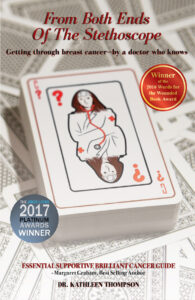
By Dr K Thompson, award-winning author of From Both Ends of the Stethoscope: Getting through breast cancer – by a doctor who knows.
http://www.amazon.co.uk/dp/B01A7DM42Q http://www.amazon.com/dp/B01A7DM42Q
http://faitobooks.co.uk


Note: These articles express personal views. No warranty is made as to the accuracy or completeness of information given and you should always consult a doctor if you need medical advice.

Ember, the thought provoking and acclaimed debut novel from Catherine Yardley, reviewed by Margaret Graham


A family torn apart by their father’s infidelity are forced to confront the past thirty years later. As Natalie’s younger sister, Amanda, prepares for marriage and impending motherhood, her plea for the family to reunite uncovers pent-up tension and animosity. Can they forget the past and become a family again?

Natalie’s life begins to unravel as their father starts to creep back into their lives and family tensions resurface, affecting her relationship with her boyfriend, Rob. Will the couple find their way back to each other, and can a family that has been torn apart ever heal their wounds?

Can you ever walk away from someone you love, or do some fires never die out?

This is a painstaking, fascinating page turner of a novel, and the Frost Magazine  review team isn’t surprised to learn that debut author, Catherine Yardly originally wrote Ember as a film script, because it LIVES. Hardly surprising when one realises that before becoming a writer, Yardley spent some years as a  successful actor, who  knows all about making characters live.

So how did the script become Ember, the novel? As happens to so many early endeavours the script  was put aside when another idea  intruded – this time for a novel, set in the acting world. In the dormant time between drafts Yardley came across the script once more, and realised …  it should have been a novel. Ember was reborn, which meant changes, research, and a great deal of thought about the dynamics of familial relationships, the acceptance of past, perhaps present failings, or  does one chose unacceptance.

In Ember Yardley explores the divisions that ensue when siblings take opposing points of view regarding a father’s  historical unfaithfulness, a division heightened by  the pain of infertility raising its head.

Will the wedding be the start of a glimmer of reconciliation, of understanding, of healing and forgiveness? Or will it cause more fragmentation as memories become ever more vivid and outrage is stoked.  And just how did Yardley  bring such empathy and understanding to a family under such strain, and to the pain of infertility?

Yardley says: ‘I feel like some people don’t realise how much research goes into a work of fiction. I had to research fertility treatment as I am lucky enough to never have needed any. I also had to research little things about driving from one place to another. I had a lovely doctor friend who writers for Frost Magazine called Dr Kathleen Thompson who answered a lot of questions and helped me create an accurate portrayal of an obstetrician’s work life.’

Yes, indeed, research is crucial, so too observation, reflection, empathy and an actor’s ability to BE a character and make it tick. So, here we have it, Ember, a forensic examination of the dynamics of a family’s life. The pain, the hope, the darkness that needs to see the light of day, be aired, and blown away if possible, if not, somehow accepted, But can it be?

It takes an author of rare wisdom and skill to create a novel which unwinds past strands and empathises sufficiently to see the different perspectives at work, and somehow bring the whole caboosh to a credible resolution. The author weaved her magic and breaks the reader’s  heart but also warms  it. She reminds us that hope can take over from trauma, division and … well, just family discord dug deep.

She reminds us that quite frankly, no-one is perfect, some less so than others. But begs the question: how long should we  go on harbouring resentment? I suspect it is something most of us have had to work out for ourselves,

Does this make it sound too heavy? Ember isn’t, It’s compelling, absorbing, and one can’t help referring back to one’s own experiences as gradually we learned to let go of fear, not to mention  animosity., or at least put it aside for the sake of the family.

I found myself asking with regard to my own life ”Did I even try to understand? Did I really want to know? Is it time to put it away now, or just walk away?

Ember is evocative, wise,  discerning, and page turning. We close the book,   the character strands unwound, a  resolution but it’s up to you to read it and discover what resolution. But more, we put it on the bookshelf aware that we have more understanding of others,  and ourselves. What more can you ask of a novel.

In a word, Ember by  Catherine Yardley, is beautifully written,  and resonates. Bravo.

Ember by Catherine Yardley. in pb and e-book. Available here


EVA GLYN’S PUBLICATION DAY REVIEW OF PRISCILLA MORRIS’S BLACK BUTTERFLIES

When the Netgalley notification came through of a novel set in Sarajevo during the conflict of the 1990s, I had to read it. My interest in the war had been sparked by a conversation with then tour guide, now friend, Darko Barisic, who as a child had lived through the same conflict in Mostar. I knew what he’d gone through and I greatly respected his resilience. I also knew I had to tell his story, which I did through the medium of The Olive Grove, my first women’s fiction title set in Croatia.

Black Butterflies is completely different to my own book, it’s literary fiction but reads almost like a memoir. It takes you to Sarajevo in 1992 real time through the eyes of Zora, an artist and tutor who along with her neighbours experiences the brunt of the siege. A siege that occurred when an army of Serbs surrounded what was a wonderful multi-ethic, highly cultured society. A society none expected would turn into a war zone.

The language the author uses is incredible in both its beauty and its harshness. It’s also immersive. I was in Sarajevo, and it is rare a book has so much power to transport me in such a multi-sensory way. The horror, the moments of lightness, the unremitting awfulness of losing almost everything… no work, no food, no power, no water… while being under fire. It all became absolutely real and that is an incredible talent.

I guessed early on that the author had access to first hand accounts and this proved to be the case. Although fictional, Black Butterflies is a melding of two family stories, and the experiences of a larger number of people, but skilfully woven together they make a unified whole.

A word of warning though; if you are particularly anxious about the situation in Ukraine, this isn’t the time to read this book. However if you would prefer to think on how conflicts do end, how people come out of the other side and go on to lead normal lives, then do.


Publisher’s blurb for Black Butterflies:

Sarajevo, spring 1992. Each night, nationalist gangs erect barricades, splitting the diverse city into ethnic enclaves; each morning, the residents – whether Muslim, Croat or Serb – push the makeshift barriers aside.

When violence finally spills over, Zora, an artist and teacher, sends her husband and elderly mother to safety with her daughter in England. Reluctant to believe that hostilities will last more than a handful of weeks, she stays behind while the city falls under siege. As the assault deepens and everything they love is laid to waste, black ashes floating over the rooftops, Zora and her friends are forced to rebuild themselves, over and over. Theirs is a breathtaking story of disintegration, resilience and hope.

Publisher’s blurb for The Olive Grove:

Antonia Butler is on the brink of a life-changing decision and a job advert looking for a multilingual housekeeper at a beautifully renovated Croatian farmhouse, Vila Maslina, is one she can’t ignore.

Arriving on the tiny picturesque island of Korčula, Antonia feels a spark of hope for the first time in a long time. This is a chance to leave the past behind.

But this island, and its inhabitants, have secrets of their own and a not-too-distant past steeped in tragedy and war. None more so than Vila Maslina’s enigmatic owner Damir Maric. A young man with nothing to lose but everything to gain…

IN THEIR 75TH ANNIVERSARY YEAR, THE FOLIO SOCIETY CELEBRATES ILLUSTRATORS AND LAUNCHES THE FOLIO BOOK ILLUSTRATION AWARD 2022


Such exciting news! The Folio Society, London publisher of award-winning and beautifully produced illustrated hardback books, available worldwide, announces that entries are open for the launch of the international Folio Book Illustration Award (Folio BIA). 

This new, free-to-enter competition aims to find new illustration talent from around the world for narrative fiction, a genre that The Folio Society publishes to great acclaim. An annual international competition, it is open to illustrators, student or professional, who have not previously been commissioned by The Folio Society. Entrants will illustrate a single scene of their choice from Edgar Allan Poe’s The Masque of the Red Death.

Selected from a shortlist of 6, the winning entrant will receive a £2,000 cash prize plus a £500 Folio Gift Voucher with the remaining 5 shortlisted artists each receiving a £500 Folio Gift Voucher.

The expert judging panel is: Yuko Shimizu, award-winning New York-based illustrator and instructor;


Tom Walker,                                                          Sheri Gee                                                Raquel Leis Allion

And  Sheri Gee, The Folio Society Art Director; Tom Walker, The Folio Society Publishing Directorand Raquel Leis Allion, The Folio Society Art Director. The winner and 5 shortlisted runners-up will be offered the opportunity of a portfolio review with the Folio Society Art Directors.

Commenting on the launch, Joanna Reynolds, CEO The Folio Society says, ‘The Folio Society has proudly published beautifully illustrated books and produced editions of the best of contemporary and classic narrative fiction for 75 years. What better way to recognise this, our 75th birthday and the fabulous contribution of illustrators everywhere, than through an accessible and international competition.

Tom Walker, Publishing Director, The Folio Society says: ‘Taking this classic American writer, and inviting visual interpretations of his evocative and timeless short story, we hope to discover amazing talent from a diverse and distinctly 21st century array of illustrators. We hope that artists from all over the world will bring their unique depiction of Poe’s chilling tale to contemporary and future generations. I am confident it will be the start of many new, great careers.

Sheri Gee, Art Director, The Folio Society adds, ‘At Folio, we’re always on the lookout for fresh talent suitable for our books and I’m itching to see the creative responses evoked by this spine-chilling story. The concept – to illustrate one short story, for the joy of seeing a multitude of responses rather than for publication – is going to prove invaluable for us in pursuit of great illustration for commissions to come.

More good news… There is no fee to enter the Folio BIA. The Masque of the Red Death by Edgar Allan Poe is available to download free of charge.

The Award opens 4 May 2022 and closes 30 June 2022. A longlist of 20 entries, chosen by the judges, will be exhibited on The Folio Society website from 18 July 2022 with the 6 shortlisted entries, one of whom will be the winner, announced online on 16 August 2022.

Illustrators can visit www.foliosociety.com/FolioBIA to find all the necessary details to enter this exciting competition.

 ABOUT THE FOLIO SOCIETY

The Folio Society, based in London, publishes beautifully produced books – available worldwide exclusively at foliosociety.com. Proudly independent for its 75 year history, in 2021, under the leadership of its CEO, Joanna Reynolds, The Folio Society was sold to its employees and is now an Employee Owned Trust. The accessible, diverse and inclusive values of The Folio Society are reflected in its new ownership that is committed to a progressive sharing of power and profit in publishing.

ABOUT THE FOLIO SOCIETY 75TH ANNIVERSARY: The Folio Society will celebrate its birthday through a number of events scheduled from May and throughout 2022

Find out more about The Folio Society at www.foliosociety.com


Crag Spring Water – Natural, Delivered And Eco-friendly – by Award Winning Author Dr Kathleen Thompson

I remember when we visited Italian relatives, we would join the locals who queue to fill water carriers, plus various other weird and wonderful old containers, with fresh spring water which flows freely from la fontana (the fountain) near the church. People celebrated and appreciated the amazing taste and purity of this simple gift from God, and even attributed magical powers to it – ‘if you drink this spring water you’ll always return here’ – or maybe that was just our rellies making sure we didn’t forget to visit? I’m not sure, but the water tasted so good and we would relish it like a fine wine.

There are numerous debates over the pros and cons of bottled waters versus tap water. Spring water is naturally filtered as it passes through underground rocks, where it also acquires important minerals for our health. In these days of intensive farming, one does wonder about the mineral content of vegetables and supplementing with natural spring water can only be a good thing. Plus these minerals give spring waters their unique and special taste, different from artificially chlorinated tap water.

If, however, you’re not lucky enough to have a natural spring within walking distance, is it really appropriate to buy from a distant source, in plastic bottles which are known to release (albeit in small amounts) harmful cancer-inducing chemicals into that water – not to mention the associated carbon footprint and plastic bottle mountains?

It’s a tricky balance, and as someone who has had breast cancer I’m wary of drinking regularly from plastic bottles. So I was excited to hear about Doran Binder’s family business – Crag Spring Water, which delivers fresh spring water direct from their spring, at The Crag Inn in The Peak District National Park.

When Doran discovered the Crag spring, or aquifer, he was advised by Richard Taylor, of testing company Blair Water, that not only was it safe to drink, but it was a source of exceptionally high-quality spring water, which having filtered through layers of sand and rock for centuries, is rich in trace minerals resulting in some of the silkiest, creamiest water ever to be tasted.

Passionate about this very special spring water, Doran has created a business model to bring you the good stuff without the downsides – and directly to your home.

Crag Spring Water delivers direct to doorsteps nationwide in reusable glass bottles. They then collect your empties and wash them, ready to be used again for the next delivery. To further reduce the carbon footprint of the deliveries they’ve partnered with the Modern Milkman.

At £12.50 for a crate (12 x 750ml or 20 x330ml bottles) of still and £15 for a crate of sparkling spring water (plus VAT and delivery) these waters are delicious, healthy, competitively-priced and convenient.

What are you waiting for? Give them a try at https://cragspringwater.co.uk/ – I tried them, and I can confirm they a real pleasure, and bring back happy memories for me of la fontana.

By Dr K Thompson, award-winning author of From Both Ends of the Stethoscope: Getting through breast cancer – by a doctor who knows
http://www.amazon.co.uk/dp/B01A7DM42Q http://www.amazon.com/dp/B01A7DM42Q
http://faitobooks.co.uk


Note: These articles express personal views. No warranty is made as to the accuracy or completeness of information given and you should always consult a doctor if you need medical advice.