Such exciting news: three-time Paralympic champion Lauren Rowles OBE retires from rowing to pursue wheelchair racing ambitions

Frost Magazine is so thrilled that triple Paralympic rowing champion Lauren Rowles has today announced her retirement from rowing in order to commit full-time to a career in wheelchair racing. The announcement, which marks the date anniversary a year on from her last gold at Paris 2024, closes the chapter on an incredible career in the sport, which also saw her become a two-time World champion and three-time European champion.

She is one of a select group of athletes who have achieved the extraordinary feat of winning gold at three consecutive Paralympic Games, having won her first golds alongside her long-time rowing partner Laurence Whitely at Rio 2016 in the TA Mixed Double Sculls and in Tokyo in the PR2 Mixed Double Sculls, before following up her final gold alongside Gregg Stevenson in France last summer.

Now the focus for Lauren will be increasing her gold tally in her new sport, in which she impressively made her debut at the 2025 TCS London Marathon, all, I might add, while still training and competing in rowing.

Lauren, who started rowing just a year before her first Paralympic gold and was inspired to take up Paralympic sport after watching London 2012, said: “I couldn’t be prouder of what I’ve achieved over the past decade.

It all started with a dream a 16-year-old girl had when she sat in a boat for the first time. Now, sat here as the most successful Paralympic Rower of all time, it’s more than she ever imagined. I’m thankful to everyone who has played a part in that journey and will always look back at this as my greatest chapter

But as one chapter closes there was always another unfinished and I’m excited to be getting back on track to finish a journey I started as a junior in wheelchair racing. Who knows what the future holds but as always whatever comes next will be marvellous.”

Outside of rowing, 27 year old Lauren is an active spokesperson for the LGBTQ+ community and wants to encourage and inspire children to get involved in sport. She lives with her fiancé, Paralympic basketball star Jude Hamer, and their young son.

The announcement was made by Lauren on her social media channels, alongside this video.

The brilliant Columbia Community Association is fundraising again – for the amazing Daft as a Brush charity: by our North East Correspondent Marion Taylor

The Columbia Community Association committee of Oxclose Rd Washington Tyne & Wear NE38 7EN recently slogged away creating a smarter, more beautiful, extremely useful Community Centre. Not content with this, they had a thought and decided it was time to support a charity of their choice again this year. What better than the Daft as a Brush Charity.

This extraordinary charity serves those cancer patients requiring treatment involving transporting them ‘in a safe and comfortable environment from where they are living to where they will be having their treatment. If required, a volunteer companion will stay with the patient during their Chemotherapy and / or Radiotherapy.‘ What a comfort that must be.

The patient is returned to their home in readiness for their next course of treatment. The charity completes thousands of cancer patient journeys each year with a passionate team of hundreds of volunteers and a large fleet of ambulances. All donations received go directly to supporting cancer patients on their journey to recovery with Daft as a Brush Cancer Patient Care.’

So, on September 26th (starts 10.30) the CCA stalwarts are planning to host a fund raising event for this remarkable charitable organisation so that many more cancer patients can benefit from their kind and compassionate service. Last year the they fund raised for MacMillan Charity, and were able to donate £800 from the local community. But… of course, a Cake Bring and Buy sale requires cakes so please can you bake your wonderful cakes and bring them on the day, or buy a few to bring for the CCA to sell, again on the day, ‘just as we used to do in the old days’.

Of course, there will be free refreshments, plus a spirit raffle and a Gift Voucher raffle – Margaret Graham, editor of Frost Magazine, is already putting it in her diary, (though she promises she won’t bake cakes, because they will sag in the middle, a bit like her, she says – I can’t possibly comment!).

Donations for Daft as a Brush can be made to the CCA at any time – just pop in to Columbia Community Centre Oxclose Rd Washington Tyne & Wear NE38 7EN and come along on the day- 26th September 10.30 – to have an extra special coffee morning and get together.

Ian Rankin, Salman Rushdie, Richard E Grant, Douglas Murray, Jake Wallis Simons, Jung Chang, Niall Ferguson, Hallie Rubenhold & Alain de Botton: early speaker highlights for Cliveden Literary Festival 2025 with tickets now on sale

Cliveden Literary Festival (11-12 October) is delighted to reveal this year’s list of speakers as tickets are now on sale. www.clivedenliteraryfestival.org • @ClivedenLitFest

Taking place at the historic Cliveden House in Berkshire, this year’s festival features the leading writers of today across culture, politics and history. Highlights will include: Michael Gove and Sarah Vine will tell Andrew Roberts about their marriage and divorce in the political spotlight; Salman Rushdie and Rachel Eliza Griffiths will discuss their creative partnership; beloved actor Richard E. Grant will talk to Georgia Beaufort about the highs and lows of Hollywood and his personal life; renowned philosopher Alain de Botton will discuss his theories of love, heartbreak and sorrow; and Wild Swans author Jung Chang and The Silk Roads’ Peter Frankopan will consider the past, present and future of China with Geordie Greig.

Meanwhile, panels of experts will gather to discuss 2025’s most compelling issues. In the political sphere, guests will learn about intrigue inside the White House, the divided American nation, and 21st-century espionage. In the literary realm, visitors will hear about the enduring allure of Jane Austen, or the writing of crime stories both real and fictional. And the most pressing questions in British politics will be cross-examined in Cliveden’s very own Question Time, with Alex Burghart and Emily Maitlis.

Across the weekend, the Festival will host a stellar cast of writers, philosophers, polemicists and politicians, including Anthony Horowitz, William Boyd, Douglas Murray – wow – and another favourite – Jake Wallis Simons,  and Caroline Derby; and our founders, Catherine Ostler, Natalie Livingstone, Simon Sebag Montefiore and Andrew Roberts.

Cliveden Literary Festival is renowned as a forum for lively discussion, thought-provoking ideas, and political  debate,  in  the  most  beautiful  of  settings,  with  something  for  everyone. Last year, Rachel Eliza Griffiths said ‘the setting of Cliveden… is a kind of mirror of the beauty that I find in books’.

Now in its eighth year, the festival revives Cliveden House’s rich history as a literary salon frequented by writers   and   thinkers   from   Alexander Pope  to  Alfred Lord Tennyson,  George Bernard  Shaw, Jonathan Swift and Sir Winston Churchill. Cliveden  Literary  Festival  is  run  by  a  committee  of  writers  and  historians  –  Andrew Roberts, Natalie Livingstone, Catherine Ostler and Simon Sebag Montefiore.

It’s a sell-out success every year, so hurry now, and book your tickets on the Cliveden Literary Festival website. It sounds its usual wonderful self.

When Your Child’s Best Friend Moves Away: Helping Them Cope

Watching your child’s heart break when their best friend moves away is one of those parenting moments that catches you off guard. Whether you’re a parent or foster carer, seeing your little one struggle with this loss can feel overwhelming. The good news is that with patience and understanding, you can help them navigate this difficult transition whilst building resilience for the future.

Try to Understand the Impact

Children form friendships in a different way to adults. Their bonds are often intense and immediate, built through shared experiences like playground adventures, sleepovers, and countless hours of imaginative play. When a best friend moves away, children don’t just lose a playmate – they lose their confidant, their partner in mischief, and sometimes their sense of security.

For children who are fostered with an agency like Fosterplus, this loss can feel particularly intense. They may have already experienced multiple separations and losses, making the departure of a close friend even more challenging to process. It’s important to acknowledge that their reaction might be stronger than expected, and that’s completely normal.

Immediate Support Strategies

In the days immediately following the news, focus on validation rather than solutions. Let your child express their feelings without trying to “fix” the situation straight away. Phrases like “I can see how sad you are” or “It’s really hard when someone special moves away” help them feel heard.

Create space for them to talk about their favourite memories with their friend. This isn’t dwelling on the past; it’s helping them process the relationship and celebrate what it meant to them. You might suggest they create a scrapbook or draw pictures of their adventures together.

Maintain the Connection

Distance doesn’t have to mean the end of the friendship. Help your child explore ways to stay in touch that feel manageable and age-appropriate. Video calls can be wonderful for younger children who struggle with phone conversations, whilst older children might enjoy writing letters or emails.

Consider planning the occasional visit if geography and circumstances allow. Even knowing there’s a possibility of seeing their friend again can provide comfort during the adjustment period.

Help Them Build New Friendships

Whilst you can’t replace their special friend, you can help create opportunities for new connections. This doesn’t mean rushing them into social situations before they’re ready, but rather gently encouraging activities where friendships might naturally develop.

Local clubs, sports teams, or community groups can provide excellent opportunities. For foster children, you might also explore whether there are specific support groups or activities designed for children with similar experiences.

When to Seek Additional Support

Most children will gradually adjust to their friend’s absence, but some may need extra help. If you notice persistent changes in sleep, appetite, or behaviour that last several weeks, or if they seem unable to engage with other children, consider speaking with their teacher or a child counsellor.

Remember that grief over lost friendships is real and valid. By supporting your child through this experience with empathy and practical strategies, you’re teaching them valuable lessons about relationships, resilience, and how to cope with life’s inevitable changes. Every child deserves to feel supported through these challenging moments, regardless of their family circumstances.

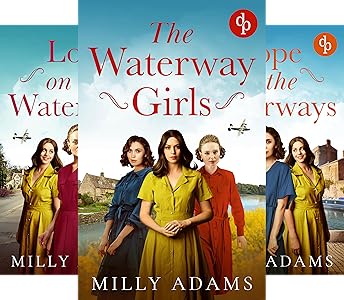
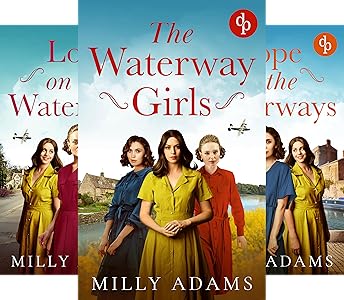
A trip to Skipton, and the Leeds Liverpool Canal, not to mention down memory lane with Milly Adams’ The Waterway Girls.

‘Let’s nip to Skipton, it’s not far, and my Milly Adams’ series, The Waterway Girls, is going to have another trot around the block fairly soon with DP Digital Publishers, oh yes it is, and how thrilling is that, so much so I want to toddle along beside a canal again.’ So said Milly/Margaret to Dick, without taking a breath. So off we nipped, with Dick sighing, ‘It’s actually quite far.’

‘Ah, but look at the fabulous scenery,’ insisted Milly/Margaret.’ ‘The time will fly as we cross the country.’

Silence fell, but Milly/Margaret had put her foot down, because, frankly, she really did want to see a canal again, as well as Skipton. After all, here in Thirsk we only have a beck, though it was thought this might be turned into a canal at one time. Like so many things, it came to nowt.

The thing was, that with the lovely news of the ‘Girls’ revival, I realised I had quite forgotten the details of the three books, and promptly re-read them, and really enjoyed them which is a great relief. What’s more, I found myself wanting to be near a canal again, see the wildlife, see the locks, see the narrowboats… Heavens, what a time these girls, who volunteered for the Inland Waterways Scheme in WW2, had to endure as they came to terms with the world of – in my girls’ case – the Grand Union Canal and the boaters, and the dreaded bucket (no, you’ll have to wait, and I might do a reveal when publication is revealed. Or I might not, of course).

There was the loading and unloading of materials to keep Britain going, the cold, the heat, the wind, the rain, the locks, the cleaning of the hold, the relaxing in the pub in the evening, thank heavens, thank heavens. Basically learning the ways of the true boaters. And all the time a war was in progress, relatives were in danger, my girls were in danger and not only from bombs. And God bless it, love was in the air, then not, then it was again – for some. What amazing people these Inland Waterways girls were. What amazing people these Inland Waterways boaters were, and they all darned well deserve books based on their lives – so people know.

But right now, we want to know about Skipton, eh? The town’s 900-year-old medieval castle is open for visitors and overlooks the main street, as it did during the English Civil War, when Sir John Mallory’s royalist garrison was situated at Skipton Castle. It was the last remaining royalist stronghold in Northern England until its surrender on 20th December 1645 after a three year siege.

Skipton, known in Anglo Saxon times as Sheep Town because it was so important to the wool industry of Craven and the Southern Dales, stands by the River Aire, and the Leeds Liverpool Canal – constructed during the Industrial Revolution. It was Britain’s longest inland waterway when it opened in 1816,and carried stone, coal, wool, cotton, limestone, grain, and other goods throughout the 19th century and is now a busy hub for leisure cruising, based in the basin, so still earning its place in this bustling town. A town with a plethora of small fascinating independent shops, cafes, and a large market with anything and everything on offer. It really is energized and what’s more, friendly.

Skipton is known as the gateway to the Yorkshire Dales, as it is the road, rail and canal hub for many areas. The station sits on the Airedale line, with direct trains to Leeds, Bradford and nearby towns and villages. By road, we came from Thirsk in little over an hour – well OK, twenty minutes over an hour but such a lovely journey. Skipton is accessible, charming and historic – and a canal. What more can one ask… (I will let you know when publication date is arrived at for The Waterway Girls). https://canalrivertrust.org.uk/canals-and-rivers/places-to-visit/skipton https://southpenninespark.org/2022/10/21/skipton-a-castle-canal-paths-and-cobbled-streets/ https://www.facebook.com/authormillyadams/ http://www.millyadams.com

News of writing festivals continues to roll into Frost Magazine: just see the line up for the north’s longest-running literary festival, Ilkley Literature Festival, which has announced its 2025 line-up.

Jung Chang, (above c.Zhang Xiaohong) Mary Portas, Alan Davies, Jay Rayner, Hugh Bonneville, Nick Clegg, Ruby Tandoh, Simon Armitage, Michael Palin, Lady Hale, Rachel Joyce, Irvine Welsh, and more set to appear.

A host of household names including politicians, national treasures, journalists, novelists, historians, comedians, and academics head to the spa town across 17 packed days from Friday 3 to Sunday 19 October. Tickets go on general sale on Tuesday 26 August, with priority bookings open for Friends of the Festival a week before, from Wednesday 20 August.

Nick Clegg, the former Deputy Prime Minister and President, Global Affairs, at Meta, opens the festival with an urgent look at the state of the internet, taking us behind the scenes of Meta and exploring where Big Tech has gone wrong – and right – with his book, How to Save the Internet

A star of the global literary scene, Wild Swans author Jung Chang brings the follow-up to her epic personal history that defined a generation. Half a century on, she brings the story of her family, and of China, up to date in what promises to be a moving and unforgettable evening.

Audiences can spend an evening with the Poet laureate, Simon Armitage, as he reads from his two new poetry books, Dwell and New Cemetery. National treasures, the ever-intrepid Michael Palin transports audiences to South America, with an account of his travels in Venezuela, and festival favourite Gyles Brandreth discusses his book Somewhere, A Boy and A Bear marking the centenary of the publication of Winnie-the-Pooh.

Hot topics also include a fascinating insight into the Post Office scandal with sub-postmaster, Jo Hamilton, whose story was immortalised in the ITV drama, Mr Bates vs The Post Office. 

Comedian Alan Davies shares his journey into the world of stand-up comedy, with his latest memoir, White Male Stand-Up. Queen of retail Mary Portas takes us behind the shop window, with I Shop, Therefore I Am and audiences are invited to an evening with the Paddington and Downton Abbey star and bestselling memoirist, Hugh Bonneville. Bonneville will also be appearing at a second event, introducing families to his debut children’s book, Rory Sparkes and the Elephant in the Room.  

Other well-known faces include Sir Tony Robinson (above c Paul Marc Mitchell) introducing his fiction debut, one of the best-known names in British broadcasting Edward Stourton, and BBC radio presenters Mark Radcliffe and Stuart Maconie.

Erica Morris, director of Ilkley Literature Festival, said: “We’re looking forward welcoming big names and exploring big ideas in Ilkley’s annual celebration of books, reading and writing. There’s a huge range of fascinating subjects this year: from folklore to fermentation, geology to globalisation, and cavapoos to comedy. We can’t wait to welcome everyone to our beautiful spa town for what promises to be entertaining and enlightening festival.”

Famed for its strong connections to poetry, the festival’s strand In Verse: The Rising of the North highlights the northern poetry scene and features a panel reimagining Tony Harrison’s ‘V.’ Written during the Miner’s Strike and deemed controversial at the time of its release, the poem explores class, anger, and alienation; 40 years on contemporary poets including Andrew McMillan and Malika Booker discuss the impact of Harrison’s poem and read their re-imaginings of this seminal piece. There will also be a series of poetry showcases, including one from rising northern poets, and a free networking event for poets to meet and mingle.

The festival will explore a series of themes for 2025 and… but no, go along and see. It is a cornucopia of writing treats.

To view the full programme and book tickets https://www.ilkleylitfest.org.uk

Follow @ilkleylitfest Box Office: 01943 816714.

Durham Book Festival Announce 2025 Line-Up which takes place from Friday 10 to Sunday 12 October – can’t wait.


Produced by New Writing North, the Durham County Council event features a very special appearance from one of the UK’s most revered living authors, Dame Pat Barker. The Durham author has written 16 novels, including the Booker-Prize winning The Ghost Road. Her daughter, the writer and poet Anna Barker, has spent a decade uncovering her mother’s life story. The two will be in conversation for Dipped in Ink, an event about their forthcoming memoir spanning 40 years exploring family silences, literary legacy, and maternal relationships.

Other internationally best-selling North East authors include Whitley Bay’s Ann Cleeves whose books have been adapted into major TV shows, including ITV’s Vera and BBC’s Shetland. She’s in conversation with the award-winning broadcaster Steph McGovern, with her debut crime thriller, Deadline. Hailing from Middlesborough, Steph began her career as a producer on Radio 4 Today, before moving to BBC news and presenting her own magazine show, Channel 4’s Steph’s Packed Lunch.

This year a special Durham Book Festival commission, with support from Manchester Metropolitan University, will mark the 40th anniversary of the publication of Tony Harrison’s seminal poem, v. Poets Andrew McMillan, Malika Booker, Jo Clement, and Paul Farley will present their reimagining of the 1984 poem that explored class, anger, and Northern identity during the Miner’s Strike.

There’ll also be another Durham Book Festival commission of an exclusive dramatic live reading from author Eliza Clark’s short story collection, She’s Always Hungry, directed by Maria Crocker, followed by a Q&A with the author. Eliza grew up in Newcastle and was named one of Granta’s Best of Young British Novelists in 2023.

Fiona Hill, the Chancellor of Durham University, will discuss her new podcast series Forged in the North. Fiona is also a political advisor specialising in Russian and European affairs and from 2018 to 2019 served as deputy assistant to the President of the US. She’ll be in conversation with the Northumberland internationally bestselling author, LJ Ross, and Romani storyteller, Richard O’Neill, on how the North East forged their writing.

Cllr Lyndsey Fox, Durham County Council’s Cabinet Member for Economy and Partnerships, said: “A good book is like an adventure, transporting us to different worlds, introducing us to fascinating characters and making us laugh and cry along the way. Durham Book Festival is a celebration of the power of the written word in all its guises. It helps to spread the joy of reading among people of all ages and provides an opportunity to showcase talented writers from our own region. This year’s line-up is truly inspirational, and I hope it encourages aspiring authors, poets and journalists from County Durham to follow their dreams.

“Furthermore, Durham Book Festival helps to raise our profile as a cultural destination and boosts the local economy by attracting people into County Durham. We are incredibly proud to commission such a fantastic event.”

All this, and much much more, but let’s not forget that the festival also features a series of events for aspiring children’s book writers programmed in partnership with Children’s Books North Network and the return of the Little Read, which will see 500 free copies of North East children’s author, James Harris’ picture book, Help! We Need a Story distributed by libraries across the county.

Founded in 1990, Durham Book Festival is a Durham County Council event produced by New Writing North, with support from Durham University and Arts Council England. To book and find out more, visit www.durhambookfestival.com

Greg Mosse Interview: On Writing, Trilogies, A.I. and Kate. 

One of the best things about being editor-in-chief of Frost Magazine is all of the people I get to meet. Having a chat with a writer I admire is also exciting for my other life as an author. Greg Mosse is a great interviewee. Candid, kind, and bursting with interesting information. I read The Coming Darkness in 2022 and loved how unique it was. It is a great thriller. Now, the third in the trilogy, The Coming Fire, is out. I interviewed him over Zoom to talk all things writing, A.I., and Kate.  

Greg complimented my children’s artwork on the fridge, and I complimented his impressive book posters. 

On the impermanence of theatre and writing during lockdown: ‘The posters on the wall, most of them are mementos of my theatre work, because theatre is a wonderful fugitive experience. It’s that brilliant moment shared by the audience live in the room together that can never be repeated, but at the end of a run of theatre, for most shows it’s gone forever. And unless you’re in Les Mis or something like that, and it doesn’t stop, it’s great to have the poster on the wall as a reminder of, ‘Oh yes, I did that.’ 

The rhythm of my life under coronavirus lockdowns changed completely. In one way, because theatre had become illegal, and so there was really no point in writing new plays for I didn’t know how long, but in another way, it didn’t change at all. It just meant that I sat in the corner of my study, there with my red blanket, because it was March, wasn’t it? It was cold at first, and then it got really hot. It just changed from writing dialogue to writing prose and that’s why, in the centre of the wall of posters behind me, are all the novels I’ve published.’ 

That was a smart thing to do. Yes, but remember, we were utterly unemployed, weren’t we? We had to fill our days and I did find it very easy to be productive, because I was utterly without distractions.

As the lockdown started, I actually went and I picked up both of our children. My wife, Kate Mosse, and I. Felix was working in Norwich. He was on stage in a show that shut, and Martha was living in North London in a flat in a block, and we thought both of those circumstances would be a less pleasant way of being locked down than in our house in Sussex with fields that you could walk out to and all of those lucky things that we had, but that said, you know, they’re grown-ups, so it’s not like I brought them home and had to look after them. So I had not limitless time, but I had a lack of distractions, which really taught me how valuable that can be in terms of working quickly, but not necessarily efficiently. 

On writing a trilogy: For The Coming Darkness, the first book in the Alex Lamarque trilogy, I wrote 170,000 words from which ultimately I cut 70,000 words because the thriller that MoonfFlower, my brilliant publisher wanted, was just under 100,000 words. However, when The Coming Darkness went very well, I got excellent reviews for which I’m very grateful. It meant that I had these subplots I cut from the first draft that were the heart of the second book, The Coming Storm. That also accelerated the process. So it wasn’t like I had to sort of start again. My hero, who’s like an action hero, a member of the French secret services. He wins at the end of The Coming Darkness, but he only wins a fragment of the battle that he’s engaged in. But I already had the heart of The Coming Storm already on the page. It had to be massaged into a different shape, a different timeline, but it already existed. The future, historical background to the book that I researched by reading lots of scientific papers and government papers and NGOs and everybody who’s predicting the future, trying to plan for what’s coming next. Five years, 10 years, 15 years, a generation. All of those notes were super valuable over the whole of the trilogy, and the things that we’re worried about today in 2037 are more urgent, more dramatic, more desperate, but they are the same things, but more so.

The Coming Fire is the culmination of a trilogy about a time when everything that we’re worried about today is more intensely felt and more intruding, more fully on people’s lives. So that meant I’ve already got a crescendo that can play out over three books, and then the other way of describing it. The further Alex goes towards the heart of this terrorist mystery, the closer he gets to the biggest, hardest enemy to defeat. There’s an overall shape that you know you’re writing into. I sometimes describe it as pouring creativity into a pre-existing shape, yet not just writing to find the shape, but the shapes already there in the back of my mind.

On authors being pigeonholed: As a writer for theatre, nobody says to you, “You know, last year, you wrote a play about smugglers, set in 1749. Why are you now writing a play about the First World War?” Whereas, as a novel writer, people say that to you all the time. Being able to write in these different voices, to tune into a different quality of creativity, is really normal for a playwright and to write dialogue in different voices. One day a king, another day a minor living 300 years later, another day a 12-year-old child living today, is totally normal. Now, the other part of your question, which one do I like best, writing plays or books? The great thing is that they refresh one another. You know what I was just saying about playwriting? That’s one of the best things about writing plays. So a full-length, two-hour play is about 20,000 words, whereas The Coming Fire is 98,000, I think. So a full-length, two-hour play is a fifth of a novel. So it’s more difficult to get that refreshing change in novel writing because the scale of the creative enterprise is so much bigger. If you have sympathetic publishers who understand that you’ve got these different goals, entertaining people in different ways, that’s what it’s about. They really bounce off each other super well. 

On his writing routine: It’s 6:30 till 10:30 more or less every day. When I say every day, it’s like six days out of seven. Sometimes I’m travelling for other parts of my life. And so it can’t happen if I’m driving to London in the morning for the work I do in theatre, for example. But about six days out of seven. 6:30 to 10:30. In that time I’d expect to write a couple of 1,000 words. I’d expect it to begin with a two. Doing that for six weeks of six days a week, 2,000 words a day that’s 72,000 words, isn’t it? And once I’ve got to sort of that, I’ve actually got an unpublished novel in my computer over there that I’ve written about 65,000 words of, and I’m currently editing it because I’ve got an idea of how it will end, like a framework for how it will end, but in order to write the last quarter of the book, I need to make sure everything in the first three quarters ties up and is completely coherent, and that I’ve probably been writing for about six weeks and now it’s going to go really slowly for a week or 10 days, maybe because I’m reviewing everything, and I have to keep going backwards and forwards, you know, to tie things together. And I’ll find a thing on page 102 and God, where was that, although I referenced that. And then there it is on page 17. And all of that over and over and over again. And only once I’ve got all of that done, probably through the whole of those 65,000 words twice. Only then will I write the last quarter of the book. And then, of course, I’ll have to check it from line one to the last line again to make sure I’ve got it all right. So that means about 10 weeks in total for a draft that I am willing to show one person alone, and that person is my wife, Kate Mosse, [Most people would be scared to give Kate Mosse the first draft of their novel] yeah, probably. But, you know, there she is. She’s having a cup of tea in the morning, eating her Marmite on toast, and she’s trapped. You know, there’s nothing she can do.

I was asked this weekend, as I usually am at some point at festivals, ‘Greg’, was it helpful at all to be married to the international best-selling novelist Kate Mosse?’ And I always say she is the wave that I surf.

On supporting other writers: When Twitter was invented, before it became a cesspool of bots and hatred, it is I chose as my Twitter description, ‘writer and encourager of writers.’ Back then, almost all of my writing was theatre, of course, and that’s changed, but the encourager of writers hasn’t. It’s the reason why, with my son Felix Mosse, we run a theatre script development programme at the Criterion Theatre, Piccadilly Circus, which is free to the mid-career playwrights who take part. And then when I’m at a festival, like Harrogate, or in the new year, Kate and I will be in Jaipur, and then Dubai, at the Emirates Festival, the majority of my time there will actually be spent with readers and writers, aspirant writers, trying to help them develop their plots, understand the business. You know, all of that stuff. And that’s super rewarding.

His thoughts on A.I: My thoughts on A.I., what I wanted to put on stage in The Coming Fire was the fact that the terrorists, the big, bad, evil presence behind the whole of the trilogy, has a view on A.I. that you and I and many people probably share, which is that it’s an enormous danger, and there are two parts to this danger. There is a relinquishing of humanity, and thinking that A.I. is probably as good as the ways in which humans have evolved, in doing things over a gazillion years over evolution, and then recorded history.

And then the other part of it is that relates to the creative arts. There’s a brilliant, I think it’s in an Arthur C. Clarke science fiction story from many years ago, where he compares a flawless reproduction of a piano to a real piano. And he says it’s like the difference between being told that you’re loved and being held in your parents’ embrace. It’s great. It may not be a quotation, but it’s something like that, right? You know what I mean there, there is a difference that feels elusive, but it’s also really substantial.

Yes. So then the other part of it is the fact that, and we’ve seen this all through the technological age, technologies respond in ways that we don’t predict. There’s always a law of unintended consequences. There’s always unfortunate outcomes, even with the best of intentions. My brother, who has a sardonic cast of mind, sometimes says to me, no good deed ever goes unpunished, and you want, but people who are, I would argue, unthinkingly embracing technology, assume the best, whereas I’m a much more precautionary cast of mind. You never know where this will end up. So coming back to the big baddie in The Coming Fire.

He wants to set back Earth’s technological development by a few generations. He wants to destroy the hyper-connected world, the global village, and fragment and atomise human populations. Now, of course, that also means that he’s a completely inhumane barbarian,

utterly insensible to human tragedy and loss of life. Those things are meaningless to him because he has this conceptual idea of turning back the technological human clock,

and a thing that he can’t see is the inhumanity of the A.I. that he wants to exploit in order to achieve those terrible goals is actually super similar to his own cast of mind, and that’s why Alex must stop him.

Well, it’s the third part of a trilogy. There is a hero. Usually, the hero wins, but of course, it would be a spoiler to say if he does. I have a friend who’s a neuroscientist who works at the University of Sussex, with whom I was talking quite recently about the fact that he gets infuriated when he’s told that artificial intelligence has discovered or devised something. And he says there is no artificial intelligence. What there is is an algorithm that analyses statistical probabilities and comes up with likely scenarios from which it can choose one. But it’s not intelligence. It’s a sifting of data to find the most likely average outcome. 

Thank you Greg. 

The Coming Fire is out now and published by Moonflower.