Treat your Valentine – Jersey Oysters Blonde and Blue

If you intend to spend an amorous evening tomorrow with your Valentine you may indulge in an abundance, nay a veritable feast of aphrodisiacs, chillies, chocolate, figs, avocados, bananas and pomegranates to name but a few. There is, however, one foodstuff that features in web searches, recipe books, and people’s imaginations more than all the others put together and this is, of course, the oyster. Now here in Jersey, we are lucky to have Royal Bay of Grouville oysters which are delicious, but why are they considered to be such an amatory stimulant.

Most people think that since Giacomo Casanova, the Italian adventurer, author, and perhaps more famously renowned lady’s man was said to consume fifty oysters a day for breakfast they perhaps had some magical quality.* This has been put down to the zinc levels which handily for you lusty feeling folk are highest in early spring. Then in March 2005, a group of American and Italian researchers presented a paper to the American Chemical Society following a study into molluscs, such as clams and mussels, that were rich in a series of rare amino acids that triggered increased levels of hormones in mice. There was a huge interest in the research but really no proof of the effect from eating oysters directly, in fact, Nancy Amy, a nutritionist, and toxicologist at the University of California provided another theory “There’s an amazing placebo effect with aphrodisiacs,” she said. “It’s very culturally specific and there’s no scientific evidence, but if you think it’s going to work, then there’s already a 50 percent chance that it will.”

*Casanova retired from adventuring and took up the position of librarian to a Bohemian Count, perhaps he relished a quieter life but it somewhat dispels the image we have of shy, retiring bookworms.

Oysters are eaten raw traditionally with lemon, tabasco or a spoon of migonette, a mix of very finely diced shallots, cracked black pepper and wine vinegar or lightly baked or grilled. There are a number of classic grilled oyster recipes such as with garlic butter, oysters Rockafeller with spinach and pastis, oysters Kilpatrick with Worcestershire sauce and crisp bacon. Alternatively, oysters can be deep-fried in in tempura batter or covered in breadcrumbs for the Southern favourite oyster Po’boy.

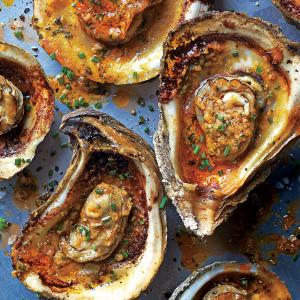
So while I cannot guarantee that this recipe will have you swinging from the lampshade in leopard skin briefs it’s really rather nice and tasty and uses some really nice Jersey ingredients. The oysters are gratinated with a crisp mix of fresh herbs, savoury biscuit crumbs, and Jersey Blue soft cheese which creamy and slightly tangy taste accentuates the salty ozone flavour of the Jersey oysters. The very light continental style beer, Liberation Blonde provides the base for a refreshing dressing to the baked oysters and chilled is an ideal accompaniment. You can substitute these with a local cheese and beer of your choice and you won’t be disappointed.
grilled-oysters

Grilled Jersey Oysters ‘Blonde and Blue’                                            serves 2 or 3

12 Jersey oysters

Classic Herd organic Jersey Blue cheese or similar such as organic blue veined Brie

50 ml Liberation Blonde ale

25 ml quality White Wine Vinegar

80 gr crushed Water Biscuits or plain Cheese Crackers

2 medium Shallots, peeled and finely chopped

2 generous pinches of Cayenne Pepper

1 teaspoon each of the following, finely chopped Chives, Chervil and Parsley


If you have a friendly fishmonger you can ask him to shuck or open your oysters for you before taking them home to cook and serve. If not you first need to open your oysters and loosen them from their shells. Set each opened oyster down on a small mound of rock salt, on a baking tray. Remove the rind from your cheese and finely dice, divide evenly onto the oysters. Mix the herbs with the finely crushed biscuit crumbs and sprinkle over the cheese topped oysters.

For the dressing simmer the chopped shallots with the white wine vinegar, cayenne, and a little water until the shallots start to soften but retain a little bite. Evaporate almost all of the liquid. Chill. When cold add in the Blonde beer. Grill the oysters for 3 to 4 minutes under a medium grill until the cheese starts to bubble and the crumb mix browns. Serve topped with a little dressing, extra chopped herbs and the remaining dressing as a side.
Great musical meals at Leon

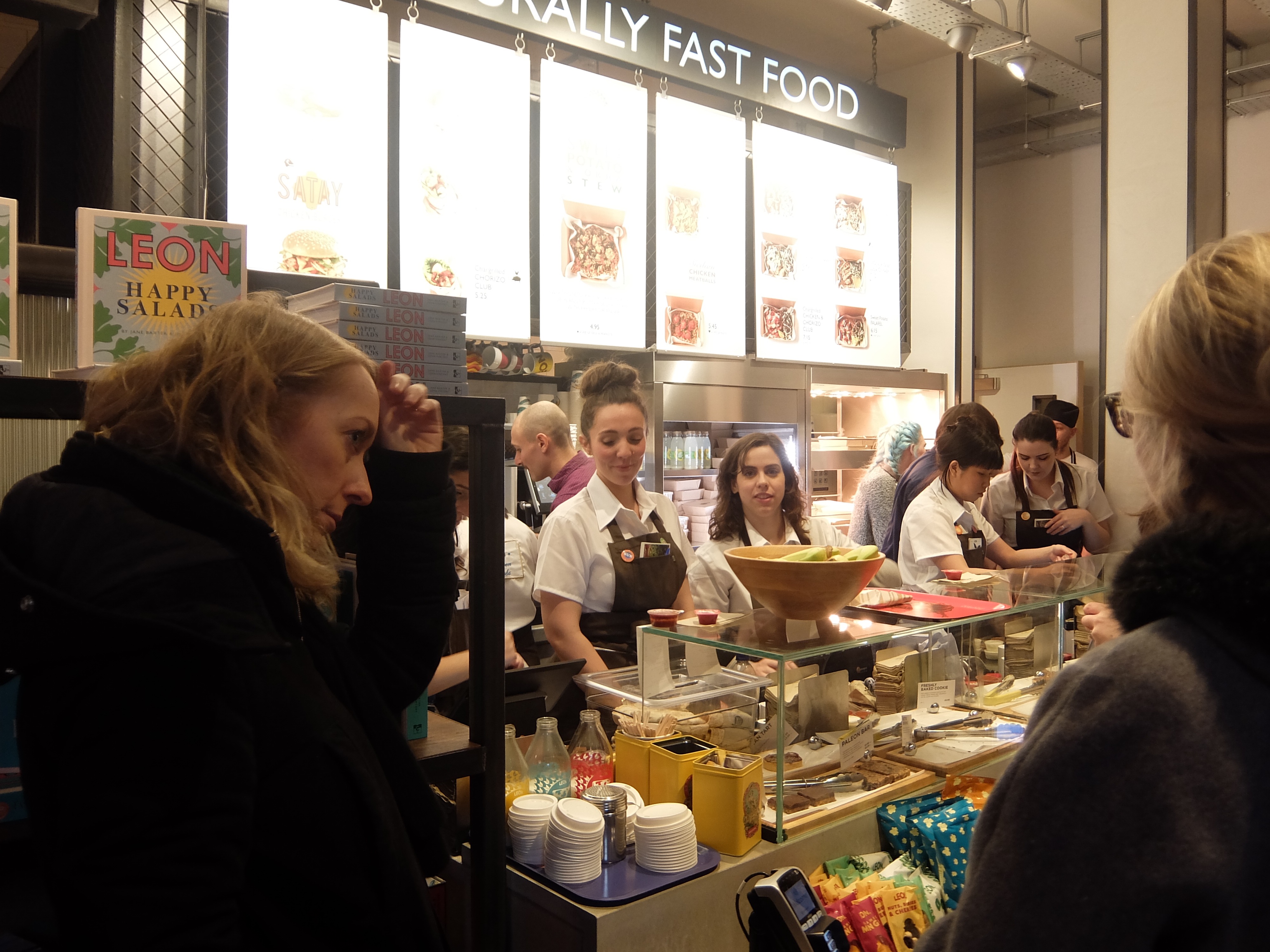
Leon at Shaftesbury Avenue

Leon at Shaftesbury Avenue

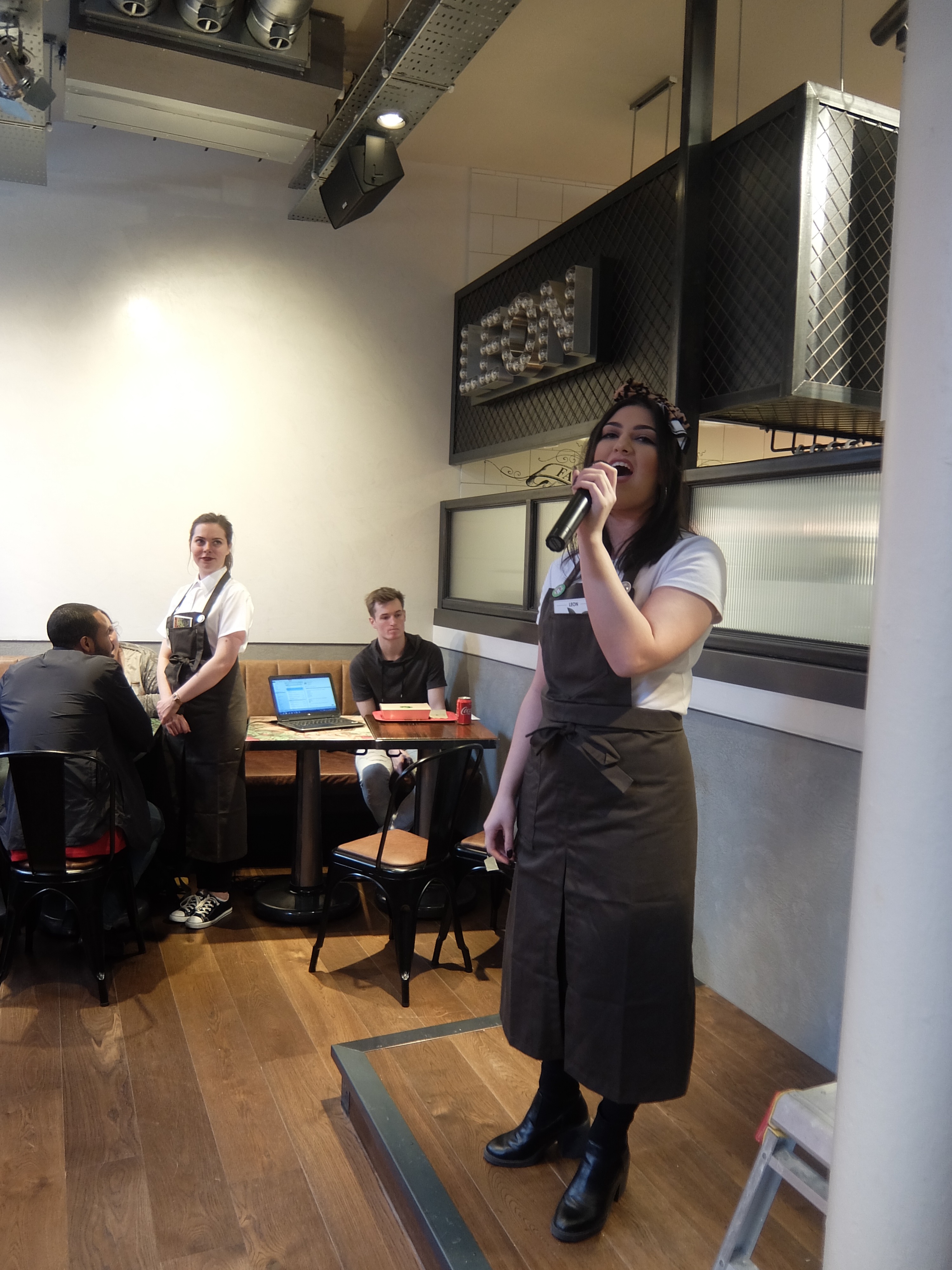
What do actors do when they’re not working? Well, a fair number of them are serving behind the counter at Leon in Shaftesbury Avenue. And between dishing out the chips, they are belting out show tunes for the diners.

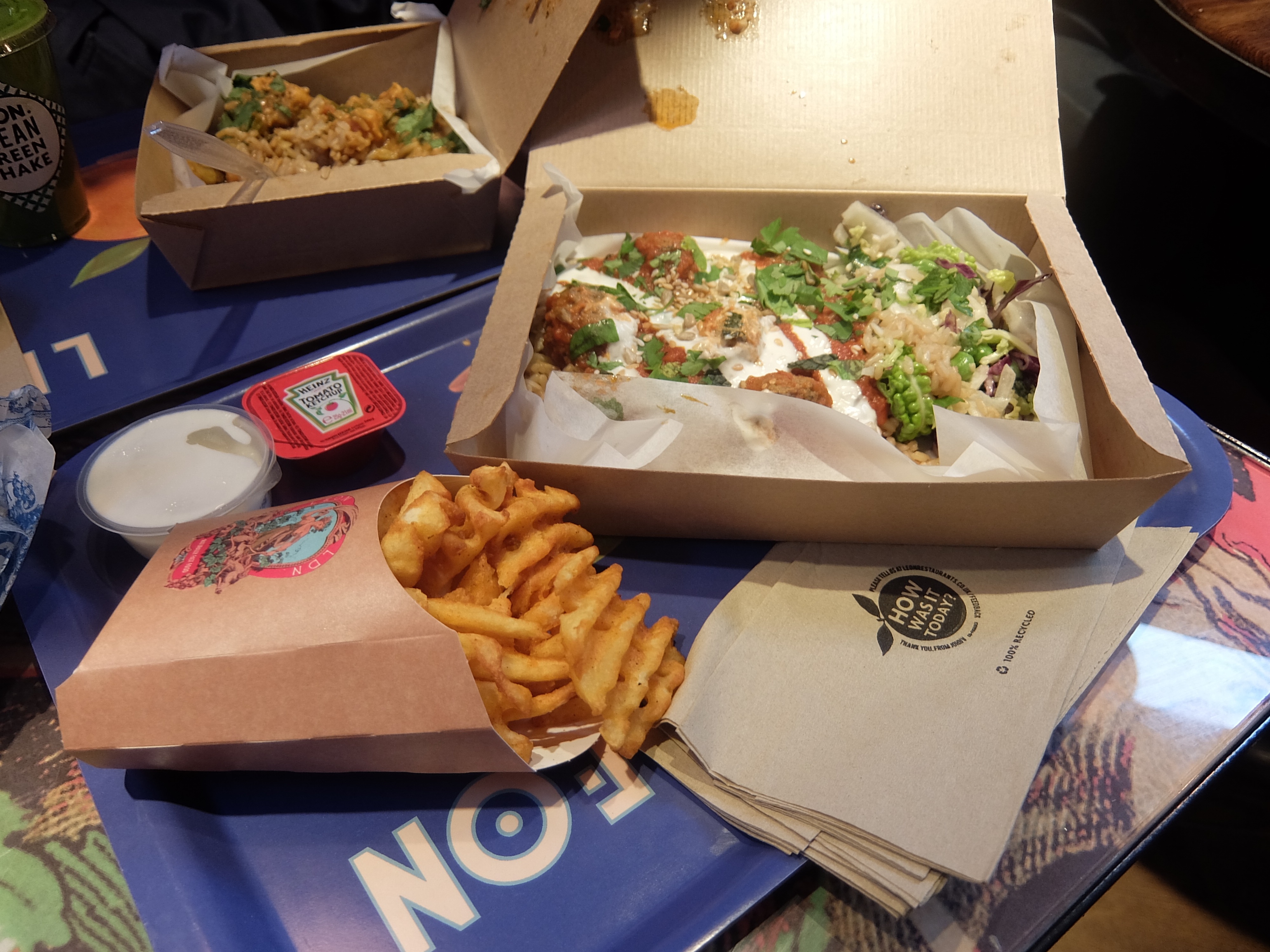
Leon, as most people know, is a fast food restaurant specialising in light and wholesome wraps and salads. But in addition to the great food, they are now dishing out entertainment.

The Shaftesbury Avenue branch, a few yards from Piccadilly Circus and just around the corner to the big West End theatres, is staffed by an assortment of young and glamorous singers and actors. And to draw in the crowds, they take turns to belt out numbers from shows. All of which makes it cut above your average sandwich bar. The singing is free: you only pay for the food.

I had a chargrilled chicken aioli lunchbox – a fine chicken and salad lunch – and a sultry woman sang ‘Can you feel the love tonight’ from the Lion King. Thirty minutes of escapism, some great music and a good meal for £6.95 – it must be one of the best bargains in London’s Theatreland.

Light food - simple and tasty at Leon

Light food – simple and tasty at Leon

Singing Waitress at Leon in Shaftesbury Avenue

Singing Waitress at Leon in Shaftesbury Avenue

My Perfect Apple Crumble

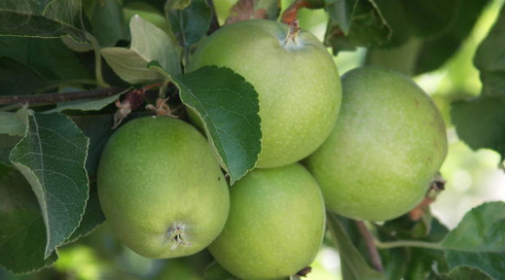
As we are in the middle of Bramley Apple Week, you knew that didn’t you, I wanted to give you a failsafe recipe for that most English of desserts the apple crumble, and you cannot make an apple crumble without a Bramley apple. In 1809 a Southwell* resident, Mary Ann Brailsford planted some apple pips one of which still bears fruit to this day. In 1846 her cottage and garden were sold to one Matthew Bramley and apart from shelling out the cash that is his total contribution. A local nurseryman admired the quality of the apples and asked to be allowed to take some grafts to develop more trees capable of producing the fruit. Matthew Bramley agreed to this on the condition that if the apples went on to any commercial success they would bear his name. The Bramley is now famous and cooks love it for its flavour and excellent cooking qualities. It remains one of the most widely grown British culinary apples.

BramleysThe crumble is a quick and easy pudding that can be adapted to suit the seasons and the different fruits available often partnering softer fruits with apples or pears and enhancing the flavour with the use of spices. Apple crumble is the most popular version of the dish and due to the keeping quality of apples traditionally a staple throughout long winters when very few fresh fruits were available. Apples such as Bramley’s would have been stored in a loft or attic to provide a valuable source of vitamin C from November to February. Today your apples are shipped into supermarkets from around the world to overcome seasonality.

However, if you want to go seasonal and reduce your carbon footprint here are a few ideas spring is when rhubarb comes into its own, I pre-bake mine with brown sugar, ginger orange juice, and zest to help keep the shape and prevent the crumble becoming soggy

During the summer there is an abundance of produce, tart gooseberries with plenty of sugar, cherries, or then raspberries, strawberries, and blackcurrants and that all liven up the last of the previous year’s apples when baked together. Spiced plums, pears, apples, and blackberries are the staples of autumn and on into winter.

2017-02-08 13.30.03

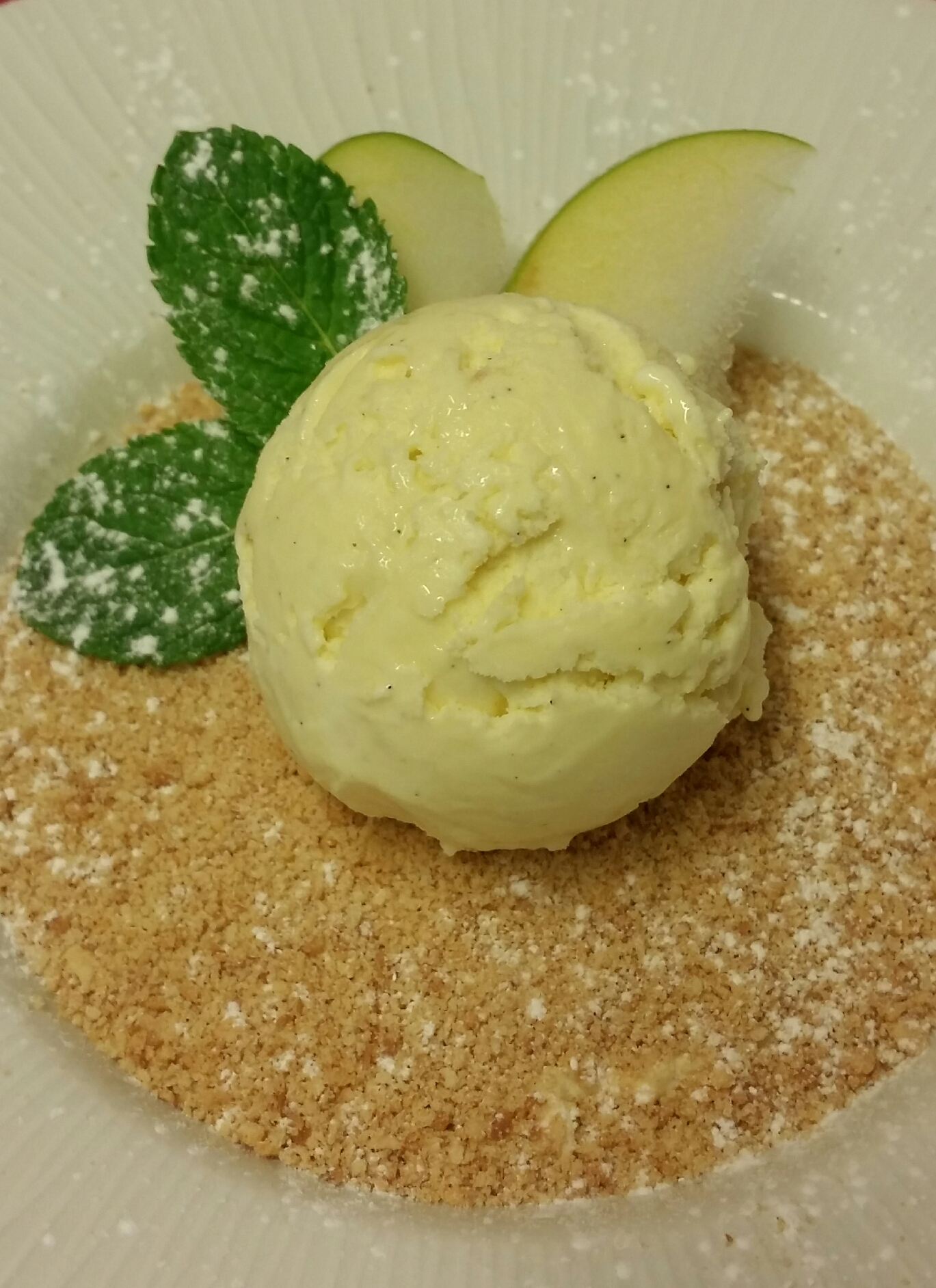
Crumbles are best enjoyed hot, with liberal dollops of custard, clotted cream or a scoop or two of ice cream. You can change the basic recipe for the crumble topping by mixing in oats or a sprinkling of chopped nuts and adding spices such as ginger, nutmeg, and cinnamon.

* Now in passing most people will know Southwell for its pretty minster and horse racing track but now you dear reader know Southwell is the home of the English Bramley cooking apple. The town holds an annual festival each October to celebrate the Bramley.


My Perfect Apple Crumble

1kg Bramley Apples

3 tablespoons of Apple Juice or water

2 tablespoons Caster Sugar ( approximately )

Juice of half a Lemon

½ teaspoon freshly grated Nutmeg

120 gr Self Raising Flour

100 gr Caster Sugar

75 gr Butter


Optional

40 gr Rolled Oats

40 gr Demerara Sugar


Preheat your oven to 200 C / 400 F/ Gas 6. Wash the apples, peel and cut them into quarters. Remove the cores and slice each piece of apple in two. Put the apple pieces into a medium sized, heavy bottomed pan with the apple and lemon juice and cook over a low heat for about five minutes, until the apples start to soften. I like the apples to start to break up leaving some bigger pieces for texture. Taste the apples for sweetness, sprinkle with sugar as required and carefully stir in. Add the nutmeg and gently stir again. Transfer the apple mixture to a shallow ovenproof dish.

In a bowl blend the flour and butter together by rubbing with the tips of your fingers until the mixture looks like fine breadcrumbs, alternatively you can pulse together in a food processor for a few seconds. Blend in the caster sugar thoroughly ( at this point stir in the oats and the brown sugar if required ) and then loosely sprinkle the mix over the cooked apples in the dish. Place the crumble in the oven to bake for thirty minutes or until crunchy and golden-brown on top.

Serve with custard, cream or ice cream.

Comforting Recipes From Nicola Millbank AKA Milly Cookbook: Hangover Spicy Rice

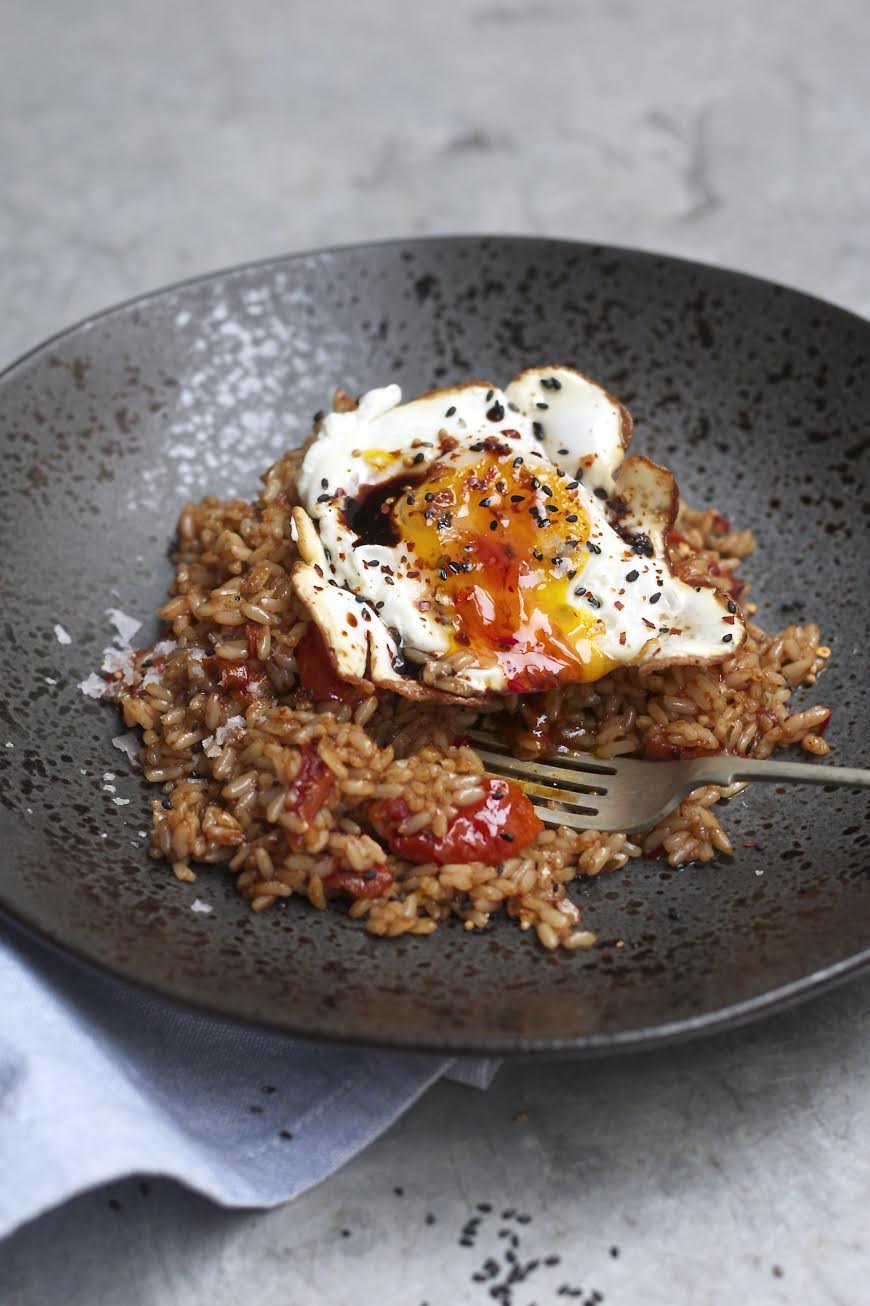
Four comforting recipes from Nicola Millbank AKA Milly Cookbook hangoverspicyriceHangover Spicy Rice

Serves 1

Perfect after the night before and a doddle to make; you’ll be feeling better in no time.

Ingredients:

– 2 tsp. of vegetable oil

– A few cherry tomatoes, halved

– 1 spring onion, finely sliced

– 1 pack of microwavable brown rice

– 1 tbsp. of soy sauce

– 1 tbsp. of sweet chilli sauce

– 1 tsp. of toasted sesame oil

– Juice of 1 lime

– A good pinch of dried chilli flakes

– 1 free range egg

– Extra soy sauce and sweet chilli sauce to serve.

Method:

– Heat 1 tbsp. of vegetable oil in a frying pan over a medium heat and add the spring onion and tomatoes. Cook down for a couple of minutes until softened and then add in the pack of rice, frying for a further 2 minutes.

– Pour in the soy sauce, sweet chilli and sesame oil and squeeze in the lime juice. Allow to fry for a further few minutes, stirring occasionally.

– In another small frying pan, heat 1 tbsp. of vegetable oil and fry the egg until cooked in the middle and crispy around the outside.

– Plate up the rice, top with the fried egg and add a dash of soy and sweet chill sauce to serve.


Comforting Recipes From Nicola Millbank AKA Milly Cookbook: Easy Sweet Chilli Steamed Buns

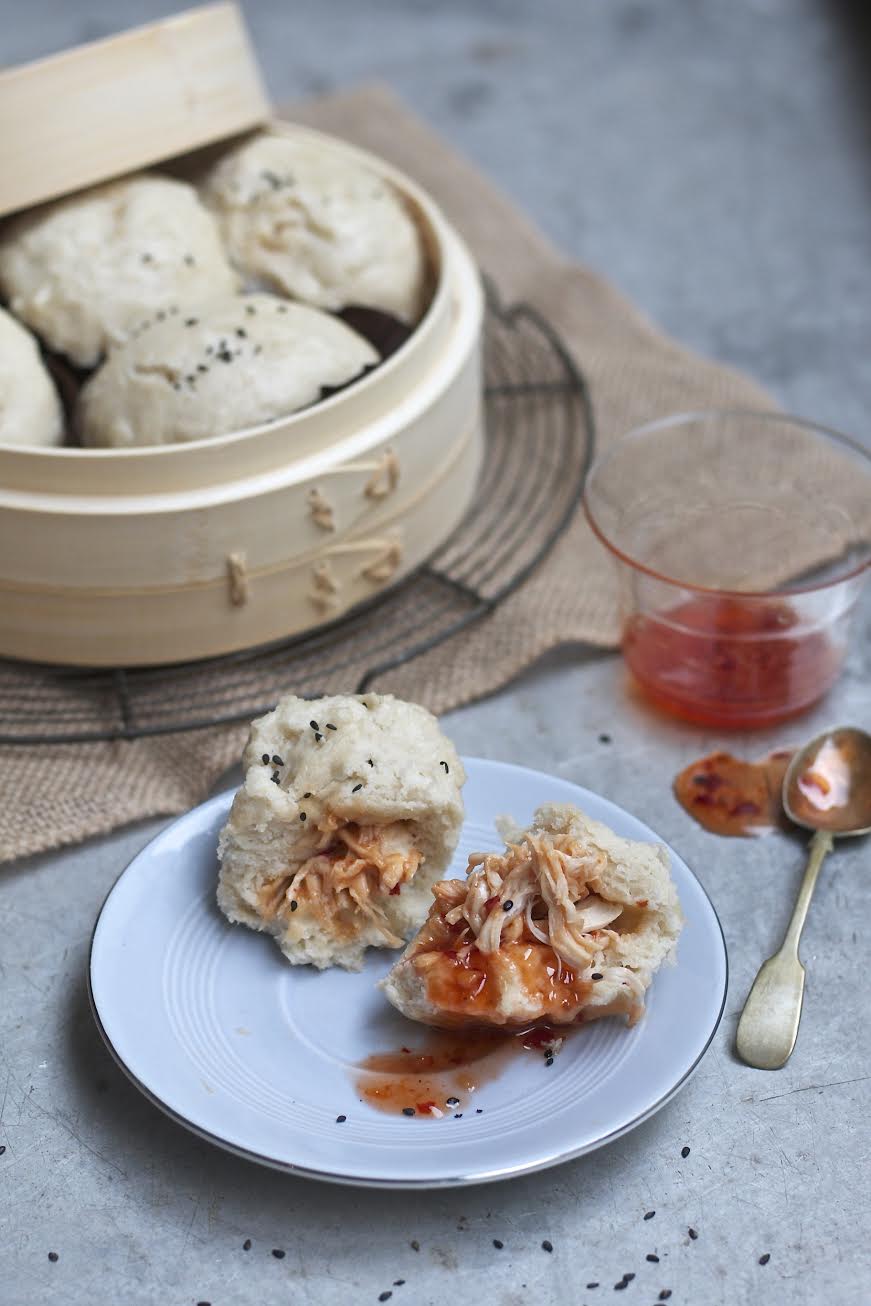
easysweetchillisteamedbunsEasy Sweet Chilli Steamed Buns

Serves 6

Perfect if you have some left-over turkey or chicken from the Sunday roast.

Ingredients:

– A 400ml can of coconut milk

– Self – raising flour, enough to fill the empty can of coconut milk

– 1 tsp. of baking powder

– A good pinch of salt

– 2 tbsp. of sweet chilli sauce

– 150g of cooked, shredded turkey or chicken

– 1 tsp. of black sesame seeds

– Cooking spray / spray oil

Method:

– Empty the can of coconut milk into a bowl, then fill the empty can with self-raising flour. Add the baking powder and salt and mix well to for a sticky batter.

– In a bamboo steamer, lay 6 cupcake cases around the steamer and spray with oil.

– To make the job easier (and less messy!), spray an ice cream scoop with oil then scoop a tablespoon of dough into the cases. Create a hole in the middle and spoon in a teaspoon of sweet chilli chicken. Scoop another tablespoon of dough over the top and gently press around the edges to seal. Spray the top of the buns with oil and scatter with a few sesame seeds.

– Pop the bamboo steamer over a pan of simmering water and cook for 10-15 minutes until risen and fluffy.

– Serve with extra sweet chilli sauce.


Recipe by Nicola Millbank AKA Milly Cookbook. Milly’s debut book, Milly’s Real Food will be published BY Harper Collins in hardback, priced at £20 and released on 4th May 2017. For more information and additional recipes see: http://millycookbook.com/


Comforting Recipes from Nicola Millbank AKA Milly Cookbook: Brie and Cranberry Waffles

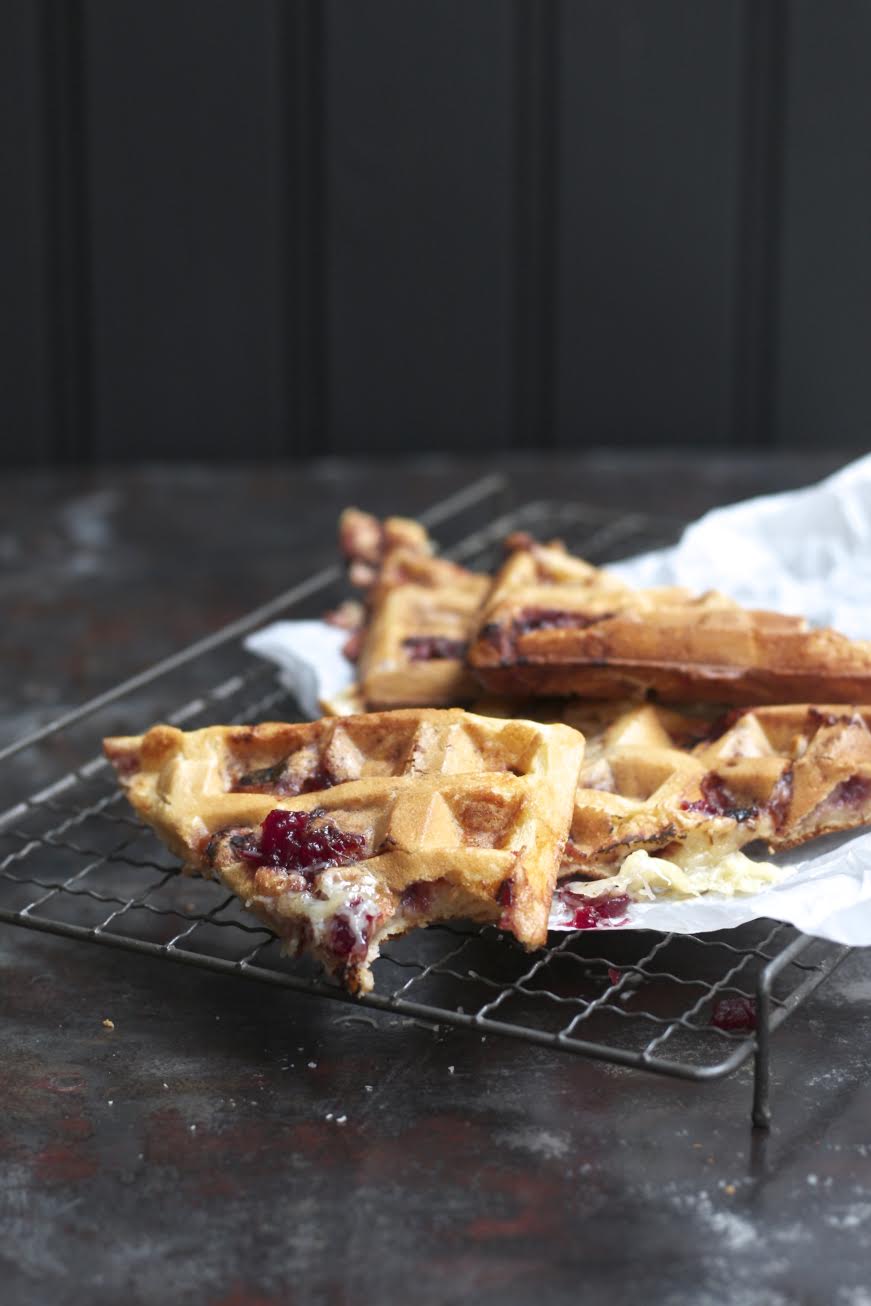
brieandcranberrywafflesfour-comforting-recipes-from-nicola-millbank-aka-milly-cookbook
Brie and Cranberry Waffles
Makes 4

Stuck with what to do with that leftover piece of Brie at Christmas and New Year? Turn it into a delicious brunch with my comforting waffles recipe.

Ingredients:

– 1 free range egg
– 1 cup of self-rasing flour
– 1 tsp. of baking powder
– A pinch of salt
– 200 ml of milk
– 1 tbsp. of honey
– A handful of brie, ripped up
– 4 tbsp. of cranberry sauce

Method:

– In a bowl mix the egg, flour, baking powder, salt, milk and honey together until it forms a smooth but sticky batter. Allow to sit for at least 15 minutes.
– Preheat your waffle iron to the highest setting.
– Dollop half a ladle full into each section of the waffle machine, scatter with brie and spoon in a tablespoon of cranberry sauce per waffle. Ladle the other half a ladle over the brie and cranberry and close the machine, cooking for a few minutes until golden on either side.
– One golden brown, serve immediately. Cut in half and let the brie ooze out.

Recipe by Nicola Millbank AKA Milly Cookbook. Milly’s debut book, Milly’s Real Food will be published by Harper Collins in hardback, priced at £20 and released on 4th May 2017. For more information and additional recipes see: http://millycookbook.com/

Comforting recipes from Nicola Millbank AKA Milly Cookbook: Swedish Potato Waffles

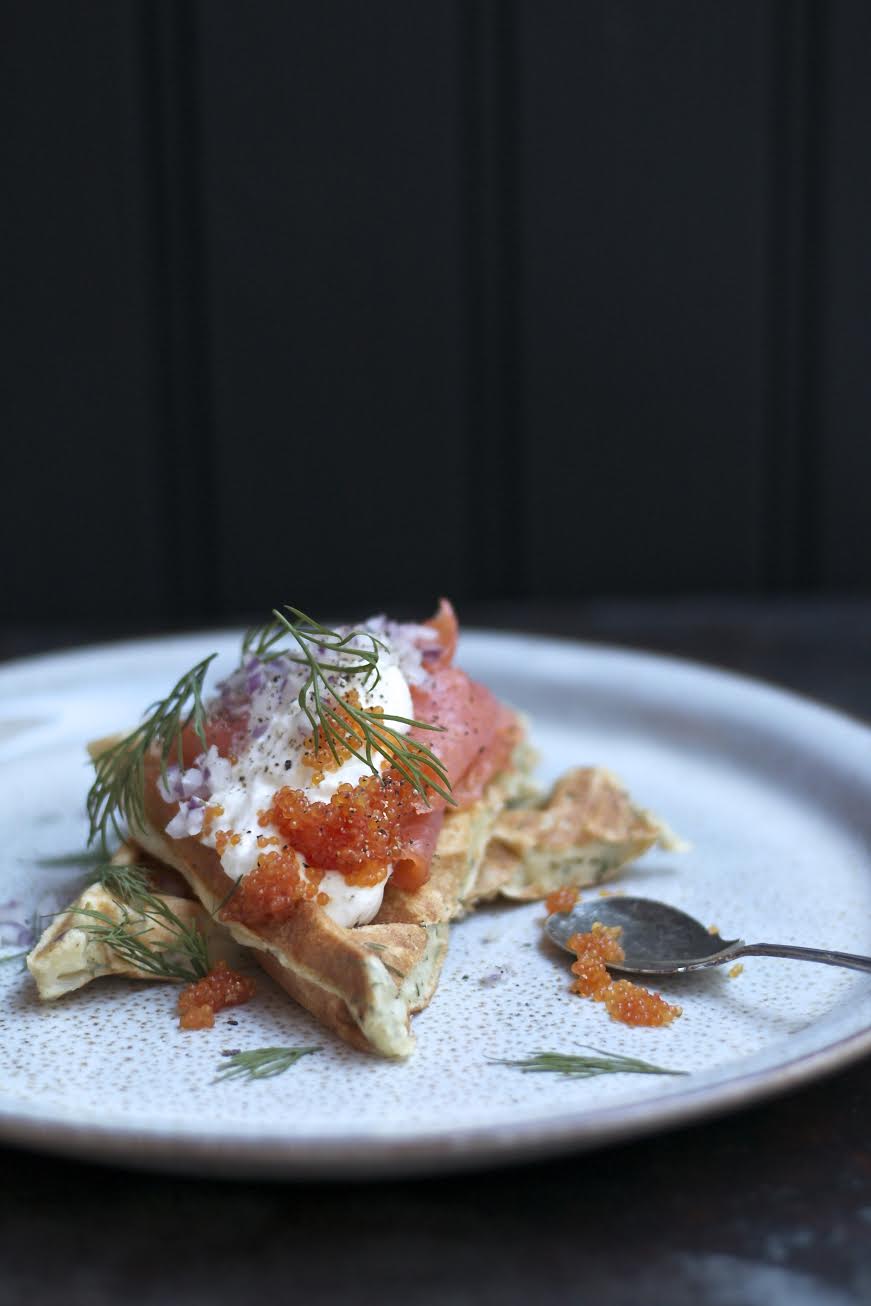
swedishpotatoewafflesrecipefour-comforting-recipes-from-nicola-millbank-aka-milly-cookbookSwedish potato waffles

Makes 4

Channel your inner hygee with these simple potato waffles, decked with traditional creme fraiche, onion, roe and dill. If you don’t have a waffle machine, turn the mix into patties and cook in a frying pan.

Ingredients:

For the waffles:

– 2 cups of mashed potato

– 2 tbsp. of plain flour

– 1 free range egg

– 1/2 a red onion, finely chopped

– 1 tbsp. of chopped dill

– A pinch of salt and pepper

To top:

– 4 tsp. of roe

– 4 tbsp. creme fraiche

– 4 tsp. of finely chopped red onion

– A few sprigs of fresh dill.

Method:

– Preheat your waffle iron to the highest setting.

– In a bowl, mix the potato, flour, egg, red onion and dill into a smooth and sticky batter. Season with salt and pepper.

– Dollop a ladle full into each section of the waffle machine and close, cooking for a few minutes until golden brown on either side.

– Top with a tablespoon of creme fraiche, a teaspoon of roe and red onion. Scatter with fresh dill and serve immediately.


Recipe by Nicola Millbank AKA Milly Cookbook. Milly’s debut book, Milly’s Real Food will be published BY Harper Collins in hardback, priced at £20 and released on 4th May 2017. For more information and additional recipes see: http://millycookbook.com/


Beef and Vegetable Pasties

It’s cold outside and you probably want something hearty to eat, worry no more I have the perfect recipe for the weekend before you indulge in all that rich Christmas food, from a few years back from when I lived and worked in Cornwall. On a journey through the southwest when you leave cuddly, cosy Devon and its world famous cream teas, scones piled high with clotted cream and jam*, you cross the Tamar river and enter another world. There is something different about Cornwall and it always has been so, it is a magical place, a mythical place, slightly out of step and even out of time with the rest of England. It is a land with a rich history, it was a stronghold of the Celtic resistance to the Roman invasion, Phoenician traders travelled across the seas, over five hundred years ago, to bargain for the tin mined from its stony ground. It is a land of rolling, bleak moors, secret coves and bays hiding smugglers and pirates. Tintagel Castle, birthplace of the once and future King Arthur clings to its rugged coast. Cornwall is the land of the pasty.

pasty-4While I lived in Cornwall I made more than a few pasties culminating in a Bank Holiday weekend festival of pasties, real ale, music and more than a little mayhem at the New Inn, Tresco. People watched live bands, drank numerous pints of real ale and scrumpy in the Beer Festival Pavilion and ate pasties, ate pasties and ate more pasties. In fact, I’m pretty sure it could be a world record we sold thousands of pasties from producers all over Cornwall with some very unusual fillings. Peaches and Cream, Lamb Biryani, the Full English Breakfast Pasty ( grandma would approve ** ) to name just a few. I developed quite an aversion to the pasty but now I am slowly recovering.

So before I upset every Cornish man, woman and child with my totally unauthentic recipe I really ought to mention how it should be made. One of the first references to a meat pasty was made by the thirteenth-century chronicler Matthew Paris ( not the modern Times columnist although I’m sure he could make a mean pasty should he wish ) writing about the diet of the monks of St. Albans. The pasty often filled with venison was a delicacy and is mentioned by Jane Seymour, wife of King Henry VIII and the diarist Samuel Pepys.

As the popularity of the pasty waned nationally the Cornish pasty came into its own. The pasty was a popular filling dish to carry into the deep pits of the Cornish tin mines in the seventh and eighteenth century, wrap in thick pastry and muslin cloth the filling would keep warm for several hours. The pasty was often divided with meat the potato then fruit fillings. The thick twist of pastry was to allow the miners with dirty hands a convenient way to hold the pasty and was then discarded. There may be some truth that this also prevented contamination with the poisonous arsenic present in the tin mines.

A proper pasty is considered to contain beef, sliced potato, onion, and swede. Confusingly in Cornwall, a swede is called a turnip. I am not sure what they call Norwegians. The ingredients are sealed in the pastry with plenty of black pepper and cooked from raw. The Cornish pasty is protected under European law alongside Champagne and Parmesan cheese so the Cornish are right to be proud of their culinary heritage. Here is my recipe for the unauthentic but still quite tasty pasty. If you are Cornish I apologise.


*Always in Devon cream first and jam on top, in Cornwall the jam goes on the scone, it’s best not to ask wars are started over less.

** It is a little known fact all grandmothers don’t think you can get through the day without a hearty full English breakfast inside you. This is no bad thing


Beef and Vegetable Pasties makes 6 – 8

1 block of readymade Puff Pastry

Look I know we have not even got to the filling and I am using puff pastry and that is sacrilege, frozen puff pastry is a godsend to all but the most dedicated of cooks and always delivers a good finished result and they are very tasty I promise and I have apologised already.


500 gr Chuck Steak, cut in small chunks ( ask your butcher if you’re a bit unsure )

1 large White Onion, peeled and sliced

1 medium Swede, peeled and sliced about  ½ cm thick

4 Carrots, peeled and sliced

2 large Baking Potatoes, washed, peeled and sliced twice as thick as the swede

50 gr Button Mushrooms, wiped and thinly sliced ( optional )

A knob of butter

A glug of quality Olive Oil

30 gr Plain Flour

300 ml good Beef Stock

Worcestershire sauce

Sea Salt and freshly ground Black Pepper


Flour for dusting

Egg wash


Preheat the oven to 200C / 400F / Gas 6. In a large heavy-bottomed pan heat the oil and butter over a medium heat and add the onion and sauté for five minutes. Seal the meat, flour and plenty of black pepper into a plastic bag and shake well. When the meat is coated add to the pan. Stir and add the carrots, swede, mushrooms and stock. Bring to the boil and simmer for ten minutes stirring occasionally. Add the swede and a good slug of Worcestershire sauce. Cook for a further fifteen minutes until the potatoes are just soft. Check seasoning and set aside to cool.

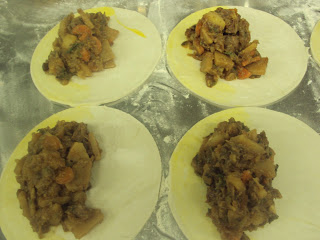
Flour a clean work surface and roll out pastry to between a quarter and one-eighth of an inch thick. Using a plate cut out circles around six to seven inches in diameter. With a soft pastry brush egg wash one side of the circle. Spoon on a generous amount of filling and pull over pastry.

pasty-2
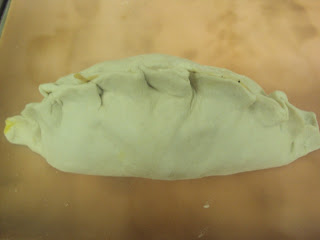
Crimp together the edges between finger and thumb to seal the pasty and place on a baking tray covered in parchment or with a silicon mat. Continue until all of the filling is used up.

pasty-3

Chill in the refrigerator for twenty minutes to relax the pastry then brush twice with the egg wash. Prick once with the tip of a sharp knife to let out the steam and place in oven. Bake for twenty minutes until golden brown and serve.