Interview with Fitness Expert and Trainer Adrian Collins by Kris Martinez

Interview with Fitness Expert and Trainer Adrian Collins by Kris MartinezAdrian Collins is one of the best trainers in the fitness industry. His exercise plan, ‘The Social Butterfly Programme’ has been featured in the Mail Online and The Sunday Times Style Magazine. The programme, which is 6-8 weeks is completely personalised to suit individual goals and promises to fit around the schedules of busy professionals.

Being a busy person myself, I was eager to learn more about  the programme and how it works.

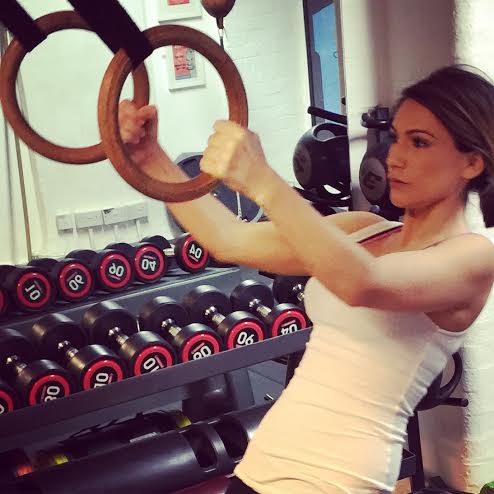
When I arrived at Adrian’s gym near Old Street station, I was expecting  to be thrown into a hardcore army style workout, but it was the exact opposite of that.  Instead, Adrian had me do a few simple exercises, which he used to assess my posture. Knowing nothing about me, Adrian was able to deduce that I used to dance. He was also able to see areas where I was tight.

After assessing my posture,  Adrian took me through a few exercises that would not only help me reach my goal of toning up, but also help with my posture issues.

Adrian took the time to get to know me and find out what my goals were. His style of training is brilliant. He uses a mix of pilates and strength training, which keeps things fun and interesting. He also gave me exercises to do on my own time that help with my posture issues. If you are in the London area, I definitely recommend checking him out. For those of you who live elsewhere, Adrian also offers online training. Prices start at £380.

collinsfitness

After our work out, I had the opportunity to ask Adrian some health and fitness questions.

1. What is your theory behind the Social Butterfly Program?

I created the Social Butterfly Program as being a city based trainer I know how hectic people’s lifestyles are. It’s the perfect regime for city dwelling, party loving people with busy social schedules. It’s completely personalised to your goals.  Wether it’s focusing on s desired body type, re alignment or shaping up for a special event, it’s tailor made to make you look fantastic and stay motivated.

2. What do you say to people, who say they don’t have the time to workout?

Time management is needed here.  Usually from my experience being able to fit in a workout in your day structure without making it too much of an inconvenience is key. Try a morning workout HIIT before work or on your lunch break having your meals around this in preparation.. This is why I promote a 15/20 min HIIT to my clients to achieve on their off days from training with me.

3. What tips do you have for people who don’t have access to a gym?

It’s not necessary to have to go and use a gym to create a good workout routine. Many of my clients don’t have gym memberships I use a private hired studio or train in parks or at homes.  There are some great outdoor spaces for working out, try finding a hill or a flight of stairs is one of my recommendations, as you can really get a burn on different intervals using these. And there is a lot you can do with your own body weight for exercises. It is affordable to purchase some basic workout equipment these days. I like using resistance bands with clients which helps with more pull exercises etc..

4. What is the best way to tone up?

Consistency – sticking to a routine and keeping your food clean… This combined with a good resistance based program can work wonders on toning your structure.

But this all relates back to goal setting if you put your mind in the right place and follow a consistent routine with your eating habits sleep and shocking up the exercise program this can create a snow ball effect to your metabolism

5. What is your favourite type of workout and why?

It depends on my mood and if I’m aiming for a specific goal. From boxing pad work to heavy lifting and squating to Pilates.  I rate the Pilates reformer highly, if I’m feeling a bit tight from weights I like the challenge this machine brings when doing specific exercises. Once you get past the basics there are some full on moves which can really challenge your body.

Interview with Fitness Expert and Trainer Adrian Collins by Kris Martinez2

6. What are good pre and post workout snacks?

I try and avoid the idea of snacking (the body works on digestion of foods with insulin response, snacking can screw this up and forces you to hit insulin spikes etc), But you do need to fuel your workouts and get the right ingredients in within 45mins, post workout to optimise muscle recovery.

Key foods that help promote a fuel efficient workout are apples, almonds and post work out protein and carb are needed for muscle recovery. Look to keep this clean as poss if you want to optimise muscle tone, I find white fish or a breast of chicken with sweet potatoes or basmati rice with good greens for fibre to help get this ingredient through your digestive system in optimal time and ease.

7. What exercises do you recommend to get rid of love handles?

Assessing your diet, getting the correct sleep pattern and with an optimal exercise program in place will all help to rid this area if that is your goal.  Targeting muscle groups in isolation can be great for specific toning and look but, if you are unfamiliar with targeted exercises I wouldn’t recommend isolation as there are implications to the rest of your kinetic chain if your technique isn’t spot on. So, for this I would recommend compound exercises and a good Pilates balance / alignment and core routine to help support your structure before upping exercises for isolation..

8. What is your favourite exercise and why?

Again this always changes dependant upon where I am with my own training routine at the time. I do like compound exercise such as deadlifting as this hits my whole body. But, I also enjoy sports as exercise such as swimming, surfing, snowboarding…

9. If you’re out having a drink, what is a good choice to go for?

Other than water! If you tend to have the “occasional” alcoholic beverage try sticking to clear drinks, champaign, vodka tonic… And also try slipping water in between to stay hydrated as this will really have a difference in how you feel the next day. Clear drinks give your digestive system an easier time in dealing with the toxins and the extra H20 helps the system flow these toxins quicker.

10. If your goal is to shed some weight and tone up, how many times a week do you recommend working out? And how long should your workouts be?

Quality rather than quantity, I’ve always said.  Ask yourself next time you hit the gym is this challenging for me? How much time am I spending on moving or am I sat here on my phone breaking my workouts not concentrating on my exercise/movements. Yes there is a key amount of days and time you want to spend in optimising your weight toning goals, that is why I have most clients I see on the Social Butterfly Program take on the intense level with three to four sessions a week.  I also, encourage them to take on the 15 minute HIITs on the days we don’t train usually over the weekends for optimal metabolism boosting effects.

For more workout reviews, interviews, and delicious recipes be sure to follow my blog, at Fit About Town.


Caroline Moran Raised By Wolves Interview

Caroline Moran InterviewHow did it feel watching series 1 go out? Where did you watch it, and who with?

I live in Sheffield, so I was at home, and my sister Claire, who is the inspiration for the character Yoko, also lives there. So I would go over to her house to watch it, she would take my phone off me so I wasn’t tempted to look a Twitter, because that’s never a good idea. I found the whole thing very, very, very surreal. Obviously I’d seen every episode a lot, because I’m on set all the way through shooting, and then in the edit. But when it goes out, it feels like opening night in the theatre. Just seeing something you’ve made on television is the pinnacle. It doesn’t get any better than that. I can die happy, right now.

Does it feel very vulnerable; having something you’ve worked on for so long, and is so personal, suddenly out there for criticism?

I kind of have all my anxiety a while before it goes out, actually, when we’re showing it to a few people and getting their opinions. Once it’s out there in the world, there’s nothing else you can do. Hopefully people will enjoy it. If they don’t, hopefully, they’ll enjoy not liking it. I let it go at that point. That’s why I try not to look at Twitter – there’s not really anything I can do at that stage anyway. Luckily, when I go to the supermarket, I’m alright, no-one knows that I wrote that thing on television that they hated last night. I’m not an actor!

Did writing series 2 feel different from doing the first series?

I really wanted to make sure the quality didn’t dip. And we wanted to get a bit more plot in there – we didn’t have a huge amount of that in the first series. And we knew we wanted to get more Della in; we knew that we wanted to get Grampy more into the family. And we knew the characters a lot better, and the actors, which helped us when we were writing. It felt a bit more pressured, because first time round we didn’t know what we were letting ourselves in for. This time, we knew the process, so we felt like we needed to get it right.

You’ve written for theatre in the past. Does writing for TV feel like a very different process?

Most of what I know about writing for TV is what I’ve learned from theatre. I guess the main thing is, in theatre you can tweak stuff. You can see the audience’s reaction, and then change things for the next night based on that. In TV, obviously you can’t do that. That’s where our executive producers are really helpful, because they’ll be that first audience for us.

When you sat down to write series 2, did you know what you wanted to do? Had you kept some stuff back from series 1?

We put everything into series 1 – we totally emptied the coffers. I think you shouldn’t hold back, you need to get it all in there, because you never know if you’re going to get another series. So every trick and joke went into the first series, and we had literally nothing for the second series. When we started brainstorming ideas, we quite quickly got to the idea of the final episode, and actually I wrote that first, I just did a draft over a weekend for that. Once we had that, we knew where we were going. Ultimately, they end up going on holiday in a caravan, which is based on holidays we went on in caravans as kids. We actually went away on location, it felt pretty epic. There were dunes to play with, and a caravan. And I think that’s my favourite episode as well. That was in Formby, north of Liverpool. They had red squirrels there! And it was so beautiful! We had such a great time. We had to evacuate though, because there was a massive storm, and it looked as though the catering bus would tip over.

How involved do you guys get on set?

Pretty involved. I think I’m probably quite irritating. I go on set – I love that bit of it. I can talk to the actors, and the director’s very good at taking suggestions. And then I’m in the edit, which is super-intense. And before that, there’s the writing period. So since May of last year, I’ve had no life – I’ve basically been doing Raised By Wolves. I’m aware that I’m quite mad

How did it feel getting everyone back together for the second series?

It just felt so right, being back with those guys. I’m actually friends with them all now, and really good friends with Rebekah Staton. She’s not Della, so at the end of every day, there’s a period of time when she winds back into being Rebekah. And Rebekah is very feminine and gentle, but has traits of Della. So you get Della plus this really cool woman as well. She’s just awesome. I’d love to write stuff for her forever.

How does the writing process work with the two of you?

We start off in a room together, and we brainstorm. We do big series-wide ideas, just chuck loads of stuff into the pot, and don’t think about structuring anything. And then we go our separate ways, and we start structuring and drafting. We don’t then write together until the very end, when we go through it and tart up lines and put in extra jokes. Or if there’s a crisis. We spend a lot of time on Skype.

Obviously Germaine and Aretha are based on the two of you, and you’ve mentioned that Yoko is based on another sister. Do any other family members think characters are based on them, and does it cause family ructions?

There are actually eight of us siblings – only six in the show; we thought eight was unmanageable, so we dropped two. So there’s been a bit of debate about who got merged with who? There are actually three boys in our family, and only one in the show – we thought it was funnier to just have one boy among all those women. So the boys gave us grief – “Are we that interchangeable that we’ve just merged into one?” We explained that it was for the purposes of comedy. We’ve spoken to various siblings about various things, and they’ve come up with ideas or music suggestions or Wolverhampton phrases, so they’ve been really supportive of it, and they watch the show whenever it goes out.

One of the great things about the show is the performances. Were you involved in the casting?

Yes, in the early days. Helen, who plays Germaine, just walked up to Caitlin at a book signing and said “If you ever make a TV show, can I be in it?” And that’s how they met. Caitlin would have done exactly the same thing. She used to write letters to Comic Relief, and Lenny Henry once replied to her, I think.

So Caitlin took her number?

Yeah, she did. Which is again incredible, because the number of times I’ve given Caitlin a bit of paper with something written on it and she’s lost it. But this one she kept, she didn’t lose it, and about a year later, when the casting started, we got her in, as well as loads of other people. But there was just something about her from the beginning. And with Aretha, obviously we had a whole load of ginger people in a room, auditioning. Although Alexa, who actually plays her, is blonde! And Molly, who plays Yoko, came in to audition for Germaine, and we just thought there was something about her, and we wanted to see her again. We hadn’t cast Della by that point, but then Rebekah Staton turned up. And Phil Jackson as well – the classiest man in television. He’s a prince.

What can you tell us about the series?

Germaine goes on an exploration to discover what it’s like to have a man in her life. Aretha finds a kindred spirit out in the world, and we realise she has a vulnerable side, actually. Yoko reaches adolescence, and becomes very worried about the environment, and extinction of animals. We explore Della’s work life and romantic life. Grampy is living in the coat cupboard, and he has a romantic liaison. Everyone’s got a bit of business


Caitlin Moran Interview

Caitlin Moran InterviewHow did you find the whole experience of making series one?

Oh God, it was amazing! I’ve always worked on my own, so first of all working with my sister, who I’d always suspected was a genius, and indeed turned out to be – not least because about two weeks into the process I realised I had no idea how to produce a plot or use the script-writing software. She knew how to do it all, having written plays for years and had loads of stuff on up in Edinburgh. And then bringing it to a team and making it happen. In a way, it was always obvious that me and Caz would work together, and do something about our family, because that’s what we used to do when we were kids. We’d have Sindys and play Sindy games, and write scripts, and making clothes for the Sindys by wrapping bits of tinfoil around them and putting pins in their ears to make little stud earrings. And when you make a TV show, you don’t have to at any point wrap Rebekah Staton in tin foil and put pins in her ears, because they’ve got a wardrobe department who actually put clothes on them. You’ve suddenly got all these resources.

Sometimes you come up with an idea that people look very scared about. In series one, we just wrote the sentence “The dog is having a poo” and it turned out to take half-a-day to film. You have ten fully-grown professional people standing around in the cold in Manchester, watched by passers-by, waiting for a dog to drop its biscuits. Such is the awful, evil power of a writer that you can just sit in the warm and write “The dog is having a poo” and suddenly you’ve ruined someone’s day.


Having worked in front of and behind the camera, which do you prefer?

Oh god, no question. You may have noticed that I’m not on television at all now. I presented a TV show when I was 18, and at the time, and I only did that because if you’re offered a TV show when you’re 18, of course you’re going to say yes. But I knew I was a terrible presenter. And this posh voice that I’ve got now – I just started speaking in it as soon as I went on camera, because I was so nervous, and I’ve never been able to break out of it since. Literally, before I went on camera, I had a very broad Wolvo accent. I felt I couldn’t be me on television, and there was a very posh girl on set called Isabel, and she seemed really confident, so I just copied Isabel’s voice. And I’ve literally not been able to shake it since, so you can tell how traumatic an incident it was that it still marks my voice almost 30 years later. It’s just horrible; I don’t know how actors do it. The whole thing of a room going silent and everyone waiting for you to do a thing on camera, and every minute is money. My job is the exact opposite of that. I sit on a chair, nobody has a clue what I’m doing, I’m in my pyjamas, eating sardines out of the tin with my fingers, chain smoking and singing and wandering around talking to myself. That’s my preferred working environment

Do you prevaricate an enormous amount, working from home?

I know a lot of writers who will sit in front of a blank page, or spend all morning hovering between the keys in their keyboard, but I’ve always had so much work I just can’t do that. I’d go mad. I run on anxiety anyway, I’ve always got five or six things on the go, and I’ve worked since I was 13. I come from a poor place, and I’m running from a nameless horror. So every day, I have something to do, and if I haven’t done that then I’m fucked, because I have to do twice as much the next day. I’ve never missed a deadline. I file early.

Were you pleased with the reception of the first series of Raised By Wolves?

Oh God yeah, it was amazing. I’m always waiting, with everything I do, for someone to come up and kick me up the bum and say “Get back to Wolvo.” And it was just across the board amazing reviews. The cover of the Guardian Guide was me and my sister and the two people who were playing us. That’s a pretty surreal moment. Then it broadcast in Canada a couple of months ago, so we started getting all these messages from Canada, asking what all these British slang words meant. And we’re in the process of doing it in America now as well, which is incredibly exciting. It kind of makes more sense there, because home education is much bigger there, and that whole prepping for the apocalypse thing that Della is doing, that’s massive there.

You mentioned getting tweets from Canada. How did the show go down in the bear pit that is Twitter over here?

When the show was on, I just couldn’t go on to Twitter – that’s just a short way to madness – but my husband was filtering it every night, and I had literally four bitchy comments, which, as a woman on Twitter is extraordinary. Given that you can be a woman on Twitter and come on and say “I love you all, here’s a pound, everyone,” and someone will just go “Shut up you fat bitch #mensrights”. So I was astonished.

We did it out of so much love. We love those girls. We want it to reach families like that, working class matriarchs, weird teenage girls, fat teenage girls, angry ginger lesbian girls, weird freaky Goth girls. They never get served anywhere. As a woman, it just does your eyes so much good to see people who look like that on your telly. Often on telly even something that’s really edgy has got women on it who are really toned, and if they’re really stressed, they’re in a little vesty singlet and tiny pants and they’re sitting on their bed with their hair in a bunch and glasses on to look intellectual but still looking hot. And to see someone who’s just dressed in rags and talking about wanking is just so different. Big girls, both in personality and stature, doing stuff and not really doubting themselves and being triumphant. We still don’t have enough of that.

You bust quite a few taboos in the series. Do you enjoy that?

I’ve never seen a taboo that I didn’t want to grab and pull out into the open whilst banging on a pan with a spoon and going “Here’s a taboo, let’s talk about the taboo.” What are taboos? They’re just things that we’ve decided, for whatever reason, we don’t talk about. To which I would add the word “…yet.” Why don’t we? It’s insane that American Pie has gone through eight iterations, an entire franchise based on a man having a wank in a pie, and yet female masturbation is never spoken about. And if you look at teenage girls in this generation, and how fucked up they are sexually, and the majority of their sex education is coming from porn, and it’s all from the male viewpoint, there’s nothing about what you want, you’re just some cock-vessel for some horrible porn star. So to have a teenage girl who looks like that, waking away her grief, trying to encourage her uptight sister to follow suit in a graveyard at a funeral – no, sex is funny!

Are you very conscious of the responsibility you have to younger female viewers when you’re writing the series?

Oh God, constantly. I was raised by media and culture, which is why I’m so hyper-aware of what there is and what there isn’t. And when I wrote How to Be a Woman, I thought it would maybe sell to women of my age, but it was all teenagers who bought that book. It was an astonishing array of girls – really fucked up girls, girls who’d self-harm, girls with eating disorders, girls with anxiety, girls with depression, and then really brilliant beautiful girls who didn’t know what to do with their energy, girls who were ashamed of their sexuality, just this massive parade of girls who didn’t see themselves anywhere, and felt incredibly vulnerable, and would grab on to one thing – one book or CD or film – and that gives them the first tiny platform they’ve got to start building their personality. And I think so much of what women see on television or in magazines makes them feel awful or hectored or lectured to or that their life is a massive fucking to-do list. I’m so conscious of the need to make jokes about it. And when we’ve finished laughing about it, we need to plan the revolution, because I’m not going to have another generation of girls growing up feeling as fucked up and unhappy about themselves as I did.


After the success of series one you’ve got you’re the difficult second album syndrome. How did you find writing series 2?

Actually a lot easier – because we knew things like don’t write ‘a dog has a poo.’ We tried to write a scene with a swan and were told not to. Basically, don’t do anything involving livestock. That’s probably a good rule for life anyway. And we knew how to plot things; we became better at that, mastering the technical side so that it worked as a drama as well as a comedy. But whenever anyone gives an answer like that in interviews that I read, I think “That’s incredibly boring, tell me a funny anecdote about you going out and doing a shit load of poppers on Canal Street and falling off a table.” And I did that as well.

So what can fans expect from the series?

Their dad is back, so we get to see how he and Della met, why they broke up, why their kids are how they are. He’s not in it that much, he’s like a wandering albatross that floats into the series but floats back out again, revealing a couple of interesting things. Otherwise – Germaine has become worse! The revelation at the end of the last series that not only would she not have to pay for sex, but that people would pay her for sex, that she could be a prostitute – this has been the bolt of good luck that is all Germaine needed to become truly insufferable. In episode one, she does something so disgusting that everyone presumed it was me, but it was actually Caz’s idea. Germaine has come up with a life hack for attracting boys that is appalling. Aretha has taken her destiny into her own hands and realised that being educated at home is not going to get her out of that house – particularly for the two jobs that she really wants, which is either to be a hermit or a lighthouse keeper. So she goes out and finds a mentor who becomes really important to her. And the person we have in to play that role is such a hero of ours; we are so thrilled to have her on the show. And we also see where Della works, and her boss, who is the other person we are so excited to have on the show. He is amazing, it was his first TV, and we immediately went away and wrote him a bigger part. In three years he’ll have his own sitcom.

Della is an amazing character, beautifully played by Rebekah Staton. When you wrote her, did you mean her to be so sexy?

No! We’d written her as someone quite small, angry and compact, just scrubbing her front doorstep and hating everyone and being very proper at all times. And then Bex came in for the audition and said “I’m just going to drop this in – I’ve just done a film with Clint Eastwood, and I want to play Della like Clint Eastwood.” Her dad was a preacher as well, and I think she plays Della as a cross between a preacher man and a cowboy. And she just brought this incredible physicality to it. To have her to write for is a true, true privilege. She’s amazing. You can just throw anything at her. She has such talent. On set she’s amazing. I’ve visited a lot of sets in my time. The king of being on set has always been David Tennant. On Doctor Who, he knew everyone, was talking to everyone, he’d bring the whole mood up, he’d have lunch with everybody, he’d be joking the whole time. Bex is the only person I’ve ever seen who’s even better than David Tennant. In between every take she’s so funny; it’s like a proper stand-up routine. And she goes round hugging everyone, and she’s looking after all the kids at the same time, she’s like a mum to them. And she’s messing about, and then suddenly she’s standing up delivering these huge speeches, and she’s word-perfect every time. I don’t know how he does it.


How important is Wolverhampton in the show. Could it take place anywhere else?

No. It’s a very specific humour that the Midlands has. A friend of mine told me that people from Wolverhampton are what Scousers think they are – very dry, very downbeat, resilient, with a wry humour.


You took press on a tour of Wolverhampton before series one. What was that like?

That was amazing. There was one main highlight. Wolverhampton has a massive chapter of the Hell’s Angels – I think the biggest one in the UK. They had a huge club house on Penn Road, it was a terrifying big gothic house with huge gates. And I was explaining to people on the tour bus about this big scary house, and we pulled up opposite, and they’d taken the gates down, had a really lovely sculpted garden, a netball court and a tennis court. It had all been done up. So I explained that it must have been sold, and the guy who worked for the local paper went “no, no, they still live there!” The Hell’s Angels were gentrified. Sarah Beeny must have been in there and given them a lovely colour scheme, all Farrow and Ball.

So do you fancy yourself as a tour guide?

Yeah, it was really good fun. But it’s made easier by the fact that Wolvo has the biggest concentration of characters anywhere. We had a tramp who loved on the roundabout, and had a tent there, and he was there for so long that the council wired him up to the mans, so he could have a fridge, a telly and a satellite dish there. When he died, people found out he’d been a Polish airman in the war, and had been in a concentration camp, where he’d been terribly traumatised, so he didn’t want to be around people any more. So he lived on this roundabout. And there are loads of Sikhs in Wolverhampton, and their philosophy is that anyone who decides to be a hermit is a holy man. So people from the Sikh community would leave him food every day, which he hated, because he didn’t like spicy food, so he complained about it. That’s so Wolvo. Then there was a guy called Barry the God, who walked around with a gold cup on a chain, and who had apparently seen God; there was The Cowboy, who walked around dressed as a cowboy at all times; there was The Preacher Man, who wore a bowler hat and would get on the buses and start reading the bible to everyone. It’s a very interesting place, is Wolvo.

Interview with thanks to those at Channel 4.

 

Spandau Baddie: Martin Kemp Meets Vicky Edwards

Martin Kemp tells Vicky Edwards why his musical theatre debut is going with a bang-bang…

'

Photo credit: Alastair Muir

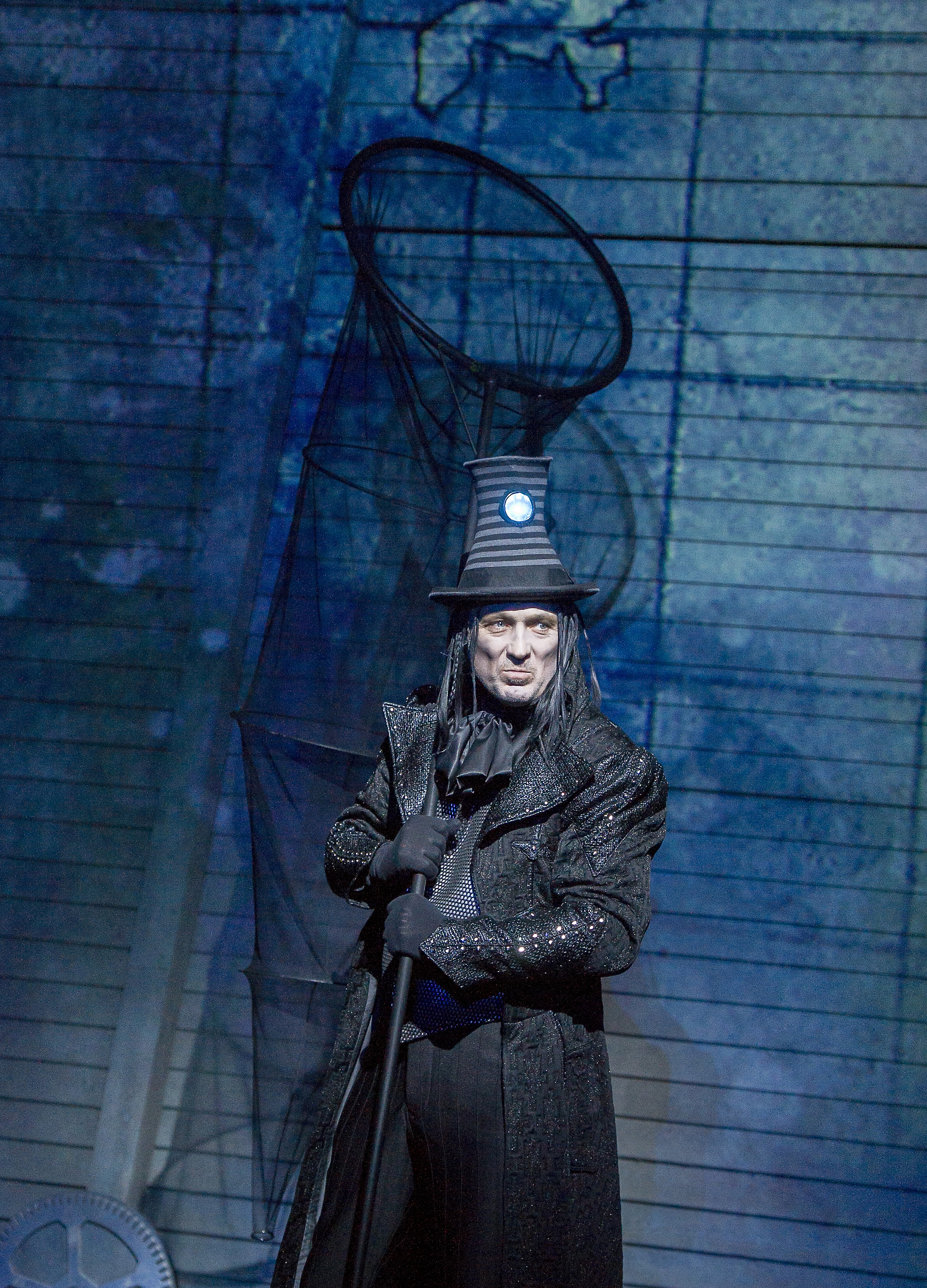
From gangster Reggie Kray to evil control freak Steve Owen in EastEnders, Martin Kemp is extremely good at being bad. Currently on tour in Chitty Chitty Bang Bang playing the Childcatcher, arguably one of the most iconic villains of all time, Martin is drawing on his previous roles for inspiration, but admits that there’s unchartered territory to explore when it comes to the character that regularly tops the polls of movie monsters.
“The Childcatcher is an exaggerated version of everything I have ever done before, but it comes from a completely different angle,” explained Martin. “He’s a step away from reality; all the characters are really, especially in the second half when we go to Vulgaria.
“In the first half I play a character called the Junk Man, but in the second half that kind of Alice in Wonderland thing happens and the Junk Man becomes the Childcatcher. Robert Helpmann did an amazing job [in the film], but my physicality is not the same as his; I don’t have his ballet background, so instead I try to bring a bit more horror to the role.”
Judging from the booing that fills the theatre before he has even set foot on the stage, he’s clearly doing that very effectively.
“Kids are scared of the name: Childcatcher. When the Baron says “Call for the Childcatcher!” I can feel the tension in the theatre and then I hear the boos,” he laughed, adding, “But that’s part of the whole experience. If you haven’t laughed, cried and been scared then you haven’t seen a good show. You need to be taken to all those places.”
And with cheers at the curtain call almost taking the roof off the theatre, it seems that it’s a journey that audiences of all ages are delighted to undertake. A co-production between Music & Lyrics Limited and West Yorkshire Playhouse, this brand spanking new reimagining of the much-loved Sherman Brothers musical is winning critical acclaim as well as standing ovations.
“Ten years ago I saw the show in London and the main thing I remembered about it afterwards was the car,” said Martin. “But now it’s very much about the story. It amazes me, but every night I walk out of stage door and people are there saying how much they loved the whole show. From old people who saw the movie on their first date to kids meeting Chitty for the very first time, the demographic is extraordinary. Yes, it’s changed from the book, and then again from the film and again from the original stage musical, but it really works. We’re sending people home with big smiles on their faces.”
As for his fellow cast members, mention them and it is Martin with a big smile on his face. “It’s a great cast,” he enthused. “I’ve worked with Michelle [Collins] before and it’s lovely to work with her again, but they are all brilliant performers.” And so they are. Funny men Jason Manford as Caractacus Potts and Phill Jupitus as Lord Scrumptious and Baron Bomburst are joined by Martin and Michelle, as well as Andy Hockley of Phantom of the Opera fame as Grandpa Potts, and West End leading lady Amy Griffiths as Truly Scrumptious. Add to that a world class company of singers and dancers and you have a show that is dazzling, star-studded and that absolutely lives up to the ‘fantasmagorical’ praise.
But while the story of Chitty might have been knocking around for a good while, musical theatre is a new challenge for Martin.
“One reason I am here is that I have never done a musical before and I thought this might be a nice way to dip my toe in. I love trying new things and I love working with new people.”
That happy-go-lucky, have-a-go attitude wasn’t always there, however. In fact, as a child he confesses that he struggled with crippling shyness.
“I’ve been doing this a while now but at the age of eight I was incredibly shy, so my mum sent me to Anna Scher’s drama workshops,” said Martin, who knows first-hand what an advantage drama classes can be to children.
“What drama clubs give you is a small amount of this magic dust called charisma. I always say that I owe everything to Anna Scher because she formed my personality as a kid.”
Pointing out that whether you become an actor or join a band or you just use that acquired confidence to get through interviews when you’re 16, Martin is certain that drama clubs are a fantastic way of developing both character and life skills.
As for children watching live theatre, absorbing stories close up rather than on a screen, Martin loves the way they get totally involved.
“Adults watch, but kids believe and become part of the world they see unfolding; they just dive in,” he nodded.
“For Chitty we recently did what is called a ‘Relaxed Performance’ for children with disabilities and conditions like Autism. The show was adapted around the audience’s needs and it was a wonderful thing to be part of.”
A member of one of the most popular bands of all time, star of movies, TV and now a musical, Martin certainly can’t complain of always doing the same old same old.
“I have always changed it up a bit and I like never knowing what’s around the corner,” he laughed, although actually this time he does know what is coming next.
“I have just finished a year on tour with Spandau which was wonderful, but it’s this great big machine that needs five artic trucks and a 100-strong crew. When you play huge arenas the size of Wembley you know that to people at the back you’re just a speck of dust in the distance and that you’ll never get to meet those people. So in May I am doing the sort of antidote to not meeting people with a show that’s going to tour called An Audience with Martin Kemp. I’ll be travelling around England chatting about my life and career and taking questions from the audience. Yeah, it’s going to be different and fun,” he grinned.
With such a busy professional life, relaxation, he says, comes in the form of painting.“That’s my down time. Sometimes it shuts me off from the world and I lose myself completely.” Asked what he paints and the smile that stole my sixteen-year-old heart lights up his face again. “I paint rock ‘n’ roll,” he says with a chuckle.
Super-talented, funny, warm and with rock ‘n’ roll artistic flair to boot, however brilliantly nasty he is as the Childcatcher, in real life Martin Kemp is a total sweetie.
Vicky Edwards


Peace and Plenty and Annie Freud by Maya Pieris

Annie Freud– teacher, embroiderer, painter, poet and brilliant party giver- is the daughter of Lucian Freud, great-granddaughter of Sigmund Freud and grand-daughter of sculptor Sir Jacob Epstein. She is also the proud owner of a new studio at her home, Peace and Plenty, in the heart of Dorset. Here from a window seat, which I would describe as more window bed, she has a view of fields, her husband Dave’s sheep and the slow train to Bath.

pic 1 frost annie imgpic032

The studio “is a first” and, along with a dedicated space for Dave means their interests which involve “paint, mud and dirt” aren’t a problem. And she’ll have the occasional sheep for a neighbour in the adjoining animal pens. It is now also home to her father Lucian’s easel which she inherited following his death in 2011 and on which currently she has just painted a “portrait” of The Fox and Hounds Pub, her local and home to the Cattistock Poets.

I’ve got to know Annie over the last 5 years through the Cattistock Poets which she started and leads, encouraging writers to find and listen to their own poetic voices, “to make it better..and to take it seriously”. She has also been responsible for organising some fabulous poetry readings to which she has invited a variety of other published poets.

Peace and Plenty and Annie Freud by Maya Pieris2

Her latest collection, The Remains, published this summer, contains 2 of my favourite poems – Aubergines and Abbotsbury, the latter which I heard Annie read in a beautiful, small, ancient Dorset chapel as part of a Christmas carol service. The Remains is her fourth collection and has established Annie as one of an exciting new group of poets – and a performer firmly committed to poems being heard.

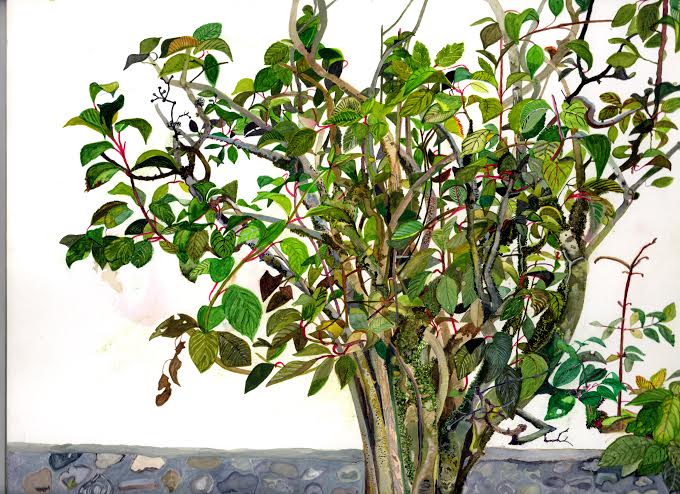
The Remains is , however, proving an artistic turning point- another first- combining 2 loves, the visual and literary, the book illustrated by Annie with original paintings, some inspired by the Dorset landscape. When “I started writing poetry..I thought I would embroider in the mornings and write in the afternoon” but she found that this wasn’t working so put the visual to one side though found this “painful” needing this element to produce “something I would try to make more solid. I’ve painted all my life with pleasure but without enough self-belief but The Remains changed all that.” I asked her if her renewed need to paint was a rearrangement of two loves but she said that “was too easy, that one should not have self-limiting views of who you are or what you can do” and that painting fulfilled a physical need.

frost annie pic 3

But whatever the medium Annie is committed to work that will “move, disturb or delight”  the point being “what it is doing to other people”. She has also had another first this December with the setting of her poem The Sun Looks Forward to Winter to music by Benjamin Tassie for three female voice and hopes this time next year to see her first London painting exhibition happen.

As for Peace and Plenty- not her own invention but the name of the 2 cottages which form her very peaceful and plentiful home.


An Interview with the impressive Andy McNab by Margaret Graham

Andy McNab was awarded both the Distinguished Conduct Medal (DCM) and Military Medal (MM) during his military career, and was the British Army’s most highly decorated serving soldier when he finally left the SAS. Since then he has become one of the world’s bestselling writers, drawing on his insider knowledge and experience.

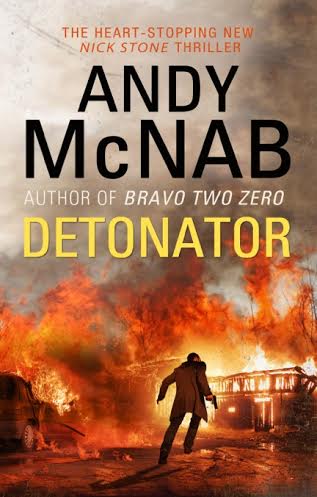
As well as three nonfiction bestsellers, he is the author of the bestselling Nick Stone thrillers, several other fiction and non fiction titles as well as a series of books for young adults. Besides his writing work, he lectures to security and intelligence agencies in both the USA and UK, works in the film industry advising Hollywood on everything from covert procedure to training civilian actors to act like soldiers, writes for a variety of newspapers and magazines and campaigns tirelessly as a spokesperson and fundraiser for both military and literacy charities.pic 2 Detonator jacketAndy, Nick Stone, in Detonator, talks of knowledge equaling power. In one of your talks I sat in on at the Yeovil Literary Festival, you mentioned that your army tutor at your squad’s first literacy session explained that the ability to read was the route to  education, which = knowledge, which in turn = power. This clearly resonated with you, even changed your life.

You write non-fiction and fiction, which shows the importance of the latent abilities your tutor unearthed but have you felt the need to pass this equation to others? Perhaps through literacy charities?  If so, what are they? Tell us more about how this equation has changed the lives of others.


Yes very much so. I was lucky enough to have been given an education by the Army, and I spend a lot of time now telling young people my story and encouraging them to make the most of educational opportunities on offer. I am an Ambassador for the Reading Agency, and through them visit many schools, prisons, Young Offender Units and workplaces every year. If I can get just one inmate, school kid or worker to change their reading habits or pick up a book for the first time, then it will have been worth it. My message is pretty simple, ‘If I can do it, anybody can.’


Was the transition from active participation and huge achievement in the SAS and then into civilian life tough? I suspect the adrenalin rush has taken a dive. The pace must be so different, and the focus.


Life is certainly not dull now. I get my adrenalin rushes elsewhere nowadays, whether its surfing, trekking to the South Pole as I have recently done or getting out and about on my motorbike. The pace of life is still pretty full on, I have projects on the go both in the UK and the US at the moment, but I’m not someone who enjoys taking time off, I like to keep busy.

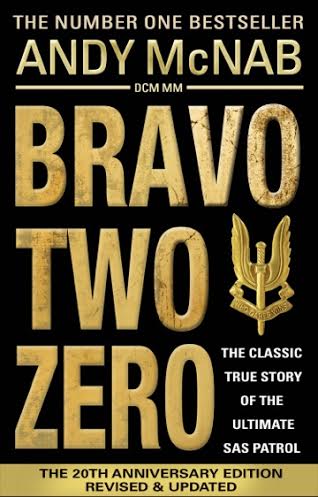
pic 3 BravoTwoZero_20th (2)


The best account yet of the SAS in action
  –   Sunday Times


Writing is something in which you have control, and focus. You can work on your own, at your own pace, which I suspect is frenetic.  Is this one reason why you do it?


I like purpose and focus, and work most productively under pressure. I would like to be able to say that as an author I can write at my own pace, and be left alone, but the publishing world doesn’t really work like that. There are always deadlines and they seem to get closer every year!


Do you miss not working in a tight unit in which there is implicit trust, or like Nick Stone, do you only trust yourself?

I guess I have replaced that army camaraderie with friends and family, and some trusted colleagues who I’m involved in various projects with.

 
Do Nick Stone or Tom Buckingham ever get into situations they can’t get out of, so you have to go back and create an escape route or do you know exactly the plan, from start to finish?


I certainly have a framework from the beginning, and as most of the action is based on my experiences or knowledge, I would hope I know how to sort out any dramas.

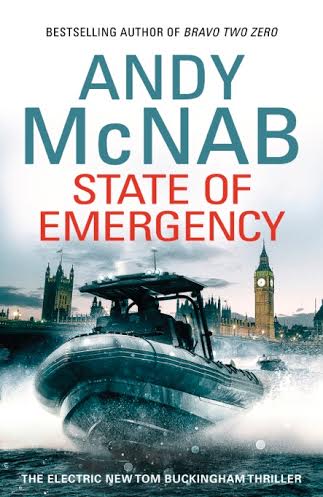
pic 4 of EMERGENCY jacket

Presumably you use your experience of special forces to drive the action, but must be careful not to actually reveal too much information of how the SAS works? Has this ever happened, at draft stage, and has been spotted by an editor, or do you have a good editorial eye?


Every book, even the Young Adult ones, goes through the MoD. They have, from time to time, picked up specific descriptions or, say, the make of a car used in the action, and asked me to change it as it is a little too close to a specific operation, but it is rare.

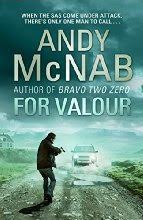
pic 4a For ValourAnd oh, Andy McNab, how could you kill off Frank’s  – you know who in Detonator? I was devastated. Yes, I saw it coming, but … How could you? I know you called yourself a functioning psychopath in your Yeovil talk, but when I do that sort of thing I really mind. Do you? You handled the guilt and grief really well, and when the others … No, won’t say anymore, we don’t want to give it away.  But you did feel it, I’m sure.


It was the same when I killed off Kelly, she was getting too old and would either have to become a mother figure or have a love interest, and that takes the storyline off in a different direction, so you just have to cut them loose. Its good to throw in a few surprises, don’t want anyone feeling too comfortable!

You’ve just trekked to the South Pole, so there are still challenges aplenty for you. But what’s next?


I’m thinking of trekking to the North Pole actually. The guy who took us to the South Pole has offered to take me as a favour, so I’m trying to work out when to fit it in. It’s a question of time though, I’ve got various film and TV projects on the go in the States, plus the books and several other projects happening in the UK, so I need to start doing some juggling.


You can obtain Andy’s books from Amazon.co.uk, and all good bookshops. And you must. They’re rip-roaring action fiction/non-fiction with heart. Great stuff.

Read Margaret Graham’s Detonator review here.


Spotlight interview with Maya Pieris

Spotlight interview with Maya Pieris1


Pinning down this writer was easy as it’s me, trying out the Spotlight idea: 


In this new series, conversations with writers, I aim to shine a brief spotlight onto what makes someone begin that uncertain path from brain to book, and to consider what makes us write.


Have I always written? Yes and no- I thought about it, had periods of trying but too often gave up. For a few years I attended various workshops but it’s since being in Bridport, Dorset, that writing has become almost a reflex reaction. There’s something in the air here that really encourages people to write to be read. And to be published.


And now ideas run about like kids in a playground. I keep pens and paper around the place though on occasions thoughts have been scrawled on the back of my left hand. This affliction does affect others as the need to make notes comes at any time, and from any and everywhere. Writers are like grave robbers: plundering anything- ourselves, others. My response after the recent French tragedy was to write 2 poems though it’s not always a comfortable thought that creativity and inspiration come from such events.  Seeing a dead mole led me to write a poem about an Islamist group whilst another idea came from seeing thousands of whitebait washed up on the shore near Bridport.


Spotlight interview with Maya Pieris2


And what do I write? Poems, short stories, magazine articles and plays. The last time I tried writing one I was aged 10 and the play was a “who dunnit” written in turquoise ink.


The writing challenge is to focus. It really is important not to get seduced by too many possibilities. And validation from peers is also invaluable, though I write firstly for myself- to try and fix a feeling or thought in words. I’m not sure why but I seem to have to. But I do have people I trust to edit and critique work.  It is, however, necessary to let your work go. In a way once it’s written it’s on its way to becoming public though it was a year before I could look at my first published book without wanting to change it.
Future plans are to write more regularly and finish work- too many unfinished “jumpers”.  Writing is a private process.  You have to enjoy the jigsaw of arranging your thoughts and ideas. There are lots of excellent courses to join and so many other writers to read but in the end it’s you, your pen or computer. And for me it’s an entry to a large uncharted world.


Spotlight interview with Maya Pieris3


An Interview With Emma Kavanagh – Author of Hidden

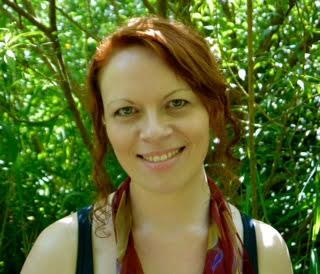
An interview with Emma Kavanagh - author of Hiddenauthorpic

An interview with Emma Kavanagh – author of Hidden

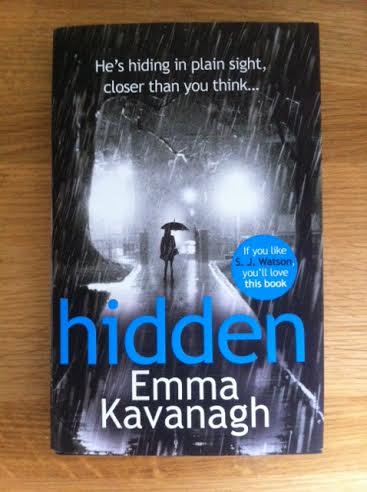
hidden Emma Kavanagh

Do you plan your books in great detail, or just go with the germ of an idea, and where does that idea come from?

I am a huge planner. I even have spreadsheets! I tend to come up with a general idea of where I want my story to take the reader, and then let that marinate for a while. I’ve had book four cooking on low for the past three months whilst I complete book three, The Missing Hours. Once I’m ready to start work on it, I begin with research, research, research, finding out as much as I can about the area I am going to be writing about. Then begins the planning. This will change as the story develops – which is why spreadsheets are so useful – but I always find it easier to have an idea of where I am heading. As to where my ideas come from, I am fascinated by psychology and true crime, which is an absolute gold mine for book ideas.

An interview with Emma Kavanagh - author of Hidden1

How do you actually work? In silence in a study, at the kitchen table?

Oh, I would love a study…no, my study is now a nursery for my youngest son. I write in the living room on a big cozy chair that has become known as “Mummy’s work chair”. When I’m planning or researching, I can’t cope with silence. It’s too intense. I tend to have documentaries running in the background, which I half-watch to distract me from the pressure. When I’m actually writing though, it has to be in silence. I’m not one of those authors who can work in a coffee shop. Who can concentrate with all that cake?
Did you have a writing background before you began writing novels?

I’ve written short stories since I was a kid, and was a passionate writer throughout school and college. But once I started my own business (I ran a consultancy practice specialising in training police and military personnel in the psychology of critical incidents) I let the writing drop away. I was working hard and my focus was elsewhere. Then one day a story idea came knocking and simply wouldn’t leave. In the end I decided that it had to be worth a shot…

An interview with Emma Kavanagh - author of Hidden2
Who has inspired you in the literary world?

So many people. I adore Kate Atkinson, especially for her willingness to push herself beyond genre boundaries and try something entirely different. Another must-read I have is Barbara Kingsolver. Her use of language is just exquisite. And I can’t not mention Agatha Christie. No one plots like she does.

 Do you read while you’re writing? I know a lot of authors don’t.

I always read. I read whilst I was in labour with my first child, whilst I was in recovery from a c-section with my second. I am always reading!! I know a lot of authors can’t read anything in the genre they write as they find it interferes too much with their creativity, but I’ve never found that to be an issue. In fact, it inspires me, to read beautiful language, clever plotting, awesome characterisation. I want to be that good!

An interview with Emma Kavanagh - author of Hidden3
Your favourite book as a child?

I can’t just pick one!!! The Folk of the Faraway Tree by Enid Blyton. Matilda by Roald Dahl. Heidi by Joanna Spyri. The Wolves of Willoughby Chase by Joan Aiken. Um…how long do we have here?

What would comprise your perfect day if you had a magic wand?

Being with my husband and our boys (aged 1 and almost 4). A scrumptious breakfast which absolutely must include bacon. Going somewhere fun where we can all play. My kids are little so the dream trip has to be Disneyworld. And it is totally not because I am a complete child. Then, an early night for my boys, a nice dinner for myself and my husband, somewhere overlooking the ocean, a glass of wine, and then a comfy sofa so I can read my book.

Hobbies?

Reading (d’uh!). I love to swim and these days try to get to the pool as often as I can. And, although I rarely have time for this nowadays, I also love to sketch and paint.
Have you always wanted to write novels?

Yes. It was one of those things that I deep down always knew I would have to do. And now that I have started, the idea of stopping is like the idea of no longer breathing.
Ambitions/dreams.

My ambitions…I want to keep doing what I am doing. I want to be respected for my ability to tell a story and create characters that take on a life of their own. I want to be able to give my children the opportunity to travel and experience the world, and to teach them that they can achieve anything they set their mind to.

If you could choose one person to read your books, who would it be? 

I’ve seen this happen to a number of my author friends – a celebrity or big name author reads their book and then starts shouting about how wonderful it is. So it got me thinking, who would I want to shout about mine? Well, George Clooney would be nice (Hi, George!). But my hands down, would-immediately-pass-out-with-excitement person would be JK Rowling. I really don’t need to explain this one, do I? She knows Harry Potter, people!!!