
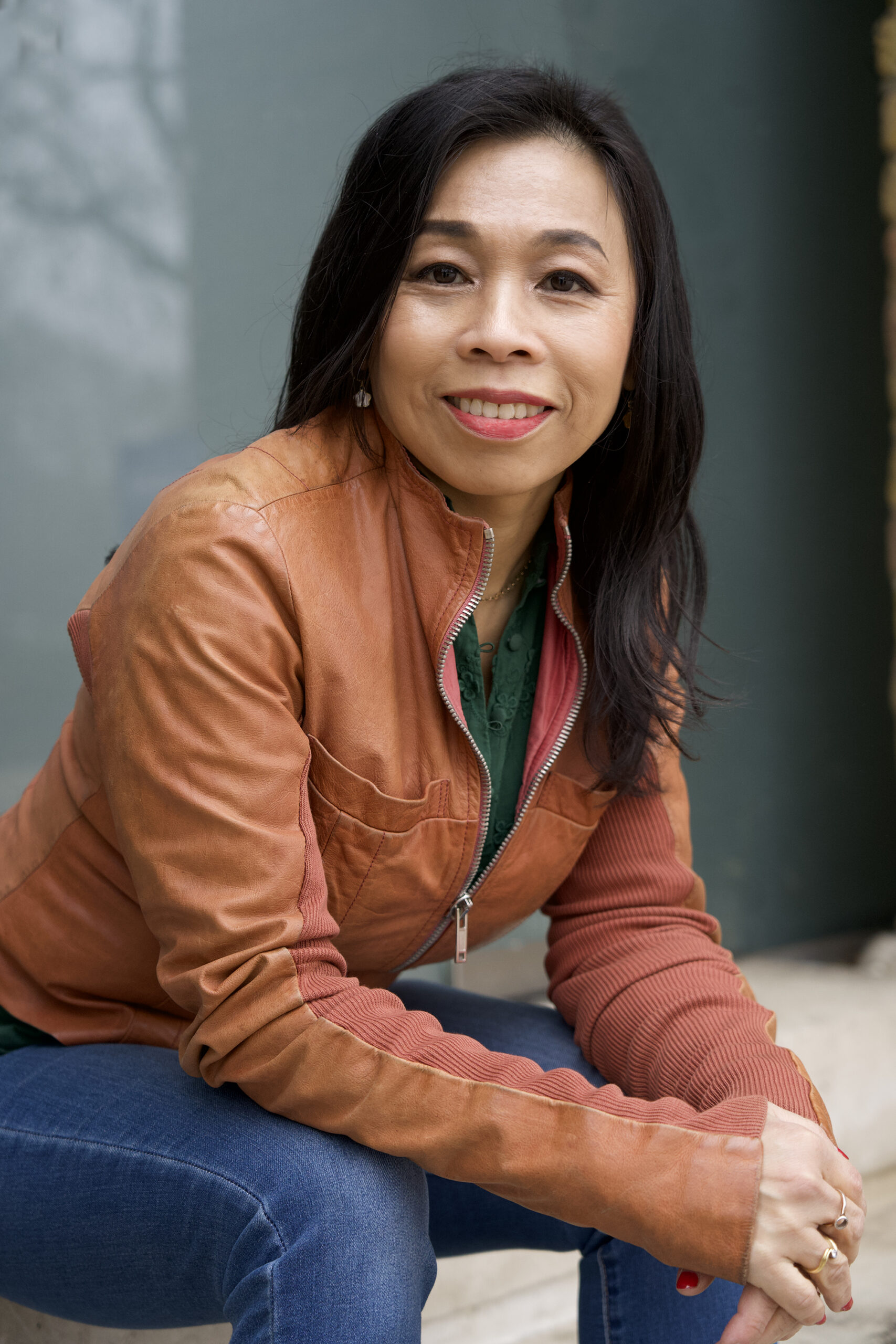
Interview With Ivy Ngeow Author of In Safe Hands

Tell us about In Safe Hands.

In Safe Hands is a psychological thriller set in London and Singapore, about a once successful but now penniless woman who seeks help from her elderly, wealthy father but finds that her role has been replaced by an attractive and efficient caregiver.

Where does your inspiration come from?

For me, inspiration comes from reading, theatre, sightseeing and walking, travel, TV and movies. I very rarely take inspiration from real people as I want to create settings and characters that are larger than life. Fiction is about stretching the boundaries of our imagination. For In Safe Hands, I was inspired by the class struggle and status consciousness in both Singapore and London, two parallel cities absorbed with economic and commercial growth which made me want to write about the have and have-not characters.

What does it feel like to be published by Penguin Random House?

Like most authors, I grew up on Penguin classics. I used to admire the plain orange spines, and wonder how I would ever write a book that appears on the shelf with the Penguin logo. When I received an offer 9 months after submission for The American Boyfriend, I thought it had to be a scam. I didn’t even reply for a week. After investigating the email, I was grateful that I was going to be not just an author, but a Penguin author.

Can you describe the moment you signed your book deal?

The moment I signed my book deal, I felt excited and light-headed, Prosecco-filled and buzzing. This was swiftly followed by a heavy responsibility, and also that I was an amateur and not good enough. Although in theory every author feels a debilitating sense of anxiety and inferiority, I felt the pressure of no longer someone who was just messing about, experimenting with writing, with sporadic success. Now I was a “real” writer and there were consequences, which were a sense of professional duty to perform, the urge to gain readers from all over the world, while developing my author brand, and finally the responsibility in delivering a top quality product to the world.

Tell us about your writing journey.

My writing journey actually began quite early, even though I only published my debut novel in my late 40s. I was writing short stories throughout my childhood for fun. Some received national commendation. I had always been interested in competitions, in case I won something. A real breakthrough came when one of my short stories was broadcast on the BBC World Service. I was actually even paid for it. It was the first time I had been paid for my writing. Gradually I entered more competitions and eventually won two big first prize competitions. 

Encouraged by my initial success, I signed up for an MA in Writing. I began writing my first novel then, which won a literary prize in Hong Kong. After I started writing novels, I was less interested in writing short stories, which I saw as something you do in between novels, like a side dish or a snack. I really enjoy investing time and energy into novel writing, which I feel is all-consuming and more like a satisfying, seriously rich meal.

In Safe Hands is your sixth book. Does it get easier?

Yes and no. They’re like children. The problems change and get bigger. Before, they just come out, exist and you make sure they don’t die. Then, when you have more books, you have to look after the whole family, your brand identity, your own development, the commercialisation of your writing, your publishing strategy and plan. There is no more hodgepodge or random scribblings, unless they are just for fun. The marketing and promo is the least fun bit of being an author, yet a significantly and disproportionately large part of publishing today, to the detriment of the fun bit: just writing. Everytime I make a reel, I know I’m not writing.

Which book is your favourite?

In Safe Hands is my favourite book. I say this not just because it is my latest book. I have made meteoric improvements since my debut 8 years ago. I exceed my own expectations with each book. I wrote better and better books. With each book, I tackle a little weakness or strength learned from previous books. Had I given up, which of course, I have considered doing many times, I would never have realised my potential to grow as a creative thinker and writer. 

What is your writing routine?

I don’t have a writing routine. Being a full-time architect and mum of two, I just write whenever I can. If I have one hour while waiting for my daughter at ballet, then I’ll write for one hour. If I have 15 minutes in between appointments, then I will write for 15 minutes. I don’t schedule any of it or get stressed if the words don’t come, because I feel that eventually when you get those minutes or an hour, the words will come. If it’s a story, then the story will be told sooner or later.

Are you a plotter or a panster?

I’m definitely a plotter, as I had made the mistake of spending 12 years writing my first novel due to not having any plot. I would just make things up as I felt like, until I got to the end. This only cost me many more years of rewrites. Now I can fill an A3 page with a diagram of my plot, and a google sheet with my chapter plan. It gives me a sense of peace just staring at these diagrams or Google sheets. I don’t mind if I have to spend a bit more time on the plotting. I see them as just as valid as plans for a building, or instructions to construct an object.

What writers and books do you love?

I enjoy character-driven plots. I read Liz Nugent, Elle Marr, Tony Parsons, Emily Barr, Shari Lapena, Lisa Jewell and Andrea Mara. I also enjoy literary fiction. Books which have influenced me include Penguin Classics. For contemporary book club fiction, I enjoy JM Coetzee, John Lanchester and Rebecca Kuang. An automatic read for me would be David Szalay. I have already ordered his Booker winner, Flesh. I love anything he’s written.
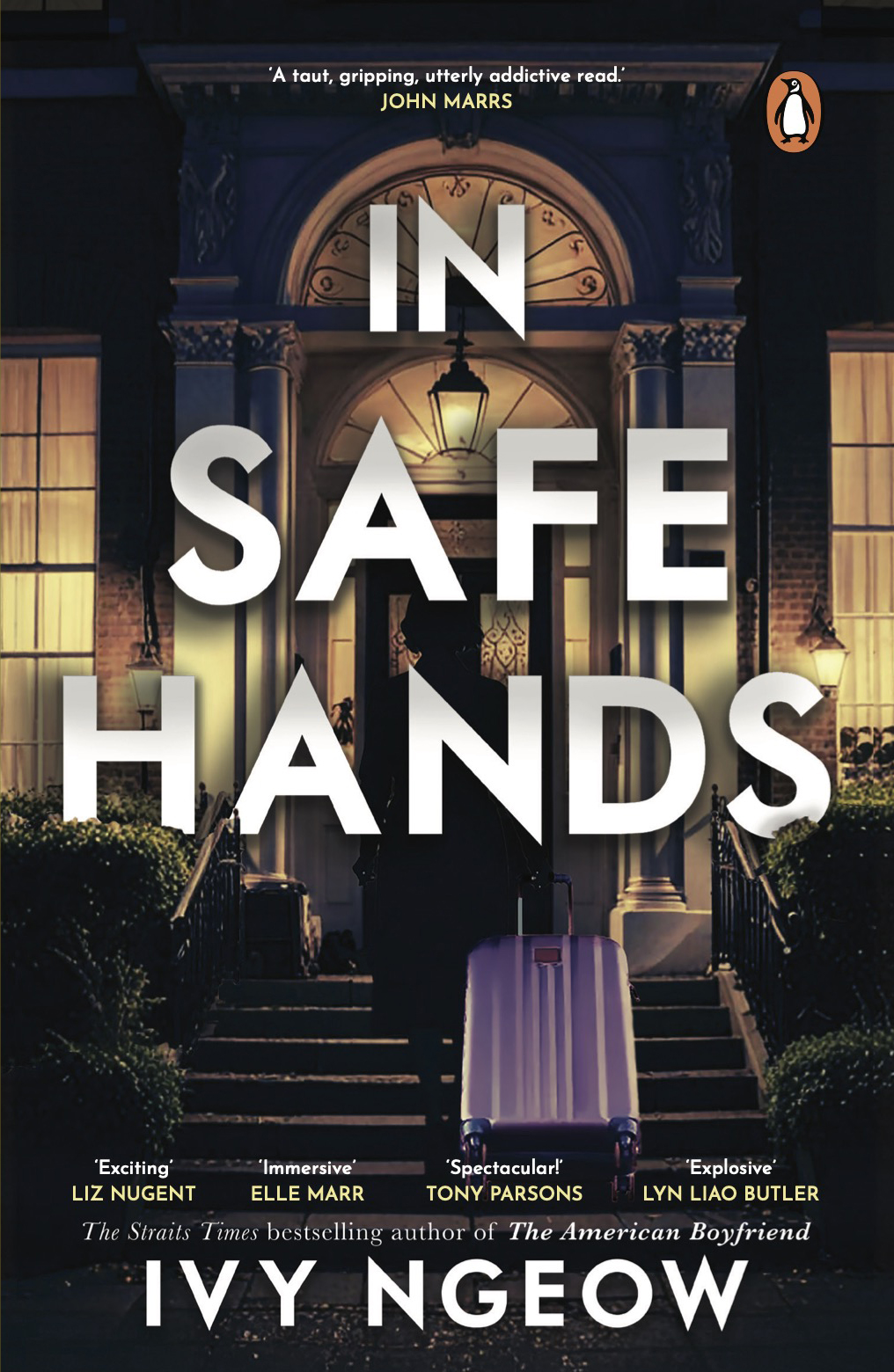
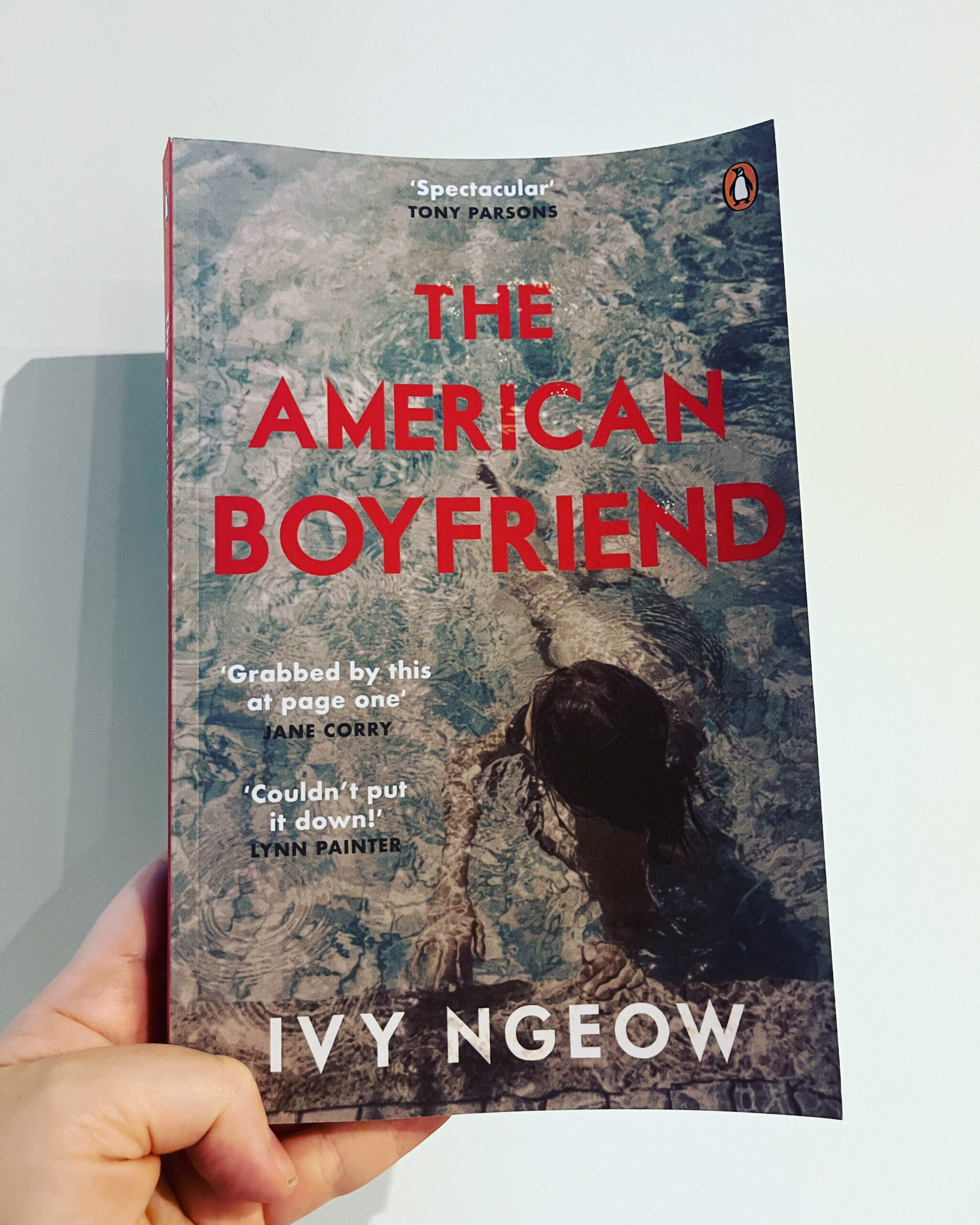
From self publishing to Penguin Random House without an agent: A Writing Journey By Ivy Ngeow

Pitching to Penguin after being signed to small publishers and being self-published.

Beginnings: I had not planned to be an author. I grew up believing that books were written by others, not me, for us to enjoy. Three or four events in my life, like special occasions, led me to “think” I was a writer. I was raised in a rich environment of stories, via my mum, my aunts, my grandparents, my dad, my teachers. I enjoyed hearing them so much that I also began telling them. I had a little burst of success as a 16-year-old in a national short story writing competition with the New Straits Times. I felt that indescribable buzz when I saw my byline among 30 highly-commended entries. 

The hotel rooms: As a university student and an adult, I wrote nothing. I only started when I started travelling for work in hospitality and resort design. I was in hotel rooms and airports a lot. I learned that I really valued and enjoyed observation and being alone, which of course, are the prerequisites of the writing life. I was surprised to be flooded with ideas which had nothing to do with work. I began writing again because as you know, you don’t need any fancy tools or equipment. In those days, I printed and posted my stories from airports, or the nearest post office to the hotel. This period led me to believe I had again some chance of success because I was getting accepted by the Sunday magazines. One story was bought and broadcast by the BBC World Service. I had meetings with agents in Soho back in London, which led to nothing but an inkling that my writing was getting attention, any attention. I took writing more seriously when I invested in an MA in Writing at Middlesex University. As you know it’s not free, so I was taking a big chance but I was working and it paid for the fees. I was astonished to discover that I won the Middlesex University Literary Prize in an international competition, a cash award large enough to cover a third of my fees. The judge was Penelope FitzGerald and about my story, she said she had never read anything like it in her life. 

The agent: I was snapped up by an agent immediately following the prize, a decision that was poor. I had no other offers. After 5 years, she did not get me a deal despite my writing not one but two novels for her to market. I did not write a word for 10 years. My writing stayed on my hard drive. It was deliberate. I had two children whom I wanted to give 120% of my attention. After 10 years and they were in primary school, I started submitting the novel again, and following 87 rejections I won a prize in Hong Kong, also a large cash prize. This novel, my debut, Cry of the Flying Rhino, was the turning point for me, because I now was an author. My entire family flew out to Hong Kong for the award ceremony and the publication. It was a small publisher, like my second novel’s, Heart of Glass.

The pandemic: Following the two novels with small publishers which were given zero marketing and publicity and unsurprisingly, hardly earned any royalties, I started to wonder if indeed they had even been published. I wrote another, Overboard. I got 50 rejections and I decided to start an imprint to publish it as I consider it to be my best book yet. I think my limit for rejections is now 30. I do think there is a limit otherwise you will be querying until you die. I don’t think I have the time or the patience to withstand 87 rejections like I did with the first, and 55 with the second. There’s no point and nobody cares. It’s an art form. It’s not a pizza which is edible and sort of OK even when bad. During the 2-3 years of the pandemic. I ate, sleep, wrote, published. Repeat. It was like a bumper sticker. 

Keep going: I did online courses on self-publishing, keywords, genres and copywriting to study the market. I cannot stress how important it is for a writer. Without knowing the market and the audience, you can’t pitch. I learned to write through editing other people’s work and through reading hundreds of books in the genres I was interested in. The MA will not teach you these skills. My objective had always been to write the best book that could write. This kept me going in the lockdown years. I published a couple more, short stories, and another novel, White Crane Strikes.

Perfect pitch: A famous author, unfortunately I forget who, said that if you cannot tell your story in 17 words, you don’t know your story. That intro letter, one-page synopsis and first paragraph in your manuscript is everything. I wrote The American Boyfriendin November 2021 which I decided I would query until that magic self-imposed 30 rejections before I would publish it myself. I would trade the complete control and higher royalties in self-publishing for a traditional deal because of the connections. By the time I started querying again post-pandemic, I had already distilled my book to the most grabby Netflix 40-word synopsis. I saw a window of open submissions from Penguin Random House Southeast Asia. I was just about to release my book, because I got to 27 rejections. 9 months after querying, in August 2022, I got the best email ever. It was from Penguin and consisted of 5 words: has this manuscript been acquired? 

Worldwide connections: The worldwide connections have been the most astounding and rewarding part of the publishing experience. Having a publicist was already mind-blowing as I had never had one before with self-publishing (that would be me) or with the small publishers I had been with (that would be no one). 

The Penguin publicity, marketing and sales team have opened doors from day one: no. 1 Sunday Times authors providing the cover endorsement quotes, media and press outreach including World Literature Today, Nerd Daily, Culturess, Book Riot, The Telegraph and Elle, being no. 4 on the Straits Times bestseller list in its opening week, being on sale at WHSmith at the airport departure lounge, book launch at West End London bookshop and in the USA, in Barnes and Noble physical bookstores throughout USA and at the airports such as in Key West, Miami International and JFK. I have also been invited to the Jaipur Literary Festival (“the greatest literary show on earth”) in February 2024. I have also seen an uptick in the sales of my other books. These opportunities to build audience trust and author visibility would not have been possible without the Penguin label. This experience has changed the way I see publishing as I come from a “nothing happens” school of thought from my previous publications. I am proud that my book now belongs with the orange-spined classics I grew up reading. I am inspired to keep writing. Stories keep us alive. Stories are more than ever what we need in these times.

My parting words and 5 rules of writing: Persevere. Learn to write. Write the best book that you can write. Believe that top quality writing always stands out. Above all, read.