Greg Mosse Interview: On Writing, Trilogies, A.I. and Kate. 

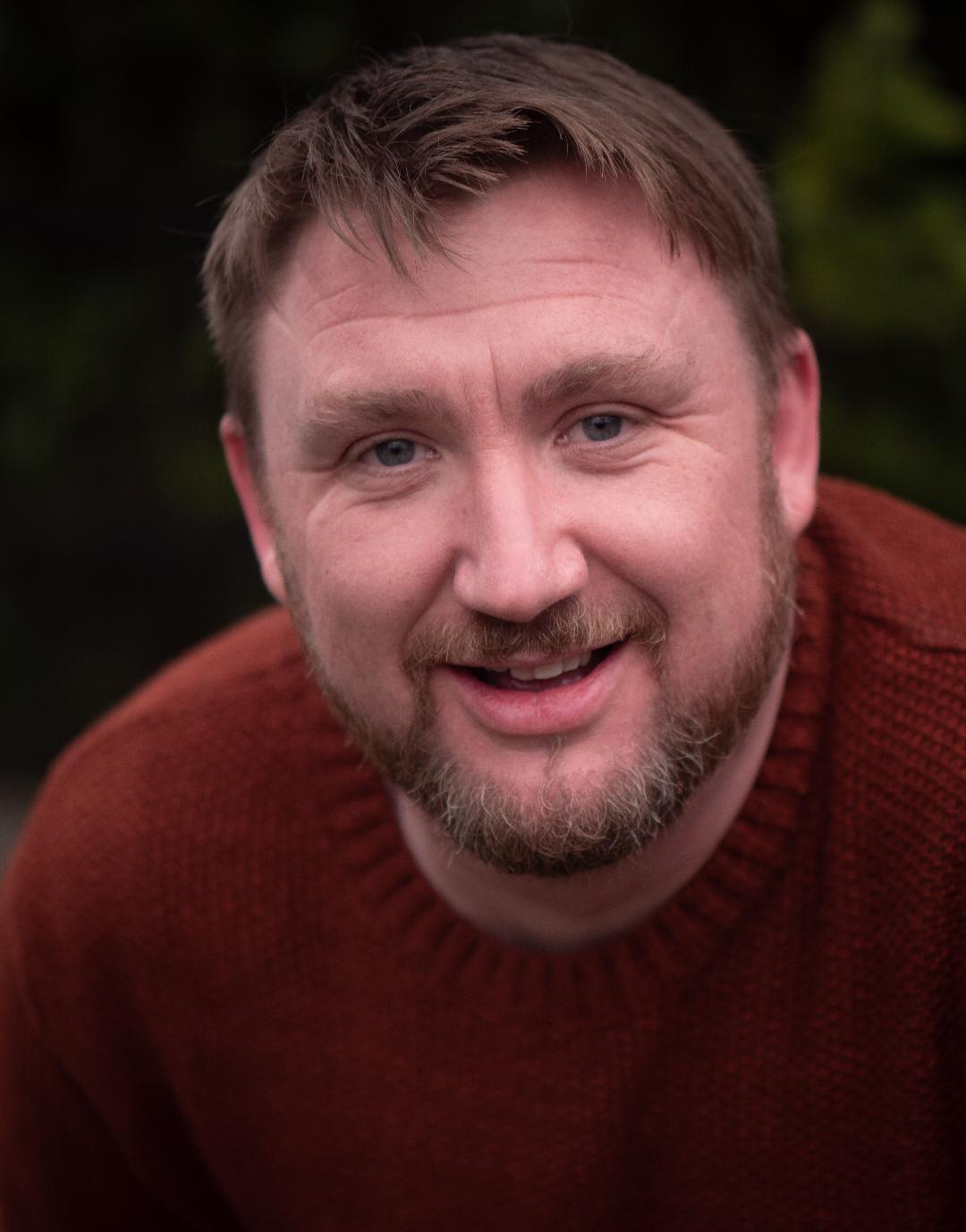
One of the best things about being editor-in-chief of Frost Magazine is all of the people I get to meet. Having a chat with a writer I admire is also exciting for my other life as an author. Greg Mosse is a great interviewee. Candid, kind, and bursting with interesting information. I read The Coming Darkness in 2022 and loved how unique it was. It is a great thriller. Now, the third in the trilogy, The Coming Fire, is out. I interviewed him over Zoom to talk all things writing, A.I., and Kate.  

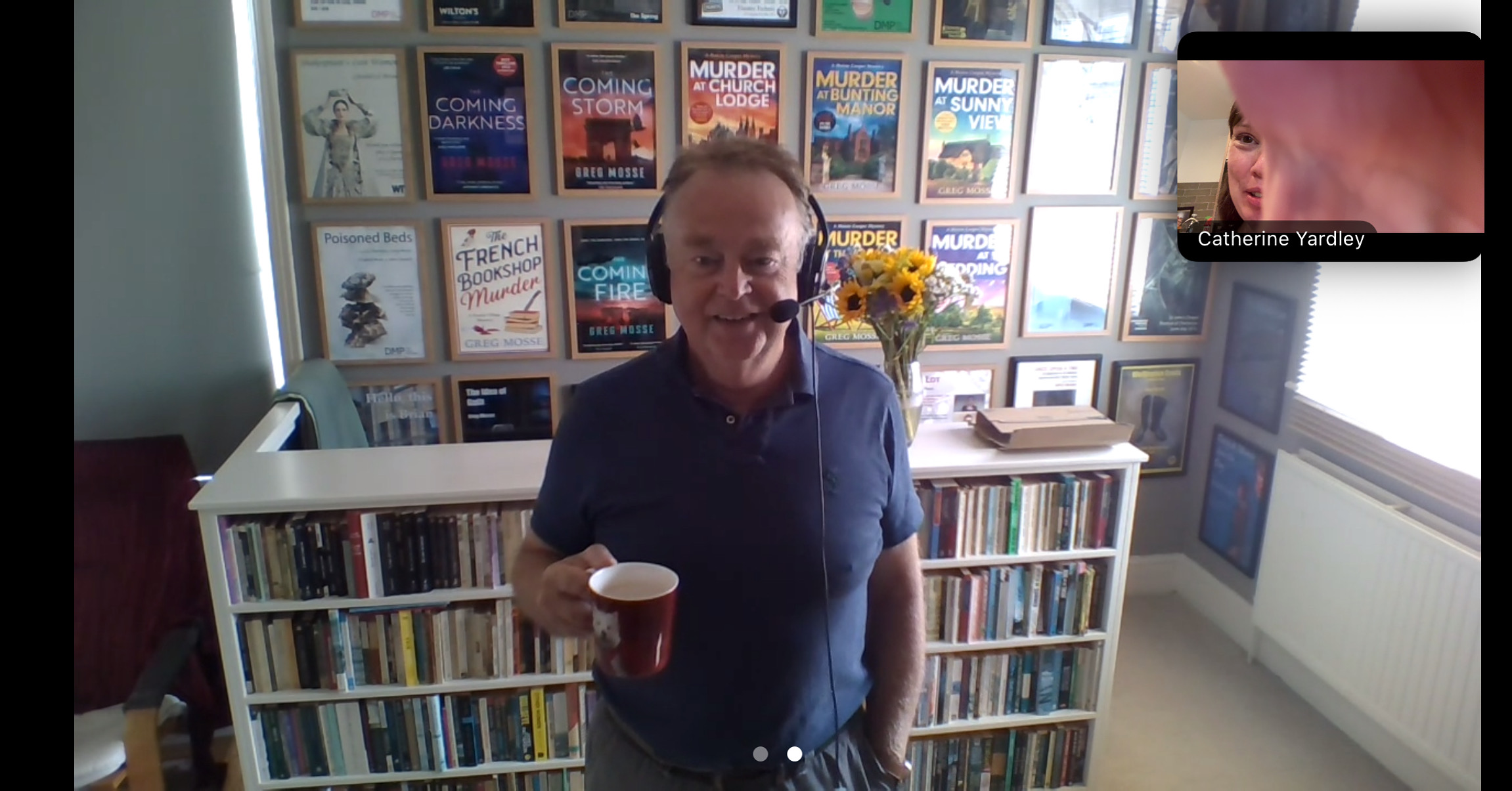
Greg complimented my children’s artwork on the fridge, and I complimented his impressive book posters. 

On the impermanence of theatre and writing during lockdown: ‘The posters on the wall, most of them are mementos of my theatre work, because theatre is a wonderful fugitive experience. It’s that brilliant moment shared by the audience live in the room together that can never be repeated, but at the end of a run of theatre, for most shows it’s gone forever. And unless you’re in Les Mis or something like that, and it doesn’t stop, it’s great to have the poster on the wall as a reminder of, ‘Oh yes, I did that.’ 

The rhythm of my life under coronavirus lockdowns changed completely. In one way, because theatre had become illegal, and so there was really no point in writing new plays for I didn’t know how long, but in another way, it didn’t change at all. It just meant that I sat in the corner of my study, there with my red blanket, because it was March, wasn’t it? It was cold at first, and then it got really hot. It just changed from writing dialogue to writing prose and that’s why, in the centre of the wall of posters behind me, are all the novels I’ve published.’ 

That was a smart thing to do. Yes, but remember, we were utterly unemployed, weren’t we? We had to fill our days and I did find it very easy to be productive, because I was utterly without distractions.

As the lockdown started, I actually went and I picked up both of our children. My wife, Kate Mosse, and I. Felix was working in Norwich. He was on stage in a show that shut, and Martha was living in North London in a flat in a block, and we thought both of those circumstances would be a less pleasant way of being locked down than in our house in Sussex with fields that you could walk out to and all of those lucky things that we had, but that said, you know, they’re grown-ups, so it’s not like I brought them home and had to look after them. So I had not limitless time, but I had a lack of distractions, which really taught me how valuable that can be in terms of working quickly, but not necessarily efficiently. 

On writing a trilogy: For The Coming Darkness, the first book in the Alex Lamarque trilogy, I wrote 170,000 words from which ultimately I cut 70,000 words because the thriller that MoonfFlower, my brilliant publisher wanted, was just under 100,000 words. However, when The Coming Darkness went very well, I got excellent reviews for which I’m very grateful. It meant that I had these subplots I cut from the first draft that were the heart of the second book, The Coming Storm. That also accelerated the process. So it wasn’t like I had to sort of start again. My hero, who’s like an action hero, a member of the French secret services. He wins at the end of The Coming Darkness, but he only wins a fragment of the battle that he’s engaged in. But I already had the heart of The Coming Storm already on the page. It had to be massaged into a different shape, a different timeline, but it already existed. The future, historical background to the book that I researched by reading lots of scientific papers and government papers and NGOs and everybody who’s predicting the future, trying to plan for what’s coming next. Five years, 10 years, 15 years, a generation. All of those notes were super valuable over the whole of the trilogy, and the things that we’re worried about today in 2037 are more urgent, more dramatic, more desperate, but they are the same things, but more so.

The Coming Fire is the culmination of a trilogy about a time when everything that we’re worried about today is more intensely felt and more intruding, more fully on people’s lives. So that meant I’ve already got a crescendo that can play out over three books, and then the other way of describing it. The further Alex goes towards the heart of this terrorist mystery, the closer he gets to the biggest, hardest enemy to defeat. There’s an overall shape that you know you’re writing into. I sometimes describe it as pouring creativity into a pre-existing shape, yet not just writing to find the shape, but the shapes already there in the back of my mind.

On authors being pigeonholed: As a writer for theatre, nobody says to you, “You know, last year, you wrote a play about smugglers, set in 1749. Why are you now writing a play about the First World War?” Whereas, as a novel writer, people say that to you all the time. Being able to write in these different voices, to tune into a different quality of creativity, is really normal for a playwright and to write dialogue in different voices. One day a king, another day a minor living 300 years later, another day a 12-year-old child living today, is totally normal. Now, the other part of your question, which one do I like best, writing plays or books? The great thing is that they refresh one another. You know what I was just saying about playwriting? That’s one of the best things about writing plays. So a full-length, two-hour play is about 20,000 words, whereas The Coming Fire is 98,000, I think. So a full-length, two-hour play is a fifth of a novel. So it’s more difficult to get that refreshing change in novel writing because the scale of the creative enterprise is so much bigger. If you have sympathetic publishers who understand that you’ve got these different goals, entertaining people in different ways, that’s what it’s about. They really bounce off each other super well. 

On his writing routine: It’s 6:30 till 10:30 more or less every day. When I say every day, it’s like six days out of seven. Sometimes I’m travelling for other parts of my life. And so it can’t happen if I’m driving to London in the morning for the work I do in theatre, for example. But about six days out of seven. 6:30 to 10:30. In that time I’d expect to write a couple of 1,000 words. I’d expect it to begin with a two. Doing that for six weeks of six days a week, 2,000 words a day that’s 72,000 words, isn’t it? And once I’ve got to sort of that, I’ve actually got an unpublished novel in my computer over there that I’ve written about 65,000 words of, and I’m currently editing it because I’ve got an idea of how it will end, like a framework for how it will end, but in order to write the last quarter of the book, I need to make sure everything in the first three quarters ties up and is completely coherent, and that I’ve probably been writing for about six weeks and now it’s going to go really slowly for a week or 10 days, maybe because I’m reviewing everything, and I have to keep going backwards and forwards, you know, to tie things together. And I’ll find a thing on page 102 and God, where was that, although I referenced that. And then there it is on page 17. And all of that over and over and over again. And only once I’ve got all of that done, probably through the whole of those 65,000 words twice. Only then will I write the last quarter of the book. And then, of course, I’ll have to check it from line one to the last line again to make sure I’ve got it all right. So that means about 10 weeks in total for a draft that I am willing to show one person alone, and that person is my wife, Kate Mosse, [Most people would be scared to give Kate Mosse the first draft of their novel] yeah, probably. But, you know, there she is. She’s having a cup of tea in the morning, eating her Marmite on toast, and she’s trapped. You know, there’s nothing she can do.

I was asked this weekend, as I usually am at some point at festivals, ‘Greg’, was it helpful at all to be married to the international best-selling novelist Kate Mosse?’ And I always say she is the wave that I surf.

On supporting other writers: When Twitter was invented, before it became a cesspool of bots and hatred, it is I chose as my Twitter description, ‘writer and encourager of writers.’ Back then, almost all of my writing was theatre, of course, and that’s changed, but the encourager of writers hasn’t. It’s the reason why, with my son Felix Mosse, we run a theatre script development programme at the Criterion Theatre, Piccadilly Circus, which is free to the mid-career playwrights who take part. And then when I’m at a festival, like Harrogate, or in the new year, Kate and I will be in Jaipur, and then Dubai, at the Emirates Festival, the majority of my time there will actually be spent with readers and writers, aspirant writers, trying to help them develop their plots, understand the business. You know, all of that stuff. And that’s super rewarding.

His thoughts on A.I: My thoughts on A.I., what I wanted to put on stage in The Coming Fire was the fact that the terrorists, the big, bad, evil presence behind the whole of the trilogy, has a view on A.I. that you and I and many people probably share, which is that it’s an enormous danger, and there are two parts to this danger. There is a relinquishing of humanity, and thinking that A.I. is probably as good as the ways in which humans have evolved, in doing things over a gazillion years over evolution, and then recorded history.

And then the other part of it is that relates to the creative arts. There’s a brilliant, I think it’s in an Arthur C. Clarke science fiction story from many years ago, where he compares a flawless reproduction of a piano to a real piano. And he says it’s like the difference between being told that you’re loved and being held in your parents’ embrace. It’s great. It may not be a quotation, but it’s something like that, right? You know what I mean there, there is a difference that feels elusive, but it’s also really substantial.

Yes. So then the other part of it is the fact that, and we’ve seen this all through the technological age, technologies respond in ways that we don’t predict. There’s always a law of unintended consequences. There’s always unfortunate outcomes, even with the best of intentions. My brother, who has a sardonic cast of mind, sometimes says to me, no good deed ever goes unpunished, and you want, but people who are, I would argue, unthinkingly embracing technology, assume the best, whereas I’m a much more precautionary cast of mind. You never know where this will end up. So coming back to the big baddie in The Coming Fire.

He wants to set back Earth’s technological development by a few generations. He wants to destroy the hyper-connected world, the global village, and fragment and atomise human populations. Now, of course, that also means that he’s a completely inhumane barbarian,

utterly insensible to human tragedy and loss of life. Those things are meaningless to him because he has this conceptual idea of turning back the technological human clock,

and a thing that he can’t see is the inhumanity of the A.I. that he wants to exploit in order to achieve those terrible goals is actually super similar to his own cast of mind, and that’s why Alex must stop him.

Well, it’s the third part of a trilogy. There is a hero. Usually, the hero wins, but of course, it would be a spoiler to say if he does. I have a friend who’s a neuroscientist who works at the University of Sussex, with whom I was talking quite recently about the fact that he gets infuriated when he’s told that artificial intelligence has discovered or devised something. And he says there is no artificial intelligence. What there is is an algorithm that analyses statistical probabilities and comes up with likely scenarios from which it can choose one. But it’s not intelligence. It’s a sifting of data to find the most likely average outcome. 

Thank you Greg. 

The Coming Fire is out now and published by Moonflower. 
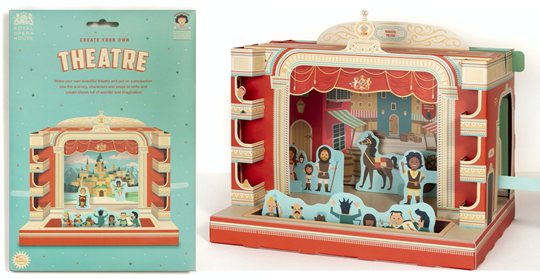
CREATE YOUR OWN THEATRE AT HOME

We love this adorable gift. So cute and great for development.

theatre, children, create your own, toys for children, imagination, Christmas .

Create your own theatre productions and performances using the beautiful craft set from Royal Opera House shop – the perfect project for budding performers and theatre lovers!


Little ones will be sure to have creative fun, learn about how the theatre works, and get lost in their imagination, whilst writing and putting on a dazzling show for all the family to enjoy.


All kits include scenery, characters and props, and come packed with interesting facts and activities.


Made with the environment in mind, paper elements are created from recycled materials, and even better… no glue or scissors are needed, making it the perfect safe activity for all children to love.


Create Your Own Theatre – £12.50

Royal Opera House shop – shop.roh.org.uk


REVIEW: Pinocchio, Chichester Festival Theatre

Photo credit: Manuel Harlan


That any live theatre has gone ahead this December is a Christmas miracle in itself. In Chichester’s annual Youth Theatre production, however, there is a double dose of wonder; against all the virus-related odds the show has not only gone on, but it’s an absolute belter.

Usually boasting a cast of almost one-hundred, in order to manage social distancing this year’s CFYT offering is presented by two smaller teams of twenty-three, with Team Fox and Team Cat splitting the performances. (On Press Night Team Fox were performing, but I am reliably informed that Team Cat are every bit as accomplished.) Directing a full-scale production to meet the pandemic’s stringent safety measures, on and off the stage, is an extraordinary feat of choreography, and one that all those involved in achieving must be congratulated.

Hope, redemption and realising that our differences can be strengths rather than weaknesses are themes that run through this abridged version of Carlo Collodi’s original tale, which has been superbly adapted by Anna Ledwich. Managing to be gloriously heart-warming without straying into sentimentality, Director Dale Rooks has infused Pinocchio with emotions and moments that truly resonate. One such instance is when Pinocchio and Geppetto ‘hug’. Standing apart, they wrap their arms around their own bodies, bringing a lump to the throat and an ache to the heart – oh to hug again!

On stage there’s not a single below par performance. Archie Elliot (Lewis Renninson) in the title role plays the headstrong little puppet with absolute conviction. Pinocchio may be made from wood but he has guts, heart and spirit, ensuring that we are rooting for him all the way. Alfie Ayling (Jack Campbell) as Geppetto is warm and wistful, playing the lonely carpenter with a maturity beyond his years.

There is excellent work too from Meg Bewley (Molly Berry) as the Fairy and Annalise Bradbury (Olivia Dickens) as Cricket, her exasperated sidekick. Marvellous cameo gems include Alex Webb (Noah Peirson) as a chatty French poodle – très magnifique!

The ensemble work is extraordinary. Matching talent with energy,  it is ultimately in the production’s togetherness that its success lies. A masterclass in how a completely cohesive company can create something magical, the story flows perfectly, the singing and dancing are stunning and the set, simple but oh-so clever, is breath taking.

The overall effect is wonderfully uplifting. Moreover, there is a sense of the fantastic; a promise of enchantment. And it delivers. With Christmas bells on.

Vicky Edwards

The Butterfly Lion: Review

The Butterfly Lion
Minerva Theatre, Chichester
Until 15 November
www.cft.org.uk

Photo credit: Manuel Harlan

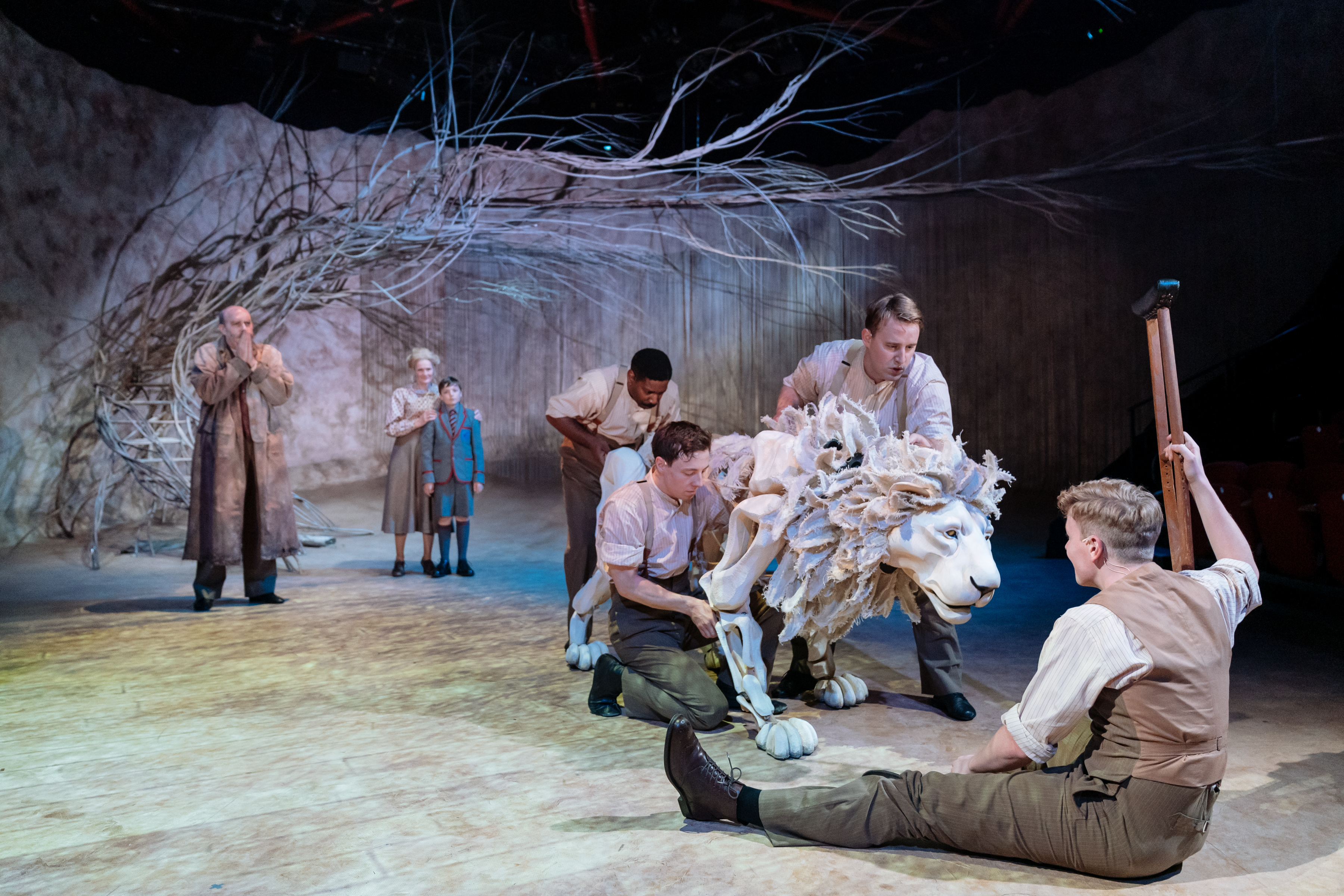
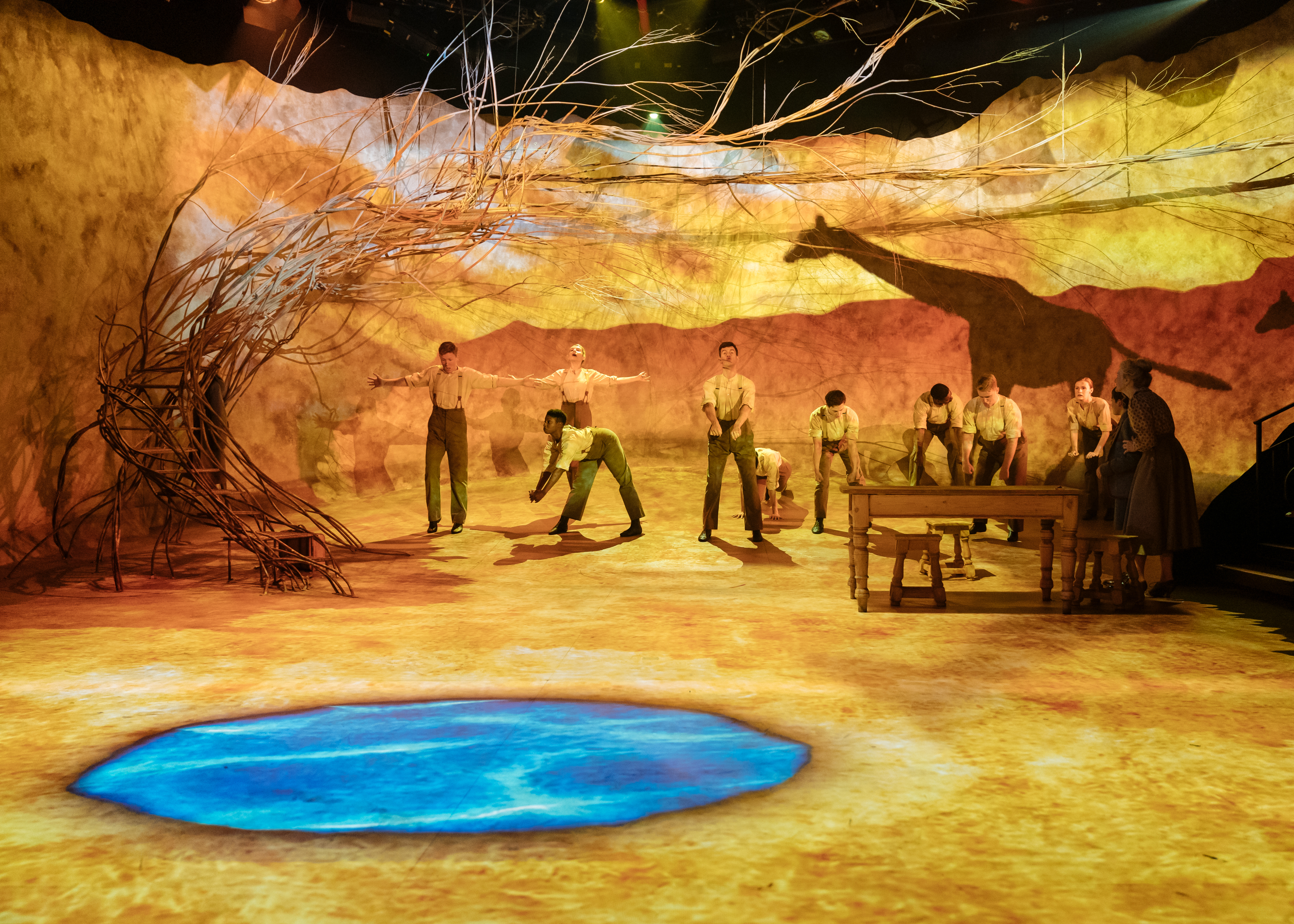
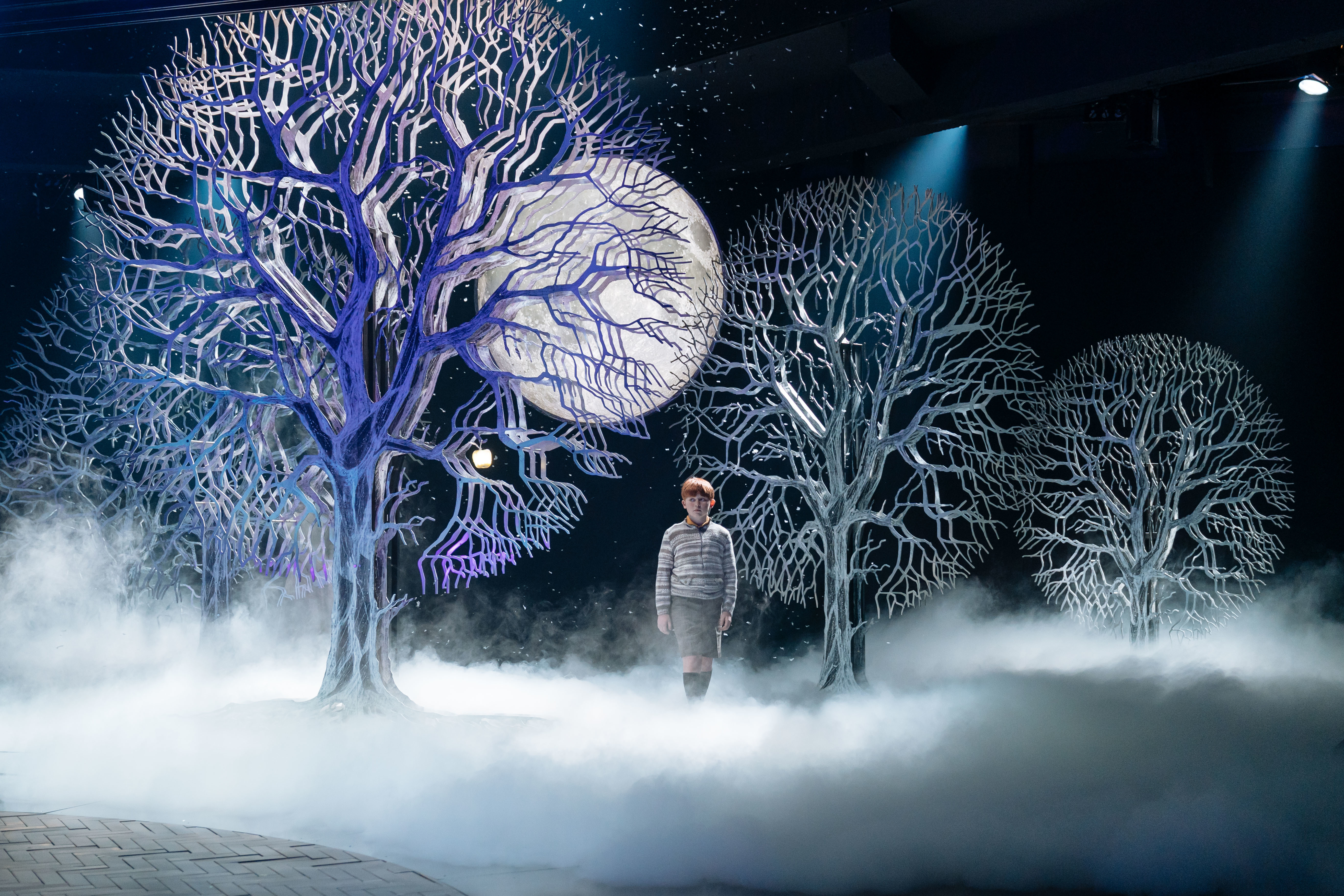
Theatrical storytelling at its finest, the importance of treasuring memories is a central theme in this superb adaptation of Michael Morpurgo’s book – a theme that is perfectly reflected in Simon Higlett’s dreamy set. Enhanced by a crack creative team (lighting by Johanna Town, sound by Gregory Clarke and video by Simon Wainright), the play’s journey, which traverses the wilds of South Africa to rural England and the battlefields of France, is a collective design triumph.

Jonathan Dryden Taylor as Michael Morpurgo himself is the story’s guide. Meandering down memory lane, his narration melts seamlessly into the action, sweeping you along for the ride and inspiring a sense of old snapshots coming to life.

All the performances are accomplished. With skill beyond their years the youngsters playing the junior versions of the adult characters don’t miss so much as the subtlest nuance.

The adult cast, many of whom play multiple roles, are equally adept. Effortlessly slipping from character to character, the scenes at the watering hole, in which they take on animal personas, are especially impressive.

Director Dale Rooks has invested such care that not even the smallest detail falls short. Making it feel as if you are watching a labour of love rather than simply an extremely polished production; her Butterfly Lion has palpable heart and soul. It makes the heart sing.

Complemented by Tom Brady’s atmospheric music, Anna Ledwich’s adaption is sensitively and elegantly done. Clearly meeting with the approval of the book’s author, who on Press Night was in the audience, Mr Morpurgo looked proud fit to burst. He deserved to.

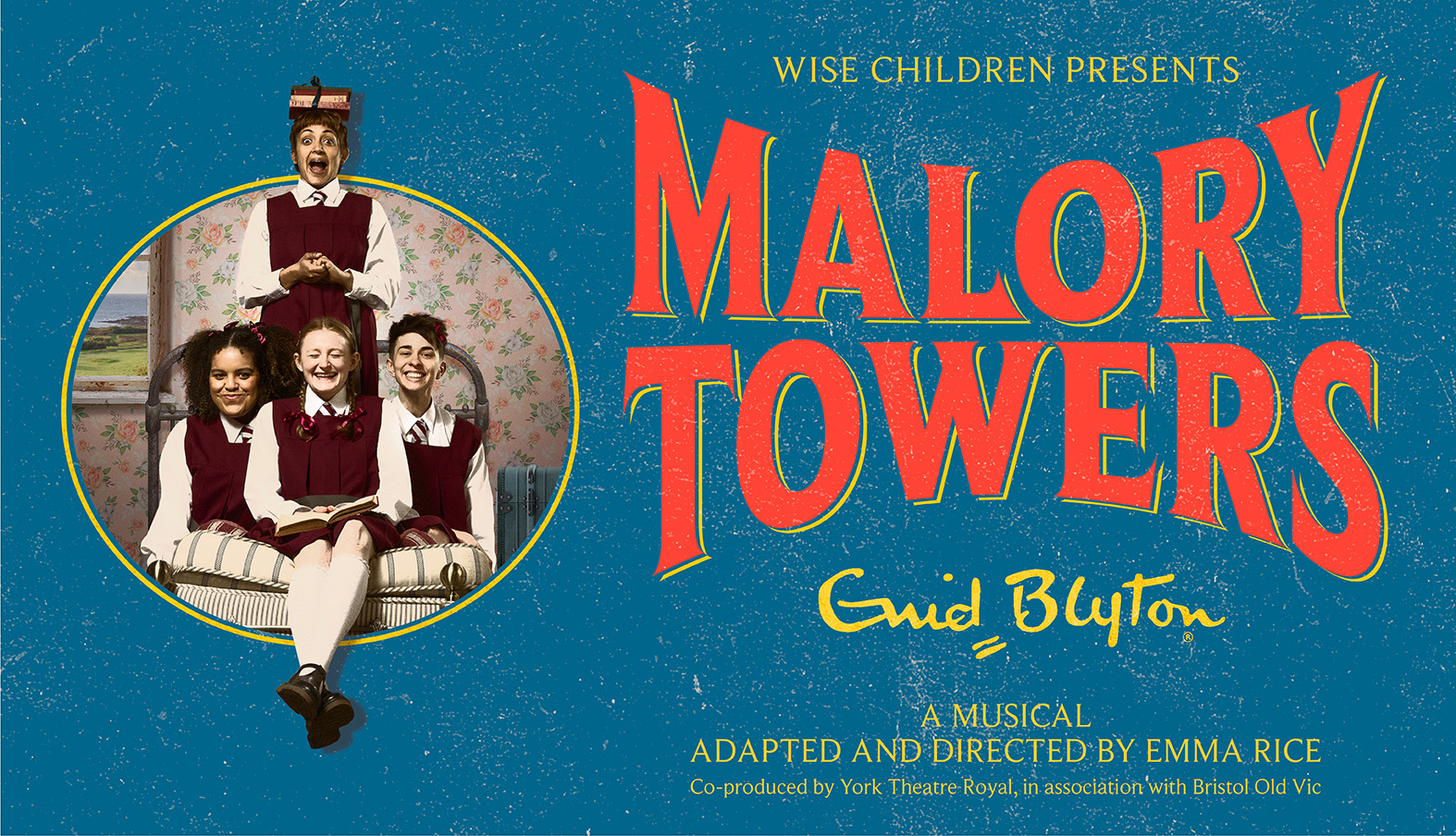
Play Up, Malory Towers!

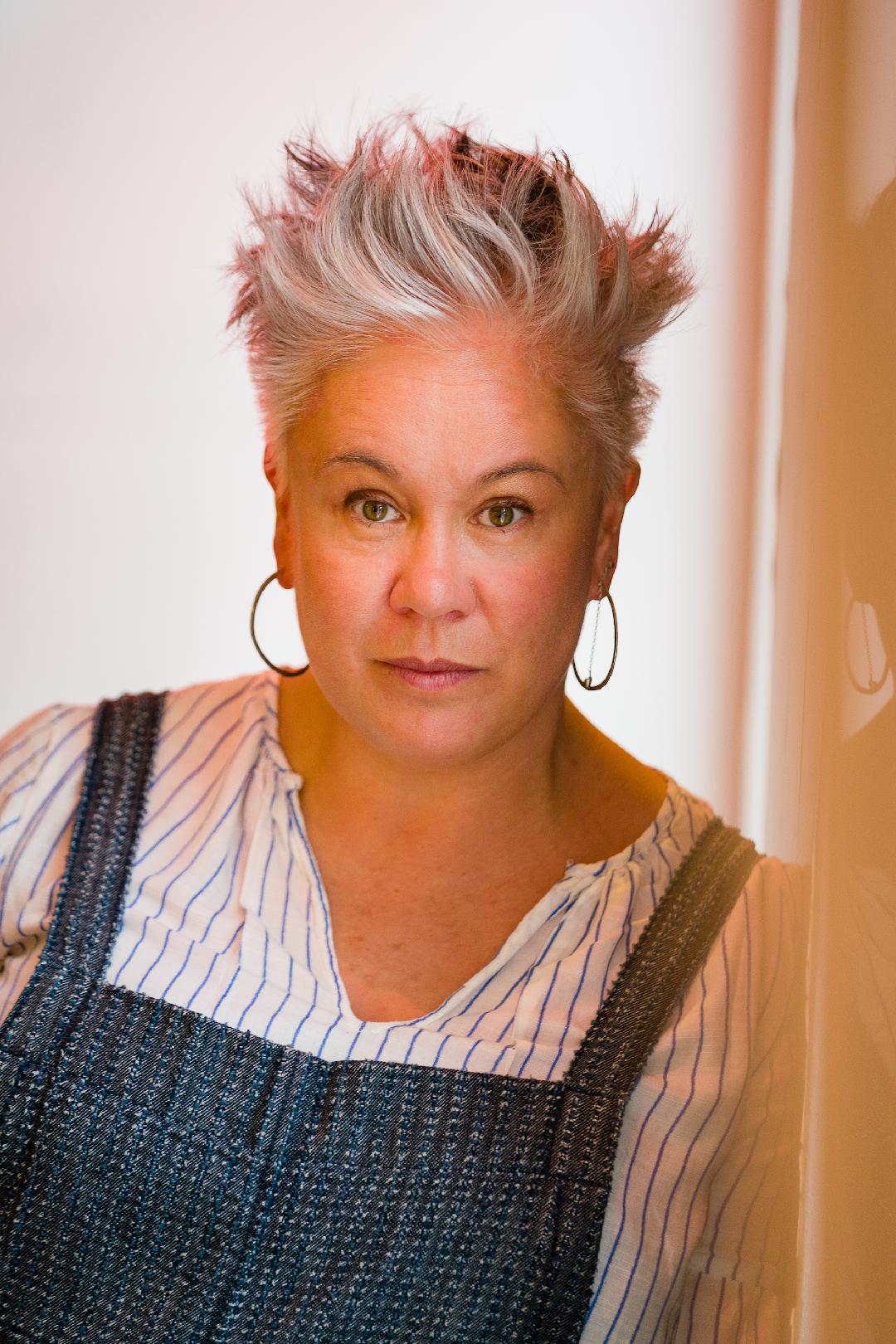
As the first ever stage production of Enid Blyton’s Malory Towers embarks on a national tour, Director Emma Rice tells Vicky Edwards why these classic stories are an enduring delight…

I’ve always thought optimism a lovely trait. Not only do the ‘glass half full’ brigade seem better equipped to withstand life’s slings and arrows, but their sanguinity is also marvellously contagious; even die-hard Eeyores struggle to maintain despondency when in the company of a fully-buoyant bright-sider. In literature, Malory Towers is the epitome of optimism. Nobody better, therefore, to adapt the original work and direct it than Wise Children’s super-sunny Emma Rice.

Co-produced with York Theatre Royal in association with Bristol Old Vic, and officially licensed by Enid Blyton Entertainment, a division of Hachette Children’s Group (HCG), Malory Towers is the original post war ‘Girl Power’ story. The high jinks of pupils at the Cornish boarding school have thrilled readers ever since the first story was published in 1946 – didn’t we all yearn to join in the midnight feasts and yell ‘Play Up, Malory Towers!’ at nail-biting lacrosse matches? The books remain hugely popular, with new generations devouring them and dreaming of being sent away to boarding school with an overflowing tuck box.


Emma Rice credit Steve Tanner

“But there is plenty for boys too,” urges Emma, in exuberant form after a productive week of rehearsals. “The only thing that would disappoint me would be if people didn’t bring their boys,” she added, promising a show that delivers plenty of thrills and spills.

“The animation is fantastic – we see the train arriving at the Cornish coast – and then there is a real cliff hanger just before the interval. We have just been rehearsing that bit today and it’s like Ben Hur!”

Described as ‘nostalgic, naughty and perfect for now,’ what initially appealed to Emma about the project?

“The Malory Towers books are great stories filled with great characters who don’t seem to age at all. It is very hopeful and I think that is right for now. I call it my happy Lord of the Flies: when left to their own devices, a group of girls decide to be the best version of themselves they possibly can be. They want to change the world and be women the world can lean on; they want to resolve conflict. They never talk about boys and they aren’t boring!”

Interestingly, Emma is a relatively new convert to Blyton’s best-loved school stories.

“I’ve worked with David [producer David Pugh] many times. He has great taste and he knows me so well, damn him!”
Laughing, she recalled how David piqued her interest by wooing her with a vintage set of the books, beautifully wrapped in brown paper.

“As soon as I read the first one I just knew they would make a great piece of theatre. They’re such page turners, the characters are so well observed and the powerful feminine voice comes through with such positivity.”

Anyone familiar with Emma’s work will know that music is an integral part of her productions.

“There is always lots of music with me,” she agreed cheerfully, “but I wanted the music in Malory Towers to be virtuosic; simple, but showing how rich the world is. There are some new compositions by Ian Ross and it’s a real musical feast,” she teased; “and it has got fantastic dancing, too. The choreography is incredible. I wanted my Malory Towers to be like Busby Berkeley, but in an earthy, feminist way!”

If the music is a feast then the actors Emma has assembled are a veritable banquet (‘simply top hole,’ as Darrell and her chums might say), and, refreshingly, it was achieved through a ‘character-over-looks’ approach to casting.

“For me, casting is always about getting the right personalities and the people who absolutely capture the spirit of the characters.” As proud as a Head Teacher with an intake of straight ‘A’ students, she adds: “My company comprises a range of actors with different backgrounds.

Gymslip clad, Emma’s performers will transport audiences to 1950s Cornwall where Darrell Rivers is embarking on her Malory Towers adventure. Bright, loyal and big-hearted, her fast and fiery temper is something she must learn to master. And, while she’s about it, can she save the school play and rescue terrified Mary Lou from the grip of a raging storm? Crikey!

But amid all the drama and japes runs Emma’s affection and regard for the generation of women who taught in schools in the wake of warfare.

“With lives shaped by the savagery of two wars, they devoted themselves to the education and nurture of other women. My Malory Towers is for them, and also for the two generations of men that died in those same wars, leaving us with the freedom to lead meaningful, safe and empowered lives. And it is for Clement Attlee and his Labour government of 1945 who looked into the face of evil and chose to do what was right. These people changed the political landscape in their focus on care, compassion and the common good. Malory Towers was written at the heart of this political revolution, and embodies a kindness, hope and love of life that knocks my socks off.”

Something else Emma is passionate about is the work of her company, Wise Children.

“We want to make fantastic world class ensemble theatre based on storytelling techniques that I have developed over my career, and at the same time teach the next generation of creative theatre makers. And we want to create access for people who might not be able to access theatre training,” she told me, explaining that there are free places given to those for whom such aspirations would otherwise be impossible.

Vowing to raid my daughter’s bookshelf and get reacquainted with Blyton’s finest work, on my way home I imagined what Miss Grayling’s comment on Emma’s end of term report might have been:

‘A splendid Head Girl who can surely be depended upon to lead Malory Towers to victory. Jolly good show, Emma!’

©Vicky Edwards

Shadowlands Chichester Festival Theatre: review

Photo-Manuel-Harlan

Revered author of The Chronicles of Narnia, C.S Lewis (Jack) was also a leading Oxford professor. Setting out his stall right at the start of William Nicholson’s award-winning play, from the lecture podium he offers the theory that only through suffering can we comprehend God’s love absolutely.

Sharing a companionable domestic set-up with brother Warnie, where ‘down time’ consists of philosophical enquiry over a pint in the local with other scholars, it is a sedate and gentle existence.

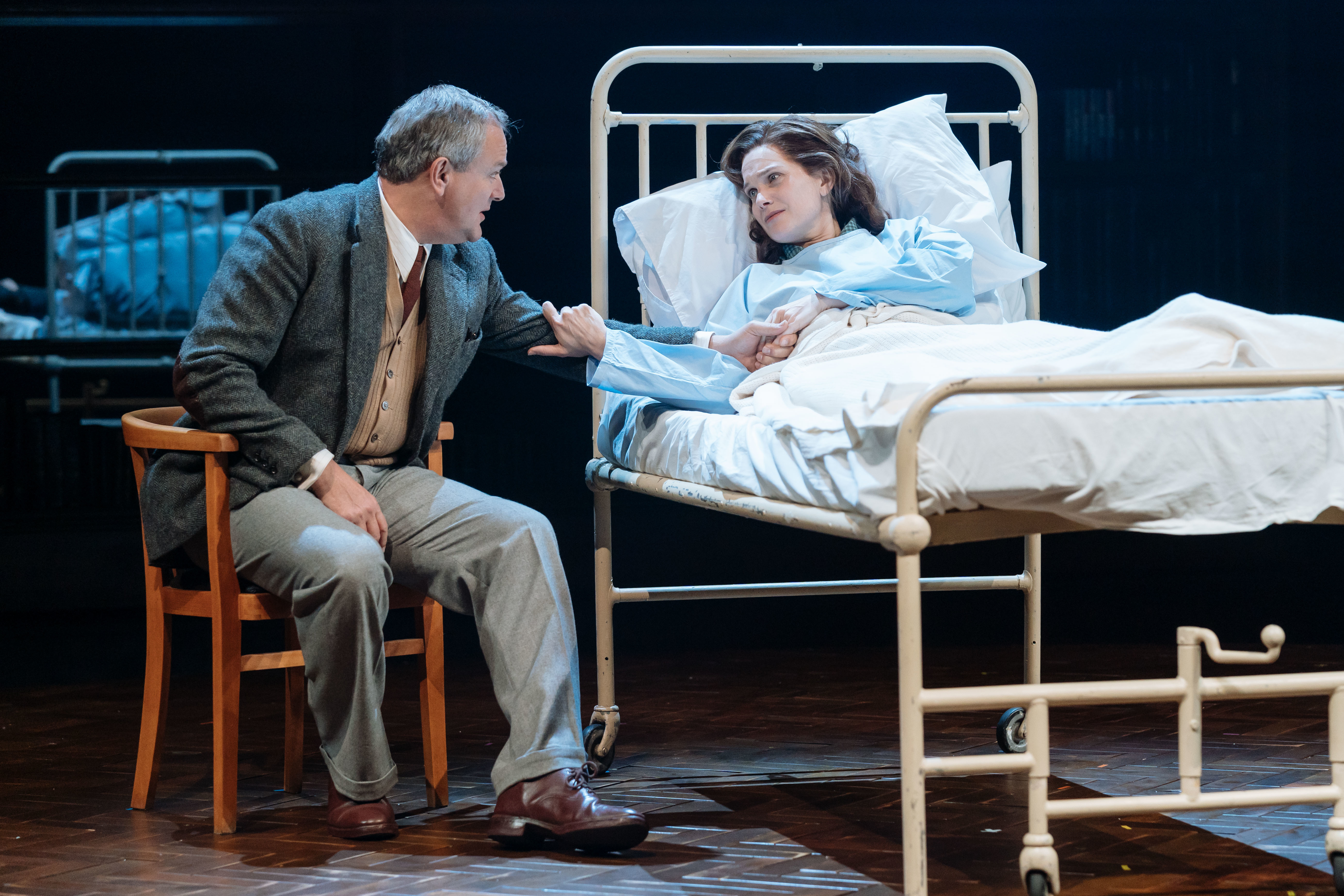
Enter American writer Joy Gresham. Forthright, brash and with a young son in tow, when it becomes apparent that she needs British citizenship in order to remain in England Jack offers her a ‘technical’ registry office marriage. Soon after, Joy is diagnosed with cancer. Only then, fear and shock forcing his emotional intelligence to catch up with his academic prowess, does he realise that he truly loves her. Insisting on a ‘for real’ bedside wedding ceremony, Joy’s terminal diagnosis also reopens the painful wound of losing his mother to cancer as a boy.

Hugh Bonneville and Liz White inhabit the characters with such conviction that I doubt that I was alone in dabbing my eyes. Equally, the humour is delivered with panache and precision timing.

A terrific supporting cast includes Timothy Watson as Professor Riley, Andrew Havill as Warnie and Emilio Doorgasingh as Rev. Harrington. The role of nine-year-old Douglas Gresham is shared between two boys and on press night Eddie Martin acquitted himself with honours.

Peter McKintosh’s set is both beautiful and clever. Facilitating seamlessly fluid scene changes – vignettes of stylish choreography in their own right – glimpses of Narnia are dreamy and wistful.

Photo-Manuel-Harlan

Nicholson’s play may be nigh on thirty years old but Rachel Kavanaugh’s elegant revival hits home because the universal truth surrounding love and loss does not date: Tis better to have loved and lost than never to have loved at all.

In his exquisite book A Grief Observed C.S Lewis might have been countering Tennyson’s affirmation with a reminder that the poet’s romantic theory still demands a steep price: “The death of a beloved is an amputation.”

A stunning start to the Festival season.

At Chichester Festival Theatre until 25 May.

Tickets: 01243 781312 www.cft.org.uk

Splurging in Southsea

Actor and director Carl Sanderson is spending the Easter holidays splurging. On an epic scale. Directing a brand new production of Bugsy Malone at the Kings Theatre, Southsea, his cast is drawn from no less than 23 local schools. Vicky Edwards snuck backstage to chat to him and to ask if directing such a big show was on par with herding squirrels…

“So far directing the show has been an absolute dream. The cast are so committed and although we are having great fun in the rehearsal room they know there is a lot of work to do in a relatively short rehearsal period so they are being incredibly professional and sensitive to this. “We have some fabulous characters who are bringing so much to the table,” says Carl, who says that he especially enjoys the collaborative aspect of directing large-scale productions.

“I love directing shows on this sort of scale as apart from the work created by the actors, the choreographer and the musical director in the rehearsal room, it is very much a collaboration between all departments at the theatre; stage management, wardrobe, administration staff and producer – everyone. Oh, and a special mention to our fabulous chaperones who do an amazing job looking after the actors. And to my incredible assistant Charlotte!”

As for the show itself, Carl is clear about what makes Bugsy Malone such a great show for children to participate in.


“Bugsy is such a great show for children as they get to kind of pastiche adults which is incredibly funny without them having to do much! Also there is the small matter of SPLURGE GUNS which as you can imagine they absolutely love! I mean, what kid doesn’t like getting messy?”

Explaining that as a child he relished every opportunity to be involved in performing, one of his first roles was in the very show he is currently at the helm of.

“One of my first parts was The Great Marbini in Bugsy Malone at school! I was heavily involved in local amateur theatre as a youngster and at the age of 15 became a member of the National Youth Theatre and spent my summers in London performing in various shows.

Going on to build a successful career that spans 20 years, has worked on numerous productions in the West End and at some of the country’s most prestigious theatres, as well as on TV and in films including That Day We Sang and The Dresser. Juggling his acting career with teaching, he has taught in many theatre schools specialising in acting through song and musical theatre stylistic studies and is a passionate supporter of the Arts being taught in all schools.

“Many of the kids in our show may never decide to take up performing as a career in the future, although they are all incredibly talented. But being part of a project like this does so much for their confidence and personal development. This is why I think the Arts in general are so important in schools and that there gradual disappearance from school curriculum is a crying shame!” he laments, echoing the cry of many teachers and parents throughout the land.

As for Bugsy Malone, which is set in 1929, audiences can expect to be taken on a thrilling pedal car ride through the splurge soaked backstreets of New York City. Delving into the underground world of would-be hoodlums, glamorous showgirls and hapless gangsters, Bugsy is a part time boxing promoter, down on his luck and striving for a better life. He meets Blousey Brown, an aspiring singer, and together they enter this fast paced, exciting and hilarious story of Fat Sam, Dandy Dan, Tallulah and a whole host of other weird and wonderful characters.

“Alan Parker’s film is nothing short of genius and was originally created from an idea thought up by his eldest son. The later stage adaptation was published after so many requests from schools and youth theatres to perform his iconic tale. Equally wonderful is Paul Williams unforgettable score and lyrics,” says Carl, adding:

“Although this production is firmly rooted in a time of American prohibition I hope we have managed to inject some contemporary elements that will make this fabulous pint sized roller coaster ride of a story relevant for today.”

So if you’re looking for family fun in this neck of the woods this Easter holiday Bugsy Malone could be just the ticket?

“You’ll have a wonderful evening in a beautiful theatre and I sincerely hope you don’t get splurged!” he says with a broad grin.

Bugsy Malone is at The Kings Theatre, Southsea, from 17-20 April 2019.
www.kingsportsmouth.co.uk

About the show

Kings Theatre Portsmouth are proud to present a brand-new production of the landmark musical Bugsy Malone from 17-20 April 2019.

The classic tale takes us into the world of street-tough boxing promoter Bugsy – a world run by kids, where cars are peddle-driven and tommy guns ‘splurge’ custard.

We follow Bugsy’s star-crossed love with singer Blousey Brown (over the attentions of her glamorous rival Tallulah), and his pivotal role in the struggle between the rival mob factions of Fat Sam and Dandy Dan.

Bugsy Malone will be performed by a cast entirely made up of children from twenty-three schools across Portsmouth.

The show will be directed by Carl Sanderson, whose previous credits include West End Productions and National Tours of The Phantom of the Opera Cats, Hairspray and Sunset Boulevard.

Choreographer Jacqueline Willis has worked on major productions around the country including Kings Theatre Portsmouth stagings of 9 to 5, Grease, Annie and The Wizard of Oz and Andrew Woodford is Musical Director, with previous credits including Oliver!, Cinderella, Disney’s Beauty and the Beast and Oklahoma!.

Bugsy Malone will be co-produced by Jack Edwards. As a performer Jack has acted in the West End and on national tours in productions such as Guys and Dolls, Mack and Mabel, The Rocky Horror Show and Oliver! and in recent years has gained a cult fan base in his home city of Portsmouth for his uproarious performances in the Kings Theatre’s much loved Pantos (even becoming something of a viral sensation for his role as the Dame in Cinderella).

In producing Bugsy, Jack will also be assuming the role of creative director of The Kings Theatre Portsmouth, where he will contribute to programming, as well as commissioning, producing and directing future Kings Theatre Productions.

Review: Gary Wilmot’s sweet success in Bognor Regis

Sweet Lorraine, The Alexandra Theatre, Bognor

New writing is the lifeblood of theatre, so for a small seaside venue like the Regis Centre to be exploring new work is exciting in itself. To beef that up by kicking off with a play by one of the nation’s most popular performers is quite some coup; even if it is difficult reconcile cheeky chappie Gary Wilmot with such a dark and tense piece. But all credit to Wilmot, who is also at the directorial helm. Sweet Lorraine is a triumph. Furthermore, it deserves a wider audience.

A compelling tale of a talented young musician with a secret, the writing is elegant, authentic and intelligent. The plot, part thriller and part grim cautionary tale, is rooted in an astute study of human nature and poses a disturbing question: just how far would you go to wright a terrible wrong that had been done to someone you love and whose life had been subsequently blighted?

Beautifully paced, the story plays out to a shocking conclusion. Gripping the attention, never for a moment allowing it to wander, evocative music and Iain Jordan’s moody lighting are key components in creating atmospheric edge-of-the-seat unease.

Aided by excellent performances from Harry Burton as Harry Burns and Martha Dancy as the eponymous Lorraine, great support is provided by Ben Fox as Phil and Katy Osborne as Emma.

Gary Wilmot has been hiding his scripting light under the proverbial bushel for too long. Here’s hoping that he continues to write and that Sweet Lorraine will play on elsewhere.

As for the Regis Centre and its Alexandra Theatre, may this gem of a seaside venue continue to champion new work.