WRITERS ON THE ROAD: LIZZIE LAMB

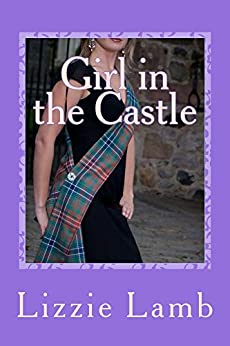
People often talk about Castles in Spain however the inspiration behind my novels comes from an entirely different source – castles in Scotland. We visit Scotland every year with our caravan and I spend part of the day writing on my MacBook and the rest researching/exploring castles, researching ideas for my next novel. My favourite castle is Castle Stalker on Loch Linnhe, the castle featured in Girl in the Castle, although I’ve renamed it Tearmannaire, meaning guardian or defender in Gaelic. We stumbled upon it almost by chance as we were driving from Oban to Ft William and it loomed at us out of the Scotch mist. It was like something out of a film set – grey, imposing and sitting squarely in the middle of the loch.

Catching a sign advertising a café, Castle Stalker View, we pulled in for a better look. There we discovered that the owner gives guided tours of the castle. Even better, he collects potential visitors from the shore and ferries them across to his home in his launch. That later used that in a scene from in Girl in the Castle where the heroine arrives on the shore,  shrouded in an autumn mist, and rings a bell for the ferryman to take her over to the castle.

The following year we discovered Bioran Dubh Caravan Site overlooking the castle and have stayed there in subsequent years. The thrill of seeing the castle every morning when we open the blinds never palls. We’re booked ourselves in there this summer on our way south after touring the highlands. A word of warning, there is no toilet block at the site, only water and electricity so your caravan needs to be pretty much self-contained if you fancy staying there.

Anyway, I’m getting ahead of myself. . .

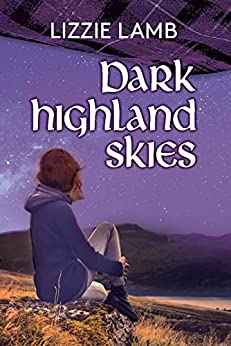
The tour of the castle revealed details which I subsequently used in Girl in the Castle. How the RAF practices low level flying along the loch using the castle as a marker and dip their wings as they fly past. How Castle Stalker became Castle Argg in Monty Python and the Holy Grail, including the scene where John Cleese hurls abuse at King Arthur from the ramparts. I learned how canny landowners were reluctant to dine at the castle in the past because there was a good chance it would be their last meal; all very Game of Thrones. (I later used that detail in Dark Highland Skies my current novel).  I also learned about heiresses being dragged to the altar to secure their dowries, the groom who was murdered by a rival before the ceremony was over and the Jacobite gold allegedly hidden there after the 1715 uprising.
They’re still looking for that!

As a nice touch, I was able to give the owner current a signed copy of Girl in the Castle as my thanks for him sharing his iconic home with us. And, as an extra, you can dine on the pub on the shore which was a notorious haunt of Jacobites back in the day.

We’re really looking forward to our tour of Scotland this summer, who knows what gems we’ll uncover and how that will influence what I write next?

https://viewAuthor.at/LizzieLamb
 

WRITERS ON THE ROAD: ELAINE EVEREST

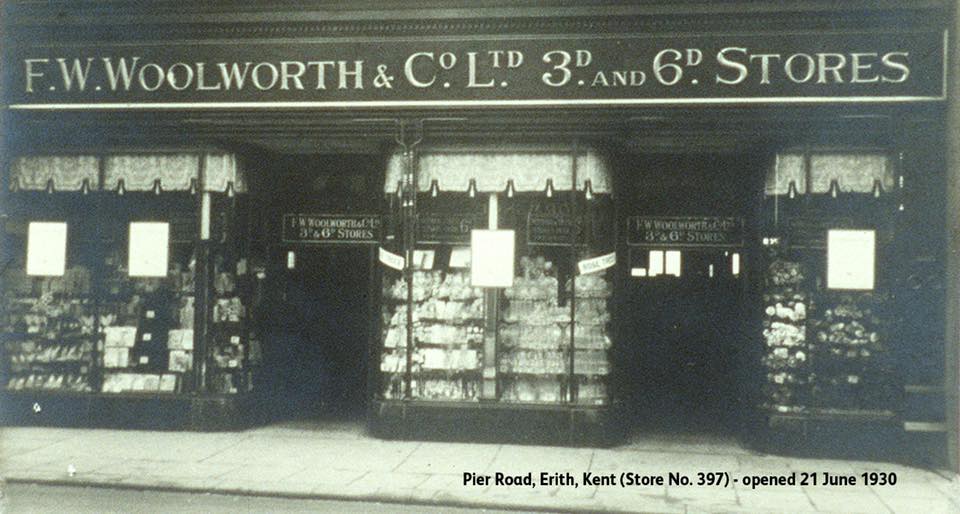
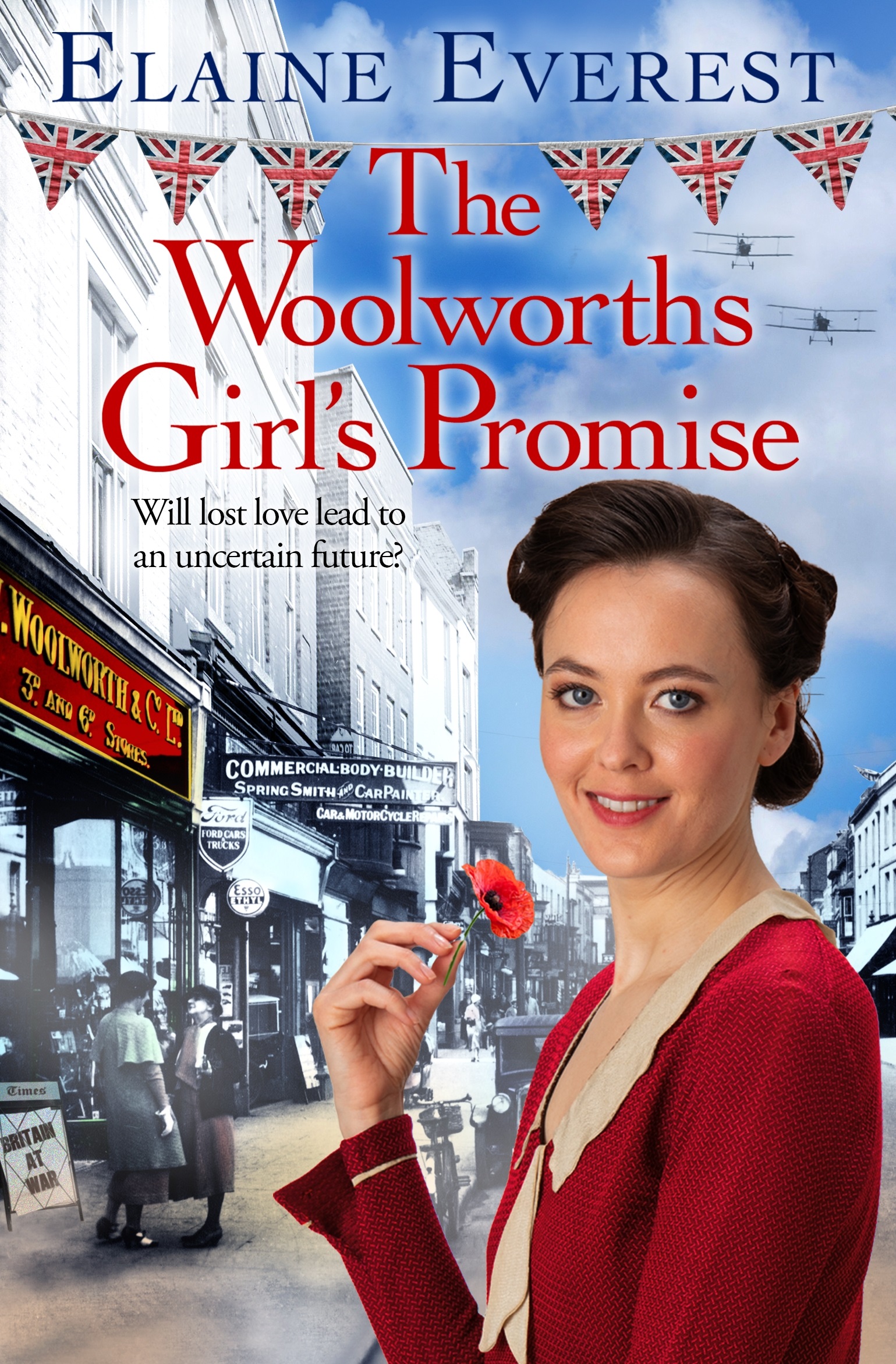
Little did I l know that my first Saturday job at the age of fifteen and three months at the Dartford branch of Woolworths would lead me to write a series of historical sagas over fifty years later, or that the home I lived in for twenty years when first married would provide me with such a wealth of happy memories. Those memories still feature in my books today, in fact I’ve just filed my tenth book set in and around Woolies during the early 1950s.

I was born and brought up in Erith, Kent, growing up listening to my parents and family members talking about ‘the good old days’ even there were times when life wasn’t so good. The history of the small town on the south bank of the Thames has a rich history not only of its involvement during the two wars, but also of family life which fascinated this young child – and still does to this day. With my mother passing away at the age of forty I hung onto the stories she told me about growing up in the war and what happened to her family members. I would need to write many more books to cover all her memories and what I’ve discovered since she died. Even though I’ve moved away from the area I only have to close my eyes and I’m back there in the street where I had such happy memories and, in my mind, walk through the old Erith which was, in my childhood very much as it was during WW2.

As I explain to new writers, memories are fine, but writers must ensure stories we’ve grown up with fit in with the history of that time. Use archives and read, read, read as much as you can about your subject. Believe me if we get anything wrong our readers will soon correct us. One of the joys of being an author and setting my books in and around North-West Kent is being able to chat with local people and hearing their family stories and memories of the town and Woolworths; there is a large community of ex Woolies employees, and they love to share their stories.

When I wrote that stand-alone book – yes, The Woolworths Girls was originally commissioned as one book – I become so interested in the history of that well-known store and started to collect old copies of The New Bond, the Woolworths monthly staff magazine. I have copies from as far back as the 1930s and they hold a wealth of information about the different stores, staff celebrations, employment anniversaries as well as advertisements from those times; I lose hours reading through my stash!

Of course, local history and store information is important, but this author needs to know what is going on in the outside world away from the town and Woolworths, and importantly how it plays a part in my ‘girls’ lives. Hours spent at the local archive centre as well as having my nose in a non-fiction book means I glean information that may just appear in my stories.

Do I envy authors who set their stories in exotic locations? Of course, I do! However, the joy for me is knowing I only need to close my eyes and step outside the front door of number 13 Alexandra Road to see again my characters and hear their stories.


Elaine’s website: www.elaineeverest.com


CARIADS’ CHOICE BOOK REVIEWS, MARCH 2023

Nicola Cornick’s The Winter Garden, reviewed by Morton S Gray

Ten stars! I loved this book. A perfect mix of past and present. I was in love with the present day hero Finn and wanted things to work out for Lucy. The historical side was told in an intriguing way and I enjoyed the ghostly elements of the story. Best historical/timeslip I have read in a long time. Bravo Nicola Cornick.


Lizzie Lamb’s Dark Highland Skies, reviewed by Jessie Cahalin

Dark Highland Skies is another triumph for Lizzie Lamb. Who doesn’t love a highland hero, strong heroine and a wee dram of secrets?

‘We all have demons to confront, secrets we’d rather not share. But that’s life, isn’t it?’

The characters are like good friends who really deserve a happy ending. The deeper you delve into the Halley and Tor’s past, the more you discover about what makes them tick. I wanted to know what was behind Halley’s ‘wall of aloofness’ and why a ‘bleakness appeared to descend’ on Tor. This is a heart-warming story of two lonely people finding each other.

Halley reaches for the stars and meets her destiny. A magical romance under the dark highland skies. As a reader I fell in love with the setting, and the ending was wonderful. If only I could have met charismatic Tam, Halley’s late uncle, who touched everyone’s life in the novel. I did not want to leave Lochaber!

Lizzie Lamb is queen of highland escapes. The uplifting stories are a perfect retreat from the troubled world.


Daisy Wood’s The Forgotten Bookshop in Paris, reviewed by Jane Cable

This is one of the books that makes me curse review sites that force you into giving stars. For me it isn’t quite five as I give those so very rarely, but it’s far better than the four I’m going to be forced to give.

This is such a skilfully told tale of resistance in wartime Paris with a main character, Jacques, you can root for and cry for, so wonderfully brave and flawed is he. A bookseller who is slow to join the underground movement fighting the Nazis, the plight of Jewish children in particular means he has no option but to help.

Meanwhile in the present day, American Juliette walks away from her unfaithful husband during a holiday in Paris, at first because she simply does not want to go home. She has family history to research but when she finds an empty, dusty bookshop she wonders if she can bring it to life again.

If you love Second World War dual timeline romances this is definitely one of the better ones I’ve read and I heartily recommend it.


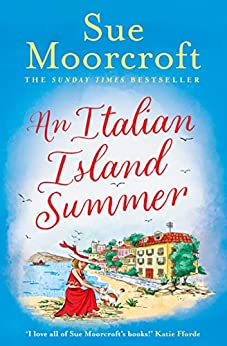
An Italian Island Summer by Sue Moorcroft, reviewed by Morton S Gray

Get whisked away to Sicily to join Ursula Quinn, who wants to learn to paint ceramics after her life in England implodes. Add in suspicious Alfio Tringali, who returns home to fulfil family duty, helping his sister with her baby and his mother recovering from an operation run the family hotel. Ursula’s parents and family in Ireland are worried about her and her ex-husband is still possessive. There are links and complications between the families that Ursula knows nothing about and these threaten her happiness.

I soon became absorbed in this story with its twists and turns, surprises and revelations. Lovely to have characters from previous novel Under the Italian Sun make an appearance too. A classic Sue Moorcroft read that doesn’t disappoint.


EVA GLYN’S HIDDEN CROATIA: DUBROVNIK SYNAGOGUE AND JEWISH MUSEUM

I would never have even realised Dubrovnik had a Jewish Museum if I hadn’t been researching the city’s Jewish community during the Second World War. As it happens, their story – and the museum itself – became an important part of The Collaborator’s Daughter.

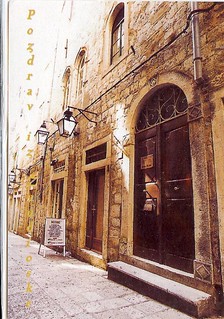
I tracked the museum down online first. There are walking tours of the city with a Jewish focus that appear to be aimed specifically at the cruise passengers, and through this I discovered the heart of the Jewish community in the old town. The name of its location, Zudioska (Jewish) Street might have given it away if I’d thought about it.

As with many medieval trading cities the Jewish community in Dubrovnik were important and the synagogue is one of the oldest Sephardic ones in Europe. It is on the top floor of the rather anonymous building and is a beautiful and calming sacred space even today. The dark wooden seats are rich with age and the Wedgwood blue decorations on the ceiling reminiscent of the Mediterranean sky.

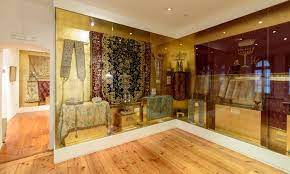
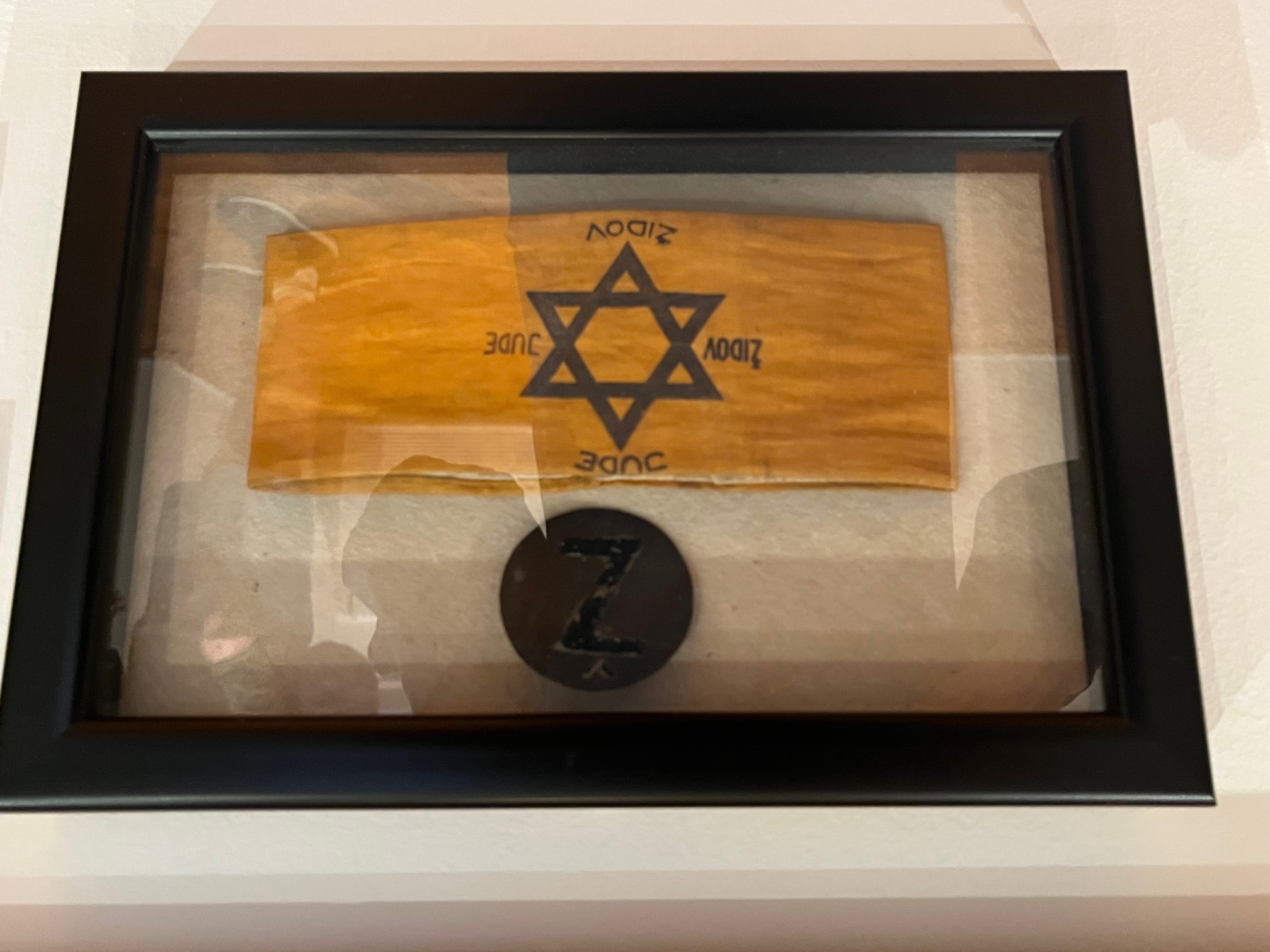
Even more interesting to me was the museum that takes up the floor below. It is tiny but showcases the community’s history so well, from the fabulously embroidered vestments and ornate fourteenth century torah scroll that represent the Jews’ proud history, to a second room with chilling artefacts from World War Two.

Compared to other parts of Europe, overall Dubrovnik’s Jews suffered less because initially at least they were under Italian control. While Croatia’s (and yes, it is correct to use that term for the period) home grown fascists persecuted the faith with even more vigour than the Germans, in this small enclave they were safe. For a while at least, and their numbers grew.

Then, in 1942 the Italians were told the clamp down. Curfews were imposed, yellow armbands issued. All the awful paraphernalia of ethnic hatred. Finally in the November the eighty or so members of the community were interned near the harbour at Gruz and on the island of Lopud. Eventually they were moved north to a larger camp at Rab, and during the chaos resulting from the Italian surrender the partisans took the area and a majority were saved. In all twenty-seven of the Dubrovnik Jews died, many more moved to Israel, and the community never recovered.

Although the synagogue is rarely used, helpful volunteers are available to show visitors around and to talk about the artefacts and history. The museum is open all day, every day, and is well worth half an hour of anyone’s time.

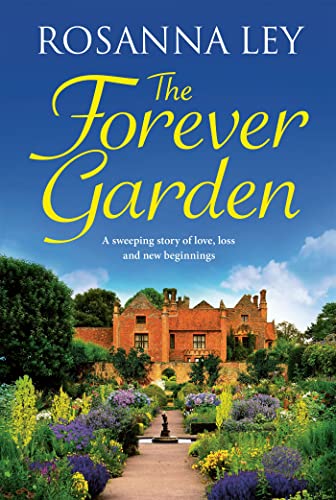
PUBLICATION DAY SPECIAL: THE FOREVER GARDEN BY ROSANNA LEY

I’m a big fan of Rosanna Ley’s books and this was no exception; in fact, it’s one of my favourites. The characters are instantly believable, the descriptions sumptuous and the whole story is perfectly tensioned between three viewpoint characters and two timelines.

The story is told from the points of view of Lara (in the 1940s and present day), her daughter Rose, and her granddaughter Bea, and it revolves around two very special gardens. The first is in Dorset, created by Lara’s mother based on the principles of the Arts and Crafts movement. It is this garden that Lara promises her mother to protect, which is the starting point for the drama that follows. The second garden is one that Lara later creates in Puglia.

The relationships between the women – and their gardens – are beautifully drawn. That Lara left the Dorset garden behind is evident from the outset, but in the hands of such a skilled storyteller, my desire to find out the whys and wherefores made it hard to put the book down. The Forever Garden will not only transport you from Dorset to Italy and back, it’s a journey you cannot fail to enjoy.

I was so entranced by the gardens that I asked Rosanna what her inspiration for them had been, and what her own Dorset garden is like:


I’ve always loved gardens. My parents were both keen gardeners and I have happy memories of running around our back garden as a child, playing out imaginary stories, dodging amongst my mother’s washing pegged out on the line and my father’s precious raspberry canes and gooseberry bushes.

Our own garden here in Dorset is not large but it wraps around the house and so I feel cocooned and sheltered – which is good as we live near the sea and it can be very windy! Because of the sea air I have plants that can withstand these conditions such as lavender, rosemary, thrift, hollyhocks and erigeron daisies. I am a fan of the cottage garden and of fragrant plants that attract insects, butterflies and bees – natural gardens and wild gardens. The garden also has two bird baths, two tamarisk trees, a pergola of clematis, honeysuckle and roses and a couple of places to sit and write or think in. And we are very lucky because it also has a sea view…

I was inspired to write about an Arts & Crafts garden after I visited Barrington Court in Somerset. The gardens there were laid out in the 1920’s to a structured design influenced by the famous Arts & Crafts garden designer Gertrude Jekyll. She believed passionately in the beauty of the natural landscape and – like me – valued the ordinary plants familiar to gardeners today, such as hostas, lavender and sweet-scented old-fashioned roses.

I immediately loved the Arts & Crafts concept of the garden being a continuation of the house, and of that garden being made up of several small rooms – each one with its own character and flavour. After all, when we go into a garden, we don’t always want to do the same thing. We might want to grow vegetables and be in the mood for some hard-core digging, or we might want to sit quietly in a soft and beautiful space that enables us to reflect, read a good book or just watch the birds go by.

In an Arts & Crafts garden, plants are sometimes chosen for their colour. A white garden, for example, can create a sense of tranquillity through the green of the foliage and the white flowers which are often considered healing for the mind and spirit. Or they might be chosen according to season. In ‘The Forever Garden’ there is a spring garden full of early bulbs such as daffodils and tulips which represents hope and new beginnings; this symbolism becomes very important to Lara in the story.

I like to think of the ‘Forever Garden’ as an important character in the book. For Lara it is both prison and sanctuary. The garden saves her and it also sets her free.


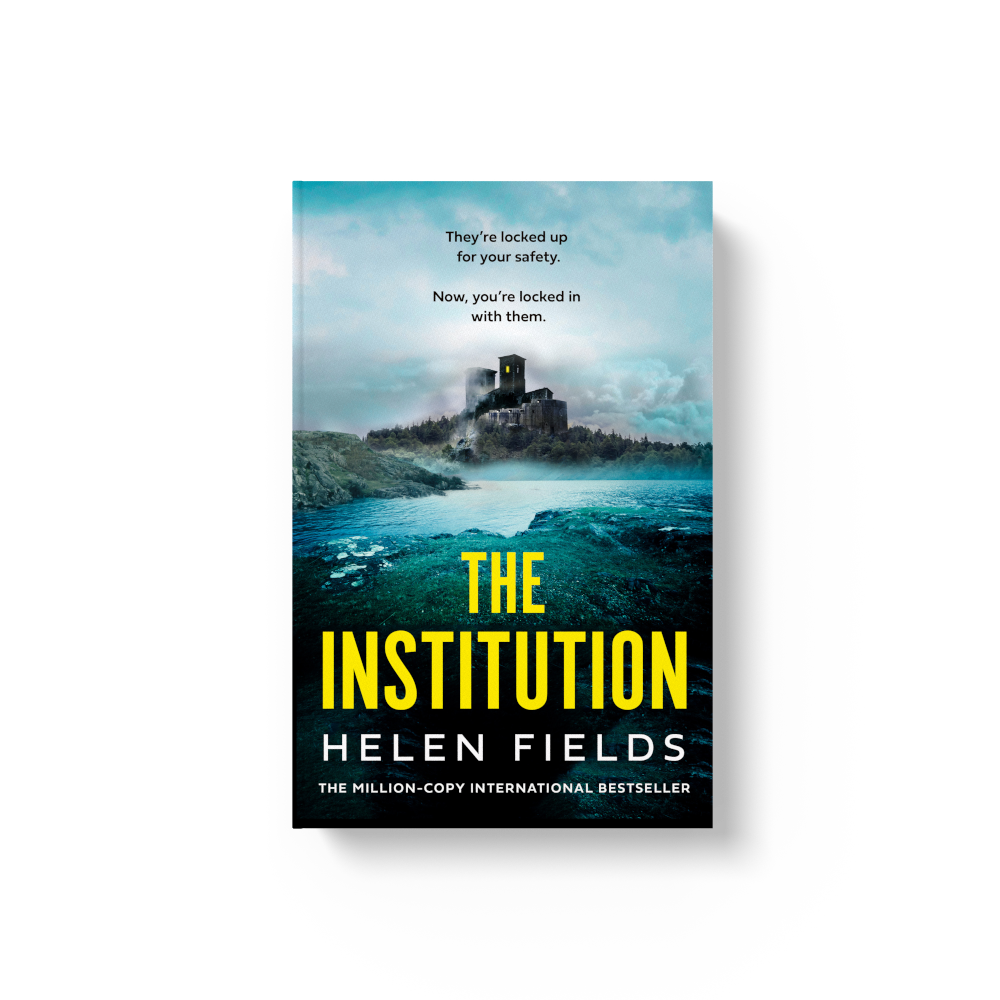
The Institution by Helen Fields

The Institution is an absolute triumph of a book. I didn’t race through this book because I wanted to savour it. I wanted to reread pages, and I didn’t want it to end. It’s a tense and atmospheric crime novel. It transports you to The Institution and then scares it out of you. This is a dark, haunting read that stays with you long after you have read it. I loved it and remain in awe of Helen Fields talents. A five star read. 

the sound of being human

They’re locked up for your safety.
Now, you’re locked in with them.

Dr Connie Woolwine has five days to catch a killer.

On a locked ward in the world’s highest-security prison hospital, a scream shatters the night. The next morning, a nurse’s body is found and her daughter has been taken. A ransom must be paid, and the clock is ticking.

Forensic profiler Dr Connie Woolwine is renowned for her ability to get inside the mind of a murderer. Now, she must go deep undercover among the most deranged and dangerous men on earth and use her unique skills to find the girl – before it’s too late.

But as the walls close in around her, can Connie get the killer before The Institution gets her?

A claustrophobic, haunting crime thriller that will keep you up at night, perfect for those who couldn’t put down The Sanatorium and Amy McCulloch’s Breathless.

The Institution is available here.

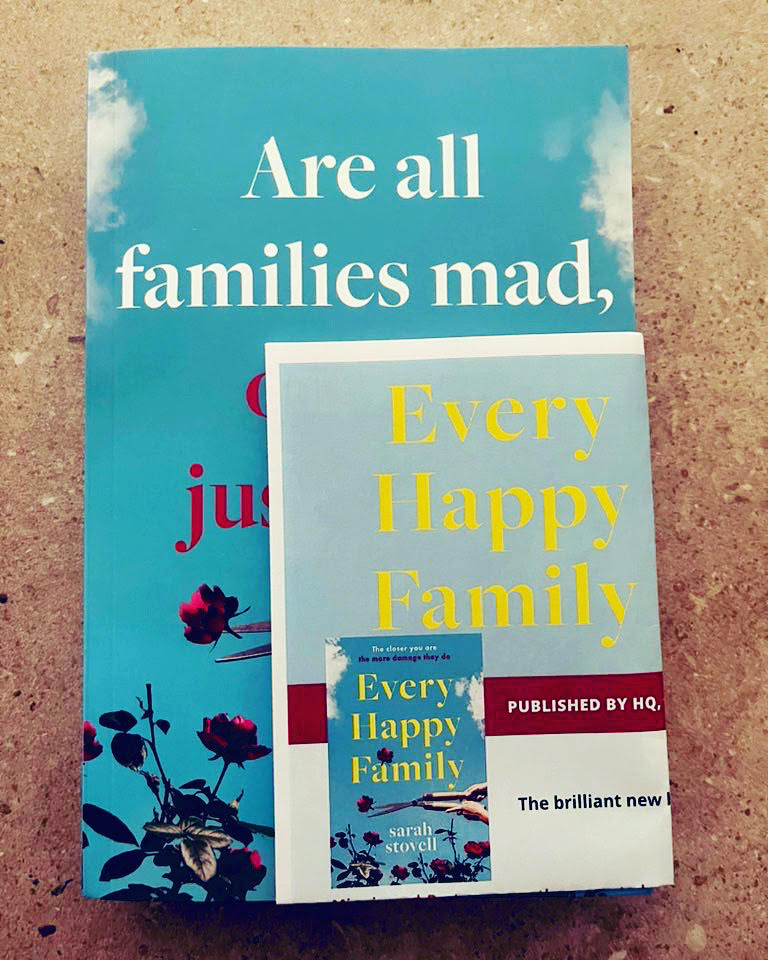
Every Happy Family by Sarah Stovell Book Review.

I loved Other Parents and was so excited when this book dropped through my letterbox. I wasn’t disappointed. This is another corker from Sarah Stovell. It’s a fascinating tale which kept me guessing throughout. The depth of characterisation is off the scale and everything we expect from such a skilled writer. I raced through this book as quickly as possible. 

I loved Minnie and her family and I loved the story. No one captures human behaviour quite like Sarah Stovell. Grab yourself a copy. You will not be disappointed. 

The new novel from the acclaimed author of Other Parents and Exquisite.

Minnie and Bert are over the moon to have their three grown-up children home for the first time in a decade. But having Lizzie, Jess, Owen and the grandchildren under one roof isn’t without its dramas.

Lizzie is off the alcohol (although emergency gin doesn’t count), Jess is juggling a toddler and a newborn, but it’s Owen who has the power to throw a grenade into everything.

It all stems from an incident that happened years ago. And it involves Nora Skelly – a name you don’t mention in front of Minnie.

With Nora also back in town, the past is about to come crashing into the present. And what better time to revisit old secrets and resentments than around the family dinner table?

Every Happy Family is available here.

The Garnett Girls by Georgina Moore Book Review

I absolutely adored The Garnett Girl. This story about a mother and her three daughters has so much depth. Margo and her daughters: Rachel, Imogen and Sasha are all so different. The Garnett Girls is centred around Sandcove, their huge family home. The book explores these women’s lives, as well as the lives of their husbands and partners. It shows how all of our lives are intertwined and how family is never easy. A beautiful and addictive read. I couldn’t put it down. 

Forbidden, passionate and all-encompassing, Margo and Richard’s love affair was the stuff of legend – but, ultimately, doomed.

When Richard walked out, Margo locked herself away, leaving her three daughters, Rachel, Imogen and Sasha, to run wild.

Years later, charismatic Margo entertains lovers and friends in her cottage on the Isle of Wight, refusing to ever speak of Richard and her painful past. But her silence is keeping each of the Garnett girls from finding true happiness.

Rachel is desperate to return to London, but is held hostage by responsibility for Sandcove, their beloved but crumbling family home.

Dreamy Imogen feels the pressure to marry her kind, considerate fiancé, even when life is taking an unexpected turn.

And wild, passionate Sasha, trapped between her fractured family and controlling husband, is weighed down by a secret that could shake the family to its core….

The Garnett Girls, the captivating debut from Georgina Moore, asks whether children can ever be free of the mistakes of their parents.

The Garnett Girls is available here.