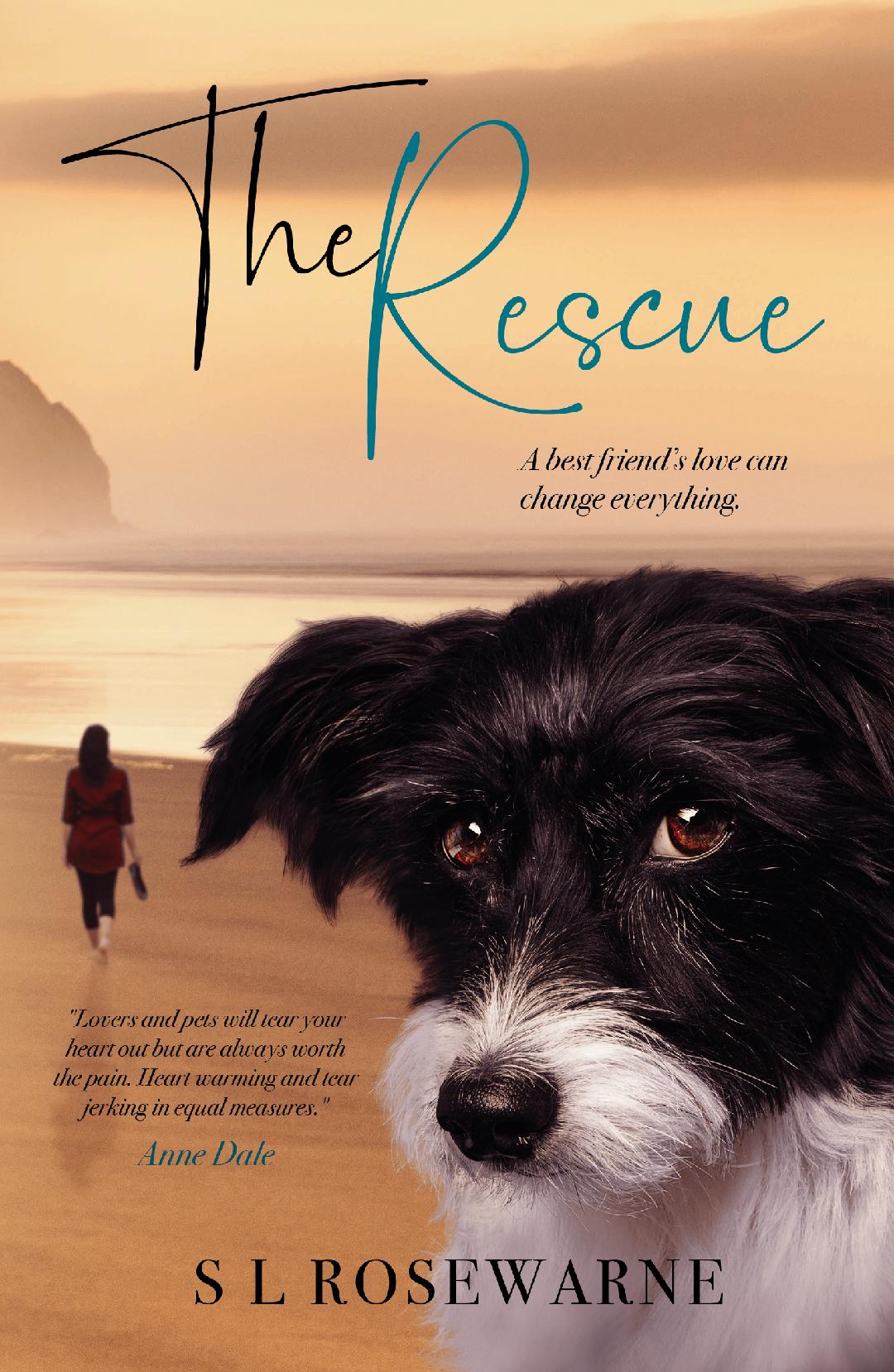
SUNDAY SCENE: S L ROSEWARNE ON HER FAVOURITE SCENE FROM THE RESCUE

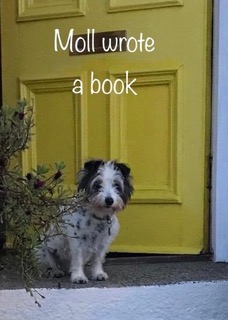
The Rescue is a novel about about second chances, written by a terrier called Moll, who promises her owner, Pip, to look after his wife when he dies.

I wanted to write about what happens when you lose your partner, and how it is terrible, but there can be plenty of life – and love – ahead. Moll was such a strong character, and kept me going through it all, so I felt she should tell this tale.

This scene is Moll’s introduction to the one and only time she has sex. It was quite a challenge to write – how do dogs feel about sex? The point of the scene is that she can understand how her owner, Suki, feels when she meets a man she is very attracted to but, for various reasons, doesn’t want to have sex with him.


Errol was a terrier/collie and a real flirt, with huge dark eyes and a wicked sense of humour, who lived in Penryn.

We met on the fields above the sea, and he gambolled over to me and ran away, back and forth, urging me to follow him. Which after a bit I did. He had a musky scent that drove me wild, and we had such fun that afternoon – racing down onto the beach, over the rock pools and back. I felt like a puppy again.
He made me bark with laughter, and nudged against me, and teased me and nuzzled my muzzle until all my cares and worries over Suki disappeared. When I was with him, I felt as if I was the most important bitch in the world.

Errol made me feel like a different dog. I noticed that I was walking strangely, swaying my hips a bit. My tail looked longer and I waved it upright, higher in the air. Even my coat looked glossy. Other male dogs started sniffing around me, but I wasn’t interested in them. I only had a nose for Errol.

Soon, Errol suggested going off in the bushes for a frolic. I wasn’t sure what he meant at first, but I had this overwhelming urge to, well, frolic, I guess, though I didn’t know what that involved. But I’d never had such a strong desire to do something like that with another dog. It was all I could think about for days, and I got so excited, lying at home, imagining what it would be like. Him sniffing my butt, then my ears, then…. I wasn’t sure what we’d do, but I knew we’d have to do it or I’d go barking mad.

So one day we sneaked off into the bushes – ‘we’ll have to be quick,’ Errol barked.
We were, and it was – well, not quite what I expected. It hurt a bit, but it was over very quickly, and all he did afterwards was bellow, then he scampered off. I could have done with a bit of a cuddle, paw to paw, and a nose-to-nose chat, but perhaps male dogs weren’t like that.

After my initial disappointment, I felt invigorated and emboldened. Desired. The experience went right up my nose. He was all I could smell for days. I got quite dreamy for a while, remembering his scent, imagining doing it again – but better this time. But he’d disappeared. I was barking to some other dogs who lived nearby, and then I heard he’d used the same chat-up to several other dogs, and my tail and my whiskers drooped. I felt a real fool.
 

www.suekittow.com

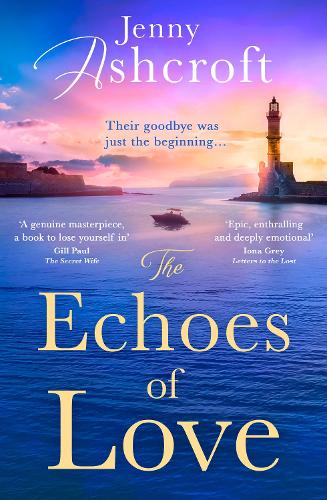
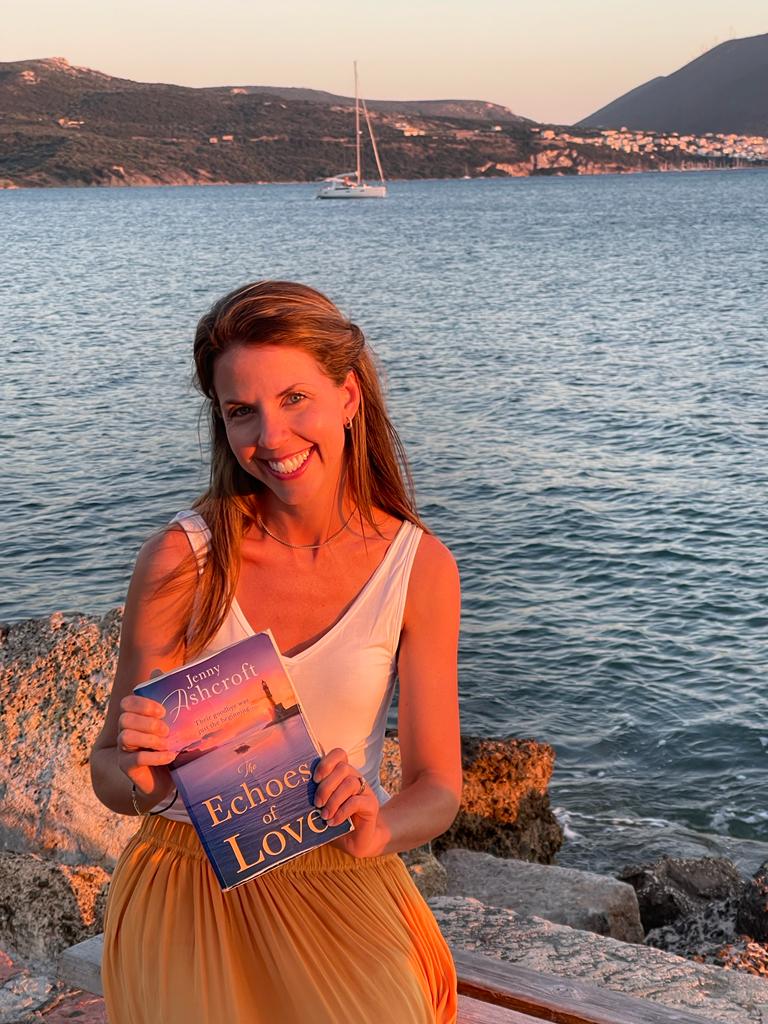
THE ECHOES OF LOVE – REVIEW AND INTERVIEW WITH AUTHOR JENNY ASHCROFT

Jane Cable reviews this fabulous historical romance

Where do I begin with this incredible book? With the sweeping love story at its gripping heart, or the impeccable historical research, or the phenomenal sense of place and time that had me living and breathing Crete in 1936 and during the Second World War? Or shall I just cut to the chase and tell you this will most likely be my book of the year.

In 1936, eighteen year old Eleni Adams returns from England to Crete to spend the summer with her Greek grandfather, something she has done every year since her mother died when she was a baby. But this summer is different; this summer she falls in love with Otto, the German boy staying in the villa next door, and I was as captivated by the breathlessness of young love, the intensity of feeling, as I was by the setting that made me feel as though I was really sitting above that cove near sun-drenched Chania.

But we all know our history, and in 1941 Crete was captured by the Germans. By that time Eleni is an SOE agent based on the island, and rather than leave she goes underground in the bombed out ruins of Chania to help to support the resistance. Meanwhile Otto is one of the first wave of fighters to be parachuted in; a reluctant Nazi, a man who stands against cruelty and reprisals, and of course the lovers’ paths cross once again.

Also running through the book is the transcript of an interview from 1974, given by the man who, it becomes apparent, betrayed Eleni. A man who knew her well. A man who she trusted.

This book transported me absolutely, haunted my dreams, tore me apart, and put me back together again. It’s an absolute triumph, so I was delighted when Jenny Ashcroft agreed to tell me how, and why, she came up with the idea of the interview transcript.


JA: First of all, thank you so much for this wonderful review. I’m absolutely thrilled you enjoyed it! As for the transcripts, the idea for those actually came before the central idea for the book. Often when I’m trying to come up with something new, I’ll write scenes or bits of dialogue that spring into my mind, and one afternoon I found myself playing around with a prologue written in interview form.

I love historical documentaries, and just thought that the dynamic between a researcher and their subject could be a really rich one – especially if that subject is carrying some deep regret, or secret, from their past. So, I wrote a sample for my agent, she really loved it, and when, a couple of weeks later, I went back to her with my synopsis for The Echoes of Love, she was really enthusiastic about that too, but asked, ‘Is there any way you can get that transcript idea in?’ I thought there was, decided that they could work as being from a fictional BBC documentary commemorating the liberation of Greece, and that’s how the transcripts came to be woven through the text of Eleni and Otto’s story.

All very iterative, and I wish I could say that I knew from the start precisely what I was doing, but I never seem to know that with any book! For me, it really is the case that it’s only when I start to write that I come to realise where I want to go. But I’m so glad I did weave those transcripts in. They really did become such a core part of the story.


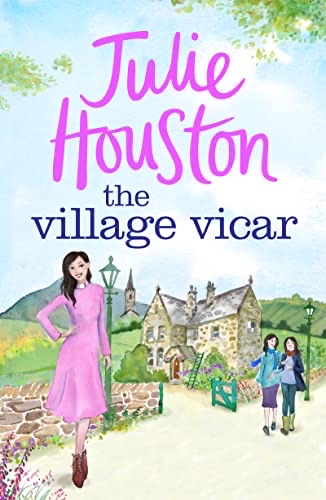
SUNDAY SCENE: JULIE HOUSTON ON HER FAVOURITE SCENE FROM THE NEXT VILLAGE VICAR BOOK

I think visitors to the north of England, and especially to the industrial urbanised towns of West Yorkshire, are always surprised to find themselves in the Yorkshire Dales – Skipton, Kettlewell and Grassington – and then, within another fifty miles or so, into the glorious Lake District. Wordsworth certainly knew what he was talking about when he called Grasmere, ‘The loveliest spot that man hath ever found’ and, writing in praise of Lake Ullswater, found it to be, ‘The happiest combination of beauty and grandeur.’

I have just completed my sequel to The Village Vicar (available January 2023) and, in this sequel, (probably to be titled The Girls of Heatherly Hall and available Summer 2023) I had a glorious time writing about Eva, one of the Quinn triplets, spending a weekend at an art retreat on Lake Ullswater.

To put the scene into context, Eva, newly separated from her husband, and utterly miserable, is in the Lake District for the weekend on an art course at one of the UK’s upmarket retreats, but also there on a fact-finding mission, prior to setting up her own similar art retreat back in West Yorkshire.

Eva arrives in the pouring rain for which the Lake District is renowned and, after a sleepless night, walks in the early hours of a now fine midsummer morning, down through the grounds of the retreat to the edge of Lake Ullswater itself. She is instantly captivated by the beauty and peace of the place:

…twelve acres of gardens and woodlands, as well as over half a mile of shore around the lake, and she set off down the beautifully kept gardens to the lake side.  The stunning mountain scenery to the south softened gradually to the gently undulating hills of the north and, as she walked, breathing in the early morning scents of Oriental Poppies, Astrantia and a mass of red and yellow roses she recognised but couldn’t identify, she began to feel calmer.

Eva spends the weekend learning to throw pots with the charismatic Russian, Andrea Zaitsev and, when he suggests an evening bike ride around Ullswater, she willingly concurs.

…the bike set off through the stable yard and down towards the large open wooden gate, before turning right onto the country road and accelerating at speed. Eva felt her heart and pulse escalate in unison with the bike as the Harley Davidson roared along, the warm summer evening breeze in her face and the rumble of the V-twin engine beneath her.

Andrea powered the bike through the village of Pooley Bridge before taking the main road which clung to, and followed, the margin of Ullswater lake to their left. Once on the main road, the bike gathered momentum and Eva realised they were probably well over the speed limit, but she felt totally safe in this man’s hands, surrendering to the glorious experience of flying through the summer evening as dusk began to descend and a large Strawberry moon rose over the lake itself.

Andrea slowed down completely as he took them through the villages of Watermillock and Glenridding where tents and B and Bs announced their popularity with tourists and then, leaving the A road, continued slowly down country lanes until he pulled up at a quirky-looking pub in the village of Patterdale.

‘Where the dogs come from,’ Eva said as, with slightly shaky legs, she dismounted the bike and waited until Andrea parked correctly in front of the pub.

‘Dogs?’

‘Patterdale terriers. No idea what they look like, but I guess they must have originated from here…’


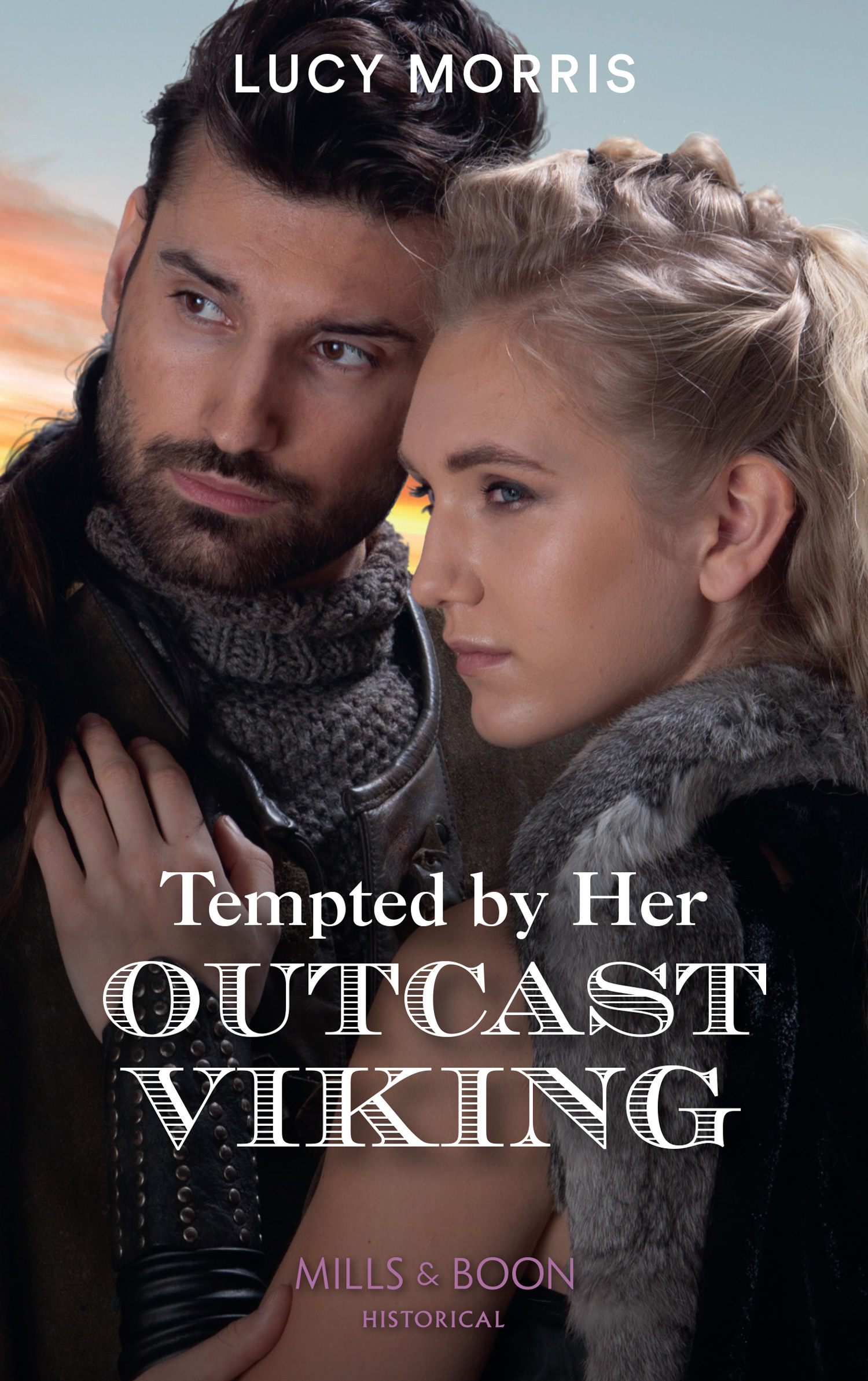
SUNDAY SCENE: LUCY MORRIS ON HER FAVOURITE SCENE FROM TEMPTED BY HER OUTCAST VIKING

My latest book ‘Tempted by her Outcast Viking’, begins in Viking age York, known at the time as Jorvik.

York has a special place in my heart as I went to university there. It’s a beautiful historic city, and still remains quite small in size. Walking through its old town you can easily imagine what it would have been like throughout the ages. Roman walls surround it and medieval architecture is down every narrow-gobbled alley.

Jorvik was a well-established city well before it fell to the Vikings. But the Norse made it into a successful trading centre that rivalled all others. Silks, spices and precious gems from across the world were bought and sold within its walls.

I wanted to reflect the global reach of the Norse trading routes with my character Erik, a man with a pitiful upbringing. His father is a powerful Jarl, and his mother was a captured Persian from the middle east. Trading with his half-brother has finally paid for his freedom, but after his father’s horrific treatment, Erik only longs for a peaceful future with a wife and children.

But that has to wait, because a woman from his past needs his help, and he needs her forgiveness:

Anger raced through her like lightning, burning away all reason.

She grabbed him by his broad shoulders and thrust him against the nearest wall. His hands in response locked around her biceps to steady himself, his grip firm, but not painful, and the heat that radiated from his fingers only angered her further, because of the effect it had on her. It caused her body to warm and her breath to catch in her throat, shivers of longing twisted in her gut and she thrust him back a second time, the plaster on the little house cracking and crumbling with the force.

‘I don’t like you!’ she snarled, ‘I’ve never liked you! So, let’s make this very clear. I do not care if you are sorry or not! Just do as you’ve promised and get my mother a damn farm!’

They stared at one another, their breathing heavy and the tension between them thick in the silence. Their big bodies filled the space of the alley, making the wattle and daub buildings seem even more fragile and small, neither of them willing to back down, their bodies held in a tight balance of frustration and stubborn pride.

The dark pools of his eyes locked with hers and then dropped ever so slowly to her mouth. ‘There was a time when you liked me…’


Go to www.LucyMorrisRomance.com for more information, and to sign up to my newsletter.

SUNDAY SCENE: JANE BHEEMAH ON HER FAVOURITE SCENE FROM HER PRIZE WINNING SHORT STORY

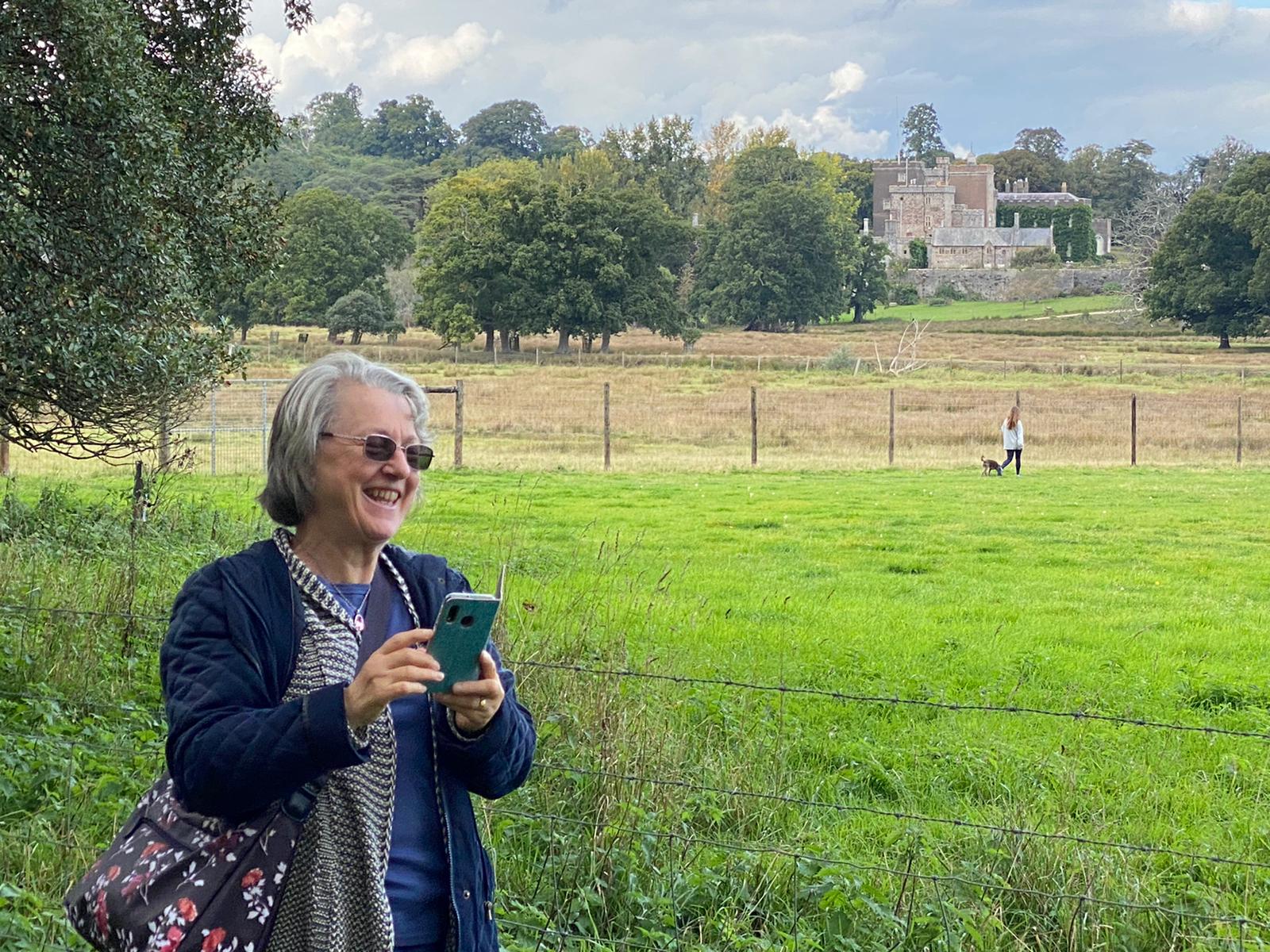
‘Under the Spreading Oak’ is a story that’s been in my head for a while, just waiting to be told. Then earlier this year Blue Poppy Publishing ran a short story competition – calling for Devon writers and a Devon based theme – and I found a fit. Quite simply, it was a joy to write. Set in Powderham Castle’s beautiful deer park, it’s told from the perspective of an ancient oak. A descriptive piece, it depicts life in the deer park, the change of seasons and some of the people who have taken shelter under its spreading boughs.

The story is – well, a story, though the place is real enough. I was lucky enough to grow up in the estuary village of Starcross, not far from Powderham. In my mind’s eye, while penning the story, I was revisiting childhood walks through the deer park with my beloved Nan. Stories do that to you sometimes, don’t they, trigger nostalgic memories. This one certainly did for me!

I’ve walked through the deer park as a teenager, too, when – like other local youngsters – I had school summer holiday jobs at the Castle tea rooms. The path was more of a track then, still a public right of way, but not opened up for ramblers as it is now. There must have been rainy days, of course, but all I remember is sunlight dancing through a canopy of leaves and a chorus of birdsong. The old gatekeeper’s cottage is gone; in its place is a café and farm shop.

The best ideas come when I’m out and about. Nature never fails to inspire, and I’ve always been enchanted by ancient trees and the stories they could tell, if only they could speak – imagine the history witnessed under their silent watch! And, mighty and majestic, there is something special about the undisputed king of the forest.

Here’s an extract from the opening paragraph of ‘Under the Spreading Oak.’

“The last vestiges of night cloak the woods in shadow. No sound, save for the tramp of boots as the gamekeeper makes his pre-dawn round, checking on the pheasants in their pens. Its hunt disturbed, a fox slinks by, picking up a new scent as the rabbit it almost had slinks into a burrow.”

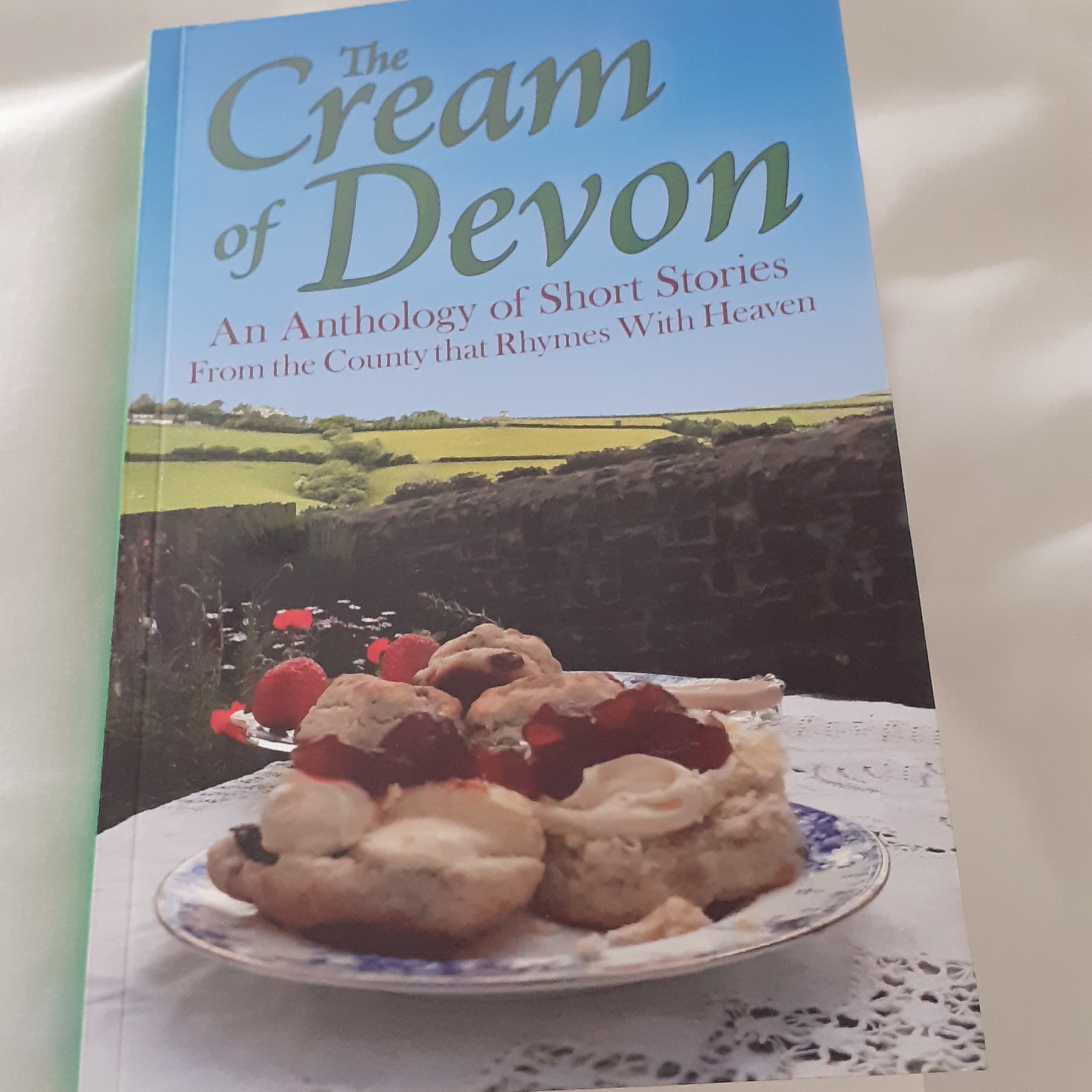
The icing on the cake: not only did my story ‘Under the Spreading Oak’ do well in the competition I’m delighted to say that it was included in an anthology and published by N. Devon based Blue Poppy Publishing this summer.  It’s a little gem of a book, titled: ‘The Cream of Devon, An Anthology of Short Stories From the County that Rhymes with Heaven.’

Now I will let my story speak again:

“A May morning like any other. My branches reach up to the cerulean sky. There’s a shimmer of mist over the Exe now. Here in the Powderham deer park, set in deepest Devon, the seasons come and go like an eternal wheel. I’m one of the forest giants, standing sentinel and watching the days unfurl. I’ve lost count of the springs I’ve seen as the cold earth warms and a carpet of bluebells spreads out on the woodland floor. All life is played out here.”

I also write novels as Kathryn Haydon, the pen name chosen as a nod to my mum.  She would have been thrilled to know about my Powderham themed story!

Below is a link to my Facebook Author Page, for those who would like to take a peep. You’ll find me there as Kathryn Haydon.

https://www.facebook.com/flickypenpot

Warm wishes and happy reading.

CARIADS’ CHOICE: OCTOBER 2022 BOOK REVIEWS

Marie Laval’s Escape to the Little Chateau reviewed by Carol Thomas

With strong elements of gothic suspense threaded throughout, the storyline of this book went to dark and mysterious places I hadn’t expected. It was, however, an enjoyable read, and I found myself reading into the night as I didn’t want to put it down. There is a good sense of place and history, and the author brings the chateau and French countryside to life wonderfully. Fabien Coste and Amy were both strong, likeable lead characters, and I loved the puppy Fabien gifted Amy. I enjoyed the unfolding of the mystery and the range of characters introduced along the way. It is a great read to suspend reality for a while and let yourself be swept along by the revelations. I definitely recommend it but with an awareness that there are elements of threat.


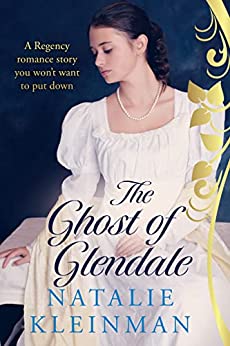
Natalie Kleinman’s The Ghost of Glendale reviewed by Jane Cable

I always turn to a Natalie Kleinman book when I fancy a Regency comfort read, or trying to get into the mood for writing in the era myself. She is a mistress of the Regency romance in the spirit of Georgette Heyer and knows her genre inside out.

Talking of spirits, this book has one, with its own sad story to tell. It added an interesting extra dimension to the story, and to how Phoebe and Duncan’s own love story developed. A gentle read, with happy endings for all.


Jenny Kane’s Frost Falls At The Potting Shed reviewed by Kitty Wilson

I loved this book so much, Jenny Kane is an absolute master at creating heart-warming, cosy romantic escapism that you can’t bear to put down. The Potting Shed is a perfect setting and I want to go and visit, wander around the polytunnels and meet Maddie, Jake and Petra myself. In fact, the whole book is packed with relatable characters, as well as a very endearing hero, all of which come together to make Frost Falls at The Potting Shed a gorgeous, warm-hearted romance that shines a light on love, friendship and is the most wonderful festive read. Cosy, romantic perfection. I cannot wait for the next in the series!
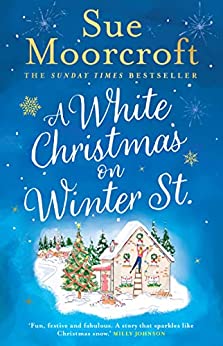
Sue Moorcroft’s A White Christmas on Winter Street reviewed by Morton S Gray

I have read all of Sue Moorcroft’s books and didn’t think she could give me another favourite, but she has!!!

Really enjoyed A White Christmas on Winter Street. It has all the Christmas touches – lights, presents, cookies, but it has so much more besides. I soon got swept up in the worlds of Sky and Daz, both of whom became so real as I was reading.

Loved being back in the village of Middledip and enjoyed the mentions of familiar characters and places. It quickly becomes evident that Sky relates to young Wilf as she recognises some of the challenges he is dealing with. Sky has many issues from the past and recent past, but has not allowed these to dampen her generosity of spirit. Daz too finds it hard to refuse a person in need even if that is at a personal cost to himself.

Loved the story, loved the journey and want to get some Christmas solar lights already!


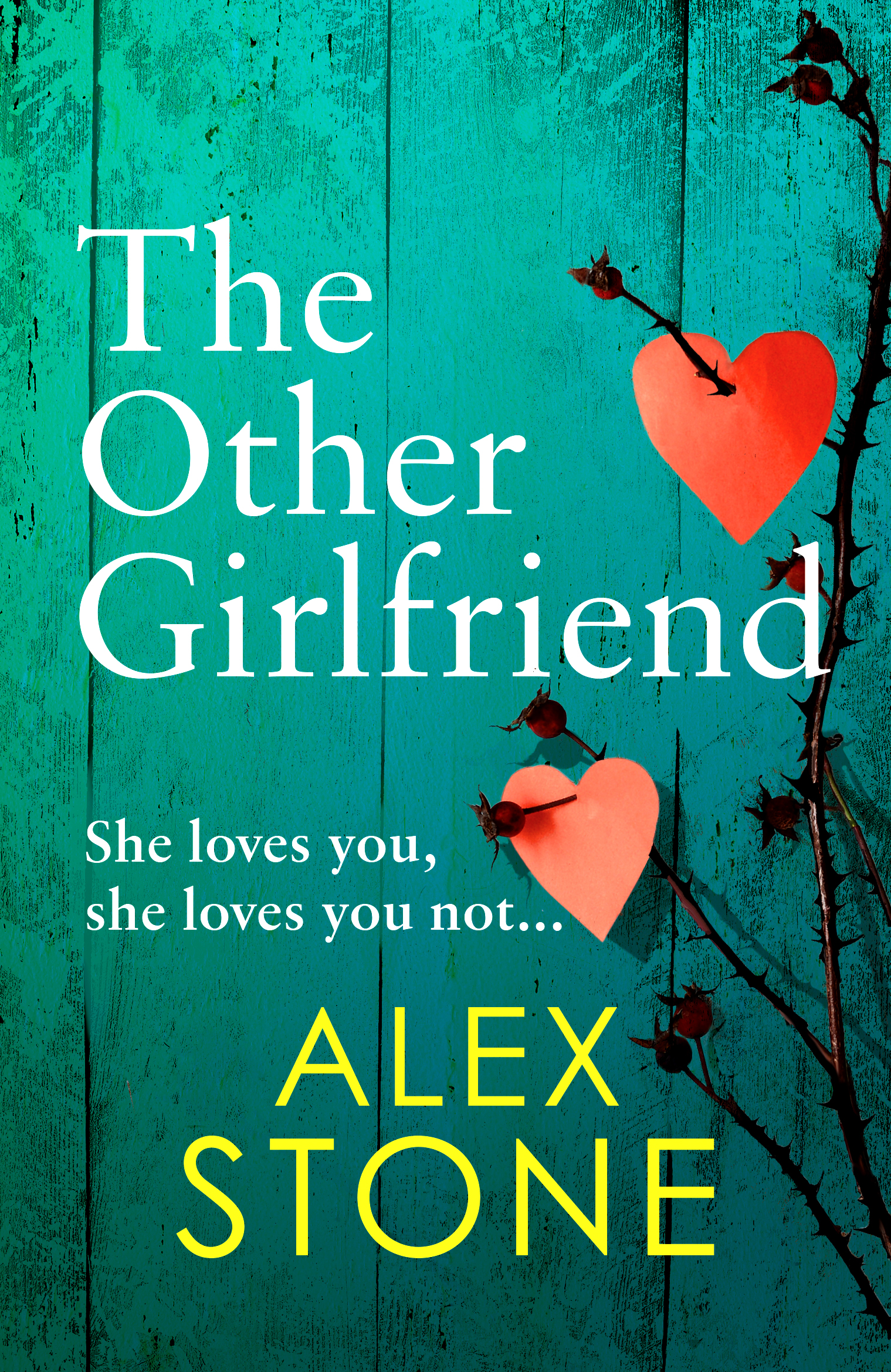
SUNDAY SCENE: ALEX STONE ON HER FAVOURITE SCENE FROM THE OTHER GIRLFRIEND

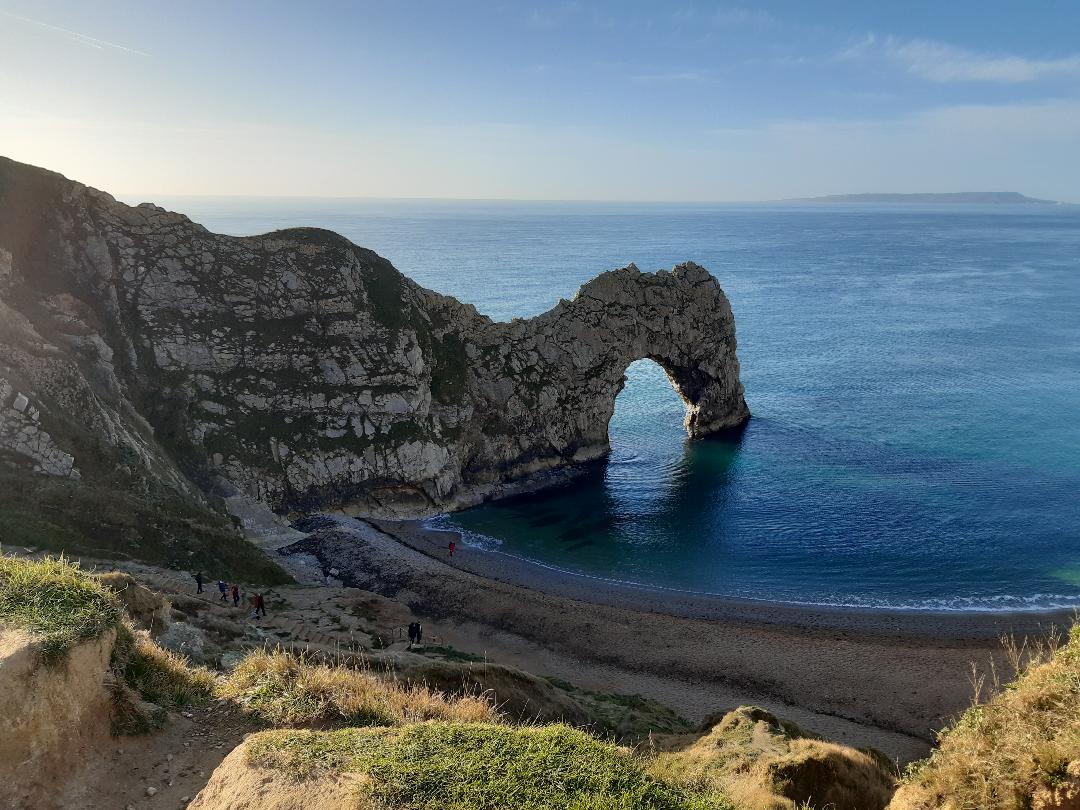
The Other Girlfriend is my second psychological thriller set in Dorset. After a weekend away at Durdle Door ends in tragedy, Lizzie’s world falls part and she battles with anxiety and agoraphobia.

Agoraphobia is so often misunderstood and assumed to be a fear of open spaces, but, as Lizzie discovers, in reality it is so much more and any situation or place where it difficult to escape from can become a trigger for panic attacks.


My heart pounded and my legs felt weak, as though they would give way at any moment. All I had to do was open the front door, step outside and walk down the driveway to the car. It wasn’t a big deal. It wasn’t difficult.

Except it was.

‘What are you standing there for?’ Mum asked, giving me a nudge forward. ‘Come on, let’s go.’

I side stepped out of the way, allowing her to pass. She cast a sideways glance at me before reaching for the latch and pulling the door open. I stared out at the world beyond the threshold. Somehow it seemed as though all the oxygen was slipping away through the open door. My breathing became laboured. Quick shallow gasps that didn’t satisfy my lungs.

I heard Mum sigh. The patience she was trying to hold onto was starting to slip. I had to get it together. I couldn’t fall apart in front of her. Not again.

I fought to regain control. But it wasn’t working.

Nothing worked.

The hallway dipped and swayed. Everything started to blur. Tears streamed down my face. I wasn’t even sure why I was crying. It was just a door. Just a driveway. I wanted to run away. To hide. But I couldn’t.

My feet were welded to the spot. I couldn’t move. Dark patches appeared at the edges of my vision. I was going to pass out. I could feel it.

‘Don’t start that nonsense.’ There was an edge of frustration to her tone. ‘We haven’t got time for it.’

I nodded, obediently, as a loud sob escaped. She was right. It was nonsense. I was being stupid. It was just the driveway. The same driveway I had walked down nearly every day for my whole life.

And yet somehow it was no longer the same. I was no longer the same.

Mum couldn’t understand. She’d tried. She was still trying. But the daughter she’d known had simply disappeared. All she was left with was this shell of my former self. Sad. Tearful. Panicked.

She couldn’t understand why. She couldn’t figure out how to fix it. How to fix me.

With every day that passed I became more reclusive and she became more frantic. My failure somehow became her failure. It was a mother’s job to keep her kids safe and well, that’s what she said. But she couldn’t make me well. Plasters and paracetamol wouldn’t work this time. Eighteen years of experience as a mother hadn’t prepared her for this.

Mum thrust smelling salts under my nose. I flinched as my eyes smarted. But I inhaled deeply. I took the little brown glass bottle from her and clung to it, wafting it back and forth below my nose as the darkness gradually faded into grey.

‘Just don’t think about it,’ Mum said as she hooked her arm through mine and pulled me forward, escorting me outside, while my body trembled and each breath rasped in my chest.

It had become her favourite phrase. I wasn’t even sure what it was I wasn’t supposed to think about.

I don’t think she knew either.


‘Little Cat and Friends’ : Book Series a ‘Purr-fectly’ Wonderful Way to Help Children Struggling to Read

‘My daughter loves these books. From the moment they were in her hands she was excited. I have read them to her numerous times now.’ Catherine Yardley. 

Author Anna Emilia got her first cat at the age of thirty. The special relationship that ensued was the inspiration behind her series, ‘Little Cat and Friends’, which is both an ode to her cat Molina and also a vital addition to any educator’s playbook. Anna struggled with reading as a child, and she is uniquely aware of how children learn and crucially, what keeps their attention.
little cat and friends book

Utilizing a variety of fonts and colours, the books contain simple, child-like conversations and questions, designed to help parents address a number of topics, from siblings to adoption and more. They are also just plain fun to read, with words that jiggle up and down, whimsical illustrations and stories that will delight children and parents alike.

Synopses:

‘The Little Cat’
The Little Cat has a new Mummy and a new home. Join her as she gets herself into some tricky situations while exploring her new surroundings. She’s so excited. Will she ever be able to settle down and go to sleep? This simple and appealing story will delight young children, especially those with a new pet.

‘Making Friends’

Little Cat has a new Mummy and a new home. Now she needs to go outside and make some friends. Will she find any? Follow Little Cat’s adventures as she looks to explore her new world and finds out what her new name will be. Will she like it? A simple yet delightful tale about exploring, meeting new people, gaining confidence and making friends.

‘Tiny Kitten’
Molina is surprised when a new brother arrives. She decides she won’t like him and is very sad until she helps Mummy choose his name. When her friends come to visit, they love her brother. Will she learn to love him too? A charming story about dealing with change and how first impression aren’t always right.

“When I struggled to read, there weren’t a lot of tools out there to help,” says Anna. “These books would have been an absolute treat for me. For any parents who have children with dyslexia or other learning difficulties, I suggest using your child’s own pet or perhaps a favourite toy as a reading buddy. This helps build confidence. I also think that as you read to your children, you should consciously make mistakes. Explain to your children that making mistakes is absolutely okay – and it’s a natural part of reading and of life. This will help your child realize that their own mistakes aren’t the end of the world. In fact, they might start to relish the effort of learning to read. Once you take away the fear of failure, they will feel so much more confident and happy – just like Little Cat!”

Readers – both big and small – have been entranced with the series since its inception.

“A beautiful book, The Little Cat is absolutely loved by my 3 year old boy Emile. Utterly charming and beautifully illustrated, it is an everyday bedtime story book in our household,” writes Delphine.

Ben agrees, writing, “All my children love the stories and the pictures, very colourful and easy to read, they can’t put the books down!”

All three books in the ‘Little Cat and Friends’ series are available now from Waterstones, Amazon, and all leading bookshops as well as the author’s own website:

https://www.littlecatandfriends.com/shop/

Anna Emilia is passionate about helping children become confident with reading. Her series, ‘Little Cat and Friends’ was born from her own struggle with reading as a child, and from the love she has for her own cats.