Books2Door offer HUGE discounts on Back2School Booksets

Online book retailer Books2Door who are committed to encouraging a love of reading in all children are launching their Back2School campaign, offering exceptional book sets at affordable prices from treasured classics to the latest must-have series. We are fully behind them and cannot recommend them enough. Head onto their website now and grab some books for your little ones.
ks2, teaching children to read, books,


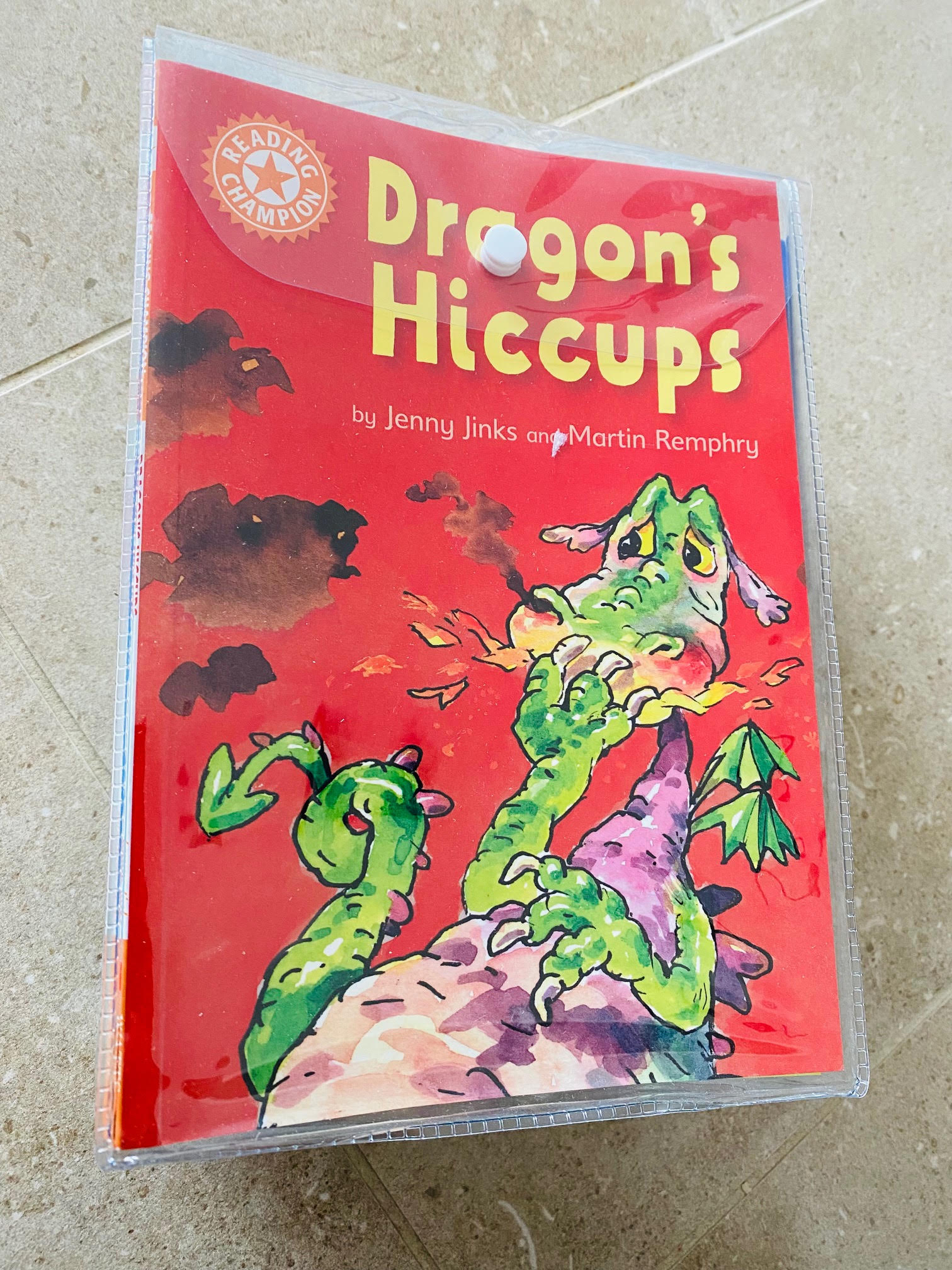
Reading Champions Developing Readers 30 Book Collection Level 6 to 10 (Series 2) – Ages 5-7 – Paperback


In this Reading Champions series, every book was carefully constructed to make for an effective means in helping kids develop important reading skills. Each book was designed to help kids mature in their reading journey step by step from the age of 5. Each book was not only designed to be informative and educational but also fun and engaging at the same time too! The themes and topics are very interesting with each book focussed on a different story making this collection always keeping kids wanting for more due to the new and unexpected storyline.

The books are colour banded, this makes sorting the level of difficulty much easier to organise. At the same time, this helps tutors and parents to monitor the progress of reading development, at the same time children will feel a sense of accomplishment as they level up. Reading Champions is one of the most effective reading series and has remained our bestselling collection on our entire website for many months, the Reading Champion series is a modern masterpiece for aiding kids readingdevelopment. Each book was designed by literacy experts to balance the books with enjoyment and education. The setting and characters are diverse, meaning readers are able to not only learn about reading grammar and language skills but also broaden their horizons in different contemporary topics to further increase the pleasure of reading. This series is a wonderful choice for the classroom and for additional homework at home, the amazing series is so well done and neatly organised together that it can make for a perfect gift for children. We have heard so many great stories and feedback from our customers and parents who noticed a massive improvement in their children’s reading skills. Reading Champion is published by Franklin Watts and will continually to remain an all time favourite for us and our customers. Be sure to check out our Home Learning and Featured category for more fantastic and useful learning tools.
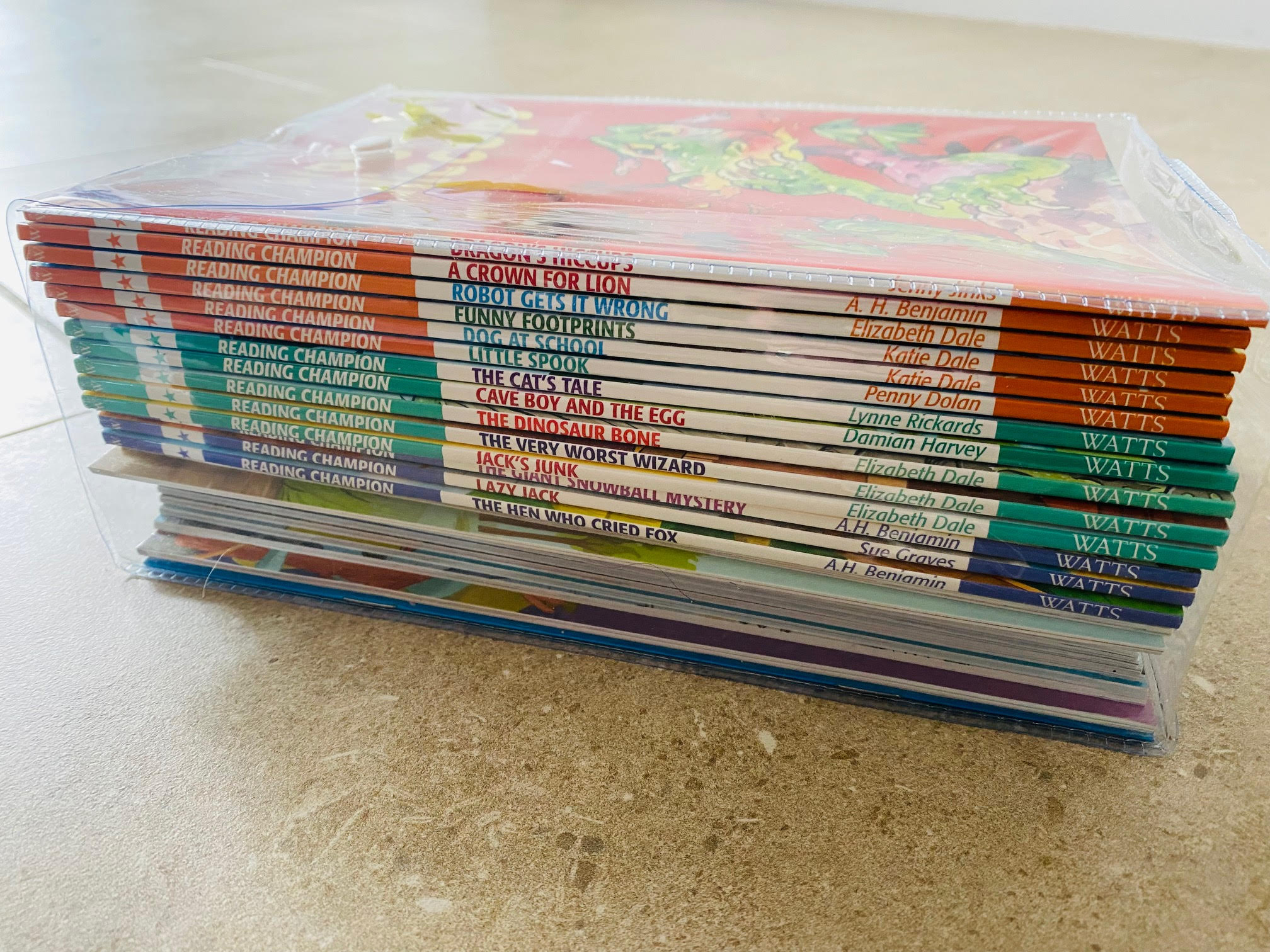
Teach children to read.

JANE CABLE REVIEWS TWO VERY SPECIAL CHRISTMAS READS


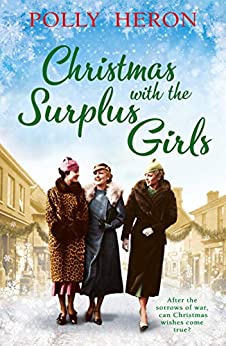
Christmas with the Surplus Girls – Polly Heron (published 7th October)

I make no secret of the fact I love Polly Heron’s books, so the moment the review copy of this one was available I requested it and dived straight in. For a start, I think the premise of this series is brilliant; the stories of the women who had expected to marry, only for the First World War to kill so many men. Their battle to make something of their lives as single women in the 1920s is seldom told and quite frankly it should be.

A saga series needs central characters and in the Surplus Girls these take the form of unmarried sisters, Prudence and Patience Hesketh, who run a business school from their home to train women in the skills they need. In this, the third book, our understanding of their position deepens and their stories move on too, for one of them at least in a quite unexpected way.

Christmas with the Surplus Girls is a wonderful blend of the comfortingly familiar (characters from previous books making appearances, the orphanage as the heart-warming seasonal setting, and, of course, the love story) with quite a few twists and turns. There are moments when nothing is quite as it seems, as well as breath-takingly written passages of true drama, but to say more would spoil it for the reader.

For the saga fan, this is the perfect Christmas read. As ever with Polly Heron’s writing there is no mawkish sentimentality, there is genuine emotion, elegantly portrayed. And even better, if you haven’t read the other Surplus Girls books there is still time to catch up with them before it’s time to pour yourself a glass of festive cheer and settle down with this beauty.


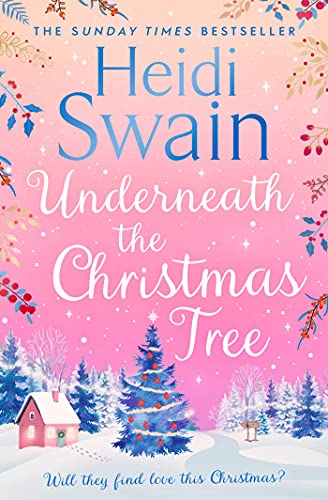
Underneath the Christmas Tree – Heidi Swain (published 28th October)

While Polly Heron puts Christmas at the climax of her book, Heidi Swain’s has Christmas stamped through it like a stick of seasonal rock. Heidi is the absolute mistress of the contemporary Christmas romantic read and I think Underneath the Christmas Tree is her best yet.

Absolute genius to set the book at a Christmas tree farm, where there is every reason for the festive feeling to start in November. Nothing about the seasonality in this book is forced; it is there as a delightful backdrop to a cast of characters so brilliantly drawn you would want to meet them at any time of year.

At the heart of the book is the love story between Liza and Ned; you know it will be fraught with difficulties but you also know a happy ending could very well be written in the stars, because that is what the romance genre does. It is just that this particular book does it so very well and it was pretty hard to see how everyone’s happy ever after could possibly work out. The world Heidi Swain creates is as rich and warm and comforting as a mug of hot chocolate with a whole ton of marshmallows and cream, but never ever as sickly, and of course its entirely calorie free.

I was delighted to receive a review copy of this book but now I have a major problem. What on earth am I going to start reading when December arrives to get me properly into the Christmas mood?


CARIADS’ CHOICE: SEPTEMBER BOOK REVIEWS

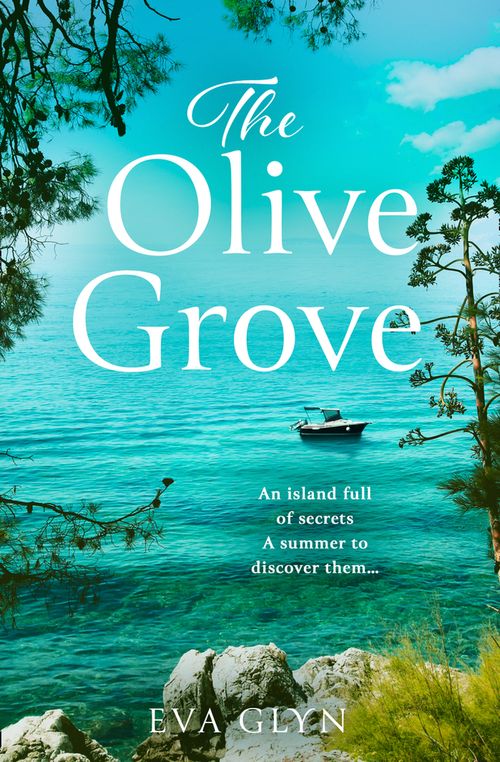
Eva Glyn’s The Olive Grove, reviewed by Kitty Wilson

The Olive Grove is also the story of Antonia, a middle-aged woman who has left an unhealthy love affair and whose daughter is of an age where she needs to become more independent. With no job, no relationship and the understanding she needs to make space for her daughter to grow, Antonia finds herself working for Damir and together the two of them help each other heal, forge a future and learn to believe in themselves.

Eva Glyn writes with empathy and compassion about Damir and her exploration of the conflict in Croatia reminds us powerfully of the atrocities of a war that was so close to home and the long-term effects war has on a community, generations after the fighting has stopped.

It is a beautiful story and Eva Glyn’s powerful prose creates the most magical setting. As I read, I was transported to another country and loved how all of my senses were stimulated by the evocative descriptive writing. A fabulous book that I am more than happy to recommend.


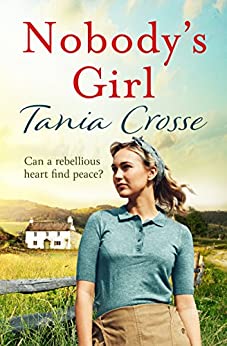
Tania Crosse’s Nobody’s Girl, reviewed by Jane Cable

I do love a saga and Tania Crosse had been recommended by so many people, when I wanted a reliable book to read I chose one of hers. I wasn’t disappointed. Nobody’s Girl charts the stories of two women in 1930s Kent, one a teenage farmer’s daughter and the other the childless wife of a well-to-do businessman. They meet in tragic circumstances and a rich and fascinating story unfolds.

Despite being true to its time the main characters are not stereotypical, and that and a strong supporting cast brings this novel alive. The surprises are not so much in what happens, but in how the characters react and grow, and I would highly recommend this book. I was also very pleased to discover there is a sequel, A Place to Call Home.


Freya Kennedy’s The Hopes and Dreams of Libby Quinn, reviewed by Carol Thomas

 There’s lots to like about this lovely story. It was an uplifting, enjoyable read. The depth of Libby’s feelings for her grandad Ernie is evident in the affection with which she recalls her memories of him and her desire to realise his dreams. The characters were all likeable, and the community setting of Ivy Lane made it a cuddle of a book. The male lead, Noah, is portrayed well, and I could feel the growing affection between him and Libby. I frequently smiled as I read and even shed a tear. Overall, it’s a great read.


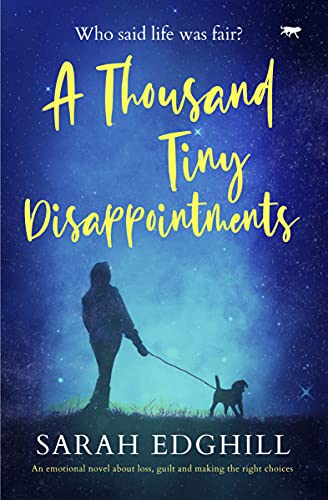
Sarah Edghill’s A Thousand Tiny Disappointments, review by Jan Baynham

A poignant and emotional read!

A Thousand Tiny Disappointments takes you on an emotional roller coaster of a journey dealing with grief, loss and a building of self-esteem. The title intrigued me and as I read further into the story, it became clear how apt it was. It’s a hard read at times; you feel for the main character, Martha, as she becomes physically and mentally exhausted by the demands put upon her. The relationship with her son, Joe, is beautifully described. The author creates authentic, multi-layered characters. The role of women as portrayed in both the characters of Martha and Alice as well as Martha’s dilemma to do the right thing are two of a number of themes explored in the novel, resulting in a thought-provoking read. I particularly liked the uplifting ending that made this a satisfying and enjoyable novel. Highly recommended.


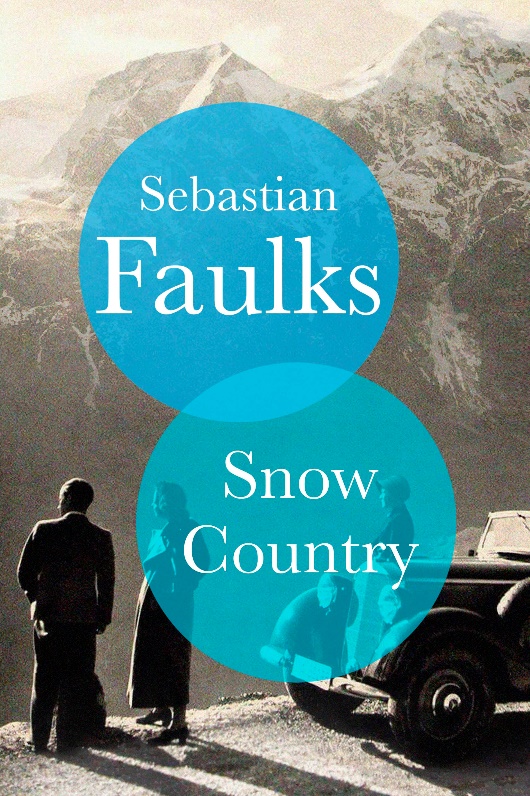
Snow Country by Sebastian Faulks Book Review

How to review Sebastian Faulks’ new novel? That is the question. Sebastian Faulk is one of the best novelists writing today and his books are eagerly awaited. Snow County is a sublime novel. Full of poetry and intelligence. I found myself re-reading pages and paragraphs as I fell in love with the book. Snow Country is the novel that Sebastian has wanted to write for ten years and I am glad he has. It is an epic, wistful,  love story, full of yearning and gorgeous atmosphere. I really felt that I was transported to 1910/20s Vienna.

Sebastian Faulk is a master storyteller and this is the perfect book to curl up with this Autumn. It is definitely one of my favourite books. Snow Country is the second book in a planned trilogy. The first was Human Traces. It can be read as a standalone novel. Get your hands on a copy now.  I will definitely be reading this again.

snow country, sebastian faulks, book review, catherine balavage

1914: Young Anton Heideck has arrived in Vienna, eager to make his name as a journalist. While working part-time as a private tutor, he encounters Delphine, a woman who mixes startling candour with deep reserve. Entranced by the light of first love, Anton feels himself blessed. Until his country declares war on hers.


1927: For Lena, life with a drunken mother in a small town has been impoverished and cold. She is convinced she can amount to nothing until a young lawyer, Rudolf Plischke, spirits her away to Vienna. But the capital proves unforgiving. Lena leaves her metropolitan dream behind to take a menial job at the snow-bound sanatorium, the Schloss Seeblick.


1933: Still struggling to come terms with the loss of so many friends on the Eastern Front, Anton, now an established writer, is commissioned by a magazine to visit the mysterious Schloss Seeblick. In this place of healing, on the banks of a silvery lake, where the depths of human suffering and the chances of redemption are explored, two people will see each other as if for the first time.


Sweeping across Europe as it recovers from one war and hides its face from the coming of another, SNOW COUNTRY is a landmark novel of exquisite yearnings, dreams of youth and the sanctity of hope. In elegant, shimmering prose, SebastianFaulks has produced a work of timeless resonance.

Snow Country is available here.

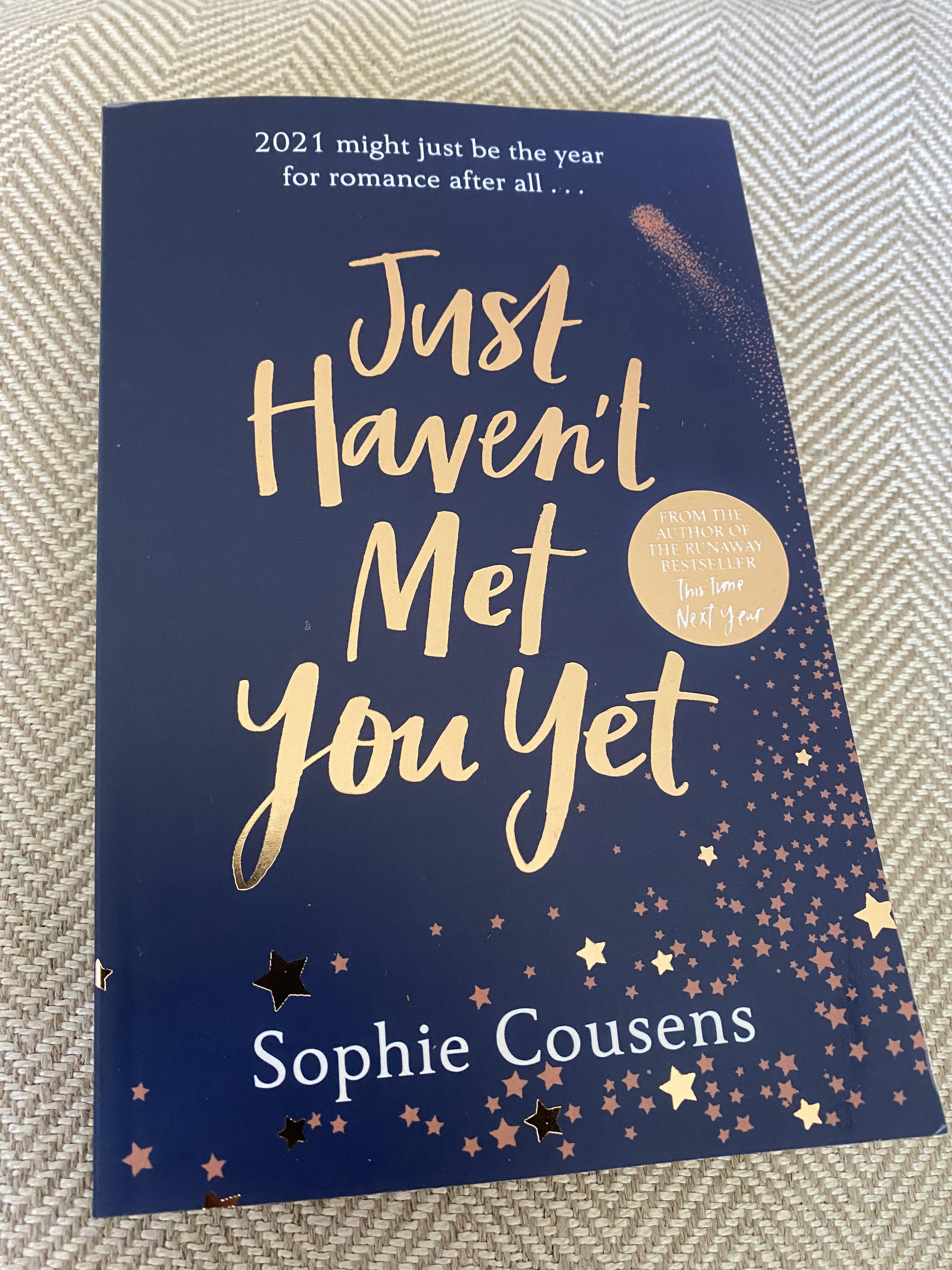
Just Haven’t Met You Yet By Sophie Cousens Book Review

Sophie Cousens’s debut novel This Time Next Year was one of 2020’s standout novels. It was a well-deserved runaway success and gave Sophie Cousens her rightful place as a writer to watch. Yes, she has done it again with Just Haven’t Met You Yet. Another blinder of a novel, it tells the story of romance-obsessed Laura and her quest to meet The One. I saw one reviewer call it “rom-com perfection” and it is hard to think of a more fitting description.

Just Haven’t Met You Yet is another corker from Cousens, you will love the characters just as much as I did. I love the Jersey setting, you really get immersed in the island. I learned so much and want to go now. Just Haven’t Met You Yet is a wonderful, clever novel. You will read it with a smile on your face. Brilliant.

just haven't met you yet, sophie cousens

Tell me the story of how you two met…

Laura has built a career out of interviewing people about their epic real life love stories.

When she picks up the wrong suitcase at the airport, Laura wonders if this could be the start of something that’s written in the stars.

From piano sheet-music to a battered copy of her favourite book, Laura finds in the bag evidence of everything she could hope for in a partner.

If Laura’s job has taught her anything it’s that when it comes to love, you can’t let opportunity pass you by. Now Laura is determined to track down the owner of the suitcase, and her own happy ending.

But what if fate has other ideas?
Just Haven’t Met You Yet is available here.

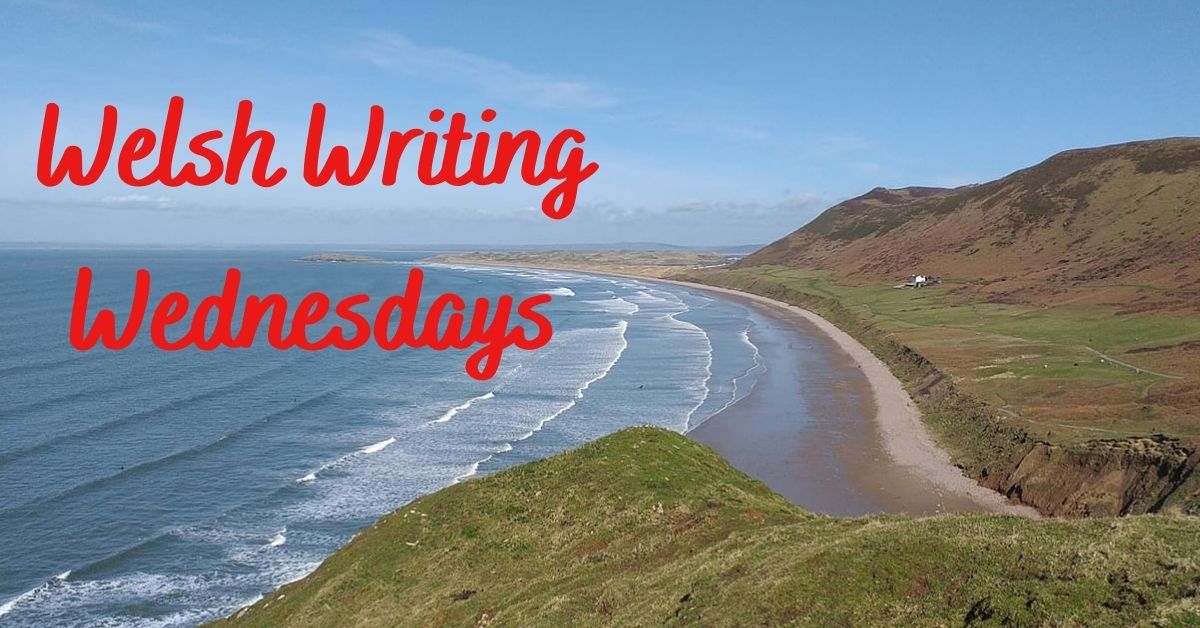
WELSH WRITING WEDNESDAYS: INTRODUCING INDEPENDENT AUTHOR ALIENORA BROWNING

Writing is, for me, like breathing: I feel oxygen-starved without it, and it has the same natural rhythms, dips and soaring highs. It is also my dominant ‘voice’ since I tend to be a listener, rather than a talker, in many situations.

I do not remember learning to write per se, but I do recall a wonderful ‘Aha!’ moment, when I was five or six, when I suddenly made the connection between the five letters which made up my nickname, its sound and the fact that it was part of me!

I wrote a play when I was eleven – and have it still, neatly written in a little blue exercise book. This was during the summer of 1969, just after my class watched the Moon Landing – and as I waited to start grammar school, having passed the 11+.

I can see that younger self, sitting in the hammock in the back garden, pen in hand, sun shining down on my hunched back, scribbling away – and feel the wave of creative excitement which lifted me up and suspended me, briefly, above the everyday world.

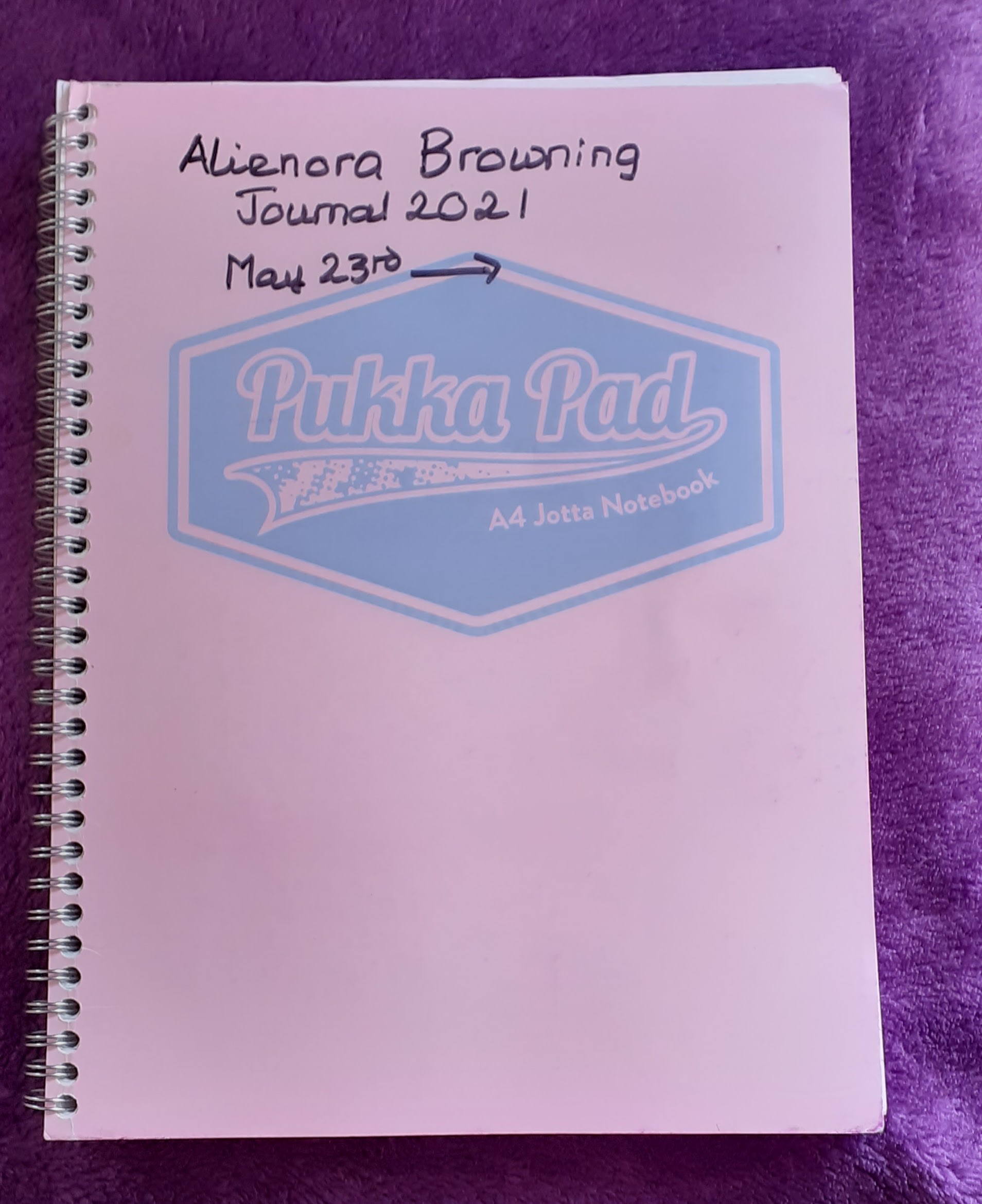
My now-nearly-fifty-year journal-writing habit started by accident (in the sense that I had never thought of such a way of expressing myself until then) in early January 1972.

Two days before my fourteenth birthday, a group of us from my school went to Glasbury, in Wales, for a fortnight of physical activity: climbing, canoeing, camping, gorge-walking and so forth. As part of the course, we were each given a pale green notebook – and asked to keep a diary account of our experiences.

I fell in love with this means of expression immediately – and, while most of the girls loathed having to do it every day, I relished the exercise and very much felt as if I had found my voice, as a girl and as a writer; in fact, so enamoured of it did I become that I ended up filling two green books!

I now have over a hundred volumes of the journal, currently stashed away in a safe space – and use it almost every day (though there are, inevitably, gaps over the years and decades), even writing in it whilst in labour and on the day my son was born!

The novel-writing came upon me towards the end of my time at Aberystwyth University – and early drafts of books won me an honourable mention, a third prize and a first prize in local South West Arts Writers in Progress awards.

Motherhood, marriage and full time teaching very much put the novel-writing side of things on the back burner – and it was only when I took early retirement in 2011 that I was able to complete previous books and write more.

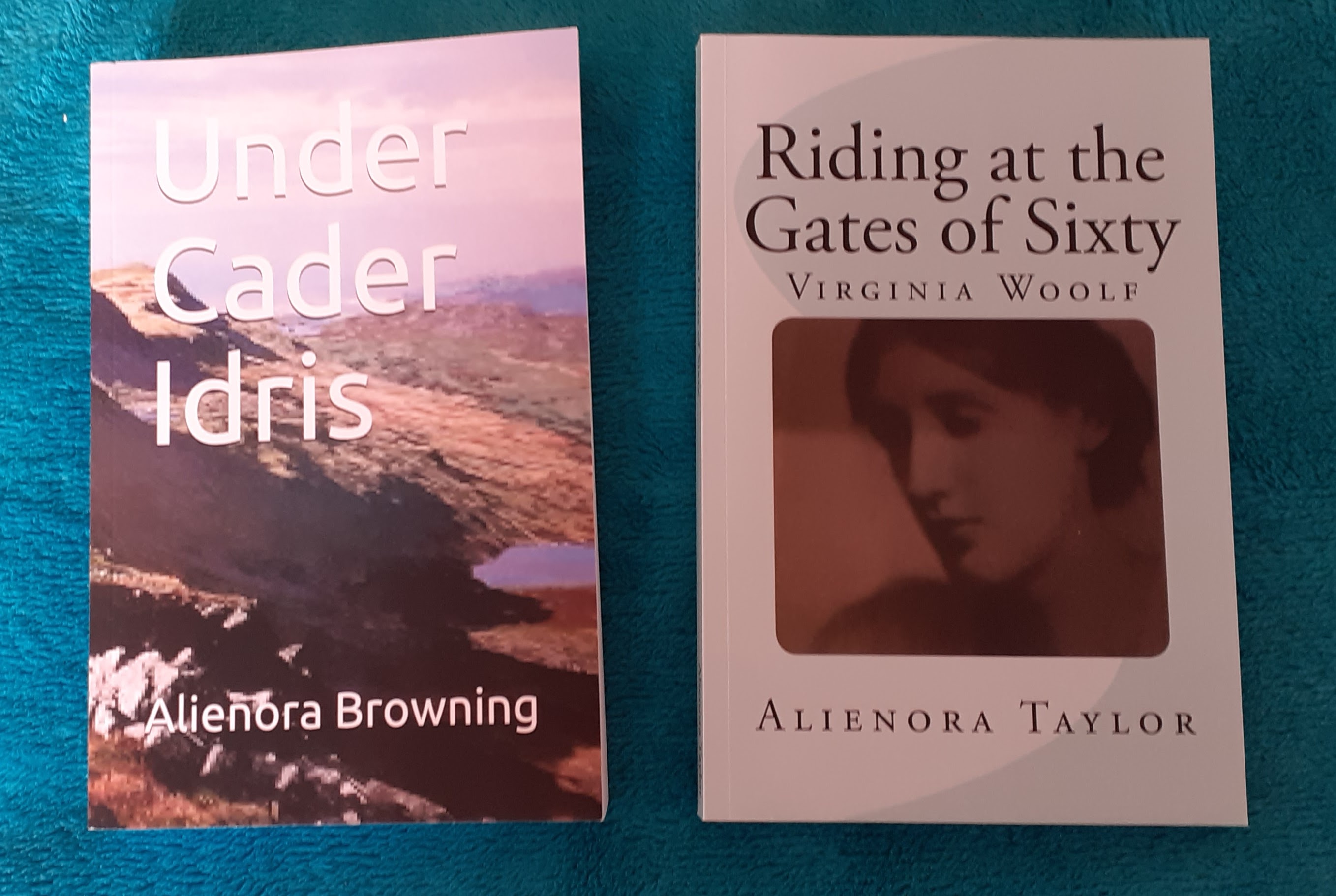
I now have seven books published via Amazon and KDP (all available as both e-books and paperbacks) – and ideas for an eighth are bubbling excitedly away in my creative cauldron.

The truth is very simple: I absolutely love writing – and that intimate, joyous connection between mind, hand, pen and paper never fails to delight and inspire me.


CARIADS’ CHOICE: AUGUST BOOK REVIEWS

Eva Glyn’s The Missing Pieces of Us, reviewed by Jan Baynham

I enjoyed ‘The Missing Pieces of Us’ immensely. Eva Glyn takes us on an emotional journey with the two main characters, Izzie and Robin. I liked the way the themes of love, grief, loss, and memory are explored from each of their POVs. The story slowly reveals how things that happened twenty years before have impacted on the two characters and made them the people they are today. The character of Claire is also developed well so that she plays a pivotal role in the journey. Central to the story is the fairy tree where people can come to make wishes and leave gifts. For me, that added element of folk-lore and magic makes the novel a little bit different.


Sandy Barker’s The Dating Game, reviewed by Kitty Wilson

I loved this perfect, feelgood summer read. The Dating Game is a gorgeous slow-burn romance with whip-smart humour threaded through every page.

Abby has been coerced into taking part on a dating show in Sydney to help inform her as she writes snarky reviews of each episode as her hilarious alter-ego, Anastasia. Whilst there, her relationship builds with the handsome producer, Jack, and I was rooting for them to get together all the way through.

This book isn’t a simple romance though, it is also a book that testifies to the strength of female friendship even when these women are pitted against each other.

Sandy Baker writes with such wit and warmth that it’s impossible not to get totally invested in this story and I frequently laughed out loud as we followed Abby and the other Does from one hideous Stag date to another. Wonderful, feelgood romcom escapism and highly recommended.


Philip Gwynne Jones’ The Venetian Game, reviewed by Evonne Wareham

If the lure of “Venice” in the title and the sumptuous cover tempt you into this book – you won’t be disappointed. Philip Gwynne Jones is Welsh, but now lives in Venice and it shows. This is the first in a series – now up to five – featuring Honorary British Consul Nathan Sutherland who has a talent for getting involved in unusual crimes that are rooted in the life of the city and which offer a real opportunity for some authentic armchair travel. Other than his consular work Nathan lives a more or less blameless life translating lawn mower manuals, frequenting the local bar and pandering to his ungrateful cat Gramsci. In this first in the series his consular role sees him reluctantly taking charge of a mysterious package which leads him into a tangled trail of forgery, theft and violence – an art scandal embedded in a deadly and longstanding feud between a pair of brothers.


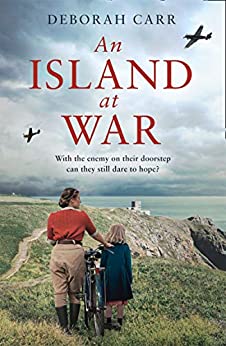
Deborah Carr’s An Island at War, reviewed by Jane Cable

The fact Deborah Carr was born and bred in Jersey shines through in this novel, which is impeccably researched, apparently with the aid of family records.

The story is one of the German occupation and starts just a few days before the troops arrived and ends as they leave. I loved the fact that the passage of time and the events in the characters’ lives seemed so natural and it allowed Estelle’s story to unfold at just the right pace. The characters are wonderful too, and I came to really care about what happened to them, particularly enjoying the sensitive portrayal of how war can change everything, even the things we think are written in stone, about ourselves and about other people.

The one thing I was unsure about was the ending, but all the same I applaud the author for it. To say anything more would spoil the book and I wouldn’t want to do that, because it’s one you should read for yourself.


EVA GLYN ON THE INSPIRATION BEHIND THE OLIVE GROVE

Sometimes an idea for a book creeps into your heart and stays there. That was how The Olive Grove started for me, with a story told by our tour guide when we were on holiday in Croatia.

We were on a small-boat cruise that began in Dubrovnik and after visiting the main islands off the Dalmatian coast and some interesting places on the mainland, ended up in Trogir. And when we were on board travelling there were talks we could listen to and to make our experience complete we wanted to lap up every one.

The war in Yugoslavia was perhaps not a particularly enticing topic when the alternative was to sit on deck, watching the glistening sea ripple alongside the boat while soaking up some sun, but I remembered hearing about the war on the news at the time and was keen to know more. And then, somewhere between the dates, whys and wherefores, our guide Darko began to tell an incredible story. His own.

I suppose I had assumed Darko was Croatian, but he is in fact Bosnian and grew up in Mostar, one of the towns that was to be worst hit by the fighting. His father was a soldier in the Yugoslav army, but when everything fractured and splintered he followed his ethnicity and joined the Croatian side, having to leave his Serbian wife (and Serbia was now the enemy) at home with their sons.

I will never forget the silence in the room at the horror of what we were told. No electricity, no water, bombs raining down, queuing for food at the community organisation – life as we would all recognise it wiped out over the course of a few days in a war that would last for years. Darko’s life moved underground to the shelters, because they were the only safe place. And he was one of the lucky ones, because living in the army housing meant the shelters were purpose-built, deep and strong.

There were moments to awful to contemplate. Darko’s mother actually disappeared, as many people did during ethnic cleansing, but he was one of the few lucky ones because she actually came back. But there were moments of light too; finding a food parcel dropped by the UN and hoping it was one with chocolate inside.

These incidents and more form the kernel of The Olive Grove, but viewed through the prism of time by my proud Croatian character Damir. Orphaned during the war he was brought up by his aunt on the beautiful island of Korcula (which we visited during our trip); brought up to forget everything about his life before he came to the island. But when she dies, the past creeps back to find him.

While Darko wears his wartime past with relative ease (which is often the case when everyone around the child is having the same experiences, when the awfulness becomes a sort of normal), fictional Damir no longer can. And help comes from a surprising quarter. A middle aged English woman called Antonia who feels she has messed up her life so badly she takes a job on the island to take stock and to heal.

And that’s what The Olive Grove is really about. It’s about healing and friendship. Like Darko’s childhood memories there is sunshine and shade. And unlike them there is the most incredibly beautiful setting.

With Darko’s help over countless Zoom meetings during lockdown I have been able to create authentic Croatian characters and culture, so as well as the initial inspiration, there are many other reasons why The Olive Grove could not have been written without him. And what’s even better, we have become friends across the miles too.