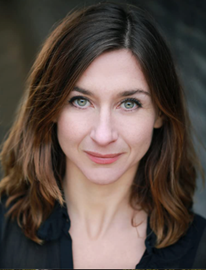
WELSH WRITING WEDNESDAYS: HELGA JENSEN ON WALES AS A SETTING FOR COMMERCIAL FICTION

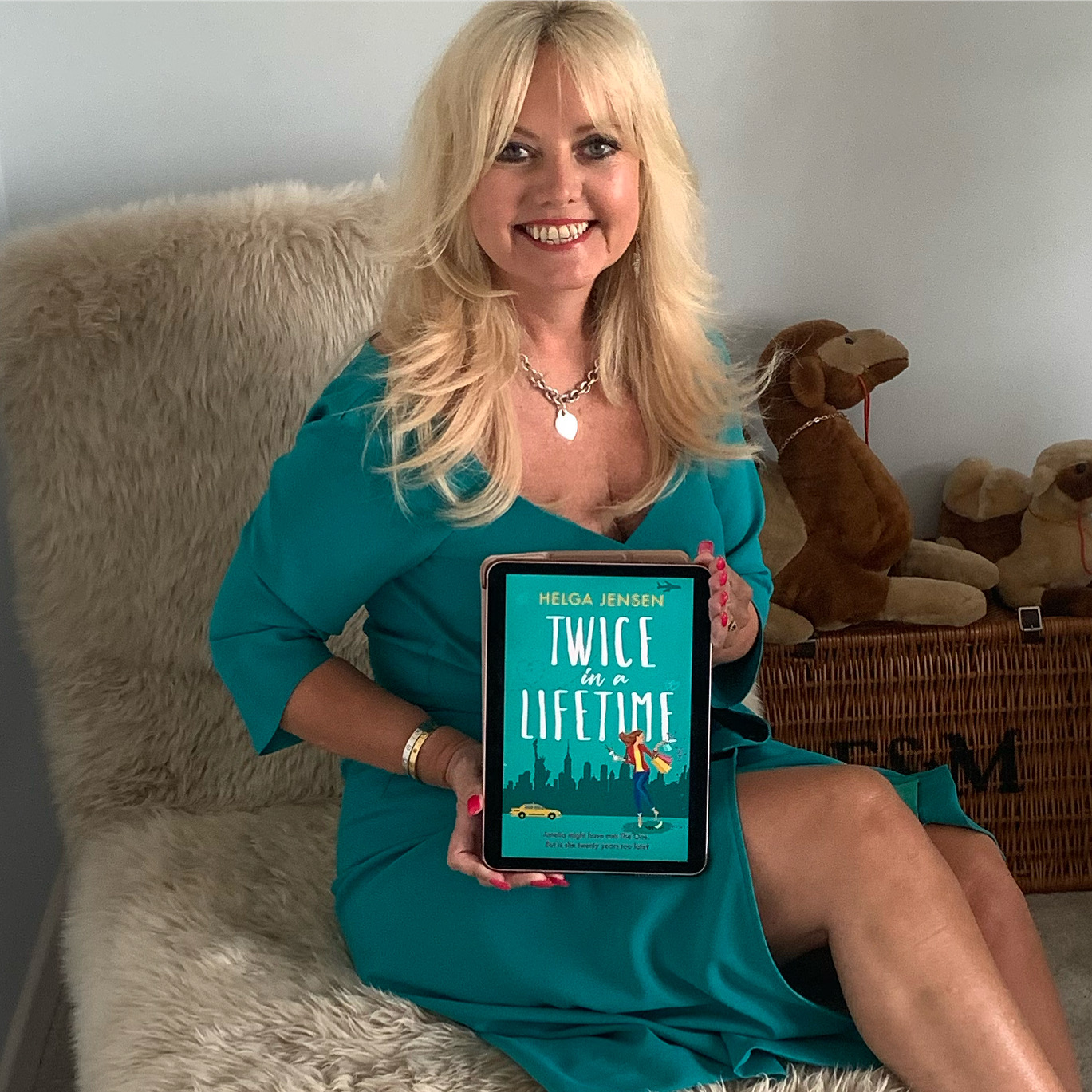
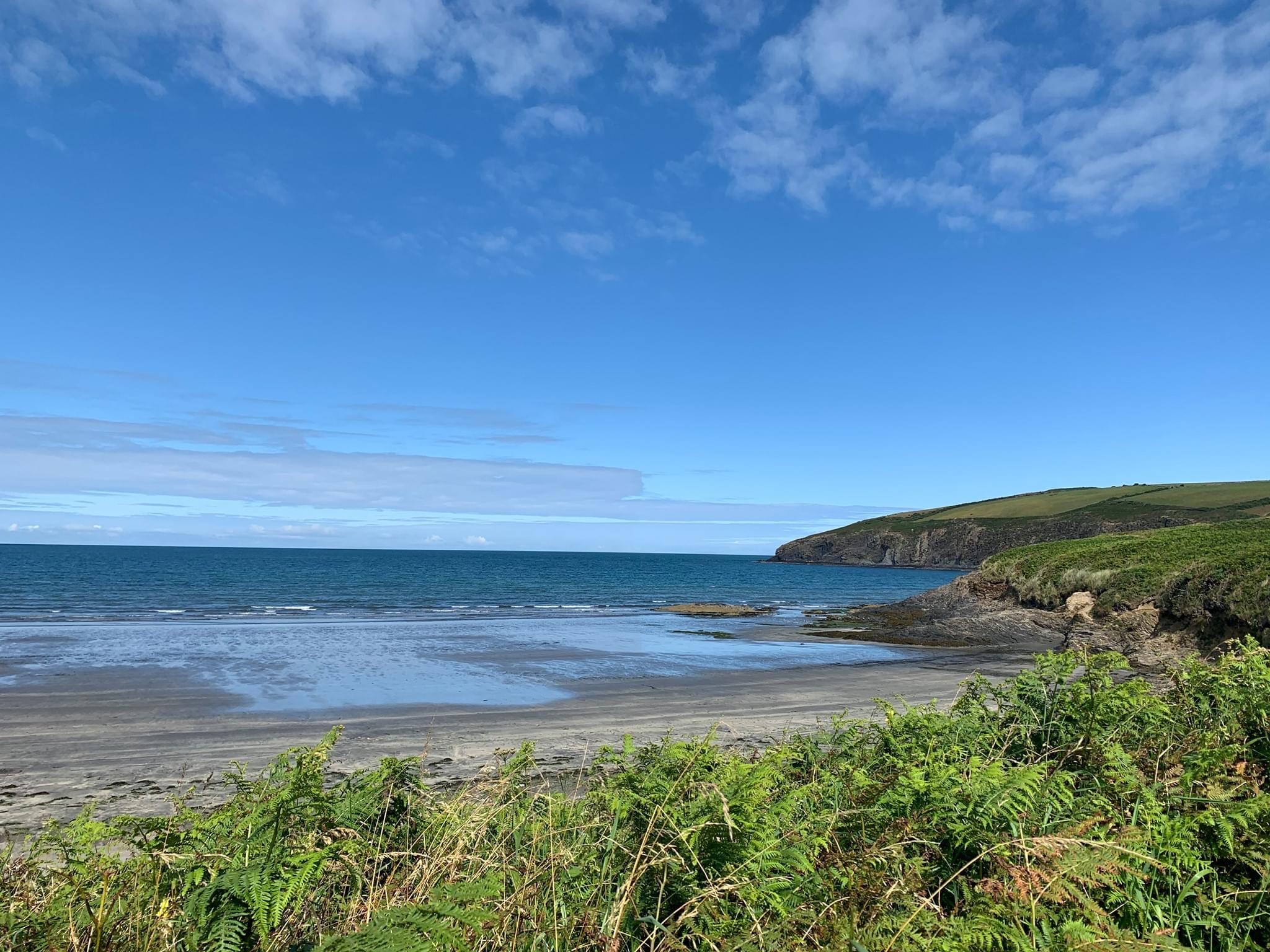
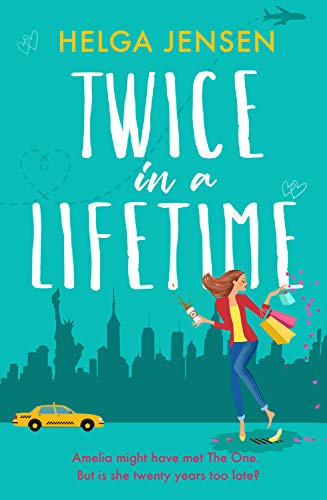
When I was planning my debut novel, Twice in a Lifetime, there was only one place for me to set it in. Having been brought up in West Wales, I was determined that any book I wrote would focus on some of the stunning areas around us. How you could possibly put those scenes into words was a completely different challenge! However, I knew that I wanted to promote Wales and see it featured in more commercial fiction. We have many women’s fiction books set in Cornwall or Ireland, so why not Wales?

When I first queried my book and sent it to agent’s I had a mixed response. Some loved the idea of a different setting, but one agent stated that perhaps Cardiff would be acceptable for my romantic comedy, but nothing further west. I was quite surprised at this. We often see Cornwall with its beautiful beaches, so why not West Wales with its similar beauty?

Whilst I was surprised at this observation, as always, when someone tells me something might not be possible, it makes me more determined. Therefore, I persevered and, although my book is also set in New York, I finally saw success with my romantic comedy that features the beautiful township of Laugharne.

After all, Laugharne is famous for many things, including the more recent television series, ‘Finding Faith,’ which has helped put it further on the map. But, of course, the association with Dylan Thomas is probably the most famous claim to fame that Laugharne has, so as Dylan spent his time in New York too, I felt a setting for a book with Laugharne and New York were the perfect marriage for my debut novel.

Since Twice in a Lifetime was released, I have had lovely messages telling me how refreshing it is to have a romantic comedy set in Wales. Naturally, I was thrilled at this feedback, as this is precisely what I set out to achieve.

I am now working on book two, which will have a combined setting of Wales and Denmark. It remains my ultimate goal to promote Wales in the world of women’s fiction. There are so many opportunities for the glorious parts to be shown to the world that I simply can’t help promote it through my books. Just as there are many prolific Irish writers, such as Maeve Binchy, with her incredible story, ‘Circle of Friends,’ I hope there will be similar best-selling commercial love stories and adventures coming out of Wales.

Trends are certainly changing, and more and more books are getting published in the mainstream from the region, but I would still like to see Wales in more romantic comedies. We have ubiquitous books traditionally set in mining villages or used in historical fiction, so I would now like to see it featured as a setting in comedies and romance. After all, welsh men can be funny and romantic when they want to be!

So, there might be many tales of Wales in books on folklore, myth and magic and eras gone by, but here’s hoping for a future filled with books set in Wales for romantic comedies and similar commercial women’s fiction.


Twitter: www.twitter.com/HelgaJensenF


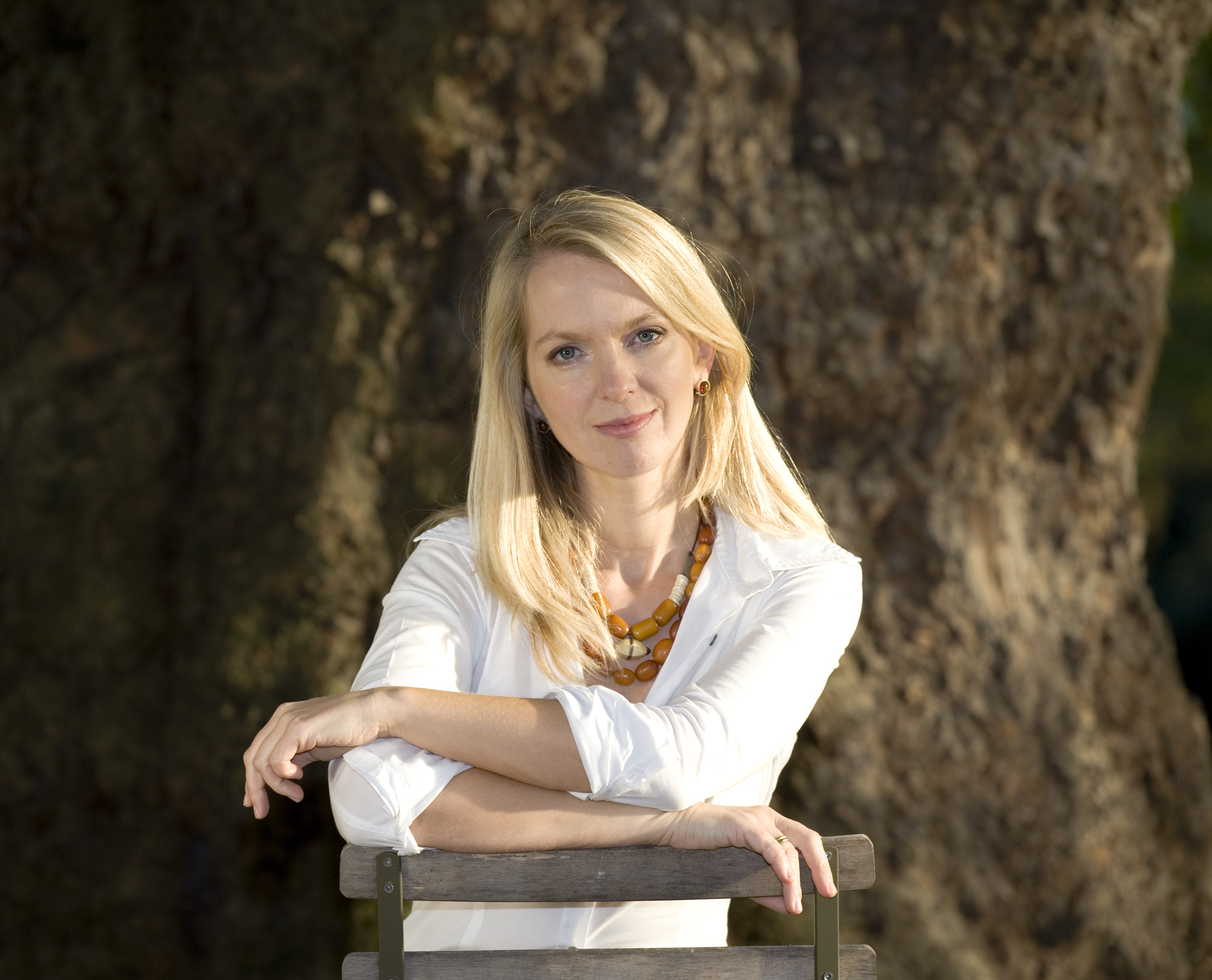
WELSH WRITING WEDNESDAYS: INTRODUCING DEBUT ROMANCE WRITER, HELGA JENSEN

As a young child, I was an avid reader, and I was very fortunate that my mother bought me many books. They were beautiful hardback copies of books such as The Waterbabies, Enid Blyton classics, and many books by Hans Christian Andersen. I particularly loved The Princess and The Pea and The Little Matchmaker. Although I grew up in West Wales, as I am half Danish, I was privileged to visit Hans Christian Andersen’s house in Denmark (Odense) many times. It was always a magical feeling when you walked out of there with a new book stamped with the official stamp from his house.

With my love of books, I dreamed of one day becoming a writer, just ‘like Enid Blyton.’ However, there were two dreams I had and being cabin crew was my other dream. Therefore, as soon as I was old enough, I applied to a few airlines for a job. My first dream came true when I successfully got a position with a great airline in Bahrain called Gulf Air. They were some of the best days of my life. I also went on to fly on private jets for royalty which was a fantastic experience.

Having had these experiences, the writer within me started to niggle away at me. So, I did a journalism course through the London School of Journalism in 2002 and started writing. My dream was to write a book, but I thought perhaps if I had published work in magazines and newspapers, it would put me in good stead to get a book published. This led to a successful career as a freelance journalist and I still write for publications in the Middle East.

As I lived in Dubai for almost 25 years, I was extremely lucky to have access to the Emirates Literary Foundation and their annual Literary Festival. At the festival, you had the opportunity to enjoy meetings with prominent writers and agents. At one of the meetings, I met a fantastic agent who encouraged me to keep writing. So, I did, and the following year, the first chapter of my debut novel was a winning entry in the Montegrappa First Fiction competition. Winning this gave me the confidence to believe that I must be doing something right. I then embarked on a BA Hons in English Literature and Creative Writing, which I finished last year. As covid hit, my degree ended a little earlier than expected, which gave me the chance to edit and polish my debut and submit it to publishers. I was delighted when I received two separate two book publishing contracts! I chose to publish with Hera Books, and my debut, Twice in a Lifetime, was released on June 23rd 2021. I am now working on a Creative Writing MA at Bath Spa University, and my second book is due out around spring next year. Both books include settings in Wales. Twice in a Lifetime is set in Laugharne and New York, and my second book will be set possibly in Llanelli and Denmark. I have a few meetings with agents coming up through the Romantic Novelists’ Association, so I am unsure what I will do next, but I still have lots of ideas bubbling away!


Follow Helga on Twitter @HelgaJensenF


Susannah Wise: My Writing Process

  • Susannah Wise: My Writing Process
      What you have written, past and present

 Like so many authors, I have always written stories, poems, and the beginnings of ‘novels’ that remained forever unfinished. As a young child these were complete with messy felt-tip illustrations and growing up, pieces of my work would appear in the school magazine each term. I’m still not sure of their merit, but Mum always thought they were great, and she obviously wasn’t biased. 

    In my late teens, I found myself in a long relationship with a playwright and screenwriter, and encouraged by him, began a regular writing practice between acting jobs: short stories, plays, more poetry than I can recall; always poetry – I have an engraved Moleskine at home full of these personal noodlings. When I die, I dread to think of my family going through them. 

     In my thirties, frustrated with the quality of scripts I was reading (I am also an actor), I began to write screenplays and comedy pilots of my own. These would garner modest amounts of interest from the powers that be at television channels, but never reached fruition and they are now consigned to my ‘oh well’ drawer.

    In truth, it was only shock, when my father was given a terminal cancer diagnosis back in 2015, that propelled me into writing seriously. I think it made me reassess what my life and what I was waiting for. I tentatively started the novel that was to become This Fragile Earth, and discovered I loved everything about the daily practice of writing: the space and time long-form prose gave me in my head, the agency I had over my characters and the world-building. I haven’t stopped writing since.

     What are you promoting now?

    This Fragile Earth is my debut, and the hardback is out on 24th June of this year. It’s a post-apocalyptic survival story about a mother, Signy, and her six-year-old son, Jed, who following a tragic event, are forced to flee near-future London and travel to the Midlands to seek out the protagonist’s mother. When they get there, however, things are far worse than they could ever have imagined. The book is a grounded science fiction thriller, with at its centre, the beating heart between the two main characters.

If you’re a fan of John Wyndham, or perhaps Emily St Mandel’s Station Eleven, this is the book for you.
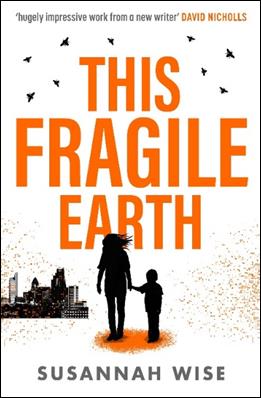
Susannah Wise: My Writing Process, my fragile earth

A bit about your process of writing, how do you do your structure, and do you plan or just write?

 I find it very hard to talk about ‘process’ when discussing art of any kind. I know some people are good at it, I’m not. I’ve written three books and for each one the process has been different. With This Fragile Earth the plot came to me quickly over the course of one night. With only a few small tweaks, I set about writing it directly from the ideas bubbling in my head. I already had a decent grounding in some of the themes in the book, although I made up almost all the ‘science’ myself. I even dreamt one of the main coding theories in there! In the course of completing it though, I did more research, attending lectures and reading books on the subject and so on. 

    My second novel, out next year, is a dark comedy about grief. When I set out writing it, I had no idea what it would be about, barring the bare bones. I had no plot, only two characters and not a clue what the ending would be. I took part in the Faber Academy novel-writing course over six months in 2018 and completed an entire first draft. I really loved the ‘pants-ing’ rather than ‘planning’ nature of this book, though it did mean rather a lot of editing once finished, of course!

    My third novel is set around some dodgy goings-on in a small village in Cumbria. Before I began, I had a plot, all the characters, and a location, and wrote out each point at the start. I did research on some elements in the book (I can’t say what they are here without giving the game away!), but the setting is a place very familiar to me, so that helped a lot. A few plot points have moved within the process of writing it, but basically, I am sticking to my initial ideas. I began during lockdown in April last year and am still going strong: I was hoping the first draft would be about 75K words, but I think it will be closer to 100K. Its completion has been hampered by home-schooling, preparing This Fragile Earth for publication, editing my second book, and the fact my partner has been away for seven months for work since January. It’s been slow-going, but I’m hoping the book is no worse for it. 

    I tend to write in the morning for two hours if I can, either at 9.30 straight after dropping my son at school, or after a walk or some sort of exercise, around 11. I find it very hard to write in the afternoon for some reason but will force myself to if I’ve been unable to complete my daily words beforehand. I’m also an actor, and auditioning and learning lines, as well as acting work itself, eats into a vast amount of writing time. Saying that, there is a lot of hanging around when one is filming, so I always take my laptop with me and use the time to catch up on my word count. It’s a brilliant and unexpected bonus and has made me far less resentful about all the ‘wasted’ hours actors endure.

Most of the time I am not filming and will write at the kitchen table (without music) or kneeling on the rug in our living room, using the coffee table as a desk. I get terrible dead feet after I stand up and will often hobble around comically for half an hour trying to eradicate the pins and needles. I have a special foam support for my wrists too, as I tend to get RSI after a long period of typing. My eyes do go a bit squiffy after a long session of intense focus. Basically, I’m falling to pieces.

What about word count?

    I tend to set myself a very achievable 500 words per day (five days a week) when I’m drafting. This will take me around an hour to an hour and a half. Then another hour perhaps of reviewing the previous day’s words. I prefer to set a low bar as I find I work better if I’m hitting my target than setting unrealistic goals, then spending the rest of the day beating myself up for my failures. This helps me stay motivated, which is important when undertaking such a vast piece of work. 

    When I’m editing a completed draft, I can easily spend three or four hours at my desk and hardly even notice where the time has gone. Even more if I have line edits back from my publisher. I once spent ten hours working on notes from my agent. I would strongly advise against this. 

What do you find hard about writing?

Ha. Well, this is a tricky one to answer, because without meaning to sound like a plonker, I really feel – for me at least – that writing is the best job in the world. I guess if I had to say a couple of things, one would be the loneliness (though ironically, this is also one of the things I love about writing). It can be a little isolating spending all day with only the people in your head for company, before going out for a walk alone. Sometimes 24 hours can pass and the only person I will have spoken to is my 11- year-old son. Love him as I do, he’s not a great dinner table conversationalist. 

The other thing I find difficult is the mental responsibility. By this I mean that like the expression ‘this book isn’t going to write itself’, the completion of any book is entirely in the hands of the author. The manuscript sits like a patient pet waiting for attention, but if there happen to be other things going on in life, it requires huge amounts of discipline and mental energy to carve out time to honour this. Some days the words fly out, some they are like sticks in a muddy dam. It’s important to know when to just close the computer and get one with something else

What do you love about writing?

What’s not to love?! I love that no one else is there making me write, it is entirely my own work, that ‘being left alone’ feeling. I love that it allows time for introspection. I gain a great sense of inner peace from its practice. On top of this, having a whole world in the palm of one’s hand is just the greatest feeling. There is huge satisfaction in putting words in order so that they have rhythm and cadence, just like music. The joy when one reads back a passage and thinks ‘hmm, that isn’t half bad,’ is like nothing else. 

More than this though, is the vast pride and sense of achievement from completing a novel, especially when one gets to see it type-set, or in its proof form, or better still the actual finished version. It is an object created outside oneself, to be held in the hands of others, taking them to new places, and will it live on long after the author is dead and gone. I still can’t quite get my head around this concept. 

This Fragile Earth by Susannah Wise is out now in hardback by Gollancz.

 

My Writing Process Ellen Alpsten

Ellen Alpsten author photo 4 (c) Andreas StirnbergWriting ‘Her-story’ –

Tell us about what you have written?
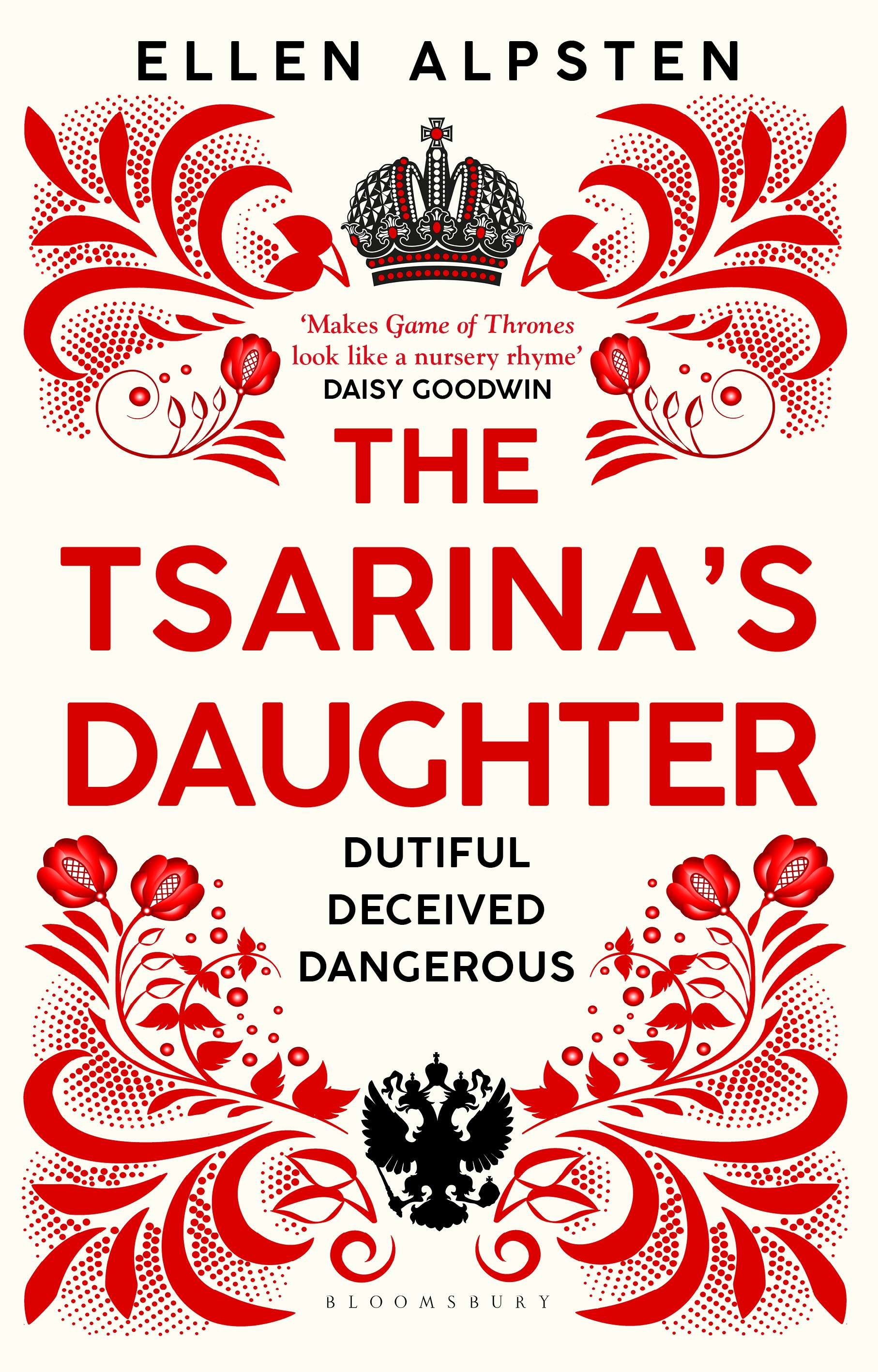
When hearing about the heroines of my novels ‘Tsarina’ and ‘The Tsarina’s Daughter’, people’s eyes pop: ‘How did you find them?’ No wonder – both belong to the family of which its own Nikita Romanov said in 1669: ‘Our men are meek as maidens, and our women wild as wolverines.’ Both books are the first ever published novels about either lady. ‘Tsarina’ Catherine I. rose from illiterate serf to first reigning Empress of Russia, while the country morphed from backward nation to modern superpower. ‘The Tsarina’s Daughter’, Elizabeth, the only surviving of Peter the Great’s fifteen children, lived the opposite of her mother: she fell from unimaginable riches to rags, before triumphantly rising from rags to Romanov.

What you are promoting now?
‘The Tsarina’s Daughter’ – the second book in a planned quartet – is published in July 2021. It was a privilege to write. Elizabeth emerges from the strict historical setting of the Petrine era – the construction of St. Petersburg, old semi-Asian Muscovy fighting the new half-European Russia – as a very modern woman. At her parents’ death, friends turned foe. Barely out of her teens, she was impoverished and isolated; even loving her was a crime that warranted capital punishment. Yet even when her path proved to be stony, Elizabeth would not surrender. She decides to take what is hers – Russia’s throne – even if it comes at a terrible price.

Tell us a bit about your process of writing.
As a student, I worked as an assistant for the Parisian bestselling author Benoite Groult. Every evening I did my own writing in my little studio, 12 sqm in the 7th arrondissement: a million words before I ever got published. Nowadays, there is no writer’s block. The Muse has to present herself at 9.30 and she better bring coffee. Working on a PC is a blessing – I am in awe when seeing Dostoevsky’s handwritten manuscripts. To finish a novel is a challenge, yet the first draft is a drop in the ocean. Editing is schizophrenic, knowing the manuscript by heart yet reading it afresh countless times. Doing our best is a duty. Readers offer us their most valuable – their time, an ever-diminishing resource.

How do you structure a book?
Mme Groult’s advice for starting and structuring a novel was invaluable: ‘The first stanza is the novel en miniature.’ Which moment sums up the story’s conflict? A life’s ups and downs so not reel the reader in. Choose characters with care – who are they, why are they there, and how do they drive the story forward?

What do you find hard about writing?
Being a writer can be a Janus-faced existence. Lonely and introspective, at publication time the cruellest of lights may be shed on your innermost thoughts and feelings. The path to success is littered with rejection – in a former life, I was either a duck or a teflon-coated pan. Getting published traditionally is artistically the hardest challenge. A painting is judged in a second, a song listened to in three minutes. But convincing someone to read your 650-page tome?

What do you love about writing?

By writing, I am living my dream: making other people dream. The freedom we live, and the alternate worlds we create, are worth any moment of self-doubt. If you doubt, you work harder. Enjoy the trip, as the goals are forever shifting – and as utterly unattainable as the most elusive of lovers.

The paperback of Tsarina is published on the 24th June and the hardback of The Tsarina’s Daughter is out on 8th July,

My Writing Process Joe Thomas

psycho, joe thomasWhat you have written, past and present

I am the author of a quartet of standalone but connected novels set in São Paulo, where I lived for ten years – Paradise City, Gringa, Playboy, and Brazilian Psycho. I have also published Bent, a historical crime novel set in Soho in the 1960’s and behind the lines in Italy during the Second World War, based on the life of war hero and notorious detective Harold ‘Tanky’ Challenor, who was in the SAS with my grandfather.

What you are promoting now

My latest novel, Brazilian Psycho, is an occult history of the city of São Paulo from 2003 – 2019, told through the lens of real-life crimes. It reveals the dark heart at the centre of the Brazilian social-democrat resurgence and the fragility and corruption of the B.R.I.C economic miracle; it documents the rise and fall of the left-wing – and the rise of the populist right.

The novel features the chaos and score-settling of the PCC drug gang rebellion over Mothers’ Day weekend, 2006; the murder of a British school headmaster and the consequent cover-up; a copycat serial killer; the secret international funding of nationwide anti-government protests; the bribes, kickbacks and shakedowns of the Mensalão and Lava Jato political corruption scandals.

psycho, joe thomas

A bit about your process of writing

I am a crime novelist interested in fiction based on fact, inspired by true stories of structural inequality. My fiction addresses the discourses of power and the specificity of crime, why something happened precisely where it did, and is an attempt to illuminate the reasons why. 

I tend to plan my novels loosely and read a good deal before beginning the writing. Once I have a defined structure, then I write in earnest. At this point, I will research, plan, and write at the same time. What this means is that I write one section of a novel and read around the section that follows. I find that this keeps everything fresh! 

In terms of structure, I tend to think in units of time, so do I want each chapter or section to cover a day, a week, six months, etc. As so much of what I write is based on reality, these units of time are often defined for me; I simply follow what happened and when! I find this both an anchor and liberating, too, in terms of having that tightly defined framework to exploit fictionally.

I want to be thought of as a writer pushing the form and writing political, meaningful, literary crime fiction. My goal is to build a body of work and I am very lucky to have the opportunity to do just that.

What about word count?

I have a very irritating habit: whenever I stop writing, or even pause for a moment, the word count has to end in either zero or five. I will tinker with sentences for this to be the case! In some ways it helps with editing; in others it is likely counter-productive!

What do you find hard about writing?

Having to overcome my own irritating habits! I used to think that I had to write first thing in the morning to produce anything of quality; since having a son – who is now twenty-months old – I am learning to use any part of the day I can. This is not always easy!

What do you love about writing?

I love that the days when I do it feel better than the days when I don’t.

Brazilian Psycho by Joe Thomas is out now in hardback by Arcadia.


My Writing Process Michael Arditti

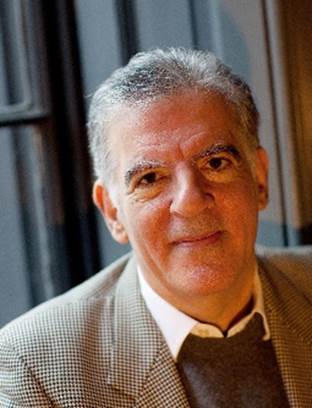
 Michael Arditti , authorWhat you have written, past and present

I am the author of eleven novels and one book of short stories, all of which have either been published or reissued by Arcadia and all of which I’m pleased (and proud) to say are currently in print.

I began my career writing plays for the radio and the stage, the former with more success than the latter, although I had a very happy experience writing The Volunteer for the National Youth Theatre in the 1980s.  Meanwhile, my play, Magda, about Magda Goebbels and Eva Braun in Hitler’s bunker, is to be produced in Latvia this autumn.  Nevertheless, I hate conflict in any form, and I learnt relatively early that such talents as I have are better suited to the reflective, discursive medium of fiction than to the more confrontational medium of drama.

What you are promoting now

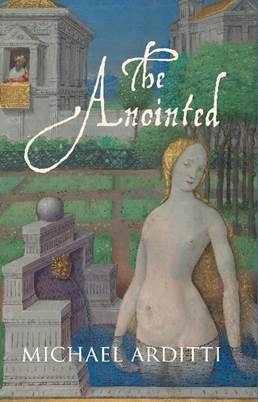
The paperback edition of The Anointed, a novel about King David, narrated by his three most significant wives.  The novel came out at the beginning of lockdown last April and, although sales were hit by the closure of bookshops, it was widely and well received, with the Evening Standard describing is as ‘#MeToo meets the Old Testament.’  That somewhat catchpenny phrase neatly sums up the book, in which three women, Michal, Abigail and Bathsheba, who are side-lined and almost totally silenced in the Bible, are given their voices and enabled to give their views of Ancient Israel’s greatest hero.

A bit about your process of writing

I am a ‘morning person’ and write from 6 or 7 am until 1 or 2 pm, with breaks for breakfast, herbal tea (and sugar-free biscuits!).   I very rarely write in the afternoons, preferring to read, listen to music or see friends.  Until last autumn, I worked as a theatre critic and spent three or four evenings a week in various auditoria.  I’m slowly adjusting to the new rhythm of life.

Like many writers, including my hero, Marcel Proust, I write in bed.  I always have done, since for me it offers the perfect mixture of freedom and constraint.  In 2001, I suffered a severe back injury, which has left me slightly disabled, so lying, propped up by pillows, with my laptop carefully positioned, is my most comfortable position.  Friends, who previously thought me self-indulgent and lazy, now think me practical and brave.  A great relief!

Do you plan or just write?

I feel a mixture of awe and envy for anyone who does things that I can’t (from swallow-diving to fixing computer glitches).  The same goes for writers who open a blank page (or a Word document) and write the first sentence of a novel, without having any idea of what the next will be.  In my own case, I need to know the arc of a novel before I can start.  Of course, the characters lead me in unexpected directions, and we all know what happens to the best-laid plans of mice and men.  But I do need to have a plan in place, to be able to deviate from it creatively.

What about word count?

I pay no attention to word counts whatsoever, either in having to complete a certain quota every day or in requiring a book to be a certain length.  Every novel is different.  My longest, Of Men and Angels, is around 180,000 words, and my shortest, The Young Pretender (about the Georgian child actor, Master Betty, which is to be published next January) is 55,000.  But the majority of my books, including The Anointed, are around 120,000 words.

How do you do your structure?

Structure is very important to me.  It should say as much about the matter of a book as the story itself does.  When I mentioned that I always had a plan before starting, I was referring to a structure rather than a plot.  For The Anointed, I worked to a readymade plot for only the second time in my career (the first was A Sea Change, which tells of the ill-fated voyage of the St Louis, a ship taking almost 1000 Jewish refugees from Hamburg to Havana in 1939).   The biblical Books of Samuel follow the course of David’s life from his gilded youth to his despotic old age, although, from my point of view, what they leave out was as important as what they put in.  

Once I resolved to tell David’s story from the women’s perspective, everything fell into place.  Michal, King Saul’s daughter, bears witness to his youth at her father’s court, his early military prowess, and his relationship with her brother, Jonathan.  Abigail, a wealthy widow who facilitates his rise to power, knows him as a skilful (and ruthless) politician, prepared to betray his countrymen to the Philistines, and usurp his father-in-law’s throne.  Bathsheba, the best known of the three (largely because her nude bathing has been a gift to painters down the centuries), encounters him in old age, raping and murdering at will and unable to control his children.  Their stories intertwine and, at times, contradict each other, reflecting the many inconsistencies in David’s character.

What do you find hard about writing?

I could say ‘everything’, although that would be too glib and not entirely true.  Ever since I published my first novel, The Celibate, in 1993, I have met people who tell me that they too would write a novel, if only they ‘had the time.’  I listen politely but wish that they had both more sensitivity and understanding of how hard a profession it is.  It requires both self-discipline and self-confidence.  It is a long, solitary process, at the end of which you can be harshly judged, both privately by friends and colleagues, and publicly by critics and readers.  It isn’t manual labour but it is often utterly draining.  If the writing is honest (as it should be), it can be very painful both for yourself and those to whom you are close.

What do you love about writing?

Once again, I could say ‘everything’ and, once again, I would have to qualify it.  To be able to create a fictional world is a gift and to have the chance to share it with readers a privilege.  Losing oneself in one’s work so that all outside concerns and distractions disappear is the most glorious sensation, bettered only by reading through one’s writing at the end of a chapter and not knowing the genesis of a particular incident or exchange but knowing that it is absolutely right.

The Anointed by Michael Arditti is out in paperback by Arcadia.


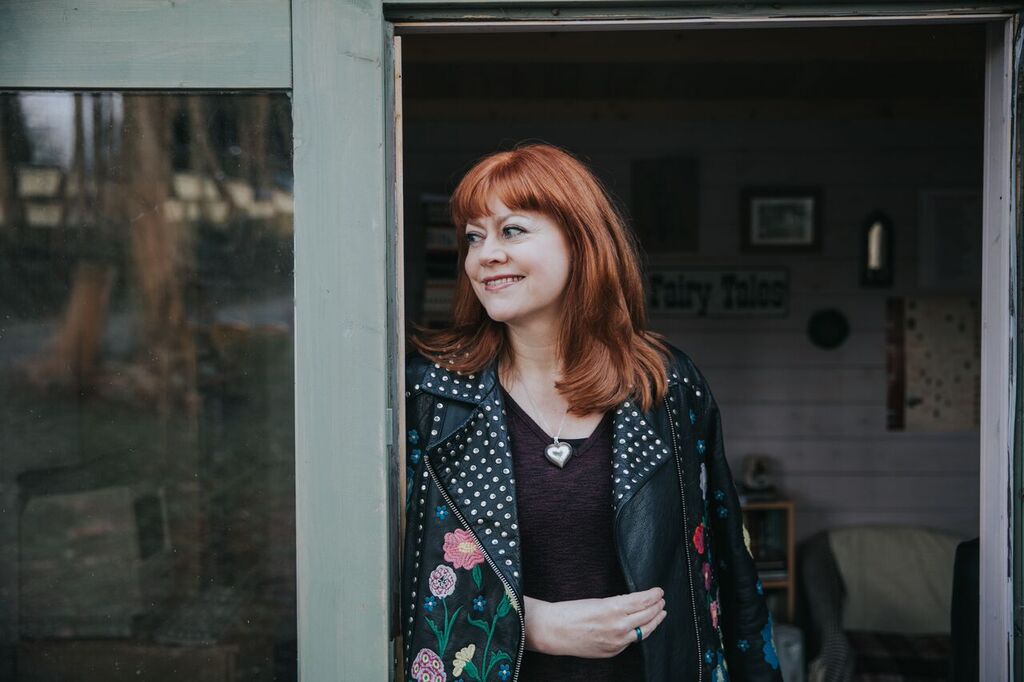
WELSH WRITING WEDNESDAYS: INTRODUCING ALEXANDRA WALSH

West Wales has always held my heart. Although I was born and brought up in London, I have family in Milford Haven and St Ishmaels – Tish to residents and locals – in Pembrokeshire. My memories of holidays here are wide, varied and full of laughter.

My writing, like my links to Wales, have been life-long. There was never any question about what I would do but, as it was necessary to earn a living while trying to fulfil my ambition of being a published author, I toyed first with the idea of acting and writing for theatre. At the age of 18, I set up and ran a touring theatre company, however, acting was not for me and a few years later I closed the company.

Instead, I moved into journalism. My first job was on a local newspaper, from here I progressed to women’s magazines, national newspapers and prestigious launches.

Yet still, I wrote fiction. For a while, I focused on scripts, both film and TV. I sold three film scripts and, for a while, worked in the British Film Industry but it’s an unpredictable and strange place. In the space of two weeks, due to the large companies who were producing my scripts suffering internal upheaval, I saw my dream vanish. My response was to run away to Pembrokeshire.

Using the last of the money from the script debacle, I took the summer off and wrote my first novel, returning to London to find a new agent and sell my masterpiece. Sadly, it didn’t happen, so it was back to freelancing as a journalist.

Things changed again, I became seriously ill, losing my ability to walk for nearly 18 months. My solace as I battled to regain my health was to write. A new manuscript, a new agent, new hope but still no publishing deal. Another book languished.

Then a new idea arrived, in a direction I had never before explored: an historical thriller.

It centred on the Tudors and as I lived not far from Hampton Court and worked near the Tower of London both places issued a siren call. On my commute to work, I researched the historical thriller, then began writing it every morning in a notebook. The Tudor link to Wales, to Pembroke, to the area I knew and loved spurred me on, even leading me to set the book in St Ishmaels.

Life changed again, resulting in a move to Milford Haven. Settled in my purpose-built writing hut, a few miles from my cousins, I took the story from my notebooks and began to polish it. A new agent made all the difference and The Marquess House Saga was born.

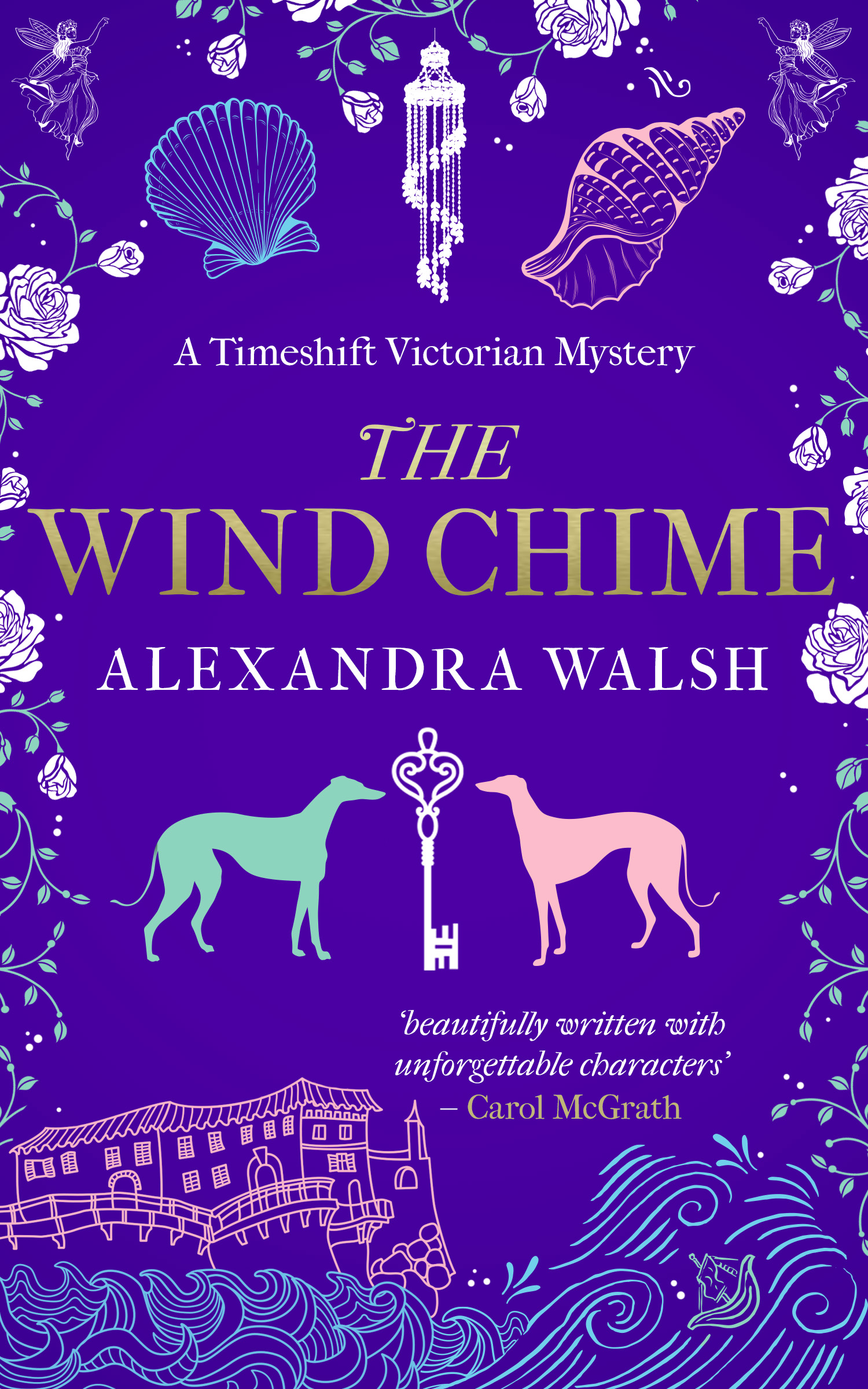
Then, one day, the first book I’d written popped back into my mind: The Wind Chime. Rethinking and restructuring it, I pitched it to my agent and publisher and suddenly, I was in the Victorian era, weaving my own family history into the story. The same happened with the book that had sustained me through my illness, The Music Makers. This, too, became a Victorian time-shift with both drawing on the Welsh countryside, the myths and folklore of Pembrokeshire and the endless backdrop of the sea.

Wales is the land of bards, story tellers, of Merlin, Druids and the Fair Folk. The landscape holds magic in its rolling hills, its jagged mountains, its sparkling streams and rivers. It was the place that always held my heart and is now the place I call home and it has helped me make my dream come true.


My Writing Process Julie Shackman.

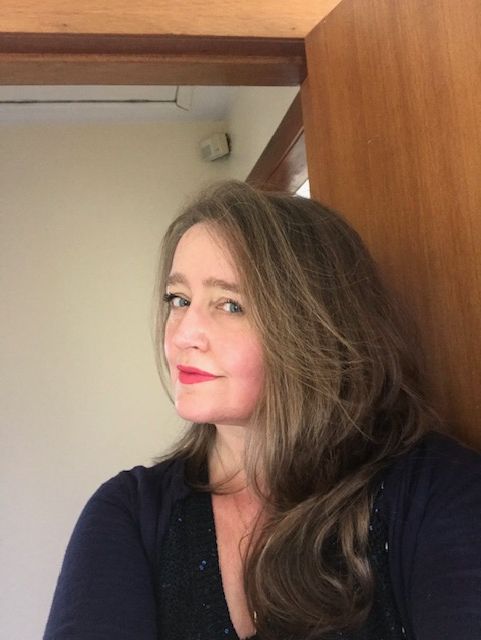
I am a writer of feel-good romance and live to the North of Glasgow with my husband and two sons. I trained as a journalist and studied Communication & Media, but I always wanted to be an author. We  adopted a Romanian rescue puppy, who we named Cooper, just before Christmas and he is often my writing companion!

What you have written, past and present. 

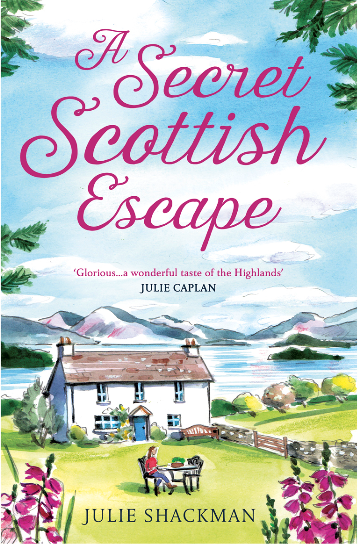
A Secret Scottish Escape is my fifth published book. My first two novels, Rock My World and Hero or Zero, were published digitally by the London based publisher Not So Noble Books and my next novel after that, A Room at the Manor, was released by Allen & Unwin. Book number four, The McKerron Castle, was released in audio by Bolinda.

Years ago, I also had two children’s picture books published in Dublin, but I always wanted to write feel-good, escapist romance and that is the genre I love to read.

What you are promoting now. 

I am promoting my latest feel-good romance, A Secret Scottish Escape, which is being released by the wonderful HarperCollins imprint One More Chapter as an ebook on 21 May and in paperback on 19 August. I can’t wait to share the tale of Layla and Rafe!

A bit about your process of writing. 

I find it very difficult to write straight onto the PC, so I tend to write long-hand in one of my many notebooks (!) and then type it up. I usually go to my favourite tea shop to write, but since lockdown, that hasn’t been possible, so I have been learning to write on the sofa, in the kitchen and whilst staring out of the window in the office! I also have to have music playing. Listening to lyrics seems to work for me as well.

Do you plan or just write?

I used to be a real panster, but have got a little bit better since  my last couple of books. I haven’t been planning everything, but write more detailed notes now on character background, settings and where the story is headed.

What about word count?

I just tend to write the first draft, get it all down and then tweak polish and edit after that. if I can write about 1k-1,500 words a day, I’m pleased with that. The most I have ever written in a day was 4,500 words. I wouldn’t like to do that too often!

How do you do your structure?

I make lots of bullet points in my notebook, referring back to themes and characters. It can look rather chaotic, but it seems to turn out ok in the end!

What do you find hard about writing?

I procrastinate alot! I also have a habit of browsing through social media or reading the paper and then have to have a stiff word with myself.

What do you love about writing? 

I love creating worlds and characters that readers can hopefully lose themselves in. I think we all really need to be able to do that – especially now!

Advice for other writers. 

Don’t ever give up. Keep going, keep writing and keep reading. A published writer is an unpublished writer who never quit.

UK Amazon Link –

https://www.amazon.co.uk/Secret-Scottish-Escape-heartwarming-women-ebook/dp/B08T5WWNDR/ref=tmm_kin_swatch_0?_encoding=UTF8&qid=&sr=

US –

https://www.amazon.com/Secret-Scottish-Escape-Julie-Shackman-ebook/dp/B08T5WWNDR/