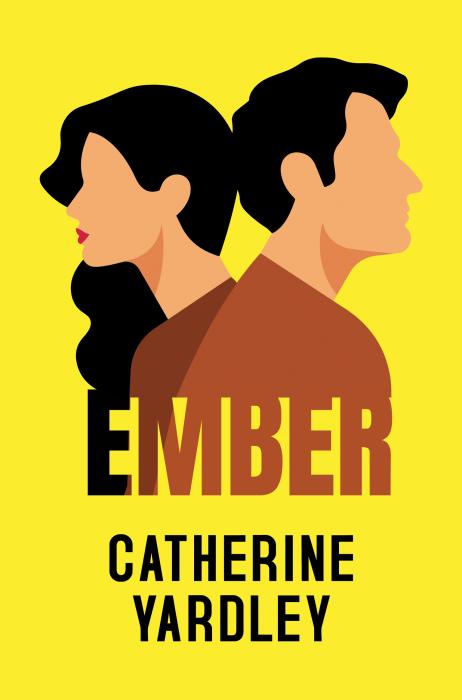
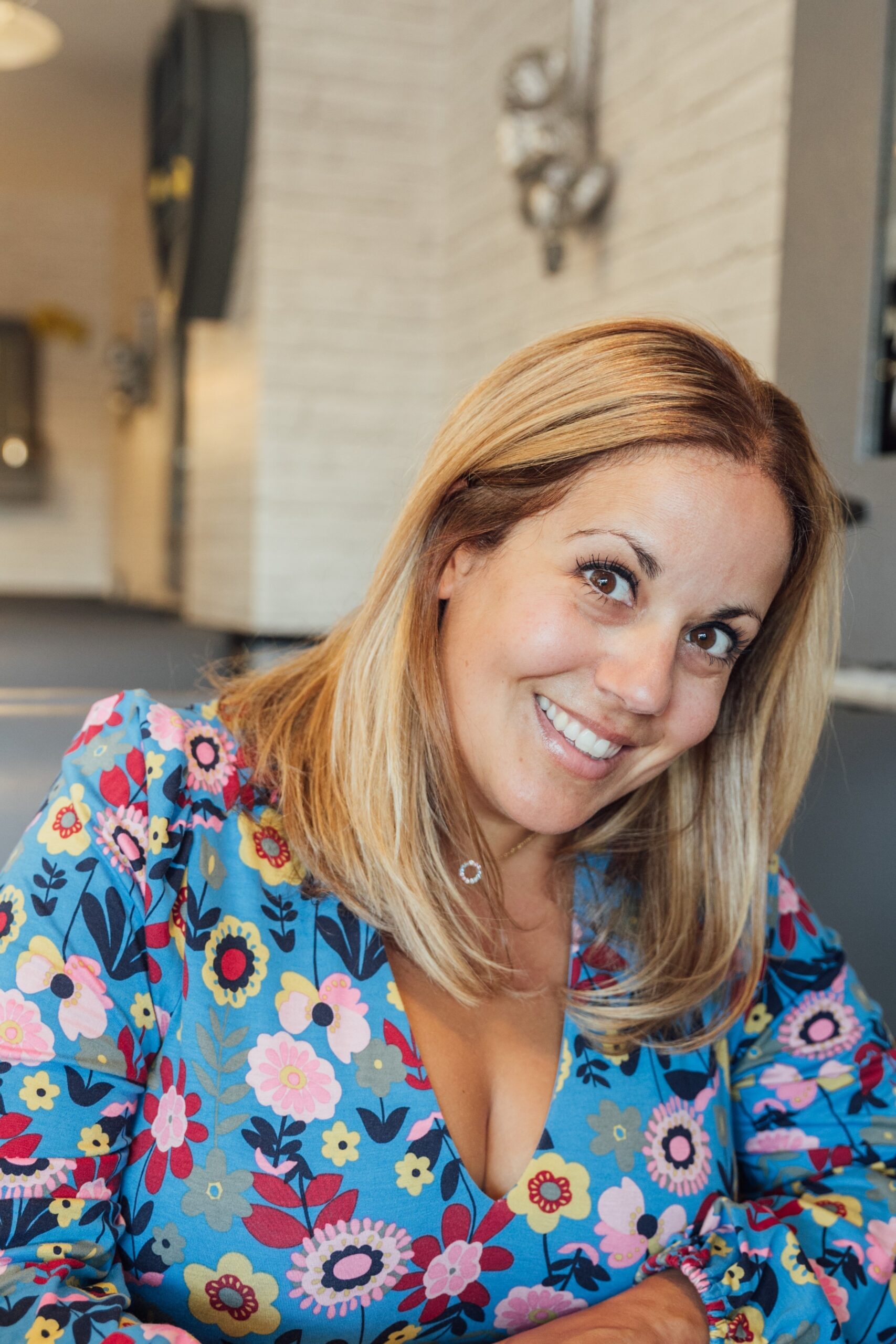
My journey to become Catherine Yardley, author, was a tough one. It’s a known fact that writing is hard. Yes, the actual writing part can be tedious, but those who decide to go the traditional route quickly find out that writing the book was the easy part. The next part is getting a literary agent. The gatekeeper to a publishing deal. Finishing a book is a huge accomplishment in itself. When so much work goes into something, you want it to pay off. I had previously written non-fiction, and when the time came to try and get it published, I bought a copy of The Writer’s and Artist’s Yearbook. It’s embarrassing to admit now, but I thought the whole get-an-agent-thing seemed exhausting. I was already exhausted from writing the bloody book! So I did a ton of research and went straight to publishers. Even more shockingly, all the editors replied, and the book went to acquisitions. Everyone was so nice and supportive. This was in 2013. You would probably get blacklisted emailing your book to editors nowadays. I first queried my first fiction book, Ember, in 2020. It was a turbulent time in everyone’s life, and I wanted something good to happen. Yet I did not think for one second I would get an agent. Every rejection was confirmation of my belief that the book wasn’t good enough. This was just my first novel, I told myself. I will write more and query them too. In fact, I had two books: Ember and Where The Light is Hottest. I didn’t think the latter was ready yet. It took me six years to write both books simultaneously. I recommend having more than one book because an agent might like your writing but not the book you are querying. So, the first time was hard, but I wasn’t expecting success. 2020 was an incredibly traumatic year for me, and I was just trying to survive. In the end, I got two full requests from agents, signed with an agent, and also got offered two book deals. All good. Ember came out in March 2022 and did well. My agent was lovely, but we ended up parting ways. Which brings me to what I want every querying writer to know: other than losing a loved one or a traumatic event, querying was the worst thing for my mental health. The constant rejections, the full requests that might lead to all of your dreams coming true. It’s a rollercoaster of pain and elation. I got a full request immediately. Then another. Still, it took an entire year for me to sign with a new agent. I was relentless. For every rejection, I send another three queries out. I want writers to understand the physical and emotional toll querying takes on you. It is a hard thing to go through. I believe querying is harder than ever. Publishing is slow at the moment, so agents are being cautious about what they take on. The day I cancelled my premium querytracker subscription (a site with all of the agents on which lets you directly submit to them) was a brilliant one. Take care of yourself. Join up with other querying writers. Take regular mental health breaks. Know that it can happen at any moment. It only takes one yes. More than anything, know that going after your dreams is hard and you are brave.
Keep at it. You will get there too. Just keep writing those books.
Last week, thanks to a fantastic article in The Atlantic, I found out that one of my books had been taken from a piracy site and used by Meta to train their AI. Seeing your book on a piracy site hurts a lot. It takes years to write a book. There is a huge amount of sacrifice. Of sleep, time spend with loves ones, and time spent with Netflix. Querying is hard and tough on your mental health. After all of that, your book can then die on submission. Then you have to write another book and start the whole thing from the beginning.
Authors do not earn a lot of money. At last count the average was seven thousand pounds a year. If you worked out the hours we put in, it is below minimum wage. You have to really love it to be an author. The highs are liking nothing on earth and the lows are crushing.
Being an author is as hard as any other career. Yes, it has a huge amount of benefits. Working from home, being creative and seeing your work out there in the world. But the work can be tedious. Reading the same book multiple times. Editing it so many times that you want to give up. Then you market it while writing your next one. It is the dream, it really is. Don’t get me wrong, but there is a lot of work involved. If you cannot afford books you can go to the library. Authors get paid when you borrow our books. There is also the Libby library app if you are not near a library. My two books, Where The Light is Hottest and Ember are both on kindle unlimited. I hate to be downer and I know how lucky I am. I feel privileged and happy every day, but please stop stealing our work. Especially if you are a trillion dollar company. We can only write if our books sell. Publishers will not give us contracts if they think we have no readers. Publishing is a business like no other. It is all about the bottom line. Thank you. Please share any comments below.
London Book Fair is a bustling and exciting place to be. A lot of deals are made. You can feel the buzz. This year they had an Author’s HQ and the SOA (Society of Authors) was also there. But is it worth it for authors? We ask Joanna Knowles, author of Lost and Found in Venice.
Was this your first time at the London Book Fair?
Yes, it was. I had contemplated going before but I had been advised that it was more of a trade event, not an event for authors to network or make contacts. However, now I was more established as an author, I saw the LBF advertised, and with tickets available specifically geared towards authors, I decided that maybe the event would be beneficial to my career. Plus, a trip to London is always a great location for inspiration and cultural enjoyment. The museums, the libraries, the natural beauty of the parks contrasting against the giant structures that seep their histories via their bricks and mortar; no wonder J.M Barrie said, “London is a swarming, restless, bustling town, always on the go.”
Why did you go?
The brochure advertised seminars that really appealed to me, and so I planned by visit by what seminars I could attend and learn from. I also noticed there would be an Authors HQ stage. With writing being a naturally solitary profession, I was excited at the prospect of meeting fellow authors and visiting the hub of a profession I am proud to be a part of.
Did you enjoy it?
The vibe was definitely humming. An eclectic mix of languages, conversations, and book genres that meant the place was thriving. And huge! Sadly, the recommended app requested to download before attending wasn’t working and so I was unable to navigate the fair with destinations in mind. It was more of a stroll to find stands that interested me. I did speak to a wonderful LBF employee at their large Helpdesk who did offer guidance based on where I wanted to visit.
The Olympia Building stands as a beauty icon in its own right. As you enter, it is the sheer amount of glass and arching ceiling that made me want to stop and just stare. However, the enormity of the site from a practical point of view was a little overwhelming without a map to guide me, and I also found little seating in the complex, observing others sitting sporadically on the floor.
I did have certain seminars that I had pencilled in to attend, noting previously that they didn’t need advance booking, but I found myself unable to enter the first seminar due to a lack of spacing and a plethora of people spilling outside of the Author HQ stage. I did try to fit in the area outside, in the hope that I might be able to hear, but I was moved on by a security guard for health and safety reasons as the walkway was beginning to get blocked.
Do you feel like it’s a good place for authors?
If a group of authors visited together, I can see the advantage of networking and comparing notes. There is a real opportunity to utilise the opportunity of having so many authors in one place.
Plus, the seminars I had chosen to attend were directed towards authors, and if there had been more space and seating available, I can see it being a great place to gain insight from a profession that is mostly remote. Plus, if an author is without an agent, then learning the valuable processes of how the industry works could be incredibly useful.
What did you gain from it?
The people I did speak to are very friendly, agreeable, and everyone is clearly passionate about the industry. I felt energised just from being there and being in the presence of the giants of publishing. I did visit my own publishing house and could see the energy and excitement that goes into each meeting with attendees.
It was also fascinating to be a part of something that is industry renowned around the world. To know that deals were happening under the same roof and that potentially, the next bestseller was being discovered over coffee, or the newest trend was being discussed was exciting. Equally, to see the various stalls evidence the creativity, passion, and effort that goes into the written word was just a joy to be around. Particular highlights include theHatchette UK stand, the Audible stand, Wordsworth Editions Ltd and The British Library stand.
As an author, what would you like to see more of at LBF?
Networking opportunities that are both free, assessable and insightful for authors that are navigating their own position in the industry. To be able to pre-book onto seminars so that the itinerary is set, and a place is guaranteed. This would avoid the over-crowding and limited access that I encountered on the day.
The queues for refreshments were long; so perhaps more catering would help with keeping people hydrated and provide the valuable seating that the 2025 LBF lacked. Also, a potential opportunity to purchase goods on display (which I appreciate would be limited in space and volume), but would offer great marketing potential rather than just scanning a barcode and being sent a summary of activity after the event.
Do you recommend other author goes?
Not unless recommended by their editor/agent to do so. There are limited opportunities for authors as the fair stands now; but I do feel there is huge potential to make the event more author friendly and desirable to all.
Joanna Knowles –
Author, Writer, Prolific Reader, Lover of Cake.
Joanna lives in the south of England with her family, in a house with far too many books, and a cat who often ignores her. She hates to fly but loves to travel; she prefers paperbacks to eBooks, and she adores American sitcoms.
Alongside her writing, she has a love of movies, eating out, and socialising with her friends. Her family are her world and her husband is the love of her life. She loves to read. Anything. Shampoo bottles, magazines, current affairs, 19th century literature; and she has a particular penchant for a pretty book cover. She has completed both a BA(Hons) in English Literature and a master’s degree in creative writing, all while her children were little. Her biggest complement would be to be called a geek. Her love of literature comes from a young age, when seated cross-legged on the classroom floor, reading book after book in the book corner.
These days, she can often be found scouring the internet for her next book destination, failing miserably at the daily crossword, and writing her next novel sitting absolutely anywhere, but at her desk.
Lost and Found in Venice is Joanna’s second published novel with Orion Fiction. Her debut, Love is in the Air, was published in November 2023. She is currently working on her third novel which takes place at the top of a volcano.
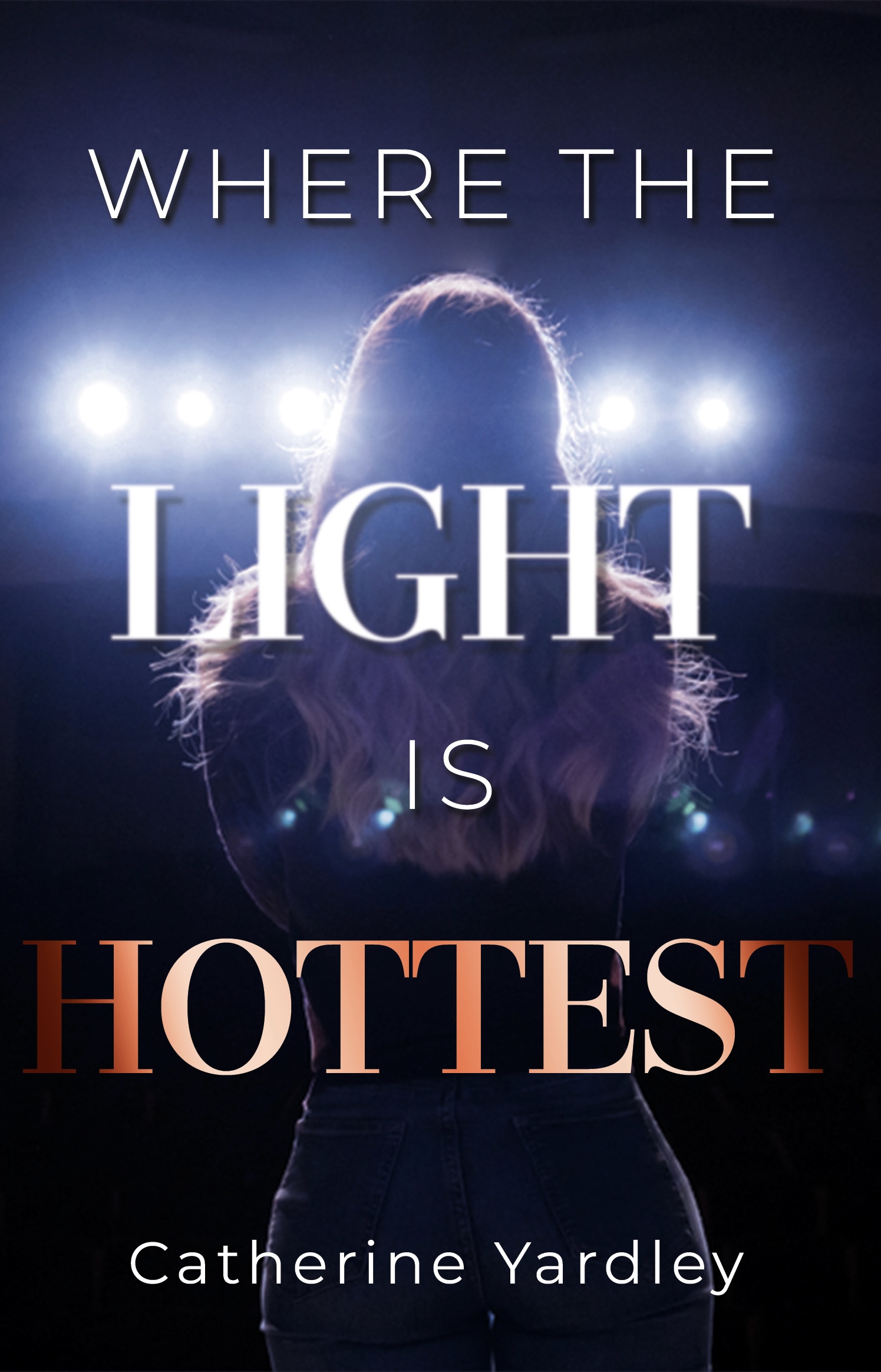
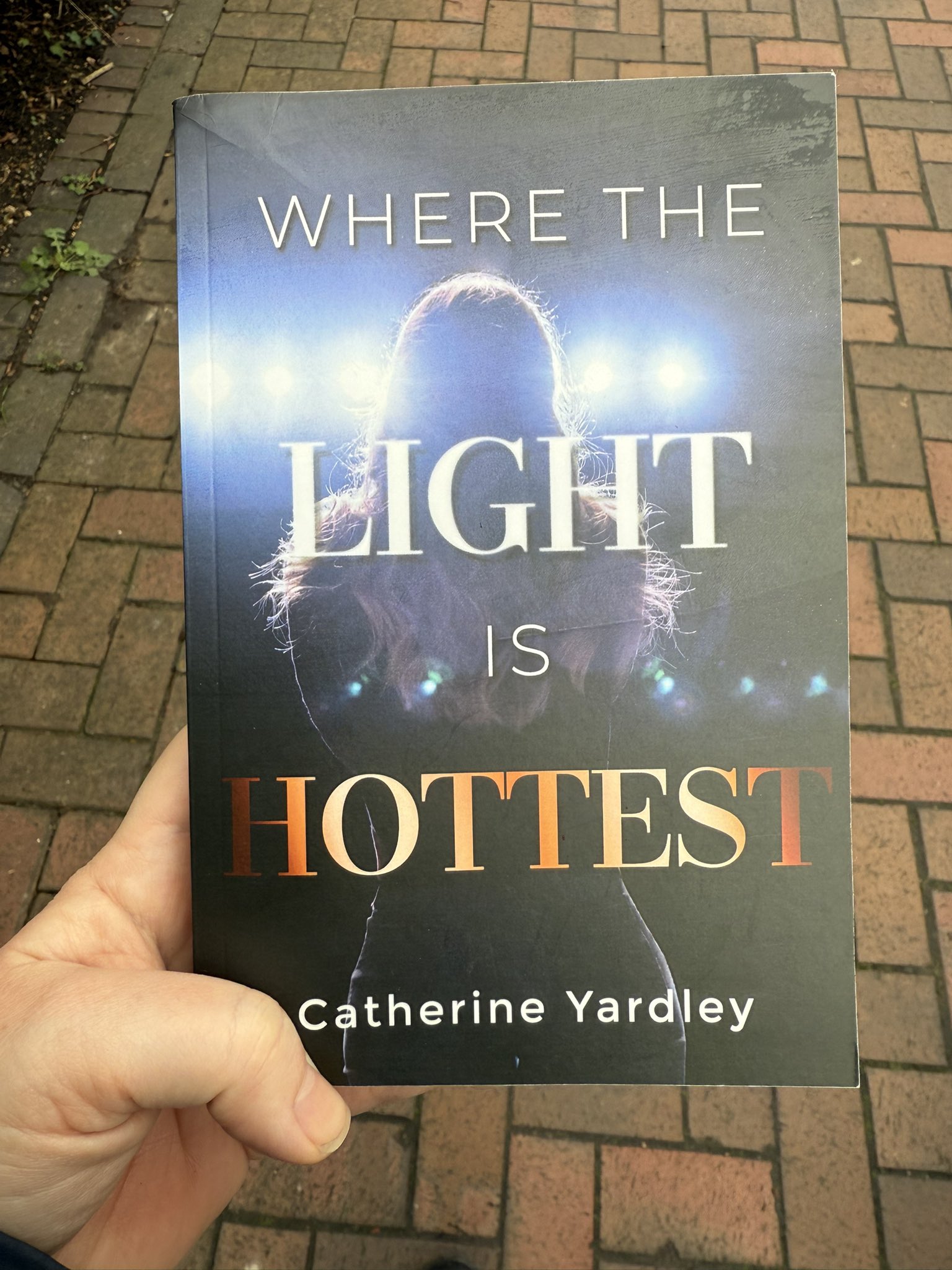
At time of writing, my book, Where The Light is Hottest, came out yesterday. It has been a long time coming. It took me a long time to figure out how to write a good book. Writing a book is hard, but one that is readable? Really hard. Anyone who is trying to do that now, keep at it. You will get there in the end.
When you are lucky enough to become a writer the amount of time you spend writing can go down. I am busy marketing and doing publicity for the book. I am also on TikTok, Instagram, Threads, X, YouTube, Facebook and Bluesky. Phew! Then there are interviews, podcasts and articles to write for various publications.
While being an author is a lot of work I can say that it never feels like work. I love what I do. I love writing and I also love meeting people. The writing and book community are amazing.
My publisher is busy printing more copies of my book as they ran out of stock. There are only eleven copies left on Amazon. It is also available on kindle unlimited and on ebook. The blurb is below.
Natasha Jones has everything – a successful acting career, an Oscar, a wonderful husband and beautiful kids. But what does she have to go through to get there? From humble beginnings in a small town, Natasha’s path to stardom is paved with setbacks, heartaches and moments of doubt.
In the glittering world of fame and fortune, where dreams are spun from starlight and ambition fuels the relentless pursuit of success, one woman’s journey stands as a testament to the resilience of the human spirit. Beneath the facade of glamour lies a story of unwavering determination and unyielding courage.
Where the Light is the Hottest is a gripping tale of ambition, perseverance and the enduring power of hope. Through Natasha’s journey, we are reminded that the road to success is rarely smooth, but for those who dare to chase their dreams, the rewards are beyond measure.
Yes I did. I began writing as a five-year-old with my Petite Children’s Typewriter and throughout my childhood wrote self-illustrated pony stories. I love horses, so wanting to become a writer was mixed up with my other longing to work with horses. I guess writing pony stories nicely mixed the two. And I did go on to work with horses – on a Thoroughbred stud, riding racehorses (when I was young and thin) and then in a riding school. After I married a farmer I even ran my own riding school for a while, interspersing that with writing.
What books did you read growing up?
Haha! Pony books, of course. But also pretty much anything. I loved the Laura Ingalls Wilder books as a child, and Alan Garner’s. My dad used to take my sister and me to the local library once a week and I read my way through the entire children’s section. I particularly loved their good selection on myths and legends of various cultures. As I got a little older my tastes matured, and I read all of Georgette Heyer’s novels, all of Dick Francis’s, plus authors like Mary Stewart, Jerome K Jerome, and Tolkien, plus I’m proud to say all of War and Peace. You name it, I read it.
What was the idea behind The Sham Engagement?
I was asked to write a Regency era novel set in London, with balls for the heroine to attend. I have Asperger’s Syndrome so balls are not my cup of tea. I decided it would be nice to write a heroine who felt the same. So I made Elenora autistic in the days long before it was even thought of. This reflected my youth as I didn’t know I was autistic until my sons were diagnosed and my childhood and teenage years were difficult. On the other hand, that’s probably why I read so much.
You also wrote the Guinevere series. Do you think you will write more?
If you read the Guinevere series you’ll know I can’t write any more books for that. It has the sort of ending that doesn’t suggest any more. However, I am at present working on a prequel. I haven’t quite decided if it should be a genuine prequel or a total standalone series not connected to the first. I loved my Merlin so much (and so did my editor) that I wanted to write his story, so that’s what I’m doing. King Arthur having been my Aspie obsession since childhood, I don’t actually have to do much in the way of research. I’ve been doing that for the last fifty plus years.
Can you tell us about your publishing journey?
Long and slow! I think I must have had over a hundred refusals before I won the Dragonblade Write Stuff competition in 2021 and a three-book deal. A long time ago (1983), pre-children etc, I had a short story published in Pony magazine, and only this morning someone who specialises in republishing old pony stories and has back copies of Pony sent me a scan of my story. I’d long ago lost my own copy, you see. That was an exciting moment for me, and the story wasn’t as bad as I thought it was going to be. I also had an article on living in France published in Smallholder magazine, but those two were my only successes until that win in 2021. Since then I’ve won a few prizes for short stories, and one of mine that was shortlisted for the Bedford Prize is in their 2024 anthology.
What’s your writing routine?
I write every single day unless we’re going out for some reason. I start at breakfast time and keep going through the day with a few breaks here and there. I have to write as much as I can because I can be rudely interrupted by random vertigo attacks which render me unable to even stand up without being overcome with dizziness. It’s horrible, and I definitely can’t write while that’s happening. So when I’m able, I’m writing all day long.
I do intersperse writing with other things so I don’t get stale. At the moment I’m teaching myself Ancient Greek, so spend maybe up to an hour a day on that. As I’m getting older I decided it might be a good idea for my cognitive reserve. Plus I love it. I’ve already taught myself Latin, which is very useful.
Who are your favourite authors and books?
I love Stephen King, Harlen Coben and John Grisham, also Nicci French, because I’m very fond of a thriller. I just reread Shogun and loved that. I think I could probably say that my favourite author is usually the one I’m reading at the moment. I’ll read most genres if they’re well written and can’t abide books that aren’t. Life is too short to read badly written books so I DNF them. As I tend to buy my books on Bookbub for my kindle, I do get a few that I just bin.
What’s your favourite thing about being a writer?
Being my own boss, being able to write whenever I like, being able to write whatever I like. Living in a world I’ve created myself, seeing it unfold in front of me in technicolour. Letting my imagination run wild and free. By the way, the worst thing is doing the publicity. Hands down. So difficult.
Your first six books were a retelling of the Arthurian legend. Can you tell us how you approached them?
I’m a discovery writer (so much nicer than saying I’m a pantser) so I just sat down and wrote. I don’t plan at all, although, saying that, I had a vague structure of Arthurian legend to follow. And I knew as soon as I began book one where book six was going to end, just not how I’d get there nor how many books there would be. Because I’ve researched the Arthurian period for so long it’s as real to me as my own world, so it was easy to sit and write what it’s like as my characters move through it. Very little research was required, although every so often I had to look up what their underwear was like or what did they use for a baby’s nappy. That was fun. Rabbit skins, by the way, for the latter, only my research didn’t specify if that was fur side in or out. Think of having to clean the fur side!
What’s next?
The book, or series, about Merlin. He has a nice selection of legends I can draw on, some of which were mentioned in the Guinevere series, so I have a vague structure for that as well. Right now I’m about 27,000 words in and he’s just a boy. I write very quickly so should have the first draft done by mid-March. And I love doing revisions. Someone once suggested that I am a planner in a way, and that my first draft is my incredibly detailed plan. Maybe they’re right.
I also have some ideas for some more Regency era books. Just waiting to hear if they’ve been approved. I might end up simultaneously writing two books which I’ve never tried before. It’ll give me time to let one rest while I work on the other. Always a good idea. I don’t like to be without some kind of writing to do. I think I’d be lost without it.
Your debut, The Cuckoo Sister, was a top 10 bestseller. Did you expect it to be so successful?
I came to publishing with my eyes fairly wide open, due to having both worked in film and TV (which has crossovers in terms of how it works) and then at Cambridge Literary Festival as the events coordinator. I knew nothing was certain with publishing so the top ten listing for The Cuckoo Sister was amazing! Obviously I wanted it to be a success and had dreamed about it, but making the top ten was fantastic!
You are known for tackling brave subjects and writing complex characters. How do you come up with your characters? Where do you get your ideas?
I read a lot-of everything. From books to magazines, to online forums, chat groups, newspaper articles. and often snippets of ideas or characters will come from these. Everyday people in extraordinary circumstances is what I like to write about and so inspiration for this can come from all sorts of places. I observe people, I listen into conversations (much to my daughters’ embarrassment!) when out and about and it all slots into the jigsaw when I’m putting together an idea. I’m like a magpie, stealing shiny things!
What was your publishing journey like?
It was strange because it happened during Covid. I had just started approaching agents in March 2020, having been longlisted for the Lucy Cavendish Fiction Prize and then my plans to focus on that got somewhat waylaid! I hadn’t sent The Cuckoo Sister to many, when my now agent, Marianne Gunn O’ Connor, responded and wanted to develop the book with me. I liked how she worked and her vision for the book so we worked on various edits before sending it out. I was on submission for about six months and I wrote The Silent Friend at that time as a way to keep sane! Boldwood then picked up both and offered me a three book deal. So it was quiet and fairly uneventful!
Describe your writing routine.
I recently moved to full time writing after juggling working for Cambridge Literary Festival as well as writing and parenting, so now my routine is a little less harried! I work from home and start the day turning the kitchen/diner back into my office! Then I usually work on admin and social media while I turn my brain from mum to writer. I then work from mid-morning to the school run on whatever stage I’m at. At the moment it’s the first draft stage for book five, so I’m aiming for 1000-2000 words a day. Once the children are home I might be able to do a little more work, or it’s back into family life.
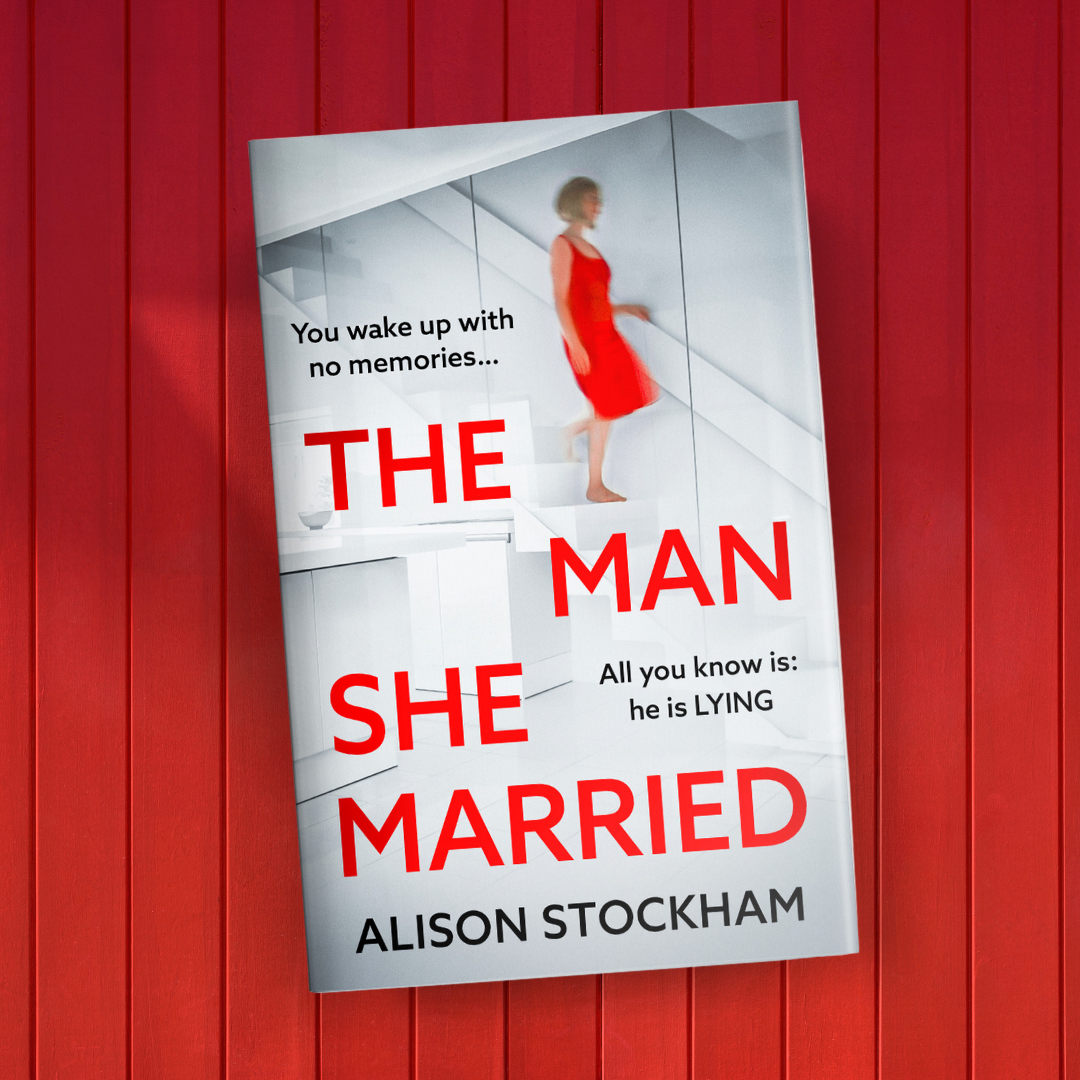
Your fourth book, The Man She Married, is out now. What is it about?
The Man She Married is about Beth, who wakes up after a car accident with 5 years of memories missing. She doesn’t remember leaving Australia nor meeting or marrying Rob, the man at her bedside who everyone says is her husband. She goes home to recover but cannot shift the feeling that something isn’t right and that she ought not to trust Rob. But-with her own mind so unreliable, can she trust herself? The book is about strength in adversity and the power to start over again.
Does writing get easier the more books you publish?
Yes and no. The worry of a first draft can be alleviated by knowing that you’ve done it before so you can do it again, and skills and techniques that you’ve learned as you’ve developed as a writer make it easier to some degree. Yet each new book is a new idea, new characters, a new plot and developing these and bringing them to life in a way that readers will connect with, is a new unchartered challenge every time.
What is your favourite thing about being an author?
I love that I get to create all these stories in my head and then share then with the world. I wanted to be a writer from a young age so the fact that I get to do this for a living is still amazing to me!
And your thing you dislike?
The required self-promotion! I am too British, and I find it difficult to overcome the cringe factor!
What books have you read that you love?
Too many to list but the latest advance copies that I’ve loved include The Rush by Beth Lewis, set in the Canadian gold rush of the late 1800s and 59 Minutes by Holly Seddon which is set in the UK when a alarm is sent that a catastrophic nuclear strike is due in 59 minutes. We follow the main characters as they decide what to do with that time. Both brilliant, both out this summer.
What’s next?
I am working on book five for Boldwood, which is about the intensity of female friendship and what happens when it goes wrong.
I think so. I used to write short stories about my childhood pet cats as superheroes. I didn’t think too much of it until I was tasked with writing a short story for my GCSE coursework. My English teacher told me I should be a writer, and something clicked in my brain. That’s when I knew. After completing my creative writing degree, I attempted to write several children’s fantasy stories before I realised that takes a certain kind of brain – one which I don’t possess! It wasn’t until I picked up Jane Casey’s The Missing, I thought yes! Maybe I could do this. And the more crime fiction I read, the more certain I became that it was what I wanted to do.
What books did you read growing up?
I was an Enid Blyton kinda kid. I had alllll the books. My dad used to read me bedtime stories every night he was home without fail, and we worked our way through The Famous Five series pretty quickly. I remember reading a lot of Dick King Smith, and later went on to discover the Harry Potter series which I fully immersed myself in to. When I got older, I was really into The Lord of the Rings and Phillip Pullman’s His Dark Materials trilogy. I truly didn’t see the crime fiction obsession coming!
What was the idea behind The Deadly Spark?
A few things sparked the idea, one of which I can’t tell you about as it’ll reveal something I really don’t want you to know yet… the killer’s identity! But honestly? The reason I wanted to write about a deadly fire was because it’s one of my biggest phobias, ever since we were shown a video at primary school about how quickly a house can go up in flames. Fire is so beautiful but so destructive, so dramatic, and the mental image of a burning house is so emotive, so naturally, it’s great to write about. And of course, I find inspiration in everything I read, from Gillian McAllister’s incredible characterisation and Louise Jensen’s beautiful description, to Jane Casey’s expert procedural plotting and Clare Mackintosh’s killer twists and reveals.
Can you tell us about your publishing journey?
I started writing The Deadly Spark in the summer of 2019, just after my honeymoon. After many, many rejections, I finally met my dream literary agent Maddalena Cavaciuti on Twitter in 2020. We polished the manuscript together, and landed a contract with HQ early 2021, and it’s been a rollercoaster ever since – not just the publishing journey, but I also managed to have a baby in that time. The book finally launched in May 2024, and I spent 6 months in a bit of a whirlwind of author events, sending out press releases and refreshing the reviews pages. I’m currently out of contract and excited at the idea of working with a new publisher!
What’s your writing routine?
I like to have each act and each chapter planned so I know more or less what’s happening. That way I find the writing and creativity flows better as I’m not worrying so much about plot issues further down the line. Once it’s all planned out, chapter by chapter, I snatch any time I can between my full-time job and parenting my crazy toddler, and write what I can when I can (and try not to stress about it). I can’t have dedicated writing time with my current situation so things are a bit slower than I’d like them to be.
Who are your favourite authors and books?
As mentioned above, I’m a huge fan of Gillian McAllister, Louise Jensen, Jane Casey and Clare Mackintosh – these are the authors I’ll read anything they’ve ever written. I’ve recently discovered Erin Kelly after reading The House of Mirrors and now I’m a little bit obsessed. Louise Minchin’s Isolation Island was SO good, Rob Parker’s The Troubled Deep was absolutely brilliant, and Robert Rutherford’s Seven Days was addictive. I do occasionally read outside of the crime fiction genre – although it doesn’t happen often – and I recently fell in love with Rachel Greenlaw’s Compass & Blade… a stunning book.
What’s your favourite thing about being a writer?
It has to be reading people’s responses to the book. Luckily for me, they’ve been mostly positive, so reading reviews, seeing social media posts about it, and attending book club meet ups has been such a lovely experience. I’ve also really enjoyed being on author panel events during my debut year – they were a LOT of fun.
And the least?
The waiting… the uncertainty… the fear of failure and rejection. I’m not sure if I can pick just one. There’s a lot to deal with along the way, and I don’t think I felt like a real author until the first time I walked into Waterstones and saw my book sitting on the shelf. Imposter syndrome is a big issue for a lot of authors I’ve spoken to, and it’s pretty hard to shake it off.
What’s next?
I have a few things on the go. The follow up to The Deadly Spark is almost finished, and I need to find a home for it. I’m working on a standalone thriller which I can’t reveal too much about just yet, but I’m super excited about it. And I’m dabbling in the world of lesbian rom coms with a new idea that I want to get stuck into. I’ve also got my first piece in Mslexia Magazine being published in March, and it’s all about marketing ideas for authors – do check it out if you can!
Roxie Key is a crime thriller author from Northampton, where she lives with her wife, Laura, and their daughter, Hallie. She has always been a writer; although the stories she wrote as a child about her pets will never see the light of day, she knew from a young age that one day she wanted to see her name on a book cover. Roxie studied Creative & Media Writing at Middlesex University and then went on to become a copywriter for a global brand. When she’s not writing, she can usually be found swimming, reading, or gaming.
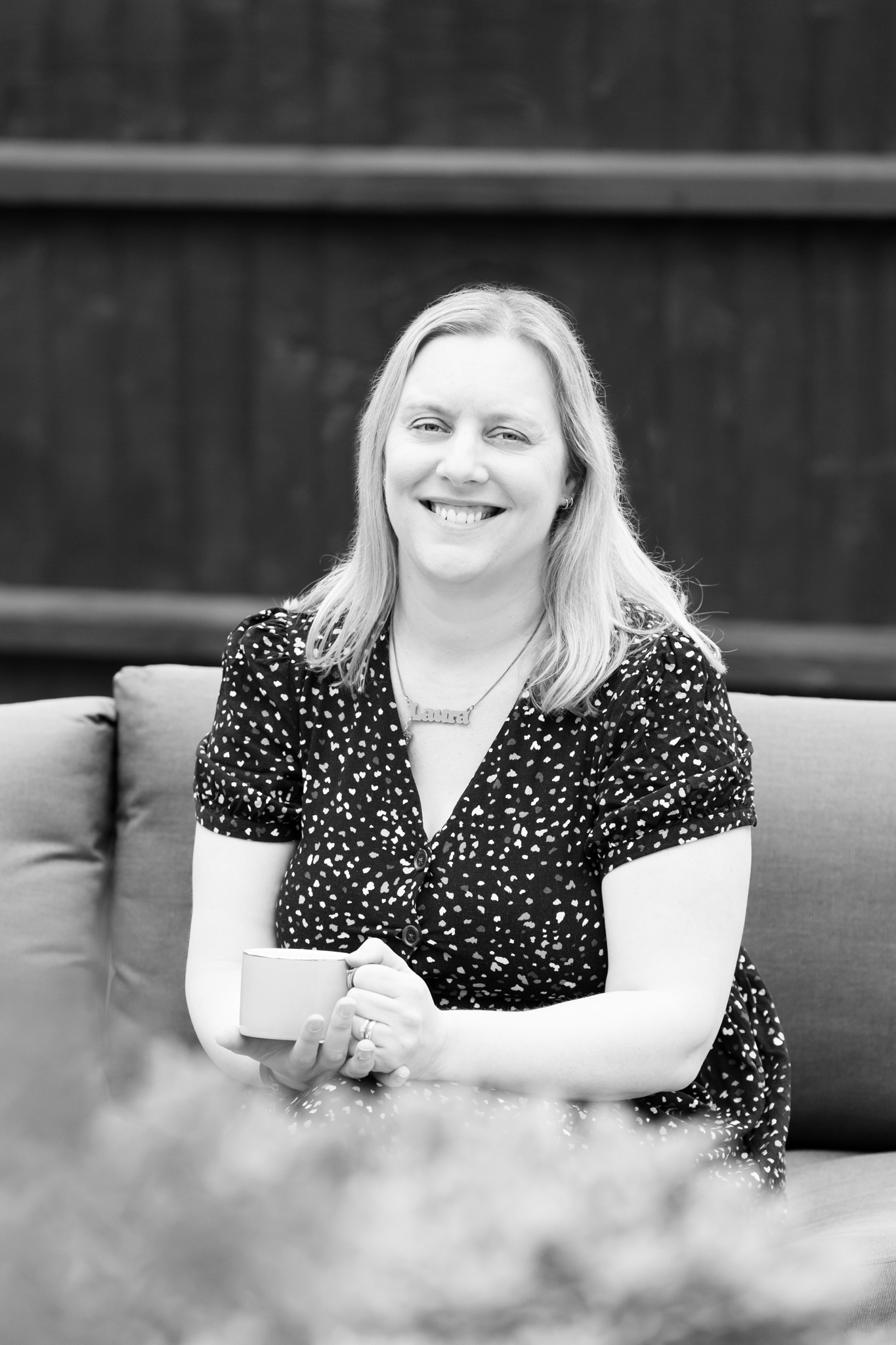
Hi. I’m Laura, I live in a village in Leicestershire with my husband, our two children and our cat. I’m pretty obsessed with reading and writing, and as well as writing novels I help run a Facebook book club called The Bookload.
Did you always want to be a writer?
I did, from about the age of six. I wrote and illustrated my first book about a witch at that time. It was about two pages long. I didn’t realise that illustrator was a separate job (and only usually required for children’s books).
What do you consider your big break?
I think getting my first offer of publication, because it had been such a long time coming.
What was your publication journey like?
Long and rocky. Which I think is true for most people. I finished writing my first book in 2010 and my first book was published in 2018. It wasn’t the same book but the first one did also get published. I’ve had three agents and two publishers and a huge amount of rejections.
Did you ever believe The Last List of Mabel Beaumont would do so well?
I really had no idea. My confidence was on the floor because I’d been trying to get another book published for four years at that point. My expectations were low, I was just over the moon to be published again. When she started to take off, it was amazing to watch. I think she’s exceeded everyone’s expectations for her.
What has changed since selling so many books?
I think I just feel more comfortable in describing myself as an author and spending so much of my time writing books. It’s really hard to believe in yourself if it feels like no one else does. Now I have an agent and an editor I can go to with questions or for support and that makes a huge difference. Also, people say really lovely things about my books all the time and it’s often so unexpected. Even though I know I’ve sold a lot of copies I’m still always surprised when anyone’s read them!
What advice would you give to other writers?
I think just to keep going if you possibly can. Obviously there can come a point where it’s not the best thing for you, but up to that point, keep writing, keep submitting. It’s all about finding the right match and it can take a long time. Rejections don’t mean you’re not good enough, they just mean you haven’t found the right person yet.
How do you become, and stay, successful as a writer?
Ask me in ten years’ time! I have no idea whether my success will last. I was so delighted when I got my first three-book deal but then I had another years-long rough patch, so nothing’s guaranteed. I am contracted to write quite a lot more novels for Boldwood Books, which I’m very happy about. But whether or not they’ll sell well remains to be seen. I just keep writing the best books I can. That’s all I can do.
What are your writing ambitions now?
We writers are very good at moving goalposts. Now I’ve sold more books than I ever thought I would, I want to be in a supermarket, and sell more foreign rights, and of course have a TV or film made of one of my books. There’s so much to aim for and I’m very ambitious.
What’s next?
My latest book, The Many Futures of Maddy Hart, came out in early February, and my next comes out in May. I’m not sure whether I’m allowed to tell anyone the title yet, but it’s about two women in their early sixties who meet by chance and are shocked to find that they’re identical. And after that, many more books! I like playing around with speculative ideas and coming up with interesting hooks.