How The Pop-up Food Industry Has Grown

Research by Eventbrite has found that the number of food and drink events which have been hosted on its platform has been increasing on an annual basis.

In an analysis of more than 40,000 of these events, the organisation has also discovered that the fastest growing trend was that of the pop-up dining experience, due to 82 per cent growth being recorded.

In this guide, Flogas, which is one of the UK’s leading LPG suppliers to businesses, has taken a look at how those in the food industry have begun to move away from brick and mortar establishments in their droves:

The growing popularity of pop-up food

To understand why pop-up dining experiences have become so appealing to members of the public, Eventbrite conducted a survey involving more than 2,000 people who have attended such events.

Three-quarters of the event’s attendees (75 per cent) felt that a unique dining experience is worth paying more money for. Around half of respondents also said that they would be happy to pay more for a meal from the exact same menu at a pop-up event where chef interaction is involved, as opposed to one served in a regular restaurant.

When it comes to what people look for in a pop-up event, 84 per cent of survey respondents said it was a unique menu or theme. This was followed by events held at memorable location (76 per cent) and occasions that promised to be a one-of-a-kind experience (74 per cent).

Chef and Co+Lab the pop-up’s creator, Melissa King, pointed out that setting up a unique event works both ways when it comes to the pop-up food industry. “There are so many chefs out there — they have their restaurants, their day jobs, but they’re looking for something more,” she acknowledged. “That’s what the pop-up culture offers them. They are able to take over someone’s space for only a few hours and convert it into their own identity. It’s not just about the food, it’s about creating a memorable experience for the guests.”

The growing popularity of street food

Street food is also on the rise. In fact, UN-FAO statistics claim that street food is now eaten by an estimated 2.5 billion people worldwide and StreetFood.org.uk had some 2,800 members with over 7,000 units serving food across the UK as of 2015.

It’s little wonder that street food has proven so popular though. The produce available is usually inexpensive, for example, while it also provides a nutritional source that is based on traditional knowledge and often follows the seasonality of farm production.

You won’t need to break the bank to set up a business in the street food industry either. General guidelines suggested by The Hub has detailed that a small second hand catering trailer or market stall could be acquired for under £5,000. A report by the Nationwide Caterers Association acknowledges that a fully equipped market stall can be bought for around £3,000 and a food truck for an estimated £10,000.

Speaking to Produce Business UK, street food vendor Charlie Morse pointed out: “Street food as a trend is certainly growing, although it’s still not at the same level as in New York. I think it will die off a little as a trend and then become a normal, everyday offer. A lot of office workers go to street food

An interview with Chris Carter, author of The Sunday Times No 1 bestseller: The Caller.  


Frost reviewed the hardback of The Caller not so long ago, or rather, I did, and now the paperback is on the shelves – grab it. It’s a hide behind the sofa read, but unputdownable: after a tough week – we’ve all had them – a shower and then relaxation seems like a good idea. Tanya Kaitlin thought so too, until her phone rings …  And it’s the start of it all.


The video call request comes from her best friend, Karen Ward. Tanya takes the call and the nightmare begins. Karen is gagged and bound to a chair in her own living room. If Tanya disconnects from the call, if she looks away from the camera, he will come after her next, the deep, raspy, demonic voice at the other end of the line promises her.

As Detectives Robert Hunter and Carlos Garcia investigate the threats, they are thrown into a rollercoaster of evil, chasing a predator who scouts the streets and social media networks for victims, taunting them with secret messages and feeding on their fear.


Frost Magazine caught up with author Chris Carter and bombarded him with questions:


Margaret: Chris Carter, I was totally hooked, but it’s not bedtime reading. It was more a ‘I need to hide behind the sofa and peek out from time to time’
type of book.

Is it based on a real case, or has it come from the inner you? Please tell me it’s a real case or I can never ever be in the same room alone with you. Presumably you have to alter the case to some extent so it isn’t recognizable?


Chris: Sorry to disappoint you, but The Caller is not based on a real case.  The idea for the plot did come out of true facts.  I can’t say which facts those are, as they are one of the revelations I make towards the end of the novel concerning the killer, but it was after reading a very concerning statistics on a new research conducted in the USA that I began working on the idea for The Caller.

Margaret: It was deftly handled and the tension was like a tripwire. Are you a prolific reader, and learned your writing trade in that way, or did you do as the rest of us, and work with a mentor, or some sort of creative writing support?


Chris: I’m definitely not a prolific reader at all.  Far from it.  My “to read” shelf is turning into a “to read” library because I never get to read much.  I also never had a tutor or mentor.  I never took part in any creative writing courses or read any books on the subject.  The truth is that I had never planned on writing a book.  I never though about a career in writing and I never spent any time thinking up stories or developing characters in my head that I would one day want to write about.  My submersion into the world of books – writing books that is – came out of a dream I had back in 2007.  In the morning I mentioned the dream to my girlfriend at the time and when I was done she said  – ‘You know what, Chris?  You should write that story down.  It’s a good idea.  And I really like the twist at the end.’


So I decided to do exactly that.  With absolutely no experience whatsoever, I began writing it.  Until then, I had never even written a short story in my life.


To make a very long story short, that dream turned out to be The Crucifix Killer, which became the first book in the Hunter series.


Margaret: I find, as an author with Random House, that the world I create is the only thing of which I am in control. The rest of my life seems to spin off as it will. Would you agree that one of the empowering things about writing is that we are able to create whole worlds that discuss and resolve issues as we wish – basically our worlds are shaped.


Chris: Yes, I would agree with that statement.  As authors of fiction books, in our stories, we are God.  We can do anything we please, talk about anything we like and resolve any issues as we wish – which can also be quite dangerous.
Margaret: How do you work? Do you plan? Do you have a strict time table?


Chris: I do have a strict timetable, but I plan almost nothing.  All of my stories are pretty organic.  All I have is a “one-line plot idea” and I start writing, for example – for The Executioner, my second novel, all I had in my had for the plot was – a killer who uses his victims fears to kill them.  With that I sat down and began writing the book.


I never really know who the killer will be until usually past halfway through writing a novel. The same goes for how Hunter will figure out who the killer is and why the killer is going around killing people.  The basis of my writing is – I will write one chapter and as I get to the end of it I ask myself – “OK, so if this just happened, what would happen next?  If I were involved in this case, what would be my next step?”  And that’s how the next chapter develops in my head.  It can get pretty confusing at times.  Actually, it gets confusing all the time, but it works for me.

Margaret: Do you actually enjoy writing?


Chris: I absolutely love it.  I love the whole process of it – I love the writing.  I love the researching.  I love coming up with characters, with villains, with crazy murders, etc.  The only bit I’m not very keen on is the editing at the end.
Margaret: I interviewed Frederick Forsyth at my charity’s (Words for the Wounded) Literary Festival a few weeks ago, and we were discussing writers – what they are? We came to conclusion that we are observers, that even when we’re out socialising, or working at something else, we are somehow not fully present. We’re assessing, observing and somehow disengaged.
Worse, even as life is turning upside down we’re thinking how we can use it. What are your thoughts on that?


Chris: I would totally agree with that statement as well.  I would just add that as authors we also have to be a tad schizophrenic.  We have to be able to think like more than one person at any time, regardless of conviction, belief, race, status, gender, or anything else for that matter.  If we are writing an argument scene between a deeply religious old man and a totally agnostic young woman, we have to tap into both of those lines of thoughts and be convincing.

Margaret: What next? Another unputdownable book?


Chris: I am more than halfway through writing my next novel, so yes, there will be a new book in 2018.  I can only hope that my readers will enjoy it as much as they have enjoyed all the previous books in the series. 

Margaret: As a p.s. Chris, congratulations on your huge success, keep the books coming, keep me scared to death. Bravo.


Chris: Thank you so, so much for your more than kind words.

The Caller by Chris Carter        –        pb  Simon and Schuster UK £7.99


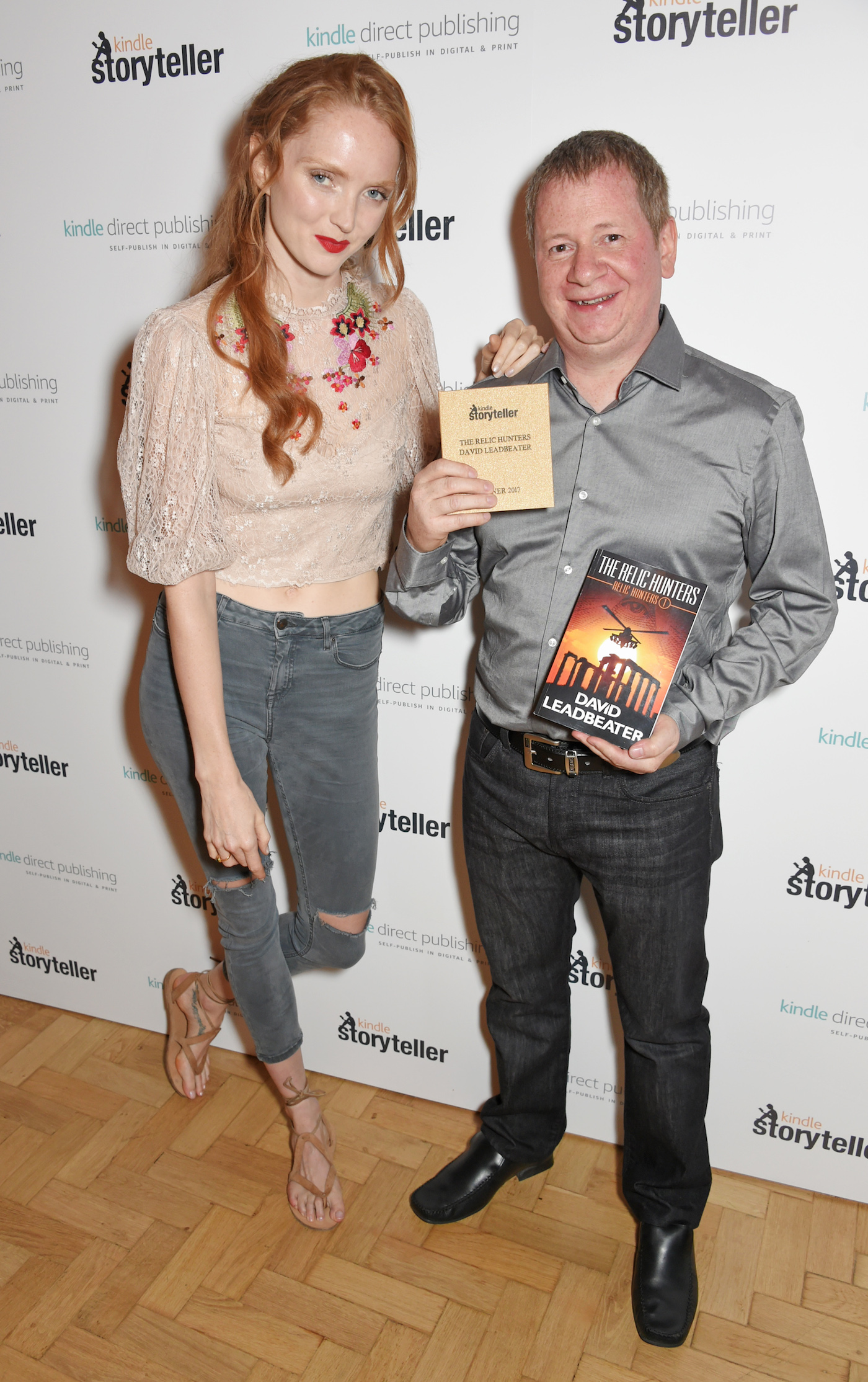
David Leadbeater’s ‘The Relic Hunters’ is the Winner of the First English Language Kindle Storyteller Award by Milly Adams


David Leadbeater has been crowned the winner of the inaugural UK Kindle Storyteller Award, with his Crime Thriller The Relic Hunters securing him the £20,000 cash prize. Alongside the money, David will receive a marketing campaign to support the book on Amazon.co.uk, access to a mentor and the opportunity to have his book translated.

The Relic Hunters’ is an archeological action adventure story that follows relic smuggler Guy Bodie across the world as he tracks down famous objects throughout history, with the help of his team along the way. Before this book, Leadbeater, from York, had already written twenty three Kindle International Bestsellers reaching readers across the globe.

LONDON, ENGLAND – JULY 25: Lily Cole (L) poses with David Leadbeater, 
Pic Credit: Dave Benett

“Winning the Kindle Storyteller Award has been a life-changing experience,” said David Leadbeater. “It’s an honour to be chosen as the winner and truly wonderful to have The Relic Hunters selected from such a strong shortlist. It is thanks to my readers that I have won this prize and for that I am truly thankful. I am excited for the next chapter in my storytelling career and hopefully with the profile this prize has given me, my stories will reach more readers.”


What made this prize truly unique was the customers’ role in the process. From thousands of entries, a shortlist of six authors was selected based on a number of factors driven by customer interest in the titles. Alongside the winning title, the shortlist included a range of genres from historical fiction to fantasy to non-fiction.


The panel of judges who decided upon the winning book included actress and literacy campaigner, Lily Cole; best-selling author Rachel Abbott; Irish author, former literary agent and founder of The Alliance of Independent Authors, Orna Ross; the Metro’s Books Editor Claire Allfree; as well as members of the Amazon Books team – UK Head of Kindle Singles and Chair of Judges, Andrew Rosenheim; UK Kindle Content Director, Amy Worth; and UK Editorial Director for Amazon Publishing, Emilie Marneur.

Lily Cole said of her involvement: “”I love the democratic accessibility of this prize. It has encouraged more people to write and independently publish, and invited readers to participate in rewarding new writers!”


For more information visit www.amazon.co.uk/storyteller

The Business of Books: Jane Cable meets Sunday Times bestseller, Elaine Everest

THE BUSINESS OF BOOKS: SPREADSHEETS & SAGAS

Jane Cable meets Sunday Times bestseller, Elaine Everest

How much of your working life does the business of books take up?


I can honestly say that books take up all my life. When I’m not writing I’m teaching novel writing to my talented students at The Mick Jagger Centre in Dartford, Kent. I’m also a committee member of the Romantic Novelists’ Association so you’ll find me organising social media and blogging for the Association. I would say that over 50% of my working day I’d be working on writing although I’m not creating words. Authors also need to be aware of Public Lending Rights, ALCS and other organisations where we need to keep our book details up to date as this will generate much needed funds,


What’s your business model to earn a living from writing?


I’ve been a freelance writer for the past twenty years so from the days when I was selling short stories, pitching features to magazines and organizing workshops for writers I’ve been conscious that I have to earn a certain number of pounds each month. Working in accountancy since leaving college, until moving into the writing world, I am addicted to number crunching so spreadsheets and cash flow predictions were part of my daily life. I could always tell at the push of a button if there were lean months ahead and would know to pitch more – and to write more fiction! This has changed slightly since moving onto writing novels as these days I’m aware when royalties and other payments are due and can plan accordingly. Those spreadsheets still come in handy!


What do you write and what do you consider to be your major successes?


These days I write historical fiction set in the 1930s and 1940s. It is a fascinating period to cover and when not writing I will have my nose in a non-fiction book researching social history, looking for fresh plot settings and generally fleshing out the world where my characters live.


My major successes are my novels with Pan Macmillan. Readers have taken my Woolworths Girls to their hearts making the first book a Sunday Times bestseller.


Tell me about your latest project.


The Butlins Girls was published in May so I’m still busy promoting and blogging about my girls at the end of World War Two. As I write this I’m looking at the final book edits for Christmas At Woolworths, which will be published in November, and these have to be completed by – tomorrow! I know there’s an email notifying me that first edits will be with me in two days for Carols at Christmas, a novella that will be published a few weeks before CAW. Writing wise I’m working on Wartime at Woolworths, which will take my girls through to the end of 1944. This will be published in May 2018. I’ve found the trick is to stay focused on the current work in progress while trying to fit all other aspects of my writing around it – and remembering to stop and eat occasionally. I can recommend writing retreats where I find working whilst gazing out to sea from my desk can be a welcome rest from my desk at home!


Elaine Everest has written widely for women’s magazines, with both short stories and features. When she isn’t writing, Elaine runs The Write Place creative writing school in Dartford, Kent, and runs social media for the Romantic Novelists’ Association. Follow Elaine on Twitter @ElaineEverest.


A wine review by Michael Rowan who tastes two Dark Horse offerings for the summer:


I have to confess to being something of a traditionalist when it comes to wine. Reds in winter, whites in summer and never the twain shall meet.

So you can imagine my reaction when I was asked to sample two new summer wines, perfect for the barbeque season. The weather did little to help, as no sooner had I dusted off the barbeque than the heavens opened. Perhaps it was a sign not to mess with tradition but I cannot allow superstition come between me and a good wine.

Dark Horse is an excellent name for these wines as it does seem to be a rather well- kept secret and at around £8.50 a bottle, frankly they are a bit of a steal. Both bottles have satisfyingly deep punts (the dimple at the base of the bottle) making pouring a pleasure.


I loved the Californian Sauvignon Blanc with its crisp citrus flavour, hints of grapefruit and a refreshing clean finish reminiscent of the popular New Zealand wines perfect with a summer salad or grilled fish and very affordable for those of us who enjoy a glass or two sitting in the garden on a warm summer’s day. With its screw top this would definitely be my first choice of picnic wine.

Still smacking my lips over the white it was time to turn my attention to the Dark Horse Merlot. This was no light weight, it had guts and was robust, dark and jammy, with sophisticated flavour notes. I could imagine it being paired it with the mouth-watering richness of barbecued ribs and to be honest if you like your red to have bite you will love this whatever is on the table. However, I can’t help thinking that it needed time to open out and I would be tempted to decant this wine an hour before I wanted to drink it. I also wondered how it would taste lightly chilled.

So forget tradition these are definitely two dark horses well worth a punt.


Dark Horse Californian Sauvignon Blanc & Dark Horse Merlot  available nationwide. £8.50 each RRP

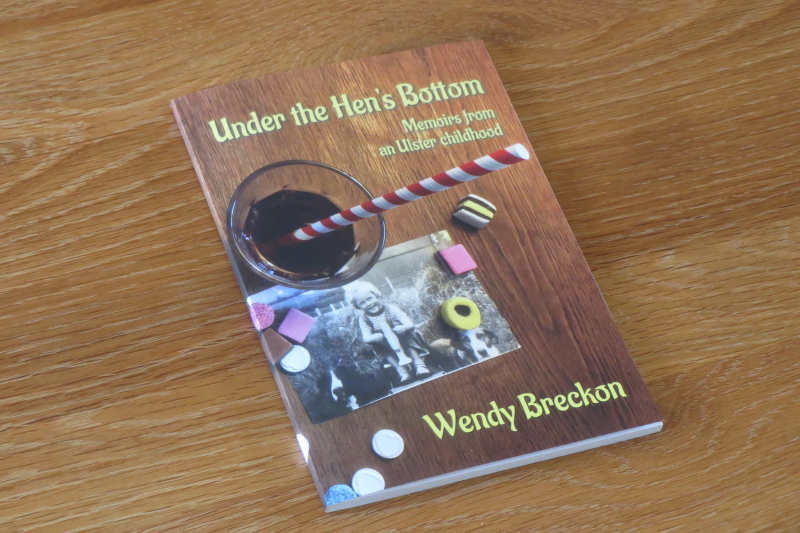
UNDER  THE  HEN’S  BOTTOM  by WENDY  BRECKON  


Review by Frances Colville

Under the Hen’s Bottom is a wonderful collection of short stories by author Wendy Breckon, detailing her memories of growing up in Northern Ireland in the 1950s and 1960s.  As the title suggests, these stories are witty, quirky and so engaging that the reader is immediately drawn into the author’s childhood experiences – from almost being born under a hedge, through holidays with her grandparents on their farm, to the building of friendships and early aspirations to be a writer and actress.


Wendy is a storyteller with a gentle touch and is particularly adept at bringing her characters to life.  The descriptions of time spent with her eccentric grandmother will make you smile, but there is poignancy here too, nostalgia for days gone by and some thought-provoking questions about the religious divide which existed at the time in Ireland.  As it says on the back cover of the book, the reader will be captivated from the moment they first turn the pages and start to share the experiences of this small child.


I was going to pick a favourite, but I actually can’t. Every time I think I have settled on ‘Voulez-vous’, I remember ‘Two Squares of Chocolate and a Floral Gazunda’ or ‘The Russian Princess’ or ‘The Lost Sheep’ or ‘An Honorary Catholic’ and the task becomes impossible.   So there is absolutely no substitute for buying the book and reading them all.


Under the Hen’s Bottom was published by Magic Oxygen on 6th July 2017 and is available (priced at £7) from Amazon or by emailing Wendy herself at wendybreckon@outlook.com

Want a reason to switch to PDF? Here are 3

For the longest time, PDF was only used in official environments or by those working in professional environments and created content intended for the consumer base. Normal computer users didn’t really care that much about PDF but that’s a mistake as the PDF format is one of the most versatile things you can expect from a computer. If you’re looking for reasons to ditch your current format solution and get into using PDF, check the top reasons we have selected below.

Accessibility and compatibility

If you’re looking for something that is compatible with any kind of OS and also comes with an amazing accessibility feature, PDF is definitely for you. PDFs can be accessed through Google’s Chrome and that means that a PDF file is accessible from any computer regardless of whatever other software is installed on that PC. That’s something you can’t really say about other formats and it could be one of the reasons why you choose PDF. Even if you’re not big on Microsoft’s Windows and use a Mac, you can still find a PDF reader for Macintosh, so there are no compatibility issues.

Security

Security is often times neglected when it comes to text files. That’s because people aren’t aware of the fact that they can actually use a password for their files. That is, of course, if they use PDF. People are also oblivious about how many people actually want to read their personal information. If you keep your data in a PDF file and lock it with a password, no one would be able to intrude on your private space. It’s a feature that’s missing from other major formats so it’s an obvious benefit that comes with using PDF.

Security needs to be at an all time high right now due to all the increasing threats and activities going on online. Whether it’s phishing or ransomware, there will always be malicious entities looking to get access to your files. Keep them safe with a password.

Versatility

The third important feature that you need to know about is the versatility that comes with PDF. No matter what you want to edit, you have access to e every aspect of it. This makes it very convenient to just open a file and start editing away when something isn’t exactly how you want it to be. Other formats will be trickier to edit, not to mention more frustrating. But there’s no point in struggling with other platforms when using PDF can be so easy.

So there you have it, three perks that represent the essence of PDF. If you were thinking of using PDF before or only now have started pondering on the idea, it’s best to keep these factors in mind as they might be decisive in how you choose your preferred format.


By Steven Hawk

Review: The House They Grew Up In

The House They Grew Up In
Minerva Theatre, Chichester
Until 5 August
Box Office: 01243 781312 www.cft.org.uk

Photo Credit: Johan Persson

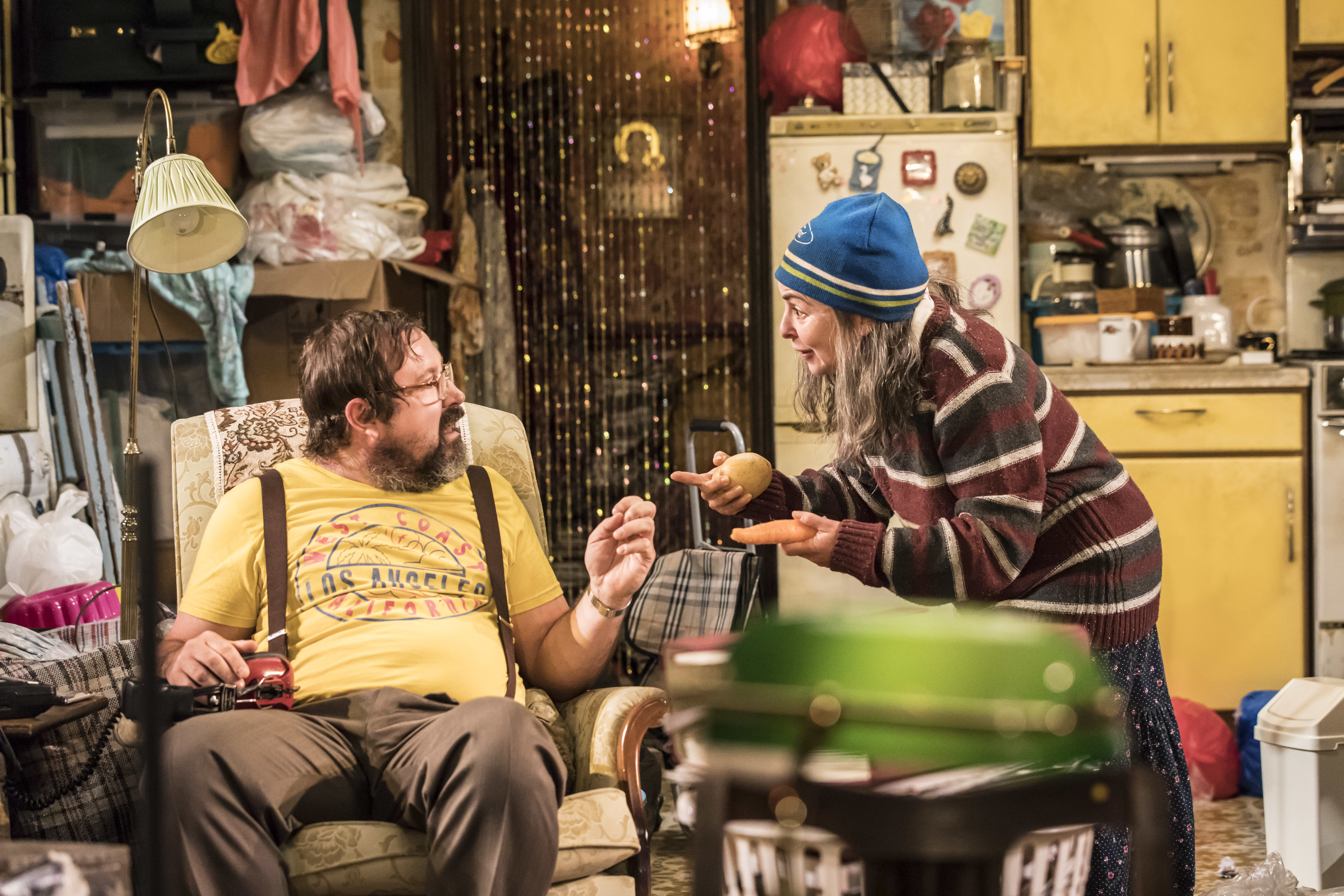
Deborah Bruce’s new play, a co-production with Headlong, manages to be both entertaining and deeply moving. It’s a tale of our time. Middle-aged brother and sister Peppy (Samantha Spiro) and Daniel (Daniel Ryan) live in the house they grew up in amid floor-to-ceiling clutter (Max Jones’s claustrophobic set design is marvelous). Isolating themselves, autistic Daniel spends his days recording a precise log of every passing moment in his diary. Highly strung and obsessed with art history and Cambridge University, Peppy leaves the safety of their nest only for food and, later, to visit Uncle Manny to try to find out why he didn’t make his regular Christmas visit. But the arrival of the little boy next door into their co-dependent lives (superbly played by Rudi Millard on press night) triggers a terrifying change in their reclusive existence, with the police, social workers, neighbours and journalists forcing the much-feared outside world upon them.

Remarkably, what seems certain to be the inevitable conclusion takes a happier turn. Jeremy Herrin’s thoughtful direction and Bruce’s accomplished writing allow Peppy and Daniel to be heard and understood, ultimately earning our compassion and making us feel uncomfortable at failing to feel and extend it sooner.

Beautiful and bitter sweet, the tragedy of the optimistic ending is that in the real world Peppy and Daniel would be the exception rather than the rule.

With superb performances, especially from Spiro and Ryan, this a thought-provoking and fascinating play that deserves a wider audience than its short run in Chichester will generate.