NOMAD by James Swallow Review by Margaret Graham


pic-1-nomad-pbk

It’s now 2017, and to screech you on two wheels into the New Year give NOMAD a try. I wasn’t sure at first because I felt  I had probably read this scenario before, but believe me, you’ll brace yourself as Swallow takes the turns of the plot at such a high speed it will take your breath away. Bedtime? Forget it. This is one you won’t put down until it’s finished. We need a new strong character in this genre, and fresh for the New Year, Marc Dane is one.

I like the well paced writing, the tight plotting, the sheer bravura of Swallow’s concept which is so up to the minute it’s worrying. He loved writing this, surely, and it shows. What’s it about? Here ya go.

Nomad is an espionage thriller for the digital age, an age I’m still trying to grapple with, but my grandchildren swim amongst with great aplomb. With hints of Ludlum, Fleming and Clancy it is sharper, the era is fascinating, the plausibility frightening.

It’s set in a Post-WikiLeaks world where private military contractors, terror cells and corporations wield as much power as national intelligence agencies…

Marc Dane is a MI6 field agent at home behind a computer screen, one step away from the action. But an attack on his team leaves Marc as the only survivor – a survivor convinced that there are one or more traitors inside MI6. What’s he to do? Head into the front line, and leave the screen behind of course.

Typically, the traitors are clever, and the evidence seems to point towards Marc as the perpetrator of the attack. Accused of betraying his country, he must race against time to clear his name. So far, this has been done by others, but it’s the era in which it is set, and the scope of the scenario which makes it unputdownable.

With his team gone Marc is forced to rely on the elusive Rubicon group and their operative Lucy Keyes. Ex US Army, Lucy also knows what it’s like to be an outsider, and she’s got the skills that Marc is sorely lacking. It’s a race against time. When will the terrorist attack occur, the one he is certain will take place. And who will stop it? It comes down to Lucy and Marc.

Buy it, it’s good.

Next week, we will be publishing James Swallow’s A Day in the Life. Don’t miss it.

Published by Zaffre. paperback, £7.99


A Day in the Life of Troubador Marketing Part 2

A Day in the Life of Troubador Marketing – Part 2

pic-1-jasmin-elliott-creates-a-targeted-pr-list

Jasmin Elliott creates a targeted PR list

1-2 months pre-publication: Media Marketing. This involves us pitching a book to media outlets and journalists for media coverage, like interviews and reviews.


PR marketing is the aspect of marketing that our authors tend to find the most daunting – pitching their book to local and national media outlets – but it can also be the most exciting! Whether you’re an aspiring or established author, you’ve probably imagined being interviewed live on air, or opening a magazine to see your book reviewed, and a solid PR marketing plan can help you achieve just that.


We start work on the media marketing of a title once the cover has been approved to give us plenty of time to hone our list of contacts, think about creative marketing opportunities and also work with the author – as this stage of the process is one of the most collaborative. Authors know their books inside out, so we work with them closely in order to create a campaign that is as comprehensive yet targeted as possible.


This part of the process sees us take a two-pronged approach. First, we identify contacts using Vuelio – industry-standard PR software that allows us to send press releases instantly to hundreds of opt-in journalists. The software contains the most up-to-date information about the different media outlets, and different topic lists can contain up to and over 3,000 journalists.


Secondly, we conduct traditional mailings – sending out review copies of books, plus press releases – using our extensive databases of media contacts that we have built up over the years. We can identify which journalists and bloggers should be sent review copies upfront by what sort of book they usually feature and books we’ve worked on with them in the past – even in today’s digital age, who you know counts!


Our media campaigns are always closely targeted, in order to maximise the chance of coverage – if, for example, we are marketing a historical romance novel, it would be no good sending the press release to a scientific publication. We also like to look for as many connections as we can. If an author is from Oxford, we will pitch their book to Oxfordshire-relevant outlets, as we find that regional media tends to be supportive of local authors. If their book is also set in Newcastle, we will also contact Newcastle-based publications as there is a link to the area.


From an author’s point of view, it’s easy to think that sending out a few copies out to the daily papers will suffice – but these outlets get hundreds of submissions a week. It’s thus vital not to underestimate the importance of contacting local publications, bloggers and subject-specific outlets – which will often be much more interested in featuring a title. Whilst getting a review in The Guardian is undoubtedly effective, unfortunately it’s very rare – especially for debut authors. What can and does happen, however, is that an author may get great coverage in local newspapers and radio stations, and as a result is picked up by national outlets – journalists do talk and won’t let a good story go to waste!


Finally, if you do get coverage, but it isn’t quite the type that you hoped for, try not to be disheartened. The saying ‘all publicity is good publicity’ is overused, but it is really is true. Sometimes all it takes is a mention in a few of the right publications – especially in local outlets, which can be key to good local sales – is all it takes to generate movement.


Media marketing can seem daunting, but it can also be a very rewarding process. The more comprehensive and targeted our campaigns are, the more effective they will be.

Next week – part 3

www.troubador.co.uk

About us…

Matador offers a bespoke, comprehensive and high-quality self-publishing service. (www.troubador.co.uk/matador). We also offer standalone marketing and distribution services for authors who publish elsewhere (http://www.troubador.co.uk/distribution.asp) and standalone design and editorial services via our sister company, Indie-Go (http://www.indie-go.co.uk).

Our annual Self-Publishing Conference, held on 22nd April 2017, offers sessions on all aspects of the publishing process and can be tailored to each delegate’s requirements – registration is open now for £65 per person: (http://www.selfpublishingconference.org.uk).


Young Voices by Meg Cannell

On the 8th December I was admitted into Great Ormond Street Hospital for a spinal fusion due to my scoliosis.


I had already had the MAGEC rods put in by GOSH for three years and because I had stopped growing it was time to go under the knife again. Over the three years I have been back to GOSH regularly to have my rods extended. This is a fascinating procedure because it is not invasive. The rods have small motors in them, and one of the staff uses magnets on the skin of my back to move the rods to keep up with my growth.


We got to the ward pretty early in the morning, but I wasn’t put to sleep until about 11 o’clock. I was pretty nervous about the anaesthetic, but I was on a heated mattress, the height of luxury. I just shut my eyes as if I was going to sleep.


We had been told the operation would be 7 – 10 hours but it was much quicker than that in the end. When I got out of theatre I was put into HDU which was nice and quiet and I wasn’t in much pain. The staff were amazing and looked after me so well.


When I was moved to the main ward things only got better. I was standing up after a day and I felt pretty good. One day a therapy dog came round, and it was so cute and reminded me of Grandma’s cockerpoo, Rosie, and cavachon, Polly – who is pretty naughty I have to say. I also met Snow White and Dopey, which definitely made my stay at the hospital a bit more special.

pic-2

My friends from school were really great and travelled into London to see me, bringing lots of presents, and even an advent calendar they had made. I was overwhelmed. I have now been at home, back from hospital, for about a week and it feels so good. Although the hospital was amazing, it’s always nice to be at home and after a year I should be able to do practically anything I want – except bouncing about on a trampoline.


Incidentally, did you know that J M Barrie gave all the Peter Pan rights to Great Ormond Street Hospital in 1929. I think that’s wonderful.


Spending a Penny- a Gentleman’s Perspective       by Michael Rowan.

Or perhaps it should be called, a cry from the heart. We at Frost love this view from the other queue, the one the women love to hate – the blokes’ public loo. A hilarious review.

Karma is indeed unforgiving, and so as a gentleman of a certain age I now realises that I should not have found my late father’s google map like knowledge of the location of public conveniences quite so amusing. Of course my father lived in an age when these were indeed conveniently located. Not so today.

It was also euphemistically called spending a penny. Oh for those bygone days when use of the urinal was free and the cubicle cost a mere penny. I accept that inflation has required the price to rise, but why so much discrepancy? At the Baker Street Underground it is free and though the soap dispenser isn’t filled with the most expensive of unguents – when you have an hour on the Metropolitan line in front of you, such free access comes, literally, as a relief.

A mere five minutes away and the charge at Marylebone Station rises 30p, similarly Paddington Station Kings Cross, St Pancras and Euston Stations. Travel to Charing Cross though and the cost rises to 50p.

If you haven’t the correct change a helpful machine will dispense what you need usually in the smallest denomination known to man, ensuring that your pockets bulge and you list alarmingly to Port .

Machine fed coins release the turn-style unless of course you haven’t noted the direction of the arrows and try to barge your way through using the fleshy part just above the knee and thigh, oblivious to the toilet attendant who is practicing his semaphore from behind a thick glass window, telling you graphically that you are going ‘in’ through the ‘out’.

It might be thought that at this point all obstacles have been overcome and would that this were so. But no, for now one is faced with a row of urinals and the etiquette has to be observed. Unfortunately no one teaches you the code (unless somehow I missed that lesson) but worse no one speaks of it either. It is the urination equivalent of Fight Club.

If the urinals are all vacant the first man there must stand on the furthest left so that the second may stand at the far right. In this game of urinal chess the next takes the middle and the rest fill in the spaces in between. The main rule is not to stand next to anyone unless there is absolutely no alternative. All eye contact is to be avoided, elbows should not touch and any speaking must cease unless you are returning from a match and the conversation is about football.

The space saving layout of some lavatories can lead to a nasty surprise especially when the hot air hand dryer blows down your ear whilst you are otherwise engaged. Looking round sharply at the cause can lead to rule breaking eye contact, not to mention, wet shoes.

Recently the architects of such edifices can be found trying to satisfy customers old and young which can cause confusion for the less observant. Some urinal stalls are set lower to accommodate boys who have yet to reach their full height. Those of us that have not only reached such height but also exceeded it, can find ourselves directing everything other than our attention to a lowered stall which alters what I suppose I should call the fall out zone, leaving one to come up with a plausible explanation for dampened trousers. Kings Cross Station has resolved this by lowering all the urinals. I say no more.

If one has managed to navigate the various perils of ‘spending a Penny’ including working out where the automatic sensors are for the soap and water one might imagine that one (if lucky) is home and, particularly, dry but there is one more and possibly the most difficult challenge still to be met.

On leaving, one is almost bound to be met by the malevolent glares from those in the queue for the ladies, at which point it is advisable to remember the golden rule.

No eye contact.


The Average Woman Will Change Dress Size 31 Times in Her Lifetime

London Fashion Week 2012The average woman will change dress size 31 times during the course of her adult life, according to new research.


Key size-gain spikes in life are having kids, moving in with a partner and the first years of marriage – while major size-drops occur pre-wedding, after the loss of someone close and following break-ups.


Regular ‘blips’ happen during Christmas and the winter period – and also after holidays away.


Men will typically go up or down a clothes size on 24 occasions as an adult – with a third identifying stress at work as the reason for the change.


The research of 1,000 women and 1,000 men was commissioned by Fits Me, a fit tool that helps shoppers to find their perfect size.


Six in 10 women said they aren’t happy with their clothes size – compared to 45 per cent of men who feel the same way.


Three quarters of females own garments that no longer fit them properly with around 16 ill-fitting items found in the average woman’s wardrobe.


While 61 per cent of males have kept hold of clothing that is either too big or too small for them – on average keeping hold of 14 items.


Half of respondents said they hang on to clothes that don’t fit because they want to get back into them one day and a fifth have a sentimental connection to the items.


The typical female is most happy with her clothes size aged 28 and men are most content at 29 years old.


In contrast, women are most dissatisfied with their proportions at 38 while males feel similarly aged 39.


A quarter of men and almost half of women have avoided going to clothes shops because they were concerned they wouldn’t find garments that fit as they would like.


Four in 10 respondents have been shopping for clothes only to find their size has gone up while 26 per cent have seen their size go down.


Perhaps as a result, three quarters of females and 44 per cent of males said they worry about finding something that will fit well.


While 21 per cent of men said they experience a drop in confidence when clothes shopping and two in five women said the same.


Over a fifth of Brits admit they aren’t confident they know which clothing items look best on them – however three quarters said their size changes from retailer to retailer.


Of those surveyed, 58 per cent have felt intimidated by shops that are “too cool” – with the range of clothes available the thing that threatens them the most, followed by the prices and the shop staff.


Three quarters of respondents buy clothes online, however 86 per cent think it’s a gamble as to whether the items ordered will fit as hoped.


Four in 10 people prefer to try clothes on in a shop fitting room and 45 per cent would rather be left alone to do so – and on average three items will be taken into the changing room with them.


A third of men and women would rather see how the garments look on them at home and 28 per cent have no preference.


The number one boost to people’s confidence when clothes shopping is seeing clothes they like – followed by getting something that fits well and finding an item in the sale.


A day in the life by the marketing team at Troubador.


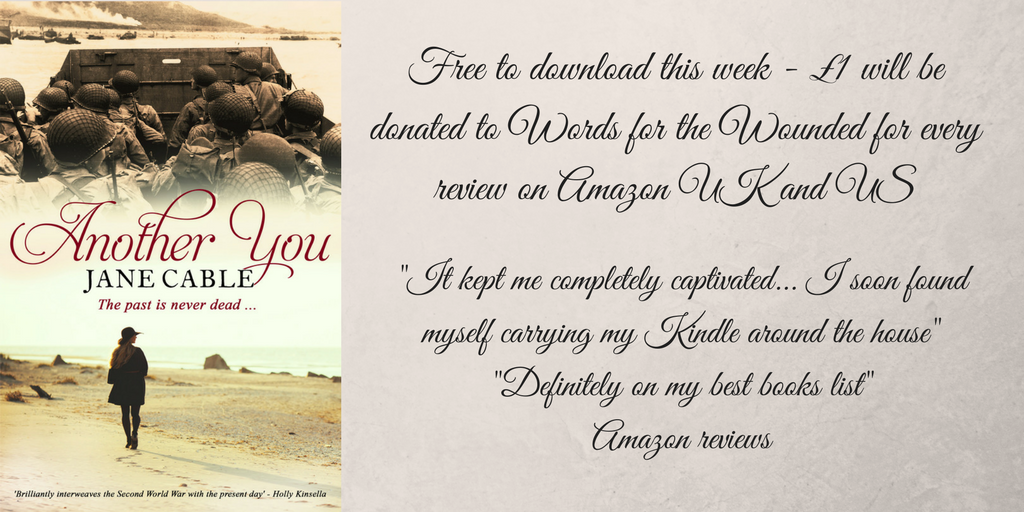
 At Frost we’re particularly fond of Troubador Publishing – a self publishing organization, one that is hugely successful. Apart from being hugely successful and professional we’re fond of it because it helps Words for the Wounded publicise its fundraising Independent Author Book Award. Indeed, WforW’s inaugural winner, Jane Cable, was published by them. Jane has now been taken by Endeavour Press and Another You has just been published.


We were really pleased when we  asked the marketing team to take us behind the scenes, and they readily agreed.  We will be publishing their Day in the Life in four sections over four weeks. But let’s hear it in the Troubador team’s own words.


………..

pic-1-alexa-davies-drafts-an-advance-information-ai-sheet

Alexa Davies drafts an Advance Information (Al) sheet

For a new title, the route to market – and customer – is multi-faceted, and it’s vital to undertake each important step within the process. Many authors only think about marketing once they’ve signed off their print files and approved their book for print, but it’s crucial to start thinking about this much earlier on. Marketing, and distribution, are key parts of the publication process – and parts that a book depends upon in order to make sales, as well as media coverage – which in turn leads back to sales.


To highlight the different steps within the marketing of a title – and the importance of doing them all at the right time – we’ve broken down the process into four distinct steps, which all happen at different stages of the production process. These are all things that happen every day in the marketing department of Matador, the high-quality self-publishing imprint of Troubador Publishing Ltd.


Jasmin Elliott, Alice Graham, Alexa Davies and Sarah Taylor from Matador’s marketing team each take a turn to explain exactly what happens – and when.


3-6 months pre-publication: Trade Marketing. This involves notifying retailers and libraries of an upcoming book in order to generate sales.


Trade marketing begins with drafting Advance Information (AI) sheets once an author signs up to publish with us. Once they’ve been approved and updated with a finalised cover, copies are sent out to relevant local and national bookshops. Every AI contains all the information that a buyer needs to know when deciding whether or not to stock a book. Quite often there is a lot of information, which we need to condense into a single page – while still providing all the relevant detail! Writing AIs is one of the more fun parts of trade marketing – it involves being creative with the information that our authors have given us and turning them into professional, industry-standard documents that will result in book sales.


When the first draft of the AI has been completed, from the information that the author provides at the beginning of the publication process, we then send this on to the author. It’s important to us that our authors are happy with the way their book is represented, and so we strive to work with their suggestions as much as possible, but we also provide guidance where we feel that something won’t work or has been omitted.


Once the author has approved their AI drafts, we add the information to a central book listing, which then gets sent out to a data aggregator called Nielsen – who then send this information on to recipients within the trade. This is a crucial point in the process, as it’s the only way that a title is discoverable/orderable – and we ensure that we keep this updated moving forward. We also update the book page on our own Troubador website (as we sell books directly to both customers and retailers) to entice buyers to purchase.


Once we have been sent a final, approved cover from the production department, we add it to the sheet (it’s important to include a cover, as most buyers make or finalise their stocking decisions based on what the book will look like) and then send it out. Each sheet is sent out to a highly targeted local and national mailing list, which is created according to the subject and interest area of a book, as well as the author’s own local area. This includes both the key outlets that we send information all of our titles to – like Waterstones and WHSmiths – as well as independents and chain branches. Once we have our list of appropriate booksellers, the final stage of envelope stuffing begins! Though some buyers prefer information by email, a lot still goes out by post – which has close to a 100% open rate.

See the next instalment in a week.

http://www.troubador.co.uk

About us…

Matador offers a bespoke, comprehensive and high-quality self-publishing service. (www.troubador.co.uk/matador). We also offer standalone marketing and distribution services for authors who publish elsewhere (http://www.troubador.co.uk/distribution.asp) and standalone design and editorial services via our sister company, Indie-Go (http://www.indie-go.co.uk).

Our annual Self-Publishing Conference, held on 22nd April 2017, offers sessions on all aspects of the publishing process and can be tailored to each delegate’s requirements – registration is open now for £65 per person: (http://www.selfpublishingconference.org.uk).


Over 19 Million Homes at Risk of Fire This Christmas

CHRISTMAS PAST & PRESENT   by Jenny Falconchristmastree1Regulatory body for Electricians advises on how Brits can avoid leaving their homes at risk of electrical fault and potential fire at Christmas
Make an electric check part of your routine this winter

  • 9 in 10 UK homes will be using Christmas lights this year
  • Only 1 in 4 question whether the lights they are using are safe
  • Shockingly 97% show no concern that the amount of lights they use could be a danger

The NICEIC & ELECSA are reissuing a crucial message as we approach the Christmas season; think safety first when decorating your home this Christmas.

The UK’s leading regulatory body for electricians NICEIC and ELECSA surveyed 2,000 UK tenants and homeowners. With 9 in 10 of us using lights to decorate this Christmas, some disturbing facts have been revealed about our attitude to electric safety over the festive period. In excess of 1 in 4 showed no concern about the safety of the lights they are using. This result is marginally better than the response to the 2015 study. Tony Cable, Senior Electrical Engineer for NICEIC and ELECSA said;

“Electrical safety in the home is important at any time of the year, but at Christmas we tend to forget that all the decorative lights we use around the home massively increase the dangers to our family. Just grabbing old lights from the loft and plugging them in isn’t acceptable. Everyone needs to be aware of the dangers and take into account the risks”.

Faulty electrics in the home account for 20,000 house fires each year, causing upwards of 70 fatalities. Most electrical issues in the home are easily preventable by ensuring your home is regularly checked electrically by a suitable, registered electrician.

Last year it was highlighted that people use the same Christmas lights year on year and 2016 has shown similar results.  65% of Brits are guilty of  reusing lights, which is a 5% increase on last year.

A further concern that the study unveiled is that 97% of Brits do not consider the amount of Christmas lights they have running on their tree, across the home, and in the garden; Vicente McNeill, a London based electrician is all too familiar with this issue:

“The most common problem that occurs at Christmas is over-loading due to people plugging in too many lights… In my opinion, homeowners are not aware of the strain they are putting on their home systems.”

Brits are advised to think safety first when decorating their home this Christmas. To assist NICEIC and ELECSA have identified the top five tips to ensure your home is electrically safe this Christmas;

  1. Do not overload sockets– Try to avoid extensive use of extension sockets and adapters. Do not plug multiple extensions into each other.
  2. Do not re-wire your lights– Many homeowners will be tempted, or have already rewired lights to include 2, 3 or sometimes 4 sets of lights into a single plug. This is dangerous and causes a potential fire risk.
  3. Make sure lights you use outside are certified safe for external use– Only use outdoor lights that have been specifically designed to be used outdoors. If you are unsure check the manufacturers’ instructions.
  4. Do not leave lights on for long periods– Many homes will be tempted to keep lights on for 24 hours, overnight or even more concerning, leave them on when they go out. All Christmas lights increase the risk of fire and overloading and should only be switched on whilst you are at home.
  5. Always use Christmas lights that have been certified for use– This can be identified by the European Standards Symbol (represented by CE) and the British Standards Kitemark. If in doubt, don’t use them. Always buy lights from reputable stores.

If anyone is concerned about the safety of their home electrics, or would like to obtain professional advice about their Christmas lights, they can visit www.niceic.com/safechristmas or www.elecsa.co.uk/safechristmas to find the latest advice and tips and to find a registered electrician.


Soothing balms for all the family from Puressentiel

puressentiel muscle and joint soothing balm
PURESSENTIEL MUSCLE AND JOINT SOOTHING BALM

If you suffer from aching joints before or after sports why not try this soothing balm from Puressential. Made from a nourishing blend of shea butter, beeswax and sunflower oil along with fourteen essential oils which include peppermint, juniper and wintergreen. It smells quite intoxicating and the warmth penetrates the skin as soon as it is applied. Great for athletes, runners or simply those who have overworked the muscles. Apply the massage balm three times per day to soothe those aching joints.

No colouring and preservative free. 100% pure and natural. The range also includes gel, roller and heat patches.

www.puressentiel.com/uk

puressential_babyrelaxbalm

PURESSENTIEL REST & RELAX BABY BALM – Ideal for babies & toddlers / pre-schoolers

The Baby Relax Balm made from 100% natural essential oils will help soothe fractious babies and may be an absolute godsend for fraught parents. Gently massage your baby’s body with a small amount of balm, a couple of times a week, and your baby will relax and sleep more easily.

Blended from cypress, lavender, marjoram, orange and thyme it smells gorgeous – so good I used it myself.

Puressentiel takes the best from nature in an ecologically responsible way. It is dye and preservative free and has no synthetic perfumes. For use on babies from 3 months.

http://www.puressentiel.com/uk