Seven Seas Perfect 7 Review

perect7forwomenIf you are in your thirties you probably remember Seven Seas from their coder liver oil tablets. Which were probably given to you by your parents. Things have changed however and now Seven Seas Perfect 7 is here. We thought we would try it out.

What they say:

“Seven Sea nutrition experts have identified 7 key needs for women and developed those into Perfect7 Woman.

Perfect7 is a unique blend of marine oils, rich in Omega-3, and key vitamins and minerals.
Perfect7 contains marine oils to help maintain normal heart and brain function, and vitamins and minerals to help contribute to reducing tiredness and fatigue.
One of the external signs of a healthy body is good skin, Perfect7 Woman is designed to provide you with nutrients to help maintain normal skin and nails from the inside.
HOW TO USE
There are two supplements, a vitamin tablet and a fish oil capsule, packaged in purple and silver blister cards. Take one of each every day with a cold drink.”

What we say:

Supplements will have different effects on different people. Although there is some controversy that says taking supplements does not  make much of a difference we liked Perfect 7. This is what our tester said: “My hair looked better and my nails grew faster. I really liked Seven Seas Perfect 7 and I will continue to use it”. So there you go, a stamp of approval. 


Available from boots.com and other chemists.


Plantar Fasciitis by Dr Kathleen Thompson

With all those modern-day labour-saving devices, can we put our feet up and enjoy life? No, we are told to shed our sedentary life-style and get fit. But at what cost?

Having spent many Sunday afternoons, patching up sports injuries in A&E departments, the price often seems high.

Besides acute injuries acquired on rugby pitches or tennis courts, our new-found fitness enthusiasm can have more insidious effects, particularly if we dash out, after sitting at a computer for eight hours, to pound the tarmac in our new go-faster runners. We often forget to allow our bodies to gradually adjust and strengthen, pushing ourselves to train too fast and for too long.

This can all take its toll on our fascia. Which is …?

Fascia is an unsung hero. Much of our body is held together by fascia—fibrous sheets and cords under skin, around muscles and organs, forming a framework and providing structure.

Normally it has a smooth surface, allowing muscles to glide over each other. However if strained, it becomes sticky, lumpy and tight. That’s when we start to notice it.

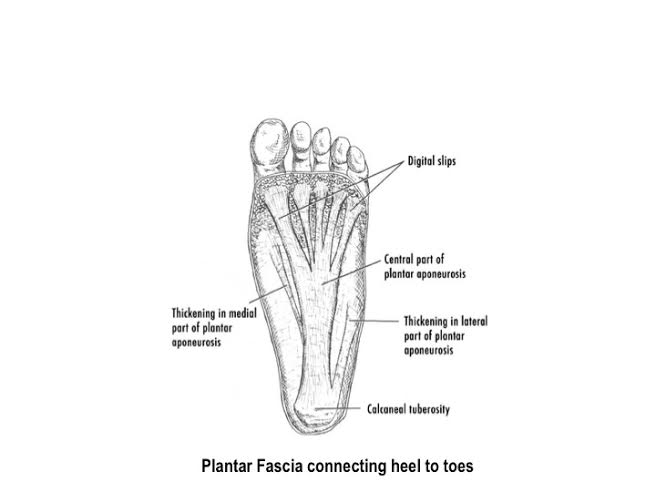
The plantar fascia lies underneath our soles, connecting our heel bone to our toes, and supporting our foot arch. Plantar Fasciitis by Dr Kathleen Thompson3

We usually neglect our poor feet, which carry our weight and absorb intense and rapidly changing forces during many sports.  The plantar fascia struggles to support and maintain foot shape during these activities, but if it is strained, it develops small tears and becomes inflamed.

The first sign is pain under our heel, which, counter-intuitively, is usually worse on getting out of bed, and paradoxically improves when warmed up by exercise. However don’t be fooled. You need to rest your foot to recover. If you don’t you could have chronic problems.

It is most frequent in women, aged 40-60 years, and is induced by long-distance running, walking or dancing,
 obesity and occupations involving standing or walking.

Importantly, the root cause may be elsewhere in the leg, the plantar fasciitis being a manifestation of poor biomechanics and abnormal walking/running movement.

Besides resting, anti-inflammatories, such as ibuprofen help. Most people recommend stretching the plantar fascia, and, importantly, also the Achilles tendon and the calf, as tightness in these may aggravate the plantar fascia. Night splints can maintain stretching whilst you sleep. Others advise against stretching the fascia itself whilst it is inflamed.

Ice massage is useful, for example, rolling your foot on a frozen orange.  The massage is quite painful, and the ice has a numbing effect. Personally, I recommend buying a quarter bottle of Prosecco. Drink the contents, half-fill with water and freeze, then roll your sole on the frozen bottle (the Prosecco takes your mind off the pain).

Shoe arch supports ease the fascia, or your therapist may use strapping.

The fasciitis will eventually settle, but may take up to two years. Steroid injections, give temporary relief but weaken the fascia in the long-term.

So what inspired me to write about this? Let’s just say, I’m rolling my foot on a frozen Prosecco bottle as I write.

Further Information and References:

http://www.mayoclinic.org/diseases-conditions/plantar-fasciitis/basics/definition/con-20025664

http://www.runnersworld.com/tag/plantar-fasciitis

http://www.kttape.com/instructions/plantar-fasciitis/

Note: These articles express personal views. No warranty is made as to the accuracy or completeness of information given and you should always consult a doctor if you need medical advice


National Seafood Week – A perfect Recipe

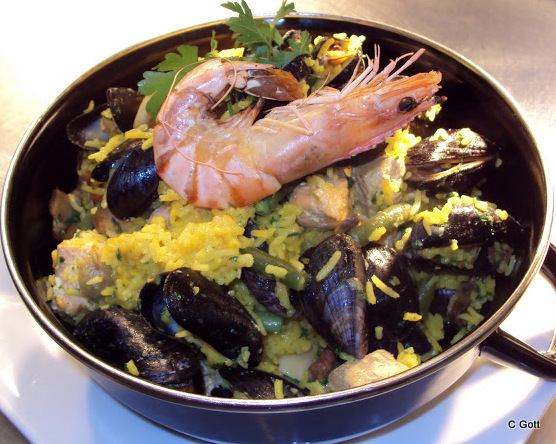
Did you know it’s the last day of National Seafood Week and the middle of National Curry Week? Who makes these arbitrary decisions? Does anyone care? Well, it is Friday today and I have gone for a fish and seafood recipe, for that Spanish masterpiece the Paella. Now like a lot of classic recipes Paella, at first glance may seem pretty daunting, but I assure you just keep in mind all you are really cooking is rice, and with that statement I have annoyed the entire Spanish nation.

I really love rice and it is easy to cook if you follow the basic rules. The principle about making a good paella is very simple, much like a risotto you want to drive as many of the flavours from the stock and accompanying ingredients into the rice. There are many myriad of varieties of paella and a huge number of ingredients that go into different regional recipes, some call for chicken, rabbit or snails, but this recipe is for a great paella, perhaps the greatest, Paella de Marisco or Seafood Paella.
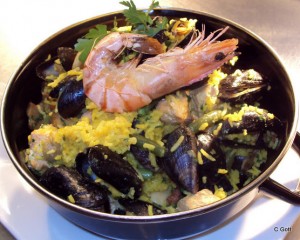
Seafood PaellaIt is really important to use the right rice, many Spanish people use a short grain variety called Bahia, grown in South & South-eastern Spain. It requires around two times its own volume in cooking liquor. For that extra special Paella, there is a variety of rice called Bomba – this is a slow growing rice that absorbs three times it’s own volume when cooked without falling apart. As Paella is primarily about the flavours of the stock being absorbed into the rice, this is a particularly excellent variety, although it can be quite expensive. About a 100g of rice per person, Bomba or standard paella rice will give a good main-course size portion, which means 1Kg of rice will make a Paella for around ten people.

Your Paella pan, the name Paella is a Catalan derivative of an old French word for pan, should be a sturdy and made of polished steel, and to care for it follow the technique as you would for a steel wok. The reason there are so many different sizes of Paella pan is because it is important not to create a Paella that is too deep. Your final Paella needs to be a “dry” rice and having the dish too full will not allow any excess cooking liquor to evaporate out once cooked. As a basic rule of thumb, a paella should not be deeper than the rivets for the handles on the paella pans. Traditionally paella is cooked over an open fire as you may have seen in Spanish fiestas or festivals. The way to achieve that really authentic Paella is to allow me to introduce Sofrito and Socorat.

The Sofrito and the Socorat
The Sofrito and the Socorat are not characters or events in Don Quixote. They are the key to you making an outstanding classic Paella. The sofrito is a fried tomato paste, do not worry if you don’t like tomato – you will never know it’s there. It adds a rich sweet note to the finished Paella. The scocorat is perhaps the most highly prized part of a paella. It is the dark caramalised rice that sticks to the bottom of the pan.

 
Seafood Paella                                               serves 4 to 6

150 gr cleaned Squid
250 gr Monk fish fillet,
100 gr good quality Smoked Chorizo Sausage, very finely diced
12 Prawns, the bigger the better, peeled and de-veined
4 Crayfish or Gamba’s , as big or bigger than the prawns
500 gr approximately fresh Mussels, washed and scrubbed
Sweet Paprika (Pimentón Dulce)
100 gr cooked Butter Beans
2 Red peppers, thinly sliced
A generous quarter teaspoon Saffron Threads
Paella Rice, one cupful per person
Seafood or Fish Stock, approximately twice as much as the rice
4 cloves of Garlic, peeled and very finely chopped
1 large Spanish Onion, peeled and very finely chopped
1 small tin of chopped Tomatoes
Peas (as many as you like)
A glass of quality Dry White Wine
A really generous glug of good quality Olive Oil
Sea Salt and freshly ground Black Pepper
Freshly chopped Parsley

A large 6 person Paella pan

In a small heavy-bottomed saucepan, place the diced chorizo sausage and generously cover with olive oil, heat until the oil just starts to bubble then turn down to lowest setting and keep on the lowest possible simmer for thirty minutes. Be careful not to have the sausage on a high heat and burn the chorizo, the aim is to slowly confit the meat in the oil to release the delicious flavours. Remove from heat and cool, then store in airtight container in the fridge. This can be made up to a week ahead of time. This braised chorizo is great gently re-heated in stews, casseroles, with chicken, as a garnish to monk fish, sea bass and oysters. As with many recipes some people are probably shaking their heads at the addition of chorizo to a seafood paella but once you smell the heavily flavoured oil sizzling in your pan I think you will be convinced.

Score and cut the squid into cubes about two centimetres each and then slice the monk fish fillet into finger thick escallops. Heat a generous serving spoon of the flavoured chorizo oil in the paella pan, when the oil is smoking add the prawns and crayfish, sauté for a minute or two then remove and put to one side. Next, put the squid in the pan and fry until light golden brown. Remove and add to the prawns.

For the sofrito
In a little further oil gently sauté the onion for five minutes without colouring. Add the tin of chopped tomatoes. Turn up the heat and cook the tomatoes with the onion until it reduced into a very thick dark red paste. Stir continuously to prevent the sofrito from sticking and burning, but reduce it right down.

Add the chorizo, garlic, saffron and a teaspoon of paprika and stir everything around before adding the rice. Stir well ensuring every grain of rice is covered in the sofrito. Pour in the fish stock, wine, pepper slices, around a ½ teaspoon of salt and plenty of freshly ground pepper and bring it up to the boil and simmer. After 10 minutes of cooking add the butter beans, peas, prawns, the crayfish and the mussels. Cook for an extra 5 minutes until almost all the liquid has been absorbed. Occasionally gently shake the pan to prevent the large ingredients from sticking to the bottom of the pan, DO NOT STIR.

For the socorat
Turn up the heat to full for no more than a minute or so. You will hear the rice start to “pop”. After a short time “popping” (30 seconds or so) turn off the heat completely. Interestingly this is how popped rice cereals made without the fish flavouring!

Resting is important for the final flavours to develop and for the rice to finish cooking . If you want to decorate you paella with extra pre-cooked prawns and mussels on the half shell, then this is a good time to add them so they can warm through. Cover with a double layer of foil and leave it to rest for ten minutes. Serve with lemon wedges and parsley straight from the pan.

‘This is’: Goya, Monet and Kandinsky

This is- pic 1 Fan.JP

I spend a great deal of my spare time dawdling around art galleries. Every time I wish I knew more about the paintings. As I stand there, appreciating the works, I am aware that I am looking at complicated ideas and histories but not really seeing or understanding the concepts.

Laurence King Publishing has brought out a new series called This is…

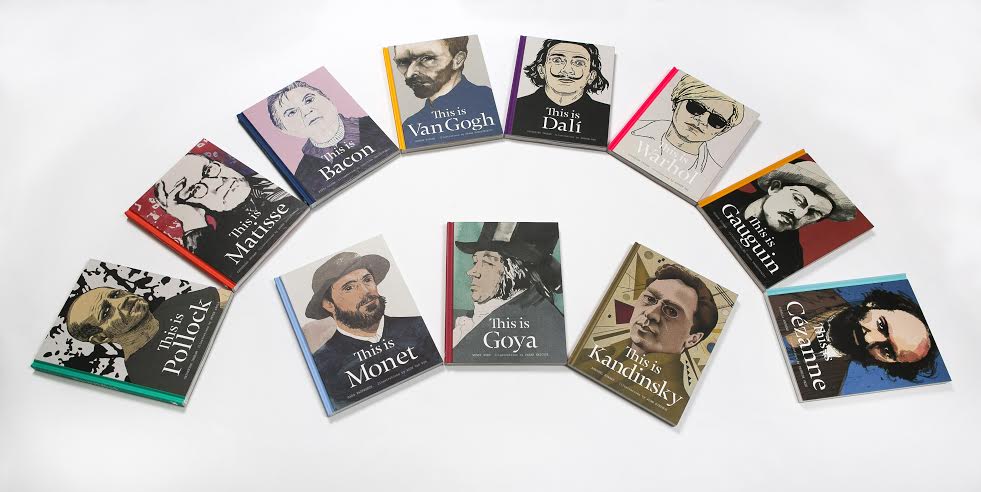
I have read This is Goya, This is Monet and This is Kandinsky, by different authors. These books are well presented, with clear and understandable text, accompanied by the artists’ paintings, as well as especially commissioned illustrations.

This is pic 2 Goya cover.

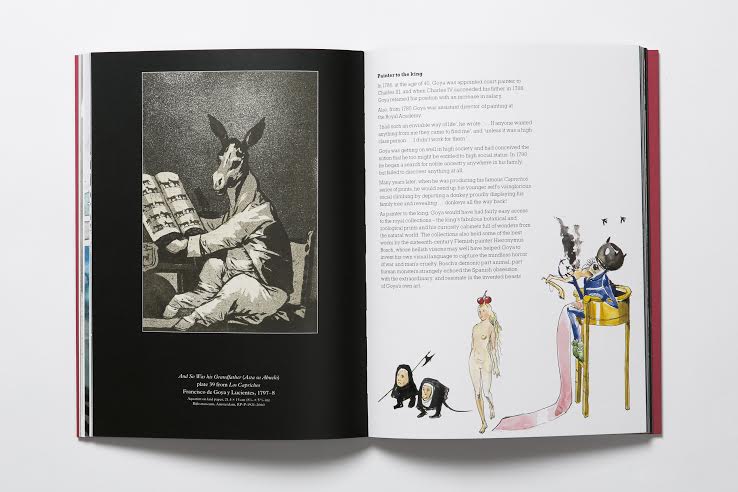
Let’s take Goya by Wendy Bird with illustrations by Sarah Maycock. Did you know that Francisco de Goya y Lucientes was the first artist deliberately to pursue creating works of art for their own sake? I didn’t.

This is Pic 3 Goya_Spread_6.

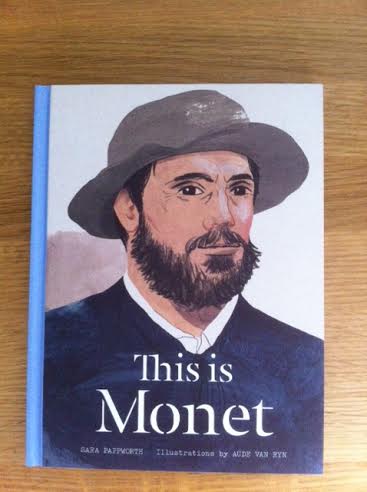
Monet I knew was a leading member of the French Impressionists.

This is Pic 4 Monet cover-12

I was looking at one of his many paintings of haystacks in the National gallery, the other day, (He painted the same haystacks but followed the play of sunlight on them throughout the day). Go and have a look. He never rested, evolving his art way into his eighties. Learn more from Sara Pappworth with illustrations by Aude Van Ryn.


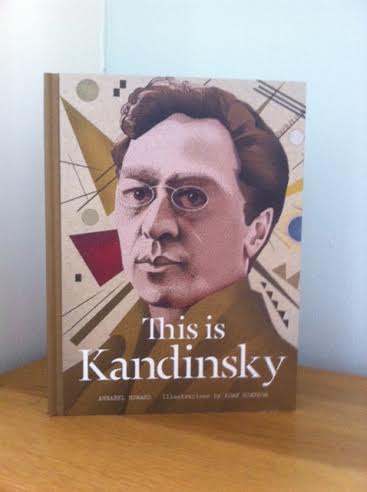
Kandinsky looks more like a clerk, or bank manager, than a painter.

this is Kandinksky cover

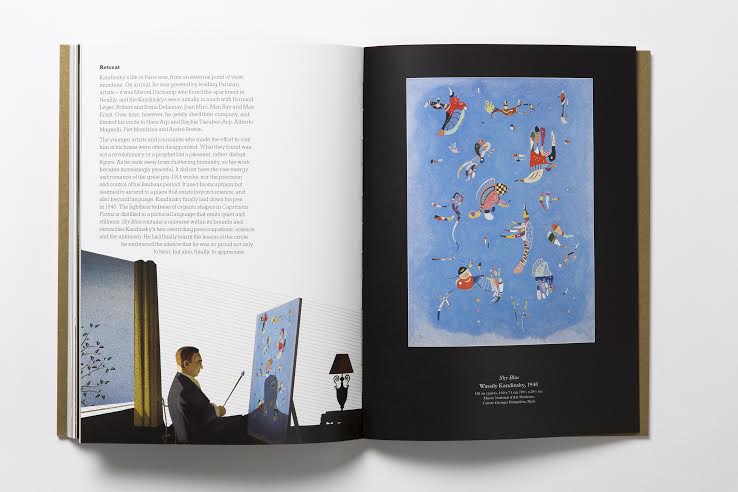
He seems almost a cypher, but inside this misleading façade lived a sensitive artist who produced forceful genre defying work. I knew little about his work and am not sure I particularly like it, but this book by Annabel Howard with illustrations by Adam Simpson has created an interest. This in itself is a virtue.

This is pic 7 Kandinsky_Spread_8

A truly lovely series.


Paddington Goes on Holiday by Paddington (aka David Worsdall)

DW pic 1 paddington at station.j

When my grandpa, who lives in Downley, High Wycombe, told the family that he was going to go to Peru it was suggested that I might go to keep him company. He agreed, but wanted to have a close look to make sure I didn’t weigh too much.I had no idea why at the time.

DW pic 2 marmalade.j

Anyway, a few days later we finally set off and flew to Lima. Grandpa said I should stock up on marmalade when we get to the hotel because there wasn’t going to be any for a few days. I didn’t like the sound of that.

pic 3 DW.

Then we went to a place called Cuzco where we met local people who were mountain guides and porters and Grandpa had a technical discussion about equipment, medicines and other things. Marmalade was never mentioned.Then off we went.

DWpic 4a.view.jp

After two days we reached a very high pass where the air was very thin. I was strangely unaffected but it was a little tiring having to pose for photographs with lots of people who seemed to recognise me including local mountain guides and everybody who had heard about my recent film.

Was this the deepest darkest Peru I had been told about? The scenery was breath-taking.  ‘in more ways than one.’ Grandpa said.

After four days we finished the journey and I perked up when Grandpa said there would be marmalade when we got to Machu Picchu

Paddington goes on holiday        by Paddington (aka David Worsdall)4

A fantastic train and boat journey then followed which I enjoyed immensely. I met lots more people.

DWpic 6 train ext.jpDW7 train int.jDW 8 local sceneDW pic 10.

As you know when you are having fun, time passes very quickly and it was soon time to come back to England.

When we got back to the airport we had to go into London to get home so Grandpa took us round to Marylebone to get the train to High Wycombe. The lady behind the ticket counter said ’I am very sorry to tell you but Marylebone is closed for engineering works you will have to go round the corner to . . . Paddington.’

pic 13 paddington home.

Grandpa and I just looked at each other and laughed.  I knew I was home.


Boom Shake Shake Shake the Room with The UE BOOM 2 Bluetooth® speaker

Following on from the award-winning UE BOOM 360 degree speaker, Ultimate Ears have upped the ante once more to bring you unparalleled party sounds with their new anywhere-you-go-proof UE BOOM 2 and trust us you will be blown away.

UE-BOOM-2-Lifestyle-4

UE BOOM 2 appeals to everyone with it’s stylish design, fantastic sound quality, connectivity to multiple devices and perfect for those crazy parties where there’s always a clumsy one which will knock over anything and everything. Yes people, this device is ‘clumsy people’ proof designed to get wet, muddy and beat up, the UE BOOM 2 will continue to blast those block-rocking beats in every direction after enduring a round or two with Mike Tyson We can assure you, you would struggle to find anything quite like it in the Bluetooth® speaker category with the durability factor just as impressive as the sound quality.

design-january

So what makes it different from the original;

Waterproof

Drop-Proof from up to five feet

Practical Size no larger than a water bottle, it’s completely the right kind of portable without compromising on volume or sound

UE BOOM 2 is 25 percent louder

Longer Wireless Range up to 100-feet

15 hour battery life

Even after all of those impressive feats, our favourite innovation on the UE BOOM 2 has got to be the new tap controls which allow you to skip songs without needing to have your device to hand. So what’s not to love…?

Our verdict is this speaker really intends to deliver everything it promises, after all we did win it by knocking it off a podium with a water balloon into a pit of water! Yes that’s right, completely adventure proof! We love it and unlike a lot of our competitors really appreciate the hard case it comes in which will prevent it turning on in luggage etc. and rinsing the battery life. A problem I always seem to have with other portable speakers.

ultimate_ears_ue_boom_waterproof_portable_bluetooth_speaker_1

Oh did we mention that theUE BOOM 2 also comes with an app for iOS® and AndroidTM which will allow you to double the sound by pairing UE BOOM 2 with any other Ultimate Ears speaker. The UE BOOM 2 is compatible with Smartphones, Tablets and any device which supports Bluetooth and is also built with a 3.5mm audio port.

JPG 300 dpi (RGB)-UE BOOM2 FOB Phantom

The UE BOOM 2 comes in six new colour variations and is retailed at £169 with a Two-Year limited hardware warranty.

www.ultimateears.com

The Best Gluten-Free and Dairy-Free Baking Recipes / The Part Time Vegetarian

I come from a family of food lovers, not of fine dining, but good honest home cooking with the best of locally farmed or grown ingredients, the benefit of growing up in the countryside. One of our closest neighbours when I was little, was the married daughter and her family, of a local farmer who pioneered a farm shop, butchering his own meat and serving local produce over thirty years ago. As we children grew up and played together there were many outings, trips, walks, picnics and visits to the distant seaside. Now the lady in question was also a culinary pioneer and catered for these events with lots of pies, pasties and sweet pastries made with wholemeal flour long before the modern, organic, healthy eating movement began, and I have to say, they were really bad. My sister and I buried them in the sand on the beach and even the Seagulls refused the crusts and half eaten baking.

Book Reveiw I
Now a good many years later as a chef I have to admit I still have an aversion to healthy cooking, compounded by a classical training using a cannon of French recipes, requiring copious amounts of cream, alcohol and butter. But times have changed. We are much more aware of diet, healthy eating and can make informed decisions about what we eat. We can make choices about low fat, low sodium, high fibre, organic, ethically sourced or gluten free dishes or menus. So two of my biggest challenges as a chef are to find inspired, tasty and healthy recipes, like vegetarian dishes a little different to a vegetable lasagne or three bean chilli, and to find reliable alternative methods to make gluten free pastry and biscuits that are slightly more palatable than my memories of buried jam tarts that will be around for hundreds of years.
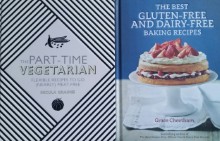
It is then a real pleasure to have found the Nourish imprint and in particular two very excellent cookery books. The Best Gluten-Free and Dairy-Free Baking Recipes by Grace Cheetham and The Part Time Vegetarian by Nicola Graimes. For someone who deals with recipes every day at work and in my own kitchen it is really encouraging to discover some real distinct and different dishes in The Part Time Vegetarian and I like the concept of adapted recipes including meat and fish if you so choose.
From the very moreish, crumbly Butternut squash scones with goats’ cheese served warm from the oven, to a particular favourite the Halloumi Hash, a really clever idea to use up any leftover roast potatoes and vegetables for a Monday lunch, the book is packed with well written, thoughtful recipes. Not only did I learn several new dishes and ingredients I have been inspired to go meat free at least one day a week. I have tried my hand at making Labneh, a simple, tangy Middle Eastern style cheese that was delicious with flatbread and Balsamic cherry tomatoes. I made Okonomiyaki for my lunch, this is another great way to use up a fridge full of leftovers and is a kind of really delicious, grilled Japanese pancake cum pizza. I found this book to be a total joy and a treasure trove of wonderful ideas some of which will no doubt find their way on to one or two restaurant menus.

In the Part-time Vegetarian there is a very adaptable recipe for an asparagus and Parmesan Panzanella, a classic Italian tomato salad that uses up yesterday’s stale bread. Nicola adds chicken for her non vegetarian version. I have done a similar dish on a menu using pan fried king prawns, but I was really impressed by the Best Gluten-free and Dairy-free Baking Recipes book with a recipe for Panzanella. You just don’t think to make a salad using up old bread for someone who is gluten intolerant. The author Grace Cheetham provides a failsafe collection of recipes for gluten breads, biscuits and cakes so you can enjoy the same dishes as anyone who is not intolerant.
I am in total admiration because I have to say these alternative recipes are every bit as delicious and palatable as the gluten originals. You will have to stock up on a few items such as chickpea flour, maize flour and brown rice flour but the results are well worth it from a moist Chilli Cornbread to an excellent Beef Wellington that would impress the most discerning dinner guest. Best of all there are some really astounding chocolate brownies and melt in the mouth Millionaires shortbread that went down amazingly well in the office. So if you are intolerant, on a restricted diet this is a detailed, practical and impressive cook book with recipes that really work and you can the adapt or use in lots more of your cooking.
If you know any chefs you will be aware that they are seldom wrong, well I would like to admit that there is a big place for some of these recipes in my work and I am very pleased to have found both of these books. If I am not going to swallow my own word’s I am at least going to do the next best thing make another batch of gluten free Millionaires shortbread and swallow the results of reading someone else’s.

Month 9 of my Reading Challenge By Frances Colville

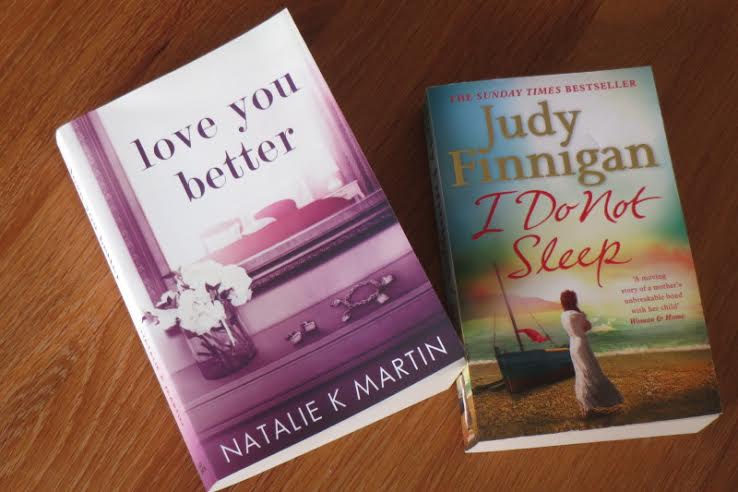
My first two books this month both dealt with hugely important issues.  I Do Not Sleep by Judy Finnigan   focuses on grief and in particular coming to terms with the death of a child, while the main theme of Love You Better by Natalie K Martin is domestic violence.  Both were interesting reads, but neither wowed me.  The storyline in I Do Not Sleep struck me as unrealistic and contrived, and I didn’t feel any real empathy with the main character.  The book was somewhat redeemed by its ending, so it’s worth persevering.  Love You  Better felt like a missed opportunity and the ending was obvious throughout which detracted from my involvement with the progress of the story.

Month 9 of my reading challenge By Frances Colville2

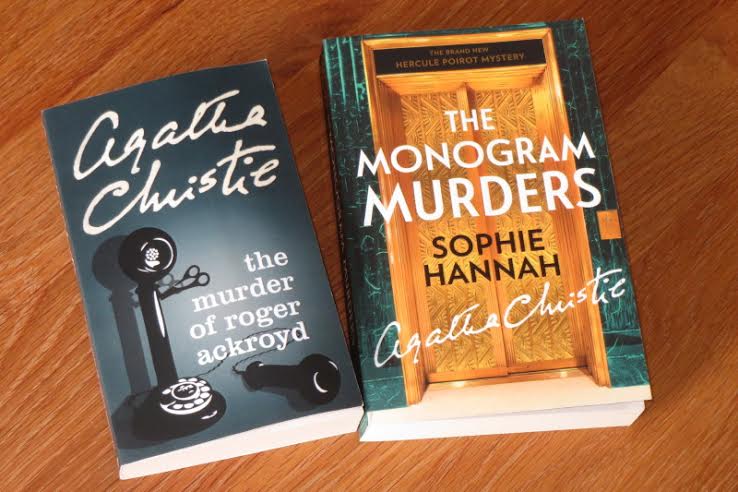
Next I turned to another of the books on my Agatha Christie pile – on my mind no doubt because of visiting Agatha Christie’s former holiday home, Greenway, in Devon last month.  This one The Murder of Roger Ackroyd was one I picked up at last year’s Cheltenham Literary Festival and  I was swiftly transported back to Agatha Christie world with all its preconceptions and prejudices.  You always get what you expect with an Agatha Christie – and there are times when nothing else will do.  This one didn’t disappoint.

Month 9 of my reading challenge By Frances Colville3

All of which reminded me of a new Agatha Christie story.  Sophie Hannah (whose psychological thrillers I also enjoy) has with the approval of the Agatha Christie family written The Monogram Murders featuring Hercule Poirot, arguably Christie’s most famous character.  I wondered if anyone else could effectively recreate Poirot and his world – and my answer having read and enjoyed The Monogram Murders is a slightly confused yes and no.  Hercule Poirot is well recreated and the storyline is as intriguing and enjoyable as any other Poirot mystery.  And yet I would never mistake this for an original Agatha Christie.  Perhaps it wasn’t meant to be.  Perhaps Sophie Hannah intended all along for this to be an updated, twenty-first century version. To me it did indeed feel more like one of her own psychological thrillers with a cast of Agatha Christie characters rather than a mystery of the type Christie herself wrote.  The confusing thing is that I don’t mind that at all.  As I’ve said before I enjoy reading both books by Sophie Hannah and books by Agatha Christie.  So a fusion of the two was always going to work for me.

Month 9 of my reading challenge By Frances Colville4

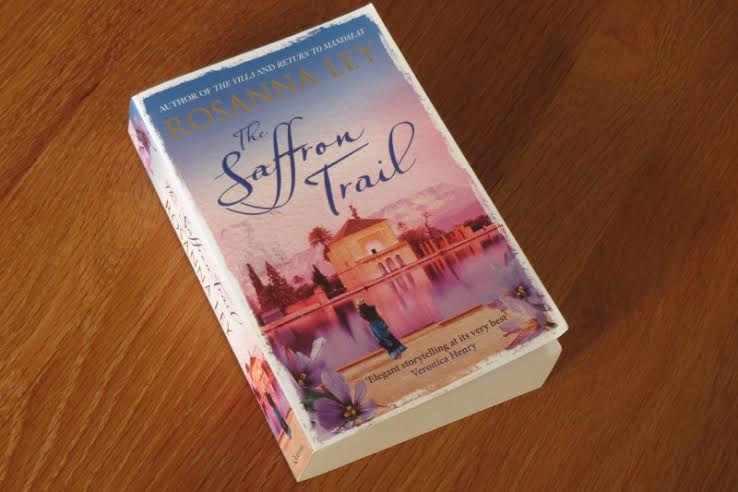
Rosanna Ley is the author of The Saffron Trail which is partly set in my local town of Bridport and the neighbouring town of Lyme Regis –  a fact which added to my enjoyment as I ticked off all the places I recognise and love.  The story also takes us to Cornwall, Morocco and the US and the descriptions of all these places is done very well.  It’s a good story too with believable and likeable characters.  This is the first  book by this author I have read, but I will certainly look out for another.

So it turns out (by chance rather than design) that all the books I’ve read this month have been books telling stories – and I’ve enjoyed them all to a greater or lesser extent.  They have provided relaxing and pleasant entertainment.  But entertainment isn’t the only reason I read; I also want to be educated, stimulated and challenged.  So now I find myself wanting a book which meets at least one, and preferably more of those criteria.  The only question is: what will it be?

October 2015