SUNDAY SCENE: MARIE LAVAL ON HER FAVOURITE SCENE FROM QUEEN OF THE DESERT

I have for a long time been fascinated by the history, cultures and landscapes of North Africa. It’s a part of the world I have always dreamt of visiting, especially the Sahara desert, the Ahagaar and the Tassili N’Ajjer National Parks. Sadly I’ve never had the chance to travel there, so whilst researching the background to my historical romance QUEEN OF THE DESERT, I tried to get a ‘feel’ for this incredible place and its people, the Tuaregs in particular, also sometimes called “Kel Tamasheq” (those who speak Tamashek) or ‘The People of the Veil’ because of the indigo veil men wear from around the age of fifteen.

I read Tuareg poems and folk tales and watched documentaries, but what gave me the greatest joy was the music I discovered. Music really brings people and heart together… I listened to so many incredible artists – Bombino, Tinariwen or Tarwa N-Tiniri to name but a few – and also to more traditional music featuring the imzad.

The imzad is a traditional string instrument played only by Tuareg women, who according to folk tales invented the imzad to distract men from their constant fighting. Here is a link to a documentary about the importance of the imzad for Tuareg culture. https://www.youtube.com/watch?v=J_0EdwuC9og

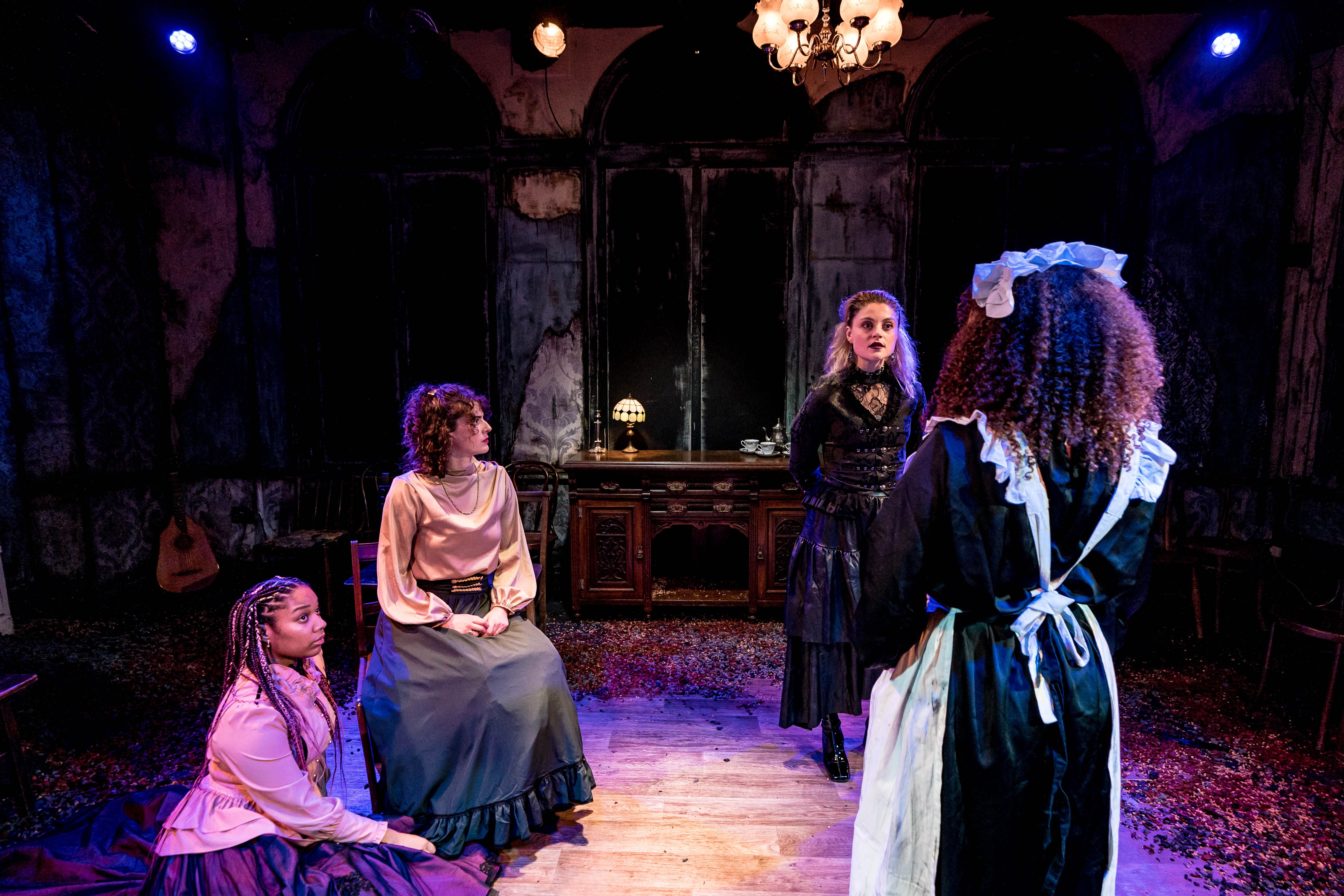
As they travel across the Sahara, the main characters from QUEEN OF THE DESERT, Lucas Saintclair and Harriet Montague spend a few days with a Tuareg caravan.

A strange landscape appeared in the distance, so strange she thought she was seeing another mirage, but they were only rock formations that the wind and the sand had eroded and moulded into weird, nightmarish shapes. Tents were pitched around them. Two dozen blue tents at least. Then she saw white mehari camels and the tall silhouette of a man outlined against the sunset. He resembled a spectre, still and gaunt, his face covered with a cheche and his long tunic floating around him.

Every evening, Lucas and Harriet listen to poems and stories.

Like every evening, they sat under a dark velvet sky studded with stars in front of the chief’s tent. Tonight was their last night with the caravan before reaching In Salah.

Lucas said a few words to the chief, who searched his leather bag and produced a smooth green stone shaped like an egg. Each stone in the story telling bag was unique, and prompted a different story by the chief. Tonight was no exception.

‘Tin Hinan,’ he announced.

‘An emerald,’ Lucas finished, his eyes shining. He stared at the sparkly green pebble the chief held in his hand as he started talking in his low, chanting voice.

‘Tin Hinan came from the Western lands beyond the great desert,’ Lucas translated. ‘She followed the stars and the ancient roads to Abalessa, the blessed.’

And after the stories there is music with women playing the imzad…

One of the women musicians picked up her imzad and started drawing long, intricate and soulful sounds. Her heart heavy, Harriet locked her fingers together and blinked the tears away. How she would miss the Tuareg caravan – setting off at sunrise in the transparent, purple dawn, camping out in sheltered gorges and lost valleys, and listening to Lucas’ voice as he translated the chief’s stories in the evenings. Most of all, she would miss the passion, the heat of Lucas’ arms every night. They had become as essential as air, water and fire.


I hope you enjoyed your imaginary journey to the Sahara desert. Thank you for travelling with me today…


Frost Magazine is doing some craft bombing as we enter August. Today Margaret talks to Marilyn Ellison – Quilter and member of the Fat Quarters Sewing Group based at Columbia Community Centre, Washington, Tyne and Wear

I make no apologies for craft bombing you with abandon at the moment. Recently it was the North Yorkshire’s Thirsk Yarnbombers’ hanging baskets dangling outside shops pubs and businesses

         The Black Lion                                                  JW Estate Agents

Today we switch to quilting. As you will know, Frost Magazine has been covering the Columbia Community Centre and how it stepped up to the plate during Covid, much as Thirsk’s community did, and I wanted to see how things were  post-Covid in my mother’s birthplace. I discovered that the CCA were pressing forward in leaps and bounds poring over plans for refurbishment, which has now begun – hooray.

Link to the first editorial on the refurbishment of the CCA building,

While work progresses, the CCA based at Brady Square, Washington, Tyne and Wear is of course, managing on the one hand to facilitate the internal and external renovations, while with the other, making sure that the groups who meet at the centre still have space to dance, exercise or in the case of the Fat Quarters Sewing Group create magnificent quilts like the one heading this article.  Oh, and to have a cuppa, of course.

Having been sent the photo of the quilt by Marion Taylor the secretary and unstoppable force of the CCA, I simply had to talk to Marilyn Ellison, the creater of this glorious Wedding Quilt, made for a grandson who is to pledge his troth today, the 12th August.  You see, I make baby quilts, which take me long enough, so how on earth…

Knowing the blood sweat and tears, not to mention pricked fingers,  that go into my little offerings, all with the rather wonky result, well-meant though they are,  I  simply had to chat to the creater of a ‘proper’ quilt, one which fills me with awe, and more than a bit of frustration. I mean, how and stay sane?

Enter stage left, Marilyn Ellison – drum roll, ta-ra-ra – doyen of the quilting world, in company with the other Fat Quarters ladies of the CCA. So, come on Marilyn, give us the gen on quilting, and Wedding Quilts, and all you know, if you please.

Marilyn comes from a long line of dressmakers – at least three generations:  ‘So it was perhaps natural,’ Marilyn said when we spoke, ‘that on retirement I would continue to pursue the family talent in some way.’

But before we move on,‘ I insisted, ‘Let’s put the name of the group to rest, because let’s face it, none of you  are  fatties not even plumpies. So why the name?’

No, no,’ laughed Marilyn. ‘Let me explain: if you have a metre of cloth, in order to get more usable material you fold it in half lengthways, then again, so you have a Fat Quarter. You then cut through the fat layers, or quarters, to produce four shapes. In this way you get more from the metre of cloth.’ So there we have it; no fatties, just quilting lingo.

Now back to the matter in hand.

It seems that a Wedding Quilt, such as the one Marilyn has worked, is not made in one piece, but in manageable blocks. These blocks are then sewn into one big quilt, which by the end is pretty heavy on the arms and shoulders. Can you  imagine, therefore, working each patchwork shape into the whole, not a block? It couldn’t be done, for a start it would fall over the floor and you’d end up with arms like a weight lifter.  Once the blocks are amalgamated into a whole, a border is then sewn.

So is that it?’ I asked.

Heavens no, then comes the wadding, and finally the backing material which is usually in one piece or perhaps two – remember  that you can obtain 5’ wide material. Finally each quilt has a label sewn on by the quilter, with a quote, or whatever is their usual ‘signature’’ Just like a work of art, I thought. For these creations are art.

My mind flicked to Larkrise to Candleford which I am watching on DVD at the moment and Marilyn and I talked about the strain of sewing by candlelight as people once did, but we decided that the eye strain was as nothing against the benefits of their Sewing Bee chatter, which no doubt was actually gossip, and probably made the industrious endeavour pleasant, instructive, and fun. Indeed a break from the cleaning, baking, bringing in the harvest and traipsing miles to the local town. I watch each episode of Larkrise to Candleford wondering at the sheer exhaustion of the life, and the discomfort.

But back to today’s world.

Our chat about sewing bees led to Marilyn and I discussing the merits of working in a group in this day and age, and they are just the same as in the 1800s – chatter and friendship which the Fat Quarters Sewing Group experience in their present home at the CCA. I say present, because the Fat Quarters is an amalgam of two groups, and has been in existence for quite some time resident in places various.

Candlelight or not, the chatter goes on much as it always has done, and the friendships endure. As Marilyn said, ‘These crafts are making a comeback, and if anyone is interested they will be more than welcome to join the Fat Quarters Sewing Group, really they will.

So take heed, all you sewers, or potential sewers, for you will receive encouragement, and guidance, and I know from my little efforts that a handmade quilt is well received.

But that wasn’t all we talked about, for Marilyn told me about the Quilters Cottage at the   Beamish Museum and I reckon the Fat Quarters should head there for a day out to visit  Josph Headley’s cottage, which originally stood in Warden, near Hexham, where he carried on the cottage industry of quilting in the 1800s. His fine craftwork was, it is thought, sent as far as America, and his particular border ‘signature’, became known as Old Joe’s Chain and I believe can be seen on display at Beamish who hold one of the only three of his quilts in existence. Go on, girls, give yourselves a treat. There is a cafe there too, and ice cream parlours.

Joe’s story is fascinating: craftsmanship, marriage to a woman 25 years older, and … wait for it …murder…

And so is quilting, and there are friends waiting to welcome you into the fold.

Information: Columbia Community Association  Columbia uk Community Forum

Memories of Brady Square  
Here’s the link for more: https://www.beamish.org.uk/exhibits/quilter-cottage/

Margaret Graham is the author of 30 books under her own name, Milly Adams and Annie Clarke. She has a special interest in military veterans and walked Hadrian’s Wall last year to raise funds, she  also lost weight -hooray but it’s all back – boo. She  is Annie Newsome’s daughter (of which she is proudest).

Annie in her parachute silk wedding dress and Bill, Margaret’s Da

The Power of Sound Healing by Alex Bannard Wellness and Wellbeing editor

I first went to one of Angie Latham Sacred Earth Sound Healing’s  baths about 4 years ago &  was immediately hooked. It was such a beautiful, ethereal experience. I had been experiencing random pains in my legs (which I later learned was a menopause symptom) & afterward the sound experience  the pains disappeared for several months. And every experience since has been different and positive.

I knew by the 2nd or 3rd sound bath that to collaborate with Angie would be wonderful.. Earlier this year Angie & I did our first Chakra Cleanse. I led the room through a yoga, breath work & meditation to cleanse, balance & align their energy centres whilst Angie worked her magic with her beautiful sound baths. It was a wonderful afternoon & we received so many amazing testimonials.

Angie once worked in the NHS & ended up with burnout. At the time she confessed she didn’t really understand about energy, but do any of us? Angie uses this analogy, ‘If we were out in the world dressed in white we would get home & notice the dirt that we had picked up , or in other words, other people’s negative, or perhaps positive energy. . Everything is energy, it is all around us. If we were wearing black then we wouldn’t know what we had absorbed. We need our own energy.’ 

We can see this if  someone walkis in &  lightis up the room or conversely someone enters who has just had an argument & we feel that discomfort. That’s energy. After handing in her notice, Angie went to The Healing Weekend & spent several hundred pounds on her first gong & her passion for sound healing was awoken.

So what is sound healing?

Angie, explained, ‘Sound is energy, it has a vibration & as human beings are mostly water, we’re great conductors of sound & vibration, amplify the cleansing & purifying properties of what is essentially a sonic massage. Scientists are beginning to understand that our cells literally plump up & become more fluid from the vibrations of a gong (so und)bath.

And what is a sound bath?   Firstly, you won’t need your swimming costume! As Angie says, ‘It’s all about letting go, complete surrender. I’ve seen clients just blossom & open up after a sound bath. You don’t have to be spiritual, you don’t have to be anything, Sound baths work for everybody because they work on all levels: the physical, the emotional & a mental/spiritual level. Whatever you need, you’ll experience.

She went on to say, ‘Sound bypasses the ego mind. Whatever your mind thinks you need, the sound will give you what you really need!’  

Angie went onto to say & this is something which I also reiterate in my classes all the time, ‘We can’t stop thought, we can’t stop thinking but we can learn to let go of thinking that doesn’t serve us; negative stories & mind-loops,. You know those stories that keep us awake at night. Sound helps us to let go of those thoughts, giving us some freedom & space, which ultimately paves the way for healing & transformation.

Angie uses crystal singing bowls, which are 99% quartz crystal. Quartz crystal is a natural purifier, cleanser & amplifier. Each bowl is tuned to a certain note which resonates with each of the chakras. Angie plays the bowls to enhance the balancing & cleansing properties of the combination of breath, yoga poses & meditation to bring each of our energetic centres back into balance & alignment which is how they work best. It’s a very powerful practice.

As Angie beautifully summed it up, ‘I’m just guiding people to remember who they really are by accessing the wisest part of themselves by dialing down the mind to remind you that you are heart centred & present, full of love & peace.’

Ultimately we are not just our physical bodies, we have a soul & energy. Becoming more heart centred opens up the gateway to our soul.

The people who have the best experiences in a sound & gong bath are those who have no expectations, and just let go & experience whatever comes up with an open heart and mind. Because, as Angie says, ‘Once you know something you just can’t un-know it.

To find out more about Angie’s work check out her website: https://www.sacredearthsoundtherapy.com/

Or on Facebook:

https://www.facebook.com/SacredEarthSoundTherapy

If you are interested in joining us on any of the upcoming monthly Chakra Cleanse, we would love to see you, please click on this link https://www.tickettailor.com/events/sacredearthsoundtherapy/743764/

Hope and Dreams for The Variety Girls by Tracy Baines

Woo hoo, Christmas with the Variety Girls has a second showing, now re-issued as Hopes and Dreams for the Variety Girls by my friend and yours Tracy Baines..

It is Cleethorpes and World War 2 has been declared but what does this mean for The Empire Theatre? What will happen to our lovely girls, Frances,  
Jessie, Ginny and Dolly  if all the theatres close across Britain?  
They will face it together, of course, in spite of the creeping shadows that are intruding into their lives, and threatening their wellbeing.  But it’snot just the threats attendant on the  looming war they have to fear –  there are others coming ever closer to home …
What about Johnny Randolph and his sister Ruby, newly returned from the States for a start? And is Imogen really Frances’s niece? If not, will this lead to trouble?
But you can’t keep good girls down, and these know how important it is to keep the show going, so when Jack Holland steps in and takes hold of The Empire Theatre the girls determine that this will be a Christmas to be remembered, no matter how hard they have to work, whilst all the time putting on a brave face.
So, they band together, support one another and provide a Christmas to warm even the hardest heart.
This was the 2nd of the Variety Girls series, and Tracy Baines has exceeded the promise of the first, and brought a flurry of fluency, immediacy, empathy and a whole heap of fun into Christmas with the Variety Girls (in Cleethorpes), but never forget the accompanying angst which these well developed characters bring to the party. Oh yes they do – overcoming the difficulties with courage and humour.
A heartwarming novel of triumph over adversity, of hoofing the boards, of brave faces and sore feet.
Cue applause, a standing ovation, bring on Christmas in Cleethorpes. It makes me want to book a whole row at the Empire, and take a coachload to clap and clap the girls, and author Tracy Baines, for it is a cracking read for those who read it the first time, and for those new to the Variety Girls.
Bravo bravo, encore maestro.

Acts of Love and War by Maggie Brookes is a pretty fine novel. One I think you should read

Acts of Love and War by Maggie Brookes

1936 – Civil War in Spain – a world teetering towards – well what? War? Chaos?

21 year old Lucy feels content with her Herfordshire existence probably because she lives next door to Tom and Jamie, two very different brothers both of whom she is inordinately fond.

Then Tom decides to travel to the Spanish warzone, only to be followed by Jamie who supports General Franco, much to Lucy’s horror..

Her irascible father is similarly horrified when she decides to follow them. So is she too going to pick a side? No, her intention is to persuade them both to return, but instead she  becomes immersed in the war, but in a different way, preferring to  join with the Quakers to help the civilians, many of whom are refugees.

Her experiences make her realise that far from bringing the two men back, hopefully to settle with the one she chooses, the three of them will be lucky  to survive at all. If they do, how changed will they be? What common ground will exist for any of them to go forward as friends at the very least, and for Lucy – who will she choose to live her life with?

War and so too the vicisitudes of love can hone endurance to a point where acceptance of things as they now are is achieved, and the possibility on onward and upwards is a reality.  Is this the case for our three characters?

Surely you don’t expect me to tell you? I insist you read this intelligent empathetic novel. You won’t regret it.

In Hardback, ebook and audio. Published by Century

The pace of Columbia Community Centre refurbishment makes Frost Magazine breathless. Talk about Marion and the committee multi tasking…

 August  is here and Frost Magazine is clinging onto the CCA’s coat-tails as they career helter skelter along their refurbishment road as Marion Taylor and the committee balance the needs of  users and workers.

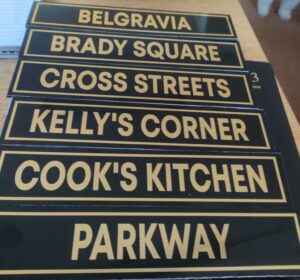
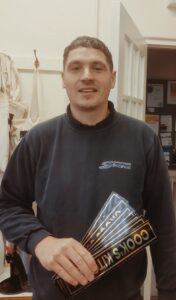
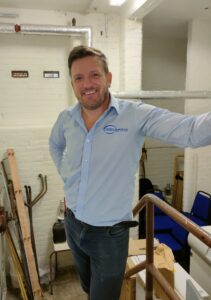
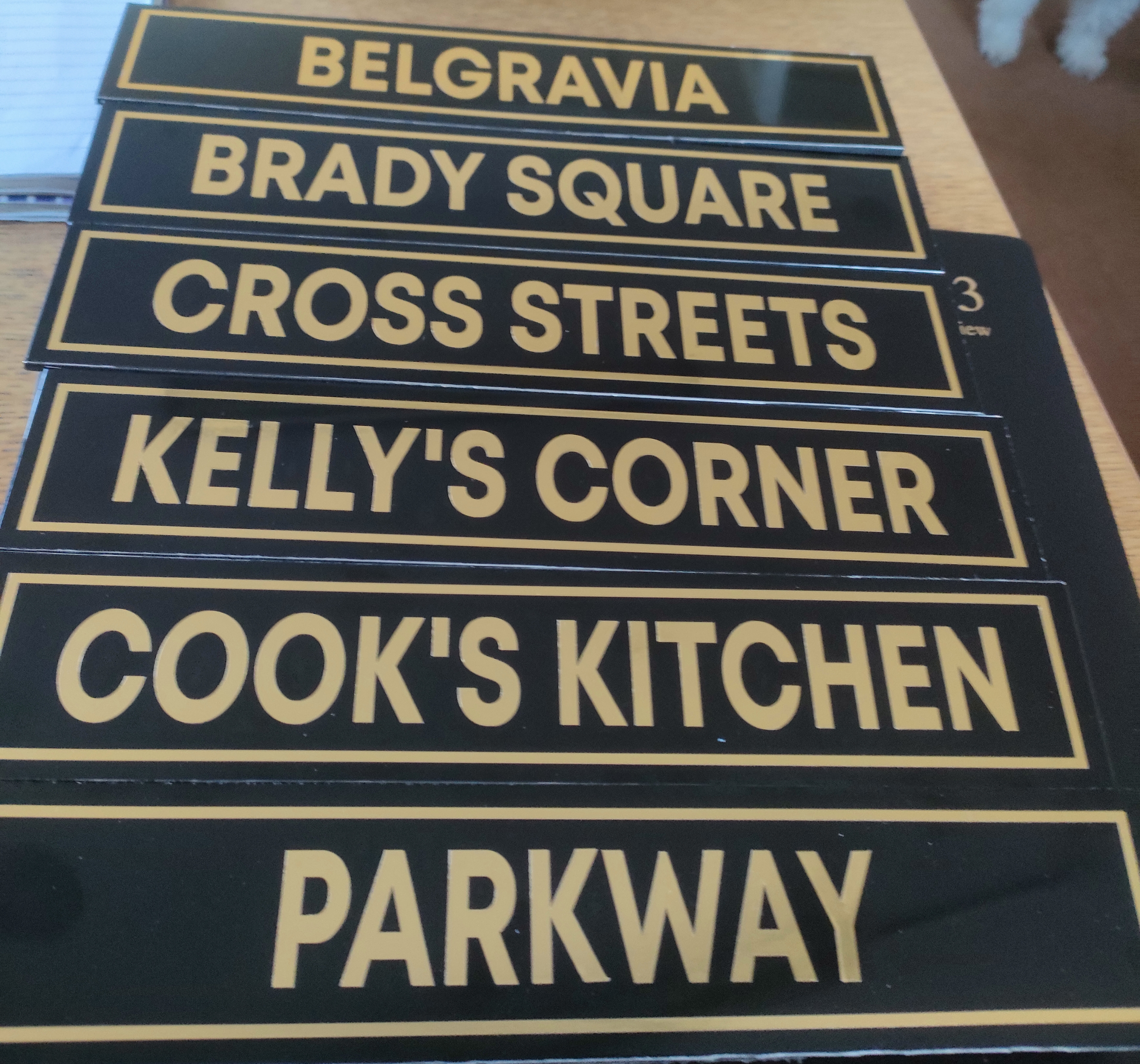
3rd August was deemed ‘takeoff’ for the sanding of the wooden front door, its frame, and the glass panel.The lads from  Complete Outdoor Cleaning & Maintenance assured Marion:  ‘It will be a thing of beauty coveted by all!’

Ah, so Is this why Marion is thinking of an Edwardian Door Knocker? ‘The committee might have different ideas’ she says, ‘but I think it will look fabulous and what about a door handle to match the Edwardian door knocker? (Hyacinth Bouquet what have you started?)’ Marion’s words, not Margaret’s. 

So is this all that has been happening? Silly me.

On Mondays,  Equans who are so generously providing and funding the new kitchen, have their weekly meetings at the CCA. Fortunately there is always an ample supply of biscuits, tea and coffee but recently it is  Adams Ale that has been requested. Margaret Graham assumes this is actually water. Gloom. 

Later Cosmic Blinds, of good old Brady Square, arrived at 9.am to measure the windows, The young man’s first words, Marion tells me, were:I will do what I can to help as I have great memories of this centre. My children had their birthday parties here and what fun we had, and, I would like to help the community in any way I can.’

Marion’s resonse?  “There is no blood like Brady blood, it’s a delicious melting pot of sincerity, love and pride that runs through the veins. Thank you, John Kelly your Cosmic blinds are out of this world.

The gas cooker was removed during the week, ‘And collected  by the local scrap man as we are starting to make preparations for the new kitchen, I really don’t know how Bob manages to do these tasks flying solo,’ says Marion. 

All this as the classes bustled in and out. With the dancers came music  laughter, and all the little people dancing their hearts out led by the wonderfully talented Aimee. ‘Who bends her body into shapes I have only read about in magazines (Frost I think)‘ says Marion. 

‘So, is that it?’ I ask, again. ‘Oh, Margaret, when will you learn,‘ I can hear my mum, Annie Newsome say, knowing full well how  the community would continue to rally round… as the CCA accepting donations of School Uniforms on behalf of Equans and Spectacles for the Cambodian appeal.

Marion has also used social media to request that  food is donated  for hampers to be raffled in aid of the Ukrainian appeal. The Family Tree Florist is sadly closing down at the end of the week and Rachel, the owner, has donated  various types of cellophane wrapping along with an array of ribbons.

Off you go then, Marion. Get working on the bows.  

Towards the end of the week the doors were collected to be stripped, which would take a week. Alongside the refurbishment activity The  Forever young bingo ladies made their appearance. Three welcome and utterly calorie free orange cakes had also appeared. Poof! courtesy of fairy Linda, who was   off to Scarbrough   but didn’t want the ladies to be denied their treats. Marion naturally had to test the cake, just a slice you understand, but how big a slice was not disclosed.


Then it was the Fat Quarters sewing group’s turn to take their place, and work on their wonderful quilts. Finally, it was Friday, and – bells and whistles –  Marion’s birthday. Apparently she is 21+VAT +VAT. Yeah. Yeah. Not only that, but Graham and Christine Thirlaway of the local shop donated lots of hamper goodies. Sister Mary Scholastica also congratulated the community on its achievements, and mentioned she had enough toiletries to last the Seamen 5 months. Hurrah hurrah for the  community – again.

‘So what progress on the hampers?’ Margaret asked.’Six hampers all ready’ Marion says, ‘and taken over to Phil at Di’s Diner who bless him has agreed to sell our raffle tickets at a £1.00 a strip.’

Honestly, Margaret needs a cuppa just thinking about it all, or hang on, let’s make it a glass of wine – onlly to celebrate Marion’s birthday, you understand.

Information: Columbia Community Association  Columbia uk Community Forum

Memories of Brady Square
There will be a CCA Newsletter available in the main corridor

Margaret Graham is an author,  but she prefers to chat to friends over lunch and a glass of wine. Buns and a cuppa are also good.


EVA GLYN’S HIDDEN CROATIA: NOTES FROM A SMALL ISLAND

It is a matter of great debate how many islands Croatia has. Some say over a thousand, and certainly they dot the coast like so many green jewels, set in an azure sea. In practical terms, only around fifty are inhabited although others offer inviting day trip getaways.

Last month we visited Sipan. It’s easily reached from Dubrovnik and its airport – in fact we were in our hotel room less than two hours after our plane landed – so it isn’t remote. But the joy of it is that it feels like it.

At the time of writing there is just one hotel on the island, the other having closed during covid. There is no doubt that Croatia’s economy suffered badly from the lack of tourism. It’s evident in marginal locations especially, with boarded up premises and half-completed building projects. But on Sipan at least construction has restarted and there were two enormous cranes perched above the harbour in Sudarad, the village where we stayed.

Although we were primarily in Croatia for a research trip for my summer 2023 novel, it was the kind of place we’d have chosen for a relaxing holiday. Small and quiet with a couple of narrow shops to buy supplies (despite the dearth of hotels there is plenty of self catering accommodation), and four or five bars and restaurants.

As for beaches, Croatians have rather different views on them. Sand is generally not favoured by the locals (and in truth there is hardly any, although Lopud, the island opposite Sipan, does boast some sandy beaches), pebbles are tolerated, and swimming from rocks – or concrete swimming platforms – is generally preferred. And there are plenty of these in and around Sudarad and the water is crystal clear.

The unseasonable heat limited our desire to wander, but we quickly discovered the best restaurant, Tri Sestre, was next door to the hotel anyway. It was everything I adore about Croatian restaurants; friendly, family run, views to die for from its terrace, well priced local wines and fabulous meals. We mostly ate seafood because it was so fresh and simply prepared, normally with a side of potatoes and chard, which is traditional. At Tri Sestre all the vegetables are grown by the owner – he told us that in summer he gets up at four in the morning to tend them – but the results are definitely worth it. I can quite honestly say I’ve never tasted tomatoes like it, and I grow my own.

Growing things; market gardening, olives and grapes, is the mainstay of Sipan’s economy as it has been for generations, and on a slightly cooler day we did venture out into the countryside. We love Croatian olive oil and wanted to buy some to take home. Just outside the village we found a small producer selling from the terrace of their house. But there was nothing homespun about the oil or the bottle and a great deal of effort had gone into both.

On the opposite side of the road was a wine producer. Agricultural machinery lined the drive and a small sign directed us past the vegetable garden to a table set out under the trees. A woman emerged, having just finished hanging out her washing, and brought two wines for us to taste. No unfamiliar local varieties here, one was cabernet sauvignon and the other merlot, again in some of the smartest bottles we’ve seen. And the contents were of truly international standard too – delicious and meticulously made.

In fact the produce we found in its countryside echoed Sipan itself; high quality and small scale. Definitely a hidden corner of Croatia worth a visit.

SUNDAY SCENE: NICOLA PRYCE ON HER FAVOURITE SCENE FROM THE CORNISH CAPTIVE

I’m delighted to share my favourite scene from The Cornish Captive. Set in a busy harbour on the south coast of Cornwall in 1800, Madelaine Pelligrew, a French aristocrat by birth, is walking on the beach for the first time in fourteen years. Recently released from false imprisonment she had almost given up hope of freedom. As she walks, revelling in the feel of the sand beneath her feet and the wind in her hair, she sees a seagull trapped in the rocks.

The struggling seagull triggers a need in her to free it. Equating the bird’s desperate attempts to free itself with her own plight, she ventures beyond the shingle. At once, her foot sinks into sand, her shoe becomes trapped, and her panic rises. A French frigate captain is also walking on the beach: a prisoner on parole, he has previously helped Madelaine find accommodation and he wades out to assist her.

        ‘The water was deeper than I thought, up to his thighs, but he kept striding out and I held my breath. He reached the seagull and held it up. It lay still in his hands, not the slightest movement and I covered my face, unable to stop my violent sobs. ‘Oh no … no…’

        The need to free it had been so powerful. I could feel myself shaking, a growing sense of agitation. My heart was thumping, pounding with sudden irregularity and I fought to breathe. Everywhere was too vast, the seagulls too loud, the sky too high. He stood smiling across at me, holding up the dead bird. ‘A piece of white drift wood, that’s all. But I must admit it looked very like a seagull struggling against the rock.’

Madelaine is very vulnerable at this stage and Piere de la Croix has already shown her great kindness by leaving a bowl of fruit for her at the inn. Yet she shies away from him, hiding behind her false name.

          ‘Please don’t think me ungrateful. My brother-in-law doesn’t take kindly to your interference. We must never meet like this again.’

         ‘As you wish.’ His voice held sadness, a stiffness in his manner as he pointed me up the beach.

         ‘That includes oranges, Captain de la Croix.’

         He reached for his jacket. ‘Once a ship’s captain, always a ship’s captain – always vigilant for the signs of scurvy. You will get better, Mrs Barnard, and quickly, too. Just eat as many oranges as you can and drink the juice of lemons and limes.’ 

           His hair was ruffled, dark lashes framed his eyes. He held up his hand to shield them against the sun. I did not want to see the kindness in his eyes, nor hear his consideration for my welfare. He was lying. All men were liars. He was a Republican spy: his only intention to trap my brother.

          Above us, soldiers in scarlet jackets watched from the fort. One was holding a telescope to his eye and Pierre smiled. ‘Do they think I’m about to steal a rowing boat?’ His laugh sounded hollow, a sadness in his shrug. ‘I’m allowed this far … yet they don’t like me being so near their fortifications.’

Later, Captain Pierre de la Croix carves a seagull out of the driftwood and it becomes Madelaine’s symbol of escape. The beach, too, features several more times: indeed this scene foreshadows a turning point in the story which is why I have chosen to share it with you.


http://nicolapryce.co.uk/