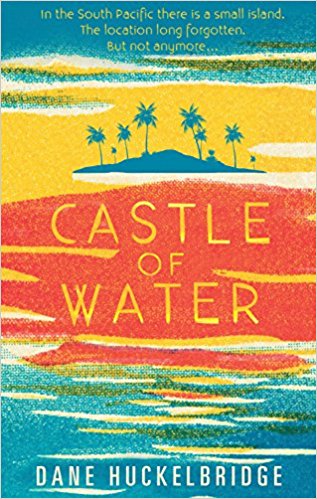
Castle of Water by Dane Huckelbridge


It’s refreshing to read a book which is ‘different’.


The story starts with a plane crash in the middle of French Polynesia. On board the plane are three people; one is an American called Barry who has spent too many years working in finance in New York, though his dream is to be an artist. He takes the plunge, literally as it turns out, as the small plane crashes on its way to Paul Gauguin’s island. The other occupants of the plane are Etienne and Sophie Ducel a newly married couple who run an architectural firm in France. They are honeymooning in French Polynesia and want to see the grave of the singer Jacques Brel, buried on the same island as Paul Gaugin.


The plane sinks, as does Etienne. The artist and the architect have to work together to survive once the reach the island.


They do more than that, over several years – as they find love in the process.


Huckelbridge creates a sense of place like no other, and I laughed out loud many times as the ups and downs of needing to depend on one another takes precedence over wanting to deliver a shape smack.


The octopus capture is hysterical. The whole thing complete and compelling. A lovely novel.


Dane Huckelbridge has sent Frost Magazine his A Day in the Life in which you get a taste of his gloriously quirky turn of phase.


A Day in the Life of author Dane Huckelbridge


Well, I’d love to be able to say that I start each day here in Paris with a crack-of-dawn run along the Seine and some sort of nourishing health shake, but that would be what the French call une bold-faced lie—although I do enjoy the occasional piña colada, which is a health shake of sorts, and my groaning march to the writing desk each morning feels just as challenging as any Ironman Triathlon. All of which makes for a vigorous spiritual work-out, at the very least. After all, if I weren’t an athlete, why would I have so many second-hand sports coats?


However, once my electrolytes have been replenished via the weird little European Nespresso machine in the kitchen, and I’ve adequately warmed up with a callisthenic regimen of intense procrastinative dawdling, I get down to work—which usually isn’t so bad. I especially enjoy writing novels, like my latest one Castle of Water, although at the moment I’m working on a historical book about a man-eating tiger in 19th century India, which is precisely as weird and intriguing as one might think. I’m not too picky about where I write—back in New York, I lived and worked for a year in a pantry under my friend’s stairs known as “The Harry Potter Suite”—but Paris ain’t all bad. It is, simply by dint of its architecture, a predominantly grey city, and winter certainly does little to improve its spectrum. In spring and summer, however, Paris is wonderful, and upon stuffing the leftover Nespresso capsules into my ears to muffle the incessant, high-decibel whine of all the motor-scooters down below, it’s actually quite nice to type away with the balcony doors open and a baguette-scented breeze wafting in. I won’t lie—being a writer has plenty of attendant stresses, and it’s certainly not all beer and skittles. But there are those rare moments when it is sweet indeed. Even sweeter than skittles, as a matter of fact, although perhaps not the red ones. Nothing is sweeter than those.


I try to finish up for the day by late-afternoon, and if it’s not too close to supper, I like to squeeze in a walk, or even the odd beer. I do like wine, although being from the American Midwest, having to drink it too often is a bit like making a dog walk on its hind legs. Namely, it’s hard on my knee joints. So I’ll usually find a spot at a café on Oberkampf, or by the Place des Vosges, and enjoy a nice, cold…well, ok, the French never serve anything cold, and sometimes I’m not even sure it’s beer, but it’s definitely not wine. A piña colada, perhaps? Who knows.


But being healthy never tasted so good. And what is writing, after all, if not an exercise in good ta—


Dangit! Just spilled piña colada mix all over my skittle-red sports coat.

Castle of Water  HQ paperback £7.99


Gay UK: Love, Law and Liberty by David C. Dawson


In the entrance gallery of the British Library until 19th september – Free


If you were alive in 1967, chances are you would never believe the day would come when a glossy magazine would feature a same sex family positively on its front cover. Or the heir to the throne would give an in-depth interview to a gay magazine. But that is how far Britain has come in the fifty years since the first, partial decriminalisation of homosexuality.

You can see all this and more at a fascinating free exhibition called Gay UK: Love, Law and Liberty, in the entrance gallery of the British Library in central London.

I judge exhibitions on how well they tell their story. This one scores full marks. It starts in 1533, when the Buggery Act was passed during the reign of Henry VIII. It continues with the oppression of Victorian England, and tells the stories of steady and persistent campaigns for sexual equality that were mounted throughout the twentieth century and into the twenty-first.

For example, you will see an original copy of the Criminal Law Amendment Act 1885 which created a much more oppressive law against homosexuality. Even homosexual acts carried out in private were made illegal. It was this Act that brought about the trial and imprisonment of Oscar Wilde.

There is a great deal of fascinating Wildean archive here, including a copy of Lippincott’s Magazine

,

in which his only novel; The Picture of Dorian Gray was first published. The book was slammed by critics of the time as “effeminate and contaminating”. Wilde rewrote it to try to play down the homoerotic content.

The narrative of the exhibition shows how literature and humour were used effectively by the gay men and women oppressed for nearly a century by the Victorian’s 1885 legislation. Did you know that Terence Rattigan’s play The Deep Blue Sea was originally written with two gay men as the protagonists? Rattigan had based their story in part on his secret relationship with the actor Kenny Morgan.

There is a copy of Virginia Woolf’s transgender classic Orlando, about a male poet who becomes a woman and lives for centuries meeting key figures of English literary history. Alongside it is an interview with Woolf’s lover Vita Sackville-West talking about the inspiration for the book.


I had forgotten that the British Library not only has a vast collection of books and documents, but also a comprehensive audio archive. I spent a wonderfully nostalgic time listening to Julian and Sandy, AKA Hugh Paddick and Kenneth Williams, from the BBC radio show Round the Horne. At a time when homosexuality was still illegal in Britain, they regularly brought the secret gay language Polari to a weekly listening audience of up to fifteen million.

Then there is a recording of the late Mark Ashton, one of the founders of Lesbians and Gays Support the Miners, portrayed in the 2014 film Pride. Or you can listen to a recording from 1932 of Noel Coward singing Mad About the Boy.

This is archival story telling at its educational best. I learned a great deal, most importantly, about the bravery of the many campaigners whose efforts have led to the increasing sexual equality we enjoy today.

In the entrance gallery of the British Library until 19th september – Free

www.bl.uk/events/gay-uk-love-law-liberty


9 Ways To Give Your Brain a HIIT Workout

We spend hours at the gym or running and hiking to train our body and endurance.  But what about our brain? If you feel like your attention span is shortening you can stretch and strengthen it with simple everyday changes. 

Get more sleep

Not sleeping properly can not only affect our energy levels and looks but also our brain functions. Getting enough Zzz’s can help support learning, memory as well as regulate our mood or even appetite and libido. When looking at the brain of someone who is sleep-deprived, scientists have found reduced metabolism and blood flow in multiple brain regions.*

Be social

Making friends and socialising has a great impact on our emotional wellbeing as well as brain functions. How? When speaking to people and building relationships, you have to pay attention to what they say and then use your memory to recall information to be able to hold a conversation.

Pick up a foreign language

Did you know that learning foreign language can actually make your brain bigger? ** It can also boost your creativity and ability to focus. But most importantly, learning another language gives you ‘a cognitive reserve’ that helps to protect against the changes that can occur during ageing. Dr Marilyn Glenville, the UK’s leading Nutritionist and author of Natural Solutions for Dementia and Alzheimer’s explains, “Speaking a second language throughout your life could delay the onset of Alzheimer’s. Studies show that people who speak two languages may develop dementia more than four years later than those who speak only one language! Language learning leads to more neural connections. More neural stability and more resilience to neural damage.”

Using music 

“Research suggests that playing a musical instrument music when you are older can give you a 36% lowered risk of developing dementia and cognitive damage,” Marilyn says. Can’t play an instrument? Don’t worry, singing can you remember words easily too. “Think how easily you can remember the words of songs that you sang years ago – and yet how much harder it often is to remember a poem or piece of prose that isn’t set to music. Word sequences are far more memorable when they are sung rather than spoken,” Dr Glenville adds.

Start knitting

Apparently knitting is set to be the new baking. It isn’t just something elderly women do and it has recently become popular with celebrities. Apart from helping you to relax it can also boost your mental health as it stimulates almost all of your brain. When knitting, you need to stay focused, plan what you’re doing in advance and also use visual information and synchronise it with your movements.

Teach your body a new skill 

There is a range of techniques to keep your brain alert that doesn’t have to paper-based cognitive tasks. Dr Glenville says “Walking in a new park or taking up line dancing fire up new neural pathways that keep your brain in touch. Needing to remember the steps n a dance is also a wonderful workout for your brain – learning the flow and rhythm of the music stimulates cognitive activity, while learning and performing the steps is great for both your memory and your physical fitness. Active learning is the perfect complement for doing jigsaws, Sudoku and crosswords.” 

Set yourself little challenges 

Dr Glenville suggests the following simple games to give your brain a workout: “Counting backwards from 100 in 2s, 3s or 4s is a good one, and you can make it harder by doing something else at the same time, such as tapping your foot. Or try the ‘tip-of-the-tongue’ game – think of a theme, such as ‘food’, and name as many items relevant to the theme as you can in one minute.” Most people can do 30. Can you double it?

Write things down

Studies have shown that the act of writing something down forces your brain to recall it in a way that typing on your computer or phone does not. ***

Laugh 

Who doesn’t love laughing? It not only lifts your mood but it’s also a great calorie burner. However, researchers have also discovered that laughing can also minimise the damage that stress hormone, cortisol can cause (it damages certain neurons in our brain and affects learning ability as well as memory). On top of that, laughter produces wave frequencies similar to true stare of meditation.****


*www.brainfacts.org/about-neuroscience/ask-an-expert/articles/2015/what-happens-to-your-brain-when-you-are-sleep-deprived/

**https://www.theguardian.com/education/2014/sep/04/what-happens-to-the-brain-language-learning,
***http://mentalfloss.com/article/52136/11-simple-ways-improve-your-memory

****http://www.laughteronlineuniversity.com/laughter-good-for-brain-meditation/


Firefly collaborate with Mr Lyan for new ‘Superfly’ Drink

Firefly, the all natural juice drink brand, are on a mission to inject a little sunshine into your drinks. Aside from their already fruity offerings which include some of our favourites; Lime and Ginger, Pomegranate and Elderflower and Peach and Green Tea to name a few, they have decided to follow on from the success of their recent Mojito inspired Kiwi, Lime and Mint combo to bring you a swoon worthy collaboration with award winning bartender, Mr Lyan himself.

Having won several awards for his innovation and influence within the drinks industry, Ryan Chetiyawardana aka Mr Lyan, has an impressive repertoire under his belt. Some of his best assets include his book, ‘Good things to Drink with Mr Lyan and Friends’, his impressive and successful retail range of bottled cocktails and of course his award winning bars, Dandelyan at the Mondrian Hotel and White Lyan in Hoxton (now Super Lyan).

Inspired by the lighter, brighter days ahead, Superfly marries the flavours of Cascara, Wormwood, Kola Nut, Green Coffee, Grapefruit and Redcurrant to bring you a unique all natural, energising and fruity new drink to enjoy on its own or, as Mr Lyan recommends, mixed in with Scotch or Gin. Serve in a tall glass with a sprig of mint as garnish. As well as the deliciously botanical taste of Superfly, the bottle is also a delight with a unique and bright design you would be proud to have stacked in your fridge or on a drinks trolley.

Superfly is now available from Mr Lyan’s bars, Selfridges stores and Ocado.

Michael Rowan joins the protest to save 35 Amici Drive


35 Amici Drive


The story is a well worn theme of evil developers in cahoots with a corrupt council threatening to demolish the aforementioned 35 Amici Drive, evicting the residents from what they have come to see as a haven of acceptance. If you want to know how it turns out then you will have to get a ticket but there is no easy resolution just as there is no tokenistic use of actors with disability.

Actors with and without disability take centre stage often giving moving performances for which disability is incidental. One young woman portrays someone physically abused in a gripping ballet scene where she is dragged from her wheelchair by her abusive partner and hurled around the stage the two dancers are later joined by another who attempts to protect her. Acting with her face and body and holding balletic lines in a moving pas de trois it was impossible not to feel every move.

There were many such moments that had me smiling laughing and yes I admit it weeping, like the woman singing to her son with learning difficulties in a prayer begging that she be not allowed to die before her son. I had only just wiped away the tear when the chorus kicked in explaining that her love was suffocating him and I was forced to challenging my own assumptions and not for the first time this evening.

Like the Para Olympians there were some gold medal performances with the cast proving they could deftly move from comedy to tragedy and where disability was secondary to telling a good story.

A final mention for the nuanced performance of the young man who acted as our guide through the telling of the story and who clearly revelled in his natural flair for physical comedy.

35 Amici Drive was produced as a collaboration between the Amici Dance Theatre Company and Turtle Key Arts.

Lyric Theatre Hammersmith.

www.turtlekeyarts.org.uk/


Pulling Away From Pain by Paul Vates


Clair Evans is a normal woman – but she has just done something quite remarkable. This is her story, her pain, her fight to leave it behind.

For me day to day life was very difficult and frustrating, the worst part actually getting up in the morning when your whole body hurts so much you don’t want to move. Sleep was disturbed every night with pain waking me up on a regular basis. I very rarely managed to get through a day without having to lie down, my body totally exhausted.

Having tried numerous medications prescribed by my doctor none of which really worked I finally attended a pain clinic where I learned the importance of exercise and keeping moving which was very painful to do but did help a little.


I accepted a long time ago that Fibromyalgia was my lot and I had to find a way to live my life as best I could managing the condition. I found a personal trainer, Mark Guest of Physique Fitness Tring who took me right back to basics and we spent the best part of 2 years just getting my body moving. Mark then recommended Paul Magee of Profortis Sports Therapy.

I arrived for my first treatment exhausted and in considerable pain all over my body after a slip in the woods. Paul took things very slowly, explaining how he could help me. After my first session I noticed a marked difference in my pain levels and the way my body felt and with a combination of treatment and gentle massage within 3 months I was pain free!! My brain and body had to get used to this feeling, after nearly 20 years it felt very strange. I found myself bumping into doors and not crying with the pain, my boys who are 21 and 18, can now give me a bear hug!

During my first treatment I mentioned to Paul that I had asked Mark to train me up to do a mad 50th birthday challenge. The idea was to prove to myself and others that Fibromyalgia didn’t have to control you and that with a little determination and a good attitude of mind you could live life to the full.

[The fight begins – training photo courtesy of Paul Magee]


Since I met Paul I haven’t stopped smiling. I never, ever thought I would find the answer to my pain. Paul has changed mine and my family’s lives completely and I cannot thank him enough for his knowledge, expertise, of course, for giving me a future to look forward to.

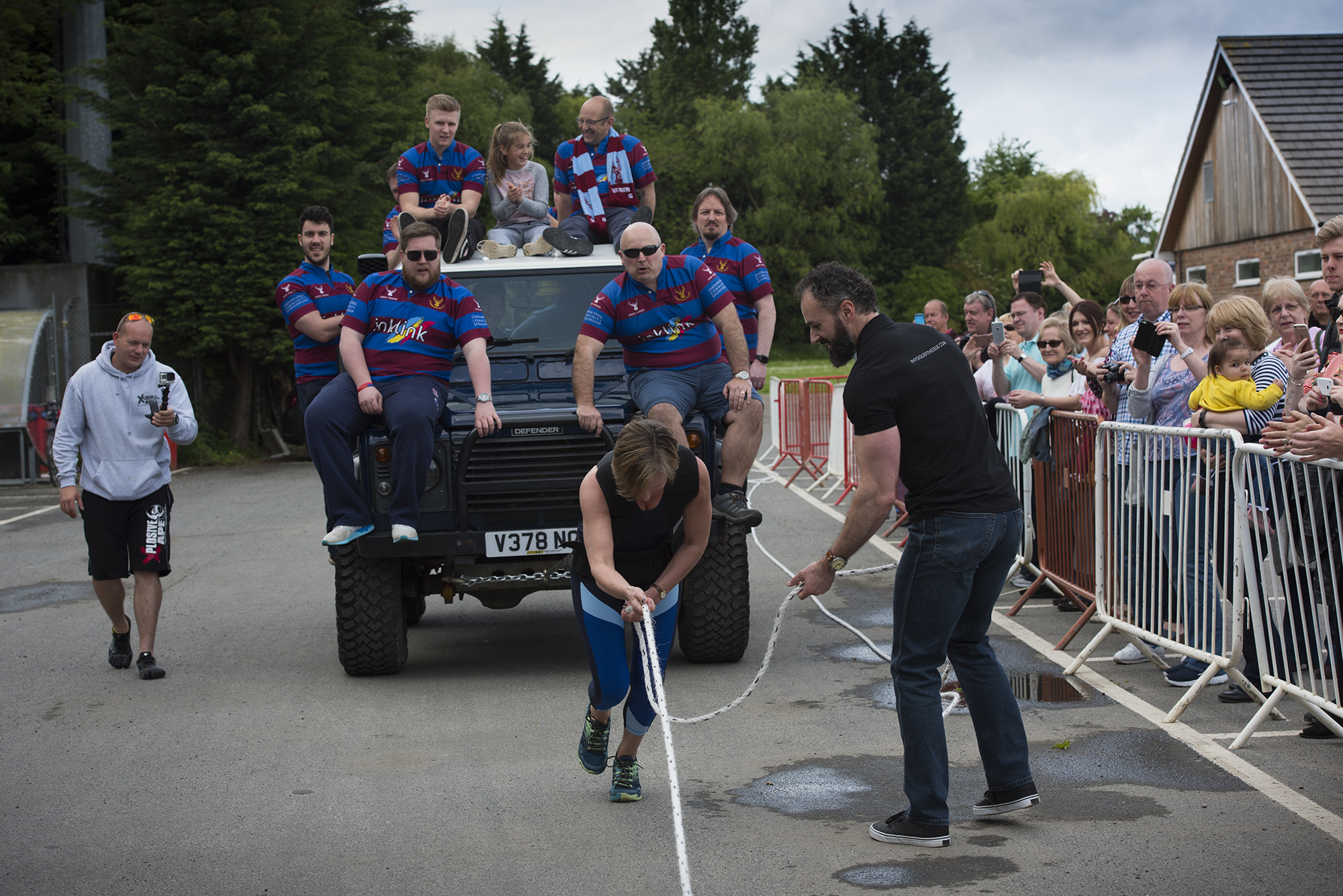
I will be pulling Paul’s Landover on the 21st May with 8 rugby players as passengers – pain free!!


Since Clair wrote this – she has achieved her goal… and is still raising money for the Rennie Grove Hospice Care charity.

Claire’s attempt at pulling large truck and men

[Photo © Peter Sanders]


If you feel inspired – Clair’s Just Giving fundraising page is still active:

www.justgiving.com/fundraising/clair-evansisonthepull


Paul Magee can be contacted via the website: www.profortis.co.uk


THEATRE REVIEW   by Paul Vates


THE MIKADO, or The Town of Titipu at Richmond Theatre, Surrey


“A feast for the eyes as well as the ears”


Sasha Regan has created a reputation of touring large-scale Gilbert & Sullivan – with HMS Pinafore and The Pirates of Penzance under her belt, it was inevitable she would focus upon The Mikado.


What’s so special about her vision? The cast is always men.


Regan’s All Male company is, to put it simply, terrific. In this modern age of amplification and jukebox musicals, this is a beautiful example (rare, nowadays) of performers projecting into the auditorium with emotion and clarity. If mumbling tv actors annoy you, refresh your batteries and see this production as it tours the UK. You’ll sigh with satisfaction.


[The company – all images courtesy of Stewart McPherson)


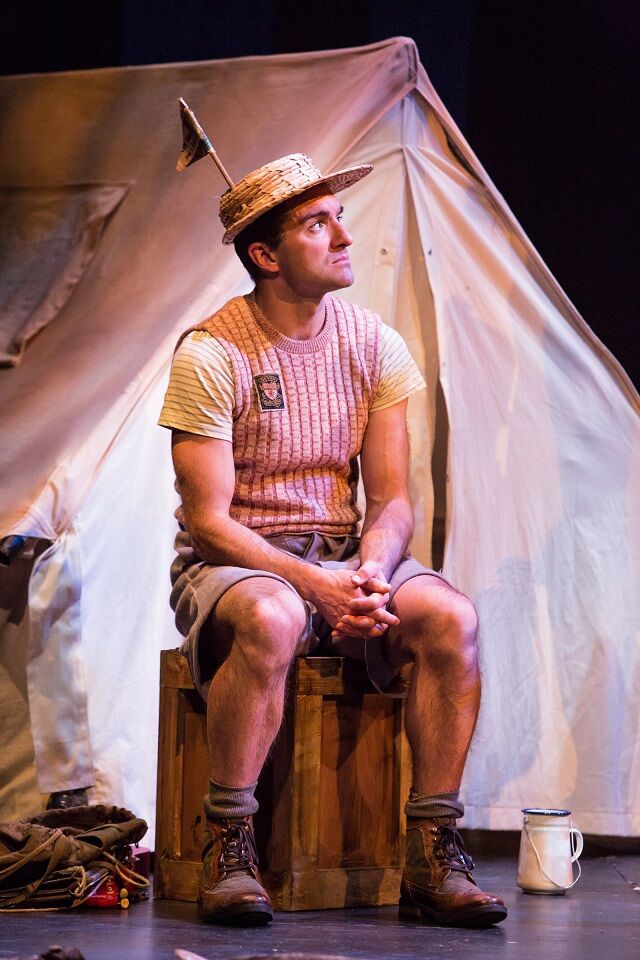
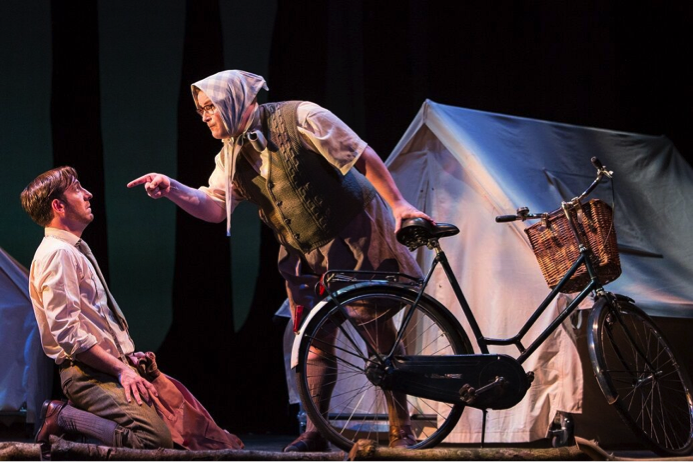
There is not much that is camp about men playing the women’s parts, they are simply – dare I say it? – acting. The ‘camp’ is left to the setting – like a naughty and frivolous expedition in the woods, the boys roleplay, dance and sing as we segue effortlessly from woodland to rural Japan.


They act as well as they sing, too.

[Richard Munday as Nanki-Poo]


Richard Munday plays Nanki-Poo (the wand’ring minstrel), in search for his love, Yum-Yum, relished by Alan Richardson.

(Alan Richardson as Yum Yum)


The chemistry between them and the whole ensemble was beautiful to see, as every single moment on stage has been choreographed to the nth degree, each joke highlighted, each note punctuated. A feast for the eyes as well as the ears.


Ko-Ko, the cowardly High Executioner, is wonderfully portrayed by David McKechnie. His is one of the famous G&S parts, sought after because he can truly show a range of character. His romance and flirtation with Katisha (a matronly Alex Weatherhill) is genuinely lovely – removing all traces of The Muppets’ version of On A Tree By A River (Tit Willow) for me (if you don’t know what I mean, Google it!).


[David McKechnie as Ko-Ko with Alex Weatherhill as Katisha]


Regan’s direction is crisp and Holly Hughes’ choreography is smooth and imaginative. The music is from one keyboard: Richard Baker playing and conducting throughout.


The whole show brought gasps of delight from the audience. Tempered only by a lull in Act Two, around The Mikado’s scenes, as though James Waud was acting ever-so-slightly in a different show, the whole piece is genuinely a joy to behold.


Paul Vates.

Running Time: 2 hours 10 minutes (plus an interval)


Booking at individual theatres, plus www.allmalemikado.com


Twitter: @allmalemikado, #AllMaleMikado


Production photographs © Stewart McPherson


Tour dates:

30 – 31 May               East Riding Theatre, Beverley

1 – 3 June                  The Spa Theatre, Bridlington

6 – 10 June                Northcott Theatre, Exeter

13 – 17 June             Theatre Royal, Brighton

27 June – 1 July        Arts Theatre, Cambridge

4 – 8 July                    Festival Theatre, Malvern

13 – 15 July               Hall for Cornwall, Truro

17 – 19 July               Dorking Halls, Dorking

20 – 22 July               Theatre Severn, Shrewsbury

25 – 29 July               Quays Theatre, The Lowry, Salford

Michael Rowan turns Turtle on his foray to the Lyric Theatre,Hammersmith.


Given that a key role of any theatre company is to project so that they can be heard at the back of the stalls, how could it be that I knew nothing of the Turtle Key Arts ?

My guess is that it’s because they’ve been so busy unlocking the potential of anyone who comes their way and putting on some amazing inclusive theatre with work that demands our full attention, I must therefore conclude that the oversight is entirely mine.

Turtle Key Arts are now based in the Lyric Theatre Hammersmith, a few minutes’ walk from the Tube Station and as they are celebrating twenty five years as a company they have decided that it was time to bring their work to a wider audience, and what a body of work.

Two films showed the breadth of their repertoire, marrying physical theatre with music, dance and sheer exuberance.

In the film a mother of one of the young performers describes how her son had explained to her how much he loved Turtle Key Arts because there he fitted in and at school he didn’t.

Turtle Key Arts believe that disability of any sort should not be a barrier to performing and that given some support everything is possible and their track record of productions often in partnership with other theatre companies proves that this is no idle boast.

Asked about ambition CEO Alison King said ’Turtle Key Arts wants to continue unlocking the creative potential in individuals and ensuring a future for others by providing arts for all’

Like all theatre companies the Turtle Key Arts needs financial support and to be discovered by new audiences and if they can achieve that there can be little doubt that they will be creating great theatre for the next 25 years.

www.turtlekeyarts.org.uk/