5 Ways To Be Good To Yourself

awesome cat picturesLife can be tough sometimes and kindness goes a long way. Sometimes no one is tougher on me than myself, which got me thinking: it is time we all started being kinder to ourselves. We live in a world where doing something for yourself is often thought of as selfish, but it is not. Since becoming a parent I never put myself first, let’s be honest, I didn’t do it even before my son was born, but with the wisdom that comes with age I have realised that you have to take care of yourself before you can care for others. A lovely health visitor told me after I had my son that I should treat myself as a toddler and my son as the baby. ‘If you don’t look after yourself,’ she said, ‘you cannot look after your baby.’ How right she was. Self care is important. With that in mind, here are my five tips for being good to yourself.

Do Something You Love.

Watch a TV show, go for a walk, get your hair done, have a bath, get a massage. It doesn’t matter what it is. Take the thing that makes you happier than anything else and do it for as long as you can. Self care is self love. I am a workaholic and sometimes I don’t take the time to just ‘be’. I am not saying you have to practice mindfulness or meditate, just do something fun. Treating yourself is important. I treat my husband and son, but sometime  forget to give myself the same treatment. The more you love yourself, the healthier and happier you will be.

Get moving.

Exercise is a necessary evil. It may not be fun at the time, but it will get the endorphins going, as well as making you healthier in the longer term. The key is finding an exercise that you don’t hate. Even going for a walk for 30 minutes 3 times a week will make a difference to your health and happiness. Read more about the benefits of walking here.

Invest in Yourself.

No, I don’t mean buying shoes. I mean saving, actual investing and education. Saving for a pension or a rainy day may not be as fun as shopping, but it is the ultimate in self love. As is paying for further education. Invest in yourself and your future and you will stand out from the competition. Even if you are in a job you love there is probably a qualification that you can do to further your career and add to your salary. Who knows, your employers might even pay for it.

The government also have a new lifetime ISA. The good thing about the lifetime ISA is that the government top it up, so you will actually get free money. Read more about ISAs here.

Take Some Time Out.

Take a long weekend or take an afternoon off to read and drink good coffee. If you are a self employed freelancer like me then you are probably not very good at giving yourself breaks. Be a good boss and treat yourself well. There are plenty of Bank Holidays so even if you do not have much holiday time you can take a long break somewhere. You don’t have to go anywhere, you can just potter around the house or read a book. Staycations are also great. York, Cornwall, Edinburgh and London are all great destinations to spend some time.

Be Naughty.

Eat an entire cake, have two glasses of wine with lunch, have some afternoon sex, spend a lot of money on something you always wanted. If you love coffee, invest in a good coffee machine from gourmesso.co.uk. Sometime being a bit naughty is a good thing.


What tips would you add?

My Bangkok Life – Loi Krathong by Alex Bannard our Bangkok correspondent

My Bangkok Life – Loi Krathong by Alex Bannard our Bangkok correspondent2I have lived in Bangkok with our family since the beginning of August. We arrived 6 months after my husband had started his new job here, after selling the house & finishing off the school year. We fell in love with it immediately, by far our best expat posting to date: lovely people, delicious food, fabulous weather, wonderful new friends, great community both at school & on the moobaan, interesting culture, I mean, what’s not to love?


One of my favourite evenings so far (& we have packed in a lot of fun nights already…but that’s another story) has got to be Loi Krathong. Loi Krathong is celebrated on the full moon of the 12th lunar month in the Thai luna calendar – this year it will be November 15th. The festival, one of the most popular in Thailand, celebrates the water spirits & basically means to float a basket.
My Bangkok Life – Loi Krathong by Alex Bannard our Bangkok correspondent1
Baskets are traditionally made out of banana tree trunks or spider lily plants & elaborately decorated with folded banana leaves, flowers, incense & a candle which are lit & floated on a river or lake as wishes are made.


The kids were allowed to dress up for school. I was so excited for my 4 year old daughter, having the chance to wear one of the beautiful intricate Thai costumes. She had other plans: she wanted to be a Disney Princess. I explained patiently numerous times that it wasn’t fancy dress it was Loi Krathong & we had to wear traditional Thai costumes. Eventually I managed to persuade them both to wear t-shirts from Chatchuk market & as I was reading in my daughter’s class that day I also got dressed up much to the teacher’s surprise.

My Bangkok Life – Loi Krathong by Alex Bannard our Bangkok correspondent3

Our moobaan annually hosts a Loi Krathong party. All around the pool were street-style food stalls offering an delectable array of Thai treats: Pad Thai, chicken satay, fish soup, green curry, pork on a stick, you name it, it was there. The pool was decorated with lights & both Thai & expat families mingled to enjoy the festivities. It was fabulous.


The kids couldn’t wait to light their Krathongs, which were being floated on the baby pool in lieu of a more natural water feature. My daughter had changed into her maxi dress dismissing my objections with ‘it IS a party, Mummy’. Before I knew it, she had thrown off her dress & was cavorting around in the baby pool in her knickers. She was having a ball but her resultant Tsunami waves were capsizing or drenching all the Krathongs. As incense & candles fizzled out, her little face glowed in the pool lights with pure delight. I was horrified, goodness knows what that has done to our karma for 2016.


Poached Lobster

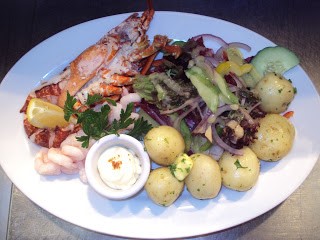
One of the joys of living on an island like Jersey is the seafood, I mean we have the Jersey Royal potato, fantastic vegetables but really it is all about the seafood and how. Faced with the choice of briny Royal Bay of Grouville oysters, plump sweet mussels fresh from the sea, fat diver caught scallops, where do I start? The undoubted stars of the seafood show are freshly caught crab and lobster. I waiver between them both sometimes favouring a big slice of rich crab tart or a hand-picked crab salad and at others a regal lobster supper. I’m kind of the side of lobster at the moment so I thought I would share how to prepare a delicious lobster.

Lobsters

In America, the Lobster is very often simply broiled ( grilled ) with oodles and oodles of butter on the side, to dip the succulent cooked lobster meat in, and it comes with a warning about Cardiac arrests. Equally popular is the fabulously addictive lobster roll with creamy mayonnaise and fresh dill. Around the world, the lobster, when treated with care, stir-fried, grilled and baked in amazing recipes is a seafood sensation. There are, however, still a certain class of restaurant where only a small number of ways to serve lobster are contemplated, in the classic sauces Newburg, American and Thermidor. Each of these blockbuster, in-your-face recipes in the right hands can be an amazing dining experience but they can be much maligned. I am at heart a big fan of enjoying the delicate flavour of lobster as unadorned as possible and simply poached.

Poached Lobster.docx

This, however, is not a simple matter, the purist would have you boil the lobster in sea water, this is not always easy or even safe. The alternative is fresh water with added sea salt (add 25 gr of natural sea salt per litre of water). My own choice is in a court bullion which is an ideal cooking medium for poaching fish, seafood and chicken. I have adapted my recipe from Richard Onley’s, ‘The French Menu Cookbook’, a recently reprinted classic and thoroughly good read. If you cannot get your hands on a Jersey lobster I thoroughly recommend Cornish as a great alternative.


For 1 or 2 750 gr / 1 kg Lobsters

4 Litres of cold Water

1 Large glass White Wine

3 Large Shallots, peeled and chopped

1 Medium Stick of Celery, chopped

1 Medium Carrot, peeled and chopped

White of 1 Leek, thoroughly washed and sliced

½ Bulb of Fennel, washed and sliced

1 Bay Leaf

1 Sprig fresh Thyme

1 Sprig Tarragon

8-10 fresh Parsley Stems

½ teaspoon Black Peppercorns, crushed

1 Lemon, halved


Place all the ingredients in a very, very large pan, cover and bring to the boil. Add the lobsters and bring back to the boil and simmer for eight to ten minutes. Using a spider remove the lobsters and plunge in lots of iced water to arrest any further cooking.

Today’s top tip is when poaching lobsters place them in your freezer ten minutes prior to cooking, this will sedate the lobsters sufficiently to allow you easily drop them in your boiling pan without the lobsters thrashing about and splashing you with scolding hot liquid.

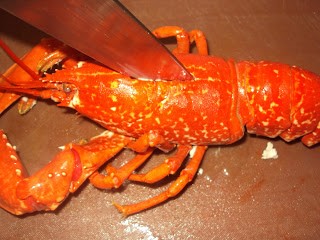
Remove the lobsters and set aside to drain. Place a chopping board on a damp kitchen cloth to prevent it from slipping. Place the lobster on the board and hold firmly by the tail. Find the cross on top of the lobsters back and using a large cooks knife cut through the shell towards the head. Turn the lobster around to then cut through the tail.

Cutting a cooked Lobster

The slushy material in the head cavity can be washed out and the shells thoroughly washed. Along the tail meat is a small dark tube, through which the lobster removes waste. Carefully pick out the tube. Reverse the tails by taking them out and placing in the opposite shell. Then using a cleaned board, you can break out the claw meat. Using a fine crochet hook or lobster pick remove the two smaller pieces of lobster. Holding the tip of the claw tightly between finger and thumb crack open the claw using the flat back edge of a large cook’s knife.


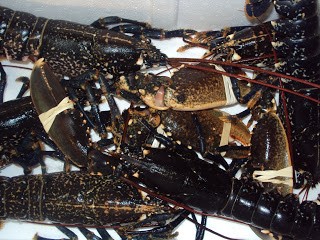
Remove the rubber band and pull down on the smaller claw, it will come off pulling with a small transparent membrane. This allows you to remove the lobster claw meat. Fill the empty head cavity with the picked lobster meat. You can serve the lobster with the claw in the cracked shell if you wish, or simply halved with a lobster claw and pick.

Re-charge your Sunday nights at The Piano Works Farringdon

IMG_6931

Everyone knows Sundays are the new Saturdays and we have just the solution for a much needed Sunday night elixir. London’s popular late-night, live music venue The Piano Works have come up with the perfect excuse to reclaim your Sunday evenings by launching live music performances by the legendary Patrick Alan and his Righteous Ten.

IMG_6932

If you would like to spend the evening with the man who helped launch the careers of Amy Winehouse and Christina Aguilera then Sunday nights at The Piano Works are just for you. We were lucky enough to attend the launch and were instantly transported to what can only resemble a funky Manhattan Jazz Club. The Cocktails were a perfect accompaniment to bobbing along at the bar to some of the most perfectly executed soulful hits finished off with a mesmerising tribute to Prince. The energy and soul that oozes from the band was infectious throughout the venue with many punters up on their feet by the end. We simply couldn’t resist. Feel free to really indulge in a little Sunday night therapy and order a dish or two from the menu. From tapas-style dishes to a variety of filled rolls and salads you will not go hungry here. Everything is well-made, fresh and satisfying, we recommend the Soft-Shell Crab Roll. All in all, we couldn’t think of anything else we’d rather be doing on a Sunday night, the ambience is uplifting and we will definitely be back for more. Patrick Alan will continue his residency on the first Sunday of every month.

IMG_6938

IMG_6610

For listings or more info visit

http://pianoworks.bar

Interview With Bestselling Author Margaret Graham

housedivided

What made you get into writing?

Having a 4th child. She was lovely but seldom slept and mithered a great deal. I needed to ‘get away’ even if only for half an hour. So I started writing a book about my mother’s rather interesting life growing up in the North East just after the 1st World War. Halfway down the first page I realised I didn’t really know my mum in that way, only anecdotes. So it became fiction, but based on her life. It’s called After the Storm.

margaretgraham

Did You find becoming a published writer easy?

Not at all. Having embarked on the novel I joined a writing class. I do wish more would these days, or at least learn the basics of structure, and how to edit one’s work. The class was not only crucial but also supportive, because I was working alongside like minded people, and it helped me enjoy the process. Mark you, my writing class had an excellent tutor, and you need to check this out. There are a lot of charlatans out there, selling their services when they know diddly-squat – and charge a lot. If you have the time, try ARVON and other residential courses. Also the weekend Winchester Writing Festival. That’s fantastic.

Then, of course, you reach the stage where you have a manuscript, finished. What next? How to get that publishing contract?

Try and find an agent. But how do you get the interest of an agent. I entered a competition and was one of the Best Entries. This helped when circulating the manuscript. I was finally taken by an agent who knew that Catherine Cookson, who wrote about the North East had just left Heinemann. Mine was a novel about the North East, and the publishers were immediately interested. Mark you, I then had to double it in length, put in a secondary character and sub plot, and do it all in 6 months. I was on my way.

So it is very much about what the publisher needs at a particular time. However, as you can see, the author does need to be flexible, and listen to the experts, and do as they want. Basically we are providing a product, which they have to need in the first instance. Then it has to be tweaked to be the best product you can create. They are invariably right. As a writer, you need patience. Learning to write well took me 4 years. Over those years I was serving an apprenticeship really, lhoning my skills, so that when the time came, I could do as they advised.

What else would you have liked to do?

Be a star. I feel the world has been deprived of a great talent!

What is your writing process?

Find that germ of an idea. Then think, think and think again, to see if it it will run as a novel. I work out the normal world, point of change, the tension, motivation, and totally getting to be the main and secondary characters. Alongside this, because I am invariably writing out of my time and place, I need to research, make notes, become so familiar with the context so that I can swim amongst the period, or situation, without overloading it with show-off details. Therefore I do a lot of reading, and that old chestnut – thinking again. Then, when I have a thorough plan, and by this I mean a chapter by chapter plan I get my head down and write hard for about 8 weeks. Because I’ve been doing it so long I have the experience to get it more or less right, and to create a sound structure. There is only one structure, you know. And it must be followed. It is the author’s ‘voice’ that makes a novel ‘different’. That’s the first draft, then I go through and alter, tweak, edit. So the second I usually sent into my publisher. Writers need to designate writing time. It’s a job, even if you already have a day job, so discipline yourself to create your writing time. You will find you do much of your thinking whilst traveling, driving, working, and at the end of the day you’re a bit further on.

A House Divided is the third Easterleigh Hall novel. How hard is it doing a series?

Hard in a way. You have to remember all the characters inside and out. What are their ages? Appearance, little ways, and then when you start the novel you have to try and make the novel stand alone, though it must also bring previous readers of the series up to date. I think that first chapter is the most difficult.

When can we expect another EH novel?

In a year.

Have you become close to the characters? Oh yes, I become all the characters really. You have to or it doesn’t work.

Can you tell us where the series is going next?

I would imagine into the 2nd world war. Perhaps Tim will go into the secret side of the war, but not quite sure about anyone else yet. It will come to me.

Lizy, me and Matt

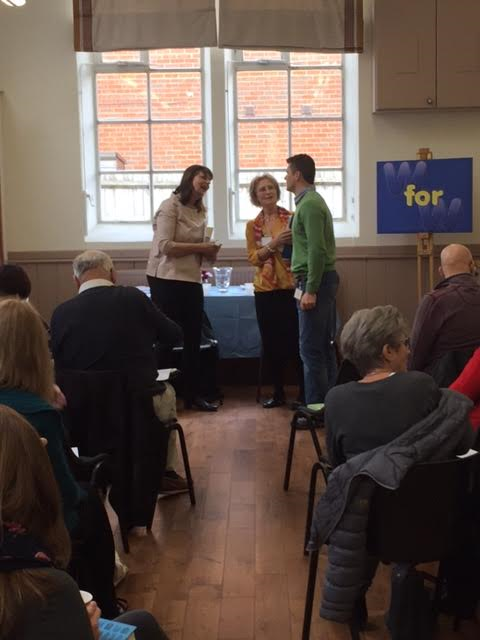
What do you like to do when you are not writing? I run my charity, Words for the Wounded, which raises money for the wounded through writing events. We have an annual Independent Author Book Award, and we also run workshops and an annual LitFest. We’ve helped a few writers along in this way. Last year’s winner was picked up by an editor, and others have found that the publicity of being placed has helped their sales. I love working with Frost, and reviewing books, and I do like to play truant and just have a good time.

Any tips for aspiring writers.

Work hard, go to writing classes, and literary festivals, listen to authors talking, and listen to a publishers’ or agents’ advice. READ books, learn how to write short stories, because publication in womens’ magazines promotes sales of your books. Most of all, don’t rush. Do several drafts, edit carefully, and enjoy it. Life’s too short not to.


Your guide to natural alternatives to sugar

Your guide to natural alternatives to sugarTo clear up the confusion around ‘natural’ sweeteners and help you chose the right one, we asked Dr Marilyn Glenville, the UK’s leading Nutritionist, author of Natural Alternatives to Sugar to give us the low-down on the most popular natural sweeteners.

Fructose

What is it? Naturally found in fruit, you can buy fructose as a white powder. The problem with it is that it is totally refined and all the goodness and fibre that would be in the fruit is absent.

Interestingly, fructose does not cause the release of insulin as sucrose and glucose do, so initially it was thought to be a healthy form of sugar. However, it has other negative effects on your health.

Fructose goes straight to your liver, which has to metabolise it, in the same way as alcohol does. So it can make you gain weight, increase your appetite and also give you fat around the middle. Fructose interferes with your production of hormones like leptin, which should send you a signal telling you that you have eaten enough, and fructose can raise levels of a hunger hormone called ghrelin, increasing your appetite.

Fructose does not supply any energy at all to either your brain or your muscles; it is only stored as fat.

Dr Glenville’s view: I would never use fructose as a sweetener. If it is naturally contained within the fruit then that is fine but I would not buy it as a white powder to add to food.

Agave

What is it? It comes from the agave plant in Mexico, where traditionally the sap would have been boiled for hours to obtain the sweet syrup. Unfortunately, to cut the costs, to produce agave on a commercial scale, the agave is made from the starch of the root bulb and the final product is just refined fructose.

There may be some companies who produce the agave syrup in the traditional way but it is not easy to tell given the marketing hype around the products. They would be definitely be more expensive because of time making the product and availability.

Dr Glenville’s view: I would not recommend using agave as it could be up to 90% fructose and there doesn’t seem to be a way of distinguishing whether the agave has been made in the traditional way or whether it is commercially produced.

Honey

What is it? Although this is a natural sweetener, you should only use it sparingly. Honey is a simple sugar, primarily made up of glucose and fructose, and so is absorbed into your blood stream quickly, hence it’s not ideal if you’re trying to control your blood sugar or lose weight. The fructose content can be up to 40 per cent in some honeys.

If you do use honey then avoid types which are ‘blended’ or the ‘produce of more than one country’ because they are often heated to temperatures as high as 71°C, which destroys their natural goodness.

Bees gather nectar from flowers to take back to the hive. Honey is often harvested from the hives in the autumn, which means that the bees will struggle without food over the winter. So the bees are fed a substitute for nectar which honey in the hive so the bees can feed until the spring. However commercial beekeepers look just at the financial cost because they can sell the honey for more than the sugar water costs to feed the bees over the winter.

So, in effect, you may not be buying ‘pure honey’, even though it might say so on the label, because the sugar water gets mixed up with the honey in the hive and, basically, the raw material for the honey is simply white sugar.

Dr Glenville’s view: Not an ideal sweetener as it is a simple sugar and so will affect your blood glucose (sugar) quickly. If you are going to use honey, try to get organic if possible and use very sparingly.

Molasses

What is it? Molasses is the by-product of the process used to extract sugar from sugar cane or beet.

The sugar cane juice is boiled and sugar crystallised from it. The syrup that is left over is molasses. Normally, the sugar cane is boiled three times to remove as much sugar as possible and the molasses left over at the end of this third stage is called black strap molasses and is dark in colour, very syrupy and has the lowest amount of sugar but the highest quantities of vitamins and minerals. It is a good source of vitamin B6 and potassium and a very good source of magnesium and manganese.

About half of the sugar content is made up of fructose and glucose in equal amounts and the other half sucrose.

Dr Glenville’s view: This has not been a sweetener that I have used, as it is a by-product of sugar extraction and, as a result, may have higher levels of the pesticides and other chemicals used in sugar cultivation and processing. It also has a very strong taste.

Xylitol

What is it? It is sold as a white powder and is considered natural because it occurs naturally in plants. It is low in calories and does not need insulin to be metabolised in the body so it is very useful for diabetics. It also has benefits for dental health as it reduces caries. Its main side effects are diarrhoea and bloating as it ferments in the digestive system.

Xylitol is found in the fibres of many plants, including sugar cane, corn cobs and birch. However, it requires a lot of refining to take it from the raw product to a white powder.

Basically, xylitol is made from the hydrogenation of a sugar called xylose, rings warning bells as we have been moving away from hydrogenated fats over the years, after we found out about the health risks associated with them. There may be concerns about hydrogenated sugar in years to come.

Dr Glenville’s view: I would not use xylitol as it requires far too much processing to be considered a natural product.

Sorbitol

What is it? Like xylitol, sorbitol is a sugar alcohol and is often used in foods designed for diabetics because it requires little or no insulin. It is usually made from corn syrup. Sorbitol is found naturally in stone fruits such as prunes, plums and dates. Like some other sugar substitutes, it is a very heavily-processed product.

The side effects of sorbitol are similar to those for xylitol, in that it can cause diarrhoea because it stimulates bowel motion. Both sorbitol and xylitol can worsen IBS.

Dr Glenville’s view: I would not recommend using sorbitol because of the negative effects on the digestive system and the fact that it is a heavily-processed sweetener.

Maple syrup

What is it? Maple syrup is made from the sap of maple trees by making a hole in the tree and collecting the syrup.

It contains 34 beneficial compounds, which have antioxidant and anti-inflammatory properties! It is also the natural sweetener usually recommended for IBS sufferers as it causes the least problems with digestion.

Maple syrup contains significant amounts of zinc and manganese and 15 times more calcium than honey. It is made up of primarily sucrose and very small amounts of fructose and glucose.

Beware maple syrup labeled as ‘maple-flavoured syrup’ rather than just ‘maple syrup’ as this won’t be pure – in fact, it may not contain any maple syrup at all!

Dr Glenville’s view: I do use real maple syrup as a natural sweetener and I always buy organic where possible. I use it in cakes and to drizzle over the top of crumbles to give it a lovely browned effect.

Barley malt syrup

What is it? This is an unrefined natural sweetener produced from sprouted barley malt, which is dried and then cooked, sometimes called Barley Malt Extract. The liquid is then filtered and reduced down to the required consistency. It is thick and dark brown and makes wonderful flapjacks. It is a reasonably good source of some minerals and vitamins and contains almost no fructose or sucrose.

Dr Glenville’s view: Barley malt syrup is a good choice as a natural sweetener. It has a malty taste so does not work well, taste-wise, in all recipes but, as I mentioned, brilliant for using in flapjacks where the malt is an added benefit.

Brown rice syrup

What is it? This syrup is a natural sweetener, available in most health food shops, also called rice malt syrup. Brown rice syrup contains three sugars – maltotriose, maltose and glucose. Cheaper versions are made from cooked brown rice cultured with enzymes to turn the starches in the rice into sugar. Others use sprouted grains that release the enzymes that breakdown the grain into maltose and other sugars. Also brown rice syrup doesn’t contain any fructose, which is a good thing.

Dr Glenville’s view: I personally would use organic brown rice syrup as a sweetener. It does tend to change the texture of baked foods, so is best used where a little crunch is of benefit. This makes it a good choice for a crumble, flapjack or healthy granola, in small amounts.

Stevia

What is it? Stevia is derived from the leaves of a South American plant of the same name. It has been used for centuries as a sweetener in South America. In 2011 it was approved for use in the EU. Stevia is 2-300 times sweeter than table sugar (sucrose).

Unfortunately, there are a couple of problems with stevia. Read labels very carefully as some products can contain dextrose and flavourings. You need a product that is 100 per cent stevia.

As stevia is not absorbed through the digestive tract, it is considered to have no calories, so it appears a good choice for weight loss. However, although pure stevia is more natural than artificial sweeteners, it still primes your body to expect a corresponding amount of calories for the sweetness. When that calorie hit doesn’t happen, your body will send you off to get the calories from somewhere else, increasing your appetite and causing weight gain.

It has a slightly bitter aftertaste for most people, which is why it is often mixed with other sweeteners, especially in soft drinks and processed foods.

Dr Glenville’s view: You could use stevia as a sweetener as long as you use it in moderation and it is just stevia in the product. Not everyone likes the taste though.

Palm sugar

What is it? Palm sugar can also be known as jaggery but, instead of being made from sugar cane, it is made from the palm tree and, in particular, the palmyra palm tree. The palm flowers are tapped to release the juice, which is then boiled down to produce the syrup, which is then be allowed to crystallise.

It is a traditional Ayurvedic ingredient and contains good amounts of B vitamins (including a plant source of B12). It has a low glycaemic index – great for weight loss.

Dr Glenville’s view: A good natural sweetener and a nice alternative to sugar – can be used in cooking as well as drinks.

Coconut sugar

What is it? This sweetener is also known as coconut palm sugar and is produced from the sap of the flower buds of the coconut tree. It is found in liquid form as a syrup, (also known as coconut nectar and blossom syrup) as well as crystals.

To obtain the sap, the tree is tapped, as in the palm sugar, and minimally heated in order to allow moisture to evaporate to form the syrup. When the syrup cools down it crystalises.

Like palm sugar, coconut sugar is rich in nutrients such as the B vitamins, magnesium, calcium, potassium, zinc, 17 amino acids, short chain fatty acids, polyphenols and antioxidants; plus it has a nearly neutral pH. It also contains inulin, which is a prebiotic and helps to feed beneficial bacteria.

Dr Glenville’s view: I have not used coconut sugar myself but it is supposed to taste like brown sugar and you would use it exactly the same as sugar. I would suggest buying organic coconut sugar.

Yacon syrup

What is it? This is a sweetener made from the sweet root of the yacon, which is a member of the sunflower family, also known as the Peruvian ground apple. It tastes like a cross between an apple and a pear. Yacon contains good amounts of a prebiotic, which helps to feed the beneficial bacteria in the digestive system. Yacon also contains good amounts of vitamins and minerals. It is low GI, can help to lower glucose levels and is said to be fine for diabetics to use. It is traditionally made without chemicals using evaporation, like maple syrup.

Dr Glenville’s view: I would recommend this as a sweetener. It can be used instead of a liquid sweetener such as honey and also in baking. Choose an organic variety. It may not be suitable for people with IBS due to its high prebiotic content.

http://www.marilynglenville.com



Perrier-Jouët Champagne Terrace in the Heart of Bath

Sub13Terrace-002

With this summer set to be the hottest on record, what better way to celebrate than to raise a glass of ice-cold Perrier-Jouët on The Terrace of Bath’s No.1 Cocktail Bar. Sub 13 is located within the stunning Edgar Buildings in Bath and is set to be the go-to place for alfresco tipples in The Cotswolds. The renowned Champagne house Perrier-Jouët have teamed up with Sub13 and have taken over their rooftop tier for the summer months making it a private retreat at the top of this beautiful Georgian Townhouse.

Sub13Terrace-004

Adorned with fairy lights and complete with it’s own chic bar, guests are invited to try creations from the specially curated cocktail menu. This really is a magical Champagne haven in The Country and with outdoor heaters and large umbrellas, Sub13 have made sure that you can enjoy this beautiful terrace come rain or shine.

Sub13Terrace-017

In the meantime, Perrier-Jouët have recommended some fantastic cocktails to whet your appetite;

Spring Punch

Vodka
Lemon juice
Sugar syrup
top with Perrier-Jouët Grand Brut and
a drizzle of Crème de Mûre

Add the first three ingredients to a hi-ball glass with ice cubes and briefly shake to mix, then top up with Champagne. Add a crown of crushed ice and drizzle the crème de mûre over the top. Finish with a blackberry and a slice of lemon zest.

Jalisco Flower

Tequila
Grapefruit juice
Elderflower Liquor
Perrier-Jouët Grand Brut,

Combine first 3 ingredients in cocktail shaker; fill with ice. Cover and shake vigorously 20 times. Strain into 2 flutes. Top each with Champagne. Garnish with grapefruit twists.

Bottoms Up!

Sub13Terrace-008

Venue;

4 Edgar Buildings, George Street, Bath, BA1 2EE

Bookings

01225 466 667

Opening times:

Monday-Wednesday 5pm-12am;

Thursday 5pm-1am;

Friday-Sat 5pm-3am

The Perrier-Jouët Champagne Terrace is open now until the end of August

http://sub13.net/the-venue/the-terrace/

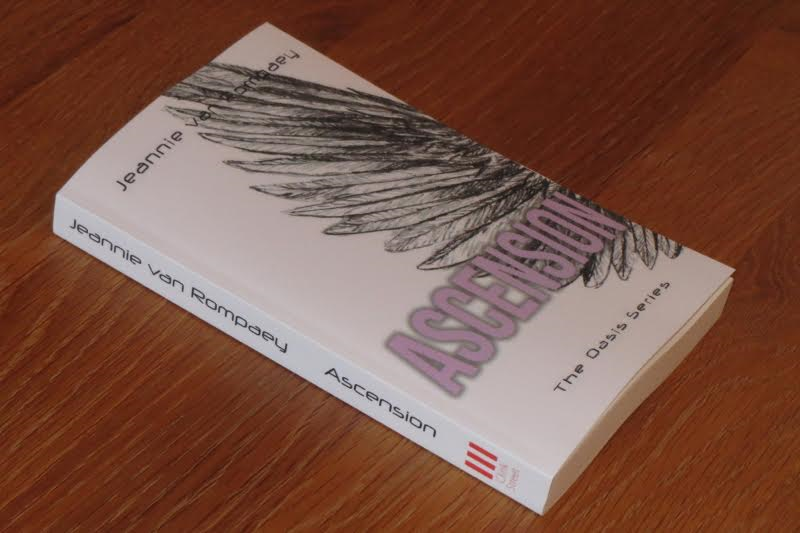
Ascension by Jeannie van Rompaey Reviewed by Frances Colville

Ascension by Jeannie van Rompaey   Reviewed by Frances ColvillePlanet Earth is depleted and rendered unlivable by its inhabitants. New satellite stations are built to house those with the money or good connections to get themselves there and the rest of the (now mutant) population of ‘humanoids’ is condemned to a restricted and closely monitored life in compounds built on Earth and surrounded by ‘the wilderness’. Can this be a happy-ever-after situation? What happens when the status quo is questioned and challenged? Jeannie Van Rompaey in her new book Ascension, the first in the Oasis trilogy, follows the lives of both mutant and ‘complete’ humanoids and explores what happens when they begin to connect.

Not the most original storyline perhaps and not at first glance a book which appealed to me – not being an avid fan of sci-fi. But it turned out to be worth persevering. Ascension has its roots firmly set in 21st century environmental concerns and failed political systems, and it asks questions about what we are doing to our planet, what the consequences are likely to be, and how people will cope if/when we do end up destroying Earth as we know it. I found it intriguing and more than a little worrying.

A few niggles. I was annoyed by the use of words such as bunku instead of bunk, compu instead of computer, even humanoid instead of human. What was the point, I wondered. Then there are too many things which seem implausible and which therefore need further explanation. The lack of originality continued to be an issue throughout the book. Even as an infrequent reader of science fiction and dystopias I felt that this had all been done before. And yet Ascension has something very compelling about it – and perhaps that is at least in part the knowledge that this type of scenario could indeed happen. And probably will if we don’t pay more attention to the lives we lead.

By the end of the book we are left with many unanswered questions. But that of course is the way it always is with a first book in a planned trilogy. And I can honestly (and rather to my own surprise) say that I am looking forward to books 2 and 3. Who knew??

The Oasis Series:Ascension is published by Clink Street Publishing and available in paperback (£8.99) and as an e-book.