Milk: The Carbon Footprint Culprit

Milk poured down kitchen sinks every year creates a carbon footprint equivalent to thousands of car exhaust emissions, according to a new study.

Scientists say 360,000 tonnes of milk are wasted in the UK each year, creating greenhouse gas emissions amounting to 100,000 tonnes of carbon dioxide.

The University of Edinburgh study said this is the same number emitted by about 20,000 cars annually.

Researchers looking into the environmental impact of food production said eating less meat and cutting down on food waste would save significant greenhouse gas emissions. They also suggest the food industry could reduce emissions by seeking more efficient ways to use fertilisers.

Dr David Reay, of the university’s School of GeoSciences, who led the study, said: “Eating less meat and wasting less food can play a big part in helping to keep a lid on greenhouse gas emissions as the world’s population increases.”

Researchers also said halving the amount of chicken consumed in the UK and other developed countries to levels eaten in Japan could cut greenhouse gas emissions equivalent to taking 10 million cars off the road.

The research team said figures show if average chicken consumption in developed countries fell from the current level of 26kg each every year to the Japanese average of about 12kg each by 2020, global emissions from poultry would fall below current levels, despite increased output from the developing world.

This would cut the predicted global output of nitrous oxide, a key greenhouse gas, from this source by almost 20%, based on current growth rates, they said.

The study, carried out in collaboration with the University of Aberdeen and partners in Europe and America, was published in Nature Climate Change.

The team arrived at their findings by examining data for global agricultural production of greenhouse gases together with consumption of food in various regions of the world.


OCADO MEALTIME MASTERCLASSES: A UK FIRST COOKALONG

Ollie Lloyd and Catherine Balavage

As Ocado continues to campaign for the nation to remix the recipes they regularly concoct, they offered lucky participants the chance to cook along live with the Great British Chefs Galton Blackiston, Simon Hulstone and Josh Eggleton via exclusive Google+ Hangouts. These consumers were able to interact directly with the chefs receiving cookery tips and five-star advice whilst ultimately experiencing the heat of a professional kitchen in the comfort of their own home. I was lucky enough to take part and had a lot of fun.

Those who chose to simply sit back and watch the chefs, could see the whole thing live on Ocado’s YouTube channel www.youtube.com/ocado. Fun fact – streaming to YouTube from Google+ is a UK cookery first!

Now the live cook-a-longs with Britain’s greatest chefs (all of whom have been awarded Michelin Stars) are easily accessible to everyone via the Google Ad Network and YouTube.

The videos feature:

· Simon Hulstone’s curried chicken Kiev with squash sag aloo, filmed at The Elephant restaurant in Torquay

· Josh Eggleton’s Pimms Jelly, filmed at the The Pony & Trap near Bristol

· Galton Blackiston’s Scotch eggs with bois boudran dipping sauce, filmed at Morston Hall in Norfolk

Cha Cha Moon | Restaurant Review

15-21 Ganton Street, W1F 9BN. Nearest tube: Oxford Circus.

Meals served 11.30am-11pm Mon-Thur; 11.30am-11.30pm Fri, Sat; noon-10.30pm Sun

Main courses £7-£8

Telephone: 020 7297 9800

On Thursday night we headed to Cha Cha Moon. A Chinese restaurant right in the heart of trendy Soho. The first thing that strikes me about Cha Cha Moon is the decor: it is incredibly stylish with an open kitchen and a bar at the back. The tables are long benches and there is also a good garden space. Of course the decor is not the main thing you want in a restaurant, that’s the food and the service. Both of which are first-class here. The atmosphere was buzzing and very much in keeping with the Soho surroundings.

I have to admit that I love chinese food. We started with the chicken dumplings and Cha cha mooli. The dumplings were excellent. They were crispy and tasted divine when dipped in the perfectly seasoned garlic chilli sauce. The Cha cha mooli was something I’d never had before, but it looked very interesting on the menu. It was Turnip cake, dried shrimp, Chinese chive, Chinese salami beansprout, spring onion, egg. It didn’t disappoint, everything somehow came together in a dish that was delightfully different.

We also had the Seafood ho fun which is Scallop, prawn, squid, red and green pepper, onion, black bean, ho fun. It tasted superb and the portion was very generous. Everything, particularly the seafood, was perfectly cooked. We also had Crispy duck lao mian: Crispy duck, cucumber, cū mian, we really enjoyed this classic chinese dish with the noodles Cha Cha Moon specialises in.

For dessert we had Banana and melon fritters. I had never had melon fritters before and they tasted just as good as the banana fritters. The fritters came in a deliciously warm sugary syrup. The cool vanilla cream on the side was the perfect contrast and when it was all combined with the crispy fritters it was a simply fantastic dessert.

Cha Cha Moon also does very good drinks. An expert cocktail maker is constantly at work behind the bar and there is a good selection of both alcoholic and non-alcoholic cocktails. We had the Golden Sunrise (Peach, mango, mint, goji berry), Chan Chan Tei (Beetroot, spinach, pear, apple), Pina Colada (White rum, pineapple, coconut, cream) and Mango Juice.

I loved my Pina Colada. It was superbly made. The Chan Chan Tei was a great savoury drink and very healthy.

The service was excellent. The food came extremely quickly and everyone was very warm and friendly. Highly recommended.

Actor John Thomson, Chef Simon Rimmer make delicious healthy Chicken Curry

With summer here, it’s time for men to peel off layers of clothing and reveal our bodies for the warmer months ahead. And while millions of the opposite sex have been dieting and heading to the gym, men are now rivalling them when it comes to getting in shape for beach season.

John Thomson is backing LivSmarter’s campaign to bring back the FELLAS – food-enjoying, life-loving, active sports-fans, to show men it’s cool to be a ‘bloke’ again, to be happy and to get fit and lose weight.

We all know how easy it is for those extra pounds to creep up on us and how hard it can be cutting out all your favourite treats.

So with this in mind, Simon Rimmer has created a delicious and healthy chicken curry that will make watching what you eat that little bit easier.

Watch our video to find out how you can make a delicious low fat meal and get tips on how to lose weight healthily and sensibly.

Curried Chicken Kiev With Squash Sag Aloo Recipe

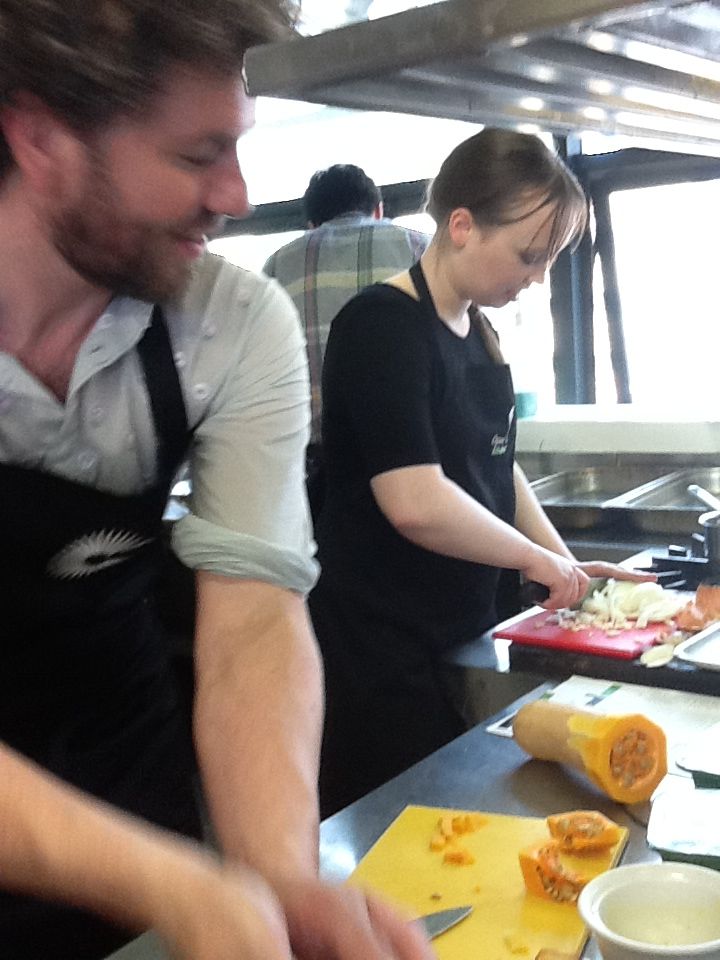
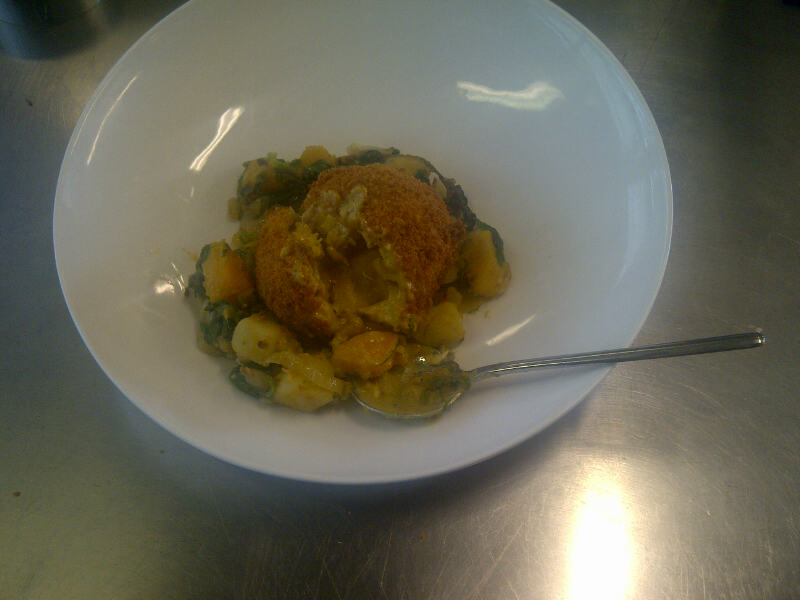
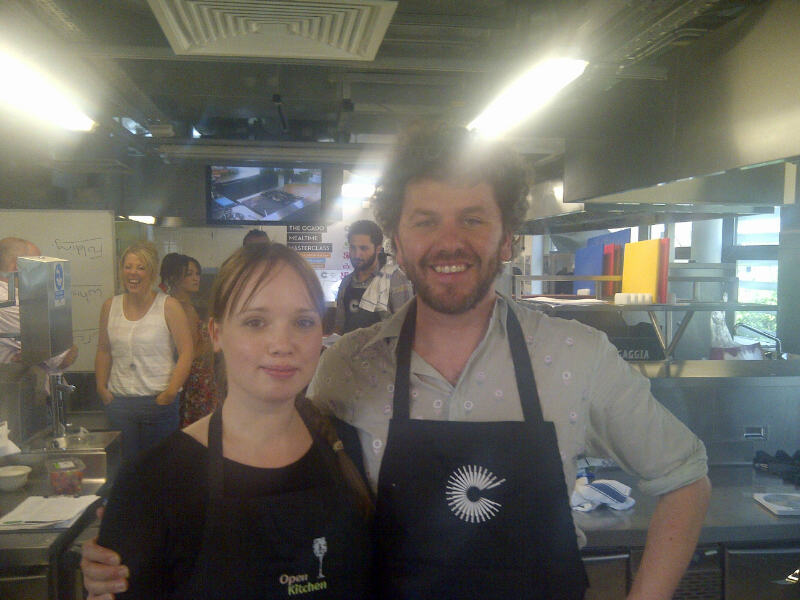
I was invited to take part in a Ocado Masterclass with a Michelin star chef; Simon Hulstone from The Elephant, Torquay. I have been getting better at cooking, but was thinking, upon seeing the recipe, that there was not a hope in hell of me managing to make the Curried chicken Kiev with squash sag aloo. Thankfully, with the help of Great British Chefs Elliot Collins and Ollie Lloyd I managed to make the dish. It looked amazing and it tasted sublime. Simon has made a killer recipe. Do try this at home.

Some tips that I picked up are: when cooking something try to cut the food in the same shape and size, if not, they will not all cook at the same time. Obvious but brilliant. If you want to become a good cook: practice, and when bashing the chicken (read below) but cling film over it. It will stop you having to wash more things because it is contaminated with raw meat.

Ocado have lots of brilliant recipes and are also doing live streaming masterclasses. These live stream masterclasses are the first of their kind. What makes them unique is that you can interact with the chef. Be sure to check them out. I am going to try their Pimm’s Jelly next.


Curried chicken kiev with squash sag aloo

by Simon Hulstone

chicken kiev
• 4 chicken breasts, skinless
• 400g of panko breadcrumbs
• 4 eggs
• 100ml of milk
• 200g of flour
• salt

curry sauce
• 25g of butter
• 1 shallot, sliced thinly
• 1 garlic clove, sliced thinly
• 20g of flour
• 100ml of chicken stock
• 75ml of coconut milk
• 1.5 tbsp of curry powder
• salt
• 100g of butter, softened

squash sag aloo
• 1 small onion, chopped
• 1 garlic clove, crushed
• 2 tbsp of olive oil
• 0.25 tsp of coriander seeds
• 0.25 tsp of cumin seeds
• 0.25 tsp of chilli powder
• 0.25 tsp of ground coriander
• 1 tsp of fenugreek seeds
• 350g of baby spinach, washed
• 300g of potato,
peeled and diced into 5mm cubes
• 300g of butternut squash,
peeled and diced into 5mm cubes
• salt

to plate
1 handful of coriander

method (serves 4)

1. Start by removing the butter from fridge to soften. Next, thinly slice the shallots and garlic and
prepare your 100ml of chicken stock
2. In a saucepan over a medium heat, melt the 25g butter and add the shallots and garlic. Cook
until soft and slightly golden. Add the 1/4 teaspoon of curry powder & cook for 30 seconds, then
add the 20g flour and cook for 30 seconds more. At this stage, add the chicken stock, making sure
to stir constantly. Cook while stirring for 1 minute and this will thicken very quickly
3. Add the coconut milk and bring to the boil. Once the mixture thickens again, remove from the
heat and transfer to a blender. Slowly take the blender up to full speed and blend until smooth.
Add salt to taste
4. Pass the mixture through a fine sieve and set aside to cool
5. Now prepare your mixture for the sag aloo – slice the onions and garlic. Peel your potatoes and
butternut squash and dice them into 5mm cubes – place them in separate bowls, covering the
potatoes in water. Set aside while you prepare the chicken Kiev
6. By now your curry mixture will have cooled sufficiently – combine with the softened 100g of
butter and whisk until fully mixed – it should turn slightly more pale in colour
7. On a large piece of cling film, put the butter mixture down the middle creating a thin sausage
with gaps at both ends of the cling film. Fold the cling film over the mix and roll to form a neat 2cm
diameter cylinder of butter. Tie off the ends of the cling film and set in the freezer until required
8. Now return to your sag aloo. Boil a kettle and place 2 small pans of boiling water over a high
heat. As soon as the water is boiling, add a large pinch of salt to each. Strain the water off the po-
tatoes and add to one pot, add the butternut squash to the other. Cook for 10-15 minutes or until
the squash and potatoes are just tender. Strain and place on a tray to cool
9. Meanwhile, as the squash and potatoes are cooking, place a large frying pan over a medium
heat. Once hot, add the oil, onions and garlic (you sliced earlier). Cook until tender or slightly
coloured

Ollie Lloyd and Catherine Balavage

10. Grind the fenugreek in a mortar and pestle and mix with the other spices. Add the spices (co-
riander – seeds and ground, fenugreek, chilli powder, cumin seeds) to the pan and cook for at least
a minute. Remove from the heat and set aside
11. Prepare a bowl of ice water and set aside. Blanch the washed spinach in the boiling water for
no more than 10 seconds, strain and then plunge into your ice water. Discard the boiling water.
Once the spinach has chilled, drain the spinach and squeeze any excess water out with a cloth
12. Place the pan containing the onions and spices back onto the stove over a medium heat. Once
the onions begin to fry again, add the potato, squash and spinach
13. Mix all the ingredients; you want the edges of the potato and squash to break up a little bit, but
not so they are mashed. Add salt to taste and place on the side until required
14. Preheat the oven to 180°C/gas mark 4, and set your deep fryer or get your pan with oil to
180°C (using a sugar thermometer to check the temperature)
15. Lay a chicken breast down on a chopping board. Use the palm of your hand to hold the breast
in place and slide a knife through the side of the breast; so it opens like a book but doesn’t create
2 separate pieces. Place each chicken breast in between two sheets of cling film and tenderize
gently with a rolling pin
16. Remove the curry butter from the freezer and peel away from cling film. Slice the curry butter
cylinder into 2cm thick discs. Remove the top layer of cling film from the chicken breast placing a
each disk of sauce in the middle of each chicken breast. Then, fold the outer edges of the chicken
breast over, so that the curry sauce is enclosed. Repeat this process for each breast
17. Set up your dipping station with three bowls big enough to coat your Kievs in. In one bowl, add
a pinch of salt to the flour. In another, beat the eggs with the milk and a pinch of salt. Place the
breadcrumbs in the third bowl
18. Roll each chicken breast, one by one, in the flour, trying to maintain the ball-like shape. Roll into
the egg mix, making sure they’re covered. Shake any excess egg off and then roll in the bread-
crumbs. Dip again in the egg mix and then back into the breadcrumbs for a second coat
19. Shape the Kievs in your hands so that they are still round. Gently place into the deep fat fryer
until golden all over
20. Once golden, remove from the fryer and place on a greaseproof paper lined baking tray and
put in the preheated oven for 15-20 minutes. Using a temperature probe, heat to 63°C, then turn
off the oven leaving the Kievs in to keep warm
21. Reheat your sag loo on the stove. Once hot, arrange the sag aloo in the middle of each plate
22. Sit the cooked Kiev on top and arrange the coriander neatly around the plate. Serve immediately

FucoCai Review

I don’t really believe in diet pills and have never taken any but I am a big fan of natural remedies. So when I got some FucoCai to review I put my skepticism aside and decided to give it a go.

New Zealand superfoods specialists, Lifestream, have launched FucoCai for weight management. Billed as a ‘new super supplement to help make achieving the perfect, bulge-free bikini body that little bit easier’.

Lifestream call FucoCai ‘a unique blend of two botanicals that are rich in vitamins, minerals and antioxidants vital to help protect the body against free radical damage caused by modern living. Additionally, together with a healthy diet and lifestyle, Lifestream FucoCai can help to support weight management’

So I started taking them. After a week I notice a difference to my skin. Many people tell me I am ‘glowing’. The tone of my skin improves, I feel I have more energy and some scars seem less prominent. I exercise while taking the pills by doing the Tracey Anderson method, but only three times a week for an hour (you are supposed to so 2 hours 6 days a week).

I do notice a difference while taking the pills. In fact I lost eight pounds in total. Would I have lost this weight anyway? I actually don’t think so. I put weight on when I was doing a film and found the last stone quite difficult to get rid of. I am also an apple, which means when I put weight on it goes to my stomach, so that is where I could not get rid of the weight, and most of it was gone by the time the pills ran out. And the last was gone thanks to my Zaggora hotpants. So how do they work?

They are packed with the plant carotenoid Fucoxanthin and naturally rich in iodine, a nutrient thought to be effective in normalising thyroid function and energy-yielding metabolism*. Lifestream FucoCai has been specifically formulated to help users achieve a healthy weight, and contains:

Laminaria Japonica (kombu) – a seaweed native to Japan, Kombu contains the active mineral Fucoxanthin which studies suggest could help support weight management** boost the metabolism and may help to support balanced blood sugar levels. In water, kombu also forms a thick gel enabling it to function as a bulking agent to enhance bowel regularity

Acai berries – organically grown in Brazil, the super berry Acai boasts antioxidant capabilities greater than that of other berries such as cranberry, raspberry and blueberry. Naturally rich in flavonoids and polyphenols and bursting with vitamins and minerals, acai is particularly useful for those putting their bodies through the rigours of a new health and fitness regime.

Fucoxanthin is thought to be one of the most exciting natural compounds discovered to date in the fight against obesity. The carotenoid gained notoriety when a group of Japanese marine biologists discovered that it could help white fat cells mimic the thermogenic behaviour of brown fat cells, ultimately resulting in a safe increase in metabolic rate and fat burning in the use ***.

Since then, studies have identified Fucoxanthin as a critical adjunct in enabling a controlled diet and increased level of physical activity to produce meaningful fat loss, even in ageing humans who as a result of reduced metabolic rate can find weight management a challenge.

Formulated without artificial additives, preservatives, colours or flavours, Lifestream FucoCai is vegan, and free from gluten, dairy, yeast, nuts and other allergens.

Lifestream FucoCai is available from all good health food stores, and online at www.grumpygorilla.co.uk, and costs £24.75 (RRP) for 90 vegetarian capsules (one month’s supply). For further information, visit www.healthyfoodbrands.co.uk.

BBC Dragons’ Den star Kirsty Henshaw takes on the UKs top selling ready meals

BBC Dragons’ Den star Kirsty Henshaw takes on the UKs top selling ready meals with a new range launching in Sainsbury’s, July 2012

Working mum Kirsty Henshaw, 26, shot to fame when her allergen-free dessert range – inspired by her food intolerant son, Jake – won over Dragons’ Peter Jones and Duncan Bannatyne in 2010.

Today, Kirsty is taking on the UKs top selling ready meals, introducing her range of healthier, irresistibly delicious and naturally nutritious chilled everyday meals.

The new range is super-charged with goodness; each meal is lovingly made up of nutrient-rich ingredients such as quinoa, aduki beans, brown rice and lentils to help you live life to the full.

Kirsty has created natural food swaps to provide healthier alternatives, and uses brown rice instead of white and sweet potato instead of white potato mash. Sugar has been replaced with natural Agave syrup for fewer calories. The meals are also free from wheat, dairy, lactose and nuts so they are suitable for everyone.

Kirsty adds: “A lot of ready meals on the market appear healthy however they are often packed with high levels of saturated fat, sugar or artificial flavours.”

“This new range is about providing people with something that is genuinely healthy as an alternative, and most importantly the meals taste fabulous!”

The meals have a low ‘green light’ for saturated fat and sugar content and have been designed to give a happy balance between salt levels and taste, they use natural sea salt and will at most register an ‘amber light’. At least one portion of your five day is provided for and the meals are low in calories (ranging from 276 to 420 for a Chicken Tikka Masala).

Kirsty’s chilled everyday meals will be available to purchase at Sainsbury’s nationwide from July 2012; the range includes:

ü Moroccan Vegetables with Brown Rice and Quinoa

ü Sausage with Onion Gravy and Carrot, Sweet Potato & Potato Mash

ü Chicken Tikka Masala with Brown Rice

ü Cottage Pie with British Beef mince and topped with Sweet Potato, Carrot & Potato Mash

The kirstys.co.uk website, which Kirsty has designed with her father, Darren a nutritionist and homeopath who runs health shop Aphrodite in Penwortham Lancs.

One in Five Mums Feel They’re Doing a Bad Job.

A fifth of mums (21%) say feeding their child manufactured baby food makes them feel like a bad mum. But should it? An independent report lifts the lid on what goes into those jars

Mums feel under pressure as almost four out of ten (39%) feel they are being ‘judged’ by other parents for not making baby food from scratch and one in five (21%) says it makes them feel like they are a bad mum, a survey by Cow & Gate released today reveals.

Mums heap pressure on themselves because a quarter (23%) are sceptical about manufactured baby food, and two in five (39%) are concerned about added salt or ‘nasties’, like preservatives. The research marks the launch of an independent report, released today, which seeks to expose the truth about one of the baby food industry’s biggest producers.

Lifting the Lid on Baby Foods, which is published today and written by Fiona Wilcock, independent public health nutritionist and food writer, investigates food practices by Cow & Gate. The report examines the manufacturing process, from field to production line to babies’ spoons, following the journey of a jar and detailing what is involved in making it.

Forty one million jars of Cow & Gate baby food are sold every year[i] and every jar meets the rigorous ‘baby grade’ standards, finds Wilcock; “Baby foods had a poor reputation in the past so it’s hardly surprising mums and dads are worried. But my report uncovered that there are no dubious ingredients you might have suspected in today’s baby food. Stringent standards, put in place by Cow & Gate, ensure baby foods are real food made from the best ingredients.”

The organic debate

Almost a fifth (18%) of mums will only feed their baby organic food because they believe this to be better quality food, and one in ten (9%) of those surveyed said they believe manufactured baby food contains pesticides. However, today’s report reveals that there are practically no pesticides residues in baby foods. The maximum permitted level of residues in any baby food is 10 parts per billion, which is equal to approximately one drop of water in two Olympic size swimming pools. It’s a little known fact that pesticides, albeit from natural origin, can be used on organic crops and that they can still carry the organic label. This finding negates the argument for only feeding babies with organic food and gives Wilcock the confidence to state; “In my opinion, they are certainly not inferior to organic foods, and could even, in some instances, be better.”

The survey reveals that more than two thirds (68%) of mums feed their babies manufactured baby food, yet less than one in ten (7%) feels confident that it’s good quality. This is why Cow & Gate encouraged Wilcock to investigate what goes on behind the scenes, to dispel the myths surrounding manufactured baby food and reassure mums of the quality of their products. Wilcock says; “I was astonished to learn about the extra commitment and requirements needed to reach the baby grade standard. I now think that even if I bought the highest quality ingredients, organic or not, I couldn’t match the degree of quality assurance that Cow & Gate baby foods have.”

Baby grade ingredients

From apple orchards in the Czech Republic to beef farming in Ireland, the report outlines the measures taken to ensure all baby food is made from baby grade ingredients, which have to adhere to strict guidelines. These ingredients go through multiple safety tests and have to be completely traceable. Farms are chosen where the food will grow best, away from sources of pollution, and where an absolute minimum of pesticides are used. Each step of the food journey is controlled and managed to the extent that every ingredient can be traced back to an individual field.

Dr Pavel Hejzlar, apple expert for Cow & Gate, comments; “We say it takes at least 18 months to learn how to become a baby food farmer. We work with farmers we’ve developed long term relationships with, people we know and trust. Quality and safety, at every level, is our primary concern. ”

Taste Test

Over a third of mums (36%) surveyed said manufactured baby food tastes bland. Wilcock says; “It’s sometimes easy to forget that we have an adult palate and have grown used to food to which we’ve added salt, sugar or flavoured sauces.” Wilcock’s report reveals that the adult food tasters at Cow & Gate have to be trained to re-educate their palates and some of them have talked of their reduced tolerance for salt and sugar in their own diet, as a result of testing baby foods.

Wilcock sums her report up by concluding thatmanufactured baby food is made from top quality baby grade ingredients and does not contain ‘nasties’. She concludes that parents should have confidence in Cow & Gate and the care it takes turning great ingredients into great meals for babies.

To read Wilcock’s report in full visit www.cowandgate.co.uk/liftingthelid

Top research findings;

· 68% of mums have fed their baby manufactured baby food yet only 7% feel confident that the food is of good quality

· 39% of mums feel judged for using manufactured baby food and 21% feel like a bad mum for using it

· 23% of mums feel sceptical about using manufactured baby food because they don’t know what goes in it, and 39% are concerned about added salt or ‘nasties’, like preservatives and colourings, which may be present

· 19% of mums feel that manufactured baby food is a necessity but wish they could do better for their child

· 18% of mums will only feed their baby organic food and 9% of those surveyed said they believe manufactured baby food contains a lot of pesticides

· Babies are more likely to be fed manufactured baby food in Worcester (100%), Chelmsford (100%) and Brighton & Hove (90%). They are least likely to be fed manufactured baby food in London (58%), Aberdeen (58%) and Coventry (54%)

· Mums in Gloucester (42%) and Brighton & Hove (45%) are most judgemental when they see other mums feed their children baby food. Mums in Swansea (7%) and York (9%) are less judgemental

· Older mums (45+) are more likely to feed their child organic food