
There is a New Literary Hotspot And it’s in Scotland.

Is there something in the water? I think so. My birthplace, Lanarkshire has produced an impressive number of authors. From Shuggie Bain author Douglas Stuart, and won the Booker Prize, and Elissa Soave, author of Ginger and Me. Elissa sets her books in Lanarkshire. Her brilliant, new, novel, Graffiti Girls, is set in Hamilton. It’s a fantastic book.

Lanarkshire is a historical county in Scotland that includes Glasgow and the surrounding areas. Lanarkshire is the heart of the central lowlands of Scotland. It’s a beautiful place with a lot of culture and music.

Former Guardian journalist, Deborah Orr, who sadly died in twenty nineteen, wrote her acclaimed memoir, Motherwell. It is all about the industrial town she grew up in. The book was a huge hit. I also note that Andrew O’Hagan, author of Sunday Times bestseller, Caledonian Road (set in London) and three times Booker Prize nominee was born in Glasgow. 

I grew up in the Scottish Borders and moved back to Lanarkshire as a teen. I spent a lot of my youth in Glasgow, Motherwell, and Strathclyde Park. Lanarkshire is a literary hotspot, churning out fantastic writers. Here is a short list: Val McDermid, Ian Rankin, Niall Ferguson, Liz Lochhead, Alasdair Gray, Damian Barr, Graeme Armstrong and Julie Kennedy.

Then there is me. Catherine Yardley, author of Ember and Where The Light is Hottest. Who also writes as Catherine Balavage. Where The Light is Hottest is partly set in Lanarkshire. The county may be cold, but it’s having its time in the sun. I have lived in London most of my adult life and consider myself a Londoner now, but a part of my heart will always belong to Lanarkshire. My family still live there and I visit. I can’t wait for the next author for Lanarkshire to publish their work.
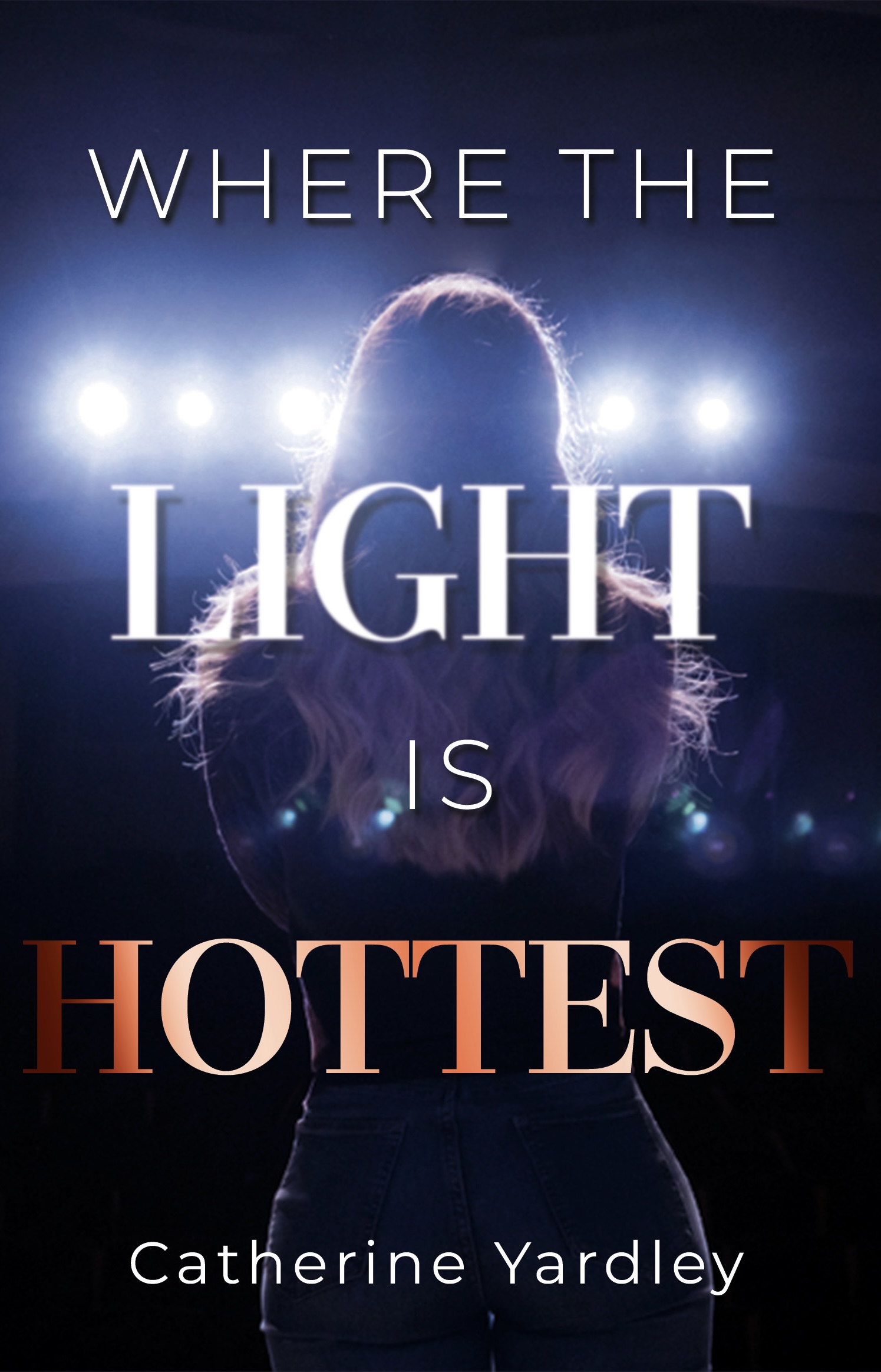
Where The Light is Hottest is available now in paperback, ebook and kindle unlimited.

The Perversion of Empire {Carl Packman}

We live in an age of bombast. Anyone who has seen Eddie Izzard’s show Circle will know of the skit he does about the word awesome, used so liberally now that even hot-dogs can be described as awesome, and of course if a hot-dog is considered awesome, what words will be available in our bank to describe the first landing on Mars, or our first sighting of Erkel.

Today the word empire and imperialism are used out of place, obscuring those original meanings. People go forth on these words particularly with regards to US and European ventures in the Middle East.

My own view is that it was unnecessary to be too instrumental in the creation of Afghan and Iraqi governments, not for the oversimplified reason that democracy building equals empire (it doesn’t) but because it was unnecessary in the war on terror (by and large a war against terror cells and factions). Regime change follows stripping the influence and power of those cells and ripping down the cash channels between neighbouring terror cells.

I opposed the Iraq war on the grounds that it was an own goal, and I still do, but the Taliban continues to forge power in northern provinces of Afghanistan and wields power by setting up fake checkpoints and unleashing suicide attacks. Reports back in 2009 suggest that families in Kunduz, a northern city in Afghanistan, and capital of the Kunduz Province, have been sending one son to join the Taliban in case militants take back control of that region again.

Fear pervades that region, and the Western troops ought to play a role in training Afghan forces to take power away from the hands of Taliban forces. Whatever ones view, that venture is not one of empire, and good reason too, because empire is over.

But one man who is not amused by the setting of the sun on the empire is Niall Ferguson – the man Michael Gove jumped up and down to clapping like an inebriated guinea fowl – empire apologist courted by the department of education.

Ferguson has been characterised as the Jamie Oliver of History, but this is not true, because as far as I can tell Oliver can at least tell his mange tout from his lady fingers.

In Ferguson’s opinion history is a discipline that won’t be jeopardised by strong opinion. Barely concealing his apologies for the British Empire, and criticising the American Empire for not being enough like the former, is one thing, but basic knowledge can remind you that history is at least the one subject where a relaxation of emotional attachment to a political ideology is vital.

In fact, the first lesson of relaying the objective facts lent to us by history is to leave agendas aside (they can obscure our understanding, and drag historical literature down to the level of chinese whispers).

Well this simply isn’t on the menu for Ferguson, who will now be in charge of deciding what goes in and what stays out of the curriculum of history for children (perhaps this is why the Qualifications and Curriculum Authority – a non department body – has been scrapped by the new coalition government).

Gove’s reason for allowing this is because he believes in traditional history teaching. We can guess what this means (Tudors, Saxons, Smurfs, Pingu etc) but is Ferguson the architect of traditional history, or is he to history what Mao was to the open society.

Gove uses the word tradition like some talk of empire today; perversely.