SISTER SCRIBES’ READING ROUND UP: SEPTEMBER

Jane:

Sometimes I catch sight of a new book I just have to read as soon as possible. It doesn’t happen often and it’s always a leap of faith; will a favourite author dash my expectation of brilliance – or will they, once again, triumph.
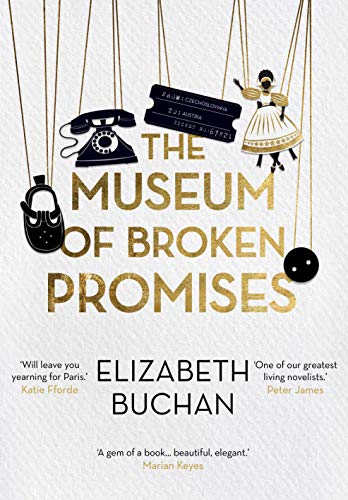
Elizabeth Buchan’s The Museum of Broken Promises is, like her other books, a slow starter. I have learnt to be patient while she creates a tapestry of detail so rich and wonderful, holding my breath until to story tips into second, third and fourth gears and becomes unputdownable.

The book is set in Paris in the present day and in Prague in the 1980s. The end of the Cold War was in touching distance, yet nobody knew it, and this adds an additional poignancy to the narrative. Laure, a young woman coming to terms with the death of her father is an au pair to a businessman and party insider, and while trying to make some sense of life behind the Iron Curtain, meets a dissident musician who steals her heart and soul. Years later in France, she sets up the Museum of Broken Promises, full of artefacts people donate in attempt to avenge or assuage the pain of betrayal – and some of them belong to her own past.

Slowly the book teases out truths from a long ago Czechoslovakian summer. One moment achingly beautiful, the other shocking in its violence, the whole fits together like a handmade glove. It stayed with me, too – and it’s only now I’m writing this review I finally understand the most important promise. And who broke it. A must read. Honestly.


Kitty:

This month I have been racing through the romcoms. I have just finished Lindsey’s Kelk’s One in a Million and absolutely loved it. She writes with such quick-fire wit that every page had me giggling and a little bit in awe. I enjoyed myself so much, I read it over two days, that I have gone and bought lots more of her books and am looking forward to laughing my way through autumn.
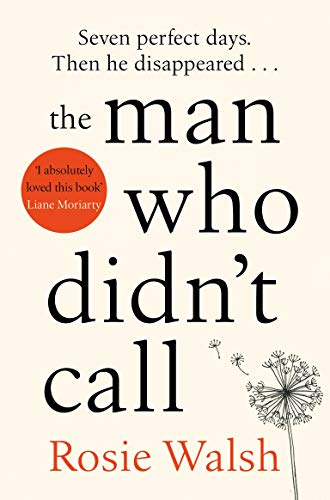
I also devoured The Man Who Didn’t Call by Rosie Walsh. I was immediately drawn into this novel. It tells the story of Sarah and Eddie and how they fall deeply and desperately in love over the course of a week, the reader is in no doubt that these two are bound to be together, that anything else would be ridiculous. Then Eddie goes on holiday and Sarah never hears from him again. This provides a thriller-like element to the story, where is he? Why has he not called? What on earth has happened? This is combined with their romance, the angst of the waiting for a phone-call, a connection that you know was special, that simply can’t peter out. I won’t give anything away and reviews show this is a little bit of a marmite book, but I absolutely adored it and suffered that sad book hangover feeling you have when a story you have loved has come to an end. Highly recommended.

I’ve just started Evie Dunmore’s Bringing Down the Duke and as a life-long fan of Julia Quinn I am over the moon to find another writer who can deliver such well-written historical comedy gold, this time set in Victorian Oxford rather than the Regency period. With whip smart dialogue and a fabulous premise, a bluestocking gathering support for The Women’s Suffrage movement, how can I not fall in love?
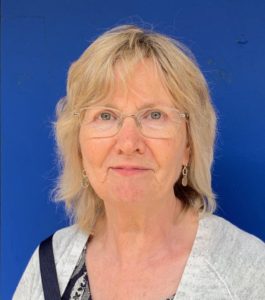
SISTER SCRIBES GUEST: CATHIE HARTIGAN BEHIND THE SCENES AT CREATIVE WRITING MATTERS

I am so happy to introduce you all to Cathie on this month’s Frost. She is responsible for taking me under her wing at my very first RNA conference and was one of the very first people to ever read my work and encourage me to keep going. She is part of the Creative Writing Matters team who support writers in so many ways; mentorship, teaching, handbooks and the running of renowned competitions such as The Exeter Novel Prize.


Does creative writing matter? Yes, a great deal to us.  Margaret James and Sophie Duffy and I have been working together for nearly a decade now. As teachers of creative writing, and because a student’s success is as thrilling as one’s own – well, nearly – we encourage our students in any way we can.

What did they want in a textbook? What would really be useful for them? Would our experience as competition judges as well as teachers be of help? Margaret and I spent a year consulting them before we published The Creative Writing Student’s Handbook.

A dream for most novice writers, is that they should do well in a short story competition. I was thrilled when the first story I sent out bounded into a shortlist. What joy! More successes followed, but then, so did no listing at all. I soon discovered that just because it may not have done well in one competition, doesn’t mean to say it won’t succeed elsewhere. How many entries, who is judging, and whether there’s a strong entry or particular subject that resonates with the judge(s), all are factors.

During my years as a music teacher I was often charged with putting pupils through exams, and my sympathetic cup ran over on many occasions when I saw the terror with which many faced such trauma. But my goodness though, didn’t they all try harder when the exam loomed. Most got exponentially better!

On the back of my experience, I had the notion to hold a tiny competition in a creative writing class. The result was the same. Suddenly, all those last minutes unedited stories were tidied up. They took notice of the word count, the spelling and grammar, and familiar topics were rethought. I was surprised and delighted. Unlike music exams or driving tests though, entering a writing competition it isn’t a do or die situation. Okay, a particular judge may prefer another story, but it is possible to give of your best by crafting your story days or weeks previously.

Sophie won both the Yeovil Novel Prize and the Luke Bitmead Award, the latter leading to the publication of The Generation Game. Margaret was shortlisted for the RNA Romantic Comedy Award with The Wedding Diary, and for many years, had been the administrator for the Harry Bowling Prize. My short stories were being regularly listed and my debut novel, Secret of the Song was shortlisted for the Hall and Woodhouse Dorchester Literary Festival prize. Competitions were something we knew about. It wasn’t long before we realised that our fair city of Exeter was missing something – a novel prize. Seven years on, we can celebrate the publishing success of many fantastic writers who either won or were listed.

One of the lovely things about being a competition judge is being continually amazed by the extent of the human imagination. The sheer variety of subject matter that people choose to write about is extraordinary, but weird doesn’t necessarily triumph over the ordinary. The ability to move, surprise, make us laugh and/or cry will raise a story above the rest, but how or why isn’t easy to quantify.  Difficult choices have to be made. Sometimes there is a stand-out winner, but not often. Obviously, it’s nice to do well, but any listing is significant. A good record of success, at whatever level, shows commitment as well as quality.

Cathie Hartigan is a musician, novelist, and the founder of www.creativewritingmatters.co.uk and the creative director of www.exelitfest.com. Her second novel, Notes from the Lost will be published in October.


SISTER SCRIBES: JANE CABLE ON CONTRADICTIONS AND RABBIT HOLES

For the first time in my writing life I am going back a couple of centuries. Not just with a glance over my shoulder, but really, properly back. With a good half of the novel taking place in 1815. It’s frightening – and exciting – and it’s requiring a great deal of research.

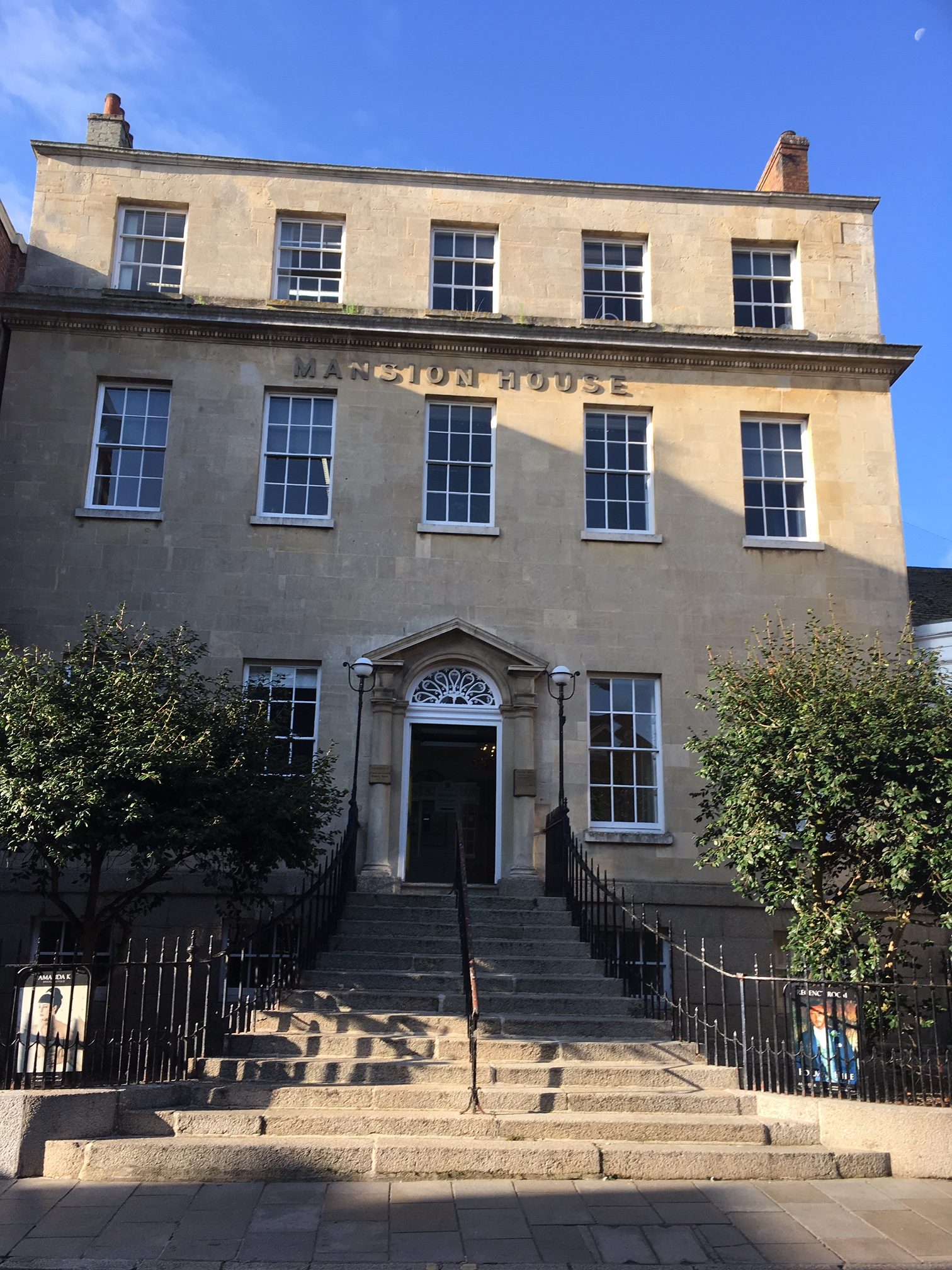
My research is centred on one family, their homes and their business interests. From that point of view, it should have been easy. Their country estate is in the hands of the National Trust, their town house still exists (albeit as offices) and their mine was one of the richest in Cornwall. What could possibly go wrong?

I knew before I started that nothing existed on the ground to show where the mine buildings once stood. I’ve walked past the field in roughly the right place numerous times, and apart from a few lumps and bumps, which may or may not be indicators, there is nothing there. What I didn’t expect was that the mine itself has almost completely disappeared from the records.

There is a portrait of the owner though, and a copy of it is in St Agnes Museum. It’s labelled as showing Ralph and his mine captain, with the mine in the background. Perfect. Except the original of the same painting in the Royal Cornwall Museum says it’s Ralph’s father, and that the mine is unknown. When I eventually found some corroborating evidence, and given when the artist died, the RCM version is almost certainly right.

This sort of thing has dogged my research. Sources you believe would be credible contradict each other. The National Trust had little to offer, telling me there was some confusion in the records as to which works on the house were completed by Ralph, and which by his son. Other sources claim more precision, but are they right?

My husband thinks this is a good thing, his theory being that if nobody really knows what happened, then no-one will know if I get it wrong. But as far as possible, I want to get it right. And thanks to the wonderful Courtney Collection at the RCM I am making progress. Not only are there some records of the mine (very little of it contemporary, however), but also an article from the 1960s about Truro’s Georgian townhouses. I popped in for an hour or two and stayed all day.

Herein lies the rub. The biggest danger of research isn’t necessarily the inaccuracies, it’s the rabbit holes. Does my story require me to know there were eleven shafts in the mine and their precise locations? I found myself becoming a total bore, pointing out to longsuffering walking friends exactly where they all were and the order they were dug. And how much a share in the mine was worth and how that was calculated. And the ages of the pumping engines. No, no, no. Completely irrelevant.

But all the same, it helped me to paint a picture, and some very useful facts did emerge. Like the mine was closed in 1814. It reopened later, but my novel deals in a very thin slice of time. And actually, the fact it was temporarily abandoned suits my story very well. Now I need to sift and sort through the rest of the information covering many pages in my notebooks, to work out what might be right – and what I actually need.

Oh, and I need to avoid any more rabbit holes and actually get writing.

SISTER SCRIBES GUEST: ALEXA ADAMS ON THE GIFT OF TRUST

Meet Alexa, a fellow writer and Jane Austen fan who’s become a trusted friend and needs no better introduction than that.


For most of my life, I did not have many female friends. As the only child of a woman who prized sincerity above all else, many of the unwritten rules of girlhood were lost on me, and I often said things that offended others, never really understanding why what I perceived as honesty provoked such backlash. I was occasionally bullied, and the lesson I took away from those experiences was not to trust women professing friendship. Apart from a few, lifelong attachments, my friends were always mostly men. As I grew older and got married, this became more isolating. Inevitably, I would find myself at parties grouped together with a bunch of other women, nervously tottering through conversations, struggling to get through the evening without trespassing on those invisible boundaries established so many years ago on the playground.

I was often depressed in my 20s, but I had no idea the lack of a female support group contributed to the problem. I thought my career in sales and marketing was the driving issue. I wanted more purpose and independence, and in a leap of faith I am still amazed my husband supported, I quit my job to write. This was a whim; I had absolutely no idea what I was doing. It was other women writers who showed me my path through their guidance, support, and acceptance.

I truly was shocked by the kindness of the woman writers I met. I didn’t expect it, and it took me a long to time to trust it. I hid for years behind my pen name, using it as an excuse to keep all my authorly interactions online, dreading having to explain to someone I had now known for years that no, Alexa is not my real name, though my middle name is Alexandra, while I simply appropriated Adams from a few notable figures in US history. Perhaps by not acknowledging my real identity earlier in my relationships with these women, I had once again trod on one of those unspoken laws of female friendship?

Cass Grafton, the Sister Scribe who invited me to contribute these thoughts, was one of the first fellow writers whom I revealed my true identity to, and she took it in such stride that it taught me how paranoid I had been behaving. In the few years since, so many of my online relationships have been solidified into real-world friendships. My network of women who I can depend on, confide in, and trust has exploded, and I have a hard time recalling how I ever got by without them. These friendships are the most unexpected gift that writing has bestowed on me, and for them I am immeasurably grateful.


Biographical Info:

A devoted reader of Jane Austen since her childhood, Alexa Adams is the author of several Austenesque novels and short stories including Being Mrs. Bennet, Darcy in Wonderland, The Madness of Mr. Darcy, and Tales of Less Pride and Prejudice. Alexa is an American residing in Switzerland with her husband, daughter, and son. She blogs about Austen and Austenesque literature at alexaadams.blogspot.com, is a contributing member of AustenAuthors.net, and a founding member of the Jane Austen Society of Switzerland.


SISTER SCRIBES’ READING ROUND UP: AUGUST

Susanna:

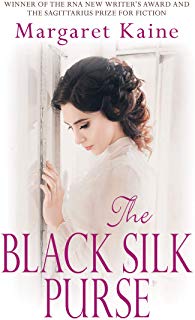
I’ve been reading The Black Silk Purse by Margaret Kaine. This saga is the sort of book which makes you read just a bit more… just another scene… just another chapter. The story has depth and pace, the characters are well-rounded and the mystery surrounding Ella’s past kept me turning the pages. I’m not going to give away any spoilers, but I particularly liked the way the ending was handled. Plenty of historicals overlook the importance of social class, but Margaret Kaine has taken it into account and therefore the happy ending she has written has substance and credibility and rounds off a thoroughly enjoyable book in the best possible way.


Kitty:

I have just taken a whole week’s holiday, full of many joys. One of which was having the time to read so read I did.

I have devoured The Forgotten Village by Lorna Cook, a fabulous timeslip that deftly weaves the story of modern-day romance along with a mystery long buried in the forgotten village of Tyneham, untouched since 1943.

I also managed to get to The Taming of the Queen by Philippa Gregory and cannot believe I have left it languishing on my bookshelf for so long. I have long been a devoted fan and this retelling of the story of Kathryn Parr, the final wife of Henry VIII, has been as satisfying as all her others in both the Tudor and Plantagenet series.

Currently I’m listening to The Flatshare by Beth O’Leary and am loving it as much as I thought I would, brilliant concept and beautiful characterisation.

And finally, this week I read an ARC which I think will be the stand-out book of 2020, but I can’t tell you about it yet. Grrr! Trust me when I can, I will sing from the rooftops so watch this space! It is perfect.


Jane:

I started the month by reading non-fiction; first Georgetter Heyer’s Regency World by Jennifer Kloester (for research purposes – thanks for the recommendation, Cass!) and then a cricket autobiography, probably unsuited to this page so reviewed elsewhere on Frost.

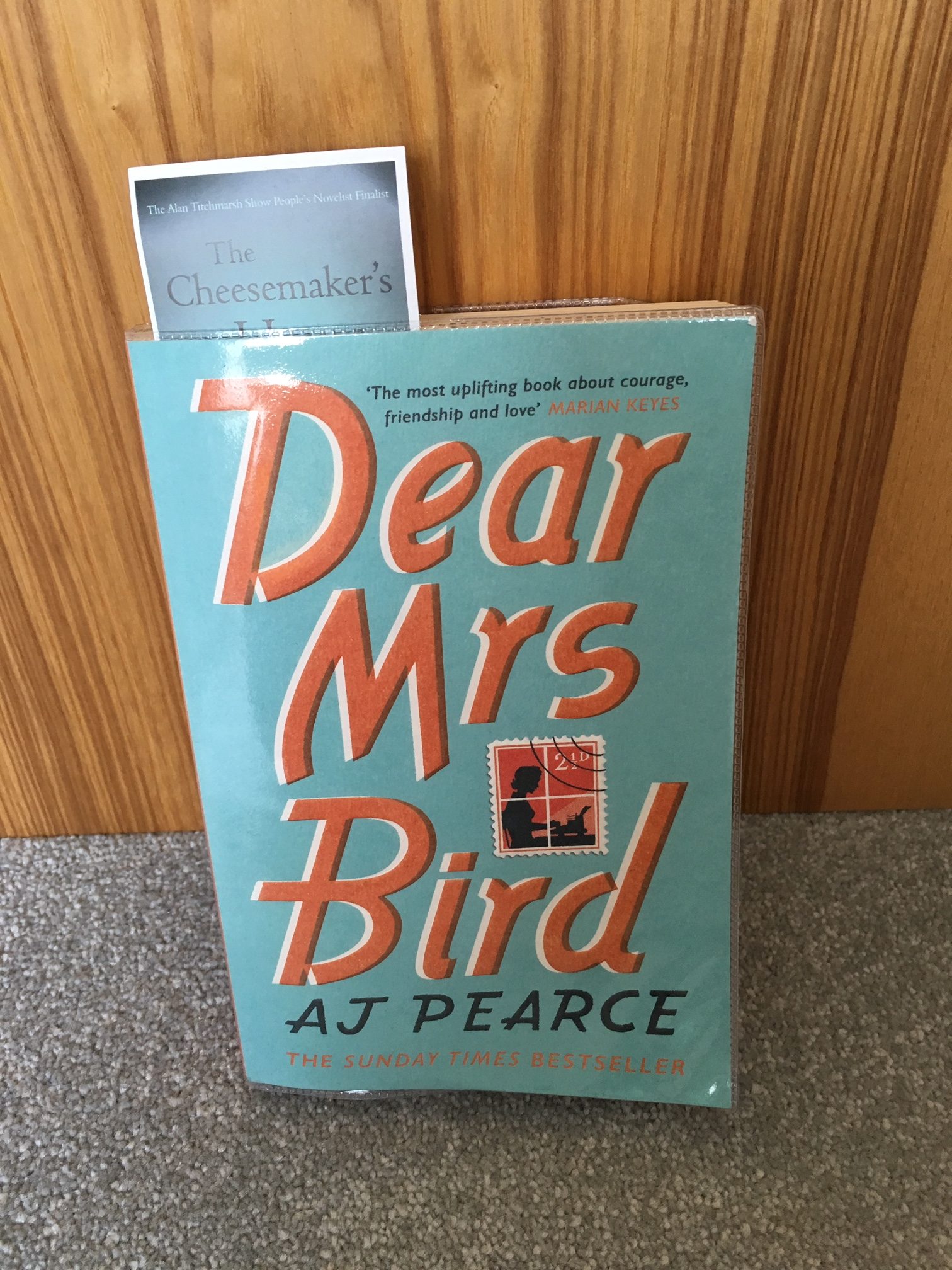
Even with a review copy of Elizabeth Buchan’s new book, The Museum of Broken Promises burning a hole in my Kindle I decided to turn to my book club read for August for some light relief. Also because it was a book I’d wanted to read for ages, A J Pearce’s Dear Mrs Bird. It’s set in London during the blitz and the narrator (Emmy) is a young woman with the narrative voice of Honeysuckle Weeks’ character, Samantha Stewart, in Foyles War.

Emmy’s dream job at a newspaper turns out to be less than perfect when she ends up working for Mrs Bird, an Edwardian throwback with a rather outdated problem page. Initially the book seems to be an amusing light read, but as the blitz worsens the story becomes darker too. The characters are wonderful and I enjoyed every minute I shared with them, although it wasn’t a book that blew me away. Still more than worth reading though.

SISTER SCRIBES: KIRSTEN HESKETH WRITING ON THE RUN

I’m writing this a service station halfway up the M6 – en route to the Edinburgh Fringe Festival where I am singing on Saturday with the Rock Choir. (I know!)

To be fair, this particular writing session was prompted and necessitated by the email I received when I pulled into Sandbach services and turned my phone back on. Had I remembered that my latest Sister Scribe missive was due like now …?

But I got me to thinking about how I love writing out and about. I do a lot of it. Part of this is due to sharing a home with teens and a newly retired husband. I love them all to distraction – but without the luxury of my own dedicated writing lair, distraction is often the operative word. It can be really hard to concentrate on my WIP when the children are on holiday and demanding my attention and hubbie wants to involve me in his plans. Far easier to decamp to a convenient coffee shop and give myself over totally to my project.

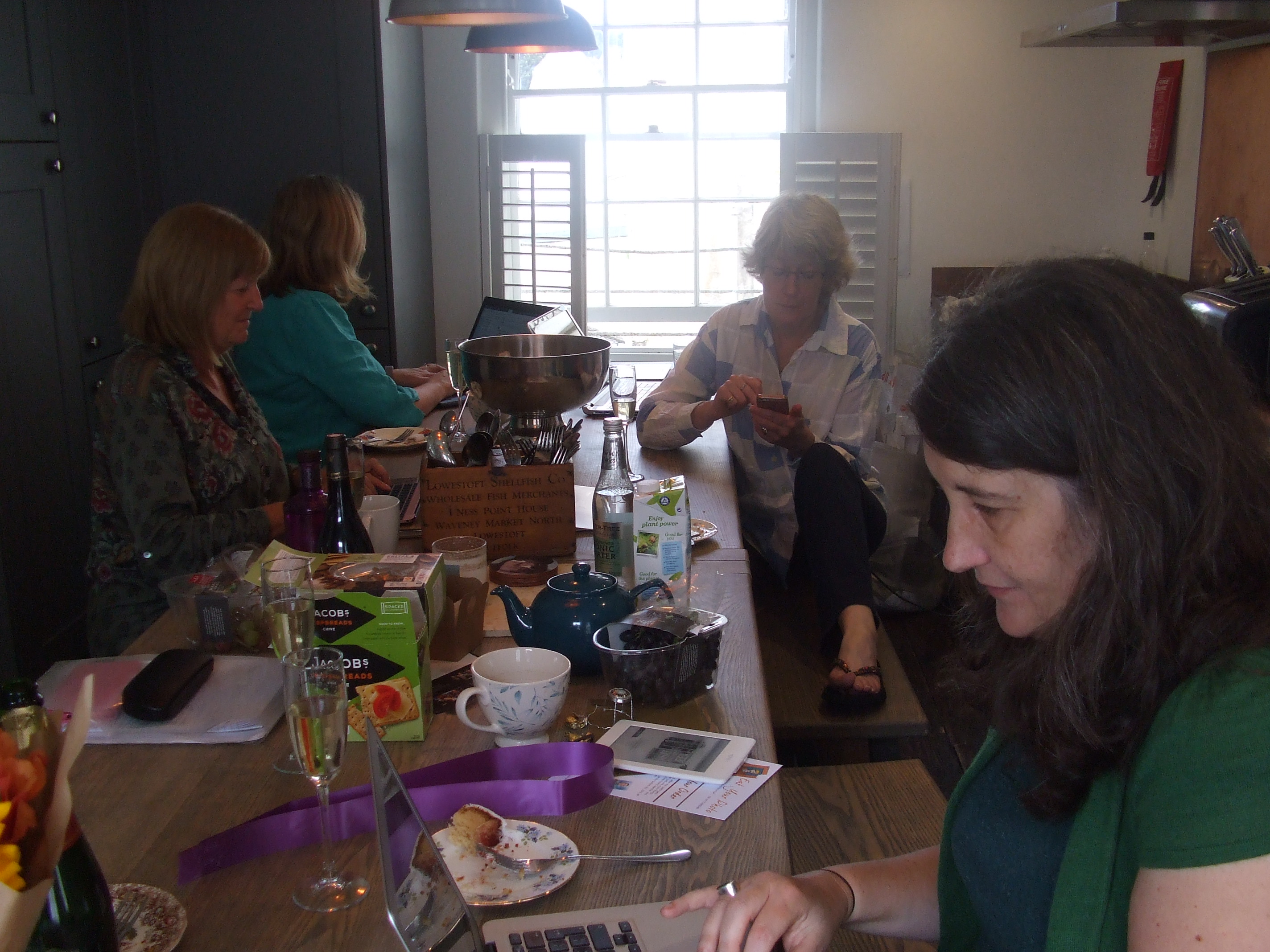
Sister Scribes write cafe-style

And what a buzz it is. I love it all – being amongst – but not with – people who demand and expect nothing of me, the background chatter, people watching, coffee and CAKE. Best of all, I find, is writing in a café with other writers. That really is the crème de la crème. For me, this happens most often during the school holidays – not just because it is when I need most to escape – but because so many of my writing buddies are teachers. We have our favourite venue – Coppa Club in Sonning – and our favourite table; the big round one in the corner with ample plugs for everyone. This particular table is in hot demand – and we used to amuse ourselves with elaborate plots for how we might secure it (you could tell what genre we were writing by our suggestions!) Then we worked out we could just book it in advance!

I asked a couple of my fellow writers what they most like about these writing sessions. For writer and poet Becci Fearnley, author of Octopus Medicine, it is all about the support. ‘I would probably get more writing done at home,’ she admits, ‘but discussing my progress, sharing in triumph and failure and even just the quiet company of people who understand you are all very much needed in the life of a writer. Writing can be a lonely business and we all need allies.’ Claire Dyer, author of The Last Day and The Perfect Affair agrees, although for her, the background noise can be an issue. (Note to cafes; sometimes the ‘background’ music can be very insistent). ‘I do enjoy the camaraderie of writing with others,’ she says. ‘There’s something collegiate and nurturing about it – and the coffee and breakfasts are scrummy.’

I think that’s it. Writing in cafes with other writers nourishes body, soul and our creative output. More than once, a brief discussion on something I didn’t even really know I was struggling with has been magically solved by a ‘chance’ comment, a plot hole closed or a character developed. Sometimes we muse that advances are being eroded and waistlines expanded, but – hey – everyone knows that you have to suffer for your art, don’t they?

And today, once skinny latte and a toasted sandwich later, my article is complete, and I am ready to hit the motorway again. I’ll proof it in another service station somewhere south of Glasgow and then hit the road for the final push to Edinburgh.

SISTER SCRIBES: JANE CABLE CATCHES UP WITH TAKE FOUR WRITERS’ LUCY AND ANGELA

Carrying on with our catch up with last year’s Take Four Writers, today it’s the turn of Lucy Coleman and Angela Petch.

Lucy:

This year has flown by and I can’t believe it’s August already – eight months since the last of Jane Cable’s series: ‘Take Four Writers’. As we all catch up, I suspect the main theme running through our updates will be that there are never enough hours in the day. But a writer’s life is never dull, and we are blessed!

Writing as Lucy Coleman, by the end of 2019 I will have had two new books out this year with Aria Fiction, the second of which is ‘Magic Under the Mistletoe’ due out on 5 September. Set in the hamlet of Porthkerry, near Cardiff, it begins in a snowstorm. It was inspired by the heavy snowfall in December 2017, which turned much of the UK into a winter wonderland.

A new publishing contract with Boldwood Books will see the first of six novels published over the next two years, beginning with the release of ‘A Springtime to Remember’ in December 2019. The story is set in Versailles, a place that is very dear to my heart.

I’ve also recently returned to blogging and my monthly feature ‘The Happiness Factor’ covers tips on motivation and generally surviving the ups and downs of a busy life. Also fun things – interior design tips, home spa pampering, the aesthetics of your workspace if you work from home, and my best buys. A treat doesn’t need to break the bank, but it can lift the spirits.

I don’t ‘endorse’ products, but share things I’ve purchased which make me smile, or have helped me. One of my best buys recently was a back brace I wear when typing, which has taken away my spells of backache!

If you get a moment, do drop by my website https://linnbhalton.co.uk/the-happiness-factor-blog/ and check it out.

Angela:

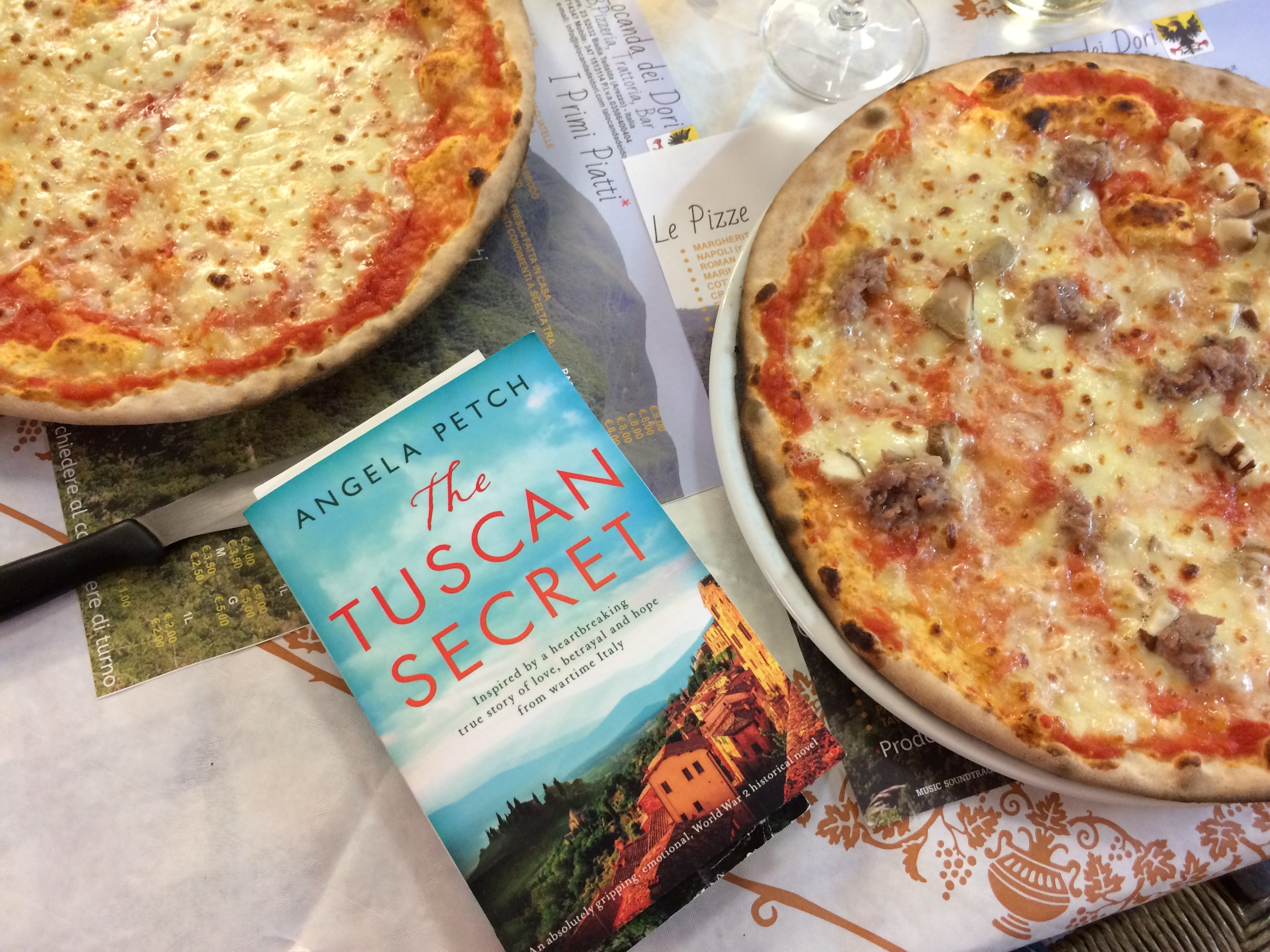
The Tuscan Secret was published by Bookouture on June 26th, after rigorous editing. At first I panicked at the structural changes suggested. I had written this book originally in 2012 and had to reacquaint myself with the story. But then I settled and began to enjoy the challenge. Today my editor told me it has sold just shy of 10,000. I could never have imagined that figure as a self-published author. (There’s also been a knock-on sales increase of my other books).

This week I sent my first draft to my editor of the second commissioned Tuscan novel, and the editorial roundabout will again whir into action. Hopefully, what I learned from the first round will ease the process.

Downsides:

  • I’m at least half a stone heavier from spending many hours sitting in front of my laptop.
  • I am developing bad posture.
  • My hubby says my head’s in another world half the time. (It is!)

Positives:

  • I’m loving what I’m doing. There was never enough time to concentrate on my writing before. It’s fun to live in a “what-if” world.
  • I have made great new friends in the writing community.
  • I’m gaining self-belief.
  • Far from being escapist, I firmly believe that writing helps me connect more with the world.

We all know that very few authors make a mint. It would be great to have more pennies and pounds in my bank account… but money is not the only measure of happiness. Connecting with readers (even with those who give less than shining reviews) makes all those hours of being hunched over my writing; all those hours of my head feeling it’s going to burst, my eyes squinty and itching — all worth it. Hand on heart.


SISTER SCRIBES: JANE CABLE CATCHES UP WITH TAKE FOUR WRITERS’ JACKIE AND CLAIRE

Everyone loved our Take Four Writers’ articles last year so I thought it would be really interesting to catch up with them. Writers lives have ups and downs, and in 2018 we shared them all. Here’s what Jackie Baldwin and Claire Dyer have been up to since – news from Lucy and Angela tomorrow.

Jackie:

Hello everyone,

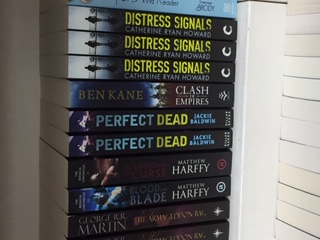
This year, a big thrill has been seeing copies of ‘Perfect Dead’ in The Works shops. It never gets old going seeing my book in the wild. I stroll past ‘casually’ whilst giving it an intense stare.

2019 has been dominated by writing my third DI Farrell book, ‘Avenge the Dead.’ This is the first time I’ve had a book published with the title I originally chose! I finished the first draft in seven months this time so I’m getting quicker with each book. The plot revolves around the Criminal Bar in Dumfries where I used to practice as a solicitor so I’m drawing on personal experience in some respects but the plot and characters are wholly fictional. Honestly!

In addition to writing and the day job I’m also in the process of moving closer to Edinburgh. We’ve found a house but it needs quite a bit doing to it so trying to organise all that has been a challenge. Hopefully, we’ll be installed before my first grandchild arrives in October!

I’ve completed my structural edit for Avenge the Dead. This is probably the stage that I most enjoy where you can fix errant plot lines and even insert new characters or subplots if the mood takes you. Currently I’m working on the Line Edit which is a complete nightmare. For example, you mention the word out three times on one page and need to change two of them.

Recently, I’ve realised that writing books is a lot like having babies. You have your baby and fall madly in love, forgetting the pain. You think it would be a great idea to have another baby. You get into the labour ward and yell, ‘WHAT was I thinking?’ And repeat…

Claire:

It’s a well-known fact that the writing life is not a simple one, and it’s easy to lose hope and/or struggle with doubt and this year I’ve been battling with both these things!

However, with the help of my amazing writer support network I am back on track. I have completed a rewrite, edited another novel and started a new one.

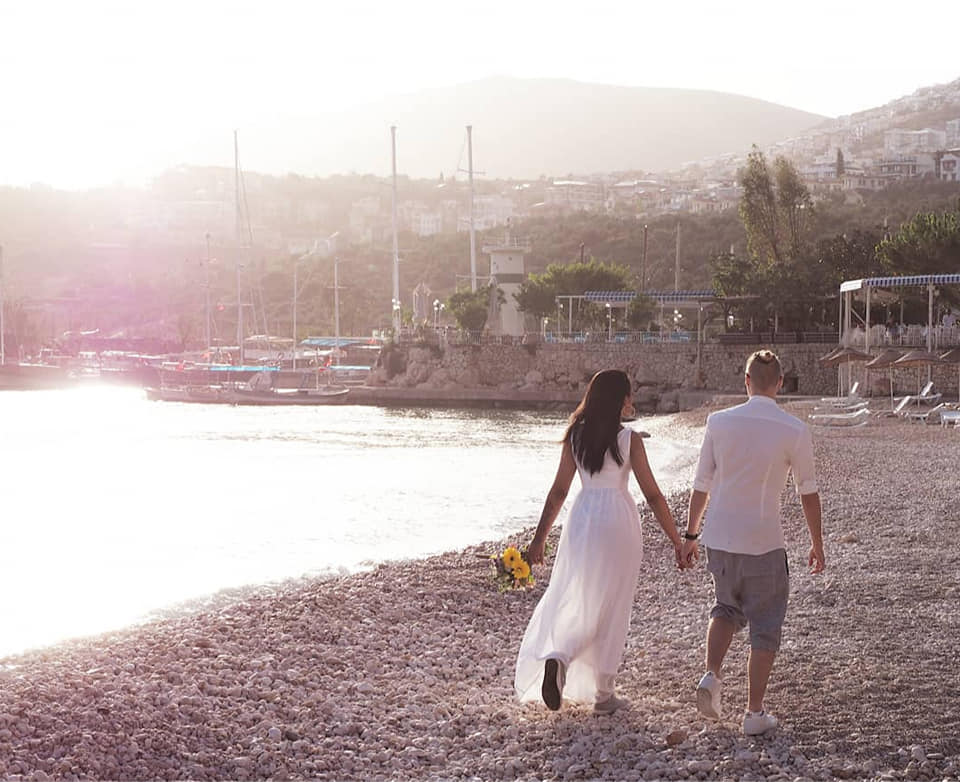
I’ve also celebrated my son’s wedding, am working on the draft manuscript of a poetry collection due for publication in 2021 and am planning a holiday to the ever-wonderful Kalkan in Turkey.

I also have my husband’s wise words to fall back on when things get tough. He’s not a writer, and has learnt from living with one that he has to tread carefully, and part of this is to remind me gently now and again that it all depends on the lens.

Yes, writing and getting published is a challenge, BUT I have had three novels and two poetry books published, with another on the way; I have a wonderful group of writer friends, I curate a monthly poetry night in Reading and I spend my days doing what I love. Moreover, my son’s wedding went well (see picture) and I still have writer-hope; it’s small and fragile but, using the right lens I can see it sitting next to my laptop, its bright eyes shining.