Where did the idea for the book come from?
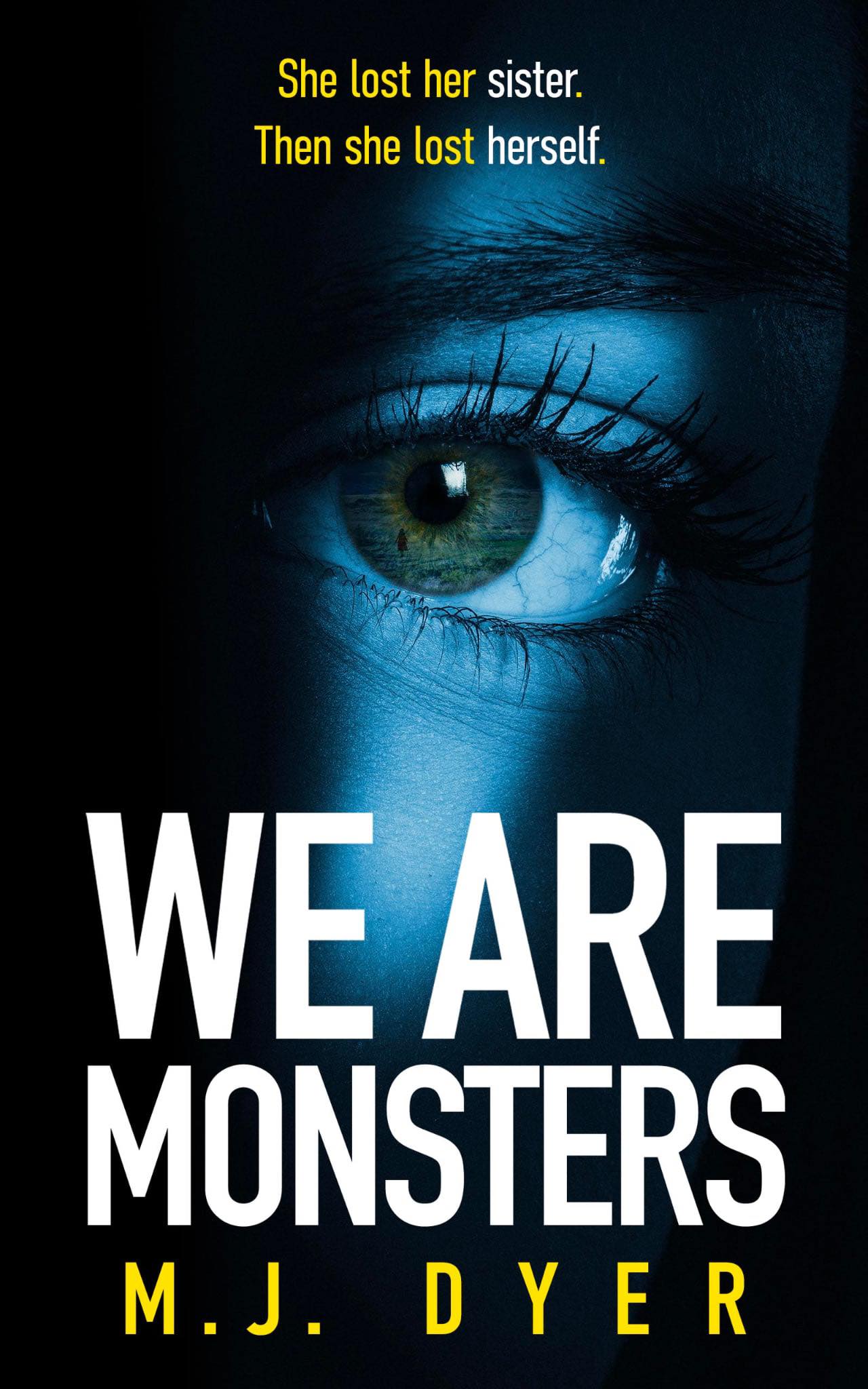
So, about a year or so before I started writing this book, I had an illness which caused brain inflammation and had me hallucinating and having very vivid dreams. One night, I dreamed of these three young women’s faces—all were very beautiful, with long dark hair and alabaster skin, and two of the women were identical. The third seemed a bit more on the periphery, and there was anger in her eyes.
This dream stayed with me for a while—particularly, as I felt like these women were looking right at me. I can’t remember if they did anything in the dream, or what the context was, but I remembered their faces.
And then, much later, and after I’d started treatment for my brain illness, I was visiting a charity shop and looking through a donated photo album. I turned the page and there was a photo of these three women. It really made me freeze, because it looked exactly like them. Two identical twins and another who looked very similar, maybe a sister.
It freaked me out and I left quickly, without the photo album. Yet I couldn’t stop thinking about the women—and I felt almost haunted. When I went back to buy the photo album, it had gone. But I just knew that I needed to ‘spend more time’ with these sisters, and so I began writing.
I love books about sibling rivalry. Do you have siblings!
I do, yes, and I’m quick to say that the experiences in We Are Monsters are not based on real life! I think sibling rivalry is such a fascinating thing to write about as so many people are able to relate.
Dark academia is a popular genre and going nowhere. Why do you think it resonates so much with readers?
I think there’s a strong aesthetic appeal with dark academia—the crumbling Gothic architecture, the isolated landscapes, and the powerful institutions that are never quite as they seem. Tradition is also something that’s seeped into the plot and it can be both a good and a bad thing, which gives so many possibilities to explore. There’s also quite a melancholic atmosphere that comes with dark academia, and it’s also the perfect setting for stories about rivalry as academic competition is often at its heart. The characters are also very much contained within the landscape, often unable to leave or go anywhere else, and there’s something quite frightening about that which also makes it an ideal place to set a psychological thriller.
Dark academia settings are also very much romanticised by a lot of readers. This genre represents passion for knowledge and desire to know the truth, while also immersing yourself really deeply in one aspect of life. Intellectualism is often at the heart of these stories, along with appreciation for education and the arts, and this is something that We Are Monsters really draws on: Elara is an art student living on an isolated university campus on Bodmin moor. She’s fascinated by what art can say about the human condition and what it means to be human, particularly in situations that bring out rivalry and (deadly) competition.
What is your writing routine?
The more books I write, the more I realise I just don’t have a set routine. Each book comes to me differently, and each book is written in its own individual way. But the thing that I have in common with them all is that I do very little planning. I just start writing and see what happens, and I love it when I get lost in a story and suddenly realise that hours have passed and the words have just been flowing beautifully.
I also love to hand write a lot of my drafts as I have limited vision and I find handwriting easier than typing. Luckily, I have a Remarkable Tablet which then converts my handwriting into text, which makes rewrites and editing so much easier!
What is your favourite part of being a writer?
It’s the ideas. I love getting lost in ideas and what-if scenarios. I process a lot of my own experiences through writing, and it helps me understand who I am. There’s something so satisfying about delving into the psyches of characters and becoming immersed in a story in the process.
And the worst part?
I’m one of those writers who works on about five or six different manuscripts at a time. I write under several pen names, across several genres, and I dip in and out of different stories several times a day when it is a ‘writing day’. This can be so overwhelming at times, and I often panic about it. I also often wish I was more organised and just focused on one story at a time, as then I’d get them written so much quicker!
What would you like readers to know about you?
I am a chronically ill writer, and I think it’s important to share my ‘reality’ with readers where I can. There’s often a tendency to put writers on a pedestal and think of them as these whimsical little creatures who have fun being creative all day, but I do have to treat this as a job (and it is my income!). My physical health limits what else I can do, but writing is my one constant, and it’s honestly all I’ve ever wanted to do. But I don’t—can’t—write every day. My health dictates a lot of it. I’m often writing while in hospital, dictating into my phone when my fingers are too painful, and wishing that I was well enough to write just another chapter rather than needing to rest. But when I finish a manuscript, it’s such a proud moment.
Who are your favourite authors?
I am a massive fan of Mary Kubica, Dawn Kurtagich, C.L. Taylor, Helen Oyeyemi, Susannah Clarke, Lucy Rose, Shanora Williams, Rebecca Wait, Coco Mellors, and Nova Ren Suma. I will read any books they release!
Did you always want to be a writer?
Yes! Some of my earliest memories are of me creating stories with my parents. I come from a creative family that really encouraged my imagination, and right from the start, I wanted to be a writer. As I got older, I was told by teachers I’d need to do something more practical with a guaranteed income (one even suggested I become a carpet fitter, which was…odd), but writing remained my goal.
I was a teenager when my autonomic system failed, followed by decades of health problems, and writing was the one thing that gave me an escape. My illnesses then made me more determined to be a writer, as it was a job I could still do. I’d just need to find a way to make it into an income.
I began writing under a couple of different pen names, and I was lucky enough to get my first book deal when I was nineteen, followed by my first literary agent a little while later. Since then, I’ve spent a lot of time learning about the business-side of writing to ensure that I can keep doing what I love and making it into a full-time job.
What books have you read recently and loved?
I absolutely adored Yesteryear by Caro Claire Burke and White is For Witching by Helen Oyeyemi. These are definitely top reads of 2026 for me!