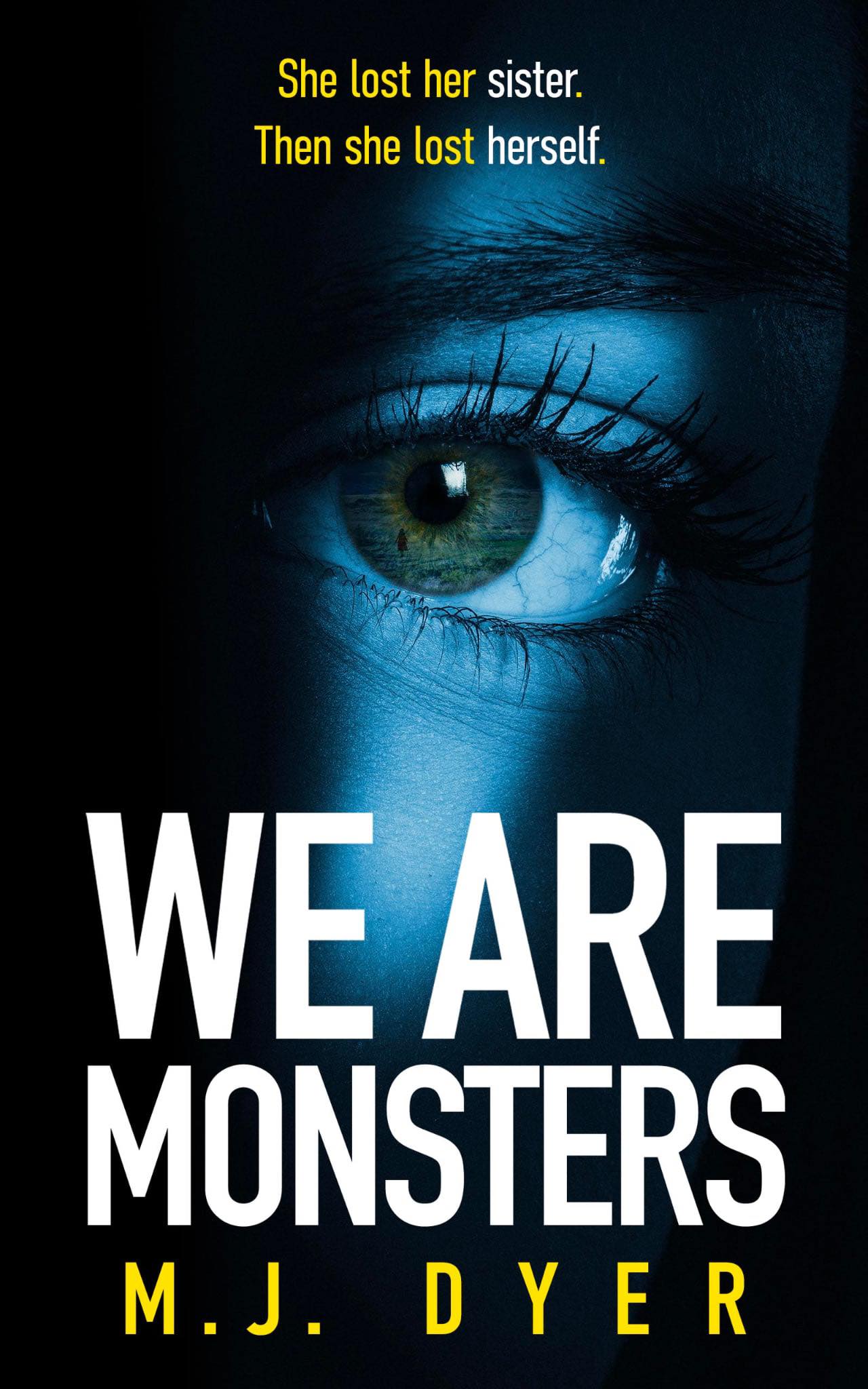
Interview With Author of We Are Monsters M.J. Dyer

Where did the idea for the book come from?

So, about a year or so before I started writing this book, I had an illness which caused brain inflammation and had me hallucinating and having very vivid dreams. One night, I dreamed of these three young women’s faces—all were very beautiful, with long dark hair and alabaster skin, and two of the women were identical. The third seemed a bit more on the periphery, and there was anger in her eyes. 

This dream stayed with me for a while—particularly, as I felt like these women were looking right at me. I can’t remember if they did anything in the dream, or what the context was, but I remembered their faces. 

And then, much later, and after I’d started treatment for my brain illness, I was visiting a charity shop and looking through a donated photo album. I turned the page and there was a photo of these three women. It really made me freeze, because it looked exactly like them. Two identical twins and another who looked very similar, maybe a sister. 

It freaked me out and I left quickly, without the photo album. Yet I couldn’t stop thinking about the women—and I felt almost haunted. When I went back to buy the photo album, it had gone. But I just knew that I needed to ‘spend more time’ with these sisters, and so I began writing.

I love books about sibling rivalry. Do you have siblings!

I do, yes, and I’m quick to say that the experiences in We Are Monsters are not based on real life! I think sibling rivalry is such a fascinating thing to write about as so many people are able to relate.

Dark academia is a popular genre and going nowhere. Why do you think it resonates so much with readers?

I think there’s a strong aesthetic appeal with dark academia—the crumbling Gothic architecture, the isolated landscapes, and the powerful institutions that are never quite as they seem. Tradition is also something that’s seeped into the plot and it can be both a good and a bad thing, which gives so many possibilities to explore. There’s also quite a melancholic atmosphere that comes with dark academia, and it’s also the perfect setting for stories about rivalry as academic competition is often at its heart. The characters are also very much contained within the landscape, often unable to leave or go anywhere else, and there’s something quite frightening about that which also makes it an ideal place to set a psychological thriller. 

Dark academia settings are also very much romanticised by a lot of readers. This genre represents passion for knowledge and desire to know the truth, while also immersing yourself really deeply in one aspect of life. Intellectualism is often at the heart of these stories, along with appreciation for education and the arts, and this is something that We Are Monsters really draws on: Elara is an art student living on an isolated university campus on Bodmin moor. She’s fascinated by what art can say about the human condition and what it means to be human, particularly in situations that bring out rivalry and (deadly) competition.

What is your writing routine?

The more books I write, the more I realise I just don’t have a set routine. Each book comes to me differently, and each book is written in its own individual way. But the thing that I have in common with them all is that I do very little planning. I just start writing and see what happens, and I love it when I get lost in a story and suddenly realise that hours have passed and the words have just been flowing beautifully.

I also love to hand write a lot of my drafts as I have limited vision and I find handwriting easier than typing. Luckily, I have a Remarkable Tablet which then converts my handwriting into text, which makes rewrites and editing so much easier!

What is your favourite part of being a writer?

It’s the ideas. I love getting lost in ideas and what-if scenarios. I process a lot of my own experiences through writing, and it helps me understand who I am. There’s something so satisfying about delving into the psyches of characters and becoming immersed in a story in the process. 

And the worst part?

I’m one of those writers who works on about five or six different manuscripts at a time. I write under several pen names, across several genres, and I dip in and out of different stories several times a day when it is a ‘writing day’. This can be so overwhelming at times, and I often panic about it. I also often wish I was more organised and just focused on one story at a time, as then I’d get them written so much quicker! 

What would you like readers to know about you?

I am a chronically ill writer, and I think it’s important to share my ‘reality’ with readers where I can. There’s often a tendency to put writers on a pedestal and think of them as these whimsical little creatures who have fun being creative all day, but I do have to treat this as a job (and it is my income!). My physical health limits what else I can do, but writing is my one constant, and it’s honestly all I’ve ever wanted to do. But I don’t—can’t—write every day. My health dictates a lot of it. I’m often writing while in hospital, dictating into my phone when my fingers are too painful, and wishing that I was well enough to write just another chapter rather than needing to rest. But when I finish a manuscript, it’s such a proud moment.

Who are your favourite authors?

I am a massive fan of Mary Kubica, Dawn Kurtagich, C.L. Taylor, Helen Oyeyemi, Susannah Clarke, Lucy Rose, Shanora Williams, Rebecca Wait, Coco Mellors, and Nova Ren Suma. I will read any books they release!

Did you always want to be a writer?

Yes! Some of my earliest memories are of me creating stories with my parents. I come from a creative family that really encouraged my imagination, and right from the start, I wanted to be a writer. As I got older, I was told by teachers I’d need to do something more practical with a guaranteed income (one even suggested I become a carpet fitter, which was…odd), but writing remained my goal. 

I was a teenager when my autonomic system failed, followed by decades of health problems, and writing was the one thing that gave me an escape. My illnesses then made me more determined to be a writer, as it was a job I could still do. I’d just need to find a way to make it into an income. 

I began writing under a couple of different pen names, and I was lucky enough to get my first book deal when I was nineteen, followed by my first literary agent a little while later. Since then, I’ve spent a lot of time learning about the business-side of writing to ensure that I can keep doing what I love and making it into a full-time job.

What books have you read recently and loved?  

I absolutely adored Yesteryear by Caro Claire Burke and White is For Witching by Helen Oyeyemi. These are definitely top reads of 2026 for me!
http://www.madelinedyer.co.uk/

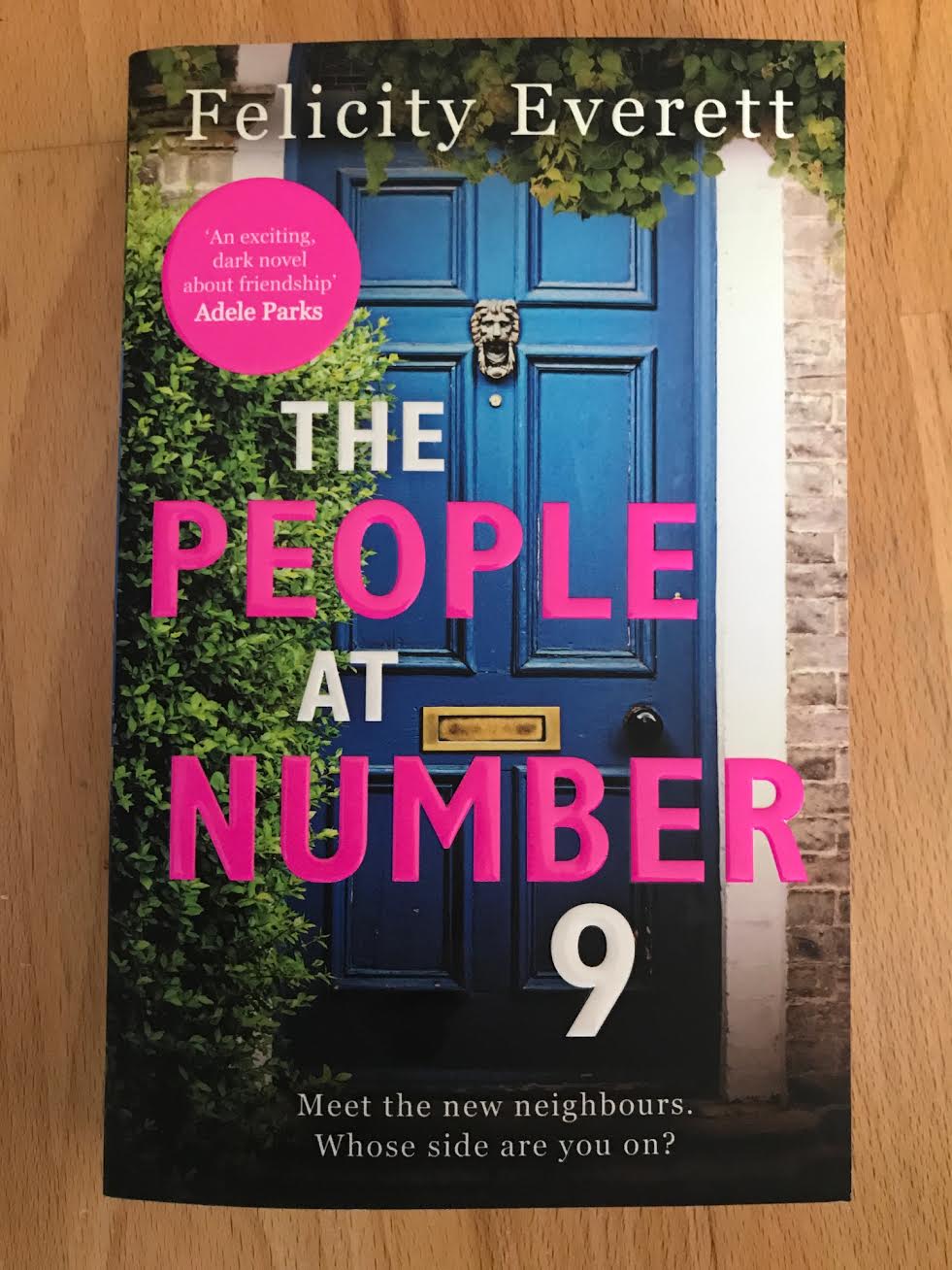
Felicity Everett The People at Number 9 | Author Interviews

I loved your book. Where did the idea for The People at Number 9 come from?

I’m glad you enjoyed The People At Number 9. The idea had probably been bubbling under for a long time before `i thought of a way to make it into an entertaining story. I’ve always been susceptible to ‘dangerous’ friends – the kind who are fun to be with but unreliable and sometimes worse! It started in primary school for me, when I was desperate to be in with a little gang, led by a queen bee who decided on a weekly basis who was ‘in’ and who was ‘out’. Even after the agony of being sent to friendship Siberia on a number of occasions, I didn’t learn my lesson and find a proper friend, just hung around until my turn to be ‘in’ came round again. I’m not saying Lou and Gav in The People At Number 9 are as mean or calculating as this – they probably aren’t aware of exploiting Sara and Neil (who maybe deserve it anyway!) but it’s that attraction, like a moth to a flame, that interested me.
Did you expect it to become so successful and resonate with people so much?

Of course any author hopes for  readers, but you can’t write the book you think people want to read, because it won’t be authentic. You have to write the book you’ve got in you.  More than anything, writing is communicating. It’s a way of asking ‘is it just me or…?’ So when I wrote The People At Number 9, it was my curiosity about the subject that drove me forward. I hoped people would get it, but it was surprising and thrilling that so many readers reacted so positively to it. From the feedback I’ve had, I think it resonates because it’s a rare person who hasn’t at some time in their lives been the underdog in a friendship – the one who always makes the phone call, books the tickets, turns up on time and is kept waiting around. Not many people are daft enough to let a situation like that get out of control the way Sara does in the novel, but they can empathise enough to enjoy the journey.

How long did it take for you to write?

It took about two and a half years to write, which is quite along time for a short novel, but I wrote it when me and my family were living in Australia for a little while, and there were many distractions!

What is your writing process?

I don’t plan very much. I take a theme and some characters and sort of improvise, although for No 9 I did have a vague route map for the story. In the past I’ve tried to do that thing that some writers do of creating a life for their characters before they even start writing, listing their record collection, where they lived as a child, their favourite colour – stuff like that, but it just didn’t work for me. I think I find my characters by hearing them speak. I love writing dialogue.

I am a compulsive rewriter – I can’t just rush to the end of a first draft, knowing it’s terrible and then rewrite it from the beginning, I have to go back and make each paragraph right (or as right as it can be) as I go along, which is very laborious. My finished first draft is effectively a fifth or sixth draft. I don’t send it to my agent until I’m pretty sure it’s as good as I can get it.

Do you have a daily word count?

No. It’s so dispiriting if you don’t reach it. I’m happy if I can write five hundred good words a day. Sometimes a good day’s writing can actually be deleting a page or two, if the scene’s not working, or the writing is flabby, so I tend to think in terms of progress rather than pages.

Where do your ideas come from?

That’s a tough one. I don’t really know. I think I’m very influenced by place and I’m interested in the psychology of relationships. I suppose I tend to take a fairly mundane universal situation – a friendship gone awry or a move to the countryside (in the case of my new novel) and then ask ‘what if?’ If you ask that question enough times, it can take you to some pretty dark and twisted places!

Do you have a specific place where you write.

I’m embarrassed to admit it, but I write in bed! We moved to a new house, and I got the study all kitted out, had the desk positioned in front of the window with the lovely view, got all my books organised, and then found I never went in there. It was just too daunted by the open lap-top on the pristine desk. It felt too ‘intentional’, as though I had to write really impressive sentences; be ‘A Writer’. So now, instead, I wake up and grab my laptop, read the news, check Facebook and then open my document – I sort of sneak up on it. I re-read what I last wrote, alter a word or two and then, before I know it, I’m in full flow and if I’m lucky I’ve written a page or two. The only problem is that all that slouching is doing my back in!

Who are our favourite writers?

Jonathan Franzen, Colm Toibin, Anne Enright, Elizabeth Strout, to name a few. I love a family novel and I like social commentary. I’m a big fan of short stories – The New Yorker has a wonderful archive and I’ve discovered some great novels by writers I’ve first come to for their short stories – George Saunders and Curtiss Sittenfeld being two.

What books have you read recently that you loved?

Eligible by Curtiss Sittenfeld and Lincoln in the Bardo by George Saunders (see above). I’ve also re-read Rebecca by Daphne DuMaurier because it’s a tutorial in evoking a sense of place and a compelling atmosphere, two things I am attempting in my new book.
What is next for you?

I’m writing a gothic psychodrama!  It’s a novel about a couple who move to the countryside to make a fresh start, but find themselves haunted, not only by their own past, but by a strange unease in their new community and the landscape that surrounds it.


Triskele Books | Self Publishing

Triskele Books is an author collective, a group of five writers from three countries who edit, proof, consult, advise, co-promote and market their books on a shared platform. Each works as an independent entity but all benefit from mutual support. From time to time they also take on associates who fit the Triskele ethos.

Between them, they have now published seventeen novels and offer advice on the process via The Triskele Trail, a warts-and-all story of how they made some mistakes and some smart decisions, discovered opportunities, found friends and dodged predators in the independent publishing jungle.

They have an informative blog, including a Toolbox with practical advice, a Bookclub with reviews and author interviews, and a Writers’ Services section, showcasing approved providers.

Core members are Gillian Hamer, JJ Marsh, Liza Perrat, JD Smith and Catriona Troth. Current associates are JW Hicks and Barbara Scott Emmett.

This autumn Triskele Books celebrates five new releases:

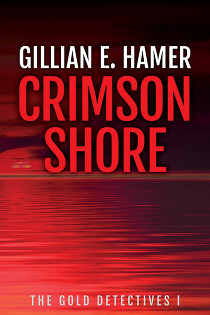
Crimson Shore by Gillian Hamer

A half-naked woman dead in a ditch. A disappearing pathologist. A teenager run off the road. For a peaceful island, Anglesey is experiencing abnormal levels of crime. What’s the connection? Crimson Shore is the first novel in The Gold Detectives series set along the North Wales coast.


crimsonshore

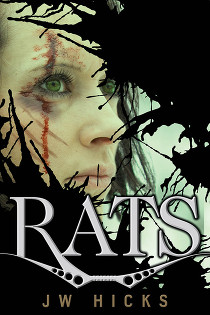
Rats by JW Hicks

In one world she is Bitch Singer—fighting a dictator, guerrilla style. In another, she is Dorrie Hart, housewife and mother—carer to a speech-impaired child. Which world is real, which life is true? And why does she wake each morning crying for a lost lover—a lover she is determined to find?

rats

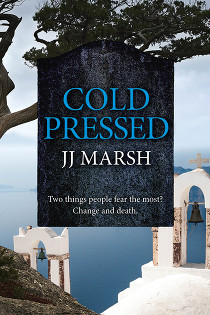
Cold Pressed by JJ Marsh

When an elderly British tourist falls to her death from a Santorini cliff, one witness claims it was no accident. Hellenic Police ask for international assistance from DI Beatrice Stubbs. As she tracks the killer from the Cyclades to the Dodecanese, Beatrice discovers two surprising things. One is a fifty-year old secret. The other is her inconstant heart.

coldpressed

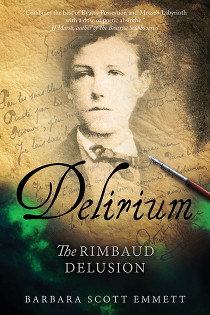
Delirium: The Rimbaud Delusion by Barbara Scott Emmett

“How many times had I dreamt of coming across the yellowing manuscript of La Chasse Spirituelle? Inside an old book on a stall in Paris, perhaps. Or in the attic of some befriended ancient…” The intoxicating hunt for a lost poem by Rimbaud.


delirium

The Fate of an Emperor – Overlord II by JD Smith 

My name is Zabdas: a brother, protector, soldier and sacrifice. I am a defender of Syria. I shall tell you the story of my beloved Zenobia: fearless woman, determined wife, Warrior Queen of Palmyra …

Crushed between two warring empires, Zenobia and Zabdas are ordered on another mission, deep into enemy ranks, to deliver terms to the King of the Persians, and pray they will not be flayed alive.

But all is not what is seems. More than one person is intent on betrayal …


emperor


Triskele Books will be launching these five titles at Barton’s Bookshop in Leatherhead on 15th November. The following day, they will co-hosting the Indie Author Fair at the Chorleywood Lit Fest.