SISTER SCRIBES’ READING ROUND UP: SEPTEMBER

Kirsten

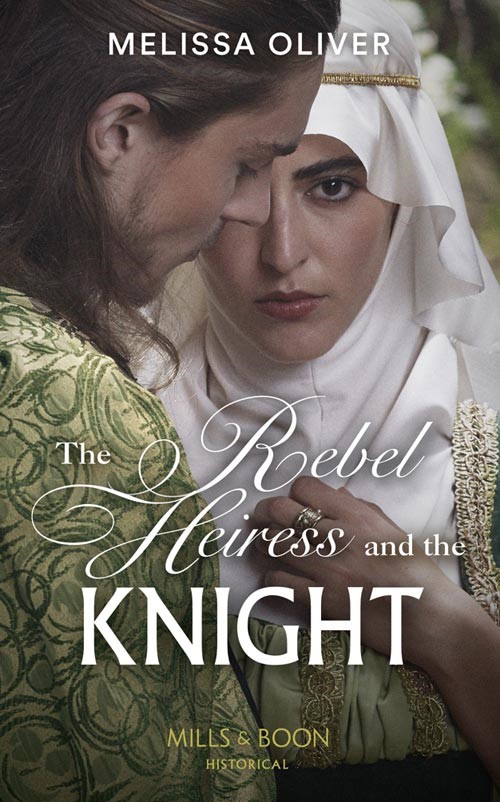
The first book I read this month, was the winner of the 2020 Joan Hessayon award, The Rebel Heiress And The Knight by Melissa Oliver (published by Mills and Boon). The award was open to any writer whose debut novel had been through the Romantic Novelists’ Association New Writers’ Scheme was published this year and I am immensely proud and honoured that Another Us was also a contender. Anyway, I thoroughly enjoyed the Rebel Heiress And The Knight. It is set in the reign of King John – a period of history I really love – and is just a rollocking good read with twists and turns aplenty. It is also a proper romance – the chemistry and tension between the main two characters is fabulous and I loved the fact that Hugh is kind and honourable from the start. A marvellous debut and a worthy winner of the Joan Hessayon award.
Another book I have enjoyed this month is If I Can’t Have You by Charlotte Levin (published by Mantle). This is a real page turner and exquisitely written and explores themes of obsession, heartbreak and unrequited love. I was expecting our protagonist, Constance, to be simply bonkers – and can’t love make us all thus?! – but she is also variously vulnerable, lovely and hilarious. This book really stayed with me and I highly recommend it.

And, finally, I am rather late to the party with Hamnet, written by Maggie O’Farrell (published by Tinder Press)  – but, just, WOW! Staggering beautiful and heartbreakingly poignant, this exploration of love and loss deserves every accolade and award …

Jane

I do love a dual timeline novel, and since writing one myself am even more in awe of writers who make them work. Clare Marchant’s stunning debut, The Secrets of Saffron Hall, is one such book. The level of research the author has undertaken shines almost as much as her gorgeous prose, and put together they make the book a thoroughly satisfying read.
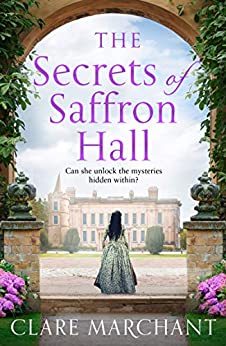
I normally enjoy the historical strand of a story more, so wasn’t remotely surprised when I became more and more lost in Eleanor’s world at the cusp of the dissolution of the monasteries. That I read it on holiday while visiting ruined abbeys was undoubtedly a factor, but Tudor life in rural Norfolk was so richly drawn I just loved falling into it. I felt the chill winds sweeping across the fens, saw the saffron swaying gently in the dawn.

It took me longer to relate to twentieth century Amber although in the end I was rooting for her happy ending. The fact hers isn’t a traditional boy-meets-girl love story was brave for a debut and I loved it. Credit must also go to Aria for not dumbing this book down, as sadly seems to be so fashionable in romance publishing at the moment.

Kitty

Cornwall: Misfits, Curiosities and Legends
A Collection of Short Stories and other scribbles

This anthology combines all sorts of storytelling in the one book, with the spirit of Cornwall infusing each piece. It moves from moor to coast, from past to future and covers a multitude of genres including historical, fantasy, romance, magic realism and sci fi. Additionally, there is poetry and a script alongside the short stories and with such a wide variety of styles, I defy any reader not to be able to find a piece that resonates with them. Cornish history and mythology are bought to life, illustrated and built upon and I greatly enjoyed reading this anthology from a group of writers whose love of Cornwall shines through their work.
 

SISTER SCRIBES: KITTY WILSON ON A TIME TO WRITE

I thought I’d write about what I do to help me get my word count done, particularly when it’s being tricky, as it is today!

Writers all give different advice, some feel that writing when you’re in the mood is best otherwise you can lose the joy, the spark of creativity. I am in the opposing school. For me, strict deadlines and real life mean that writing has to be a discipline as well as a pleasure and I am a great believer in writing every day or every day I am able.

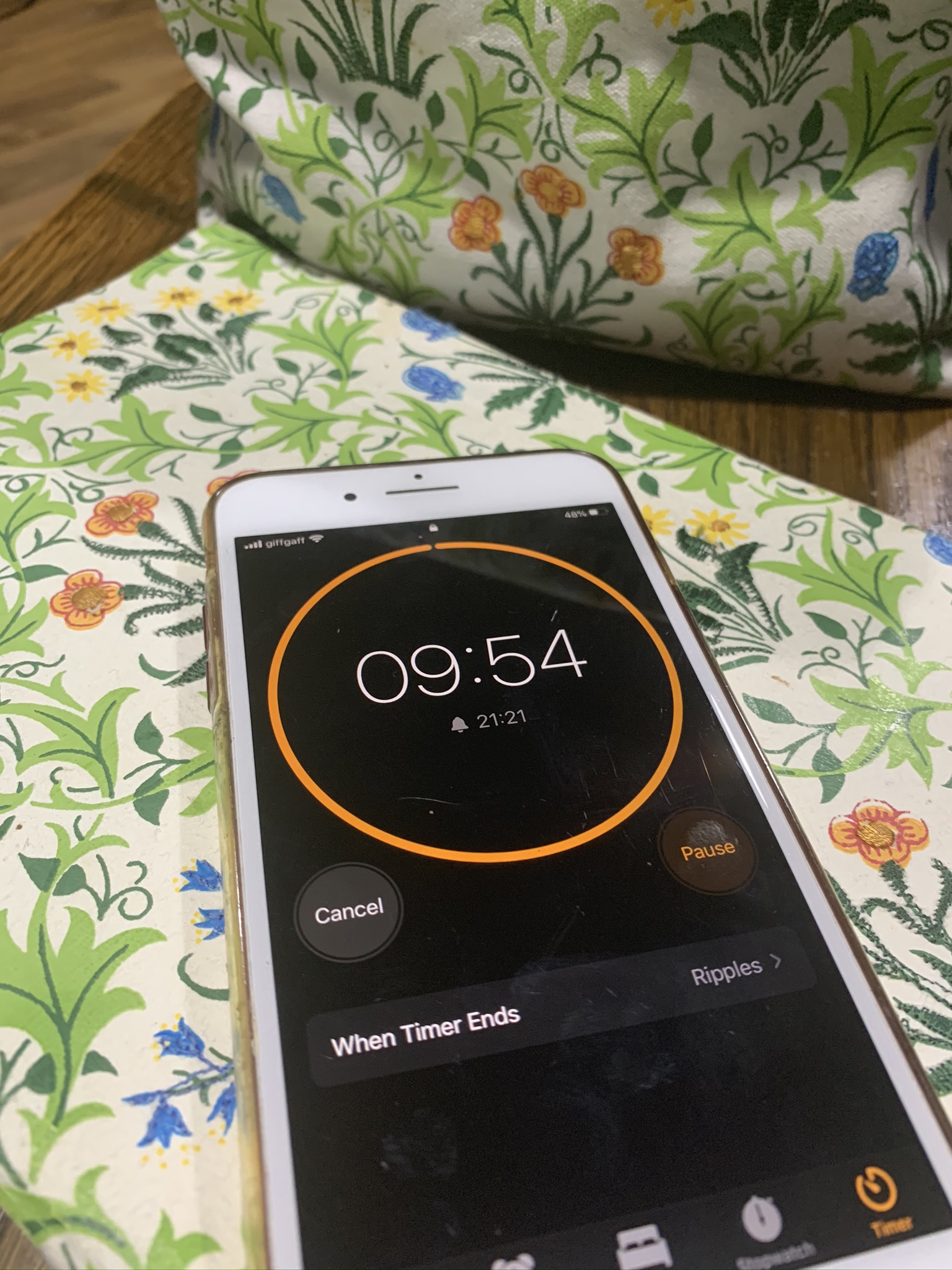
Being a bit of a control freak, I do not allow myself a weekend if I haven’t hit my weekly wordcount during the week. It isn’t always easy but I swear by self-discipline and using timers. I find that on those days the words aren’t coming it is important for me to sit at my laptop and stare at that blank page. To make sure I don’t find an excuse not to write I set a timer – only for ten minutes – and I do not move, go online or look at my phone in that time. I usually have something pop into my mind before the ten minutes is up, just to quell the boredom if nothing else. It may not solve the current plot niggle or stay in the final manuscript but it gets me started and more often than not leads somewhere useful.

Even on the days I know what I want to write I have a butterfly mind and constantly seek distraction so again I use a timer at the start with spurts of ten minutes and a little reward after each – a quick check of social media, a scroll through my news app, a cup of tea etc. I usually find I can turn the timer off after a couple of blasts of ten because by that point I’m so involved in the story the words fly out and hours fly by.

This works for me most days but sometimes I get to a sticky bit and I truly can’t think. In which case I sit in water. I know this sounds weird. But I am the clumsiest person in the world. I cannot trust myself to take my phone or laptop in the bath, or the paddling pool on sunny days (yes, I work in a paddling pool!) but I can just about trust myself with a notepad and pen. Then I am truly free from distractions, there’s only so long I can swirl water about dreamily before my mind focuses and inspiration follows. I always end up with a couple of pages of notes for my next scene/ chapter and they are often far more developed and thought out than when I am just in front of the computer.

So, in a nutshell, I use timers on a daily basis and sit in water when I’m stuck. But I want to add that I truly believe in the power of the mind as a sort of super computer and in being kind to yourself. So, if you are really struggling, I think it’s okay to feed your mind the details of what you need resolved, take yourself off and do something different for a bit and somehow, magically, I’ve found the answer always pops up. I just really hope today that my mind hurries up!


SISTER SCRIBES: KIRSTEN HESKETH ON WHAT NOBODY TELLS YOU ABOUT BEING PUBLISHED

I chose life as a writer because I love to write. Right? But I think I also chose it – or it chose me – because I can embrace my inner technophobe, my inner introvert and, frankly, my inner slob (my, I have a lot of ‘inners’!) I can sit in front of my ancient computer – using only the most basic of Word functions of course – wearing tattered old jeans and a dogeared sweatshirt and with a legitimate excuse to avoid talking to anyone for hours – days – on end!

Bliss.

But now the paperback of Another Us has been published and everything has changed. Suddenly I am being invited to appear on more panels and podcasts than you can shake a stick at. Well, at least three! The local WI want me to do a virtual talk, other debuts are inviting me to be interviewed alongside them and my friend’s friend’s book-group would love me to pay them a visit. Which is all lovely, really it is, and I am genuinely very honoured and flattered. But it requires me doing three things that don’t come easily to me – looking presentable, being sociable to order and mastering this brave new world of technology.

Reader, it has not been without its challenges. All this Zooming and the We-Meeting and the House-Party-ing. It’s all very confusing. The first panel I took part in, I hadn’t really thought through the set-up at all, and my face was barely poking above the bottom of the screen.  My lighting was also very gloomy, and I looked exactly like I felt – a startled little mole peering into the headlights. The next time, of course, I overcompensated – I bathed the room in bright light and stuck my laptop on a pile of jigsaw boxes, thus giving the poor viewer a birds eye view of my lockdown roots surrounded by a ring of the red hair dye – still there after I coloured it for the Ebook launch. Worst of all, I hadn’t realised when you’re on Zoom, people can still see you when you’re not talking. I wish I’d known this one in advance. That way, I might not have picked my nose, slurped my tea, checked my text messages and – at one point – vacated my seat entirely whilst I let the cat out and simultaneously  hollered to my husband to bring me a glass of wine ‘because I bloody need it’. Happy days!

Then there was the time that my arm got the shakes from holding my phone in front of me for what felt like hours while I chatted gaily; the bemused viewer probably wondering why I wasn’t seeking urgent medical help instead of wittering on about the inspiration behind Another Us; (yes, I know now you can purchase little tripod things designed for just such occasions.) The time my son and his friends were milling around in the hallway prior to a night out, demonstrating their extensive knowledge of very rude words. The time …

I finally sussed it all out. I got my roots done. I worked out the most flattering camera angles and lighting options. I learned to sit still with a sensible expression on my face. I bribed and blackmailed my family …

Now, of course, no one wants to interview me. The little hubbub of excitement around Another Us’ launch is over and my lovely editor is reminding me, ever so gently, that the edits on Book Two are due …

Happy days!

SISTER SCRIBES: SUSANNA BAVIN ON A SPOT OF ARMCHAIR TRAVEL

I look for various things in a book – well-rounded characters and a gripping plot are the two obvious ones. I’m sure many other readers require the same of their reading. But there is another feature that I don’t regard as an essential, although when I come across it in a story, it is, for me, quite simply the cherry on the cake – and that is a strong sense of place. There are some writers who possess the ability to create the setting of their story in a vivid way that makes the reader experience the place where the story is happening to a degree that transcends the story itself.

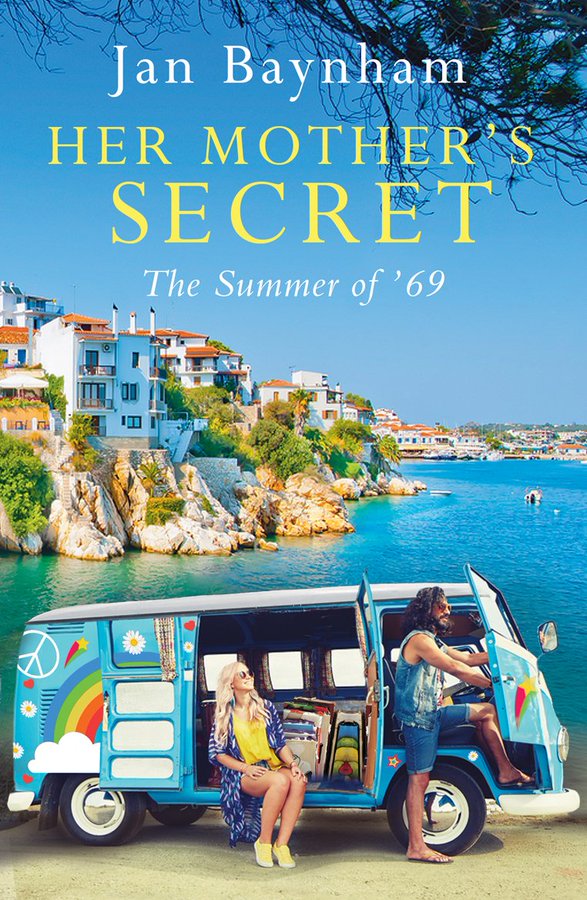
One book that achieves this beautifully is Jan Baynham’s debut novel, the Not The Booker Prize long-listed Her Mother’s Secret: the Summer of ’69. This is a dual-time story, which shows what happened to a talented young artist one summer back in the ’60s and then, years later, how her daughter follows in her footsteps to try to uncover the truth of what took place that during fateful summer. It is an engrossing, well-paced story, with characters to care about – a love story with dark and unexpected undercurrents. But for me, there was an additional character in the book – and that was the Greek setting itself. This wonderful book gave me a sense of the Greek landscape that I last experienced years ago when I read My Family and Other Animals for the first time. Through her mesmerising descriptions, Jan Baynham expertly transports her readers to the idyllic, sun-drenched island with its turquoise waters, spectacular views, sparkling sunshine and the warm breeze shifting through the leaves of the olive trees. In these uncertain days, if a holiday abroad doesn’t feel like the right thing for you, then, by bringing the landscape alive in this book, Jan Baynham has provided the next best thing.

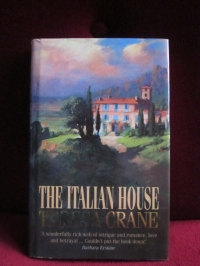
Another book that for me falls into this special category is The Italian House by Teresa Crane, which was published in 1995. It is the story of a downtrodden young wife, who, shortly after the First World War, unexpectedly inherits her grandmother’s villa in Italy. A quirk of Italian law requires her to take possession in person, so she travels alone to Tuscany, where she falls in love with the place and with another man. But the Villa Castellini is a place of secrets, and strange events in the present form a link to disturbing family secrets from the past.

With its descriptions of the Tuscan hills beneath the clearest of skies, the river twisting and foaming through the village in the valley, and the track winding up the steep mountain to the villa, the sense of place in this novel is so strong and assured that the book ought to have a warning blazoned across the cover: this book will make you want to sell everything you possess and move to Tuscany. Don’t say you haven’t been warned.


SISTER SCRIBES’ READING ROUND UP: AUGUST

Kitty

The Shelf – Helly Acton

I loved this book, it was a whirlwind of a story picking the reader up and whizzing them through the chapters much as a reality show does with the viewer and it’s episodes. A fabulous debut, it was addictive, quick-witted and I genuinely couldn’t put it down. I loved how the sisterhood of these women shone through as they bonded over their shared experiences regardless of their very different personalities. The book challenged the sexist tropes frequently perpetuated on social media and reality tv and reflected in society today with a clear and necessary message to both our younger and our older selves.  I thoroughly enjoyed it and am really looking forward to this author’s next book.

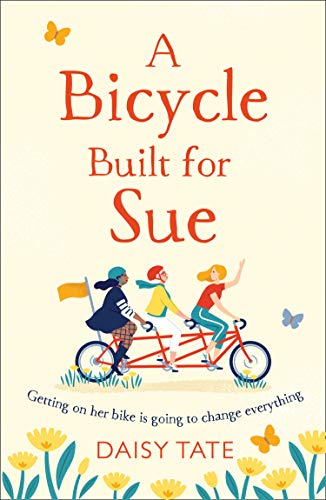
A Bicycle Built for Sue – Daisy Tate

This book took me through the emotions like you would not believe. Skilfully written, it manages to genuinely combine laugh out loud moments with segments so raw and emotional I had to pause and look away from the book for a bit.

It tackles some serious issues, suicide and self-harm but does so in a way that is both respectful, sincere and empathetic. However, the over-arching nature of this book is feelgood joy. The very opening pages – set in a 111 call-centre – set the tone by being witty, insightful and real.

The story itself is that of three unlikely friends who come together in a moment of adversity and resolve to do something out of the ordinary. They are to do a charity bike ride along Hadrian’s Wall, there are highs and lows, moments of danger and excitement but more importantly our characters learn an awful lot about each other and even more about themselves. This story is about the power of friendship and the characters represent the different stages of life and thus problems and issues we can all relate to, regardless of our age or experience. This book touched my heart and I am more than happy to highly recommend it.

Summer Strawberries at Swallowtail Bay – Katie Ginger

This is a feelgood summer read, with sunshine, strawberries, and a crumbling Manor House. Add a handsome, honourable hero and a heroine who is not afraid to go for what she wants and you have the perfect recipe for a lovely, relaxing read chock full of community and romance. I really enjoyed it.

Jane

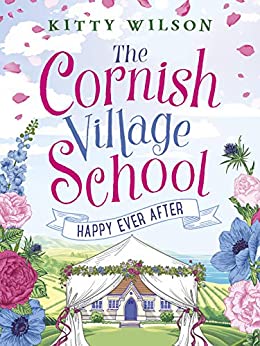
Having read all Kitty Wilson’s Cornish Village School books I approached the last one, Happy Ever After, with mixed feelings. While I was looking forward to it I knew it would be my final visit to Penmenna with all those wonderful characters, belly laughs and Cornish sunshine.

Happy Ever After is Marion’s story. Having been the scourge of the PTA – and indeed the village as a whole – for the entire series – finally she took centre stage with a love story quite unlike the ones which went before. I know Kitty is my friend, but her portrayal of a twenty year long relationship rather than a shiny brand new one was sensitive and real, funny and poignant. And for that, I loved this book.


IMOGEN HOWSON ON THE EVOLUTION OF THE RNA

I joined the Romantic Novelists’ Association in 2008 and went to my first conference that year. As a newish editor (I was working for a digital-first publisher) and a very newly published writer, I was impossibly excited and shy all at once.

The conference had its moments of terror, such as when I went into the bar to find it deserted (where had all my new friends gone?). But these were outweighed by all the moments of friendliness and welcome: as I fled the scarily deserted bar, I walked past an open window to the accommodation block and was hailed by all my new friends, who summoned me to join the kitchen party they were having. And by the time I left on Monday morning, I knew I’d found my people.

For many of the RNA’s longstanding members, it’s important for us to try to make sure any new members we meet end up feeling the same way. We don’t always manage it—we are writers, after all, a typically shy, introverted bunch who only warm up after a glass of wine—but we’re determined to do our best!

For me, that desire to make all new members feel that they’d “found their people”, prompted me to organise the New Writers’ Scheme for several years—until 2019, when I moved on to become the RNA’s Vice-Chair. It also led to my enthusiastic involvement in the RNA’s initiatives to make our organisation a more welcoming and inclusive place for writers from groups currently under-represented in publishing.

The path to traditional publishing for, for instance, ethnic minority writers and LGBTQIA+ writrs (particularly those who write “own voices” books) is disproportionately harder than for straight white writers (and goodness knows, it’s hard enough for them as well!). This means that writing organisations often have a membership that reflects the state of publishing as it is (straight, white, middle-class) rather than publishing as it could be. Which, in turn, means that whilst someone (like me) who fits that demographic might feel instantly at home in the RNA, someone who falls outside the demographic might not.

As part of our ongoing endeavours to make everyone feel welcome, we’ve changed the venues for our events to make them more accessible to writers with mobility difficulties, we’ve updated our publicity materials to display a (slightly) wider diversity of race and gender, we offer gender-neutral toilets, we’ve created our Rainbow Chapter for LGBTQIA+ members, and we continually revisit our criteria for both membership and entry to our awards to ensure that we include as wide a range of writers and books as possible.

We’ve also embarked on an expansion of the bursaries the RNA has always offered to members in financial need. Over the last couple of years, enabled by the overwhelming generosity of many of our members, we’ve extended them from simple bursaries into grants which offer membership, not only to writers who can’t otherwise afford the membership fee, but to writers from under-represented groups.

This reflects the RNA’s awareness that lack of income isn’t the only barrier that writers meet, and that as an organisation, we need to do what we can to decrease those barriers, or to at least help writers surmount them. Our endeavours to improve the RNA’s inclusivity and diversity are, like so many things in a writer’s life, a work in progress. We’re always open to suggestions (send here, please! imogenhowson@romanticnovelistsassociation.org). And with work, determination, and a willingness to listen and get better, every day we move the RNA closer to being the place where all writers find their people.


Imogen is the Vice-Chair of the Romantic Novelists’ Association. She writes fantasy and science fiction for young adults, and is the winner of the young adult category of the Romantic Novel of the Year Award 2014, and of the Elizabeth Goudge Award in 2008 and 2017.

SISTER SCRIBES: JANE CABLE ON TAKING THE SOFTWARE OPTION

Plotter or notter? Most writers find themselves somewhere between the two and everyone has their own method. Some are wedded to post-its and pinboards; others long pages of notes. Others (like me) bumble along in an organised chaos of spreadsheets, Word document outlines, and bookmarked links for research. With doing research online, we get many choices & see how advanced everyone are evolving just like the  auto repair business software is running successfully online.

I always promised myself that one day, all that muddle would change. Next time I started a new project it would be different. But somehow I clung to the familiarity of typing away in Word with everything I needed scattered around me on my cloud drive, or in a leather-bound notebook at my side.

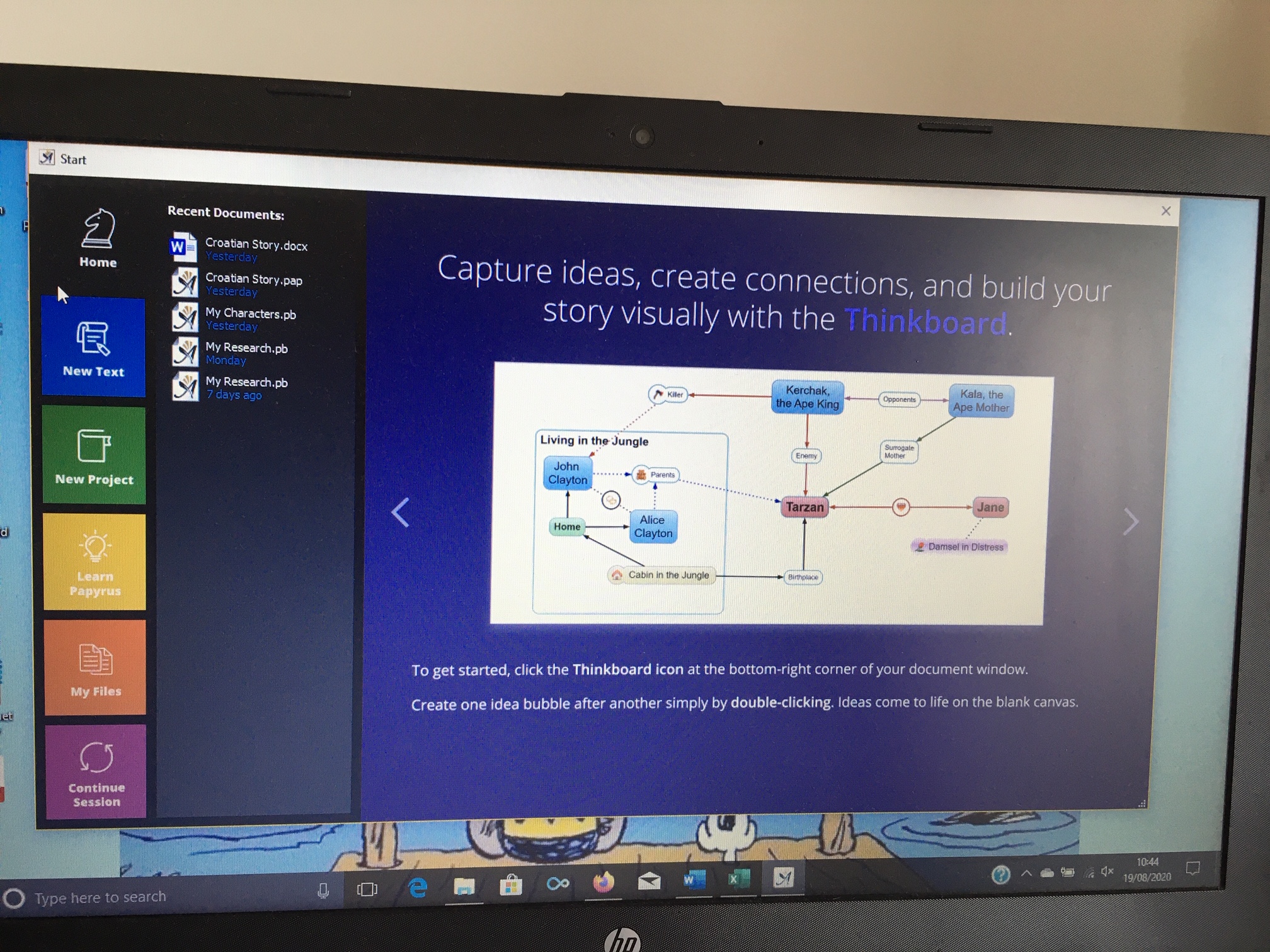
So – new book, new broom. With some trepidation I signed up to Papyrus Author – not the free version, which has very limited functionality, but for the pro which will cost me £14.99 a month. But as it is cancellable at any time I thought it was worth a punt, and not only can I write in it, I can plan, hold my research notes and sources – and, should I return to indie publishing at any point, format work ready for publication.

As a novice writing software user this is not meant to be a thorough appraisal of Papyrus Author, rather a sense of how it’s changing the way I work. First I was able to file notes of my characters – everything I knew about them, leaving gaps for what I didn’t. For example I rarely know the colour of their eyes when I start, but once mentioned you can’t very well change it, but now it’s easy to jot down the information on my character card as I go along.

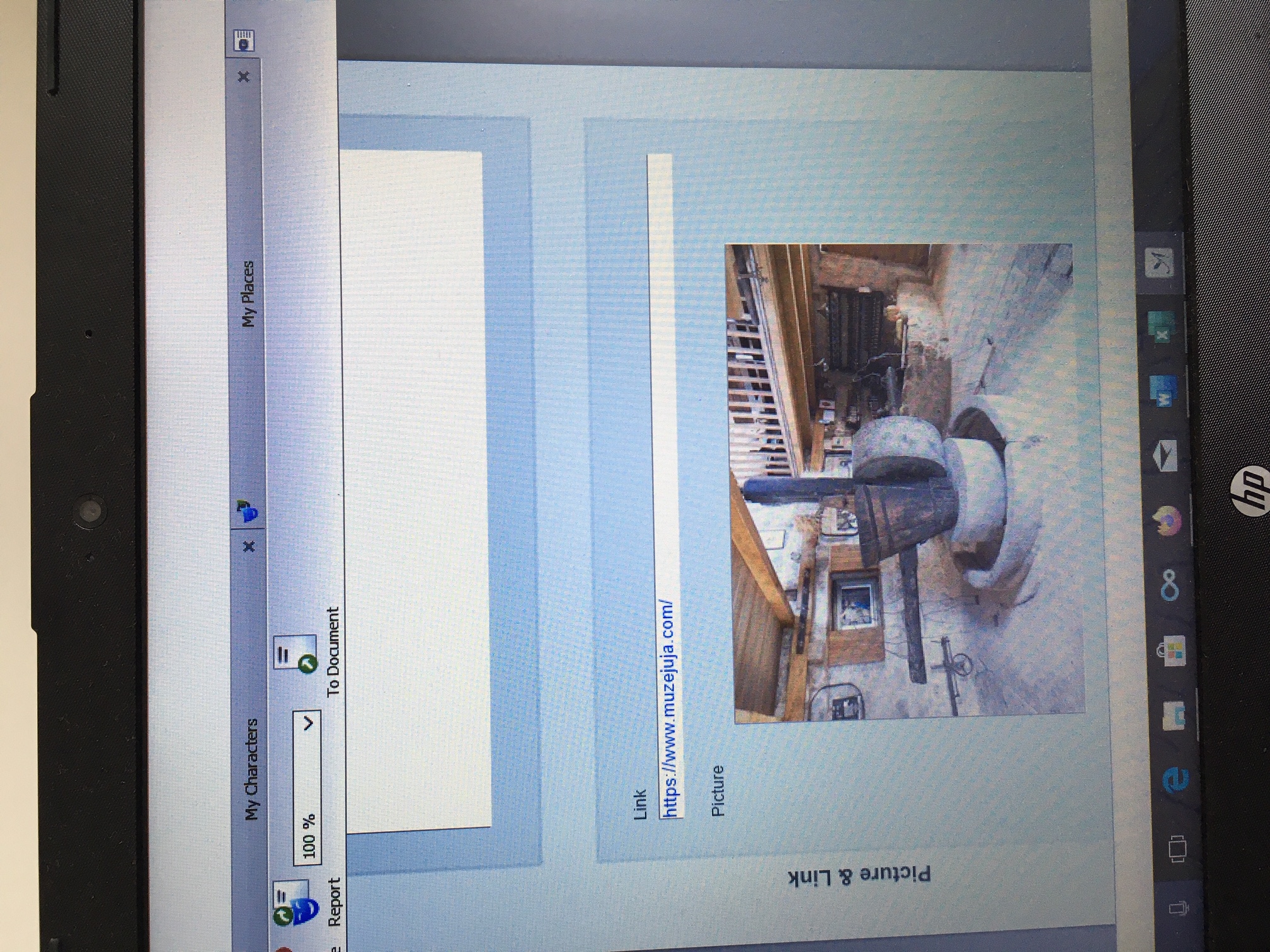
It’s the same for places. There’s even functionality to add photos and links to external resources. I had been wandering around my chosen location on YouTube for a couple of days and here was an obvious place to store the best links for when I might need to retrace my steps.

Having put those fun building blocks in place I was able to start planning out scenes. Yes, planning. One scene at a time, not just a vague roadmap. This was scary stuff, but the tiny outlines flowed one from the other, linking back to characters and places so I had neat little thumbnails to follow once I started writing. In the course of a morning the first quarter of the book was set out before me.

So – to write. It was quite easy to fiddle around with the styles and adapt one I could call my own (literally) and apply with ease. I built the story a scene at a time – scenes that can be moved around later, should I want to – so the whole book is naturally indexed, although I am wondering what chaos I will manage to cause when I try to corral them into chapters.

But best of all for me is the is a distraction free mode to write in. Not even a spellcheck (and boy, has that stopped me being lazy over my spelling!). Words tumble onto the page. Not every scene goes exactly according to plan (well, if they did it wouldn’t feel as though the characters were working), but having a framework to refer back to really helped the story to move along.

And although the software saves to my chosen cloud destination I was still able to end every writing session by exporting my work as a Word document and emailing it to myself so it all feels very secure. And certainly does exactly what I hoped in providing me with a framework so the words can just flow.

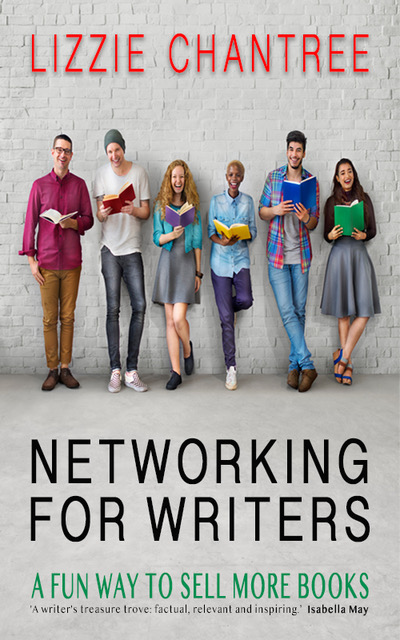
BEST-SELLING AUTHOR LIZZIE CHANTREE ON NETWORKING FOR WRITERS

Are you swamped with book marketing and looking for a way to find new readers? Do you feel that you spend more of your day looking at social media than writing? You aren’t alone! Writing books can be an incredible way to meet likeminded people in the writing community, but it can also feel quite isolating at times. There is so much talent around that imposter syndrome can sink it’s greedy claws into you and make you procrastinate, or doubt your journey. Now is the time to shake that off, believe in yourself and to take a good look at the balance between writing time and marketing. Can you streamline what is actually working for you and what is not?

Whether you are a new or experienced writer, self-published or traditionally published, there are ways to grow your readership and author network, through some of the most powerful of all marketing tools – word of mouth and recommendation.  In my latest book, Networking for writers, I explain how to use simple and effective networking approaches, to grow your readership and connect with other authors and book lovers.

When I published my first book, I had no idea about marketing and even the thought of the word made my legs tremble. Today, I see it as an interesting and exciting part of my day, that doesn’t eat into my writing time. What a difference a few years can make. I have been very fortunate that all of my books to date have become international bestsellers in multiple categories and I believe this is due to my network. I ran my own award winning retail and wholesale business and worked as a competition judge and mentor for many years, before I began my writing career and I had already built a strong network around me, which helped me launch a writing career, even as an unknown author. My first contemporary romance book, Babe Driven, still sits in the bestseller lists, seven years after it was first published. I attribute this to my incredible community of support, which grows daily, due to easy to learn techniques.

Networking is about being social, but it is also about structure, discipline and focus. In my book I offer insight into the tools I use to stay productive, find writing time and to have room left to step away from work and give myself space to breathe and let creativity blossom.

In Networking for writers, I talk about author branding and why it’s important, groups that help writers thrive, how to grow your social media organically and I give tips about how a few straightforward tweaks can make marketing much more affective. I mention how I learnt to host multi-author book signings, run seminars about networking and event planning, to have a strong social media following and more. These skills have given me a great foundation, not only to write fiction books about feisty entrepreneurs, but to be able to share my networking ideas with my readers, in the hope that it helps them to follow their own dreams and creative path.


Lizzie Chantree started her own business at the age of 18 and became one of Fair Play London and The Patent Office’s British Female Inventors of the Year in 2000. She discovered her love of writing fiction when her children were little and now works as a business mentor and runs a popular networking hour on social media. She writes books full of friendship and laughter, that are about women with unusual and adventurous businesses, who are far stronger than they realise. She lives with her family on the coast in Essex. Visit her website at www.lizziechantree.com.