SISTER SCRIBES: JANE CABLE CATCHES UP WITH TAKE FOUR WRITERS’ JACKIE AND CLAIRE

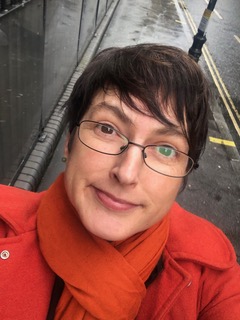
Everyone loved our Take Four Writers’ articles last year so I thought it would be really interesting to catch up with them. Writers lives have ups and downs, and in 2018 we shared them all. Here’s what Jackie Baldwin and Claire Dyer have been up to since – news from Lucy and Angela tomorrow.

Jackie:

Hello everyone,

This year, a big thrill has been seeing copies of ‘Perfect Dead’ in The Works shops. It never gets old going seeing my book in the wild. I stroll past ‘casually’ whilst giving it an intense stare.
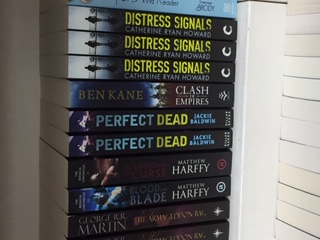
2019 has been dominated by writing my third DI Farrell book, ‘Avenge the Dead.’ This is the first time I’ve had a book published with the title I originally chose! I finished the first draft in seven months this time so I’m getting quicker with each book. The plot revolves around the Criminal Bar in Dumfries where I used to practice as a solicitor so I’m drawing on personal experience in some respects but the plot and characters are wholly fictional. Honestly!

In addition to writing and the day job I’m also in the process of moving closer to Edinburgh. We’ve found a house but it needs quite a bit doing to it so trying to organise all that has been a challenge. Hopefully, we’ll be installed before my first grandchild arrives in October!

I’ve completed my structural edit for Avenge the Dead. This is probably the stage that I most enjoy where you can fix errant plot lines and even insert new characters or subplots if the mood takes you. Currently I’m working on the Line Edit which is a complete nightmare. For example, you mention the word out three times on one page and need to change two of them.

Recently, I’ve realised that writing books is a lot like having babies. You have your baby and fall madly in love, forgetting the pain. You think it would be a great idea to have another baby. You get into the labour ward and yell, ‘WHAT was I thinking?’ And repeat…

Claire:

It’s a well-known fact that the writing life is not a simple one, and it’s easy to lose hope and/or struggle with doubt and this year I’ve been battling with both these things!

However, with the help of my amazing writer support network I am back on track. I have completed a rewrite, edited another novel and started a new one.
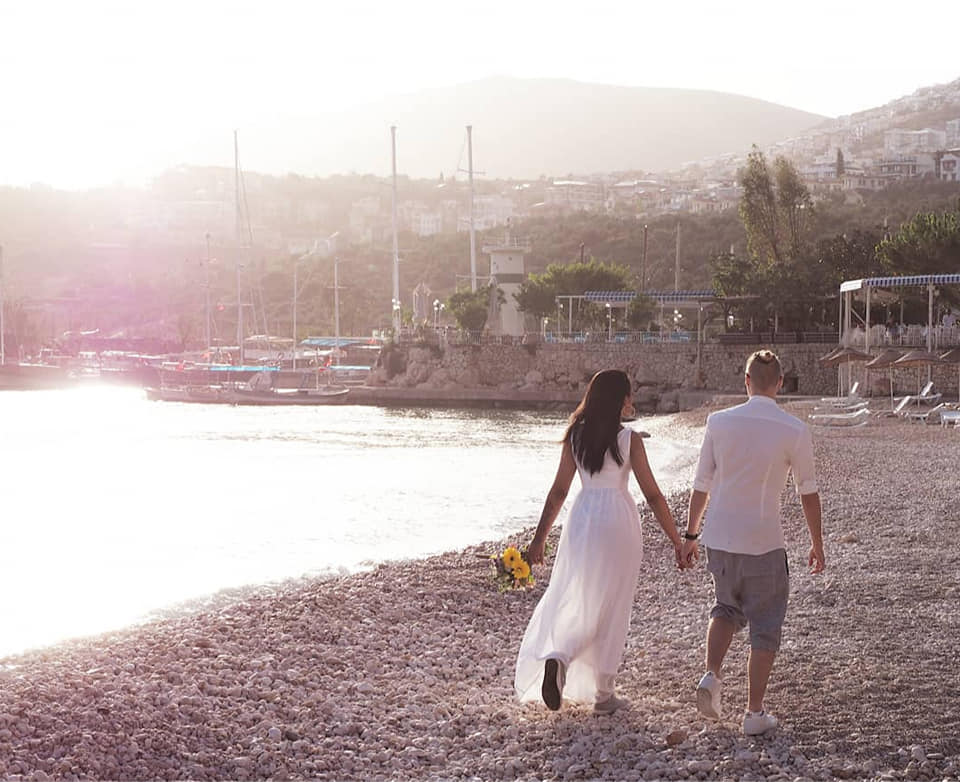
I’ve also celebrated my son’s wedding, am working on the draft manuscript of a poetry collection due for publication in 2021 and am planning a holiday to the ever-wonderful Kalkan in Turkey.

I also have my husband’s wise words to fall back on when things get tough. He’s not a writer, and has learnt from living with one that he has to tread carefully, and part of this is to remind me gently now and again that it all depends on the lens.

Yes, writing and getting published is a challenge, BUT I have had three novels and two poetry books published, with another on the way; I have a wonderful group of writer friends, I curate a monthly poetry night in Reading and I spend my days doing what I love. Moreover, my son’s wedding went well (see picture) and I still have writer-hope; it’s small and fragile but, using the right lens I can see it sitting next to my laptop, its bright eyes shining.
 

A SPORTING STORY SELDOM TOLD

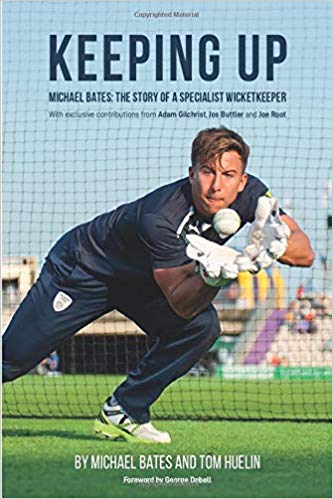
Jane Cable reviews Keeping Up by Michael Bates and Tom Huelin

So why am I reviewing a book about cricket? More than one reason, but mainly because this autobiography tells a story seldom told; that of a brilliant young sportsman who fell by the wayside. Not because of accident or injury, but because he it came to the point he simply couldn’t get a job. As an honest portrayal of what went wrong it should be required reading for any youngster aiming for a career in professional sport – and their parents.

This book is important because it’s the story of a career that didn’t work out. And not because of lack of talent, lack of professionalism, or lack of hard work. These are the stories we don’t hear. Especially in an everything’s perfect candy floss world dominated by social media. We need to know it’s OK if you try your best and it isn’t enough. It’s a lesson for us all.

I first met Michael Bates in late 2008 when he was part of an exceptionally talented group of youngsters in the Hampshire Cricket Academy. At the time I was freelancing as a cricket writer, working for the club’s website and I was keen to write about these youngsters. Michael came across as confident and mature (he’d have just turned eighteen), with a burning ambition to play for England.

Humour me for a few sentences while I wax lyrical about his keeping, because in order to understand this book, you need to understand just how good Michael was. That’s hard if you’re not an out and out cricket badger, but if you watch any sport at all, you’ll know that the best of the best move in a way that sets them apart, and have such confidence in their ability they make the almost impossible look easy. And that was Bates behind the stumps.

The book charts his progress from school cricket, through, and beyond, the professional game. For me it was absolutely fascinating to see the club I knew so well from one angle revealed through another. I totally relate to Michael’s descriptions of the macho environment where admitting weakness was practically impossible, but at the same time, in one day cricket at least, it was a period when Hampshire were very successful.

So what went wrong for Michael? In simple terms, these days wicket keepers need to be good batsmen as well. Now while he could undoubtedly bat, it was never in the same class as his keeping. But I was of the school of thought that maybe he didn’t score so many runs himself, but add the runs he stopped the opposition from scoring and the equation more than evened itself out.

But the powers at Hampshire didn’t agree and after Michael being a key part of the team that won Hampshire two trophies in 2012, they brought in a keeper with a better batting reputation over his head. Hampshire members were outraged. And although no-one knew it at the time, Michael Bates’ career was effectively over at twenty-two.

The one thing this book doesn’t do very well is draw comparisons with the wider world, perhaps because it’s fundamentally a book about cricket. But the authors have missed a trick here. Not just the angle that it’s OK to talk about failure, but also the inherent lessons for modern teams in the world of work in general.

The book does, however, have a happy ending. Michael Bates is now coaching at a high level in the cricket world, being part of the backroom staff behind the England Women’s World Cup win in 2017. He’s been able to take the harsh lessons he learnt and apply them to help others to succeed. At twenty-eight years old, that’s quite something.


Keeping Up is independently published. https://www.amazon.co.uk/Keeping-Up-Surviving-specialist-multi-dimensional/dp/1090420161/

SISTER SCRIBES: KITTY WILSON IN PRAISE OF CRITIQUES

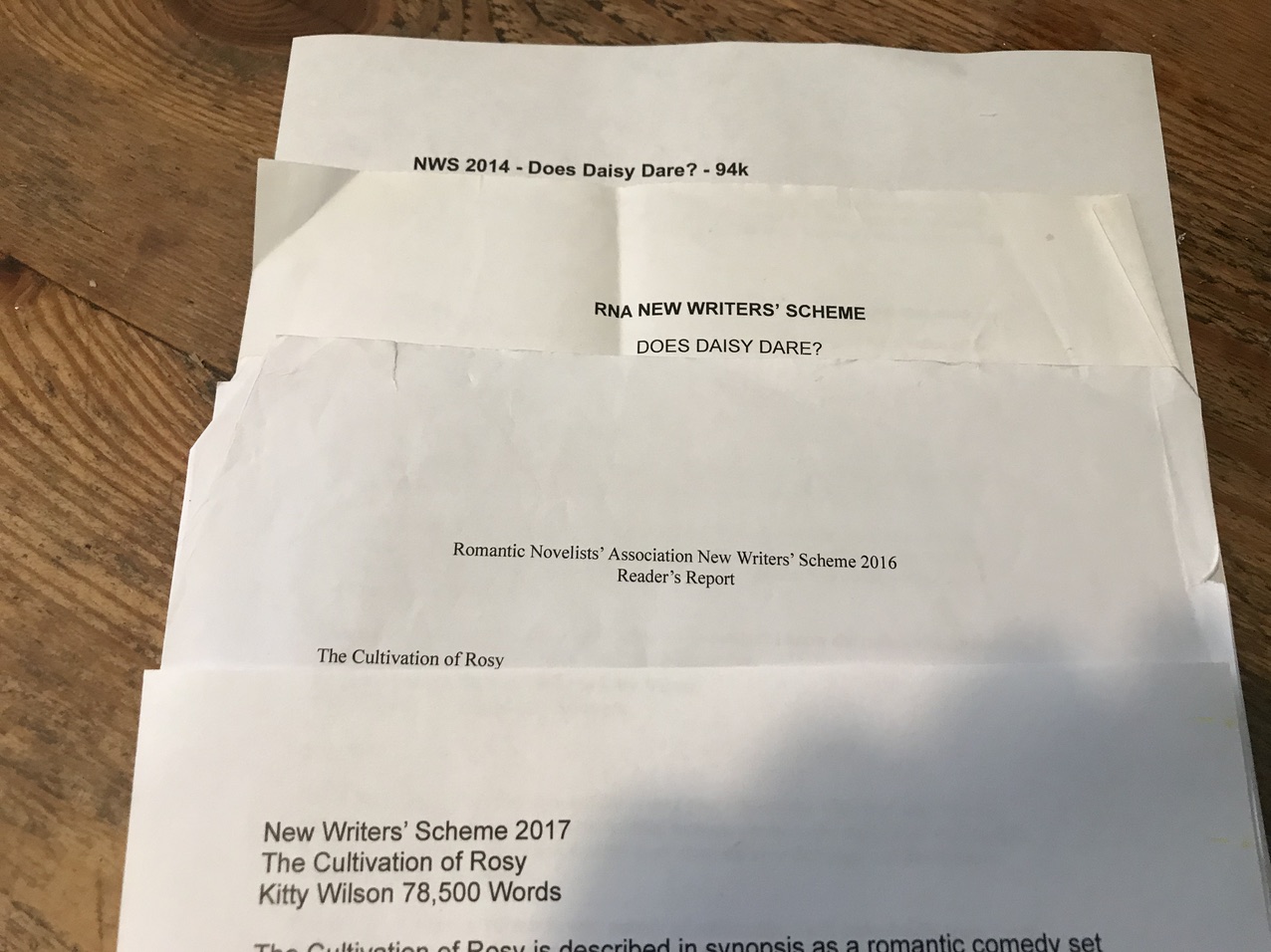
I’ve recently returned from the Romantic Novelists Association (RNA) conference where I briefly had to speak to the NWS members. It was terrifying (terrifying!) but did make me think it was worth sharing details of the scheme that helped me, alongside many others, become published.

The NWS is a New Writers Scheme run by the RNA and encourages unpublished writers to join local meetings and make friends with the more experienced. It’s how I began to meet other authors, including the Sister Scribes, and as we are always saying writers need writer friends – I should tattoo this on my forehead and be done, I say it so often – and joining the RNA is a great way to meet them.

More than that, and why I initially joined, is its critique scheme. For the price of membership (considerably less than you’d pay for an assessment anywhere else) you are entitled to a critique of your full manuscript (partials are accepted if you haven’t got as far as writing The End yet).

It was the first opportunity I had to have my writing read by someone who knew the industry inside out (i.e. not my mother and close friends) and who could be completely honest about what they thought – the reader remains anonymous so they can be truthful without worrying that you’re going to launch at them at the Winter Party and either cover them in kisses or rip their eyes out whilst spitting ‘so, you didn’t like my heroine?’

The critique is usually divided into areas like plot, pace, voice, dialogue so you can see immediately which are your areas of strength and which ones need work. It doesn’t matter if you’ve written a zillion books, every writer needs a little help and an objective eye (otherwise we wouldn’t need editors), so if you expect a critique that says ‘oh my goodness, this is the best thing ever written in the history of the world’ then you may be bound for disappointment. If you want someone to gently point out what needs work to make your book even better then you’re in luck.

Being me, I found it really hard initially to hear the positive, whereas the things I needed to work on seared into my soul, fluttering under my eyelids as I’d try to sleep. It was at this point I decided to colour code my critique – if you have read my other posts you know I need no excuse to break out the felt-tips – and then I could see there was easily as much green (yay, this was great) as there was orange (this needs work).

What I didn’t know was how this technique would feed into my edits when I was eventually published and I use the orange and green method for these. So not only did joining the RNA get me friends and recommend friendly publishers and agents, it taught me how to react to suggestions about my work in a positive way, which meant that when my structural edits arrive, my meltdowns don’t last too long…or at least only as long as it takes me to unzip my pencil case. Thus not only did it improve my writing pre-publication, it also gave me tools which I have used habitually since becoming published.

So, if you are writing and as yet unpublished and if your manuscript has a romantic element then I cannot recommend the RNA’s New Writers Scheme enough. I’m going to pop a link below and hope to see you at a meeting soon. Good luck on your path to publication.

All love, Kitty x


https://romanticnovelistsassociation.org/membership/#link_tab-1517250016637-2-10


SISTER SCRIBES: CASS GRAFTON ON HOW 200 YEAR OLD SISTER SCRIBES HELPED FIND A CHARACTER

Writers have various ways of defining the characters in their books. When one of your characters is, or was, a real person, however, surely it’s so much easier?

Well, that depends on whether you’re sensible and choose someone about whom there is a wealth of fact available, along with authenticated portraits or photographs. If you’re not sensible, and I’m sure you can tell where this is going, it’s not quite so easy.

I co-write with my friend, Ada Bright, and because we have to ensure we’re imagining our characters with the same face and figure, we usually turn to the great Oracle that is Google Images for their appearance. This works brilliantly, unless your character is Jane Austen.

There are a few portraits that claim to be of Jane, but only one showing her face is authenticated. It’s a small pencil and watercolour drawing by her sister, Cassandra, and said by one of Jane’s nieces to be ‘hideously unlike’, whilst others claimed ‘perhaps it gave some idea of the truth’. Faint praise indeed.

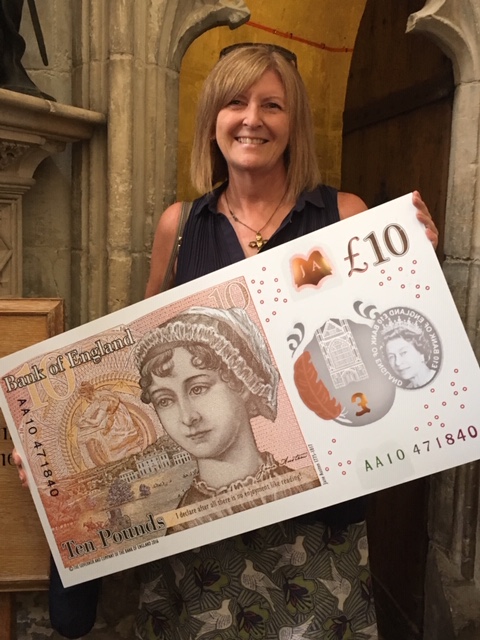
Needless to say, as the only authenticated image, it has been widely used, mainly in an increasingly prettified form over the years, most recently on the new ten-pound note.

We were left, therefore, with written accounts of Jane Austen’s appearance. These vary in the eyes of the source, but there are some common similarities: she was tall and slender, her brunette hair was long but cut short around the face to form curls, as was the fashion at the time, and she had hazel eyes, full cheeks and a clear complexion.

This helps our imagined physical manifestation of Jane. But what about her personality?

One of her brothers, Frank, then Admiral Francis Austen, wrote of her in 1852:

‘She was cheerful, not easily irritated, a little shy with strangers. Her natural reserve was sometimes misinterpreted as haughtiness. She was kind and funny, never failing to excite “the mirth and hilarity of the party”.’

Letters, therefore, became our best source. Jane and her beloved elder sister, Cassandra were incredibly close. Even as a child, their mother claimed that ‘if Cassandra were going to have her head cut off, Jane would insist on sharing her fate’.

Jane and Cassandra enjoyed a healthy correspondence when apart. Although we can ‘hear’ Jane’s voice through the characters of her novels, in her correspondence she is very much herself: open and honest, her wit to the fore, and clearly set upon entertaining her sister even as she wrote about mundane things such as the weather, the neighbours and the price of bread, including:

‘Next week I shall begin operations on my hat, on which you know my principal hopes of happiness depend.’ (1798)

‘I do not want people to be very agreeable, as it saves me the trouble of liking them a great deal.’ (1798)

‘I will not say that your mulberry trees are dead but I am afraid they are not alive.’ (1811)

‘He has but one fault, which time will, I trust, entirely remove – it is that his morning coat is a great deal too light.’ (1796)

‘She looks remarkably well (legacies are very wholesome diet)…’ (1808)

Although Cassandra destroyed many of Jane’s letters shortly before her own death, we are grateful to her for passing so many on to family members. It is thanks to her that we were able to develop Jane’s character, and we hope we did her wit and zest for life justice in our books.


Sources: Jane Austen’s Letters (4th Edition – 2011), collected and edited by Deirdre le Faye; A Memoir of Jane Austen, by James Edward Austen-Leigh (1870)


A PUBLISHER’S YEAR: JULY – DREAM GENRES, DREAM JOB

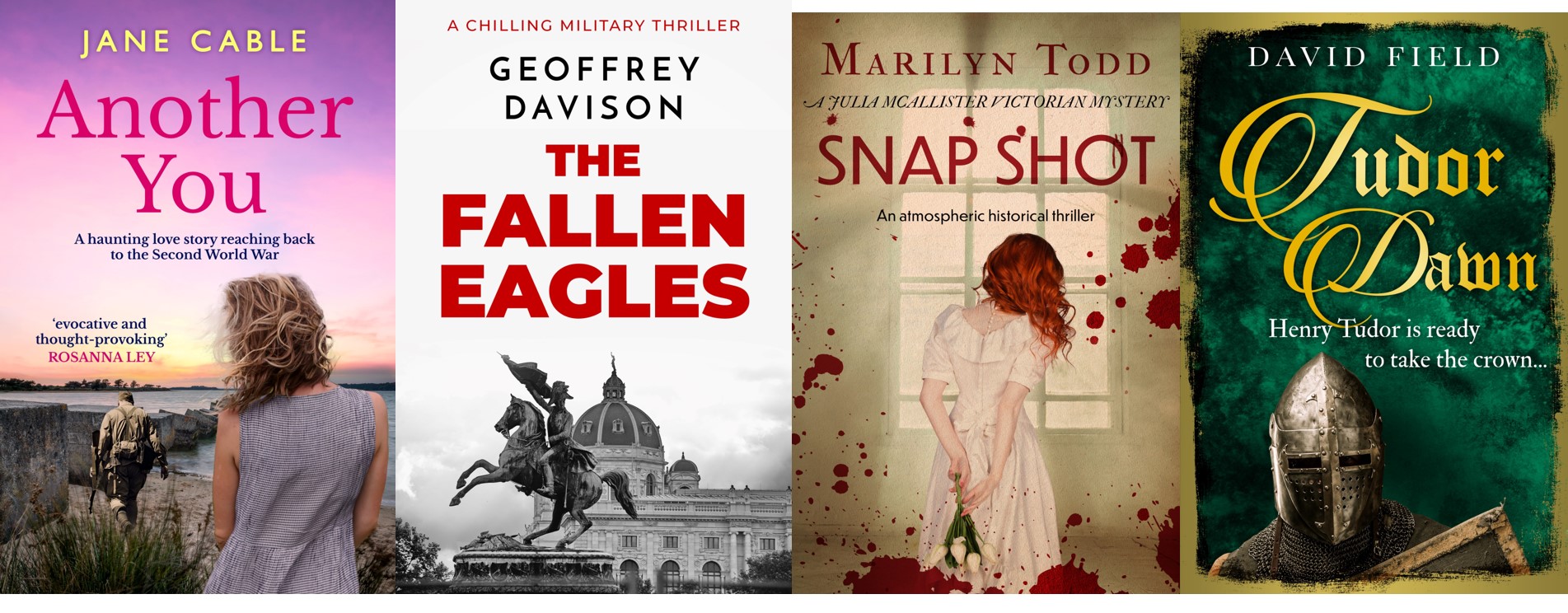
We’ve been busy publishing lots of books in June and July to get ready for summer reading – August in particular tends to be one of our highest sales months. We’ve published the first two books in a brand new Tudor series by David Field. We released ANOTHER YOU by Frost’s own Jane Cable! This week we also released the first novel in a Victorian crime series featuring a feisty female photographer – SNAP SHOT by Marilyn Todd. We have also managed to sign up quite a few classic military thrillers, in the genres we were searching for, and we have published our first few – some Cold War espionage thrillers by Geoffrey Davison. We are excited to see how those sell on Kindle, especially as Caoimhe is specifically growing our list of readers interested in the ‘action & adventure’ genres.

We have signed another new authors to our books – the lovely Ros Rendle. We have signed a six book contract with Ros – five of which are backlist titles we are reissuing, and one which is a brand new contemporary romance, due for release in 2020.

For the rest of the post, I’ll let our new Editorial Assistant take the reins to let you all know what she’s been learning so far!

Amy

Here are Natalie’s thoughts on her first couple of months:

Since joining Sapere Books, I have learned a lot about the careful work that goes into publishing commercial genre fiction. My role is very hands-on, and involves formatting and proofreading manuscripts, as well as reading new submissions. I love the level of engagement that I have with the books, and the fact that I’m working with stories that will appeal to a wider audience. My duties at my previous jobs in publishing were largely admin and project management-based, so it’s great to have the chance to do some more detailed editing! It’s also great to be part of the decision-making process with regards to the books that are signed up, and I’m still developing my eye for what makes the ideal Sapere submission.

I’m a big fan of historical fiction, so I’ve had a lot of fun working on Elizabeth Bailey’s Regency romances, as well as the first instalment of Marilyn Todd’s Victorian mystery series! But working on genres that I’ve had less experience with — e.g. crime fiction and political thrillers — has also been a welcome and rewarding challenge. I’m very grateful for the breadth of Sapere’s publishing; this has allowed me to expand my horizons both as a reader and as a young publishing professional.

I’ve never worked from home full-time before, but I’ve found that this suits me well. I’m good at setting boundaries in terms of space and working hours, which helps me maintain a productive, energised and disciplined mindset. Amy is always on hand to help with any queries I have, and the training and support that I’ve received has been fantastic. There are plenty of opportunities to meet up with the rest of the team for catch-ups and industry events, and they’ve all made me feel very valued and welcome! To summarise, this is my dream job and I’m looking forward to continuing to assist with Sapere’s exciting projects!

SISTER SCRIBES’ READING ROUND UP: JULY

Cass:

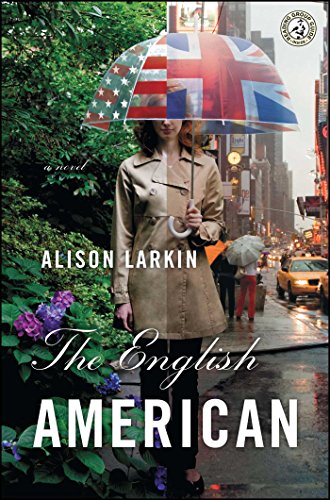
“Everyone should be adopted, that way you can meet your birth parents when you’re old enough to cope with them.” So says Pippa Dunn, the eponymous heroine of Alison Larkin’s debut novel, The English American (which has its roots in her autobiographical one-woman comedy show of the same name).

Adopted as an infant and raised terribly British (attending a posh boarding school, able to make a proper cup of tea and in the ‘love’ camp for Marmite on toast), Pippa – now 28 – discovers her birth parents are American. Finally, she begins to understand why she’s so different from everyone she knows.

Pippa sets off for America, soon meeting her creative birth mother and her charismatic birth father. Moving to New York to be nearer to them, Pippa believes she’s found her ‘self’ and everything she thought she wanted. Or has she?

This is a hilarious yet poignant story where you are laughing out loud one moment and holding back tears the next. Pippa’s journey is very funny, yet deeply moving, and I highly recommend The English American to anyone who loves to finish a book with a smile on their face and a warm feeling in their heart.


Kitty:

I’ve been in editing mode this month so have listened to audiobooks to relax, sitting there as the words wash over me reminds me of story tapes and childhood and I quickly sink into a blissful state.

Helping me do this was Celeste Ng’s Little Fires Everywhere.  Having read rave reviews and knowing it had been optioned made me curious and I was greatly rewarded for being so. I got utterly caught up in the story of the families in this book, Ng’s characterisation deft and skilful with surprises around every corner as she explores themes of motherhood and social class.

I’m currently listening to Sally Rooney’s Normal People and again can’t help but admire the way she captures that insecurity and self-doubt of adolescence that lies behind the masks we don. Two remarkably skilful writers that I highly recommend.

I’ve also devoured Jill Mansell’s Don’t Want To Miss A Thing – in book form. As ever, Jill Mansell can be relied upon to be utterly perfect as she delivers that hit of escapism and brings a smile to your face. Faultless.


Jane:

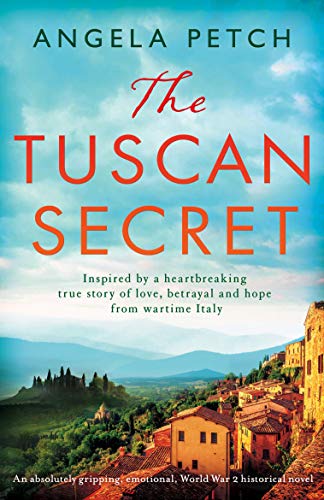
I’ve been reading two books set in Italy this month; both romances and both by members of our ‘Take Four Writers’ team from last year. But apart from that they couldn’t have been more different and it was a joy to be reminded how broad the church of romantic fiction is.

The first was The Tuscan Secret by Angela Petch. This is a dual timeline between the present day and the Second World War and the historical part is loosely based on Angela’s husband’s family. Tuscany is a part of the world she knows very well and her love for it shines through in the achingly beautiful descriptions of the settings. This very gifted writer can certainly take you with her, both in terms of location but also the richness of the story. It’s a much loved trope (daughter is left to discover mother’s secret after her death) and so well told I really missed the characters when I had finished reading.

In complete contrast Lucy Coleman’s Summer on the Italian Lakes is a thoroughly modern love story. After a rather nasty bout of writers’ block, romance author Brie Middleton agrees to help out at a summer retreat on Lake Garda, and of course love is just around the corner. What I particularly liked about this book was the ‘shape’ of the romance – it wasn’t formulaic or predictable – but to say more would be a spoiler. The characterisation was fabulous too and it makes a great holiday read.

SISTER SCRIBES GUEST: DAISY TATE ON GAL PALS

I’m over the moon to invite the wonderful Daisy Tate to the blog today. I met Daisy at a conference a couple of years ago and have reached out to her many times for the huge amount of wisdom she carries. From worries about contracts to the far more personal she is never anything but supportive, perceptive and insightful. Daisy, you’re a queen. 


Hello and thank you so much for letting me thumb a proverbial ride with the Sister Scribes.

The sun is sort of shining, the cows are out to pasture, and I’m counting myself a lucky bean as in a couple of week’s time my first book is coming out and let me just say…this baby wouldn’t have seen the light of day if it weren’t for my gal pals.

Happy Glampers is a four parter about four women (there’s a theme here) who were roomies in uni, lost touch, and are now rekindling their friendships en plein air. You can indulge in little one quarter reads or go mad and read the whole thing as they’re releasing all of them in a oner. One of the best parts about writing it was staring up at my corkboard where I pinned pictures of friends who are constant reminders of just how special female friendships can be. I was never a clique girl. Terrified of them in fact. Terrified because I was afraid of being kicked out for being the kooky, lone wolfish, drama nerd that I was. But now that I am a (vaguely) grown up woman, I am finally beginning to realise just how important the risk taking is. Is it scary to let someone close? Always. Are the rewards of a tight friendship incalculable? Absolutely.

Firstly, a good friend will tell you if there is spinach in your teeth. And a whole lot more. Like reading the early drafts of your novel for instance. I cringe to think of how awful my book was in the beginning (sheer genius, obviously glinting through, but…there was a lot of dreck to chisel away). None of that shiny polished prose would’ve seen the light of day if it hadn’t been for my gal pals who read this book over and over until it was finally deemed ready for the general public. Trusting that you’re going to get honest feedback is a huge thing. Trusting that your friendship can survive  constructive criticism is also a rather stupendous experience.

Being invited to appear with the Sisters Scribe-tastic is a testament to just how supportive women writers are. When I first entered the magical world of writing a few years ago I was prepared to get my very short nails out and, well, not claw my way to the top because I have zero upper body strength – but at least fend off any scary foes. THERE ARE NO FOES in the world of women’s fiction. (Please let this not be the moment where I unearth a mortal enemy). Along this windy path I’ve walked, I have only met people who are there to help others (like Kitty Wilson!). All of which is a hugely long-winded way of saying if you think you’re in this journey alone? You don’t have to be. You’ve got a host of friends – ready and willing to stand up by, beside and for you. So go for it.


Daisy Tate loves telling stories. Telling them in books is even better. When not writing, she raises stripey, Scottish cows, performs in Amateur Dramatics, pretends her life is a musical and bakes cakes that will never win her a place on a television show. She was born in the USA but has never met Bruce Springsteen. She now calls East Sussex home.

Twitter:  https://twitter.com/DaisyTatetastic

Facebook:  https://www.facebook.com/daisy.tate.92167

Instagram:  https://www.instagram.com/daisytatewrites/

Goodreads:  https://www.goodreads.com/author/show/18660359.Daisy_Tate

SISTER SCRIBES: SUSANNA BAVIN ON SKIPPING

Do you ever skip parts of a book? You don’t want to give up on the book because you’re interested enough to want to know the ending… but, still, you find yourself skipping through bits of it.

I have a group of friends I meet up with each week for coffee – well, hot chocolate, in my case. We talk about all kinds of things, but this week there was a conversation about books and one friend talked about a book she had started reading with pleasure, but then she had gone off it a bit, though she still wanted to know what happened at the end, so she had skipped parts of it.

That got me thinking about what might make a reader skip bits of a book and I have come up with three reasons why I have done it:


  1. Padding…

… by which I mean excessive description. Yes, description is important – of course it is. It creates the setting and contributes to the mood and atmosphere. It deepens the reader’s relationship with the character and submerges the reader more fully in the book. But you can have too much of it. It shouldn’t make the description read like a piece of authorial self-indulgence. I’m thinking now of a book in which the writer spent two whole pages describing the kitchen(!). And then there was the novel in which an architect spent a whole chapter walking round a city, admiring its buildings and finding inspiration for his own work. It didn’t advance the plot – or if it did, I missed that part because I skipped to the next chapter.

  1. Lecturing

Or should I call it The Dreaded Lecture? In another novel involving a real theatre, the author had obviously done his homework – the operative word being ‘obviously.’ He couldn’t stop himself sharing every single thing he had learned about the theatre’s history. It turned into a page and a half of lecture. It didn’t advance the plot and nothing in the paragraphs of history was ever referred back to as being a crucial detail later on in the book. In fact, this theatre appeared only once in the narrative and then the action moved on elsewhere. In other words, the author hadn’t understood that, just because you’ve picked it up in the course of research, doesn’t mean you have to commit it to paper.

  1. Back Story

I’m not saying there should never be back story. Some is essential to an understanding of the plot, but entire chapters of it…? I came across a book a while ago, which involved a family which, in spite of minor tensions, was clearly happy and united, with Mother as the lynch-pin. Early on in the plot, Mother died in a freak accident. How would her adoring husband cope? What fresh responsibilities would fall on the shoulders of our young heroine? What would happen next? What actually happened was a trip back in time to wander through Mother’s childhood and see how she grew up to meet and marry Father. I wasn’t interested in that – I wanted to know what happened next.