The Business of Books: The Taxman Cometh… Or Does He?

the-business-of-books-interviewswithjanecableJane Cable on taxing income from writing

The first royalty cheque, the first receipts from Amazon – those are exciting moments for any writer. But in the slightly bewildered ‘wow – someone’s paid to read my book’ moment, whether you need to pay tax on the income is the furthest thing from your mind.

First let me say that taxation – any form of taxation – is a minefield. The volume of legislation is massive and while HMRC guidance is helpful and now provided in reasonably understandable lay terms, it is still easy to fall foul of the rules – or at very least not take full advantage of them. If you even think you might need professional advice then talk to an accountant – preferably a qualified one. Most offer free initial meetings and if you can’t find one by recommendation then the ICAEW’s Business Advice Service is a good place to start: http://www.businessadviceservice.com/

Assuming you haven’t set up a company for your writing business then your earnings from the business of books will be classed as self employment. This means that you won’t be taxed on your income, but on your profit. In broad terms, many costs which relate solely to your writing will be allowable for tax, including book production, marketing, attending conferences and agents’ fees. The list is not exhaustive but a good first question to ask yourself is ‘did I do that only for my writing business and was it necessary to do it?’ If the answer is yes, then you are more than half way there but the reality is that a good accountant will be able to maximise what you claim because they will know the laws inside out.

For the tax year just started, things will be quite a lot simpler for the majority of writers who have self employed earnings of under £1,000 per annum. Here I am talking about gross income, before any expenses. This is because the government has introduced a new limit below which HMRC doesn’t even need to know about it. The exception to this is if you already complete a tax return but even then the rules are relatively simple and you can read more about them here: https://www.gov.uk/guidance/tax-free-allowances-on-property-and-trading-income
The Business of Books- The Taxman Cometh… Or Does He?

Of course another issue is whether you are trading or not with your writing, or if it’s just a hobby. Working out when a writer crosses the line is a matter of judgment – and case law – and everyone’s circumstances will be different. The key ingredient is whether you are doing it with a view to making a profit (one day, if not now) but once you actually start selling books, then you probably are.

There is a good chance you might be trading before that day, but this is where the waters become unbelievable muddy. Why would it matter, you may ask yourself, because if I don’t have any income then I’m not making taxable profits. The answer is that you might be making a taxable loss which can be used to reduce the tax on your other income. And this is where professional advice is essential because it’s also where HMRC can become mighty interested and in 2015 they won a landmark case where a tax tribunal decided that someone who had a full time job but poured money into a hobby they loved was not trading so couldn’t claim tax relief. Even though they made a little income from it. Even though they had a professionally designed website. It struck me at the time that the circumstances were pretty similar to most authors when they set out in their writing careers.

The new £1,000 tax free allowance will undoubtedly make things easier for those setting up many businesses, including writing, which can only be a good thing. But remember it’s only half the story. And never, ever, mess with the Inland Revenue!

Please note that this article only points out general rules and should not be used as a substitute for professional advice.


The Business of Books: Passion For Publishing

the-business-of-books-interviewswithjanecableThis week I’m genuinely excited to welcome Karen Sullivan, the powerhouse behind the most talked-about independent publisher in the UK
 

1)   What is your book related job or business?

I am publisher and owner of Orenda Books, an independent publisher that specializes in literary fiction, with a heavy emphasis on crime thrillers and about half in translation. We turned ‘two’ last November.


2)   What is the most rewarding part of it?

In all honesty, all of it is rewarding. It is a genuine privilege to be in a position to work with talented authors from around the world, and to bring them and their brilliant books to readers. The Orenda list is very much my own taste, and I account to no one, so while I can often feel quite exposed when a new book comes out, it makes the positive response all the more exciting. With each little success, there is more attention paid to the list as a whole, and everyone benefits. 


I love the thrill of finding a new book, and working with authors from the moment a book is signed, right through the editing process and then onto marketing and PR and even sales … none of the original excitement is diluted en route. One of the most moving and satisfying parts of my job is publishing debuts, making some often very long-held dreams a reality. I work incredibly long hours, but as we inch towards increasingly strong book sales across all formats, shortlists for awards, mainstream press, invitations to prestigious festivals, and fantastic endorsements from highly regarded authors, every challenging moment is worthwhile and I am in a constant state of wonder that this is mine!


karen sullivan, writing, publishing, Jane cable

Credit: Ian Patrick


3)   What do you consider to be your major successes?

There have been many! It was fabulous to be shortlisted (twice) for the Nick Robinson Newcomer Award at the Independent Publishing Awards. Watching Ragnar Jonasson’s debut novel Snowblind knock The Girl on the Train off the number-one kindle spot for the first time was unbelievable (sorry, Paula!), as were the exceptional sales of the Dark Iceland series. We’ve had three books selected for the excellent WHSmith Fresh Talent promotion (Amanda Jennings’ In Her Wake, Agnes Ravatn’s The Bird Tribunal ­[translated by Rosie Hedger] and Matt Wesolowski’s Six Stories), and The Bird Tribunal was a Radio 4 Book at Bedtime. Ragnar’s Nightblind won Most Captivating Crime in Translation at the Dead Good Reads Awards at Harrogate, and In Her Wake was shortlisted for Most Recommended Read. Louise Beech’s How To Be Brave was a Guardian Readers’ Pick, as was Ragnar’s Blackout. David F. Ross’s The Last Days of Disco was sold for stage to the Scottish National Theatre, and to Random House in Germany. It was the first-ever book that I published, and a massive boost! 


There are more of these ‘individual successes’, but I suppose the most exciting thing is to see the company grow. We quadrupled turnover in less than two years, and Orenda Books is definitely becoming a recognizable name both with readers and in the trade. Every positive review (and there are thousands), every bit of support from the ‘community’, every opportunity to bring my brilliant authors to festivals and events and bookshops, has added to the thrill of it all.  


4)   Have you always loved books, and what are you reading at the moment?

I have always been a reader. My dad was transferred a lot when I was young, and books were my solace and my friends. I would take a dozen books out of the library every week and be transported! When I was about eleven, I read a novel where the protagonist got a job in a publishing house, reading the slush pile. I couldn’t believe it! That was a job? And here I am! I always have a few books on the go. I’m reading Stav Sherez’s The Intrusions and Sarah Perry’s The Essex Serpent at the moment, plus first drafts by Orenda authors, including Louise Beech’s Maria in the Moon and Michael J. Malone’s House of Spines. All are AMAZING!


Karen Sullivan is founder and publisher of independent publisher Orenda Books, and a Bookseller Rising Star for 2016.

The Business of Books: Ready, Steady – Write!

the-business-of-books-interviewswithjanecableJane Cable on writing competitively

Writing is not generally a competitive pastime; in fact, as I was saying in my last column, it’s a mutually supportive one. Yet writing competitions are forever popular and it’s probably the one time that pencils are sharpened into threatening points as we pit our wonderful words against those of our peers.

Doing well in competitions has shaped my writing life. Being a finalist in the Alan Titchmarsh Show’s search for a People’s Novelist gave me the confidence I needed to pursue my career as an author. Winning Words for the Wounded’s Independent Novel of the Year in 2015 led to representation by an agent and my first publishing deal.

There is no doubt that having a competition win on your CV helps get you noticed in all sorts of ways. Not only by agents and readers, but by sites like Bookbub and Ereader News who are impressively picky about the books they take for promotion. And as with everything else, practice makes perfect.

The Business of Books- Ready, steady – write!

Many competitions have an entry fee which funds not only the prizes but the running costs. Some, like the Words for the Wounded prize, exist to raise money for charity. Others help to fund literary festivals, but there is no doubt that entering enough of them to become really good at it can cost a small fortune.

This is one of the reasons that Frost editor Catherine Balavage and I are delighted to support a new free to enter competition, The Cornish Writing Challenge. Organised by short story writer Vikki Patis, the competition is open to writers everywhere but the entries must be either set in Cornwall or have a Cornish main character. There are four photographs for inspiration and full details can be found on Vikki’s The Bandwagon blog here: https://dracarya.wordpress.com/2017/04/04/cornish-reading-challenge-cornish-writing-challenge/

The judges are Vikki, Cornish author Angela Britnell, Catherine and me. The winning entry will be published in Frost and the writer interviewed on The Bandwagon. Highly commended entries will be published on The Bandwagon too.

So, how should you go about winning such great prizes and adding an impressive line to your writing CV? First and foremost, follow the rules. Don’t send 1,600 words when the maximum is 1,500. Make sure your entry is submitted before 27th May. The basics, really.

Choose your photographic prompt and use it – either literally or figuratively, but don’t half forget about it and slip it in at the end. It will show. But you are allowed to think outside the box and use the image as creatively as you wish.

Think your story through before you start to write. With a novel you can afford to ramble on a bit in a first draft, but a short story needs to move swiftly and smoothly from beginning to middle to end. It’s so much easier to do this when you know where you’re going from the outset.

Once your draft is down, edit it so that every single word counts. They don’t have to be long, difficult or showy words – in fact it’s often better if they’re not. But each one needs to have its place and contribute to the story. And don’t forget spelling and grammar because nothing grates on a judge more than sloppy writing.

Most of all, enjoy the journey and when you have a story you’d be proud to see in print, upload it to The Bandwagon website. Vikki, Angela, Catherine and I can’t wait to read it.


How To Have More Than 100 Titles Published

the-business-of-books-interviewswithjanecable
This week I talk to multi-published and multi-talented author and writing tutor, Karen King.


How much of your working life does the business of books take up?

The short answer is all of it! Writing – and teaching writing – is how I earn my living.  So every day I’m either writing, visiting schools to talk about writing, running a writing course, marking writing students’ assignments or doing social media about my books.


What’s your business model to earn a living from writing? 


Keep writing. Be flexible. Be aware of the market. Be dedicated. I’ve often worked to commissions so I’ve had to be adaptable, to work to publishers’ briefs and keep track of current trends. As I earn my living from writing it’s a priority for me. Writing comes first, ironing and cleaning is way behind. I had four young children when I first started writing so worked around them, early in the morning, evening and late at night. Writing for magazines meant I had deadlines to work to and, at first, this was the days before email so I had to write up my story/article or whatever, and get it in the post often within a few hours.

karenking How To Have More Than 100 Titles Published

What do you write and what do you consider to be your major successes?
I’ve been a published writer for over thirty years now and for the first twenty years I wrote solely for children. I started off my writing career writing for teen magazines like Jackie, Patches and Loving then moved on young children’s magazines such as Thomas the Tank Engine, My Little Pony, Barbie and Sindy. I wrote photo stories, comic strips, short stories, articles, puzzles, the lot. I even wrote a horoscope page and a problem page. Alongside this, I wrote children’s books. Now I tend to write mainly YA and chicklit. I was really delighted when Accent Press contracted me for three chicklit novels, and offered to republish my backlist too. They have such a great reputation and are a delight to work for. That’s my major success so far.

Tell me about your latest project.

I’ve just finished my third chicklit for Accent Press. The second one comes out in July, it’s called The Cornish Hotel by the Sea, and the cover is so lovely I keep looking at it. Accent are also republishing my YA Perfect Summer on 10 May. It’s got a fab new cover and has been completely revised. I’m really excited about it as it deals with two themes close to my heart, the pressure society puts on people to have perfect looks and how people with disabilities are treated. The tagline is ‘In a society obsessed with perfection, being different is a crime’ so that gives you a big clue to the plot.


Author Bio

Karen King is a multi-published author of children’s books, YA and romantic fiction. She has had 120 children’s books published, three romantic novels and several short stories for women’s magazines. She is also a writing tutor. Her YA Perfect Summer is released on 10 May and her second chicklit, The Cornish Hotel by the Sea will be released in July.

Contact links

www.karenking.net

Amazon Author Page

Karen King Children’s Books Facebook

Karen King Romance Author Facebook


The Business of Books: The Feeling’s Mutual

the-business-of-books-interviewswithjanecableThe Business of Books: The Feeling’s Mutual

Jane Cable muses support from other writers

I had a very interesting conversation on Thursday. At the Romantic Novelists’ Association Cornish Chapter lunch we fell to talking about how best to market our books. None of us felt we had a firm grasp of what worked and what didn’t, but all the same I was adamant that doing something was better than doing nothing.

Take the RNA’s #TuesNews initiative. On Tuesdays a number of us (probably about a hundred or so of the full membership) retweet each other’s posts carrying the hashtag. As a result our Twitter feeds fill with the latest news from romantic novelists, some blatant promotion and some a bit more interesting, but we do it to support each other. And actually, for readers and bloggers with an interest in the genre it’s a good place to find out what’s going on in the world of romantic fiction.

writing, #amwriting, authors, jane cable. Margaret graham

You also come to ‘know’ the regular retweeters and interact with them in other places and in other ways. Writing can be isolating and it’s good to know there are people around you sharing the same experiences, even if it’s in a virtual sense. Whether or not there are sales to be gained from the exercise is perhaps less important than the feeling of being part of something larger.

I belong to a number of groups of writers, formal and informal, and all have their own character. The No 1 Author Buddy Ladies on Facebook has become a real place for mutual support. We have just over 100 members covering multiple genres and writers at different stages of their careers help each other out. We celebrate when someone has their first deal, help them to see the wood for the trees with potentially dodgy contracts and chip in on all sorts of subjects from naming characters to helping to promote special offers.

All the same it’s still helpful to meet other authors face to face, like at the Cornish Chapter lunch. The problem is that finding mutually convenient times for meetings is hard, and even local groups need to be flexible. Take Chindi Authors – formally Chichester Independent Authors and now rebranding as Celebrating and Helping Indie Authors with a stronger online presence and virtual meetings. Chindi has always existed primarily to help with publishing and marketing indie books and to gain real depth of experience across all genres we needed to extend our reach beyond the confines of our corner of West Sussex.

I still have a hunch that the authors you support the most are those you actually know. Certainly when setbacks come they are the ones you turn to for advice and – let’s face it – sympathy. Although when I recently parted company with my agent because she didn’t rate my current manuscript my loving husband cracked open the champagne (literally!), it was author friends who provided solid advice and shored up my wavering confidence in my work.

In the digital age writers can’t afford to be isolated and selfish with their time and a large number aren’t. I suppose there are those who are, but we simply don’t know them. There is huge generosity out there, such as JoJo Moyes on Twitter offering a week in her holiday home for an aspiring writer to work in peace and Chindi Authors pulling together to raise almost £1,000 for Words for the Wounded.

The world of publishing is getting tougher and it’s up to writers to work together to make the best of it. So if anyone is reading this in a lonely garret – reach out – you’ll be surprised what you find.


The Book Publicist EllyDonovanPR talks to Jane Cable

the-business-of-books-interviewswithjanecableWhat is your book-related job or business?

I am a freelance book publicist carrying out PR campaigns for authors and publishers. I try to obtain reviews, articles and interviews about my clients’ books in newspapers and magazines – and on the internet, the radio or television.  This type of publicity can help boost book sales as well as raising the author’s profile: a good review, an article or an interview in the media is more likely to get a book (and its author) noticed than expensive advertising might do.


Nonetheless, book publicity is an extremely competitive and there are no guarantees of success. With approximately 500 new books published every single day in the UK (yes, 500 every day!) it is impossible for every new book to get the media attention it may deserve.


Every day, busy journalists and broadcasters are inundated with communications from publishers and authors who are trying to grab their attention with news of forthcoming books. A professional PR campaign may improve an author’s chances of success.  A professional book-publicist knows and understands the media – and knows how to give a book the best possible chance of media coverage in this tough industry.

The Book Publicist EllyDonovanPR talks to Jane Cable …

What is the most rewarding part of it?

It is very satisfying to help authors make the most of their PR opportunities (eg: helping them with their interview technique or advising on their use of social media etc).   New authors soon discover that writing their book is just the first step in a long journey. These days, authors are also expected to be experts at marketing, sales and PR – as well as being good writers. It can be an extremely frustrating and bewildering experience for some novice authors.


Assisting authors by carrying out their PR campaigns and then supporting them in the lead-up to publication and during the first few months after is extremely rewarding for me.  It is always a pleasure to hear an author’s reaction on receiving their first good review or when they hear themselves performing well  on the radio or when their TV appearance gets lots of ‘Likes’ on social media. And, naturally, the lovely comments, thank-you cards and testimonials that I receive from authors also mean the world to me.


What do you consider to be your major successes?

With so many books being published, only a tiny percentage of books achieve any nationwide publicity at all. This is why it is always a thrill when I see or hear my authors appearing in the national media as a result of my efforts.  Even after all these years in the business, I still get a ‘buzz’ from seeing one of my authors on TV or hearing them interviewed on the radio or reading a good review of their book in a quality newspaper.  However, my successes are not always measured in circulation figures or audience numbers. Sometimes niche coverage in the right publication can be an even more effective way to reach the perfect book-buying audience for a particular book.


Have you always loved books and what are you reading at the moment?

I’ve always loved reading so studying English literature at University was a pleasure, not a chore. In my professional life, I make a point of reading every one of the many books I promote. (It may surprise you but not all book publicists read the books they promote.) Currently, for my work, I am reading one novel and one memoir written by my clients. In my free time, I am also enjoying Jeremy Paxman’s autobiography, A Life in Questions.


Brighton-based EllyDonovanPR has worked in publishing and PR since graduating in 1980. She is a Member of The Publishers’ Publicity Circle; 

and a Partner Member of The Alliance of Independent Authors. 

To find out more about EllyDonovanPR ‘s services for authors and publishers, visit her website ellydonovan.co.uk

You can connect with Elly on social media: 

twitter: @EllyDonovanPR   facebook.com/elly.donovan.7   

Linked-In: Elly Donovan PR  

For further information,  authors & publishers can email: elly@ellydonovan.co.uk


The Business of Books: #AMREADING

the-business-of-books-interviewswithjanecableJane Cable starts working through her ‘to be read’ pile

Two weeks ago I wrote, with some trepidation, about my slightly difficult relationship with reading now that I’m a writer. I have to say I was really pleased by the positive comments I received from other authors feel the same – I certainly don’t feel so much of a freak. But nevertheless I made a decision: this month I’m not going to write – I’m going to read.

I have, however, imposed a basic rule: the books I choose have to be in my genre – contemporary romance. Of course this exercise is for pleasure but it’s also research into how other writers and their publishers achieve excellence. So, what have I been reading? And what have I learnt?

The Girl on the Beach by Morton S Gray (Choclit)

You simply can’t be a romance author and ignore Choclit. They have such a huge presence in the market it felt irresponsible not to have read anything they’ve published. I decided to start putting that right with The Girl on the Beach because it was a mystery as well as a love story so right up my street.

It was completely different to my own books in that much of the intrigue was fairly obvious and initially I wondered how it was going to hold my attention. But it did – largely because of the wonderful characters; I cared about Ellie and as with every great romance, even fell for Harry just a little bit myself. The writing was crisp and unpretentious and I found it hard to put this book down. It re-enforced my belief that well written mainstream romance will never die.

The Business of Books- #AMREADING

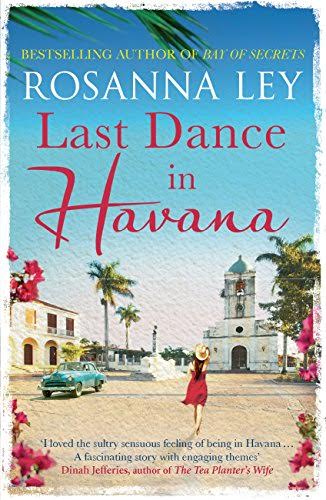
Last Dance in Havana by Rosanna Ley (Quercus)

I have been a big fan of Ley’s for some years and was delighted when she provided me with some lovely cover quotes for Another You. Last Dance in Havana flips between Bristol (which I know) and Havana (which I don’t) and tells the story of a step-daughter’s and step-mother’s searches for love. Ley’s descriptions brought both places to life to the point I could feel the Cuban sun on my back but it was her superb characterisation that made the book for me. In particular Rosa, the older woman, will remain in my head and heart for a very long time.

Writing as well as Rosanna Ley takes years of experience but thinking about this book (and her others) they show me that with a good story, great characters and an amazing sense of place you don’t need gimmicks to write a first class commercial romance.

Sealskin by Su Bristow (Orenda Press)

Sealskin is the book everyone is talking about at the moment. It’s a re-telling of a Scottish legend about the selkies, seals which can turn into people, and is a fairly short but thought-provoking read. I was completely transported to a remote Scottish fishing village and one of the really clever things about the book is its timelessness – there isn’t a clue about when the story takes place and it actually doesn’t matter. It’s a multi-layered romance which sits equally well in the realms of literary fiction which is where its publisher’s interests lie.

It’s also been marketed incredibly well by Orenda and I’m delighted that the dynamo behind this amazing independent publishing house, Karen Sullivan, will guest on this column in April. In the meantime I’m trying to work out what I would need to do before I’d even consider sending a manuscript to them. Although I can recognise literary fiction when I see it, how to create it is another matter entirely. Definitely something to aim for, though.


The Business Of Books: Writing In Balance

the-business-of-books-interviewswithjanecableAuthor Nikki Moore tells Jane Cable why she never quite wants to give up her day job.


  1. How much of your working life does the business of books take up?


The honest answer is, quite a bit, but not as much as I’d like. I have a full-time HR day job, so writing has to slot around that, as well as my children. Of course there’s also seeing my boyfriend, friends and family, housework, food shopping etc. I have the same commitments as everybody else. I’ve had to be very disciplined and maketime to write. I set several evenings a week aside and also write on weekends; I watch a lot less TV than I used to (although my boyfriend and I are newly addicted to The Walking Dead). When I’m working under deadline – 2015 was a busy year as I delivered five novellas and a 100,000 word novel for the #LoveLondon series – I write any spare moment I can, whether it’s during lunch breaks or into the early hours of the morning. As well as working on manuscripts, I also have to promote my books so I blog when I can, as well as tweeting and Facebook posting regularly.

I used to want to give up the day job to write full-time, but I’ve realised I need to be around people in order to write believable characters and compelling storylines, so now the dream is to scale back the day job to 1-2 days a week and write the rest of the time.

THE BUSINESS OF BOOKS- WRITING IN BALANCE

  1. What’s your business model to earn a living from writing?

I’m not a best-selling author – I hope to be one day – although I’ve sold more books than I ever imagined I would when I started out. However, like many authors, I don’t earn enough to give up the day job yet; my HR career pays the bills.  So my business model is to stay passionate and keep working hard to write the best books I can for my readers, get them published, earn good reviews, promote my books through as many forms of media as possible, interact with my audience including bloggers, build networks… and cross my fingers for luck.


  1.  What do you write and what do you consider to be your major successes?


I write romantic fiction and am hoping to move into women’s commercial fiction. In terms of successes, before being published I was a finalist in several writing competitions including the RNA’s Elizabeth Goudge trophy (judged by the fabulous Katie Fforde) and Novelicious Undiscovered.  Some of the #LoveLondon novellas have been in the Top 100 short story charts on Kobo and Top 20 in the Amazon UK bestsellers Holiday chart. Having a short story in the bestselling RNA/Mills & Boon anthology Truly, Madly, Deeply alongside best-sellers like Adele Parks, Miranda Dickinson and Carole Matthews was amazing. My debut novel Crazy, Undercover, Love was shortlisted for the RNA Joan Hessayon Award and Valentine’s on Primrose Hillshortlisted for a Love Stories award. But there are other measures of success too; the thrill of a message from a reader telling me they stayed up until 2.00 a.m. to read my book and cried when it was over; being interviewed by my local paper; being asked to co-tutor a workshop with my aunt Sue Moorcroft at Purbeck Literary Festival last year. And sometimes, just finishing a book is a success.


  1. Tell me about your latest project.

I’m currently finishing revisions on a women’s commercial fiction book I’ve been working on in the background for several years. I can’t say much, other than people who enjoyed Eat, Pray, Love or Me Before You, or The Fault in Our Stars may enjoy it. I’m also working on an outline for another exciting project. One thing is for sure; whether its revisions or writing something new, as long as I’m writing, I’m happy.

Nikki Moore is a Dorset girl and social media addict who loves reading and writing. Published mainly by HarperImpulse, she is the author of the #LoveLondon series. A member of the Romantic Novelists Association, she is a firm supporter of aspiring writers and is always happy to share her writing experiences. She encourages readers to get in touch too!