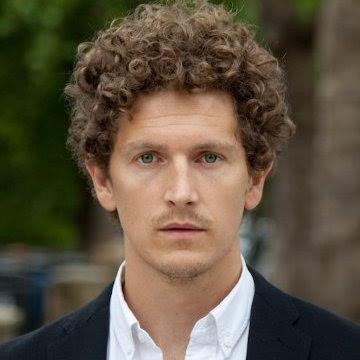
A Day In The Life of Ryan Stanier, Director of The Other Art Fair

pic a Ryan portrait.

As director of The Other Art Fair my days are always busy, meeting with artists and planning for the fair. 2015 saw the launch of two new fairs – one in Bristol and our first international fair in Sydney – and the 10th edition of the London fair is coming up, (15 – 18 October) so I’m busier than ever!

art fair pic 1.jp

My day typically starts at 6am. I’ll stop by my local coffee shop Ginger & White in Belsize Park for a double espresso on my way into work. I like to be in our Covent Garden office by 8 am to go through my emails and catch up with phone calls. The rest of The Other Art Fair team are in by 9 am – if it’s a Monday morning we kick-start the week over coffee, pastries and swap interesting stories from the morning newspapers.

art fair pic 2.I visit artists’ studios before lunch to discuss their practice and plans for the upcoming fair. I recently caught up with Dan Hillier at his studio in Stoke Newington. Dan has participated in all 10 editions of the fair and so we asked him to design our #TOAFis10 tote bags, celebrating 10 successful editions of The Other Art Fair.

art fair pic 3

I’ll have lunch with one of our fair partners, such as Deborah Curtis from House of Fairy Tales to discuss their exciting Matchbox Project for the upcoming fair. Then it’s straight back to the office for a creative planning session with the team, developing ideas for future editions of The Other Art Fair.

art fair pic 4.

At the end of the afternoon Sophie, the fair manager, and I meet to discuss plans for our next international fair. I try to finish work at 6.30, and at the end of a busy week I’ll go to catch up with mates at The Engineer in Primrose Hill. My job is demanding, but it’s worth it to see the success of artists who participate in The Other Art Fair.

art fair pic 5.

The Other Fair Old Truman Brewery Hanbury Lane LondonE1 6QL

15 – 18 October 2015

www.theotherartfair.com/

Dan Hillier’s #TOAFis10 tote bag is available to buy online or at the fair, with all profitable proceeds going to the fair’s charity partner The House of Fairy Tales.

Follow Ryan on instagram @ryan.stanier


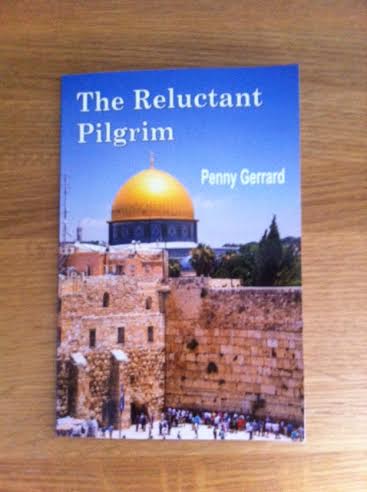
The Reluctant Pilgrim by Penny Gerrard Reviewed by Margaret Graham

The Reluctant Pilgrim review

At the start of The Reluctant Pilgrim, Penny Gerrard asks, ‘How do I capture the contrasts using what can hardly be more than verbal snapshots? Can I bring you the sights, sounds and smells which for me, in the future, will immediately say ‘Israel’?

Well, she can, and she does.

The Reluctant Pilgrim records a journey Gerrard took which showed her some of the best and worst of the troubled land she has been reading about in the Bible since she became a Christian forty something years ago.

Starting at the shore at Caesarea Philippi Gerrard immediately brings to life the shore: I felt the warmth of the sun, the blue of the sea, and the five desalination plants of today’s Israel. And this is how the journey continues, history mixed with today, conveyed in straightforward prose and using interesting photos.

I was actually in Israel quite a while ago, cycling on and off road. I saw the parched land bloom, I visited places named in the Bible, I would, however, have liked to read Penny Gerrard’s journey before I went.

Why? She weaves us through past and present. The present being 3 shekels to reserve yourself a music filled cubicle in a public loo, the past being the fact that Roman soldiers were known to use dead chicks in lieu of the more usual sponges. Oh joy.

We go with her to Tiberius, founded on the shore of the Sea of Galilee. And onwards to, amongst others: Bethlehem, then the home of Dead Sea Scrolls and finally Jerusalem.

The Reluctant Pilgrim is a journey through faith, as well as a country. Gerrard has the happy knack of being able to bring a place to life. How? She doesn’t ignore detail, she writes with a great sense of place. The Reluctant Pilgrim is thoughtful, and evocative.

Bravo.

The Reluctant Pilgrim by Penny Gerrard can be obtained from Amazon.co.uk

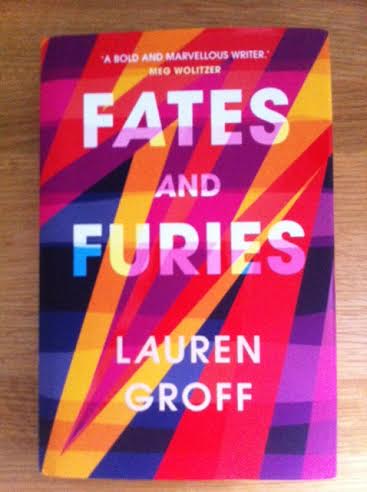
Fates and Furies by Lauren Groff Reviewed by Margaret Graham 

fatesandthefuruesbookreview
 
Fates and Furies 

This is a novel that deserves its hype, and trust me, not all do.

At age twenty-two, Lotto and Mathilde are tall, glamorous, madly in love, and destined for creative greatness. A decade later, their marriage is still the envy of their friends, but by now we understand that things are even more complicated and remarkable than they have so far seemed.

Lauren Groff is in full command of her perspectives. She reveals each new twist effortlessly, and her vibrant prose keeps us gripped and involved over more than two decades. Basically, Groff explores the unsettling truth: that secrets are often the cement – or do I mean the engine? – of relationships.

I really enjoyed Fates and Furies, and admire the oomph of the prose and profound understanding of creative, and relationships, that Groff displays. It’s a clever, accessible, and resonant novel. Brilliant.

Lauren Groff is the author of the New York Times bestselling novel The Monsters of Templeton, the short story collection Delicate Edible Birds and Arcadia. She has won Pushcart and PEN/O. Henry prizes, and has been shortlisted for the Orange Award for New Writers. Her stories have appeared in publications including The New Yorker, the Atlantic, One Story, and Ploughshares, and have been anthologised in Best American Short Stories 2007 and 2010, and Best New American Voices 2008. She lives in Gainesville, Florida, with her husband and two sons.

Fates and Furies by Lauren Groff. Published in hardback by William Heinemann in September 2015 at £14.99


Do Medicines Cost Too Much? By Dr Kathleen Thompson

The UK Cancer Drug Fund, which funds non-NHS cancer treatments, has removed twenty-five drugs off its list recently, to combat a £100 million (and rising) overspend. This highlights a recurring dilemma of modern healthcare.

Medical science is advancing with cosmic speed. Patients with desperate diseases have new hope. Genetic advances allow personalised medicine for enhanced individual benefit.

However, drug costs are becoming frighteningly high, and, as people live longer, health budgets rise further. To be cynical, it was cheaper when people simply didn’t survive.

In response, many governments have attempted to force medicine prices down. Politically a quick win. But what are the consequences?

Let’s examine the drug development process. 

picture2drugarticle180915

First a drug target is chosen – often a protein molecule (receptor) on the surface of some of our cells.

Thousands of chemicals are then screened. If they bind to this receptor, they could influence how that cell works, and hence affect disease activity.

Chemicals which do bind are further narrowed down to those with additional potential drug properties—those likely to be well-absorbed, lack toxicity, and remain in the body long enough to work.

A lead candidate is chosen, and then modified further, optimising its chances of success.

Next, as required by government regulations, it is tested in animals and in the test-tube, for potential safety, effectiveness, and suitable dose.

Finally, clinical trials can begin. Often in healthy volunteers first, then small numbers of patients and finally in many patients. Thousands of people are usually tested before a drug can be marketed, and the size and duration of clinical trials has increased, as regulatory requirements have increased1.

Consequently, the typical cost of a new drug development is US$350 million according to a recent study by Forbes2.

But it’s worse than that—the development path is littered with booby-traps and precipices. Fledgling drugs frequently fail, and the Tufts Centre study found that, even those medicines which make it as far as clinical trials, have only  approximately a 12% chance of eventually reaching the market3.

Thus, including the costs of failed developments, the actual cost for each successful drug is nearer US$2.6 billion3, and for many smaller companies, if the roulette wheel isn’t kind, the cost is failure and liquidation.

Pharmaceutical companies are not angels, nor are they demons. To survive, they must make enough profit from their marketed drugs to fund their development pipeline, in addition to returning some profit to shareholders. Long drug-development times, mean they may only have a few years of patent-protection left to achieve this. If governments force prices down, companies sometimes react by reducing development risk – choosing drugs more likely to succeed in preference to innovative but riskier developments for difficult diseases.

A typical drug development takes around ten years – so we won’t see this effect immediately, and when we do, it will be too late – it could take another ten years to correct.

So there’s the problem – health bills cannot continue rising exponentially, but forcing drug prices down has serious consequences too. What to do?

Further Information and References:

1. http://www.phrma.org/sites/default/files/pdf/rd_brochure_022307.pdf

2. http://www.forbes.com/sites/matthewherper/2013/08/11/how-the-staggering-cost-of-inventing-new-drugs-is-shaping-the-future-of-medicine/

3. http://csdd.tufts.edu/files/uploads/Tufts_CSDD_briefing_on_RD_cost_study_-_Nov_18,_2014..pdf

Note: These articles express personal views. No warranty is made as to the accuracy or completeness of information given and you should always consult a doctor if you need medical advice


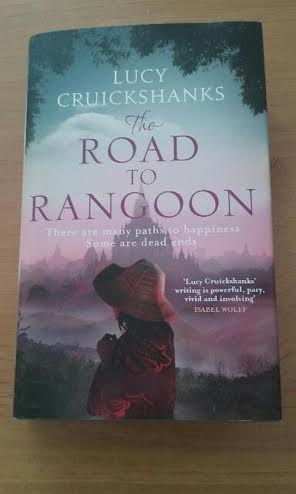
The Road To Rangoon By Lucy Cruickshanks By Jan Speedie

roadtorangoon

Lucy Cruickshanks’ latest atmospheric novel is set in 1980 in the Mogok region of northern Burma (now called Myanmar). This region is where they mine the world’s most beautiful rubies. A bitter civil war rages between the controlling Tatmadaw and the rebel Shan State Army. The people are poor and the Tatmadaw regime is cruel, violent and corrupt. Lucy’s three main characters are thrown together by chance and must struggle together to survive.

Than Chit an ambitious military officer with the Tatmadaw longs for promotion and power. His schemes and manipulations to promote himself end in devastating personal loss.

Thuza Win is 11 years old when her parents are imprisoned for ruby smuggling. Deeply scarred by life and struggling to survive she must grab any chance she can for a better life.

Michael Atwood, son of the British Ambassador in Rangoon is a naive 21 year old. Following a bomb attack in which his friend is seriously hurt Michael decides to avenge this terrible deed by helping the rebels. Unfortunately, Michael finds that he has been tricked; he is in danger and his only hope of survival lies with Than Chit and Thuza.

But as three strangers, in this savage country, they must learn who they can trust.

Lucy Cruickshanks has travelled the world, drawn to countries with a troubled history. Her first novel was set in Vietnam and was short listed for the Authors’ Club First Novel Award and the Guardian Not the Booker Prize.

Lucy was born and raised in Cornwall. She studied Politics and Philosophy at Warwick University and Creative Writing at Bath Spa University. She now lives on the south coast of England with her husband and two small children.  She enjoy writing and caring for her young family.

I enjoyed Cruickshanks’ handling of her material, and her research is thorough and fascinating. She weaves it all together into a satisfying novel. Even the title is evocative: ‘Rangoon’ has such resonance …

Published by Heron Books on 17th September 2015 in hardback £18.99


Month 8 of My Reading Challenge By Frances Colville

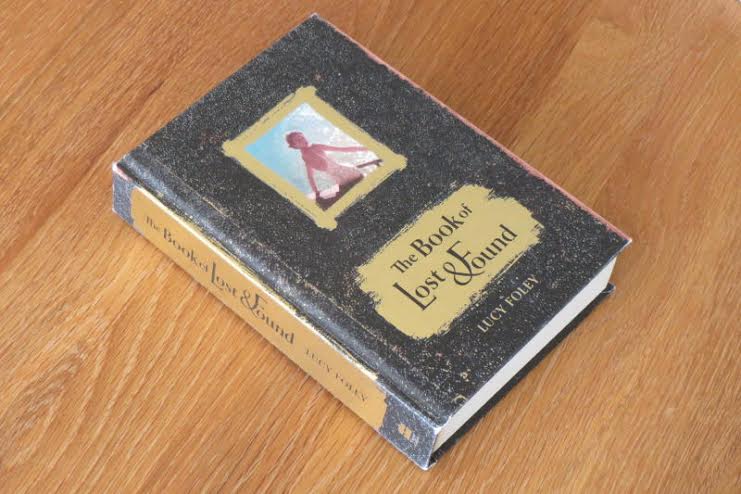
 This month I deliberately set out to base my book choices on recommendations from other people.  This decision in part came about because my first book  The Book of Lost and Found by Lucy Foley (Harper Collins 2015) was lent to me some time ago by a friend who has been wondering why I hadn’t yet got round to reading it.  So now I have.  And a good story it is too, telling of the relationship between two people over the course of the 20th century from the viewpoint of a younger family member.  It’s well-written and well-constructed.  I enjoyed it.  But it isn’t memorable in any way and I suspect I’ll have forgotten all about it in a month or two.

thebookoflost&found

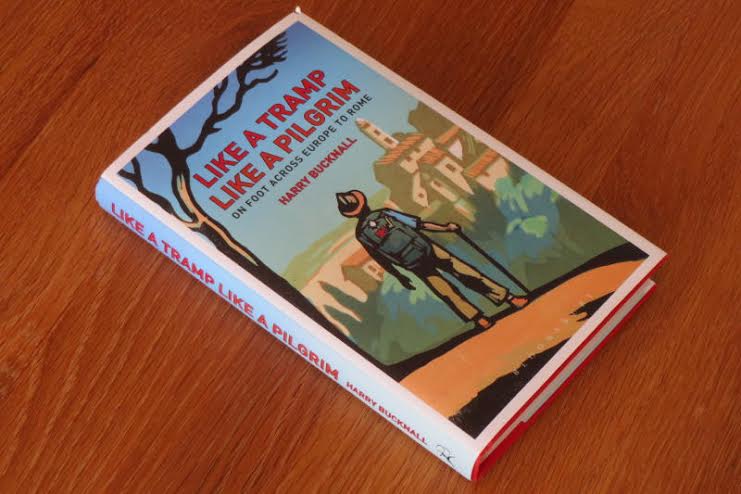
I met Harry Bucknall, the author of my next book, Life of a Tramp, Life of a Pilgrim (Bloomsbury 2014), at a recent creative writing workshop. He mentioned his book and I was intrigued enough to pick up a copy the next time I was in a bookshop. He writes about a pilgrimage he took from London to Rome on foot, following the old Via  Francigena.  This is a fascinating mix of travel book, history and memoir and I recommend it to anyone who likes any of those genres.  I also found a personal link to the book – the author mentions Eric Newby, who escaped from a prisoner-of-war camp in Italy during WW2 and went on to write about his experiences.  My father was in the same camp as Eric Newby and frequently talked of him and his successful escape.  As I’ve said before, I like to look for connections in and between books and this one was very satisfying!

likeatramplikeapilgrim2

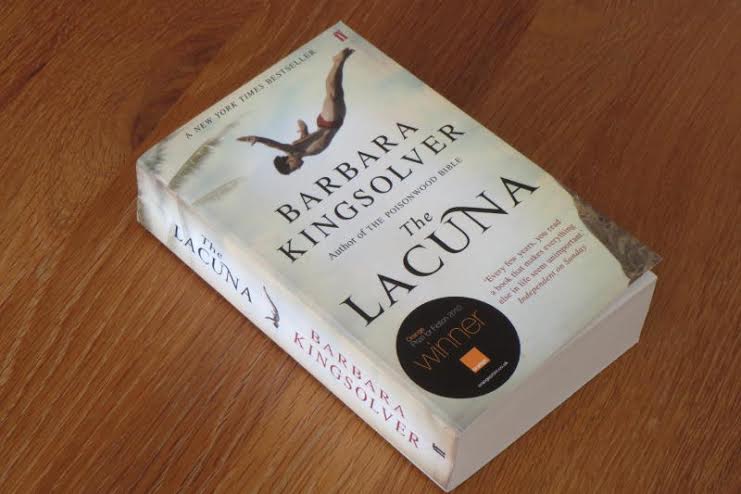
Next up was The Lacuna by Barbara Kingsolver (Faber & Faber paperback 2010).  I read The Poisonwood Bible (about Belgian colonialism amongst other things) by the same author many years ago when I was living in Belgium and it has stuck in my mind ever since.  So I was very pleased when her latest book was suggested by a member of one of my book groups.  It’s a long book, and has been 10 years in the writing.  It took a bit of getting into, but the language is memorable from the start and I was soon completely hooked by the story as well. This novel works on many different levels. It’s full of information about life in Mexico and the US in the 20th century, about Trotsky, his exile from the USSR and murder in Mexico by Stalin’s men, about the art world of the early 20th century, Diego Rivera and Frida Kahlo in particular and about McCarthyism in the US. A fascinating mix of fact and fiction. Above all a book about people, their inner lives and their relationships.  But I think what will stick in my mind most of all is the power and beauty of the descriptive passages. This is a book which has so much to admire, it might require reading several times. When though?  That’s the problem.

thelacuna

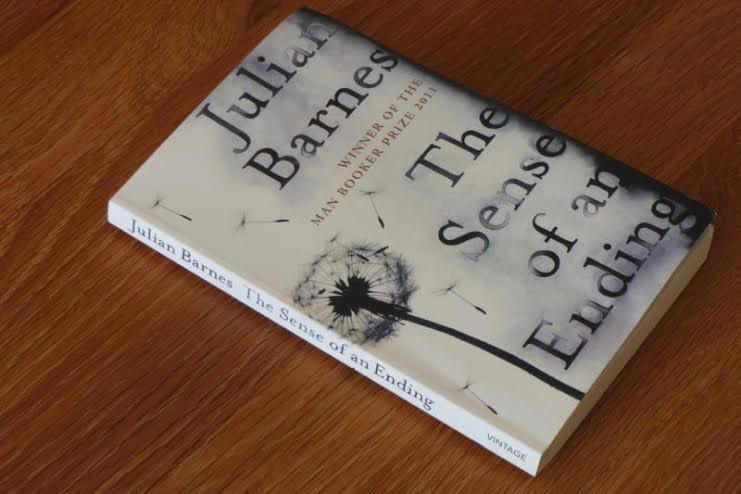
My youngest son has been recommending Moby Dick by Herman Melville for a long time (years probably) telling me that my life is much the poorer for never having read it.  However, having tracked down his copy and had a flick through I decided to opt instead for another of his recommendations, the much shorter The Sense of an Ending by Julian Barnes (Vintage 2011)It proved to be a great choice, reminding me of On Chesil Beach by Ian McEwan and Stoner by  John Williams, both of which I enjoyed very much.  Much of it resonated with me, having grown up in the 60s and 70s, and the idea of writing a novel out of relatively little appealed to me greatly.  What I didn’t get – ironically given the title – was any sense of the ending. I’m not sure it fitted the rest of the book.  And Moby Dick?  On my list for the future, but probably not this year.

thesenseofanending


Armada by Ernest Cline Book Review

armadabookreview

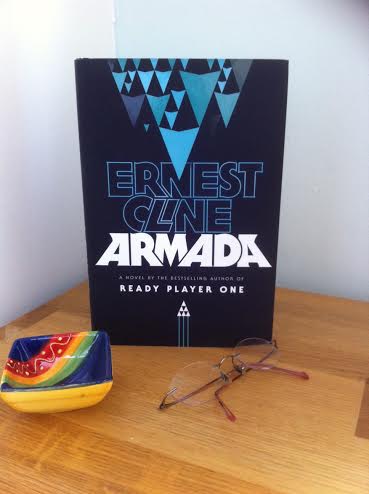
Armada arrived on my desk and as a total non-gamer I approached it with diffidence. Halfway through the first page, however, I settled down with the main character, Zack Lightman, as he daydreamed through another boring maths class at high school hoping something would happen to take him away from all this. And who hasn’t felt this?

Ernest Cline writes with a fine sense of empathy, and a deliciously casual sense of humour and it is this that works extremely well: I reminded myself that I was a man of science, even if I did usually get a C in it.

So there was Zack, glancing through the window, and lo and behold, along came a flying saucer – every geek’s dream. It is a flying saucer that happens to be straight out of the video game he plays every night. It is a popular online flight simulator called Armada, in which gamers protect the earth from alien invaders.

Suddenly, the problem is real, or is it?

I discovered there is a dormant area of geekism at my core as I enjoyed Zack’s skills which are fully utilized. Not just his, but millions of gamers across the world who have to raise their game to save the earth from what’s about to befall.

I kept thinking: reluctant students, beware the dream, as I read on, following Zack and his new comrades as they scramble to prepare for the alien onslaught. Plenty of twists, turns, and tension but also the emotional conundrum of his father’s premature death, and his mother who has fun, but won’t commit to any bloke … No, I won’t go on. Read it.

I found it satisfactory on many levels, not the least that it is accessible to young adults, and old ducks like me – a rare accomplishment.  Armada is a journey towards emotional intelligence and understanding, a journey towards some questions answered, others posed – huge questions they are too.  Armada’s a good ‘un.

Armada by Ernest Cline

Published in hardback by Century £16.99

Also available in ebook

Ernest Cline is the author of the bestselling Ready Player One


An Interview With The Incomparable Salley Vickers by Margaret Graham

I read Miss Garnet’s Angel a while ago now, and absolutely loved it and thought it would be fascinating to interview Salley Vickers, the author. At last I’ve managed to find a window in her busy life, and here she is to answer questions for Frost Magazine. What’s more you can hear her talking about The Boy Who Could See Death on 29th September at the Windsor Literary Festival.
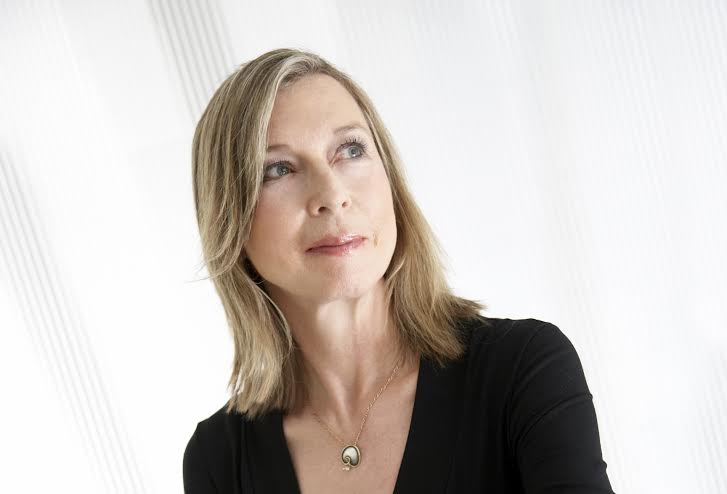
An interview with the incomparable Salley Vickers   by Margaret Graham 1

You had an interesting but complex childhood, and felt that you had a sense of some unspecified task to fulfill. Did that sense drive you? Does it still?

Yes, I think it does. My parents imbued me with a feeling that one should work for the general good. In my case, that is best done by conveying my attitude to life through my writing.  But also they endowed me with a strong sense of the basic equality of all, and what people seem to like in my novels is finding aspects of their own hidden being there, which gives a sense of being understood.  I feel sure this is part of the power of a good novel – the capacity to make us feel known and perceived in our most private recesses of being.
An interview with the incomparable Salley Vickers   by Margaret Graham 2

Most of us grow up with parents defined in some way by their past. If it is a traumatic past, it can lead us to have an enhanced ‘political’ sensitivity, in order to weave our way through the rocks. We learn what to reveal, and what to hide. 

This is a skill I notice in your books, so would you agree that we authors write out of our past?

Inevitably, we write out of our conscious but, more powerfully perhaps, unconscious experience. The novel I have just completed, (‘Cousins’ published Viking March 2016) explores the way trauma recurs through a family history, even if the past is unknown to those in whom it re emerges. Nothing fascinates me more than how memory, both conscious and unconscious, lives on beyond the limits of any individual life.

You write with grace, but with ‘political’ care, holding back information, and then revealing. It gives an implicit tension. So – perhaps authors are not just influenced by their past, but trying to make some sense of it?  What are your thoughts on this?

I am sure I write to discover what I already ‘know’. What we think we know, what we know we don’t know and what we know but ignore are very common human conditions which I often explore. A previous career as a psychoanalyst has taught me to reflect on these levels of seeming ‘knowledge’.

Or are we just story tellers, or both?

Everything is story, in my view. Even science is a series of superseding stories. We are hard wired to make sense of experience through narrative. In analysis the work is to find a more workable version of the story a person tells themselves about their life. A writer’s job is to follow a story that has its own organic truth and is not a ‘truth’ imposed by the author’s own prejudices or intent.

How did you start your writing career? With short stories, or straight into Miss Garnet’s Angel?
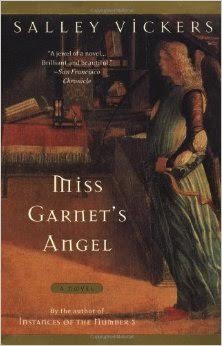
Miss Garnet's Angel

Miss Garnet began life as a short story and just grew. I had no idea of publishing it. Like much of real significance in my life it was a happy accident – as were both my wonderful children.

How do you work? Do you have the germ of an idea, spend time thinking and then planning? I ask this because your novels are multi-layered. They are  psychological, mythical, in some ways fairy tales, but grounded ankle deep in reality. I believe I would need to think, and plan, and know where I was going, and what I wanted to say to achieve this level of complexity, and present it, as you do, in such an accessible way.

I never never plan.  I hear a voice, revisit a much loved place, recover a memory and then let imagination, memory, sudden encounter, whatever accrue around it, rather like the grit of sand that through a nacrotising effect becomes a pearl. The excitement of writing for me is not knowing what is going to happen. I never know the end of a novel, or a story, until very near the end and then it is often a major surprise.
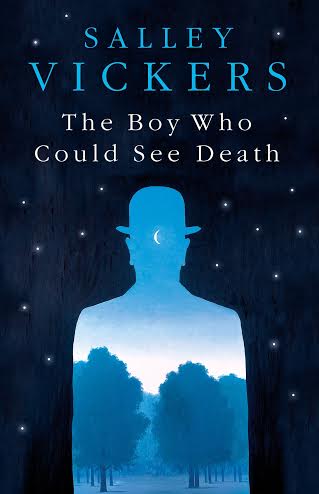
theboywhocouldseedeath3

Do you enjoy writing or do you find that starting a novel is daunting because until you have finished it, you have half a foot, or more, in their world? I ask this because once I start, I find that I need to ‘be’ the characters. Well, not even need to be, I am, the characters. Someone once said, that an author is writing their life story so absorbed do they become in the world of their characters. 

I love it once I’m in it. I tend to spend the first part of a book in a restless state of acute anxiety. Then once I get over a certain sort of hump I really let rip and can write for very long hours. But your unnamed authority is right: it does become one’s own life story and I think much of the excitement comes from living out a life that is both one’s own and yet not one’s own. I write out of myself lives I have never lived but live through writing them.

Of all the books you’ve written, which is your favourite?

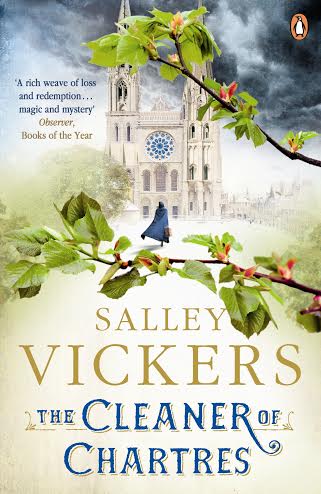
Probably the last one I have written – but if you point a gun at my head it would have to be either  ‘The Other Side of You’ or ‘The Cleaner of Chartres’.
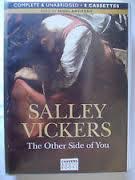
pic 4 The other side of you

Have other authors influenced you?

Oh yes. Many. I grew up in a reading household, for which I am ever grateful, and had read all the classics by the time I went to university. Henry James,   George Eliot, Trollope, Conrad have all influenced me. Also Beatrix Potter on whom I learned to read and from whom I learnt about cadence (if you listen to Beatrix Potter the prose is exquisitely cadenced).

pic 5 Beatrix Potter

But of more contemporary authors, Penelope Fitzgerald and William Maxwell are my heroes. Penelope Fitzgerald did me the great honour of endorsing Miss Garnet shortly before she died. I’ve not had a higher or more precious encomium since.
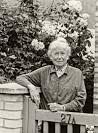
ic 6 Penelope Fitzgerald

What next? 

Cousins and after that it’s a secret, even from myself

What do you do when you are not writing?

The usual introvert’s pleasures: read, walk, talk to friends, listen to music, go to the opera/ ballet.

What brings you joy?

Children (this is boast but I am reliably informed by my grandchildren that I am very good indeed at playing), birds, poetry, dancing, and I must confess also …. shoes…

pic 7 shoes

Salley Vickers is talking at the Windsor Literary Festival on 29th September at 7.00 pm. She will be discussing The Boy Who Could See Death. The boy is question is Eli, who is an ordinary lad with an extraordinary gift, or is it a curse?

For more information:

http://tickets.windsorfestival.com/Sales/Autumn-2015/Tuesday-29th-September/The-Boy-Who-Could-See-Death/The-Boy-Who-Could-See-Death