Hocus Pocus or an underexploited resource? By Abbigail Langstone-Wring

By Margaret Grham

Hocus Pocus or an underexploited resource? By Abbigail Langstone-

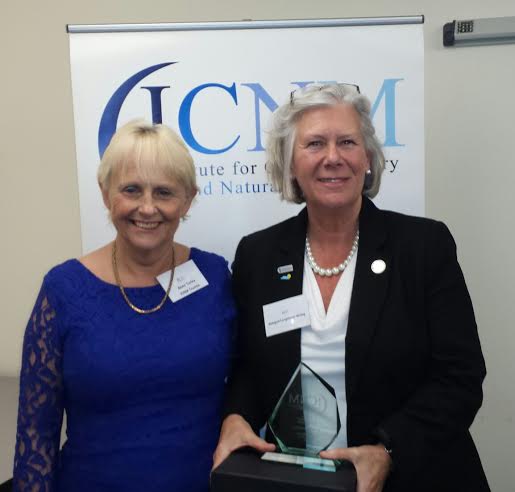
Frost Magazine is delighted to announced that Abbigail Langstone-Wring , our regular Complementary Practioner contributor, has been presented with an award in the “Best Complementary Practitioner “ category of the Institute of Complementary and Natural Medicine 2015 Awards.   Bravo, bravo,

A COMPLEMENTARY PRACTICE.
by Abbigail Langstone- Wring.  BSc   SBRCP  MAR.   Director  ICR.

Hocus Pocus or an underexploited resource?  By Abbigail Langstone

As a Complementary Practitioner celebrating twenty-five years in professional practice I am still amazed by the positive feedback of the beneficial effects of the therapies I deliver. None more so than the recently gathered information from a Clinical Reflexology  project that I have been working on since Nov 2014.

The aim of the project, as put forward  by the Lead Cancer Nurse Specialist, was to introduce Complementary Therapies into a Cancer Ward and Chemotherapy Unit at the local NHS Hospital with a view to reduce patient anxiety to enhance the patient experience.
I formally declared my interest and snet off a detailed CV that contained evidence of my range of skills and  techniques and specialist work experience gained through being a local hospice volunteer in palliative care.  A funder for the project was already in place and with their approval a hospital interview was arranged with the result of an honorary contract being granted to me.
I must just stop and say that not only was I honoured and proud, but also momentarily overwhelmed at the possible importance of this responsibility.
Hocus Pocus or an underexploited resource? By Abbigail Langstone-reflexology

I began the project by looking for information of past studies and research published in journals on the role of Complementary Therapies in stress management. After a great deal of thought I settled with the decision to trial Clinical Reflexology.

Why?  Primarily for it’s mode of action.

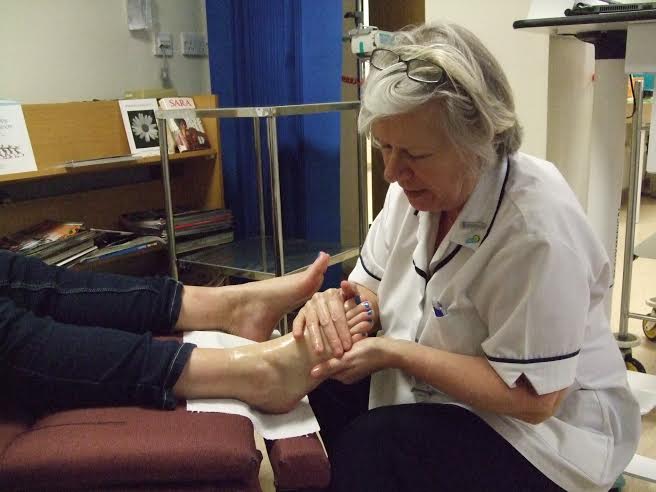
For those not aware of what Clinical Reflexology is or how it works. Briefly, it is the application of pressure via the fingers or thumbs to mapped areas on the feet, hand or ears that correspond to organs and systems of the body. Having a close affinity to Acupuncture/ Acupressure, it may calm and ease tension throughout the nervous system, encouraging relaxation throughout the body. Given the specialist patient group my treatments were modified to be sympathetic to the established side effects of their individual medical treatment.
Secondly, suitability of delivery. Choosing to work via the feet, it would enable me to access patients on the ward in their beds, or chairs and on the chemotherapy unit in their reclining chairs whilst receiving their chemotherapy treatment. Also, it would be the least obtrusive, offering no disruption to the staff and the everyday running of a busy ward and unit.
To enable me to asses the effectiveness of my treatments I collected data via a simple evaluation tool. At the end of the year ( November ) I will have completed 300 treatments. The feedback from patients and staff has been very positive. I am busy compiling a final report but the evidence is indicating  an average  drop of between 2-4  points in stress levels following my treatment.
Due to these positive findings, the good news is that I have been successful in acquiring funding to extend and expand the project into 2016/7.
 

Tolkien- An Illustrated Atlas by David Day Reviewed by Frances Colville

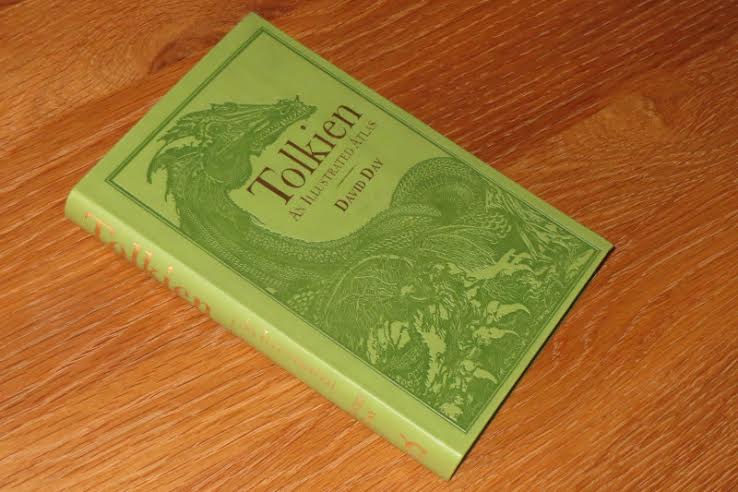
TOLKIEN - AN ILLUSTRATED ATLAS by David Day Frances Colville

If you have a Lord of the Rings or Hobbit fan amongst your friends or family members, this little book could just be the perfect Christmas present.  It looks fantastic (in both senses of the word) and it’s reasonably priced.  The sort of book you could read right through and examine in great detail – or simply dip into when you have a spare half hour.

Designed as a companion to Tolkien’s books from The Hobbit through to the Silmarillion, there is a satisfying mix of illustrations, genealogies, chronologies and maps.  An unofficial book, not authorised by the Tolkien estate, it was never intended to be a substitute for reading the original books and you won’t find any complete stories.  But you will find a wealth of information which will make following the books themselves more straightforward and arguably even more compelling than they already are.  Be careful though if you already possess the Tolkien Encyclopedia or World of Tolkien or the Tolkien Bestiary as some of the information included in those books is repeated in this new one.

Even if you are, like me, not someone who knows your orks from your ents and doesn’t particularly care about the exact time-line of the development of Middle Earth, you will find much to like in the artwork, the varied fonts and the colour and feel of the pages on which this book is printed.  The faux leather cover is a work of art in its own right – much more interesting than it sounds.  And as far as I can tell, not being an expert on the subject myself, the author David Day knows his stuff.

Tolkien-An Illustrated Atlas is published by Cassell and is available in bookshops now.


Plantar Fasciitis by Dr Kathleen Thompson

With all those modern-day labour-saving devices, can we put our feet up and enjoy life? No, we are told to shed our sedentary life-style and get fit. But at what cost?

Having spent many Sunday afternoons, patching up sports injuries in A&E departments, the price often seems high.

Besides acute injuries acquired on rugby pitches or tennis courts, our new-found fitness enthusiasm can have more insidious effects, particularly if we dash out, after sitting at a computer for eight hours, to pound the tarmac in our new go-faster runners. We often forget to allow our bodies to gradually adjust and strengthen, pushing ourselves to train too fast and for too long.

This can all take its toll on our fascia. Which is …?

Fascia is an unsung hero. Much of our body is held together by fascia—fibrous sheets and cords under skin, around muscles and organs, forming a framework and providing structure.

Normally it has a smooth surface, allowing muscles to glide over each other. However if strained, it becomes sticky, lumpy and tight. That’s when we start to notice it.

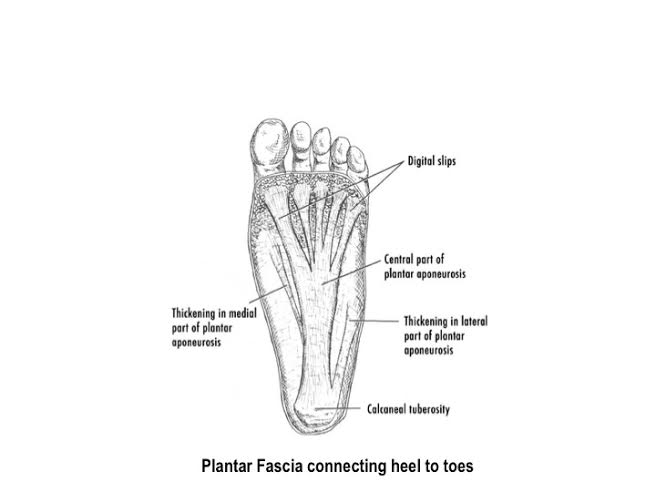
The plantar fascia lies underneath our soles, connecting our heel bone to our toes, and supporting our foot arch. Plantar Fasciitis by Dr Kathleen Thompson3

We usually neglect our poor feet, which carry our weight and absorb intense and rapidly changing forces during many sports.  The plantar fascia struggles to support and maintain foot shape during these activities, but if it is strained, it develops small tears and becomes inflamed.

The first sign is pain under our heel, which, counter-intuitively, is usually worse on getting out of bed, and paradoxically improves when warmed up by exercise. However don’t be fooled. You need to rest your foot to recover. If you don’t you could have chronic problems.

It is most frequent in women, aged 40-60 years, and is induced by long-distance running, walking or dancing,
 obesity and occupations involving standing or walking.

Importantly, the root cause may be elsewhere in the leg, the plantar fasciitis being a manifestation of poor biomechanics and abnormal walking/running movement.

Besides resting, anti-inflammatories, such as ibuprofen help. Most people recommend stretching the plantar fascia, and, importantly, also the Achilles tendon and the calf, as tightness in these may aggravate the plantar fascia. Night splints can maintain stretching whilst you sleep. Others advise against stretching the fascia itself whilst it is inflamed.

Ice massage is useful, for example, rolling your foot on a frozen orange.  The massage is quite painful, and the ice has a numbing effect. Personally, I recommend buying a quarter bottle of Prosecco. Drink the contents, half-fill with water and freeze, then roll your sole on the frozen bottle (the Prosecco takes your mind off the pain).

Shoe arch supports ease the fascia, or your therapist may use strapping.

The fasciitis will eventually settle, but may take up to two years. Steroid injections, give temporary relief but weaken the fascia in the long-term.

So what inspired me to write about this? Let’s just say, I’m rolling my foot on a frozen Prosecco bottle as I write.

Further Information and References:

http://www.mayoclinic.org/diseases-conditions/plantar-fasciitis/basics/definition/con-20025664

http://www.runnersworld.com/tag/plantar-fasciitis

http://www.kttape.com/instructions/plantar-fasciitis/

Note: These articles express personal views. No warranty is made as to the accuracy or completeness of information given and you should always consult a doctor if you need medical advice


It’s All Kicking Off by Paul Vates

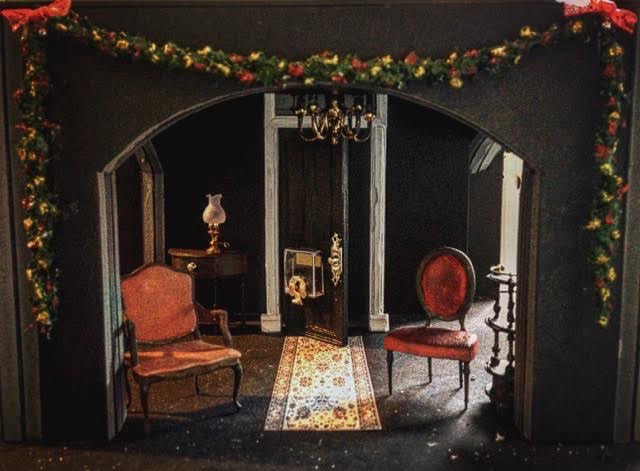
So, the saga continues. Trying to show how one ‘puts on a play’ creaks ever onwards. At a secret venue, which for the purposes of continuity, we shall call a pub, there was a production meeting where the remarkable Katie Unsworth-Murray produced her design for the set. It literally fits into a shoebox and she has made it all to scale.

pic 1 set design

(Shoebox design by Katie – including the chandelier)

She even produced a tiny chandelier, which allowed me to inform her that ‘electricity hasn’t been invented yet’. I promised that I wouldn’t mention that to anyone (oops!).

Once you’ve advertised for actors wishing to audition for a production of A Doll’s House, it is only polite to be there and welcome them in. ‘Once more unto the breach’ came to mind as we entrenched ourselves into The Barons Court Theatre. Director Kevin Russell, for New Dreams Theatre, sat me down and gave me a list of names. These people would, at thirty-minute intervals, arrive and audition for us.

If you read my last article about finding the lead actress for the part of Nora (and Alexa Matthews accepted our offer), then you’ll have some idea what Kevin had already had to do to get to this stage.

Even so, a collection of characters wandered in that would have made P T Barnum gasp in horror. Amidst the drunk Irishman, the bizarre Chuckle Brother impression and the born-again Christian seeking new converts, we did manage to find a wonderful bunch of actors, all worthy of the three parts up for grabs. So, the full cast is now complete:

dollshouse2

The cast:

Alexa Matthews (Nora Helmer), Paul Vates (Torvald Helmer), Julia Florimo (Kristine Linde)

Brian Merry (Dr Rank), Cathryn Brayshaw (Helene), Ramzi DeHani (Nils Krogstad)

Still at the end of the audition day, we returned above ground, into the light, for a drink in The Curtains Up pub that sits atop the theatre. As we discussed the colourful collection of actors on offer, like a couple of football pundits on a Saturday afternoon, taking into account the results, the teamwork aspects and the skill and style on show, the Irishman shadowed us in between his pints – he had decided to linger for a few when he discovered the bar…  For all I know, he may still be there.

As an aside, rehearsals have begun on a relaxed basis between Alexa and myself (I’m playing Torvald, her husband). Kevin has taken us through all the major scenes between us, allowing us to get a grasp of the whole thing before the whole company assembles.

pic 3 Paul Alexa Pre-rat

(Alexa as Nora – possibly before the unexpected visitor)

It has all gone quite smoothly, apart from when a rat scurried through the room – eye contact that afternoon was at a minimum as every shadow became our rodent critic.

pic 4 paul

(Alexa – having noticed the ratty critic?)

Now there is only one thing left to do – full company rehearsals!

We’ll soon meet and with a frisson akin to a school playground, we’ll begin assembling the play. Then – and only then – will Kevin utter his trademark phrase: It’s All Kicking Off!

A Doll’s House by Henrik Ibsen will be performed from November 3rd to 22nd at Barons Court Theatre, west London. Call the box office direct on 020 8932 4747 or email londontheatre@gmail.com to reserve seats.

www.newdreamstheatre.co.uk

Facebook: New Dreams Theatre

Twitter @KevinNewdreams


‘This is’: Goya, Monet and Kandinsky

This is- pic 1 Fan.JP

I spend a great deal of my spare time dawdling around art galleries. Every time I wish I knew more about the paintings. As I stand there, appreciating the works, I am aware that I am looking at complicated ideas and histories but not really seeing or understanding the concepts.

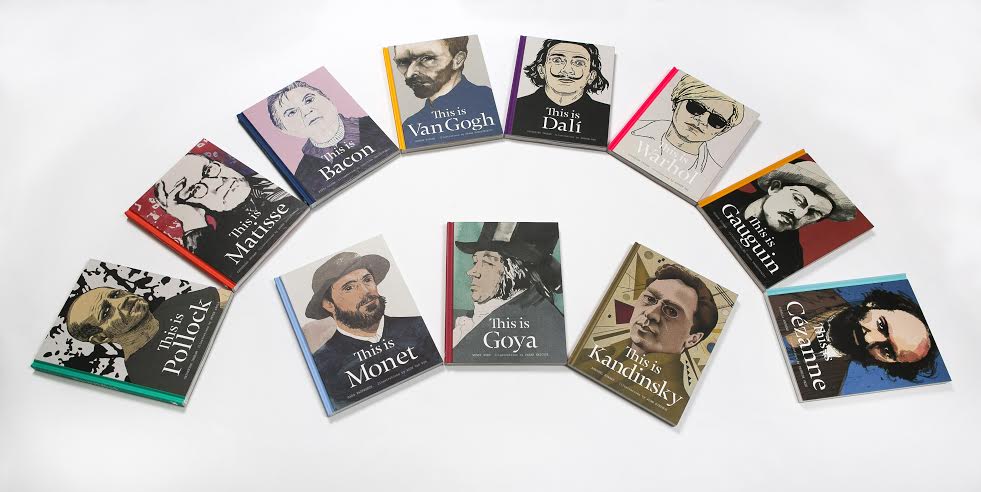
Laurence King Publishing has brought out a new series called This is…

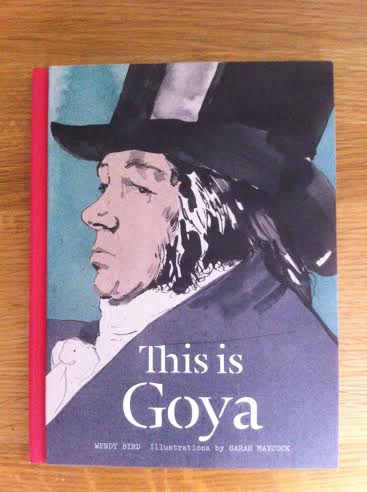
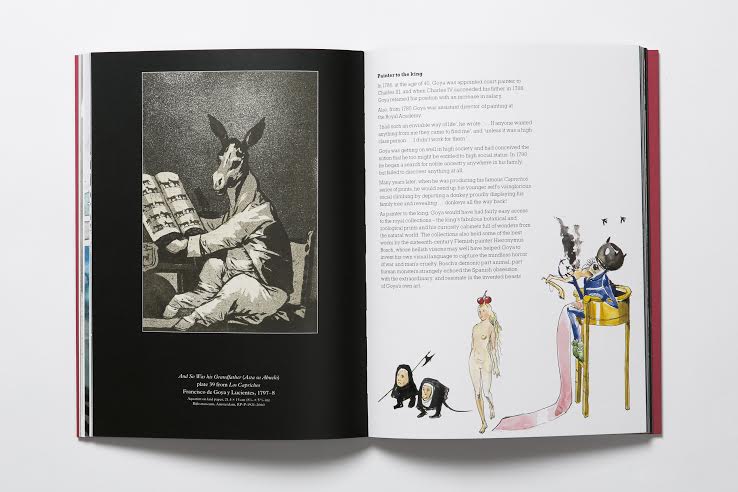
I have read This is Goya, This is Monet and This is Kandinsky, by different authors. These books are well presented, with clear and understandable text, accompanied by the artists’ paintings, as well as especially commissioned illustrations.

This is pic 2 Goya cover.

Let’s take Goya by Wendy Bird with illustrations by Sarah Maycock. Did you know that Francisco de Goya y Lucientes was the first artist deliberately to pursue creating works of art for their own sake? I didn’t.

This is Pic 3 Goya_Spread_6.

Monet I knew was a leading member of the French Impressionists.

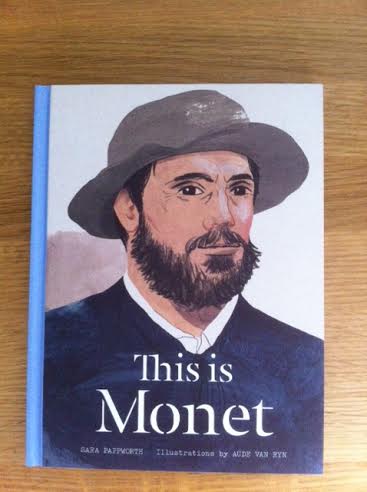
This is Pic 4 Monet cover-12

I was looking at one of his many paintings of haystacks in the National gallery, the other day, (He painted the same haystacks but followed the play of sunlight on them throughout the day). Go and have a look. He never rested, evolving his art way into his eighties. Learn more from Sara Pappworth with illustrations by Aude Van Ryn.


Kandinsky looks more like a clerk, or bank manager, than a painter.

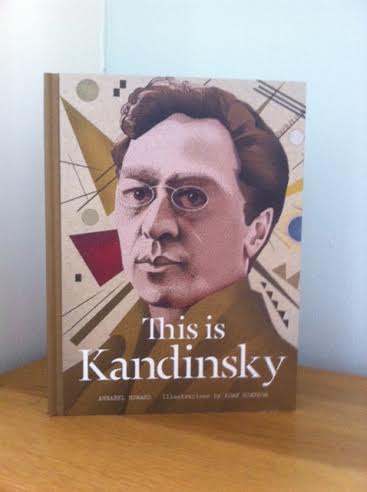
this is Kandinksky cover

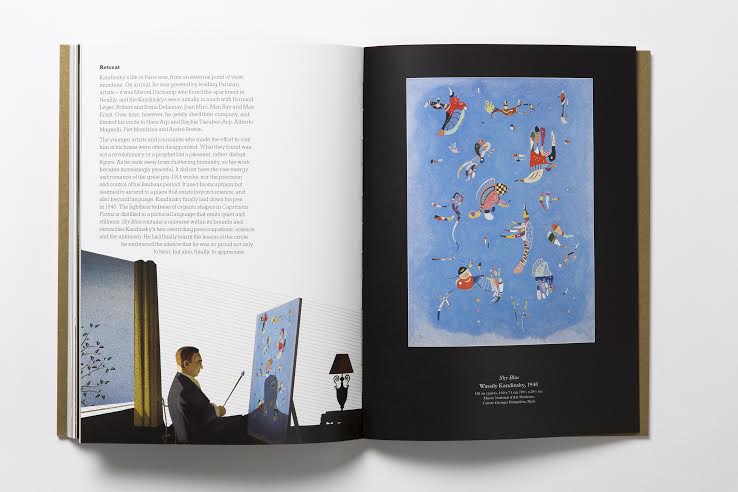
He seems almost a cypher, but inside this misleading façade lived a sensitive artist who produced forceful genre defying work. I knew little about his work and am not sure I particularly like it, but this book by Annabel Howard with illustrations by Adam Simpson has created an interest. This in itself is a virtue.

This is pic 7 Kandinsky_Spread_8

A truly lovely series.


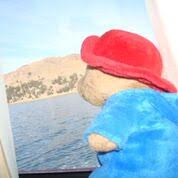
Paddington Goes on Holiday by Paddington (aka David Worsdall)

DW pic 1 paddington at station.j

When my grandpa, who lives in Downley, High Wycombe, told the family that he was going to go to Peru it was suggested that I might go to keep him company. He agreed, but wanted to have a close look to make sure I didn’t weigh too much.I had no idea why at the time.

DW pic 2 marmalade.j

Anyway, a few days later we finally set off and flew to Lima. Grandpa said I should stock up on marmalade when we get to the hotel because there wasn’t going to be any for a few days. I didn’t like the sound of that.

pic 3 DW.

Then we went to a place called Cuzco where we met local people who were mountain guides and porters and Grandpa had a technical discussion about equipment, medicines and other things. Marmalade was never mentioned.Then off we went.

DWpic 4a.view.jp

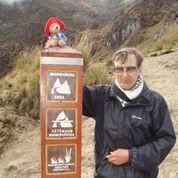
After two days we reached a very high pass where the air was very thin. I was strangely unaffected but it was a little tiring having to pose for photographs with lots of people who seemed to recognise me including local mountain guides and everybody who had heard about my recent film.

Was this the deepest darkest Peru I had been told about? The scenery was breath-taking.  ‘in more ways than one.’ Grandpa said.

After four days we finished the journey and I perked up when Grandpa said there would be marmalade when we got to Machu Picchu

Paddington goes on holiday        by Paddington (aka David Worsdall)4

A fantastic train and boat journey then followed which I enjoyed immensely. I met lots more people.

DWpic 6 train ext.jpDW7 train int.jDW 8 local sceneDW pic 10.

As you know when you are having fun, time passes very quickly and it was soon time to come back to England.

When we got back to the airport we had to go into London to get home so Grandpa took us round to Marylebone to get the train to High Wycombe. The lady behind the ticket counter said ’I am very sorry to tell you but Marylebone is closed for engineering works you will have to go round the corner to . . . Paddington.’

pic 13 paddington home.

Grandpa and I just looked at each other and laughed.  I knew I was home.


Month 9 of my Reading Challenge By Frances Colville

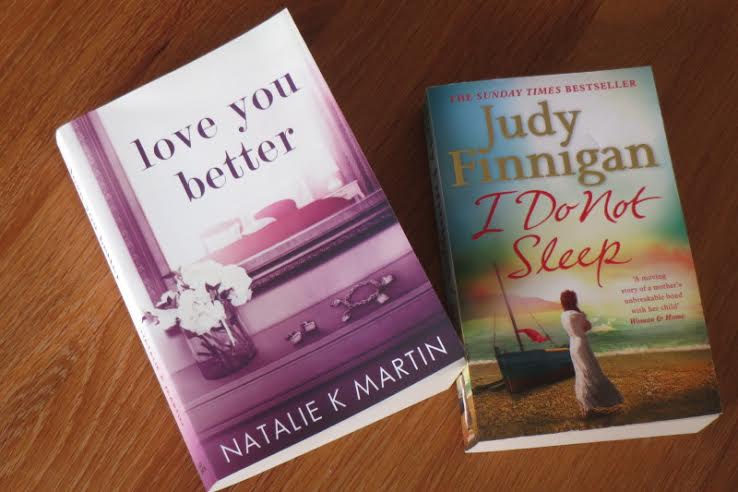
My first two books this month both dealt with hugely important issues.  I Do Not Sleep by Judy Finnigan   focuses on grief and in particular coming to terms with the death of a child, while the main theme of Love You Better by Natalie K Martin is domestic violence.  Both were interesting reads, but neither wowed me.  The storyline in I Do Not Sleep struck me as unrealistic and contrived, and I didn’t feel any real empathy with the main character.  The book was somewhat redeemed by its ending, so it’s worth persevering.  Love You  Better felt like a missed opportunity and the ending was obvious throughout which detracted from my involvement with the progress of the story.

Month 9 of my reading challenge By Frances Colville2

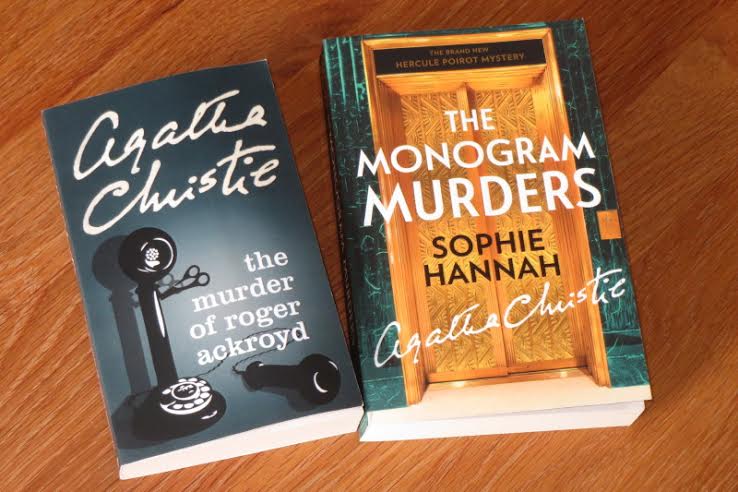
Next I turned to another of the books on my Agatha Christie pile – on my mind no doubt because of visiting Agatha Christie’s former holiday home, Greenway, in Devon last month.  This one The Murder of Roger Ackroyd was one I picked up at last year’s Cheltenham Literary Festival and  I was swiftly transported back to Agatha Christie world with all its preconceptions and prejudices.  You always get what you expect with an Agatha Christie – and there are times when nothing else will do.  This one didn’t disappoint.

Month 9 of my reading challenge By Frances Colville3

All of which reminded me of a new Agatha Christie story.  Sophie Hannah (whose psychological thrillers I also enjoy) has with the approval of the Agatha Christie family written The Monogram Murders featuring Hercule Poirot, arguably Christie’s most famous character.  I wondered if anyone else could effectively recreate Poirot and his world – and my answer having read and enjoyed The Monogram Murders is a slightly confused yes and no.  Hercule Poirot is well recreated and the storyline is as intriguing and enjoyable as any other Poirot mystery.  And yet I would never mistake this for an original Agatha Christie.  Perhaps it wasn’t meant to be.  Perhaps Sophie Hannah intended all along for this to be an updated, twenty-first century version. To me it did indeed feel more like one of her own psychological thrillers with a cast of Agatha Christie characters rather than a mystery of the type Christie herself wrote.  The confusing thing is that I don’t mind that at all.  As I’ve said before I enjoy reading both books by Sophie Hannah and books by Agatha Christie.  So a fusion of the two was always going to work for me.

Month 9 of my reading challenge By Frances Colville4

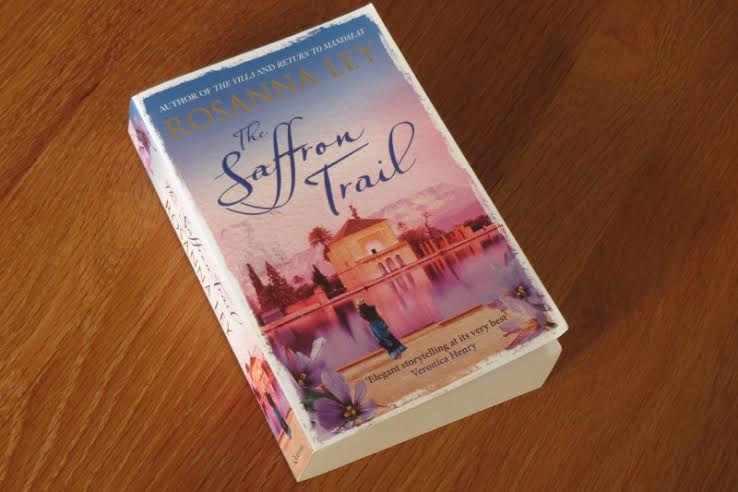
Rosanna Ley is the author of The Saffron Trail which is partly set in my local town of Bridport and the neighbouring town of Lyme Regis –  a fact which added to my enjoyment as I ticked off all the places I recognise and love.  The story also takes us to Cornwall, Morocco and the US and the descriptions of all these places is done very well.  It’s a good story too with believable and likeable characters.  This is the first  book by this author I have read, but I will certainly look out for another.

So it turns out (by chance rather than design) that all the books I’ve read this month have been books telling stories – and I’ve enjoyed them all to a greater or lesser extent.  They have provided relaxing and pleasant entertainment.  But entertainment isn’t the only reason I read; I also want to be educated, stimulated and challenged.  So now I find myself wanting a book which meets at least one, and preferably more of those criteria.  The only question is: what will it be?

October 2015


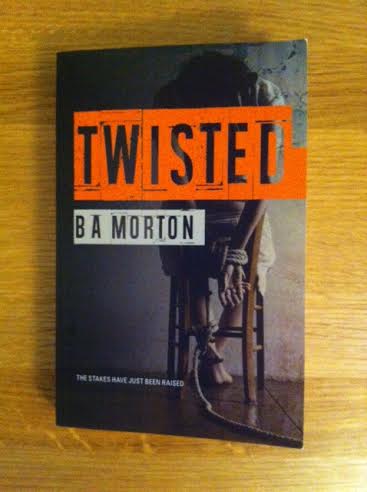
Twisted by B A Morton Reviewed by Margaret Graham

Twisted by B A Morton                                            reviewed by Margaret Graham

Blimey, talk about tense …

In Twisted, Jack Miller’s been playing a dangerous game, and the stakes are about to be raised.

I read the first few lines and was hooked.

Poor old DI John Samuels is on the trail of a bank robber, but he has no idea of the people he’s dealing with. In particular, let me introduce you to Spook, who is one of the most balmy and evil characters I’ve come across. How on earth did B A Morton conjure her up, let alone all the others. You see, so few are conventionally good people, but they’re so interesting. I was totally engrossed, and found myself – understanding? Well no, not understanding why they were as they were, but close to that.

The pace, the story, the characters are all spot on. So, let’s get back to the book: the ruthless robber is Miller, for whom bank robbery is simply a means to an end. Wounded while making his escape Miller has half a million in used notes and a hostage that wasn’t part of the plan. As the police close in, Otto, the crime boss wants his cash, and someone wants Miller silenced  – forever.

Then there’s the weird misfit Spook. Unstable and fearless, she’ll go to any lengths to get what she wants. Then a judge’s daughter disappears and evidence points at Miller. It is then that Miller discovers just how crazy Spook really is. (Ah ha, but I knew it all along, so very there).  With every twist and turn, and even with the rapid pace, Morton keeps us with her.

Published by Caffeine Nights, Twisted surely lends itself to a series. I do hope so.

B A Morton lives in the North East of England, and writes across a number of genres, including crime, romance, horror and historical fiction. She lives in a cottage built on the remains of a medieval chapel.

She is a member of the Crime Writers’ Association. In 2011 her debut novel, Mrs Jones, a crime thriller set in New York, took second place in the international literary competition, The Yeovil Prize, and launched her extremely successful career.