The Railways of Great Britain – A Historical Atlas by Col. Michael H Cobb PhD, MA, FRCS, MInstRE

The Railways of Great Britain – A Historical  Atlas by Col. Michael H Cobb PhD, MA, FRCS, MInstREA

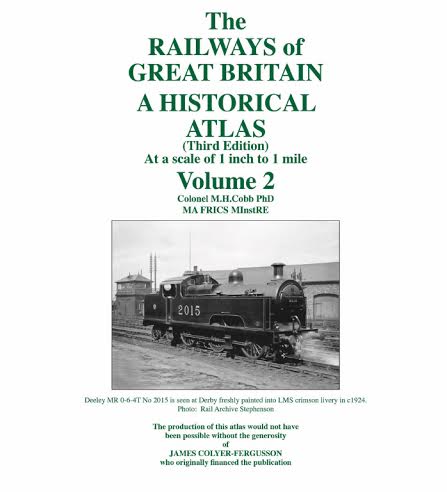
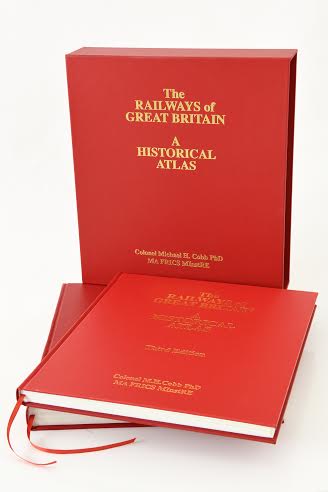
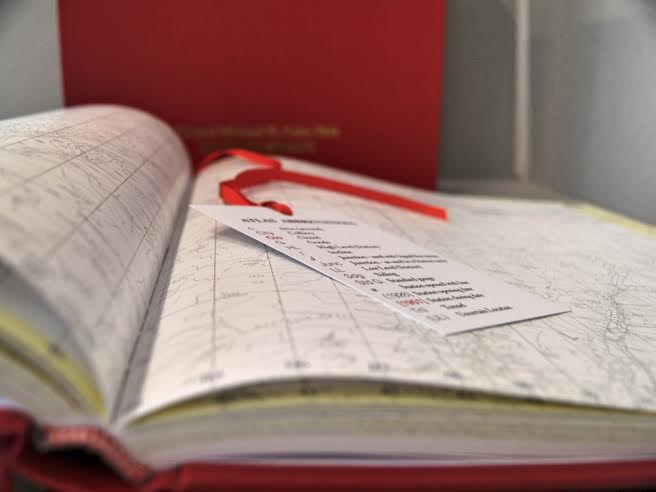
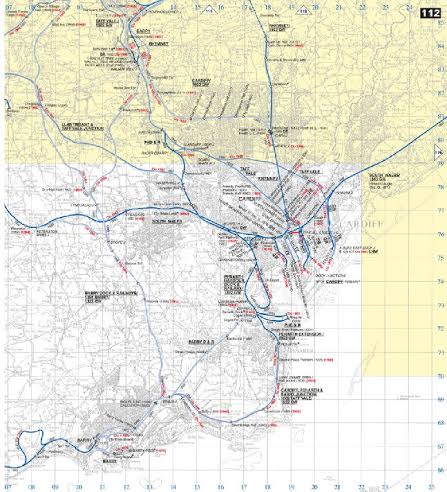
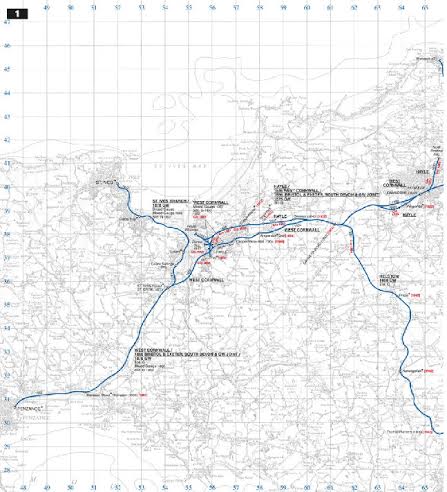
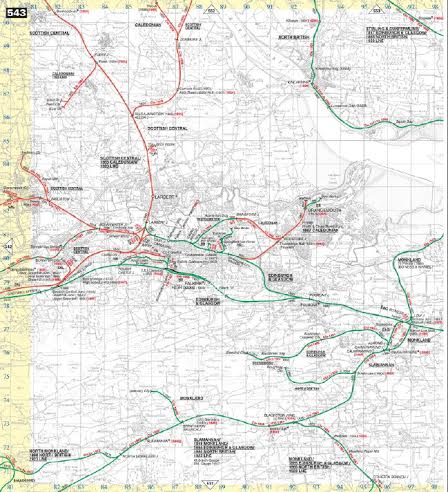
This is the dream read for any railway and map lover, and I speak as one who is both. It is the definitive historic guide to all the railways in Britain, both existing and lost. All train lines in operation between 1807 and 1994 are dramatically set in colour against an Ordnance Survey grid, alongside the names of the companies that built them, and the opening and closing dates of the stations they connect.
The Railways of Great Britain – A Historical  Atlas by Col. Michael H Cobb PhD, MA, FRCS, MInstRE1

Colonel Cobb, cartographer, railway historian and WW2 veteran created this magnificent atlas after he expertly pinpointed PG Wodehouse’s fictional Blandings Castle by examining the railway information and train times, mentioned in all of Wodehouse’s stories.
OLYMPUS DIGITAL CAMERA

Inspired by the task, this amazing man embarked on an epic study of all of Britain’s railways, past and present. It took 18 years of painstaking plotting and researching, as well as traveling on every train line in the country.
The Railways of Great Britain – A Historical  Atlas by Col. Michael H Cobb PhD, MA, FRCS, MInstRE3CARDIFF

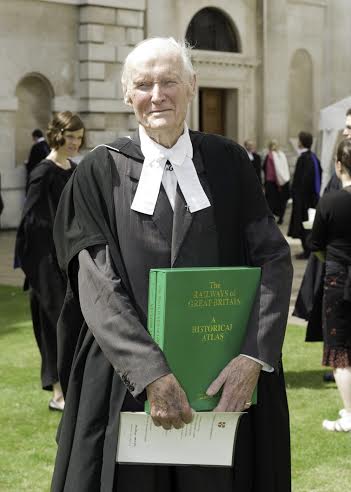
Colonel Cobb was awarded a PhD by Cambridge University for this work at the age of 91, making him the oldest person on record to be award a PhD by a university. The first atlas was published in 2003 and sold out immediately, as did a subsequent reprint. This edition has been carefully edited and improved by Patrick Cobb, Michael Cobb’s eldest son.
The Railways of Great Britain – A Historical  Atlas by Col. Michael H Cobb PhD, MA, FRCS, MInstRE4

With over 646 pages of beautifully reproduced maps, this luxury edition consists of two volumes in a slipcase. It is the perfect companion for collectors of special, limited-edition, art books.
The Railways of Great Britain – A Historical  Atlas by Col. Michael H Cobb PhD, MA, FRCS, MInstRE5falkirk

In 1940 Michael Cobb participated in the Battle of France, the Dunkirk evacuation and also trained commandos and saw action at Nijmegen. En route to the Far East in 1944 his troopship was sunk in the Mediterranean Sea. After the war he joined Military Survey, becoming FRICS. He retired in 1965 as a colonel and spent some years as a professional cartographer before becoming fully retired in 1971.
The Railways of Great Britain – A Historical  Atlas by Col. Michael H Cobb PhD, MA, FRCS, MInstRE 6

I love it. The maps are just an amazing feast of information, and constantly one is aware of the love of the task, and the sheer consistent endeavour. Fascinating and moving. I love the fact that Patrick, Michael’s son has cared for, and improved his father’s life’s work.

Published on 13th July by Riley Dunn & Wilson (Huddersfield) Ltd. £295   www.rdw.co.uk

www.railwaysofgreatbritain.com


Month 6 of My Reading Challenge by Frances Colville

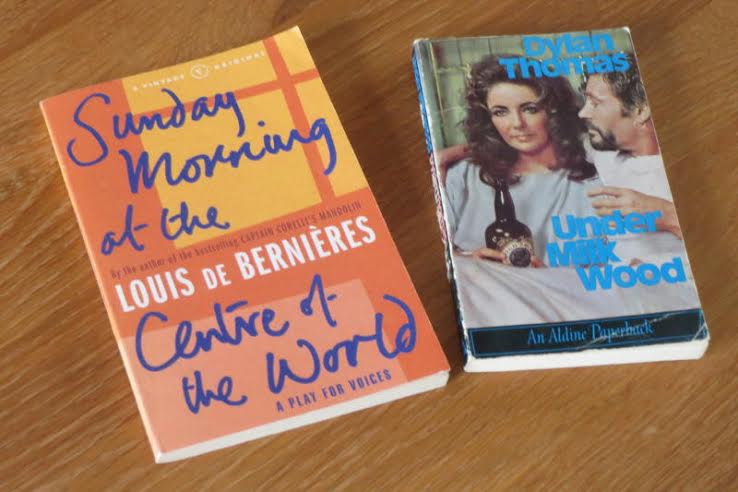
Recently I went to a wonderful performance of Louis De Bernieres’ play for voices entitled Sunday Morning At The Centre Of The World.  I’ve read and enjoyed Captain Corelli’s Mandolin, Birds Without Wings and various others of De Bernieres’ books but I’d never come across the play before and I went straight out and picked up a second hand copy to read. It’s such a vivid evocation of life in multi-cultural London and it’s a quick read which is useful for someone trying to read as much as possible in a year.  I realised it must have been based on Dylan Thomas’ Under Milk Wood, an old favourite of mine, so of course I then had to re-read that as well. Both plays stretch the boundaries of language, putting together combinations of words which are highly original as well as being thought- provoking and hugely enjoyable.  And both authors distill the essence of a community they know very well into just a few pages.  To give you a taster, this sentence is taken from the first page of Under Milk Wood  ‘It is spring, moonless night in the small town, starless and bible-black, the cobblestreets silent and the hunched, courters’-and-rabbits’ wood limping invisible down to the sloeblack, slow, black, crowblack, fishingboat-bobbing sea.’  Magnificent!

Month 6 of my reading challenge by Frances Colville

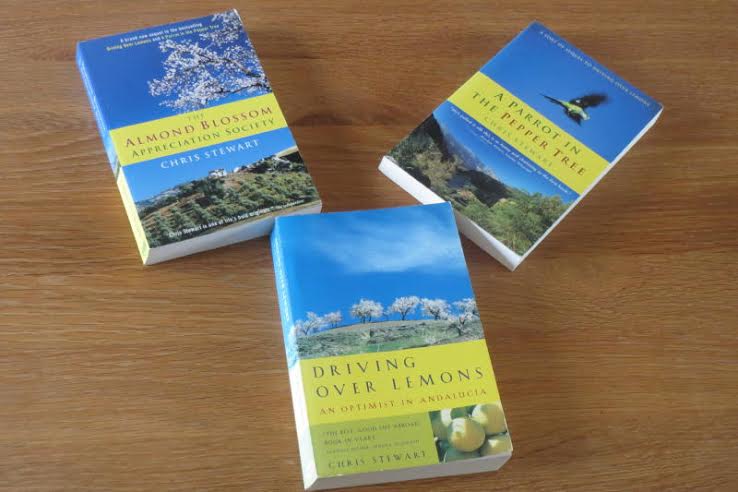
There’s a series of books written by Chris Stewart, one-time Genesis drummer, (Driving Over Lemons, The Parrot in the Pepper Tree and The Almond Blossom Appreciation Society) which are laugh-out-loud funny.  They tell the story of how Chris and his partner Ana buy a rundown farm in Las Alpujarras, a region of southern Spain, and how their life develops over a period of years.  I first read them years ago and have recently been dipping in to them again.  Very enjoyable, but also well written and perceptive.  I see there is a recent addition to the original trilogy – The Last Days of the Bus Club – which I have now added to my list of books to read.

Month 6 of my reading challenge

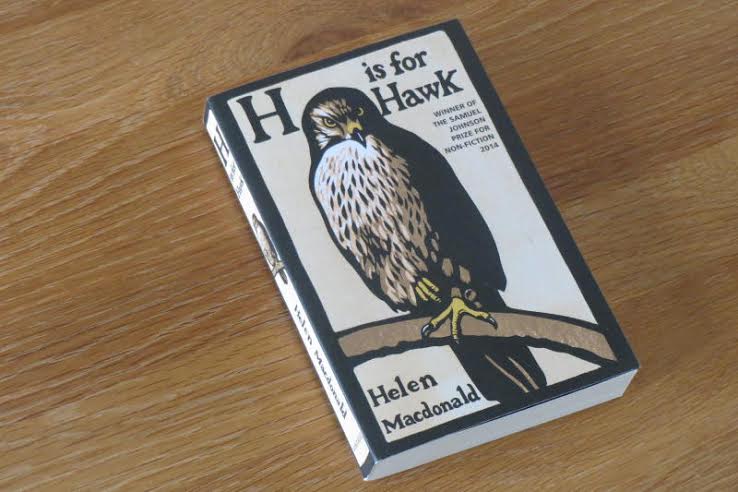
What’s next?  H is for Hawk by Helen Macdonald has been in my pile since it won The Samuel Johnson Prize for Non-Fiction and the Costa Book of the Year in 2014.  It’s not an easy read but it is one of the most sensitive and incisive portrayals of grief I have ever come across.  For me, the training of the hawk Mabel is almost incidental to the proceedings but I can see that it is also a vital part of the book and will no doubt be completely absorbing for anyone who knows about hawks and falconry.   The use of language and the descriptive passages throughout the book are quite simply outstanding.

Month 6 of my reading challenge goodbooks

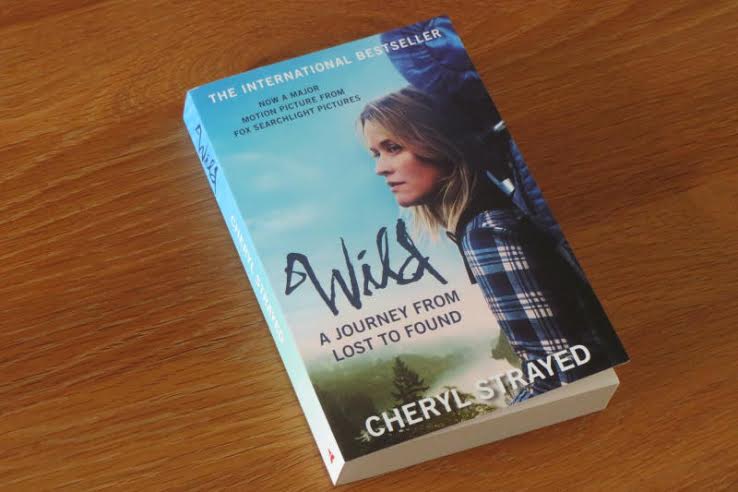
Wild by Cheryl Strayed  was an obvious follow up since it too tells of a passage through grief and depression by returning to the wild and searching for healing in the natural rather than the human world.  It’s the story of a walk taken by the author along the Pacific Crest Trail. It isn’t as powerful a book as H is for Hawk, and at times I found it to be over-focused on the author and her feelings (so many paragraphs beginning with ‘I’!) rather than giving  a wider picture of the trail.  But it is very readable and I think actually resonated more with me – partly at least  because I can see myself setting out on a long walk or other adventure to assuage grief far more easily than I can see myself trying to train a hawk.

Month 6 of my reading challenge wild

So this month my reading choices  have, purely by chance, been  pretty much entirely about people and the different ways they live their lives.  I’ve been by turn amused, saddened, educated, enlightened, inspired and always entertained.  I suspect it would not be at all difficult to continue finding books in this genre for the rest of the year, but I’m not going to do that.  Something different is calling.


Ross Mabey Poet And Song-writer By Margaret Graham

Ross Mabey is 72 years old and was diagnosed with Parkinson’s Disease (PD) in November 2005. He was living in London UK for 15 years before returning to Australia in June 2014 accompanied by his wife Linda. Their son Jonathon, 28 years old, returned to Australia in 2012. During his working life Ross was employed in various roles in the Telecommunications industry in Australia and later in the UK. His interests include writing poetry, lyrics for songs and family history. He is also interested in researching to help find a cure for PD.

We published his feature on his work, and life a few days ago, with a promise of his poetry, and song-writing. Here it is. Enjoy.

Ross Mabey's poem and song

Poetry, A Song Of Life.

Poetry is a very personal thing,

That can lift your heart and make it sing.

Its rhythms can have a beat, like a song,

That makes you move your feet.

Or, it can be an intellectual panacea,

For those who seek life’s perfections,

Expressed in words of structured verse.

Which soothe the ripples, of this Universe.

Or, it can be a song of life,

That speaks of truth, love, joy, toil and strife.

Whatever, captures your imagination,

It can be the emotion, that adds to the tapestry of life.

Whatever appeals to your Universe,

Is hidden in words, rhymes and verse.

Their potency is felt by those,

Who feel the need to write, in anything but prose.

Copyright © 2006. Ross James Mabey.

Ross Mabey's poem cowriter

Song lyric – Montana Mountains.

By Ross Mabey and Jeffrey Ullsperger.

Verse #1

Montana Mountains, your son has come home,

Through majestic forests and valleys I now roam.

I look upon your mighty peak’s, towering above,

Their grandeur is what I can’t help but love.

montanamountains

Chorus

Montana Mountains, reaching for the sky,

Take me to a special place,

To nature’s perfect high.

You’re beauty captures my heart,

I will be yours faithfully.

So Montana Mountains won’t you,

Please speak to me.

Verse #2

By the campfire’s glow, at night all alone,

I am comforted knowing you’re part of my soul.

Surrounded by your beauty, every night and day,

The sun, the moon and stars do light my way.

montana

Chorus

Montana Mountains, reaching for the sky,

Take me to a special place,

To nature’s perfect high.

You’re beauty captures my heart,

I will be yours faithfully.

So Montana Mountains won’t you,

Please speak to me.

Bridge

When I die one day,

And home is Heaven above.

I’ll ask for a room with a view,

Of the mountains that I love.

Instrumental

Chorus

Montana Mountains, reaching for the sky,

Take me to a special place,

To nature’s perfect high.

You’re beauty captures my heart,

I will be yours faithfully.

So Montana Mountains won’t you,

Please speak to me.

Montana Mountains won’t you,

Please speak to me.

Copyright © 2009. Ross Mabey / Jeffrey Ullsperger.


Parkinson’s, Poetry And Song. Bring it on by Ross Mabey

(Australian pictures  by Brent Miller)

pic a Ross MabyIMGRoss Mabey is a poet and lyricist and was living in London when he was diagnosed with Parkinson’s Disease (PD) in November 2005. He returned to Australia in June 2014 with his wife Linda. Their son Jonathon 28 years old, had returned to Australia in 2012.

pic 1.Devils Marbles. NT Australia.

Ross told Frost Magazine:

My love of poetry dates back to my school days in Australia. In the late 1940’s and early 1950’s, the names of Australian poets were familiar in nearly every Australian household. Poets such as, Mary Gilmore, Adam Lindsay Gordon, Henry Kendall, Henry Lawson. These poets helped capture and shape the unique character of Australians of that time. Never underestimate the deep love of poetry in the Australian psyche.

!Job:   111180, Layout:        1!

In particular, poets were inspired by this light filled spacious country, and the unique characters that lived here. The wonderful Dorethea Mackellar expressed such a sentiment in “My Country”: “I love a sunburnt country, a land of sweeping plains. Of ragged mountain ranges, of droughts and flooding rains.” Andrew Barton (Banjo) Paterson in his poem “The Man From Snowy River”, speaks of a fearless character and his horse who without hesitation pursued wild horses down a steep mountainside, to finally round them up.

ic 3 BARRIER REEF

My love of poetry was rekindled in 1970’s when I joined a religious teaching, with a focus on creative/imaginative techniques to help individuals to understand life. However, it wasn’t until a few months after I had been diagnosed with Parkinson’s Disease (PD) in November 2005 at the age of 63 that I had a strong desire to write poetry and lyrics for songs.

!Job:   163006, Layout:        1!

Was it the shock of diagnosis, or the medication? Whatever it was, it wasn’t the moment to sit back and feel sorry for myself. I knew that if I wanted the rest of my life to be an interesting and productive experience, I must start creating the life that I wanted. I knew that part of the answer for me was to write lyrics for country songs, but how would I do that? And why country songs ? They were my favourite song genre, but I felt they needed a fresh approach.

Not being a musician and having little idea of how to write or structure these lyrics, I started to search the Internet looking for the answers. Eventually I emailed Jeffrey Ullsperger from Wisconsin in the US. He had experience in editing and co-writing country song lyrics. He also had a couple of songs published. Jeffrey agreed to mentor me in how to “craft” the lyrics for these songs.

pic 5. ARNHEMLAND

So 2006 brought a co-writing partnership. To date we have over 40 song “demos” produced and co-written the lyrics to other songs as well. The genre’s we write in now include Contemporary Country, Folk, Pop and the Blues. Several of our songs were entered in the UK Songwriting Contest over several years, and were rated  in the “Semi-finalist” category.

So how did this experience benefit me with regards to life in general and the PD symptoms that I have?

Without a creative interest of some kind, words like isolation, frustration and loneliness come to mind. Words like interaction, satisfaction, confidence and fulfilment were outcomes that were more appealing to me.

I am very grateful to Australia, for its beauty, co-writer Jeffrey Ullsperger for his patience, tolerance, kindness and help in this endeavour while suffering from his own health problems. Also, my gratitude goes to my wife, son, other family members, friends and many others for their love, understanding and support.

We will be featuring two poems by Ross Mabey soon. 


The Finale of The Odyssey by Margaret Graham and Jan Speedie

The finale of the odyssey by Margaret Graham and Jan Speedie1

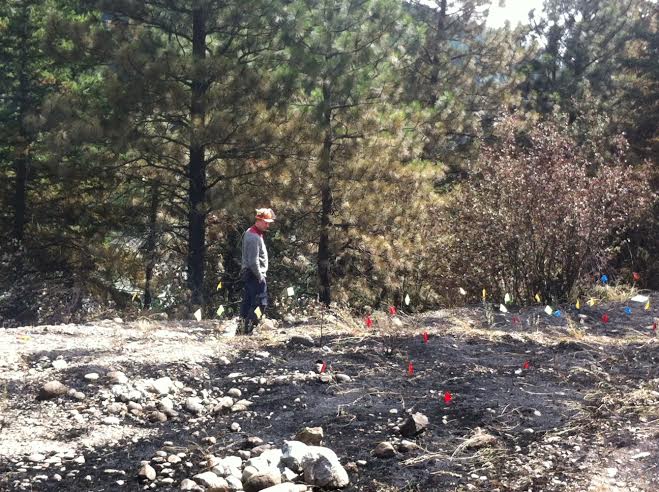
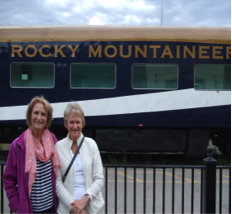
With sore heads we embark on the Rocky Mountaineer, heading for Vancouver. It proved to be a deliciously slow journey owing to an immense bush fire that had reached the track in places overnight. Though these areas were under control, the train causes such air disturbance that it must crawl along.

The finale of the odyssey by Margaret Graham and Jan Speedie firefights2

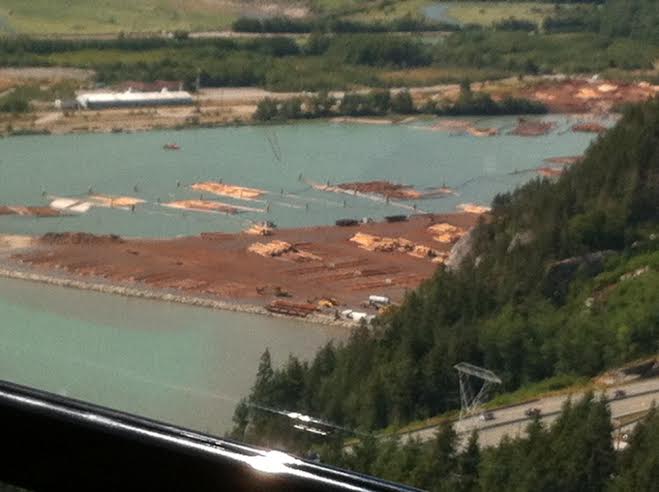
Shino explained that loggers stored logs in the river, to save on storage costs. How intelligent. We saw this again in Howe Sound Fjord, along from Vancouver. We travelled alongside rivers, woods, and prairies until finally we arrived, after Shino had saved the day with an evening meal as we were still trundling along, 4 hours after we should have arrived. Small beer, when you think of the firemen still battling to save the forests and towns.

The finale of the odyssey by Margaret Graham and Jan Speedie3

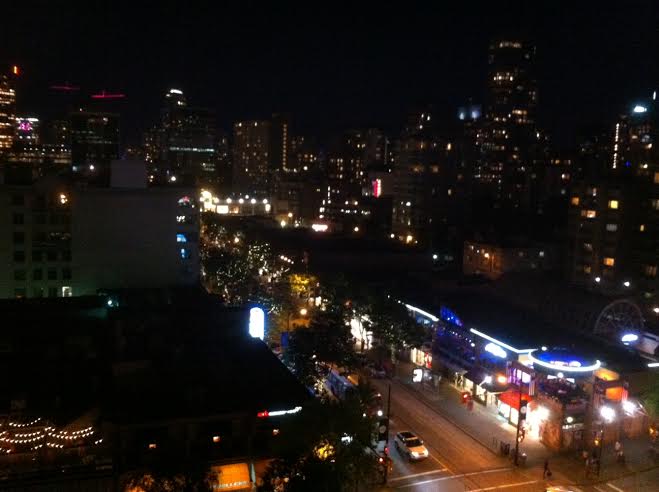
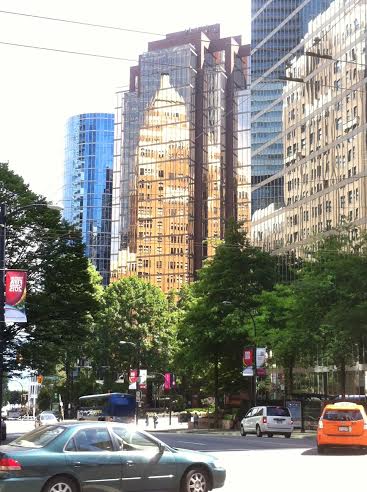
In the morning we were captivated by the modernity of Vancouver. For a while we thought the reflection of the building in this glass windowed skyscraper was actually imprinted on the glass.

The finale of the odyssey by Margaret Graham and Jan Speedie4

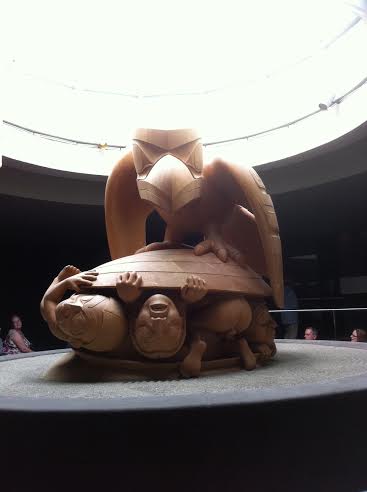
We were taken by a friend, Barbara, to the Anthropological Museum containing First Nation culture. It was full of totem poles, and their crafts. Bill Reid a First Nation sculptor (died 1998), created this out of over 100 yellow maple planks bonded together.

The finale of the odyssey by Margaret Graham and Jan Speedie4a

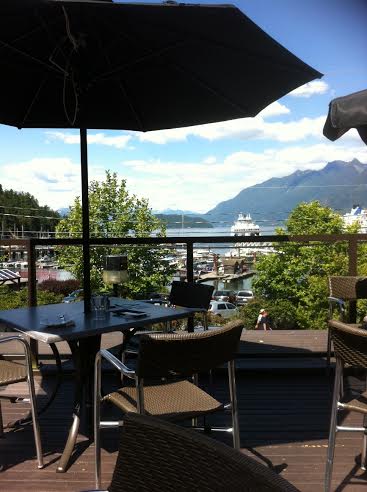
Horseshoe Bay for lunch, in glorious sunshine yet again (for once we had brought sun wherever we went).

The finale of the odyssey by Margaret Graham and Jan Speedie5

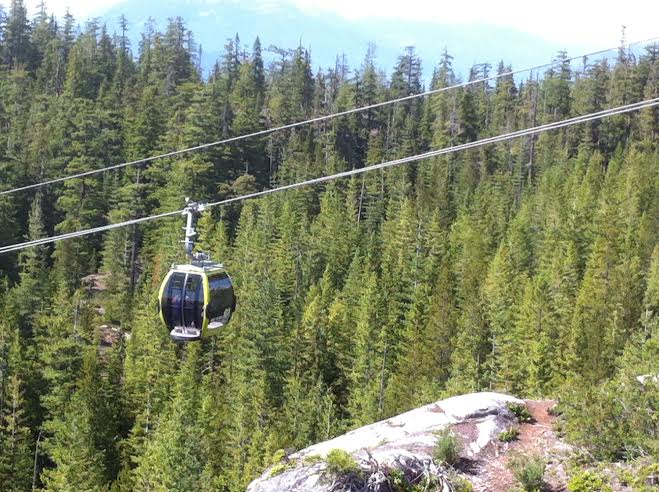
Then Barbara drove us to a First Nations gondola.

The finale of the odyssey by Margaret Graham and Jan Speedie6

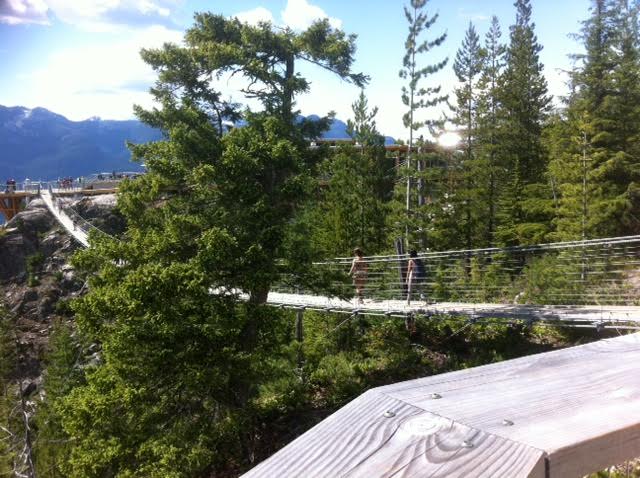
The views were magnificent, as always and we tootled across the skywalk and explored the woods on the summit. Down in Howe sound were the stored logs.

The finale of the odyssey by Margaret Graham and Jan Speedie7The finale of the odyssey by Margaret Graham and Jan Speedie7nationskywalk

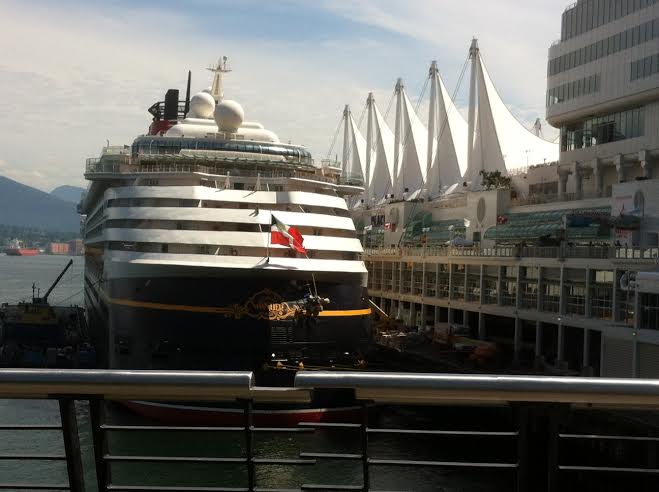
The next day, before heading for the airport, we tore around Vancouver, seeing a small cruise ship waiting for its passengers to arrive. Some of our fellow passengers on the Rocky Mountaineer were embarking on a 2000 person cruise ship bound for Alaska. It sounded amazing, though somehow I think I’d rather see Alaska when covered in snow.

The finale of the odyssey by Margaret Graham and Jan Speedie8

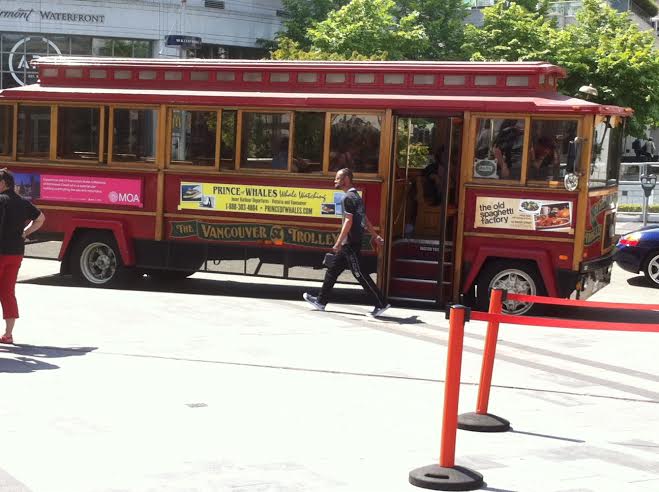
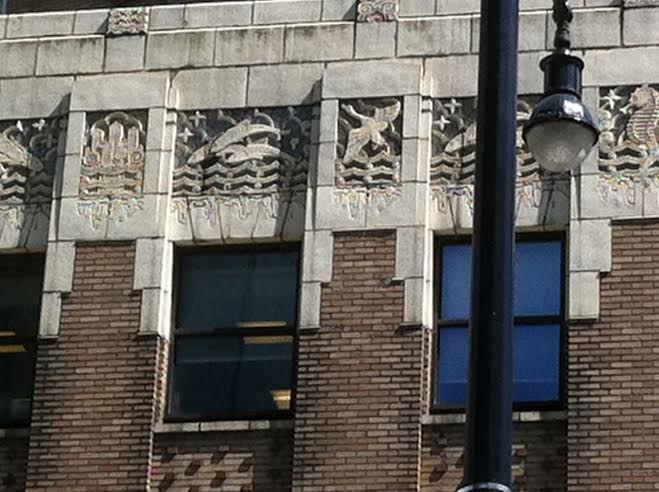
There were trolley buses, many shopping centres below ground, and just a few indications of the early buildings, with the ‘emblems’ of Canada, salmon and Canadian geese.

The finale of the odyssey by Margaret Graham and Jan Speedie9The finale of the odyssey by Margaret Graham and Jan Speediesalmonandcanadiangoose

I have to say that I never knew there were so many different varieties of salmon, and we probably tried them all. They are so fresh that they taste quite different to ours.

Then, onto the airport.

Did we enjoy our Canadian adventure? You bet. It was the holiday of a lifetime. We’re looking up train journeys for next year, but this time ALL THE WAY. We are determined to set off from St. Pancras, heading for Florence, and this time, Dick will be on board too. Then the Ghan in Australia perhaps in the autumn, from Adelaide to Perth.  Better get on with the next novel then.

The Rocky Mountaineer has started something… A few more odysseys coming up.

www.rockymountaineer.com
www.greatrail.com


Ever Onwards, The Duo Go, Heading For The Rocky Mountaineer by Jan Speedie and Margaret Graham


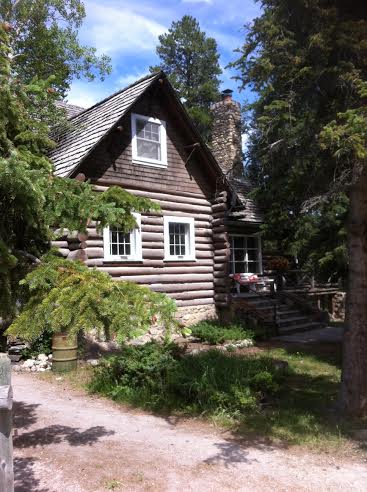
Rocky Mountaineer.Jasper reminded us of the bush towns of Australia with its pioneer homes.

pic 2 old house

Whilst there we saw many lakes, and rivers, always with the mountains in the background, and a coach which bore the wonderful sign, totally appropriate for women like us, with delusions of grandeur.

pic3 coach sign

This coach took us to Maligne Lake and Canyon. It is the most tranquil of lakes where sound carries extraordinarily clearly, so it didn’t remain peaceful once our lot hit it.

pic 4canada pic 4a carriage

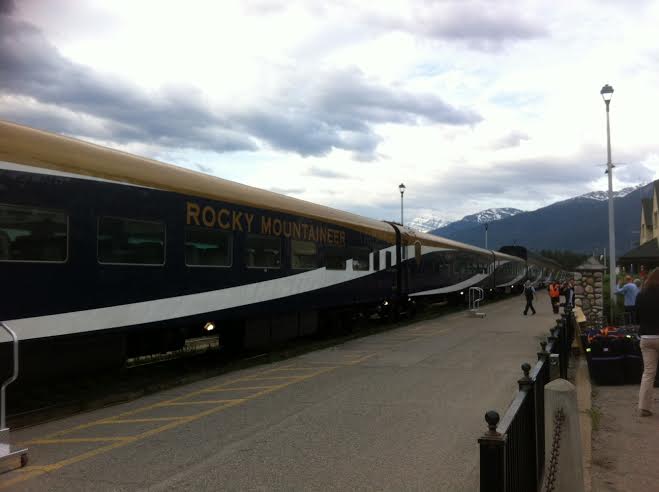
Then, it was the day of the birthday. Margaret was greeted with a banner on the door. No more can she say 21 years of age and on to the station, where the Rocky Mountaineer waited. We were in a red leaf carriage, the bottom of the pile, we suppose, but it was nonetheless fantastic.
pic 5 train

We had the lovely Shino to ply us with food and drink, and a viewing platform either end of the carriage. We began our journey along the ‘First Passage of the West’ retracing the steps of the early 19th century adventurers.  We was as always, the snowy mountains, forests and tranquil lakes. Aware that we were leaving the Rockies, we looked long and hard. Never have we seen such scenery, and never have we seen such a l-o-n-g train.
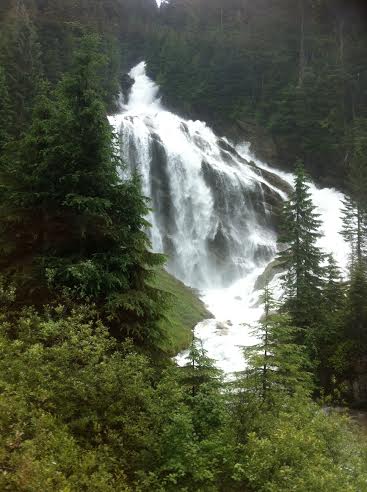
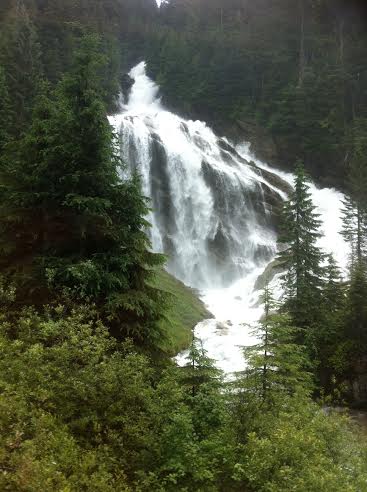
pic 6 Rockies waterfall.

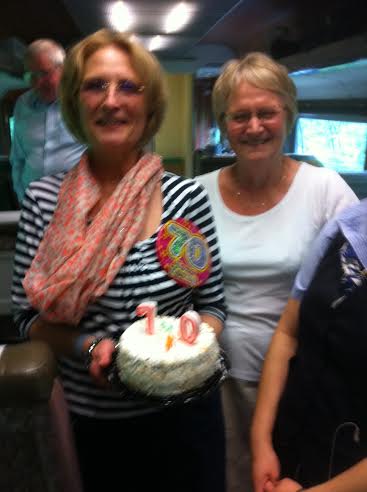
Jan had arranged a cake, so happy birthday was sung, but no bumps. Then the Rocky Mountaineer gave her a couple of prints and a bottle of champagne. Obviously she shared it all (well, not the prints)

pic 7 cake

We follow the path of the Fraser River until we join the North Thompson River to Kamloops where we stop for the night. Shino kept us entertained with stories of the early pioneers and their perilous journeys and we ware always on the lookout for the elusive wild life.  The only thing we saw were bald eagles, but too far away to photograph.

Finally we drew into Kamloops, and another birthday celebration in the evening.

pic 8 birthday celebs. pic 9birthday celeb

www.rockymountaineer.com


The Ongoing Odyssey of Two Old Dears on The Loose in Canada By Jan Speedie & Margaret Graham

All our body clocks were still grappling with real time, Canada, and Margaret’s had rather more to worry about, so while she lazed about in a darkened room, Jan hit the road with the gang, heading for Lake Louise.

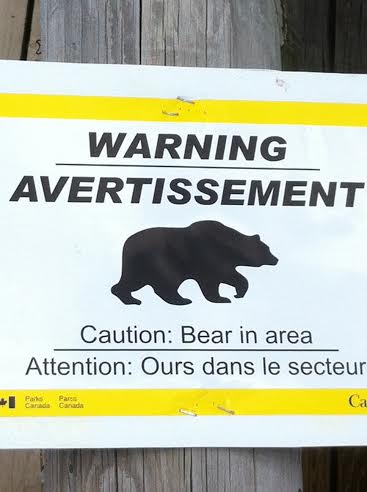
pic 1 bear sign

Before we arrived at this iconic lake we made several stops on our way always looking out for wildlife –black or grizzle bears, elk, moose, big horned sheep and mountain goats.

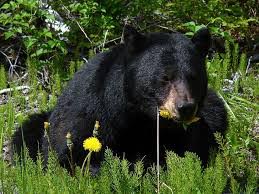
pic 2 black bear

Our first stop was the Lake Louise ski centre. Surrounded by snowy peaks everywhere it was easy to imagine the winter scene. The only occupant of the piste was a black bear, looking for a fresh patch of dandelions, their favourite pudding.

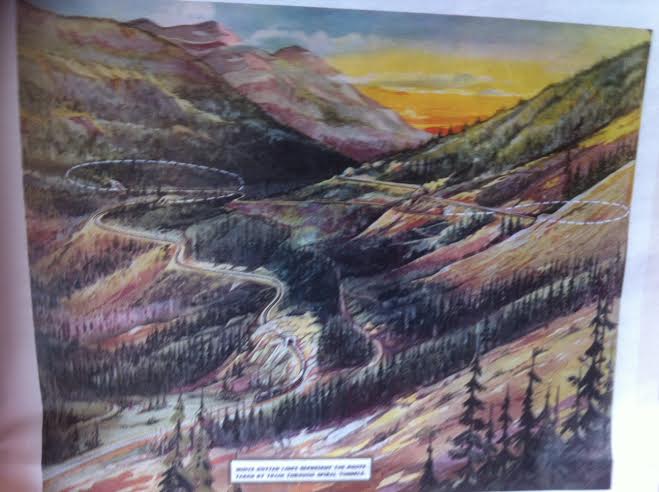
pic 3 spiral tunnels

Back on our coach, the next stop was the Spiral Tunnels an amazing piece of engineering and design,  built in 1909 to prevent further fatal accidents as the trains struggle to ascend and descend Big Hill in the Kicking Horse Pass. The tunnels form the shape of a figure of eight, and although a longer route, it reduces the gradient and provides a safer passage for the freight and passenger trains. It is still in use today.

pic 4 Rockies waterfall

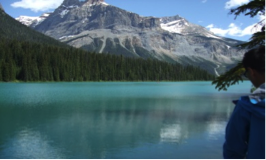
We stopped to look at many waterfalls on our way to the Emerald Lake which is one of the 61 lakes in the Yoho National Park. The lake is enclosed by mountains and was discovered by Tom Wilson in 1882. The remarkable colour is caused by the fine particles of glacial sediment (Rock Flour) descending into the lake. From November to March the lake is frozen but for our visit the weather was perfect and the colour incredible.

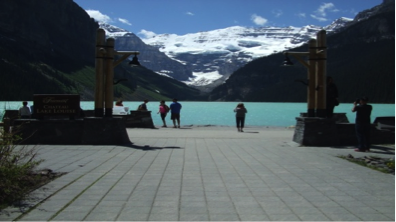
pic 5 lake louise

This beautiful lake is surrounded by larch trees and overlooking the lake is the famous Fairmont Chateau hotel. No hotel lunch for us, a picnic admiring the lake and a quick wander on one of the many trails surrounding the lake.

pic 6 lake louise

Bow River, Yoho National Park


Two Old Ducks Hit The Canadian Rockies by Jan Speedie & Margaret Graham

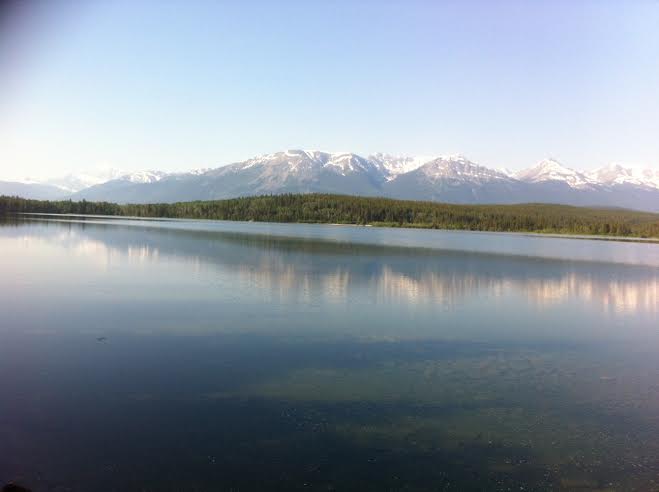
pic 1. rockies in distance

It seemed like a good idea at the time, but was it? As all things do, it began with just one question: ‘Where shall we go to celebrate this sort of birthday?’

We met at primary school when we were nine, a million years ago, and both had one of those birthdays this year. We decided on the Rockies, by train. Would we go it alone, or with a company? We decided on Great Train Journeys. Dr Diffey was in charge of us, a former headmaster, which caused some palpitations as detentions were a feature of Margaret’s school days. He was far from the usual model, a real legend.

pic 2 calgary airport

We landed at Calgary at the beginning of June, imagining Calgary to be a small rodeo town, but it’s thriving and huge. We set off by coach across the prairies, heading for Banff, in the Rockies.

pic 3 prairie Calgary - RockiesWe saw the Rockies from a great distance, and why not, they’re huge. We were lucky and arrived in a heatwave. Normally there is a British amount of rain and the mountains can be hidden, but we had a full frontal view at all times.

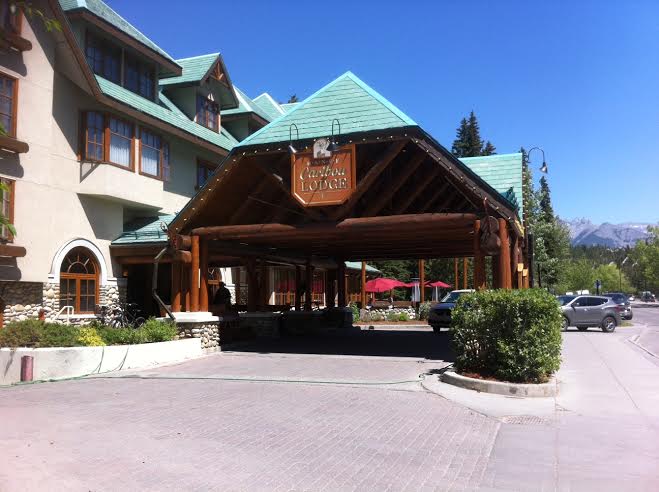
Feeling a little travelled out we hit Banff, toddling into the Caribou Hotel with our luggage. Margaret was smug because she had stuffed her clothes into something little bigger than a weekend case. Jan was just a small step up.

pic 4 Cariboo hotel at Banff

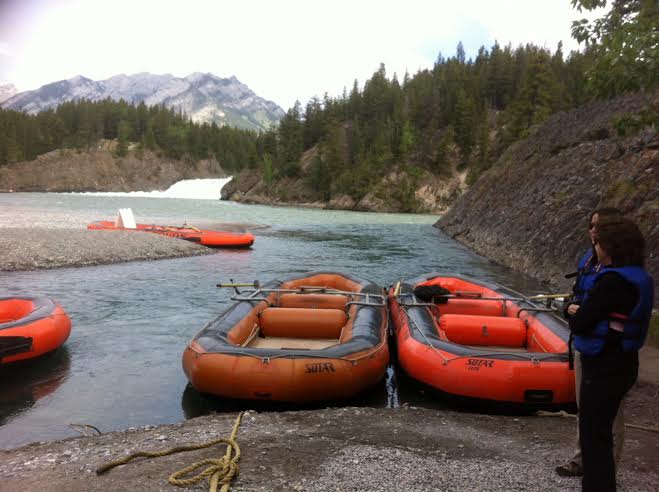
Then a quick look round in the clean clear air of the mountains. Banff is a tourist town, but why not? A perfect centre, with restaurants, shops, and lots of activities on offer.  The next morning, Keith Diffey gathered us up, assuring us that it wasn’t like herding cats, but not sure we believed him. We clambered on board a converted school bus, and headed for Bow River where we were to – no, not white water raft, but just raft for an hour.

pic 5 rafting

Another glorious day it was, as we were ‘oared’ rather than rowed along this most shallow of rivers. It has very few fish, as there isn’t enough to sustain more than the odd trout. The same could be said for the land either side. We saw the occasional caribou, but no bears, which we had rather expected. We passed weather eroded rocks.

pic 6 rocks

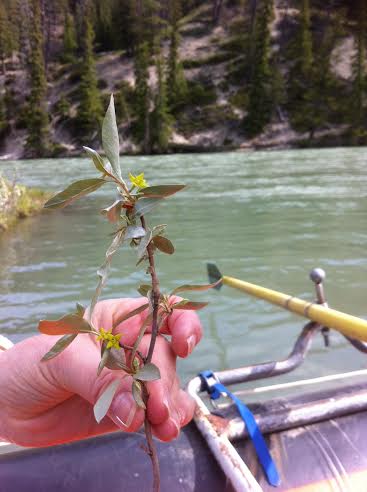
And stopped to see the golden willow, which the First Nation Indians would use for headaches. Much as we use aspirin for ours, though willow is common to both medications.

pic 7 Golden willow heachace cure.

We reached a gently sloping bank, and there was the bus, waiting to return us to Banff. As Margaret reached terra firma, she began to feel dreadful. Travel sickness? Onto the bus we went, Margaret with her voluminous handbag as always – thank heavens. (much like Tinky Winky the teletubby)  As we travelled, she upchucked into the only receptacle, the handbag, of course, or rather the scarf lying on the top. A memorable  moment for in the vicinity .

Jan spent a delightful afternoon dawdling along the river bank at Banff – alone. Margaret did not see the light of day for a good 24 hours, wondering quite where the high temperature had come from. There is, you will be thrilled to hear, no illustration of these events, especially not a selfie.

She did not emerge for the trip to Lake Louise, but instead managed to get into Banff and gave a chemist the option of shooting or medicating her. He gave her antibiotics, and anti-this, and anti-that, which got her upright and so the odyssey continued. More later.

https://www.greatrail.com/