ANGELA PETCH ON THE WEIGHT OF RESPONSIBILITY OF RESEARCH

I felt a weight of responsibility to get my research right for The Girl who Escaped. A main male protagonist is based on my Italian grandfather-in-law and I wanted to respect Luigi’s courage, as well as accurately represent the plight of Jews in Italy.

The first book I consulted was: It happened in Italy, written by an Italo-American lady. Elizabeth Bettina wrote of an internment camp for Jews near her grandparents’ village of Campagna. They’d been treated with kindness and respect. This was a revelation. I had only come across stories of gruesome concentration camps. Did camps like Campagna exist in Tuscany?
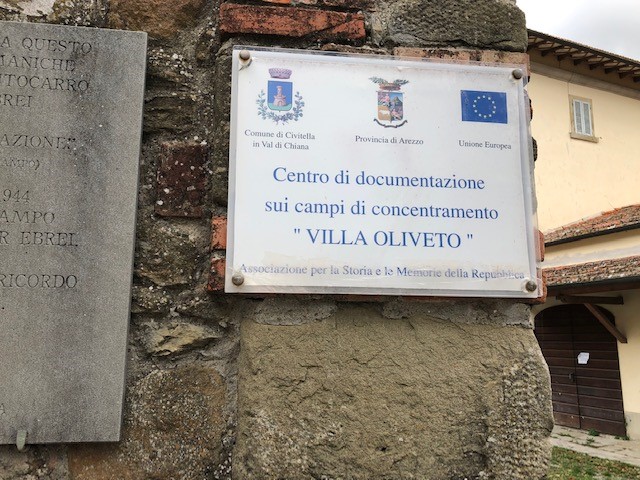
I found a camp called Villa Oliveto where archives for internment camps were stored. Brilliant! The hunt was on! I found accounts and photos of this place in the 1940s.

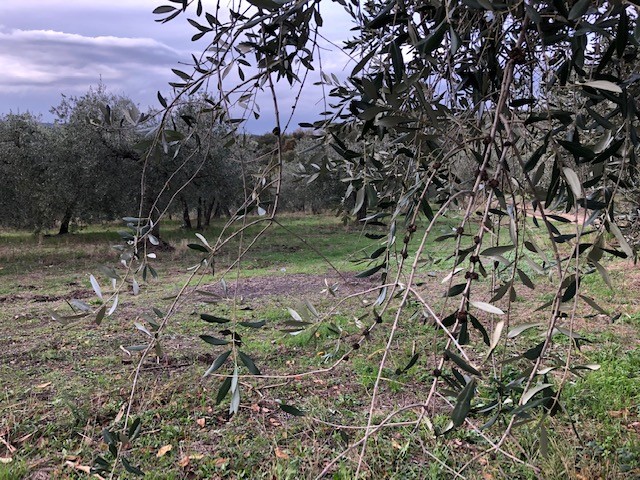
We travelled to the picturesque location set in olive groves near Civitella in Val di Chiana, but the villa, a former orphanage, was closed and archives no longer stored there.
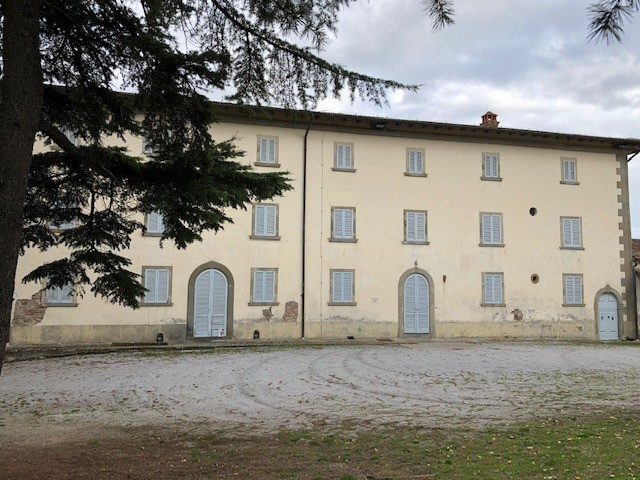
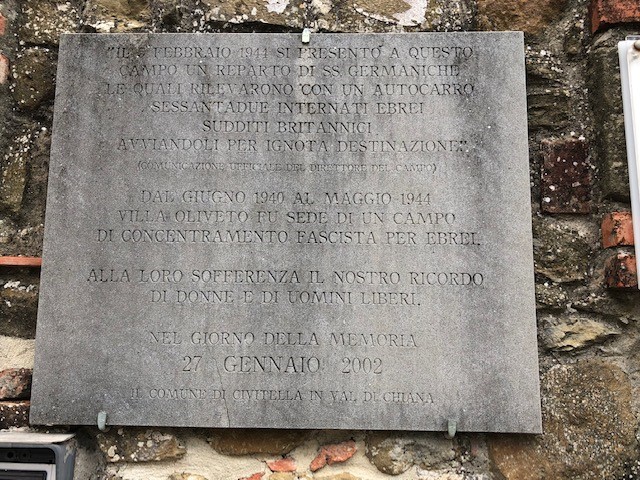
All was not lost, however. I wandered around the building, taking photographs and notes. Then, I came across a puzzling, fading plaque, which told me the villa had once housed British Jews. Extremely puzzled, I asked a local woman who was walking past. But she had no idea. I speak fluent Italian and this helps when researching.

I enjoy a research puzzle and when I discovered the explanation later, it inspired a new character. Bear with me…

A young woman called Shira is a Cyreneican Jew from eastern Libya. (A former Italian colony). After Italy joined the Germans in 1940, many Libyan Jews were sent to concentration camps where they were treated abominably.  Jews lost trust in the Italian government, and began to support the British. The British had first conquered Cyrenaica in December 1940 and abolished Mussolini’s racial laws. Many Jewish men joined the British army and were granted British citizenship. Here was the link I needed.
On April 3rd 1941, Italian and German forces pushed British forces from Benghazi. Jews were arrested by the Italians, especially those who had allied themselves with the enemy, and were sent to the notorious Giado camp. Some Libyan Jews, however, were sent back to Italian camps. I’ve never found the exact reason, but have allowed myself artistic license through detective work. In a brilliant Italian book covering the persecution of Jews in Italy I found possible explanations of why Shira and other Libyan Jews might have landed in Italy, instead of elsewhere.
The Italian government knew about extermination of Jews already by the second half of 1942 – when they’d heard of massacres of Jews in Russia, from word sent home by Italian officers operating on the Eastern front. And foreign Jews who had arrived in Italy, including Hersz Kawa from Siedlce, Poland, had also talked of atrocious treatment too. He and two others had managed to escape in an empty wagon of a train bound for Italy. They spoke to Italian guards who made sure they were sent to an Italian camp, rather than German.  Similar events happened in Vichy France, when French Jews escaped to Italy because they felt they would be better treated.

I’m hoping that the same thing might have happened to those British Libyan Jews mentioned on the plaque. Saved by Italian soldiers acting with conscience.


The Girl Who Escaped:  https://geni.us/B0BYC1V9NHcover



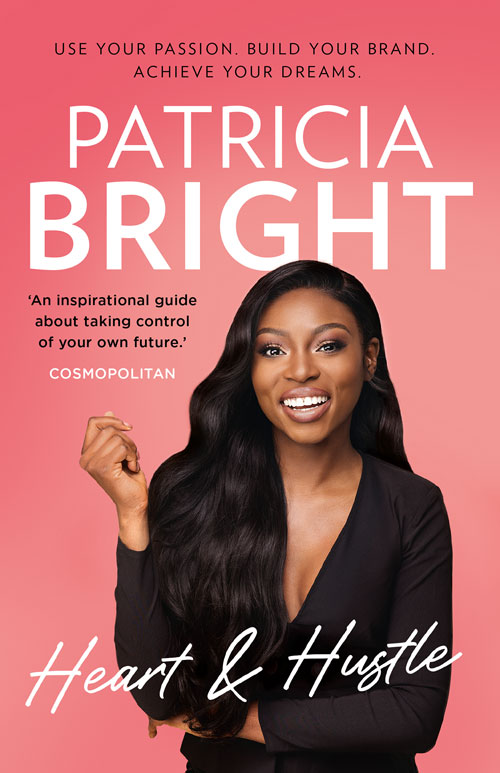
Heart and Hustle by Patricia Bright Giveaway

Frost is all about aspiration and becoming who we want to be, so we’re delighted to have five copies of Heart and Hustle by Patricia Bright to giveaway. A brilliant book on how to control your own future. Comment below or RT the Tweet of the competition on our Twitter @frostmag, or our editors @balavage. Good luck!

I’m going to show you how to hustle like I do, using your head and heart. All it takes is three steps…

YOUR BRAND: how you can use who you are to smash it online

YOUR BUSINESS: how to run your side hustle like a total boss

YOUR BELIEFS: ditch the thinking that s holding you back

From the early lessons she learned growing up in South London, to the moment she gave up the 9 to 5 to do what she loved, Patricia Bright s story will revolutionise how you think about work, life, and what it means to succeed.

Packed with her trademark attitude, style and sense of fun, Heart & Hustle is an inspirational guide to taking control of your own future.

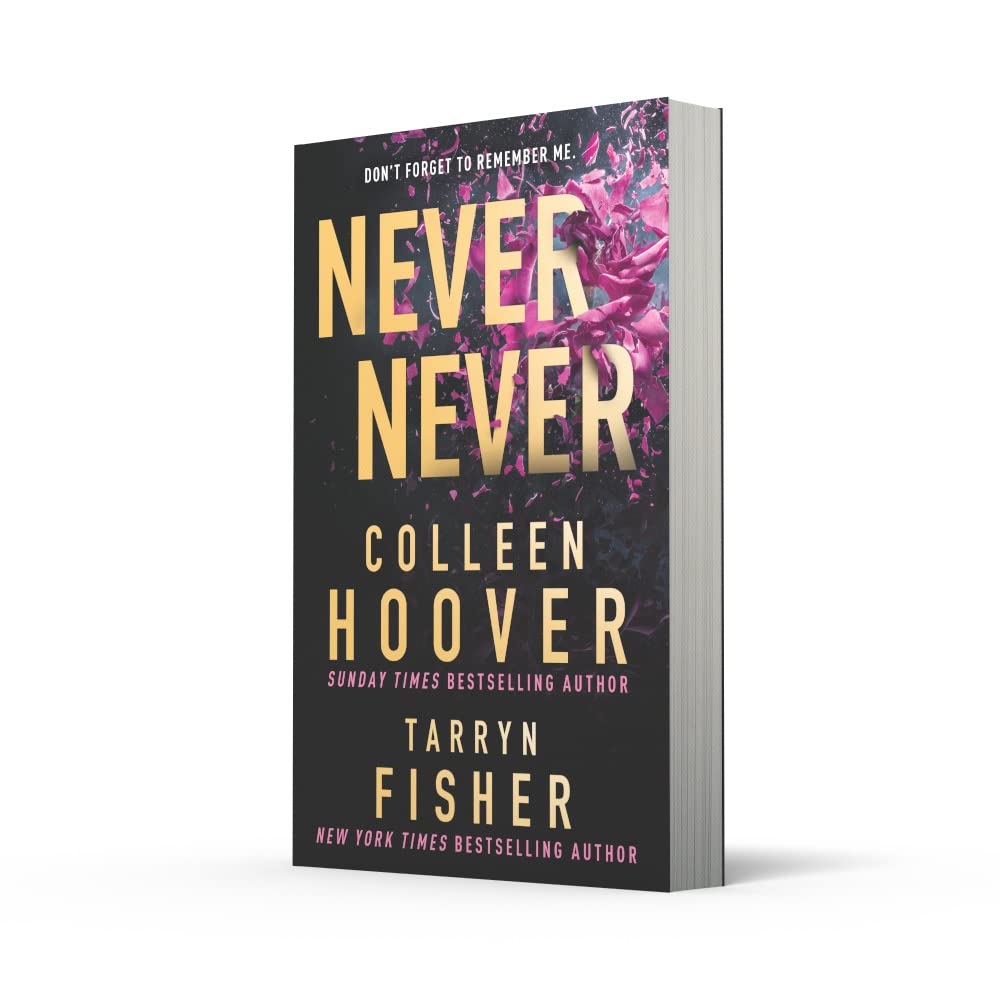
‘NEVER NEVER’ by Colleen Hoover and Tarryn Fisher

The powerhouse couple of Colleen Hoover and Tarryn Fisher was always going to be an event and my, my, what a book this is. The first in a trilogy about a teenager couple who’s memory vanishes. It’s hard to place the genre initially, but the ride is there in the characterisation and whip-smart dialogue. It made me laugh, smile and kept my guessing all of the way.

A good starter to what I reckon is going to be a belter of a trilogy. Loved it.

Charlie Wynwood and Silas Nash have been best friends since they could walk. They’ve been in love since the age of fourteen. But as of this morning… they are complete strangers. Their first kiss, their first fight, the moment they fell in love… every memory has vanished.

Now Charlie and Silas must work together to uncover the truth about what happened to them and why. But the more they learn about the couple they used to be… the more they question why they were ever together to begin with.

Forgetting is terrifying, but remembering may be worse.

The Number One Sunday Times bestselling author of It Ends with Us joins forces with the New York Times bestselling author of The Wives for a gripping, twisty, romantic mystery unlike any other.


Never Never

By Colleen Hoover and Tarryn Fisher

About the author:

Colleen Hoover is the #1 New York Times and international bestselling author of multiple novels and novellas. She lives in Texas with her husband and their three boys. She is the founder of The Bookworm Box, a non-profit book subscription service and bookstore in Sulphur Springs, Texas.


Tarryn Fisher is the New York Times and USA TODAY bestselling author of nine novels. Born a sun hater, she currently makes her home in Seattle, Washington, with her children, husband, and psychotic husky. She loves connecting with her readers on Instagram.


WRITERS ON THE ROAD: CHRISTINA COURTENAY

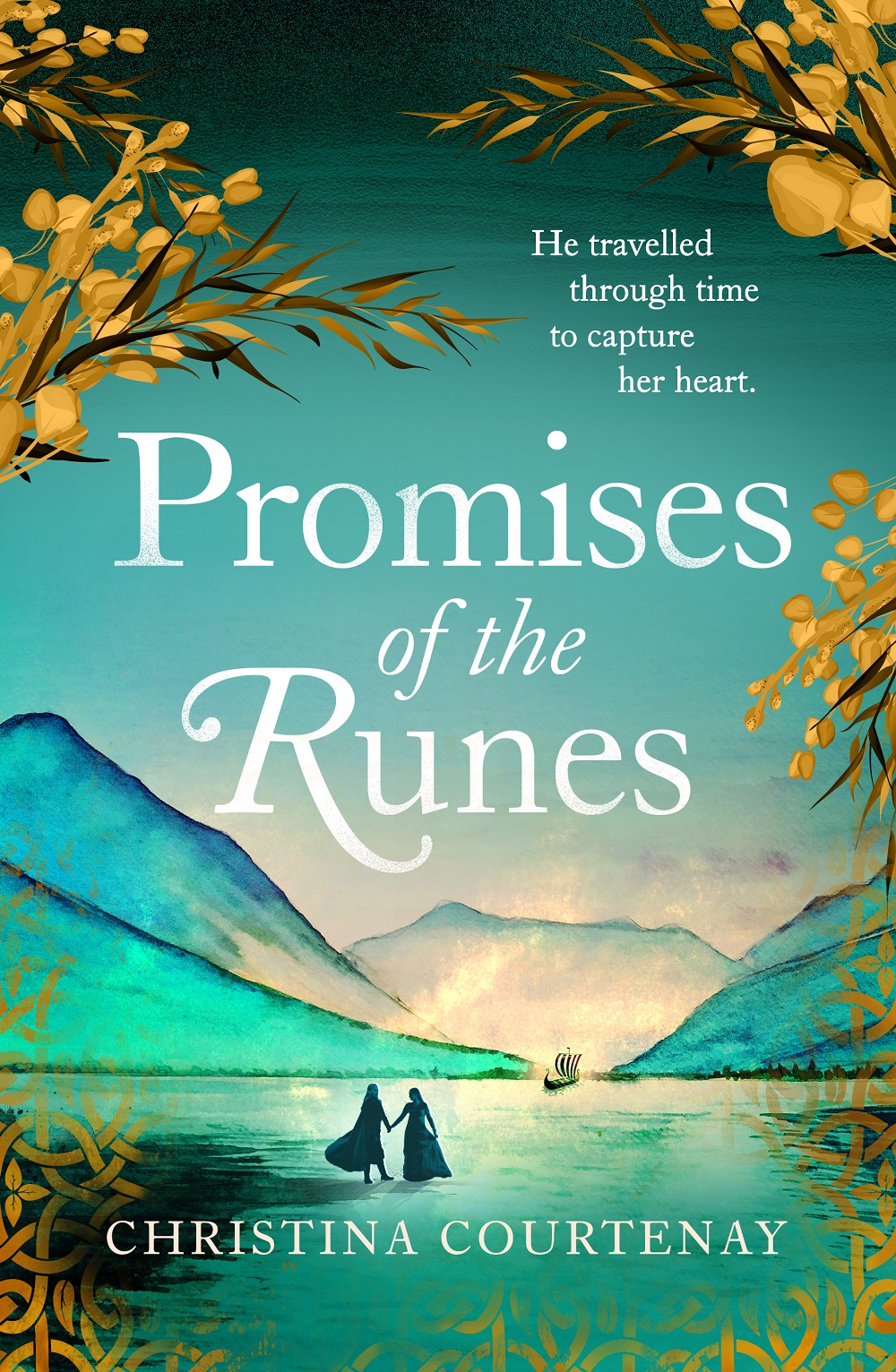
I write stories about the Vikings, and being half Swedish, it would have been easy to just set all of them in Sweden as it’s a place I know well. But where would be the fun in that? The Vikings were intrepid travellers and explorers, and journeyed far and wide. I had a wealth of places to choose from, and as I’ve been working on a series, I decided early on that each book would feature a different location. That hopefully makes it more fun for both the readers and myself!

Book five, Promises of the Runes, (out this month) is set in Norway, and I’d previously used Sweden, Russia, Iceland and England. For book six, therefore, which I’m working on at the moment, I turned my sights on the Orkney Islands. It was a place Scandinavians had traded with for centuries, and no one really knows exactly when they began to settle there rather than just visit occasionally. By the 9th century, when my book takes place, they were well established and had integrated fully with the previous occupants, the Celts. Most of the islands have Norse names – any that end in ‘ey’, for example, as that means ‘island’.

There is nothing better for an author than to actually visit a place we are writing about. It helps with descriptions, catching the essence of a place – its scents, sounds, nature and people. So I dragged my husband along on an epic road trip. A twelve hour drive up to Scrabster, followed by 90 minutes on a ferry, and suddenly there they were – the gorgeous Orkney Islands.

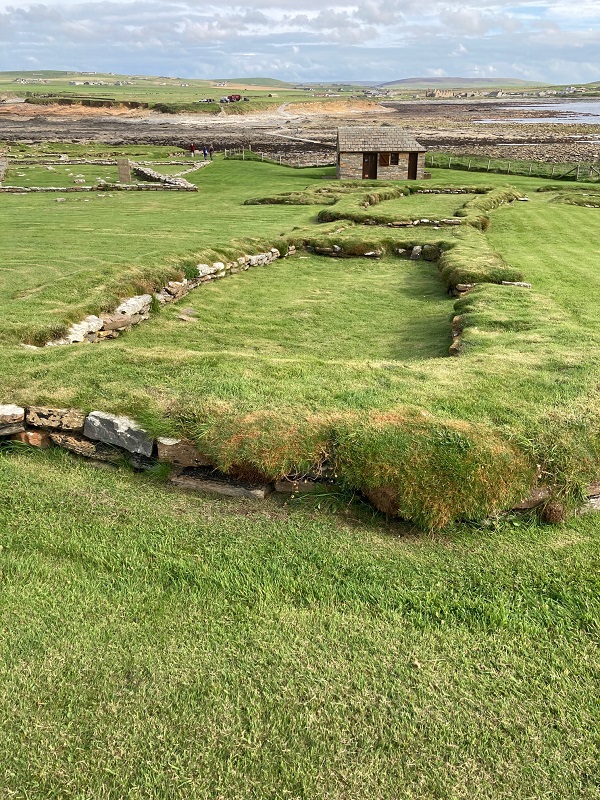
We were incredibly lucky with the weather and had beautiful sunshine and blue skies interspersed with fluffy clouds. The air is so clear and I found myself wishing I could paint the landscape just because the light was so brilliant. There’s a huge amount of history, going back to Neolithic times, but I was concentrating on anything remaining from the Viking era. We headed first to the Brough of Birsay, a tidal island that can only be reached by a causeway during low tide. Here are the remains of a large Viking settlement, the outlines of the houses clear on the grassy site. I could definitely see why they’d wanted to live in such a beautiful location! It was also perfect for use in my story.

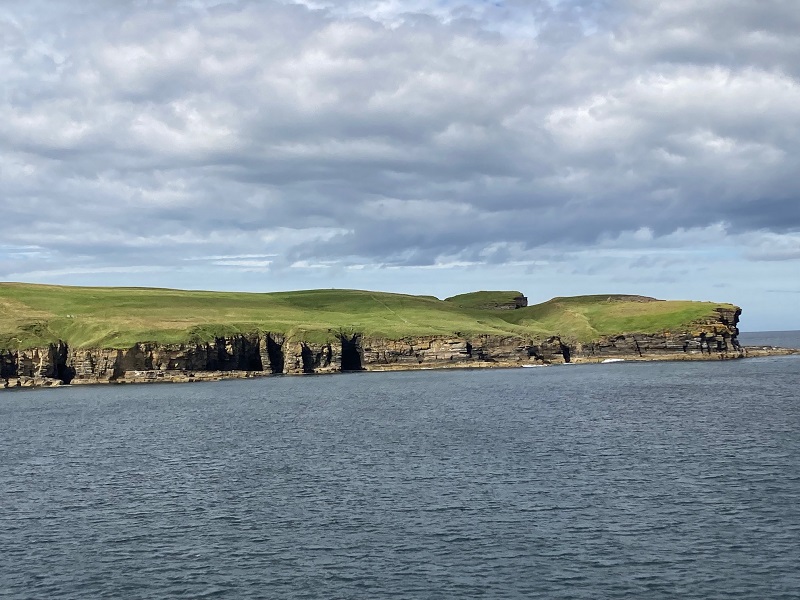
We visited several other Viking sites – one at Orphir called Earl’s Bu and another at Deerness. To reach the latter, we had to walk along spectacular cliffs that were part of a nature reserve. The Vikings had a settlement on top of a 30 metre high sea stack on a promontory sticking out into the North Sea – an isolated place, but again, stunning. Nearby was a beach and cove, perfect for longships.

In Kirkwall, the main town, the historical museum had lots of Viking items, among them a bear tooth carved with runes. It might have been worn as protection against magic or to imbue the wearer with a bear’s strength.

The most poignant reminder of the Vikings, however, was in the Neolithic tomb at Maeshowe. Shaped sort of like a beehive buried inside a huge earth mound, it is reached via a 10 metre long tunnel only a metre high. A thousand years ago a group of Vikings had apparently taken shelter there and scratched graffiti all over the walls. There were more than 30 messages written in runes. It really made these people come alive for me and I could see them sitting in there, bored and restless. The connection was almost visceral and I was so pleased I got to experience this.

If you get the chance, do visit the Orkneys!

Buy link for Promises of the Runes – https://geni.us/ExsdDss 


JANE CABLE REVIEWS…

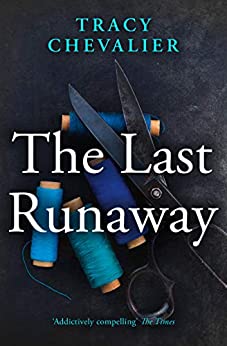
Two research books, and two book club reads this time. My book of the month is Tracy Chevalier’s stunning story, The Last Runaway.


The Girl Who Left by Debra Gavranich

I read this book in the name of research, because I was fascinated by the opportunity to read a first hand account of the Second World War on the Croatian island of Korcula, and I wasn’t disappointed. Such gems in the English language are rare, and this family history is firmly rooted in the author’s mother’s memories, and well written.

As Marija’s story unfolds I found that I really cared about the outcome and her journey across the oceans as a proxy was fascinating. I must admit I only scanned the parts about her life in Australia, but my lack of interest was a personal thing and no reflection on the book.


The Last Runaway by Tracy Chevalier

Such a brilliant book, it took me straight to nineteenth century Ohio with all the harshness and iniquities of life there.

Honor Bright is a quaker from Dorset who accompanies her sister to America, where she is to be married. But the fates are cruel and the bride dies on the way, so Honor arrives in rural Ohio alone. The story revolves around her quest for friendship and happiness, but also her desire help escaped slaves in the Underground Railroad to Canada, which runs through the community where she lives.

Rich in description, strong in emotion, run through with tension, this is close to a perfect read. The characters became almost real to me and I was completely invested in Honor’s story and how her choices affected those around her. It was only the ending that left me feeling a tiny, tiny bit short-changed but I would still unreservedly recommend this very special novel.


Orlando by Virginia Woolf

If the author hadn’t explained in the foreword she’d started to write this as a bit of a joke, I don’t think I would have got it – and there were moments the author’s asides made me laugh out loud. I have to admit that I skimmed through much of it. but I did love the dreamlike elasticity of time, gender and sexuality and it was clearly a book ahead of its time.

Orlando is born a boy in the Elizabethan era and ages only a little and rather irregularly so in effect travels through time. But the real fascination for me was when he becomes a woman part way through the story and is therefore in a position to compare the two states.

If like a highly unusual read, rich in description and introspection, this is definitely worth a go.


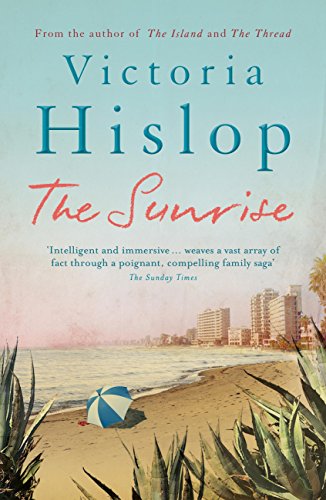
The Sunrise by Victoria Hislop

I loved the premise of this book, set in the Cypriot resort of Famagusta, which was abandoned during the troubles in the 1970s which divided the island. However for me it didn’t completely deliver. For some reason I couldn’t buy into the love story between the nightclub manager and his boss, and although I appreciated the tensions which led to the arrival of the Turkish troops, for me it took far too long to happen.

What I did really love was the relationship between the neighbouring families of Greek Cypriots and Turkish Cypriots and how that developed. And as ever with Victoria Hislop, the sense of place was phenomenal and the historical research extensive. I just didn’t fall in love with it as much as some of her other books.


EVA GLYN’S HIDDEN CROATIA: EATING WITHIN DUBROVNIK’S WALLS

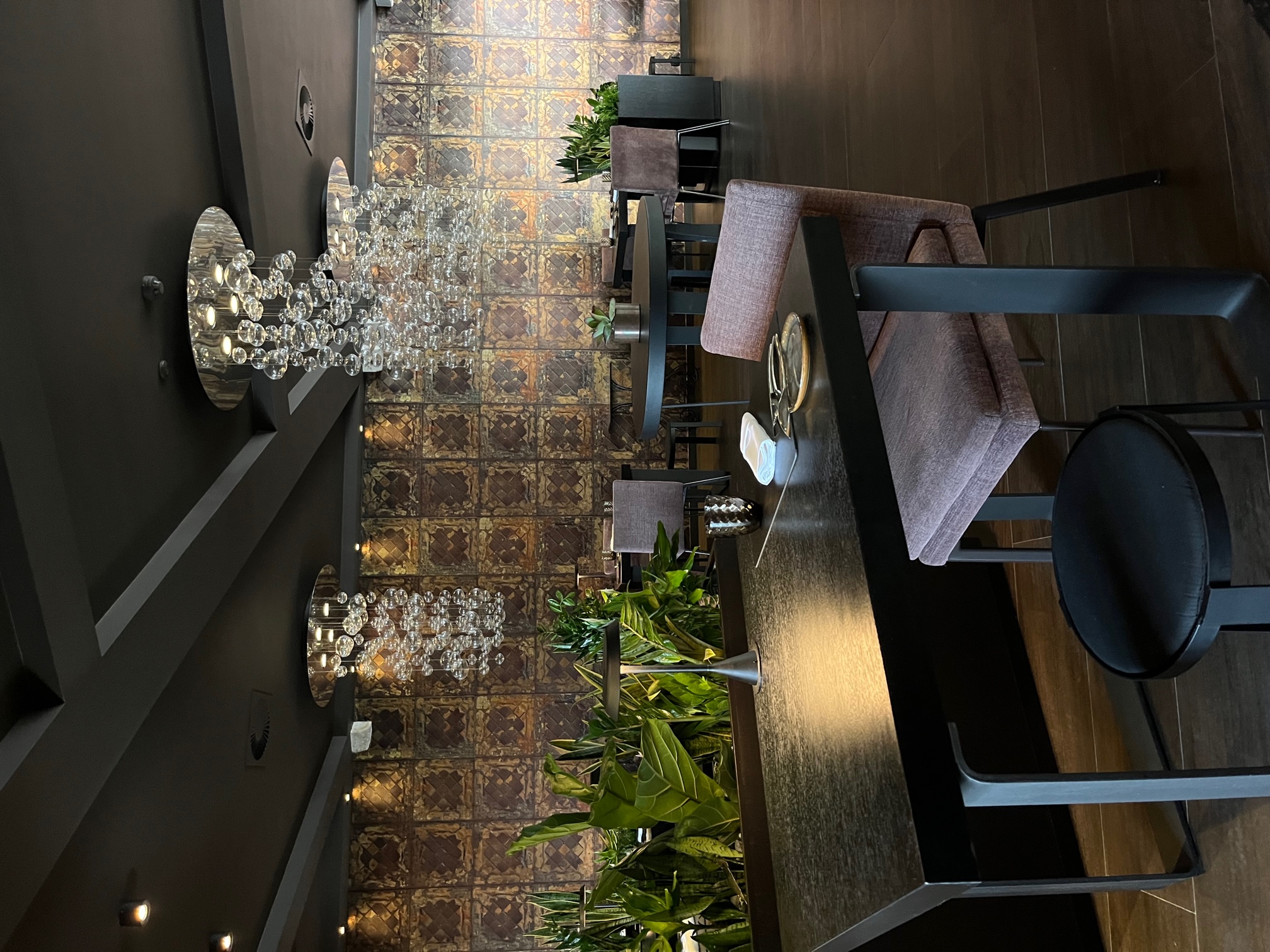
First let me say that I am one lucky, lucky writer. Long have I dreamt of eating at Dubrovnik’s only Michelin starred restaurant, and on my last visit, I did it. It’s a very special place (with prices to match) but I had cause for celebration – it was publication day for The Collaborator’s Daughter, my novel set in the city.

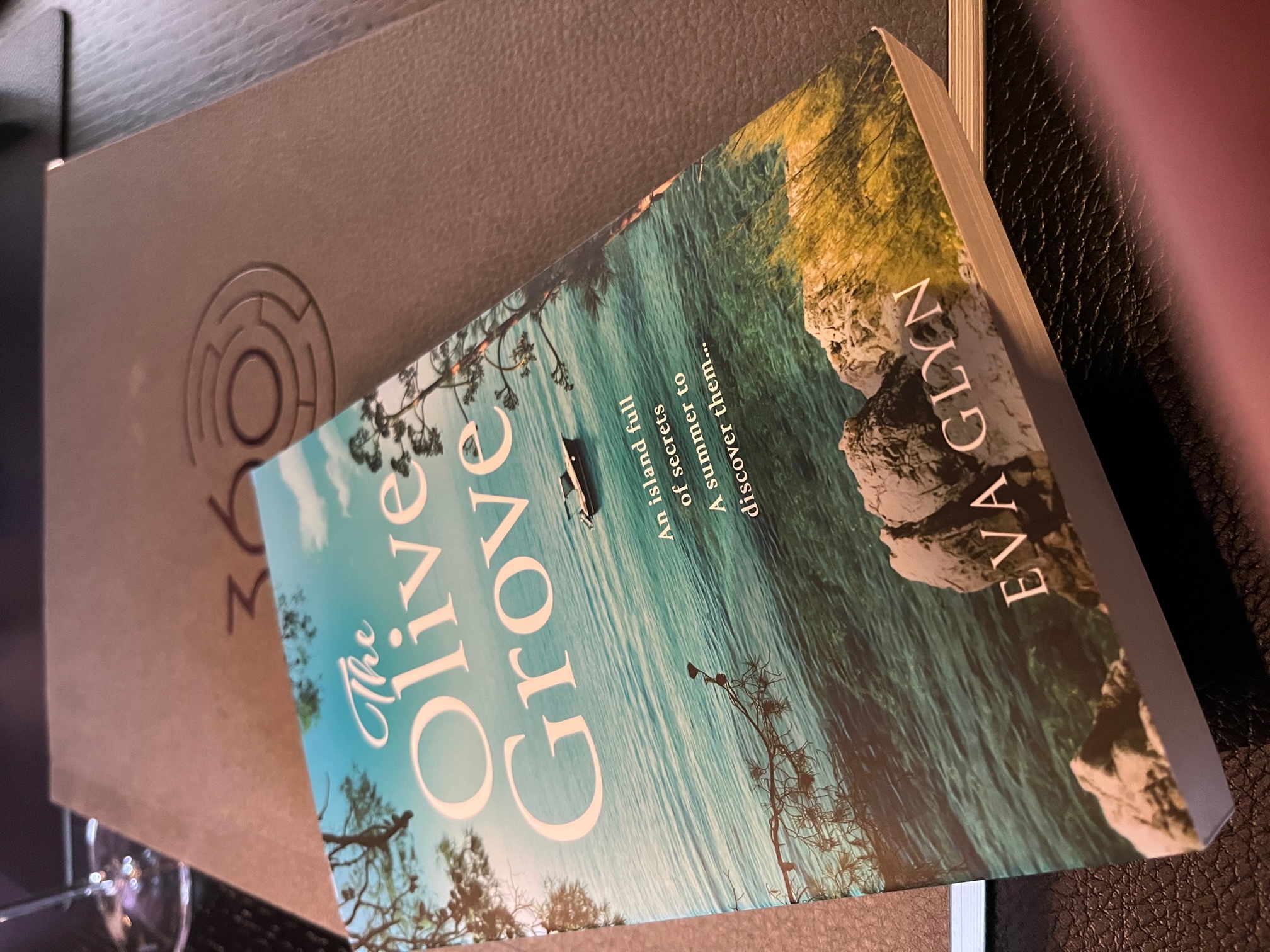
I had visited Restaurant 360 before, but only through the pages of The Olive Grove. Where else would wealthy businessman Josip Beros take Damir to impress him?

‘The design of the place alone took Damir’s breath away, the cubed rattan furniture in turquoise and grey in the lower courtyard contrasting in both colour and style with the honeyed stone of the old fort into which it was built.’

It is, indeed a stunning location, and in the summer open air tables grace the tops of the walls giving stunning views of the harbour, but on a breezy evening right at the beginning of April I was pleased we would be eating inside.

Everything about Restaurant 360 is precise, except for the service which is as friendly as it is knowledgeable about the food and wine they serve. As well as a la carte choices, there are two tasting menus; Antalogica, which showcases the chef’s latest signature dishes, and Republika, a modern take on heritage dishes from the time of Dubrovnik’s Ragusa republic.

We were delighted when the sommelier was able to match a different Croatian wine with each course. Croatian wines are hugely underrated (and my husband knows a thing or two about wine, having worked in the industry) and we were able to enjoy a selection of the best with our meal. We were especially impressed with a Grk from Lumbarda on Korcula. All the more delicious to me because that’s where The Olive Grove is set.

All the food was wonderful, but it was with fish that Restaurant 360 excelled. We do sometimes treat ourselves to Michelin starred food, and some of the dishes bettered anything we have eaten. Anywhere. The absolute star of the show was what sounded an unlikely combination of smoked eel, foie gras, melon, and date cream. The man who thought that one up, and then delivered it, is some sort of genius.

A great deal of time goes into perfecting the dishes. Our waiter told us that the ‘fish soup’ accompanying the brodet (a very traditional Croatian dish) of grouper and clams had gone through almost forty iterations before it was deemed worthy of serving. And I would imagine it was the same with everything else; the sea bass with leek and langoustine was one of the most amazing things I have ever tasted. And the scallop tartar with kohlrabi and yuzu gel was as delightful as it was refreshing.

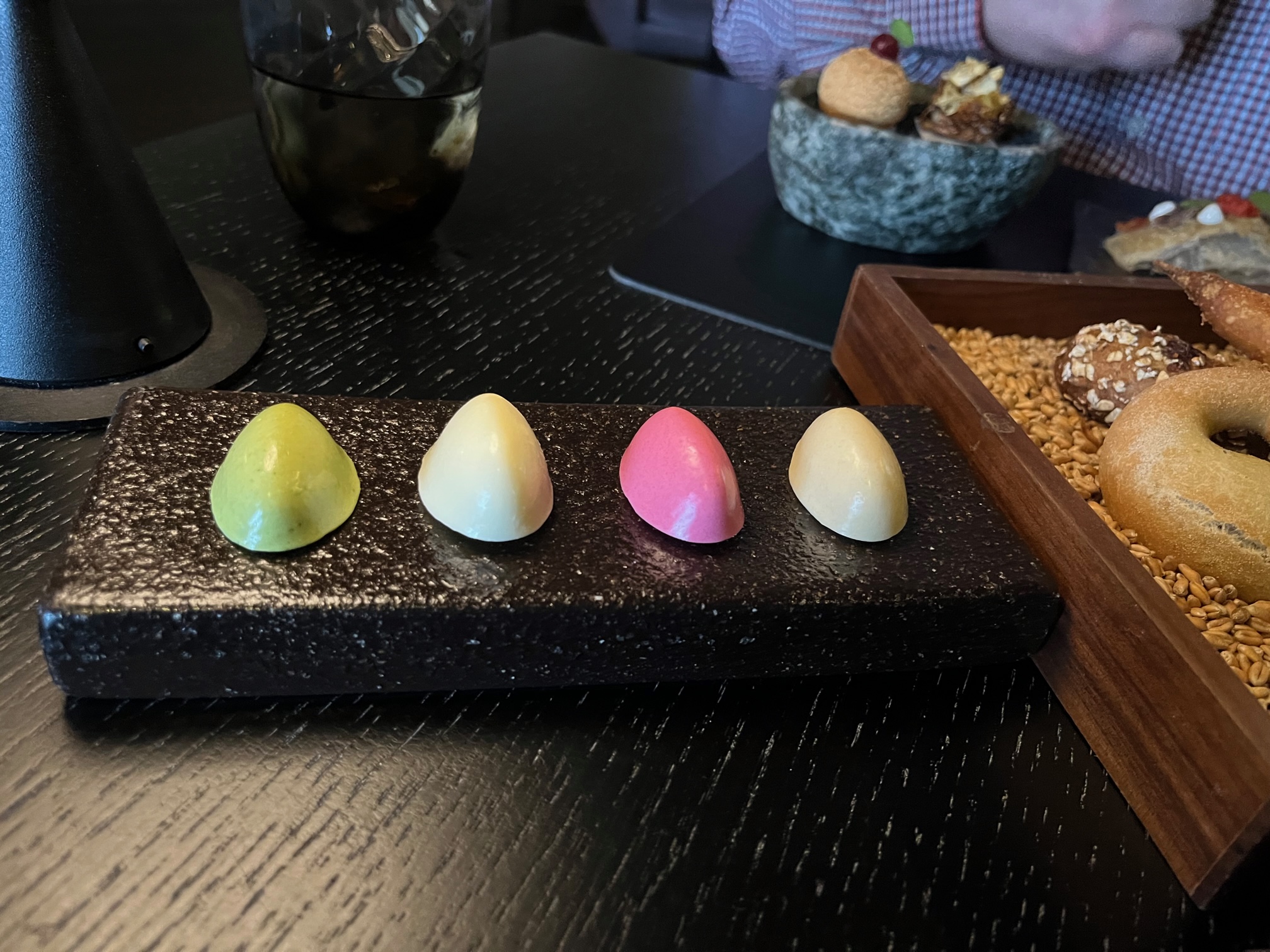
Great care was taken with my gluten free diet and I felt very safe all evening. The bread was delicious and plentiful, accompanied by a colourful array of butters, and where a dish could not be adapted, (as with one of the amuse bouche) the chef made something specially for me. Nothing was too much trouble for kitchen or staff, which made dining at 360 a wonderful experience.

I couldn’t resist taking a copy of The Olive Grove with me, and gave it to our fabulous sommelier when we left. He was delighted to hear it was set on Korcula, where he and his wife had honeymooned. It seemed such a small thank you for a night we will never forget.

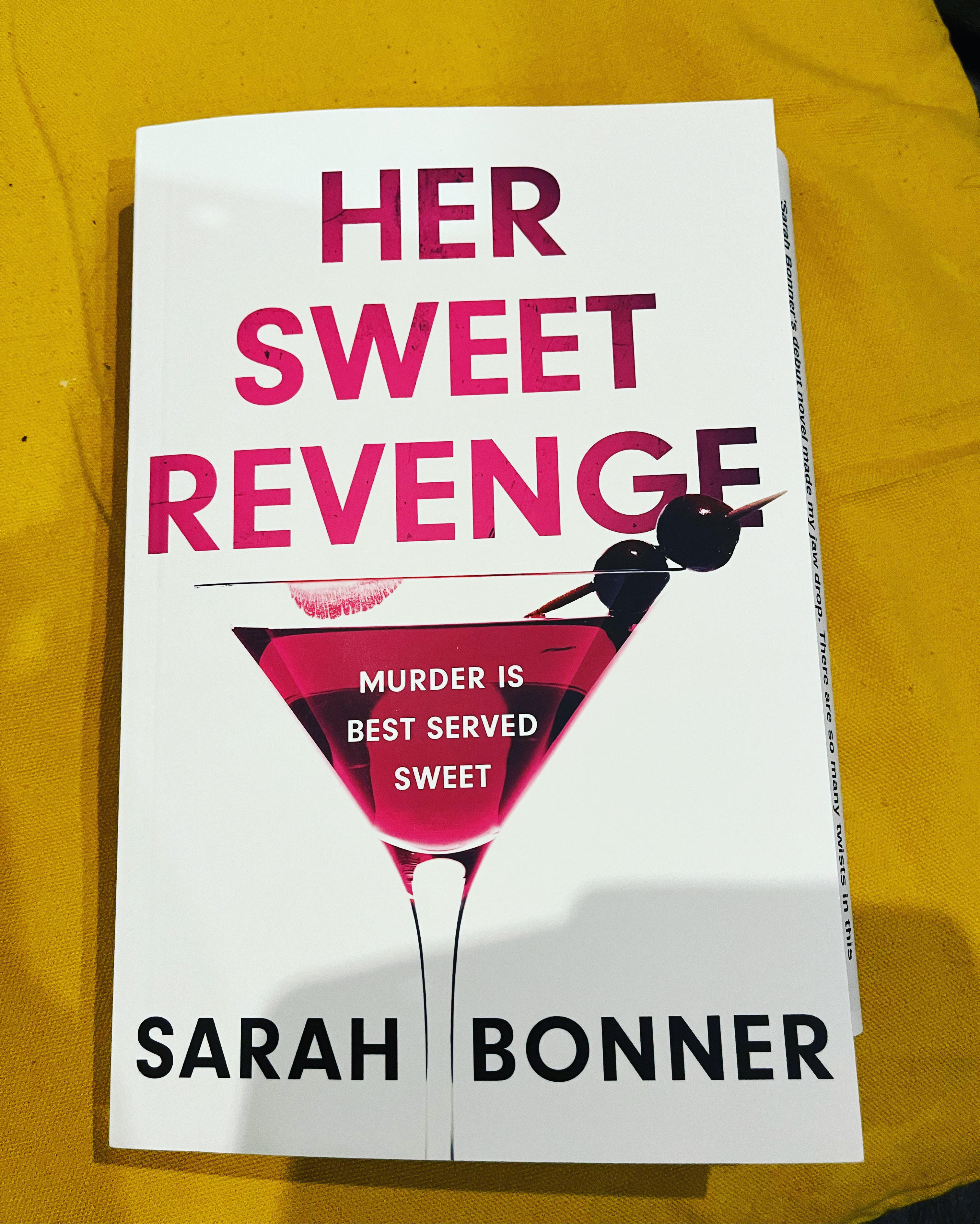
Her Sweet Revenge by Sarah Bonner

Her Sweet Revenge is another stunning thriller from Sarah Bonner. It’s ambitious, covering four years and numerous POVs but that makes me love it more. The relationship between the different characters (the mother-in-law and her daughter-in-law, the female friendship) is all done so well. You’re not quite sure who or what to believe until the very end. It made me feel so many emotions.
It’s a great read and I couldn’t wait to find out what happened. I finished it in 24 hours. Sarah Bonner is a formidable talent and this is another triumph,

Secrets and lies ruin lives

Two women receive the same anonymous note.
For one it’s a threat.
For the other it’s an invitation for revenge.

Helena is beautiful, successful and living in married bliss in Exeter. But she’s hiding a secret that could tear her perfect life apart. When the notes begin to arrive, she realises someone else must know. But what might her husband and his overbearing family do if they find out the truth?

Thea is reeling from her best friend Helena’s death. But when she starts digging into the circumstances, she receives a threatening note warning her to stop. She knows her friend’s death wasn’t an accident. This was murder. And she is determined to get revenge. And everyone knows, it’s almost always the husband . . .

Her Sweet Revenge is available here.

Spotlight | Author and Podcaster Georgina Scull

I’m very excited to introduce a new series to Frost. Spotlight does just that, it finds people, or things, that deserve to have a light on them. Launching this is Georgina Scull who I’m a huge fan of. Her book, Regret’s of the Dying, is a wonderful, life-affirming book. Georgina is such a talented person, and also a thoroughly decent human being. Grab a copy of her book now. You won’t be disappointed.

Georgina Scull

Tell us a bit about you.

I’m originally from Central London, but live in Cambridge now. My family is small; English on my mum’s side and Romani Gypsy and Norwegian on my dad’s. I have one daughter and I’m happily separated.

You work in different mediums. Which one is your favourite?

That’s like asking someone who their favourite child is! Honestly, they’re all great. I work in podcasts, radio, and books, and am forging into film. Really the story dictates where it should be told. Sometimes you get an idea that you can hear and is more dialogue-based, so it’s natural home might be audio. It’s just different ways of storytelling and they’re all brilliant.

Have you always wanted to tell stories?

No. I’ve always loved stories, and always loved English at school, but to be honest it never occurred to me that someone might get paid to write, or that it might actually be a job you could choose, but I knew I wanted to do something creative. I started when I was 19 – and had no idea it would take me this long!

How do you come up with ideas?

I think I’m pretty lucky, because I always have more ideas than I can work on. Where do they come from? Just living, and listening to people, and connecting the dots. Lots of the time it might come from one central question you want to answer – with Regrets it was ‘if you only had one year to live, what would you do with it?’. Sometimes it’s an image you imagine or something you see in real life. And then it becomes – what if that couple who look like they’re in an embrace are actually arguing, and vice versa. I think it’s about finding a question or moment you want to explore; and I’d say that’s true of both fiction and non-fiction.

You started Regrets of the Dying as a podcast. How difficult was it turning the idea into a book?

It wasn’t hard, because most of the people that feature in the book weren’t on the podcast so it felt very new. The most difficult thing was finding people who wanted to talk, and being worried about upsetting them when we did sit down together. That, obviously, would never be my aim. Luckily, from what the interviewees told me afterwards, the experience seemed to be a cathartic one.

What’s your favourite thing about becoming a published author?

Probably receiving messages from readers, telling me that my book helped them. That, to me, is really amazing. I’m not sure if this’ll make any sense, but when the hardback came out last year I was 48. I’d been plugging away for so many years, mainly writing fiction, but really didn’t have much to show for it. I’d made a podcast series, and created a radio play which was well received, but really hadn’t achieved much for the amount of years I’d been working. I felt completely invisible. So to write a book that may have helped others was a very special thing, and something I am really proud of.

Tell us about your creative process.

When I start a new project I always buy a new pad, always A4 and always lined. I usually come up with the title very quickly and then do a bit of a one-two sentence blurb just to keep me focused on the main story and my reason for wanting to tell it. If I can’t come up with that blurb quickly, chances are the idea isn’t ready yet. Then, if it’s a podcast or a book, I’ll sketch out the cover art. This is purely for me: it helps to see it as a finished thing. Then I brainstorm the characters, the basic beats of the story and then make a schedule to write it. I then try and write most days but don’t really do set hours. It always takes me longer than I hope. Always. But if I try to do too much each day I end up doing nothing. I have a small office, but I tend to write in bed, or in cafes. And if I get stuck I go walking. It’s strange how a plot point or problem can seem impossible, then you go walking, listen to a podcast about a completely different subject, and by the time you sit down for a cup of tea that impossible thing seems weirdly obvious.

What is the highlight of your career so far?

Probably going on Woman’s Hour, mainly because I remember my mum listening to it on the radio when I was growing up.

What advice do you have for people who want to have a career like yours?

It’s important to be practical: to have another stream of income because making a liveable income from writing is incredibly hard; to not wait for some magic moment to write, and to crack on in the little pockets of time you do have; to have a clear idea of what you want to achieve; and to send your work out – if you’ve written something it serves no purpose sitting in a bottom drawer. You have to remember, like finding love, it’s a bit of a numbers game: not everyone will like/love your stuff, but you don’t need everyone to love it. You just need one or two people on your side that will open the gates wide enough for you to sneak in.

But I think probably the biggest thing I wish I’d learnt a lot sooner is to have a few people around you who believe in you. People who can cheerlead and help you keep the faith when you’re consumed with doubt and drowning in rejection (because it can feel like that sometimes, unfortunately). For years I was in a relationship with someone who wouldn’t read my work, wouldn’t listen to my podcasts, and really didn’t want me to talk about it at all. And in those moments of doubt, when I needed reassurance, all I had was myself. I now have that mutual support from my new partner and a small group of lovely friends and writers. I just wish I’d realised my need for it sooner because we all need support. Even those of us who are used to being the ‘strong one’.

What are you working on now?

I’m working on my next book, and have a couple of audio projects that are in the pipeline; one factual and one fiction. I’m a bit superstitious so I won’t say any more than that!

The paperback of Regret’s of the Dying is available on March 30th. Other formats are out now.