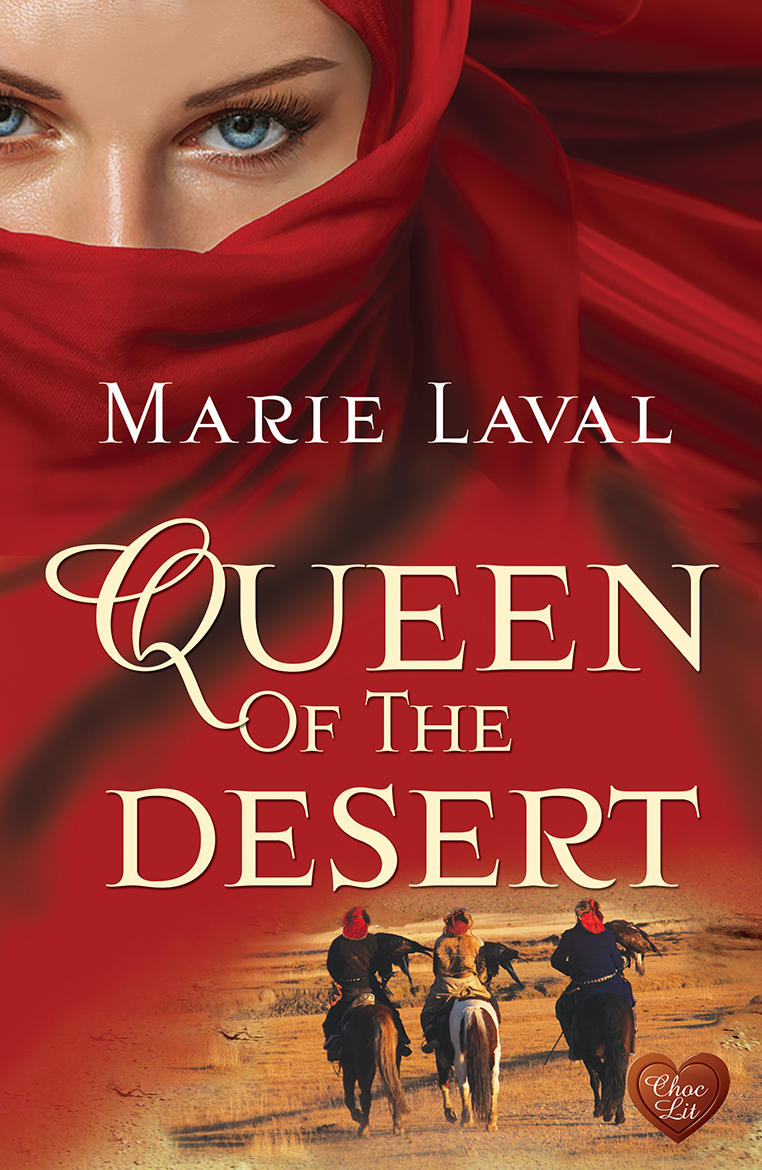
SUNDAY SCENE: MARIE LAVAL ON HER FAVOURITE SCENE FROM QUEEN OF THE DESERT

I have for a long time been fascinated by the history, cultures and landscapes of North Africa. It’s a part of the world I have always dreamt of visiting, especially the Sahara desert, the Ahagaar and the Tassili N’Ajjer National Parks. Sadly I’ve never had the chance to travel there, so whilst researching the background to my historical romance QUEEN OF THE DESERT, I tried to get a ‘feel’ for this incredible place and its people, the Tuaregs in particular, also sometimes called “Kel Tamasheq” (those who speak Tamashek) or ‘The People of the Veil’ because of the indigo veil men wear from around the age of fifteen.

I read Tuareg poems and folk tales and watched documentaries, but what gave me the greatest joy was the music I discovered. Music really brings people and heart together… I listened to so many incredible artists – Bombino, Tinariwen or Tarwa N-Tiniri to name but a few – and also to more traditional music featuring the imzad.

The imzad is a traditional string instrument played only by Tuareg women, who according to folk tales invented the imzad to distract men from their constant fighting. Here is a link to a documentary about the importance of the imzad for Tuareg culture. https://www.youtube.com/watch?v=J_0EdwuC9og

As they travel across the Sahara, the main characters from QUEEN OF THE DESERT, Lucas Saintclair and Harriet Montague spend a few days with a Tuareg caravan.

A strange landscape appeared in the distance, so strange she thought she was seeing another mirage, but they were only rock formations that the wind and the sand had eroded and moulded into weird, nightmarish shapes. Tents were pitched around them. Two dozen blue tents at least. Then she saw white mehari camels and the tall silhouette of a man outlined against the sunset. He resembled a spectre, still and gaunt, his face covered with a cheche and his long tunic floating around him.

Every evening, Lucas and Harriet listen to poems and stories.

Like every evening, they sat under a dark velvet sky studded with stars in front of the chief’s tent. Tonight was their last night with the caravan before reaching In Salah.

Lucas said a few words to the chief, who searched his leather bag and produced a smooth green stone shaped like an egg. Each stone in the story telling bag was unique, and prompted a different story by the chief. Tonight was no exception.

‘Tin Hinan,’ he announced.

‘An emerald,’ Lucas finished, his eyes shining. He stared at the sparkly green pebble the chief held in his hand as he started talking in his low, chanting voice.

‘Tin Hinan came from the Western lands beyond the great desert,’ Lucas translated. ‘She followed the stars and the ancient roads to Abalessa, the blessed.’
And after the stories there is music with women playing the imzad…

One of the women musicians picked up her imzad and started drawing long, intricate and soulful sounds. Her heart heavy, Harriet locked her fingers together and blinked the tears away. How she would miss the Tuareg caravan – setting off at sunrise in the transparent, purple dawn, camping out in sheltered gorges and lost valleys, and listening to Lucas’ voice as he translated the chief’s stories in the evenings. Most of all, she would miss the passion, the heat of Lucas’ arms every night. They had become as essential as air, water and fire.


I hope you enjoyed your imaginary journey to the Sahara desert. Thank you for travelling with me today…
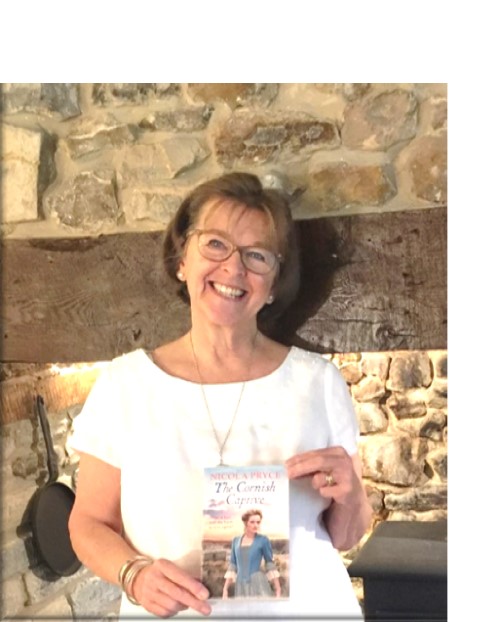


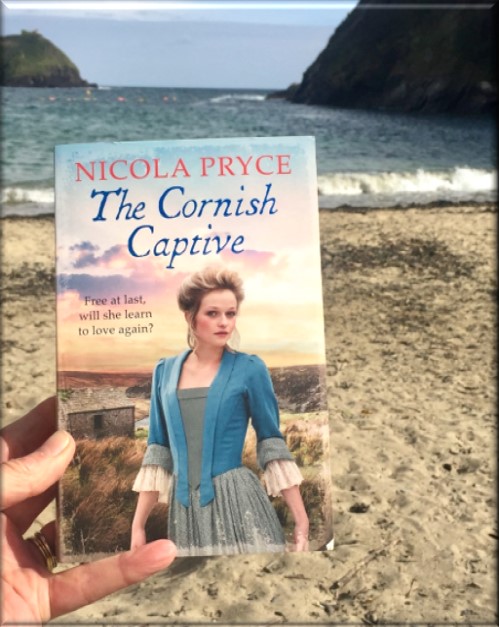
SUNDAY SCENE: NICOLA PRYCE ON HER FAVOURITE SCENE FROM THE CORNISH CAPTIVE

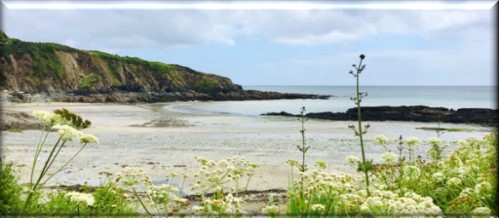
I’m delighted to share my favourite scene from The Cornish Captive. Set in a busy harbour on the south coast of Cornwall in 1800, Madelaine Pelligrew, a French aristocrat by birth, is walking on the beach for the first time in fourteen years. Recently released from false imprisonment she had almost given up hope of freedom. As she walks, revelling in the feel of the sand beneath her feet and the wind in her hair, she sees a seagull trapped in the rocks.

The struggling seagull triggers a need in her to free it. Equating the bird’s desperate attempts to free itself with her own plight, she ventures beyond the shingle. At once, her foot sinks into sand, her shoe becomes trapped, and her panic rises. A French frigate captain is also walking on the beach: a prisoner on parole, he has previously helped Madelaine find accommodation and he wades out to assist her.

        ‘The water was deeper than I thought, up to his thighs, but he kept striding out and I held my breath. He reached the seagull and held it up. It lay still in his hands, not the slightest movement and I covered my face, unable to stop my violent sobs. ‘Oh no … no…’

        The need to free it had been so powerful. I could feel myself shaking, a growing sense of agitation. My heart was thumping, pounding with sudden irregularity and I fought to breathe. Everywhere was too vast, the seagulls too loud, the sky too high. He stood smiling across at me, holding up the dead bird. ‘A piece of white drift wood, that’s all. But I must admit it looked very like a seagull struggling against the rock.’

Madelaine is very vulnerable at this stage and Piere de la Croix has already shown her great kindness by leaving a bowl of fruit for her at the inn. Yet she shies away from him, hiding behind her false name.

          ‘Please don’t think me ungrateful. My brother-in-law doesn’t take kindly to your interference. We must never meet like this again.’

         ‘As you wish.’ His voice held sadness, a stiffness in his manner as he pointed me up the beach.

         ‘That includes oranges, Captain de la Croix.’

         He reached for his jacket. ‘Once a ship’s captain, always a ship’s captain – always vigilant for the signs of scurvy. You will get better, Mrs Barnard, and quickly, too. Just eat as many oranges as you can and drink the juice of lemons and limes.’ 

           His hair was ruffled, dark lashes framed his eyes. He held up his hand to shield them against the sun. I did not want to see the kindness in his eyes, nor hear his consideration for my welfare. He was lying. All men were liars. He was a Republican spy: his only intention to trap my brother.

          Above us, soldiers in scarlet jackets watched from the fort. One was holding a telescope to his eye and Pierre smiled. ‘Do they think I’m about to steal a rowing boat?’ His laugh sounded hollow, a sadness in his shrug. ‘I’m allowed this far … yet they don’t like me being so near their fortifications.’

Later, Captain Pierre de la Croix carves a seagull out of the driftwood and it becomes Madelaine’s symbol of escape. The beach, too, features several more times: indeed this scene foreshadows a turning point in the story which is why I have chosen to share it with you.


http://nicolapryce.co.uk/

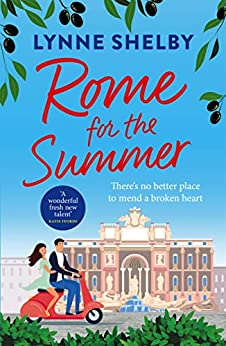
SUNDAY SCENE: LYNNE SHELBY ON HER FAVOURITE SCENE FROM ROME FOR THE SUMMER

Kate Harper, the heroine of my new book, Rome For the Summer, has always loved the painting that has hung in her parents’ dining room for years, never suspecting that it is worth a fortune – until her art dealer boyfriend cheats her family out of the proceeds of the painting’s sale, leaving her devastated.

Kate discovers that, two hundred years ago, the girl in the painting, Charlotte Browne, ran off to Rome with the artist who painted her portrait. He abandoned her, but her eventual fate is unknown. Hoping to uncover the mystery of what happened to Charlotte, Kate seizes the chance of a summer job in Rome, where she strikes up a friendship with artist Jamie Taylor . . .

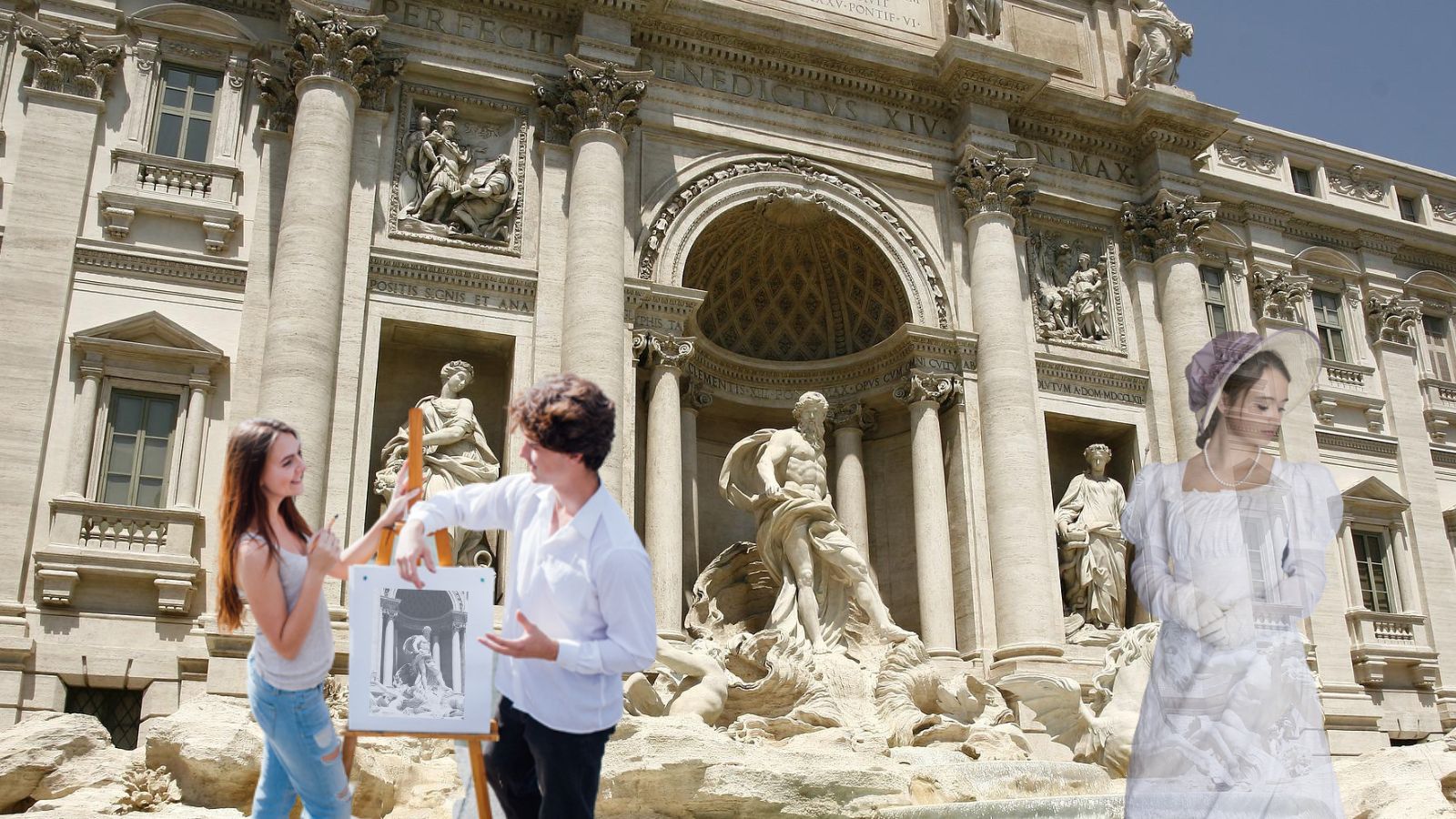
One of my favourite scenes in the book, takes place on Kate’s first day in the city, when Jamie takes her to see the Trevi Fountain, leading her through ‘a maze of streets’ narrow enough for her ‘to wonder how the cars parked along their length could possibly have driven down them.’ Passing apartments with flowers tumbling from their tiny balconies, restaurants with tables outside on the pavement, fruit stalls, ‘and street vendors selling anything from red roses to dubious leather handbags,’ they round a corner into bright sunlight and Kate hears the sound of rushing water . . .

‘Oh – there it is!’ I exclaimed. There in front of me was the famous Trevi Fountain, its white marble statues glowing in the late afternoon sun, water splashing down into a turquoise pool, the steps surrounding it packed with tourists, most of them holding up camera phones. It was a scene familiar to me from every movie set in Rome that I’d ever watched, and yet it took my breath away.

Writing this scene through the eyes of a character who has never visited Rome before bought back memories of my first visit to the city – my reaction on seeing sites like the Trevi Fountain, the Colosseum or the view from the Palatine Hill for the first time, was very similar to Kate’s!

The scene is also the first time Jamie, who spotted Kate sketching on the Spanish Steps earlier in the day, offers to help her improve her painting and drawing technique.

I looked again at the fountain with its statues of a man and two galloping horses set against a backdrop of a palace façade, and knew that I didn’t have the skill to capture it on paper.
‘I could never draw something like that,’ I said.
Jamie raised his eyebrows. ‘You don’t know that.’
‘Believe me, I do,’ I said. ‘I’m no good at drawing people or horses, even if they’re made of marble.’
‘I could help you draw them,’ he said, ‘if you’d like me too.’
He smiled encouragingly, and somehow, even although I felt sure he would be wasting his time, I found myself nodding my head.

Kate’s drawing of the fountain turns out a lot better than she expected, Jamie’s encouragement helping her find the confidence that she lacks to believe that she can actually draw, foreshadowing the way her summer in Rome will lead to her finding the confidence to pursue her dreams and ambitions in other areas of her life as well.

I very much enjoyed writing this scene and giving my heroine a great first day in the Eternal City. As Jamie says to her, at the end of the chapter, as they share a bottle of wine and a pizza at a pavement café: ‘Benvenuti a Roma, Kate.’


www.lynneshelby.com


CARIADS’ CHOICE: JULY 2022 BOOK REVIEWS

Nita Prose’s The Maid reviewed by Kitty Wilson

This is my favourite audiobook in ages. I absolutely loved it and found myself racing through it over the course of a weekend, deliberately choosing activities that meant I could keep listening. A delightful heroine surrounded by a fab cast of characters, you cannot help but fall in love with Molly the maid as she navigates a world full of social cues, clues and language that she doesn’t always understand. On the surface this is a simple whodunnit with a neurodiverse detective heroine, but it’s also a witty, refreshing look at society, how we communicate and what we prioritise. Highly recommended.


Lynne Shelby’s Rome for the Summer reviewed by Carol Thomas

What a lovely, uplifting read! I read the novel on holiday; it was the perfect book to relax and unwind with. Kate was a likeable heroine, her family were wonderful, and her newfound life and love interest in Rome was perfect. For a novel filled with artistic fervour, Jamie was the ideal hero; his passion for both the art exhibited in Rome and that created by his hand was evident throughout. The insights into the past worked well, and I enjoyed discovering more about Kate’s Italian girl (depicted in a painting). Overall it is a lovely escapist read that will whisk you off to Rome for the Summer, fill you with warmth and leave you with a big satisfied smile.


Anne Booth’s Small Miracles reviewed by Jane Cable

I can absolutely see why this book is published under Random House’s Vintage label, because it is just that. Quaint, charming and a little old-fashioned, not just because it is set in 1995; it transports the readers back to simpler times, before the world was glued to its mobile phone.

Set in an English catholic convent down on its luck, the book follows the remaining three nuns, the local priest and a small cast of parishioners and friends, as after a modest lottery win, a series of other ‘small miracles’ begin to occur.

Although I quite enjoyed the journey, there was something missing from the book for me. I wanted it to be either funnier, or tug at my heart-strings more, and I had problems relating to the three main characters. However if you yearn for fiction akin to the Miss Read books, this may very well be exactly to your taste. It was in no way a ‘bad’ book (whatever that is), just not for me.


Bella Osborne’s A Wedding at Sandy Cove, parts 1 and 2 reviewed by Morton S Gray

I have loved all of Bella Osborne’s books and wasn’t surprised that I loved this one too. I sat and read the first part of Ella’s story in one sitting and didn’t want it to finish. Can’t wait for the next part.

Like Ella, I was a bridesmaid numerous times and never thought I would be a bride, but to work in the bridal industry must make that thought even harder. Love her cat and her friends, who can see her flaws but want the best for her.

Easy to read, easy to relate to, left me wanting more …

Part two of A Wedding at Sandy Cove didn’t disappoint and I found myself laughing and even shouting at my kindle, so I guess that means I was involved in the story!

Ella’s adventures continue. I’m glad I wasn’t at her friend’s hen party event but there is plenty to read about and I even spat my mouthful of tea out at one point when I laughed totally unexpectedly!

Waiting for Part Three…


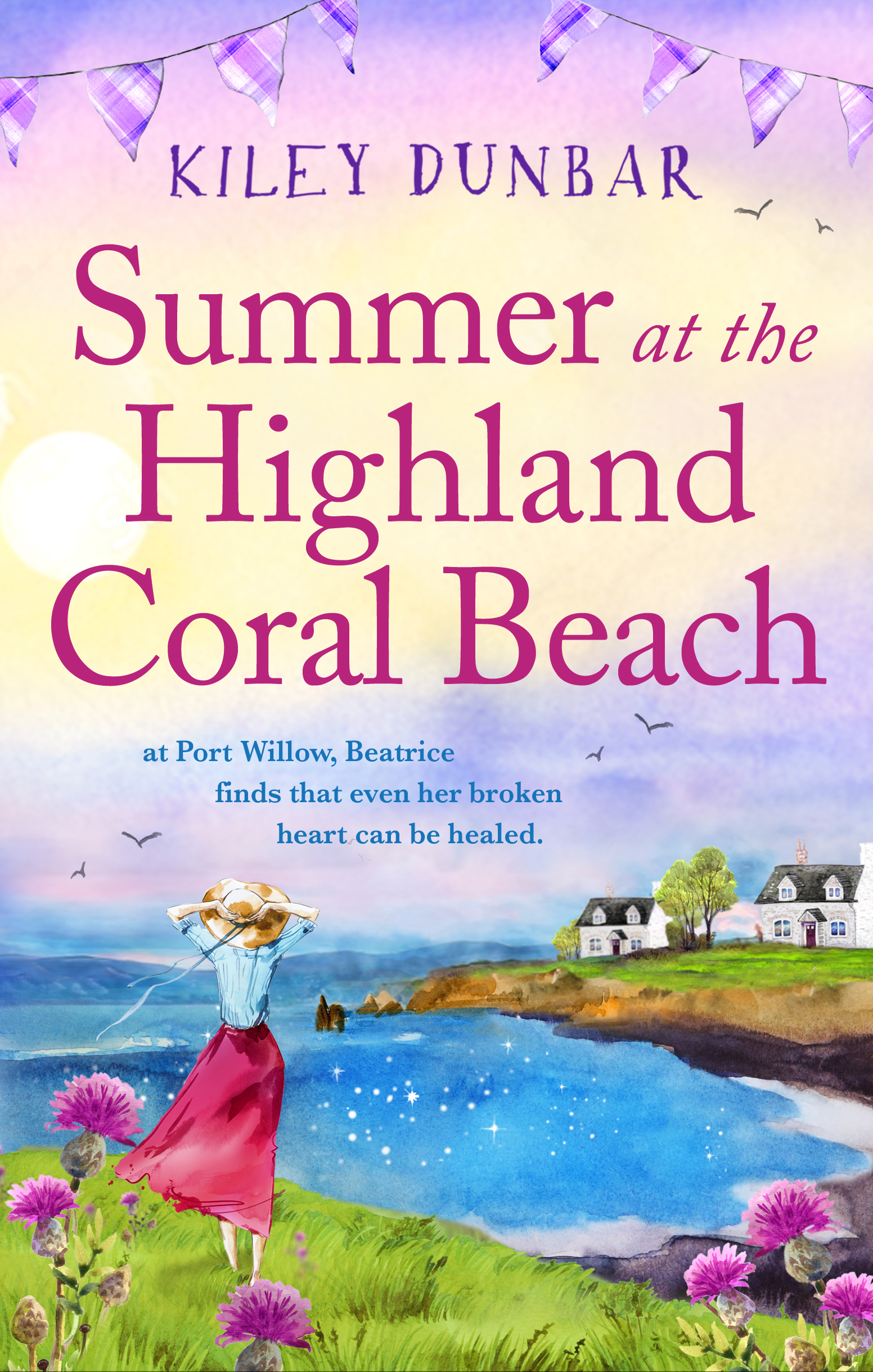
SUNDAY SCENE: KILEY DUNBAR ON HER FAVOURITE SCENE FROM SUMMER AT THE HIGHLAND CORAL BEACH

I call my third novel, Summer at the Highland Coral Beach, ‘the book of my heart’ as it was deeply emotional to write.

The story follows Bea six months after the miscarriage of her longed-for baby. She’s approaching her fortieth birthday, her marriage has ended, and she’s spiralling. Bea books a spur-of-the-moment crafting holiday in the highlands at the eccentric Princess and the Pea Inn (complete with towering fairy-tale bed). Here, Bea has time to wild swim off the coral beach, make beautiful things, and process her grief a little, helped by willow weaving tutor, Atholl.

Having grown used to keeping her grief to herself (so often grieving parents find they have no outlet for their sadness), the words spill from her during a panic attack witnessed by Atholl. He strikes upon a way of helping Bea begin to say goodbye.

I love this scene because it depicts things not all that often discussed in ‘light’, cosy romances.

He produced a parcel from under his arm and unwrapped the brown paper that protected it. ‘I thought maybe, if you want, you could make use of this wee thing?’

He handed her the intricately weaved hollow bassinette shaped curiously like a Russian doll or an ancient Egyptian sarcophagus with a round hole where the face would be.

‘I made it myself of the spring’s youngest willow back in March.’
‘It’s lovely. What is it?’ Bea asked.
‘It was for a talk Seth was giving about old Highland customs. It’s a swaddling basket. You’d wrap the baby in cloths and bands, tucking them up tight so they could sleep, and then they’d be placed inside the basket and worn over the parent’s back while they worked in the fields or at the fishes.’
‘It’s beautiful. It’s tiny, though. Too small for a newborn.’
‘It was only a model, to show what the real thing would be like.’

Beatrice turned it over in her hands, her eyes misting, and she looked up at him, hesitatingly, still unsure of what he intended her to do.

‘There’s another Highland custom, an ancient one, going back to the earliest folk on the land,’ he said softly. ‘When a loved one passed, they would swaddle them too like a bairn, placing them in the water, letting the tides carry them home.’

Beatrice took his meaning and she bobbed her head as the silent tears came again.

‘Do you want to do it now? There’s a braw moon lighting the harbour.’
‘All right.’

Those were the last words they said to each other that night as Beatrice, the mother of a loved son, threaded the Highland posy of forget-me-nots, heather and white campion into the loose basket work, weaving each flower in amongst the shoots from the sappy willows as Atholl watched on.

When her work was done she left the inn, crossing the dark road and leaning over the sea wall. Atholl stayed by the inn porch, close enough to see her kiss the little bundle before lowering the empty bassinette onto the surface of the gentle waters.

Neither could tell how long it took for the horizon to claim the floating focus of so much of her grief but by sunrise it was gone and Beatrice was asleep soundly in her bed.


Despite the sadness, there’s love and laughter in store for Bea and Atholl. I’ve received many messages from parents saying how Bea’s story helped them. I hope it continues to offer a wee bit of brightness to yet more readers when Summer at the Highland Coral Beach comes out on paperback this July.

One in four pregnancies end in miscarriage, the miscarriage association is there to help: https://www.miscarriageassociation.org.uk/


SUNDAY SCENE: NANCY PEACH ON HER FAVOURITE SCENE FROM LOVE LIFE

My debut novel Love Life is set in and around a hospice (admittedly an unusual choice for a romantic comedy) but one of my favourite moments in the book is when the heroine, Tess Carter (a palliative care doctor) visits the home of her patient, Mary Russel. Tess has a complicated relationship with the Russel family. Mary’s son Edward is in denial about his mother’s terminal illness and remains conflicted about the hospice and everything it stands for, including Tess. On this occasion she is visiting the house to return a scarf to Edward but is not sure what to expect. She knows that the Russel family are wealthy, but the family home is a bit more substantial than she’d anticipated.

‘Tess was entirely unprepared for the view of the Russell residence, which was indeed just up the hill from the vet’s practice. As she cornered round the leafy lane that circumnavigated the estate she caught a glimpse of the main house, a Georgian manor in mellow stone nestled amongst smaller outbuildings, including a carriage house and stable block. She pulled to a stop on the gravel drive, half expecting a butler from a Merchant Ivory production to emerge from the main portico and open her passenger door. She sat for a moment in the car just gazing in awe at her surroundings; the lawn rolling down away from the house towards a thicket of trees, the neatly trimmed box hedges that bordered the drive, the sash windows reflecting the early sunlight and lending a cheerful openness to the façade.’

The novel is set in Bristol and has a Pride and Prejudice theme, featuring a Jane Austen character as one of Tess’s internal narrators, and a hero with hints of Mr Darcy. I love the architecture of this period and the Russel house combines elements of Georgian splendour with the warmth of a family home, complete with canine companions.

‘She made her way round to the back of the house, where she found a weathered rear door with iron boot scrapers at either side. She knocked hard against the door panel and found that it was ajar. With some trepidation she nudged it open and called out “Hello?” Almost immediately there was a cacophony of noise from within the house, barking and the scrabbling of claws across tiles, and she was nearly knocked off her feet by a pack of dogs hurtling into her, tails wagging. The first three dogs were rangy setters, their knobbly heads knocking into her thighs as she fussed over them. A few moments later an elderly cocker spaniel with cloudy eyes shuffled into view and the setters backed off to allow the senior member of the party to greet the visitor.

“Hello?” Edward’s familiar voice shouted through from the next room, “I’m just in here, come through.”

Tess made her way into the kitchen accompanied by the enthusiastic canines and discovered Edward, clad in damp running gear holding his ankle behind him with one hand to stretch out his quads whilst supporting himself on the back of a chair with his other hand. He looked up at her in surprise.

“Dr Carter! How nice.” He was smiling, although she couldn’t tell if it was genuine pleasure at seeing her or more of a grimace as his muscles relaxed into the stretch. He released his right ankle and repeated the move with the left whilst trying to fend off the dogs who were all trying to get involved in the warm down. Tess was mortified.’


www.nancy-peach.com

PUBLICATION DAY SPECIAL: THE LOVE EXPERIMENT BY KITTY WILSON

Sometimes I fall in love with a book instantly, and sometimes it takes a little while. This was one of the latter, but let me tell you, by the final chapters I was laughing and sobbing at more or less the same time, which isn’t the best of looks in a busy Starbucks branch.

The premise of The Love Experiment is deceptively simple; Lily won’t date – even staying the night after a hook up is too much like commitment, and Jay can’t date – he’s promised his sister he won’t in an attempt to show her that changing the habits of a lifetime is possible. But there the cliches end.

All the characters, large and larger than life, are drawn with an incredible eye for detail and a roundness that is often missing in romantic comedy. They were real and will stay with me for a very long time. And laugh? Did I mention a fair chunk of the action is set in a drag club? The names of the artists alone was enough to make me cackle. And don’t even get me started on the harpist…

This book is laugh out loud funny while at the same time dealing with serious issues and the horrendous scars they leave. The more I came to know about Lily’s past the more I ached for her to be able to move forwards. The more I understood what made her the way she is. The more I wanted to be her friend.

Lily’s backstory and what happened to her as a teenager really got to me. So much so I had to ask Kitty Wilson why she decided to shape her character that way:

Thank you. Lily is far from my usual heroine and is polished, successful and on the surface has it all but, underneath, is a scared young girl desperate for a sense of control.

When I was creating her, I initially wanted to highlight women’s health, I know so many women with periods that are completely incapacitating[1] and yet I haven’t seen it mentioned often in novels. That was my starting point but, as an author, it is hard not to be shaped by the things around you. As I wrote the first draft, the discussion of women’s safety was at its peak with the subsequent growth of Everybody’s Invited illustrating how schools and universities were often far from the places of safety that every parent hopes. This awareness worked its way into Lily’s story and when her body changes as a teen, things take a dark turn as name-calling in school morphs into something more sinister.

I did consider carefully whether these themes should be included but they are so frequent in women’s lives it felt wrong to cut them, so Lily was born, a high achiever who is privately carrying the weight of gynaecological issues and a related history of childhood bullying. These two things then shape all her life decisions; decisions that on the surface look like they are healthy, empowered choices but are actually indicators of deep-rooted scars.

But I love a happy ending – I write romance after all – and adore weaving through the joys in our lives, and hopefully The Love Experiment brings many, many moments of light and laughter to brighten Lily’s path as she learns to defeat the dark and open herself to life and love at its fullest.


[1] One in ten women in the UK have endometriosis and another one in ten have PCOS. https://www.endometriosis-uk.org/information

https://www.nhs.uk/conditions/polycystic-ovary-syndrome-pcos/


SKINTELLIGENT: What you really need to know to get great skin

SKINTELLIGENT

What you really need to know to get great skin

By Dr Natalia Spierings


Published by Vermilion.

Trade Paperback priced £16.99

The first entirely evidence-based skincare guide written by a real expert that explains how skin actually works, how to navigate the confusing world of Big Skincare and what you really need to do to achieve healthy, glowing skin – throughout your life.


This is the first book about skincare based on fact, not fiction

 There is no such thing as ‘essential’ skincare; almost all skincare should be viewed as a ‘luxury good’ and therefore, in fact, absolutely not essential!

  • Scared of using Vaseline? Don’t be – it’s the best moisturiser on the market, also the cheapest, it doesn’t ‘clog pores’ or cause pimples and it is totally safe to use. Plus, it is in every single moisturiser on the market anyway.
  • You don’t need to buy a separate product to use around your eyes, just use your regular moisturiser around your eyes; ‘eye creams’ are a scam
  • Facials are a waste of time and money
  • When it comes to skincare, less is always more
  • Expensive skincare is never better than cheaper skincare


Consultant Dermatologist Dr Natalia Spierings of Channel 5’s Skin A&E has announced the launch of her new book, Skintelligent: what you really need to know to get great skin, published by Vermilion. Dr Natalia Spierings is here to shake things up in the skincare world and isn’t afraid to tell the truth and call out the BS about all things related to skincare. Drawing on a decade of work as a practicing consultant dermatologist, helping thousands of people achieve great skin, she will empower you with the knowledge to navigate the confusing world of skincare so you never get fooled into buying hundreds of pounds of disappointing cosmetic skincare products again. If you have a problem with your skin – whether it is pimples, pigmentation, overly dry skin, large pores or whatever – the problem you have needs to be viewed as a skin abnormality or even a disease and therefore cannot be corrected with a three-step skincare regime you buy at a department store.


Dr Natalia Spierings said: “I wrote this book with the aim of answering all the hundreds of questions I get every day from my patients and through social media about skincare; there is too much misinformation being thrown at us about skincare from people who just don’t know what they are talking about, merely to sell products. It’s time to empower the skincare consumer with facts and the correct information so we all stopping wasting our money (and our hope) on products that don’t deliver on their (often outlandish) claims.”

Using an unbiased, evidence-based approach and cutting through the pseudo-science, she explains:

–        how skin actually works

–        which skincare products are proven to be effective for all of major facial skin complaints

–        what trendy skincare ingredients do or don’t do what they promise and why

–        what you can do to manage everything from acne to rosacea to melasma as well as wrinkles and sun-damage


Bringing together years of experience treating a huge range of skin problems, Skintelligent is the only book you will ever need to read to get great skin.


“Buying this book will be a great investment; following Natalia’s advice will save you money on your skincare whilst helping you to look your best.”

Dr Andrew Birnie, Consultant Dermatologist & Founder of Altruist Sunscreen


“Dr Natalia Spierings is a terrific consultant dermatologist with a very clear – and utterly science-based — approach to skincare which many people will find refreshing.”

Alice Hart-Davis, founder of thetweakmentsguide.com


About the Author


Dr Natalia Spierings is a Consultant Dermatologist with a Master’s Degree in Aesthetic Medicine. A unique combination of technical skill, depth of knowledge, aesthetic sensibility and communication skills has positioned her globally as a leading dermatologist. She currently splits her clinical time between both the NHS and private sector in London, and at Kings College Hospital in Dubai. @drnataliaspierings