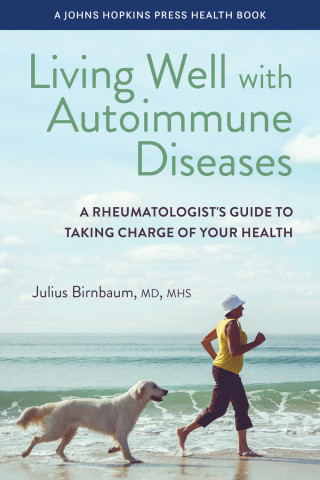
A Rheumatologist’s Guide to Taking Charge of Your Health
By Julius Birnbaum, MD, MHS
Medical books can be very dry and hard to read. Not so, Living Well with Autoimmune Diseases. This book is a must read. A much-needed book that tells you more about autoimmune diseases than I have read anywhere else. It is a guide full of knowledge and actionable information. I felt like a friend was taking my hand and telling me all about these various conditions. Both comprehensive and insightful, I cannot recommend this book enough. It is a must buy for everyone who has, or cares for someone who has, an autoimmune disease. Get a copy now.
With one in ten adults in the UK living with an autoimmune disease, Living Well with Autoimmune Diseases offers essential advice for navigating the complex world of various autoimmune diseases. This substantial and compassionate guide helps patients, caregivers, and health care professionals understand the diagnosis, management, and treatment of conditions like lupus, rheumatoid arthritis, Sjogren’s syndrome, and more.
Author Dr. Julius Birnbaum, an expert in both neurology and rheumatology, covers a wide range of topics, from the basics of autoimmunity to the nuances of various rheumatic diseases and their interconnected nature. With an engaging blend of scientific rigour and empathy, Dr. Birnbaum:
Provides a primer on autoimmunity, explaining how the immune system can mistakenly attack the body’s own tissues
Discusses the roles and limitations of blood tests and biopsies
Covers the complexities of various treatment options, including when to use immunosuppressive therapy and when simpler symptomatic treatments might be appropriate
Emphasizes the importance of personalised treatment plans that consider the unique needs of each patient
Debunks common myths about rheumatic diseases and provides practical advice that can help improve quality of life
Provides captivating patient narratives from his clinical practice that clarify how to diagnose and treat autoimmune diseases.
This indispensable overview of autoimmune diseases, supplemented with helpful tools for readers and their loved ones, offers hope and empowerment for managing these complex conditions.
May 2025 | Paperback 440 pages | ISBN 9781421449890 | Price £25.00
For further information about this book please click HERE,
One of the best things about being editor-in-chief of Frost Magazine is all of the people I get to meet. Having a chat with a writer I admire is also exciting for my other life as an author. Greg Mosse is a great interviewee. Candid, kind, and bursting with interesting information. I read The Coming Darkness in 2022 and loved how unique it was. It is a great thriller. Now, the third in the trilogy, The Coming Fire, is out. I interviewed him over Zoom to talk all things writing, A.I., and Kate.
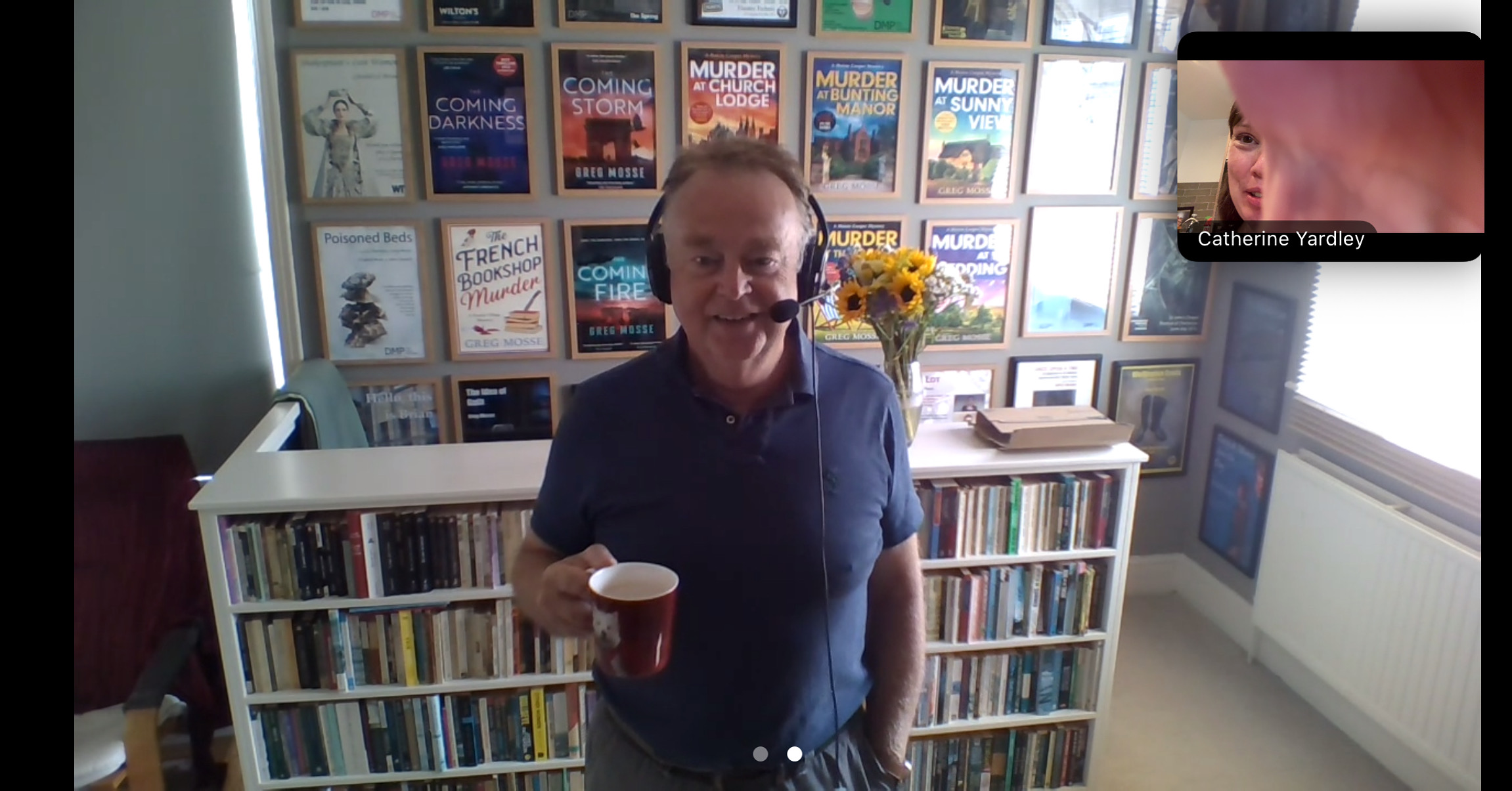
Greg complimented my children’s artwork on the fridge, and I complimented his impressive book posters.
On the impermanence of theatre and writing during lockdown: ‘The posters on the wall, most of them are mementos of my theatre work, because theatre is a wonderful fugitive experience. It’s that brilliant moment shared by the audience live in the room together that can never be repeated, but at the end of a run of theatre, for most shows it’s gone forever. And unless you’re in Les Mis or something like that, and it doesn’t stop, it’s great to have the poster on the wall as a reminder of, ‘Oh yes, I did that.’
The rhythm of my life under coronavirus lockdowns changed completely. In one way, because theatre had become illegal, and so there was really no point in writing new plays for I didn’t know how long, but in another way, it didn’t change at all. It just meant that I sat in the corner of my study, there with my red blanket, because it was March, wasn’t it? It was cold at first, and then it got really hot. It just changed from writing dialogue to writing prose and that’s why, in the centre of the wall of posters behind me, are all the novels I’ve published.’
That was a smart thing to do. Yes, but remember, we were utterly unemployed, weren’t we? We had to fill our days and I did find it very easy to be productive, because I was utterly without distractions.
As the lockdown started, I actually went and I picked up both of our children. My wife, Kate Mosse, and I. Felix was working in Norwich. He was on stage in a show that shut, and Martha was living in North London in a flat in a block, and we thought both of those circumstances would be a less pleasant way of being locked down than in our house in Sussex with fields that you could walk out to and all of those lucky things that we had, but that said, you know, they’re grown-ups, so it’s not like I brought them home and had to look after them. So I had not limitless time, but I had a lack of distractions, which really taught me how valuable that can be in terms of working quickly, but not necessarily efficiently.
On writing a trilogy: For The Coming Darkness, the first book in the Alex Lamarque trilogy, I wrote 170,000 words from which ultimately I cut 70,000 words because the thriller that MoonfFlower, my brilliant publisher wanted, was just under 100,000 words. However, when The Coming Darkness went very well, I got excellent reviews for which I’m very grateful. It meant that I had these subplots I cut from the first draft that were the heart of the second book, The Coming Storm. That also accelerated the process. So it wasn’t like I had to sort of start again. My hero, who’s like an action hero, a member of the French secret services. He wins at the end of The Coming Darkness, but he only wins a fragment of the battle that he’s engaged in. But I already had the heart of The Coming Storm already on the page. It had to be massaged into a different shape, a different timeline, but it already existed. The future, historical background to the book that I researched by reading lots of scientific papers and government papers and NGOs and everybody who’s predicting the future, trying to plan for what’s coming next. Five years, 10 years, 15 years, a generation. All of those notes were super valuable over the whole of the trilogy, and the things that we’re worried about today in 2037 are more urgent, more dramatic, more desperate, but they are the same things, but more so.
The Coming Fire is the culmination of a trilogy about a time when everything that we’re worried about today is more intensely felt and more intruding, more fully on people’s lives. So that meant I’ve already got a crescendo that can play out over three books, and then the other way of describing it. The further Alex goes towards the heart of this terrorist mystery, the closer he gets to the biggest, hardest enemy to defeat. There’s an overall shape that you know you’re writing into. I sometimes describe it as pouring creativity into a pre-existing shape, yet not just writing to find the shape, but the shapes already there in the back of my mind.
On authors being pigeonholed: As a writer for theatre, nobody says to you, “You know, last year, you wrote a play about smugglers, set in 1749. Why are you now writing a play about the First World War?” Whereas, as a novel writer, people say that to you all the time. Being able to write in these different voices, to tune into a different quality of creativity, is really normal for a playwright and to write dialogue in different voices. One day a king, another day a minor living 300 years later, another day a 12-year-old child living today, is totally normal. Now, the other part of your question, which one do I like best, writing plays or books? The great thing is that they refresh one another. You know what I was just saying about playwriting? That’s one of the best things about writing plays. So a full-length, two-hour play is about 20,000 words, whereas The Coming Fire is 98,000, I think. So a full-length, two-hour play is a fifth of a novel. So it’s more difficult to get that refreshing change in novel writing because the scale of the creative enterprise is so much bigger. If you have sympathetic publishers who understand that you’ve got these different goals, entertaining people in different ways, that’s what it’s about. They really bounce off each other super well.
On his writing routine: It’s 6:30 till 10:30 more or less every day. When I say every day, it’s like six days out of seven. Sometimes I’m travelling for other parts of my life. And so it can’t happen if I’m driving to London in the morning for the work I do in theatre, for example. But about six days out of seven. 6:30 to 10:30. In that time I’d expect to write a couple of 1,000 words. I’d expect it to begin with a two. Doing that for six weeks of six days a week, 2,000 words a day that’s 72,000 words, isn’t it? And once I’ve got to sort of that, I’ve actually got an unpublished novel in my computer over there that I’ve written about 65,000 words of, and I’m currently editing it because I’ve got an idea of how it will end, like a framework for how it will end, but in order to write the last quarter of the book, I need to make sure everything in the first three quarters ties up and is completely coherent, and that I’ve probably been writing for about six weeks and now it’s going to go really slowly for a week or 10 days, maybe because I’m reviewing everything, and I have to keep going backwards and forwards, you know, to tie things together. And I’ll find a thing on page 102 and God, where was that, although I referenced that. And then there it is on page 17. And all of that over and over and over again. And only once I’ve got all of that done, probably through the whole of those 65,000 words twice. Only then will I write the last quarter of the book. And then, of course, I’ll have to check it from line one to the last line again to make sure I’ve got it all right. So that means about 10 weeks in total for a draft that I am willing to show one person alone, and that person is my wife, Kate Mosse, [Most people would be scared to give Kate Mosse the first draft of their novel] yeah, probably. But, you know, there she is. She’s having a cup of tea in the morning, eating her Marmite on toast, and she’s trapped. You know, there’s nothing she can do.
I was asked this weekend, as I usually am at some point at festivals, ‘Greg’, was it helpful at all to be married to the international best-selling novelist Kate Mosse?’ And I always say she is the wave that I surf.
On supporting other writers: When Twitter was invented, before it became a cesspool of bots and hatred, it is I chose as my Twitter description, ‘writer and encourager of writers.’ Back then, almost all of my writing was theatre, of course, and that’s changed, but the encourager of writers hasn’t. It’s the reason why, with my son Felix Mosse, we run a theatre script development programme at the Criterion Theatre, Piccadilly Circus, which is free to the mid-career playwrights who take part. And then when I’m at a festival, like Harrogate, or in the new year, Kate and I will be in Jaipur, and then Dubai, at the Emirates Festival, the majority of my time there will actually be spent with readers and writers, aspirant writers, trying to help them develop their plots, understand the business. You know, all of that stuff. And that’s super rewarding.
His thoughts on A.I: My thoughts on A.I., what I wanted to put on stage in The Coming Fire was the fact that the terrorists, the big, bad, evil presence behind the whole of the trilogy, has a view on A.I. that you and I and many people probably share, which is that it’s an enormous danger, and there are two parts to this danger. There is a relinquishing of humanity, and thinking that A.I. is probably as good as the ways in which humans have evolved, in doing things over a gazillion years over evolution, and then recorded history.
And then the other part of it is that relates to the creative arts. There’s a brilliant, I think it’s in an Arthur C. Clarke science fiction story from many years ago, where he compares a flawless reproduction of a piano to a real piano. And he says it’s like the difference between being told that you’re loved and being held in your parents’ embrace. It’s great. It may not be a quotation, but it’s something like that, right? You know what I mean there, there is a difference that feels elusive, but it’s also really substantial.
Yes. So then the other part of it is the fact that, and we’ve seen this all through the technological age, technologies respond in ways that we don’t predict. There’s always a law of unintended consequences. There’s always unfortunate outcomes, even with the best of intentions. My brother, who has a sardonic cast of mind, sometimes says to me, no good deed ever goes unpunished, and you want, but people who are, I would argue, unthinkingly embracing technology, assume the best, whereas I’m a much more precautionary cast of mind. You never know where this will end up. So coming back to the big baddie in The Coming Fire.
He wants to set back Earth’s technological development by a few generations. He wants to destroy the hyper-connected world, the global village, and fragment and atomise human populations. Now, of course, that also means that he’s a completely inhumane barbarian,
utterly insensible to human tragedy and loss of life. Those things are meaningless to him because he has this conceptual idea of turning back the technological human clock,
and a thing that he can’t see is the inhumanity of the A.I. that he wants to exploit in order to achieve those terrible goals is actually super similar to his own cast of mind, and that’s why Alex must stop him.
Well, it’s the third part of a trilogy. There is a hero. Usually, the hero wins, but of course, it would be a spoiler to say if he does. I have a friend who’s a neuroscientist who works at the University of Sussex, with whom I was talking quite recently about the fact that he gets infuriated when he’s told that artificial intelligence has discovered or devised something. And he says there is no artificial intelligence. What there is is an algorithm that analyses statistical probabilities and comes up with likely scenarios from which it can choose one. But it’s not intelligence. It’s a sifting of data to find the most likely average outcome.
Thank you Greg.
The Coming Fire is out now and published by Moonflower.
I loved Milli Hill’s book, The Positive Birth Book, and I was excited to read Ultra-Processed Women. I believe our diets are causing health problems. It is not normal that the rate of many diseases has rocketed. Our food is full of rubbish, to put it politely. I have always felt overwhelmed about trying to improve my diet, but Ultra-Processed Women explains everything clearly. It is an eye-opening book which lets you take back control of your diet and health. Other health books I have read made everything too hard to follow and overwhelming. Basically, just give up everything you love and never eat anything nice again. Ultra-Processed Women takes a complicated subject and makes it easy to understand and follow.
Ultra-Processed Women is brilliant and informative. I think every woman should read it. This book is literally life-changing. I will be referring to it regularly. A must read.
In Ultra-Processed Women, acclaimed journalist and women’s health advocate Milli Hill uncovers the shocking truth. From period pain and weight gain to depression, hormone imbalances, autoimmune conditions and even Alzheimer’s, Hill reveals cutting-edge research into the hidden dangers thatlurk in your daily food choices.
But this is not just a book about food. Ultra-Processed Women also explores the way the modern food industry has exploited women in their advertising for decades and uncovers the damage being wrought not only on our bodies but on the environment and on our own ability to connect with each other through the fundamentally human experience of cooking and eating.
This isn’t just a wake-up call―it’s a battle cry. Written in Hill’s trademark down-to-earth style, Ultra-Processed Women will help you understand the issues and develop a clear course of action, arming you with tools and practical steps to cut through the confusion, break free from the damaging effects of UPFs, and reclaim your health without guilt or deprivation. Changing the way we eat, Hill argues, is a radical act of resistance to an ultra-processed world.
It’s time to take back control. Your body, your choices, your future.
Milli Hill is a writer and freelance journalist with a passion for women’s rights in childbirth and throughout their reproductive lives. Her book The Positive Birth Book is one of the UK’s bestselling pregnancy guides, and has sold nearly 100k copies since publication in 2017. Her more recent books, Give Birth like a Feminist, and My Period (for preteens), have also topped the Amazon charts.
HQ will publish Ultra-Processed Women on 3rd July2025 in hardback, eBook, and audiobook formats.
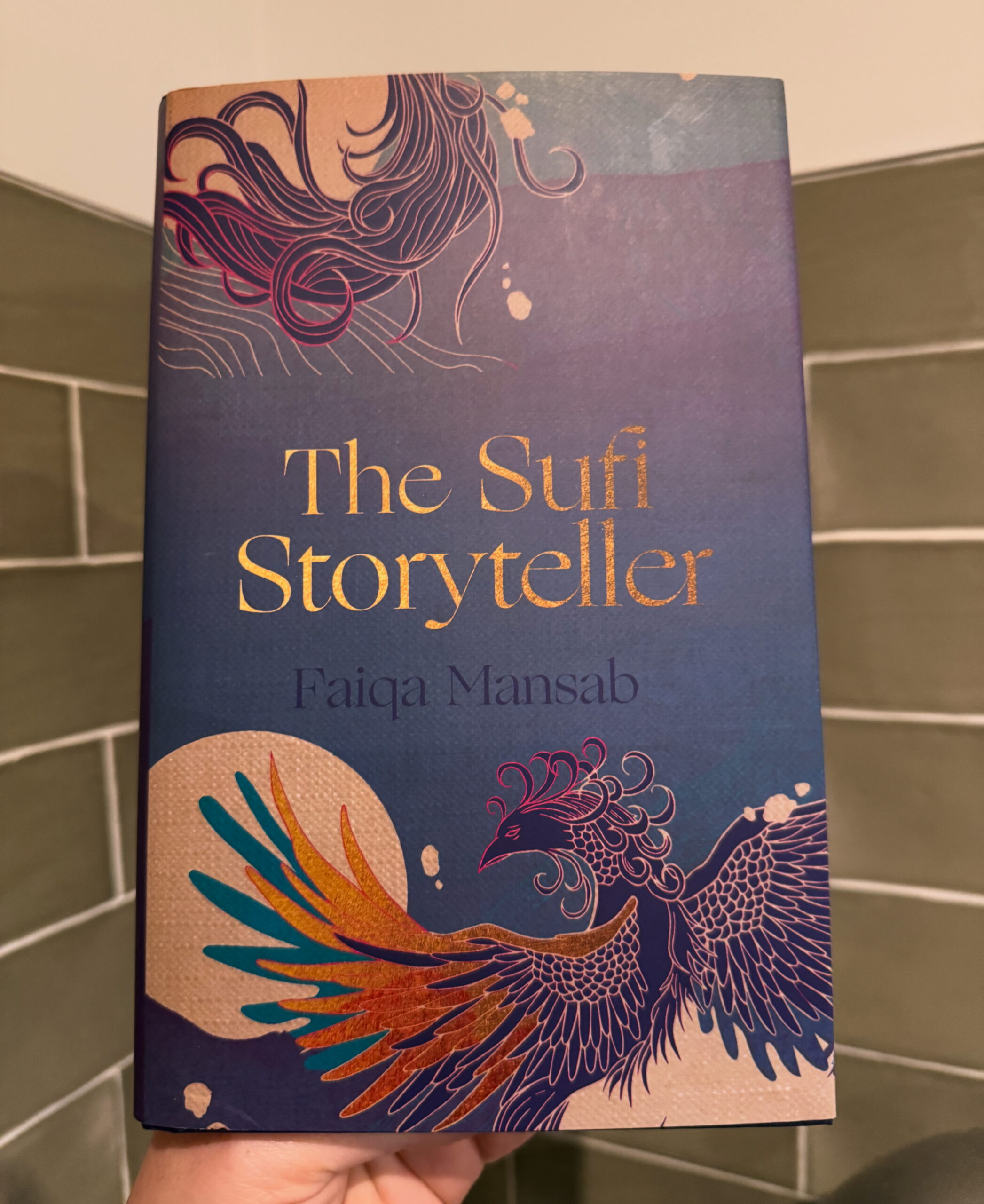
From the first page I was deeply drawn into The Sufi Storyteller. Faiqa Mansab is a fantastic storyteller. Her prose is beautiful and eloquent. This book is steeped in myth and I found the tales of Sufi story traditions fascinating. The books’s deep and full of knowledge, with a murder mystery woven through it. It is high-end literary fiction with a riveting crime twist.
Set in America and Afghanistan, the book is sprawling and is set in the past and the present. The novel is unique and immersive. I was hooked until the very last page. With a darkness that lingers through it, you will struggle to put it down. Faiqa Mansab is a writer to watch. Five stars.
An estranged mother and daughter urgently need to reconnect and navigate a world of Sufi story traditions to catch a killer, and to save each other.Layla is a scholar of women’s histories and stories. Her life is a carefully constructed set of routines in her small American liberal arts college, but all of that is about to change…
Mira is a renowned Sufi storyteller who is running from a terrible past. When she learns that the murdered woman in the library was carrying a note from the killer addressed to her, she is presented with an opportunity to break a cycle of trauma and hurt. To confront her past, she must disclose the truth to Layla.
Together they enter the realm of Story, but can Layla find the forgiveness in her heart necessary to lead them to the answers they are looking for?
This contemporary murder mystery takes readers from small town America to the mountains of Afghanistan.
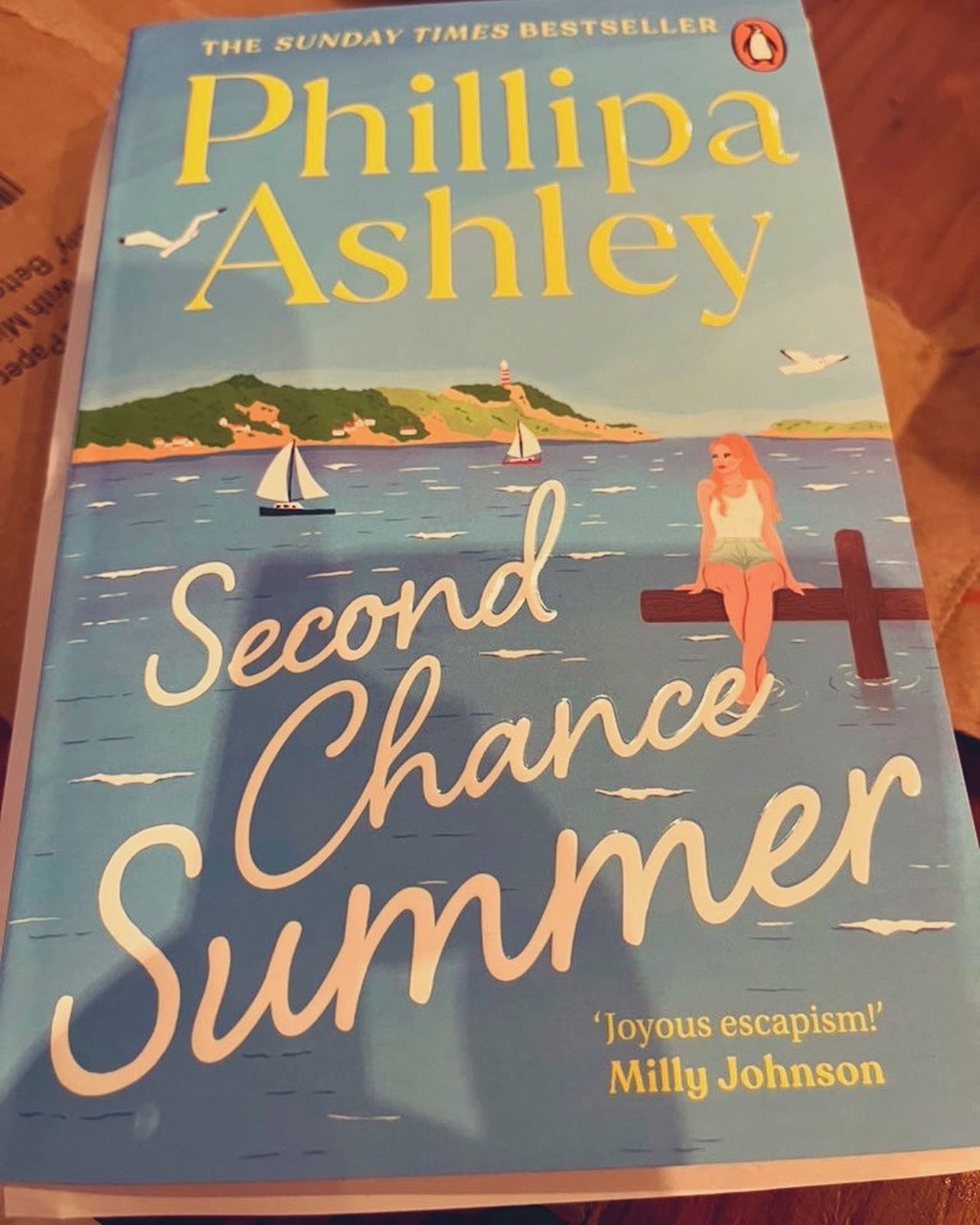
Phillipa Ashley is at the top of her game. I devoured this book in a day and a half. It’s quite chunky so that’s an achievement. I was swept away in the works of art Tammy makes, and this wonderful story of love and family. All set in glorious Cornwall.
Tammy cherished her childhood growing up in the charming harbour town of Porthmellow. However, when her father’s bankruptcy and her mother’s abandonment shattered her world, she quickly realised that nothing lasts forever.
Now, Tammy dedicates her days to creating art in the golden Cornish sand, determined to shield herself from further heartbreak. But her life takes an unexpected turn when she meets Ruan – a captivating solicitor who has relocated to Cornwall seeking a fresh start.
As Tammy begins to question if Ruan could be the key to breaking down her walls, she uncovers a shocking secret – one that shatters everything she believed she knew about her past.
Can they work past it? Will everything be okay? Read this brilliant book and find out.
Six Poppies by Lisa Carter is a unique book. This book came about because the author saw a newspaper article about an extraordinary man, Rob French, in 2017. Rob was a former Royal Marine who had a large tattoo of seven large poppies on his back. The poppies represented seven of Rob’s colleagues who died within weeks of each other in Afghanistan in December 2008. This book is not about Rob. He did not want the attention, or the book to be about him. This fictional tale perfectly tells a story, however, and what a beautiful story it is. I could not put this book down.
Lisa Carter has taken Rob’s extraordinary experience and weaved it into a fantastic tale which is a beautiful love story, but also a modern book about an underwritten about war. It perfectly captures war and what it is like being a soldier. No punches are pulled on the mental toll of those who join the military.
Carl is a fantastic character and is written so well. I was fully invested in his story. He falls immediately in love with Sarah on the first day of camp, but she is his fellow soldier, Danny’s childhood sweetheart. This is a fantastic and deeply moving book. I loved it and cannot recommend it enough.
A Secret Escape went straight into The Sunday Times bestseller list. Deservedly so. I wanted to read it after the blurb said it was about two female friends that have lost contact, and one asks the other for help after ghosting her. Could a female friendship be repaired? Should it? Milly and Nicole are lifelong friends who have drifted apart. Milly likes a quiet life with her daughter, running her business, and Nicole is a successful actress. They same very different, but practically grew up together. Nicole’s mother not being the maternal type. I love A Secret Escape for a lot of reasons. One is obviously the characters. Sarah Morgan sure can write them. She takes you under their skin. The story is fantastic and woven together expertly. The book has its heartbreak, as well as its joyful moments. The story leaves you guessing all the way. A Secret Escape is the perfect summer book to get lost in. I read it in a day. A perfect five star read from a masterful writer at the top of their game.
A lifelong friendship
Childhood friends Milly and Nicole had always been more like sisters so Milly never understood why Nicole dropped out of contact all those months ago. Milly buried that hurt and moved on with her life.
A call for help
Now, suddenly, Nicole is begging for Milly’s help. She needs somewhere private to hide, and the only safe place she can think of is Milly’s holiday home business in the Lake District. Milly knows she should tell Nicole no, but she can’t ignore the desperation in her old friend’s voice so, despite her misgivings, she agrees to let Nicole stay.
A summer to reconnect
Over a summer of tentative conversations, the two women begin to reconnect, and there’s a potential new romance for Milly too. But then the biggest bombshell of all lands and their delicate friendship is put to the test once more …
Can the friends come together in this time of need, or will this summer break their bond forever?
I loved Heather Darwent’s first novel, the Things We Do To Our Friends. While second books can be tricky things A Sharp Scratch is another stunner of a book. This is a compelling and dark tale of chronic illness and obsession. A searingly smart take on the wellness industry. It’s original and compelling with unforgettable characters and a plot that leaves you guessing. It is completely original with a twist you will not see coming.
I loved the take on chronic illness and feel like it’s a subject that isn’t written about more. The book is a wonderfully dark satire on modern living. A Sharp Scratch captures how healthy people react to those who are chronically unwell. I loved the complex relationships in the book. The messy female friendships, and that desperate need to be liked are written about perfectly. The tension gave my stomach a good ache as well. I couldn’t put it down. Heather is such a talent. It’s a ride of absolute dark, thrilling, sumptuous literature. Utterly compelling and completely original. She’s done it again. I read it in a day.
We can fix you.
It’s a promise that Betsy has heard far too many times. From the child psychologist, from her husband, and from the wellness trends that scream at her from her screen.
So far, it’s been a lie.
But this time, she believes it. Because Betsy has been offered a place at Carn – a luxurious, unorthodox retreat, where healing really is possible. At Carn, she discovers that her imperfections make her unique, not weak. She isn’t broken, just special.