CARIADS’ CHOICE: FEBRUARY BOOK REVIEWS

Jill Barry The House Sitter, reviewed by Jessie Cahalin

Characters’ actions are measured with precision in this gripping psychological thriller. The house sitter, Ruth Morgan, is complex and plans to be an integral part of the Deacons’ lives.

‘A fledgling idea trembles in the dark recesses of Ruth’s imagination… Up went the hand to stroke her throat.’

Shadows of the past haunts Ruth. Lost in the tension at the midpoint of this novel, I fell into the abyss with Ruth and worried that I felt empathy for this dangerous character.

Bethan is Ruth’s counterfoil, and her investigation orchestrates intrigue. Love is in the air for Bethan and this adds a hopeful dimension in this thrilling narrative.

Clues and tension are skilfully woven into the characters’ viewpoints. Clever writing with an intricate narrative that will chill you to the bone.
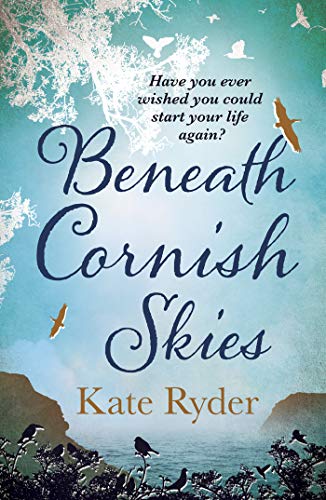
 

Kate Ryder Beneath Cornish Skies, reviewed by Jane Cable

Beneath Cornish Skies tells the story of Cassandra Shaw, who leaves behind her outwardly perfect but soulless life in Sussex to work for a chaotic Cornish family. The contrasts between the two settings are sharp, but united by the author’s love of horses, nature, and the lore attaching to the natural world.

This book blends romance with new beginnings and a ghostly past. Don’t be put off by the fact it’s described as ‘book 3 of 3’ on Amazon, it is in fact a standalone novel and has achieved a bestseller flag in paranormal ghost romance.


Naomi Miller Imperfect Alchemist reviewed by Kitty Wilson

I adored this well-written tale of two women at opposite ends of the social spectrum in the sixteenth century coming together and working in tandem in herbalism and alchemy. Their story covers a myriad of themes from both lives, including the suspicion and misogyny behind witchcraft trials in the villages and their impact alongside the high arts represented by Mary Sidney’s renowned Wilton Circle. Although a fictional account of The Countess of Pembroke’s life, the author’s knowledge of history and the literature alongside her skill at writing makes this a novel that pulls you in utterly, making me as a reader willing to believe this is how it was. It certainly is a fitting tribute to a woman who was at the forefront of new thinking and intellectual debate in a time women were overlooked in every arena. I loved it and shall be looking for more books from this author.
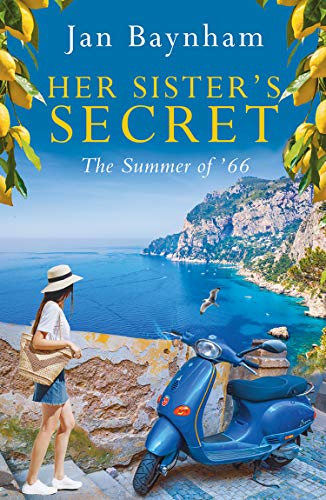
 

Jan Baynham Her Sister’s Secret, reviewed by Imogen Martin

Jan Baynham’s second novel slips seamlessly between Rose in the 1940s and Jennifer in the 1960s. It opens in a mid-Wales village where Rose works at the Big House whilst Mam tries to keep the peace at home. When Rose meets Italian prisoner-of-war Marco, the sparks fly. I was fascinated, as I have a friend whose Italian father and Welsh mother met in exactly this way. Unlike my friend, there’s no happy ending for Rose when her domineering father finds out about the relationship.

In the 1960s, the family secret comes tumbling out after a chance discovery by Jennifer. Will she have the courage to travel to Sicily to find out the truth?

Jan Baynham captures the excitement of standing on the cusp of a new life in Cardiff, the big city, in contrast to the vivid portrayal of small Welsh village life.

Her Sister’s Secret is a cracking read with passion, hurt and wisdom intertwined.  Whilst it has parallels with Jan’s debut novel Her Mother’s Secret, this is a stand-alone saga.


SLOW AND STEADY WINS THE RACE – JANE CABLE ON HER NEW PUBLISHING CONTRACT

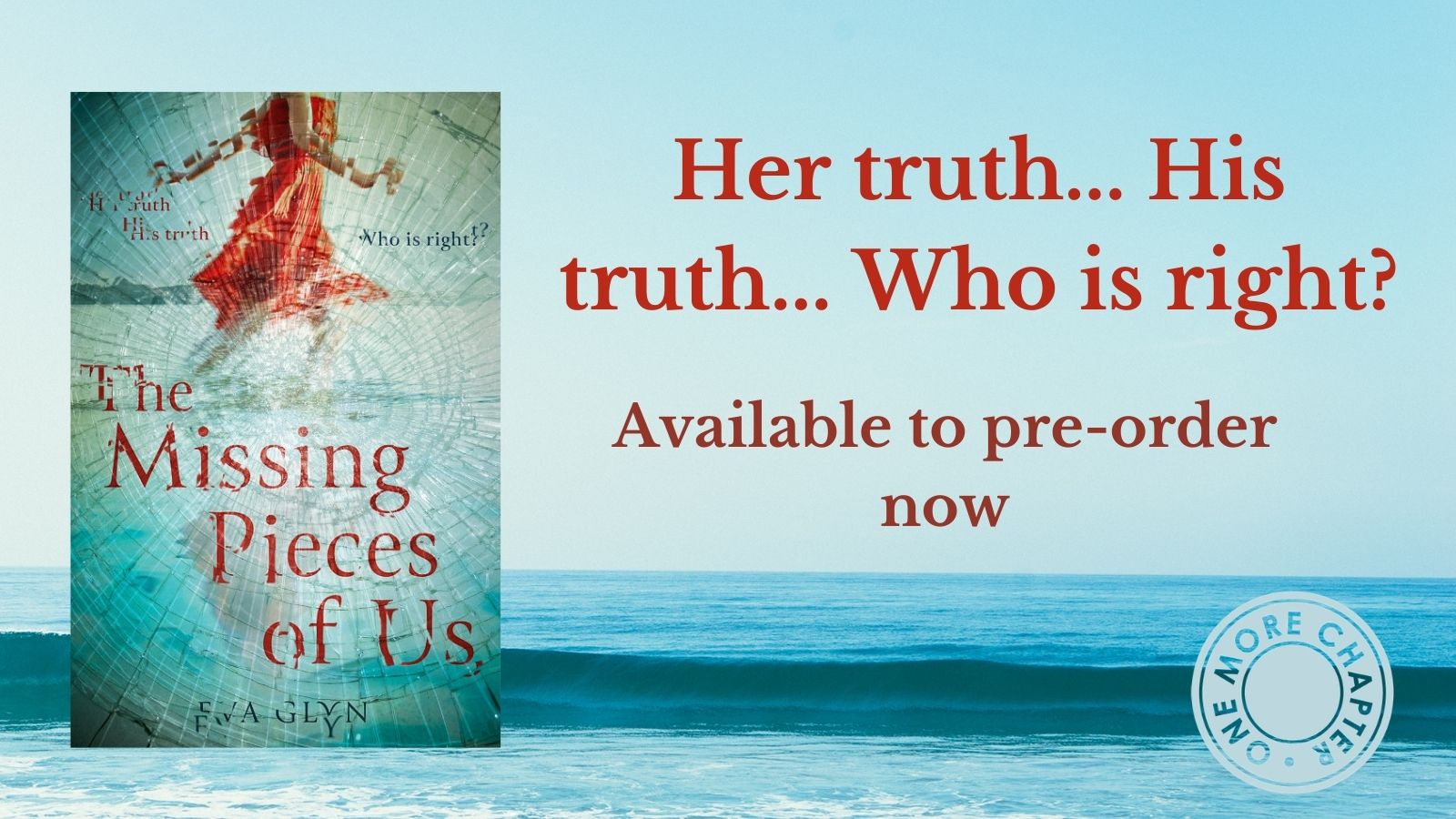
I have never particularly seen myself as a tortoise, but boy oh boy, has this been a long time coming. Today it was announced that I will be writing emotional women’s fiction for One More Chapter, a digital first division of Harper Collins, under the name of Eva Glyn.

I think all writers have an idea of where they want to be, and for me, no doubt influenced by Harper Collins being the sponsor of The Alan Titchmarsh Show’s People’s Novelist competition in which I was a finalist, they were the publishing house at the top of my wish list.

Having failed to win the competition and so any short cut to publication, I might have guessed I was in for the long haul, but at that stage I didn’t realise quite how long it would actually be. But fairly early on in my career I had a near miss when after a one-to-one at Winchester Writers’ Conference a young editor called Charlotte Ledger requested the full manuscript of The Faerie Tree.

Nothing came of it, and the book became my second indie novel. And as my career progressed I was aware of Charlotte’s rapid rise through the ranks of Harper Collins’ digital imprints and wondered if perhaps at some stage it would be worth submitting to her again.

In the meantime I had the opportunity to work with Amy Durant and when she set up Sapere Books was happy to follow her there. And while I am happy to stay with Sapere too, I still hankered after what a bigger publisher could offer in terms of multiple platforms and international clout.

By the time the Romantic Novelists’ Association conference came around in 2019 I had a new manuscript in my locker that I knew wasn’t a Sapere Book. I saw Charlotte Ledger was offering one-to-ones and I was lucky enough to grab one. We met again. And again she asked for the full manuscript, but this time to be sent to her personal email. I felt I was one step closer.

In the end Charlotte didn’t take that book, but the door was kept open. Last March I had a fifth anniversary blog tour for The Faerie Tree and the response was so overwhelmingly positive I brought the title up to date, gave it a little polish, and after much encouragement from Susanna Bavin, sent it off to Charlotte.

She asked me to do some rewrites and they were so in line with my own thinking for the book that I did. The next thing I knew we were talking about author brand and slowly it dawned on me she was offering me a contract. And the author brand she was suggesting was exactly where I wanted to be – emotional women’s fiction.

There would be no ghostliness, no looking back at the past, so these would be different to my books for Sapere, so we decided they would be published under another name. I chose Eva Glyn – Eva for my father’s mother, and Glyn for Glyn Jones, the Welsh author who was a great friend of my parents.

Today is a proud day because for the first time I can talk about the deal as the cover for The Missing Pieces of Us has been revealed and the book is available for pre-order. And it’s only taken me nine years…


Marian Keyes Shares Her Ultimate Comfort Reads for Hard Times.

International best-selling novelist Marian Keyes (Watermelon, Rachel’s Holiday and The Break) has today revealed her Ultimate Comfort Reads for challenging times, with a curated list shared on Bookshop in support of indie bookshops, and to mark the paperback publication of her globally acclaimed Sunday Times No.1 novel, Grown Ups (Penguin Michael Joseph, £8.99).

Marien Keyes, comfort books, Marien Keyes, comfort books,

Confessing she’s “personally … desperate for a holiday from reality and from my head”, Marian’s recommended reads will offer readers some much-needed solace and escapism into a world of bookish pleasure during lockdown, and beyond.

Marien Keyes, comfort books,

From Booker-nominated debut novels to fiercely funny memoirs, and from heart-warming stories turned into much-loved TV series to feminist retellings of traditional fairy tales, Marian’s curated list aims to inspire, engage and entertain, as an antidote to the difficult times we’re living in.

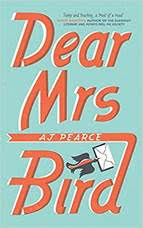
Marian’s list includes: Stella Gibbons’s Cold Comfort Farm, a classic comedy novel named one of BBC ‘100 Novels That Shaped Our World’; The Surface Breaks by Louise O’Neill, a feminist reimagining of The Little Mermaid; My Sister, The Serial Killer by Oyinkan Braithwaite, the sensational debut novel nominated for the Booker Prize in 2019; Love, Nina by Nina Stibbe, a laugh-out-lout memoir adapted into a popular BBC series by Nick Hornby; Eligible by Curtis Sittenfeld, a Pride and Prejudice catapulted into our modern world; Dear Mrs Bird by AJ Pearce, the Sunday Times best-seller chosen as a Richard & Judy Book Club Pick; the WWII romance The Morning Gift by Eva Ibbotson, based on the author’s own experience as a refugee.

The list has been released by Bookshop.org – the alternative to Amazon for shoppers wanting to support independent bookshops when they shop online. Celebrated by critics, readers and booksellers, Marian is known for her untiring support of independent bookshops. She was one of the first authors to take part in “At Home with Four Indies”, the virtual series of events launched in lockdown by independent booksellers from Linghams (Heswall), Booka (Oswestery), Book-ish (Crickhowell) and Forum Books (Corbridge).

Marian Keyes, author of Grown Ups, said: “Life is very challenging at the moment and personally, I’m desperate for a holiday from reality and from my head. Reading has always been a huge pleasure for me but because so much fear is circulating, there are lots of subjects I’m currently not able for. I’ve put together a collection of titles that I’ve found engaging, uplifting, distracting and entertaining. I hope that some of them give you enjoyment and respite. I am thrilled to share this list on a platform that supports the vital work of independent bookshops.

One of the most successful novelists of all time, Keyes’ books have sold over 30 million copies in 33 languages, and her writing has received several accolades, including the British Book Awards, the Irish Book Awards and the inaugural Melissa Nathan Prize for Comedy Romance. In the last year, Marian has been chair of judges for the Comedy Women in Print prize, and the second series of her instant hit, Between Ourselves, will air on BBC Radio 4 on 18 February 2021.

Marian joins a growing number of authors to share a curated reading list on Bookshop.org, such as: Elena Ferrante, Malorie Blackman, Nikesh ShuklaEmma Gannon and more. Author reading lists on Bookshop.org have proven to have a tangible impact on sales figures for the books they feature, shining a light on many lesser known works beyond bestseller lists.

Marian Keyes’ Ultimate Comfort Reads:

  • The Secret Countess by Eva Ibbotson (Pan MacMillan)
  • Oh My God, What A Complete Aisling by Emer McLysaght and Sarah Breen (PRH)
  • I Never Said I Loved You by Rhik Samadder (Hachette)
  • Gravity is the Thing by Jacqueline Moriarty (Atlantic)
  • Standard Deviation by Katherine Heiny (Harper Collins)
  • Love, Nina by Nina Stibbe (PRH)
  • Professor Chandra Follows His Bliss by Ranjeev Balasubramanyam (PRH)
  • Writers and Lovers by Lily King (Pan MacMillan)
  • The Surface Breaks by Louise O’Neill (Scholastic)
  • The Loveliest Chocolate Shop in Paris by Jenny Colgan (Little, Brown)
  • Cold Comfort Farm by Stella Gibbons (PRH)
  • Filter This by Sophie White (Hachette)
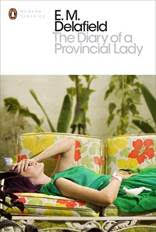
  • The Diary of a Provincial Lady by E.M. Delafield (PRH)
  • My Sister, The Serial Killer by Oyinkan Braithwaite (Atlantic)
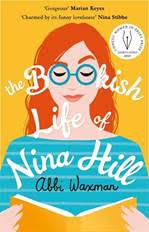
  • The Bookish Life of Nina Hill by Abi Waxman (Hachette)
  • If I Never Met You by Mhairi McFarlane (Harper Collins)
  • Odd One Out by Lissa Evans (Simon & Schuster)
  • Such A Fun Age by Kiley Reid (Bloomsbury)
  • The Switch by Beth O’Leary (Hachette)
  • The Cazalet Chronicles by Elizabeth Jane Howard (Pan MacMillan)
  • Dear Mrs Bird by AJ Pearce (Pan MacMillan)
  • Brother of The More Famous Jack by Barbara Trapido (Bloomsbury)
  • The Morning Gift by Eva Ibbotson (PanMacMillan)
  • Eligible by Curtis Sittenfeld (Harper Collins)


What would you add?

www.Bookshop.org

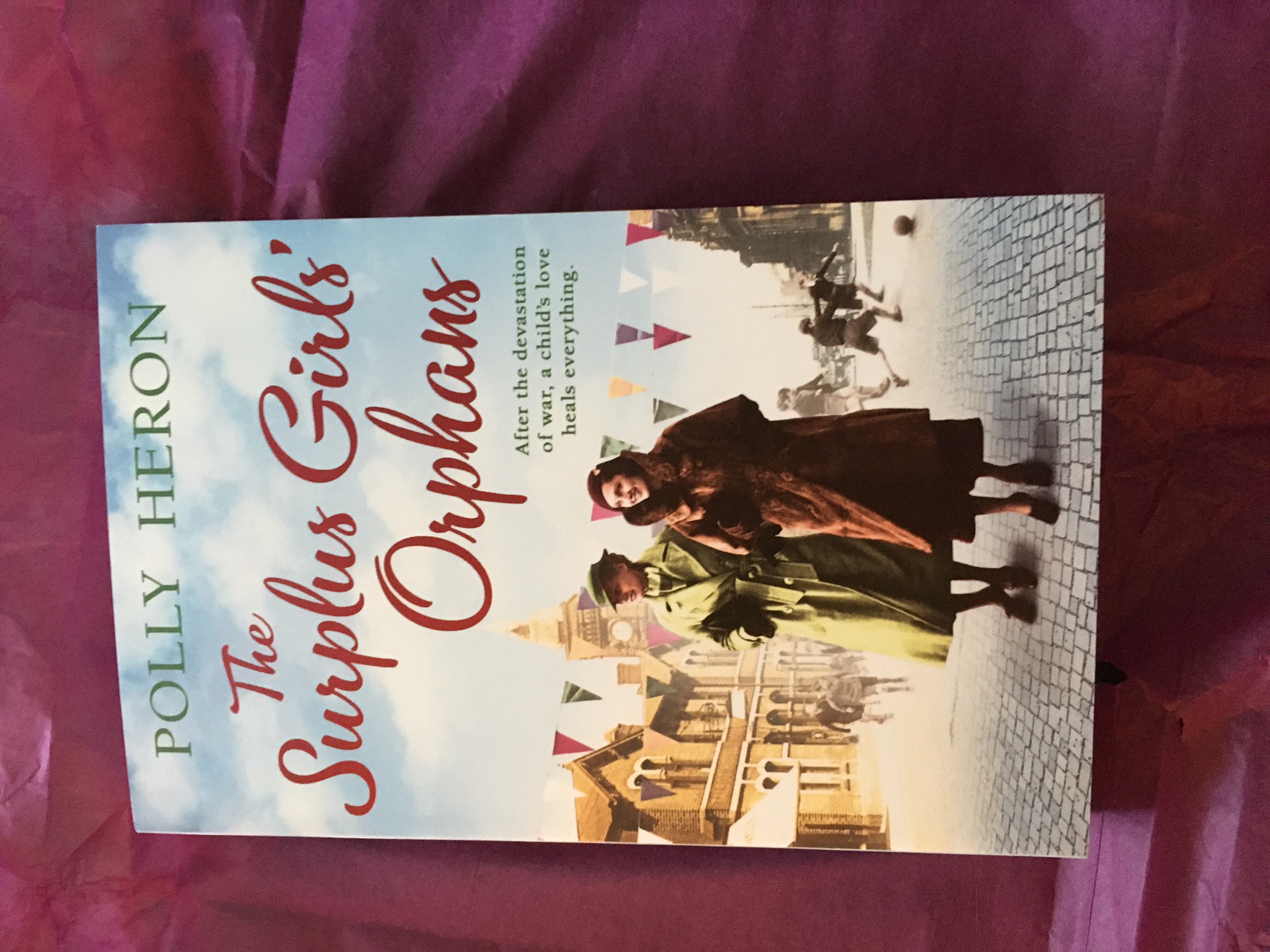
THE SURPLUS GIRLS’ ORPHANS – POLLY HERON’S EXCEPTIONAL NEW SAGA

Much as I enjoyed Polly Heron’s The Surplus Girls, I can honestly say that The Surplus Girls’ Orphans is the best saga I have read. The restricted lives of women in the inter-war period is captured perfectly, but with a fresh eye and brilliant story-telling that avoids the ‘grit and grim’ which I find makes some sagas less than a pleasure to read.

I know, as a writer, that the essential structure of a saga is to pour increasingly huge problems onto the heroine, twisting and turning the plot until she (apparently) has no way out. But of course, as a reader, you know she will find one. While all the time I find myself wondering how much more of the unremitting misery I can take.

Polly Heron’s books are not like that. There is joy and beauty in small things; in the orphans playing pirates on a wet evening, in the barley-sugar legs of a washstand, in children dancing around a maypole. And the plots and subplots are so beautifully drawn together than even when life is incredibly tough – which was, after all the reality of the time – as a reader you are led from one storyline to another without ever having time to get depressed. Angry, frightened, heart-warmed, amused… but never down right miserable.

Drawing on some of the characters in The Surplus Girls, and still wound into the story of the Miss Hesketh’s business school, The Surplus Girls’ Orphans is a standalone novel in its own right, although readers will get more out of the story having read the first book. As well as the Hesketh family, two of the Layton children feature, also as Mrs Atwood, and of course the backdrop is still the Chorlton area of Manchester.

However there is an entirely new main character in the form of Molly Watson, who is suffering perhaps the longest engagement ever, to a penny-pinching, controlling man. Deciding she would rather be a surplus girl, to the horror and shame of her family she breaks free to find work in an office, and then the orphanage, where she looks to change the lives of those around her and not just her own.

Her relationship with Aaron Abrams unfolds beautifully; the initial misunderstandings never overdone, the attraction between them perfectly paced. Nothing is sugar-coated and although the ending is perhaps inevitable (as it has to be to satisfy the genre) their journey feels unforced in a way all the best fictional romances do.

The subplots work perfectly too, in symmetry with the main story. A single thread connects Molly and the Hesketh household as secrets are revealed, with certainly some big surprises along the way. And Jacob Layton’s bullying at the hands of the inescapable thug Shirl brings an at times terrifying tension to the book.

Polly Heron has tremendous skill as a story-teller, but on top of that the quality of her writing shines through. She has a knack of wasting not a word on description, but of weaving detail into the action so the reader had a perfect mental image of a place and time as the story unfolds around them.

Overall, this is a brilliant book. I smiled when I read the acknowledgments, seeing that some of it had been written while we were on a retreat in Bath. I clearly remember Polly at the kitchen table, writing in longhand in a large notebook, and it is gratifying to think that as well as friendships, such a fabulous novel was forged at that time.

WELSH WRITING WEDNESDAYS: SALLY SPEDDING ON LIVING OTHER LIVES

‘Write what you know’ is a common enough diktat for the newbie writer, but how about the more subtle ‘write what you sense’ which carries far more possibilities. Material delivered by mysterious inner forces, as opposed to merely outer observations. Why? Because I’m a believer in the transmigration of souls, whereby a departing spirit finds the first empty womb to inhabit, as espoused by the hounded, tortured Cathars particularly from that beautiful, historic Ariège region of France during 1294 – 1324.

To visit it, having read the historian, Emmanuel Le Roy Ladurie’s moving account of their lives in the hamlet ‘Montaillou’ and its seemingly still mediaeval surroundings, is to experience, like the shepherd Pierre Maury, mysterious timeslips. When interrogated under torture, as to where he’d been on a particular day, he replied, ‘out looking to find my shoe.’
‘What shoe?’ asked his interrogator.
‘One that I cast when I was a horse.’ Sealing his fate.

To read of these Cathars’ cruel deaths in Pamiers, Foix, and in Carcassonne’s ‘Tower of Justice’ during the early fourteenth century, is chilling, yet these gentle people who posed such a threat to the Catholic Church, will never be forgotten, and whenever I start new work, whether a poem, short story or novel, conflict between good and evil begins.

Having reluctantly moved from our cottage near the River Sawdde in Llangadog, to urban Northampton, because of my now late artist husband Jeffrey’s new post at its university, I felt bereft, so, using a ruler to find the nearest coast, found where the River Nene, dividing Norfolk and Lincolnshire, meets the North Sea. Even now, that sense of death lurking in its silence, still lingers. I soon began ‘digging’ then writing the first few chapters of a part-contemporary/part-historical novel provisionally entitled, ‘Snare.’

Imagine my surprise having discovered Hilaire Belloc’s vivid collection of essays, ‘Hills and the Sea,’ in which he describes how once a newly-cleaned footbridge was re-opened in Sutton  Bridge, those who’d been waiting then walked across it ‘into the Wringland.’ This name intrigued me, but learning it had evolved from ‘wrungo’ the old High German for ‘snare’ added to the weirdness. I met several people living on the Fens who wouldn’t allow their children to go out after dusk because of ‘evil spirits.’

‘Wringland’ was the first in a two-book deal with PanMacmillan in 2001. Here, the ghost of Martha Robinson – one of the last to be publicly executed in 1862 – tells a fragment of her story before each chapter, in which young, keen Abbie Parker, a saleswoman in a new housing development, arrives at its Show Home to find the door already unlocked, the alarm disabled, and a strange, black-clad woman sitting by her desk demanding Plot 2 be reserved for her. Someone badly wronged, seeking justice. But at what price for Abbie, with her new career?

While looking for a holiday home in France, we’d stopped by the Grotte de Lombrives near Tarascon, where I immediately began shivering with fear and begging Jeffrey to drive on. Only afterwards did I learn from my Dutch aunt how Frenkel – my middle name – evolved from those Franco-Raphaelite Jews, purged by the Spanish Inquisition. Many of whom were walled up alive in that very same grotto. This might explain my claustrophobia. I still can’t use the Underground, lifts or aeroplanes. Meanwhile, France with its relatively few cremations, although harbouring so much dark history, continues to inspire my later books.


http://www.sallyspedding.com


CARIADS’ CHOICE SAINT DWYNWEN’S DAY REVIEW SPECIAL

Most people probably know that St Valentine is considered to be the patron saint of love, but did you know that Wales has its own equivalent? St Dwynwen’s day is celebrated on 25th January in the same sort of ways as her more famous counterpart – sending cards, giving flowers, having a special meal – anything in fact that says ‘I love you’. St Dwynwen’s own story is a sad one, told with an overlay of traditional folklore elements – beautiful princesses, thwarted lovers and people being turned into blocks of ice. Ill-fated in love, Dwynwen became a nun, founding a convent on Anglesey, and generously praying that true lovers should have better fortune. Frost magazine is marking her special day with some reviews from Welsh authors of romance books that have a Welsh connection.

Trisha Ashley A Leap of Faith, reviewed by Evonne Wareham

I’m an Ashley fan, and she has been one of my go-to feel-good reads in lockdown. That said, I had mixed feelings about this one. It has familiar ingredients – a slightly older heroine, with a biological clock ticking, a bit of mystery, some infuriatingly arrogant and entitled ex boyfriends and husbands, a supporting cast of eccentrics, crafts and baking and recipes. I loved the fact that it’s set in Wales, in an imaginary community on the Gower and has a rather gorgeous hero called Nye, who speaks with a Welsh lilt, although he was brought up in Manchester and his looks are more Viking than Celtic! On the down side, the book is twenty years old and has not been significantly updated and there are a couple of episodes of harm to animals that I found upsetting. With those caveats, I did enjoy the book. Probably one to choose if you have read her others and are completing your collection, as I was. If she is new to you, it may be better to begin with something more recent. Those involving chocolate are particularly scrumptious.

Sue McDonagh Escape to the Art Café, reviewed by Jan Baynham

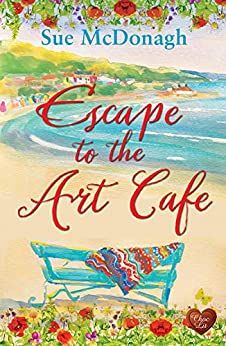
The third in a series, Escape to the Art Café is another feel-good, uplifting novel that may also be read as a stand-alone. The author writes with pace and humour to keep the reader turning the pages. However, for me, her strength is in the characterisation. She creates multi-layered characters whom you care about. Both Flora and Jake are ones I really warmed to and as their backstories are revealed, I came to understand more about them. Set against the backdrop of the beautiful Gower peninsular and with a great twist towards the end, the theme of strong community so often found in Wales runs through the whole novel. I enjoyed it immensely.

Tracy Rees The Hourglass, reviewed by Jill Barry

Two different eras spring to life in this poignant story of youthful dreams and cold reality. We meet the competent Nora in 2014 at an unhappy time for her. In 1953, schoolgirl Chloe lives for her annual visit to Tenby, a town to which the troubled Nora is also drawn. But the two are linked by more than the Welsh seaside resort which, as the novel progresses, is viewed in all its colourful splendour through the main characters’ eyes. You’ll relive simple pleasures and wonder about the power of love and positive thought.

Evonne Wareham A Wedding on the Riviera, reviewed by Jessie Cahalin

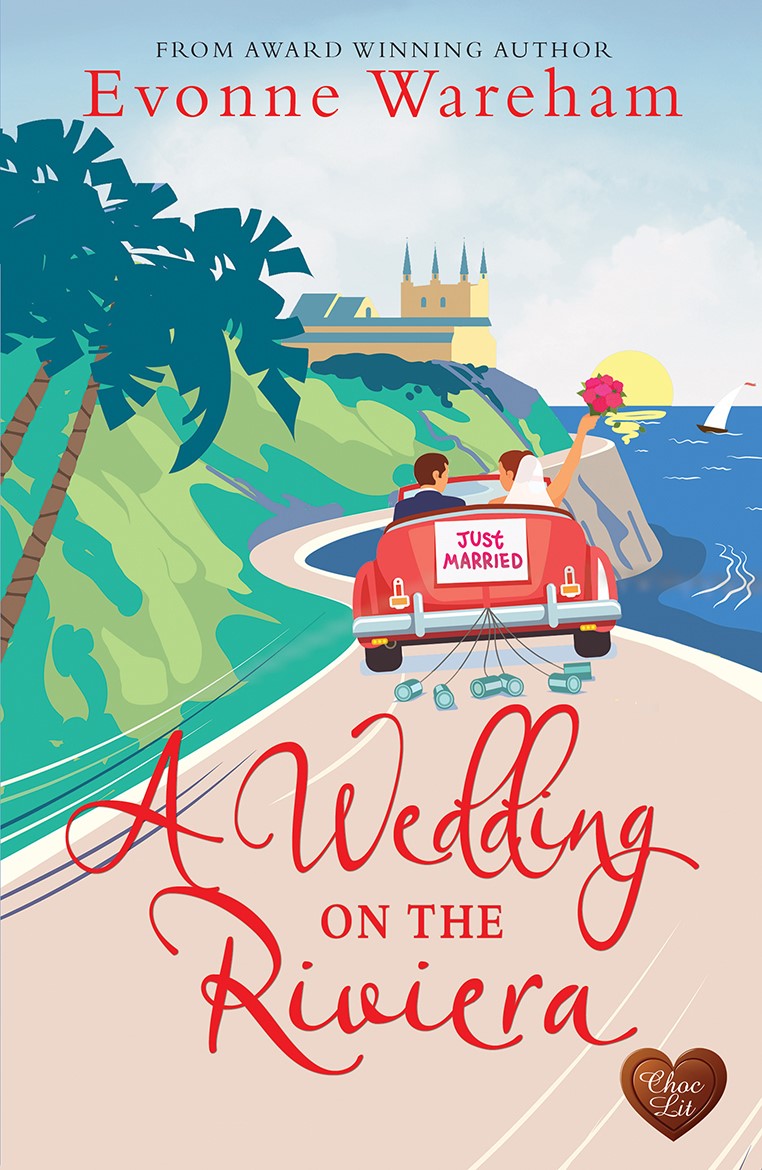
A Wedding on the Riviera is a smoking hot romance entangled with an intriguing mystery. The runaway groom hooked me from the outset. An intricately woven plot ensured I escaped to the Riviera, Cardiff, Bristol and Bath.  Wonderful writing took me into the heart and soul of Nadine and Ryan and made me yearn for their happiness. I absolutely loved the tension created by the dubious dealing of Thackery. Drama, romance and glamour are packed into the novel. Will the perfect plan to catch a thief be thwarted?


THE BOOK I NEEDED TO WRITE – MICHAEL PARKER

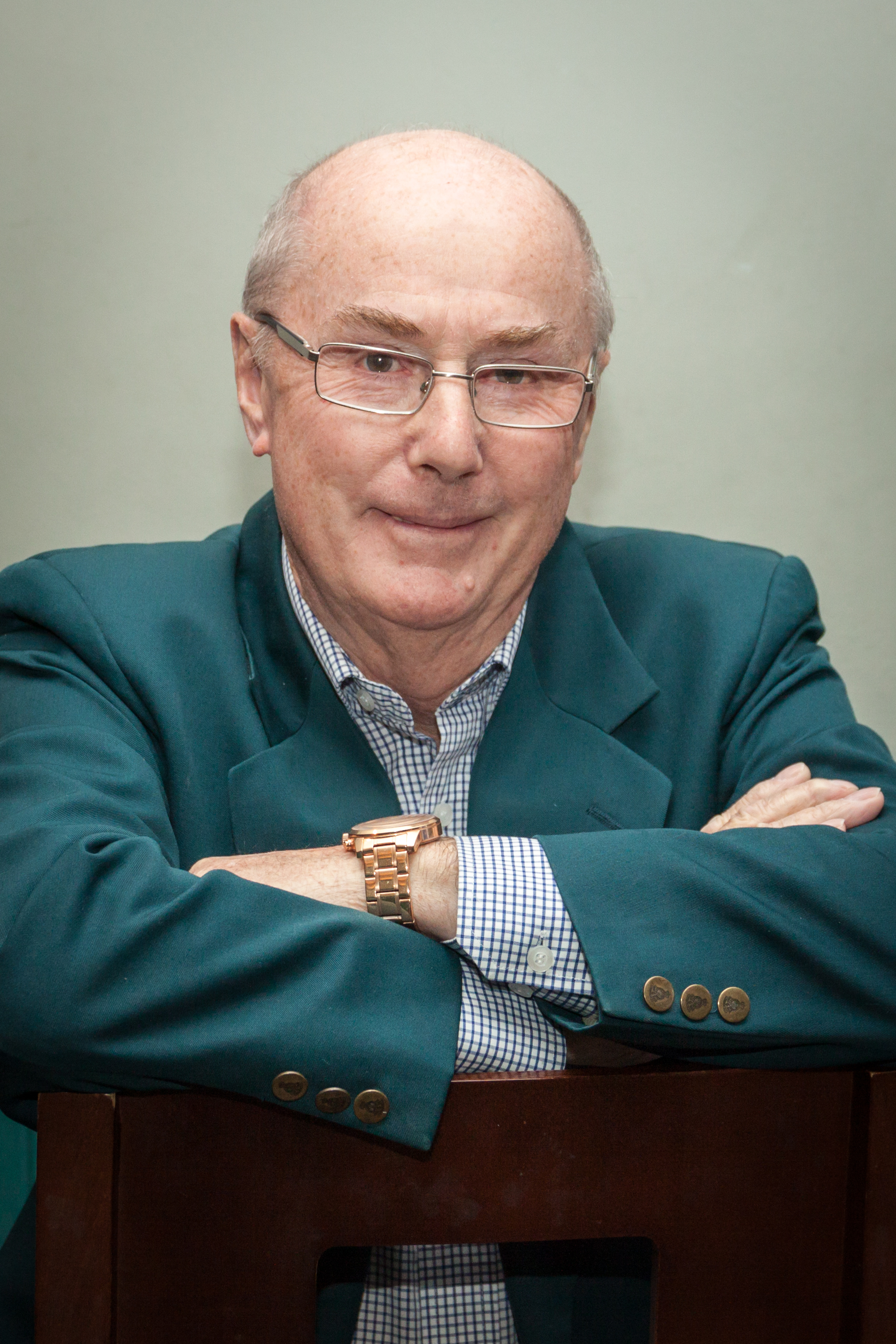
When I was a Chindi Author (a group of indie writers in Chichester), Michael Parker was our elder statesman, the author who had been traditionally published, and who had time for everyone. It was hard to think I could come to respect him more, but since his beloved wife Pat died last year, he has written an incredible tribute which I hope to review for Frost next month.

I have always been able to write. As a teenager at Grammar school, I used to write hooky notes for my mates and charge them one cigarette for each note. You could say I was earning royalties even then. I was a prolific reader too and often found myself in awe of the authors and how clever they were. But I never aspired to become a writer; that was something only the clever ones did: those with university degrees and a middle-class upbringing. For someone like me: a working-class lad with no qualifications, I never believed I could become a published author.

I started dabbling with storytelling in my mid-twenties and wrote a family saga. It never saw the light of day, but it did become the seed, that feeling that there was something there. I remember contacting the Daily Mirror and asking them how I could get my book published. I had no clue about the publishing world. Their advice was to get an agent. It was when I was in my late thirties that I finally succeeded, when Macmillan agreed to publish my first novel, North Slope, in 1978. The Financial Times called me a “gifted narrator”. As rewarding as that was, it didn’t mean I would become a successful author.

Years later, when I was living in Spain with my wife, Pat, I found myself writing and being published. Eventually I ended up with seven traditionally published novels; six of them with Robert Hale of London. I was published in Norway, Denmark and Canada. Now I have fourteen books to my credit: all of them available on-line. But the book I needed to write: the book I want to talk about now, was a tribute to my lovely Pat who sadly died of cancer last year, 2020.

Pat became ill after a five-week trip to Australia and the Far East. She was diagnosed with cancer on our return after an examination for a spider bite. I looked after Pat for almost two years, here at home, until she finally succumbed to the disease. By this time, I’d already given up writing; there was no longer any inclination or desire. My sole reason for living was to be by Pat’s side and nurse her.

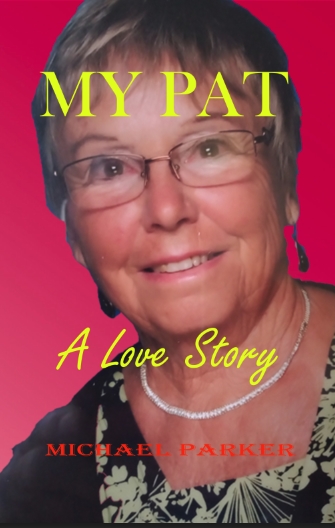
When it was all over, I was asked if I would start writing again. I would shake my head and say probably never. But my granddaughter, Gemma, wanted to know more about her Nan, and it was this that encouraged me to write down my memories after sixty years of marriage, and put them in book form: a tribute to my lovely wife. The book has now been published and is called, My Pat, a love story.

I don’t have enough time here to explain what a lovely woman Pat was, but the following is a short extract from the book:

I first laid eyes on Pat when she was fourteen. I was a “mature fifteen-year-old” who could not possibly have any interest in a girl as young as that. Besides, Pat was my mate’s little sister, and it was beyond parody to think I could have anything to do with her. But I still remember her dark hair, lovely eyes and generous mouth, plus the fact that she was wearing a canary yellow sweater. So, it stands to reason I couldn’t have noticed her. Four years later we were married.

Whether I’ll write again remains to be seen, but I am happy that I have published my best work ever.

You can learn more of me and my books by hopping over to my website: www.michaelparkerbooks.com.


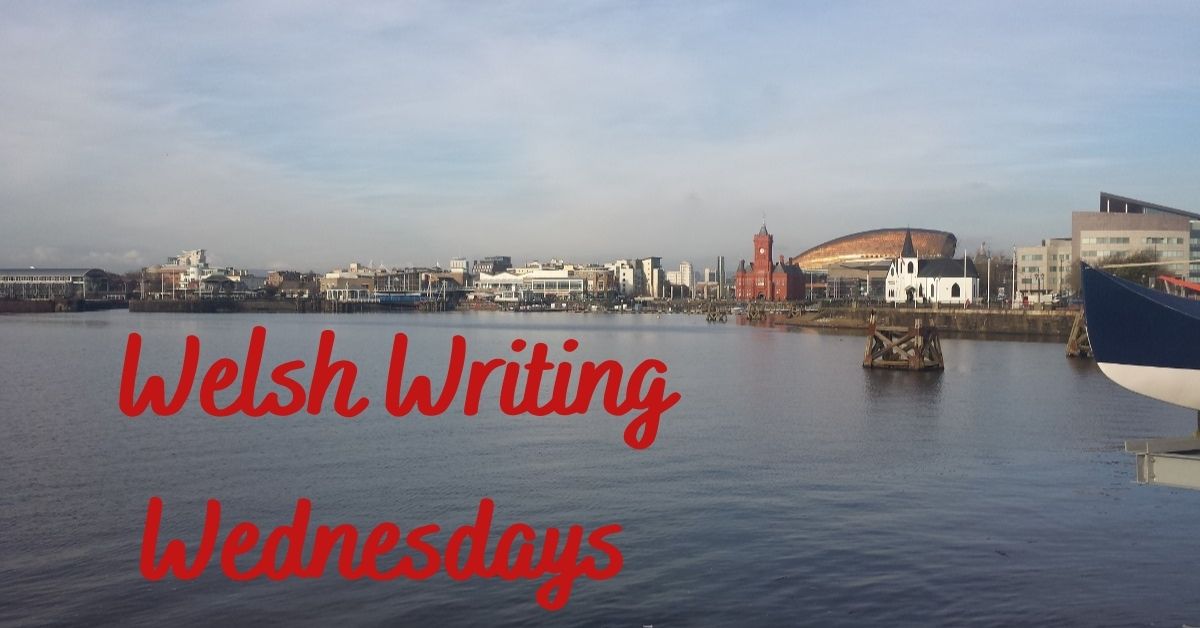
INTRODUCING WELSH WRITING WEDNESDAYS

Although it isn’t often mentioned in Frost, I am very proud of my Welsh heritage. I was born in Cardiff and my father was an Anglo-Welsh poet and literary critic, so it is inevitable I have an affinity with other writers with connections to the principality. So much so, I am a member of the Cariad chapter of the Romantic Novelists’ Association, and it is to these wonderful women I looked first when I was considering Welsh Writing Wednesdays.

The idea is simple; on the second and fourth Wednesdays of each month one of us will bring you an article about writing in Wales. And replacing the ever-popular Sister Scribes’ Reading Round Up on the last Monday will be Cariads’ Choice.

So here are some of the wonderful authors you will be meeting through Frost this year.

Judith Barrow

Originally from Saddleworth, a group of villages on the edge of the Pennines, Judith has lived in Pembrokeshire, Wales, for over forty years.

She has an MA in Creative Writing with the University of Wales Trinity St David’s College, Carmarthen, BA (Hons) in Literature with the Open University, and a Diploma in Drama from Swansea University. She is a Creative Writing tutor for Pembrokeshire County Council and holds private one to one workshops on all genres.

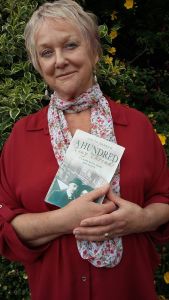
Jill Barry

Jill began her writing career with short stories for magazines and anthologies, winning prizes and being both long-listed and short-listed. She is a multi-published romantic novelist who also writes Pocket Novels for D C Thomson and who draws on her varied career and her travels for inspiration. She has also written one psychological suspense novel which is published by Headline Accent. A member of the Romantic Novelists’ Association and the Society of Authors, Jill enjoys mentoring new writers and is convinced she will never stop learning.

Jan Baynham

Originally from mid-Wales, Jan lives in Cardiff. As well as short stories and flash fiction, she writes full-length novels that deal with family secrets and explore the bond between mothers and daughters. Her debut novel, Her Mother’s Secret, was published by Ruby Fiction in April 2020. This was followed by Her Sister’s Secret in September 2020 and book three will be out next July.

A member of the Romantic Novelists Association, she values the friendship and support from other members and regularly attends conferences, workshops, talks and get-togethers. She is co-organiser of Cariad, her local RNA Chapter.

Jessie Cahalin

Jessie is a Yorkshire author living in Wales. Wales and words have a special place in her heart, and she wants everyone to meet the characters who’ve been hassling her for years. Penning women’s fiction is Jessie’s dream job, but she also writes travel articles and features for her blog and magazines.

You Can’t Go It Alone, her debut novel, was a bestseller in the UK and Canada. For Jessie, a good natter with other authors and readers is a special treat as she usually lives in her tiny writing room with Paddington Bear and a collection of handbags.

Alexandra Walsh

Alexandra is the author of The Catherine Howard Conspiracy, The Elizabeth Tudor Conspiracy and The Arbella Stuart Conspiracy, known collectively as The Marquess House Trilogy. A series of a dual timeline Tudor conspiracy thrillers, published by Sapere Books, the novels explore a secret hidden within history and the potential havoc its revelation could wreak. Her new book with Sapere, The Windchime, is due out in 2021. Another dual timeline story, set in present day and late Victorian times, it explores mental health issues, grief and rebuilding lives after the worst has happened.

Evonne Wareham

Evonne is an award winning Welsh author of romantic suspense – more crime and dead bodies than your average romance. She likes to set her book in her native Wales, or for a touch of glamorous escapism, in favourite holiday destinations in Europe. She is a Doctor of Philosophy and an historian, and a member of both the Romantic Novelists’ Association and the Crime Writers’ Association.