CARIADS’ CHOICE: MARCH BOOK REVIEWS

Carmel Harrington’s My Pear Shaped Life, reviewed by Kitty Wilson

I thoroughly enjoyed this story of Greta Gale, the highs and lows of trying to learn to value yourself. The author wrote empathetically about addiction, body issues and familial relationships. As a reader I was willing Greta on and particularly loved her travels across The States. We could all do with an Uncle like Ray. The author weaves the story of The Wizard of Oz throughout which is exceptionally deftly done, beautifully illustrating the light and the dark within us all.
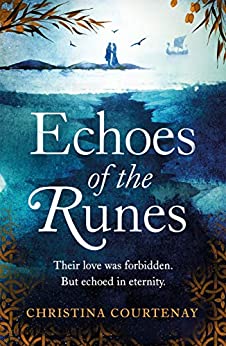
 

Christina Courtenay’s Echoes of the Runes, reviewed by Kitty Wilson

I thoroughly enjoyed this novel, both narratives kept my attention and made me want to keep reading. It was fascinating reading the contemporary storyline and the archaeological detail. The romance kept me hooked and the little bit of jeopardy (no spoilers!) had me willing Mia and Haakon on.

However, it was Ceri and Haukr who captured my heart. I loved this storyline and could have read so much more about them. I rarely find a captive and captor romance convincing but Christina Courtenay writes these characters with such empathy it is impossible not to fall a little in love with them and their story. Am greatly looking forward to the next in the series.


Kate Johnson’s Death on the Aisle, reviewed by Evonne Wareham

This is the third book in the Molly Higgins amateur sleuth series from award winning author Kate Johnson, who confidently mixes romance with cosy crime. It can be read as a stand-alone but there are recurring characters and story lines so reading the series in order would be beneficial, and all are enjoyable. The first, Death Comes to Cornwall, was a recent nominee for the Jackie Collins Romantic Thriller of the Year Award. In this third book Kate takes some classic ingredients for romance – hunky hero, capable independent heroine, a Cornish fishing village and a cupcake café and mixes in a celebrity wedding, a film set, a virtual reality show, the wedding planner from hell and a couple of fairly gruesome murders. If you like romance with a hefty dash of crime and sleuthing, it’s an enjoyable read.
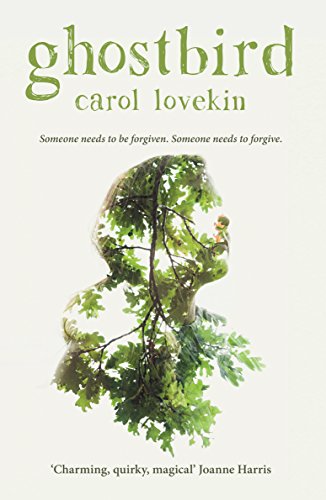
 

Carol Lovekin’s Ghostbird, reviewed by Jan Baynham

This is a magical tale that kept me spellbound until the end. I was able to marvel at the figurative language and poetic nature of the prose without it detracting from the pace of the story. The characters are very well drawn, displaying deep emotions, and I was particularly fond of Cadi. Secrets unravelled and the reader journeyed with all the characters to a satisfying conclusion. I loved the interaction between Cadi and the ghost. With its beautiful cover, Ghostbird is a book I thoroughly enjoyed, a book I kept returning to in my thoughts long after I’d finished reading it. Highly recommended.


Maisie Thomas’s Secrets of the Railway Girls, reviewed by Jane Cable

I loved the first Railways Girls saga, and the second book in the series did not disappoint. Set in World War Two in Manchester it vividly portrays the lives of women from vastly different backgrounds thrown together to help keep the country’s rail network running.

Although this book focuses on Dot, a working class forty-something grandmother, other stories are woven around hers so cleverly you just have to keep turning the pages. From the horrors of the Christmas blitz to cosy chats in the station tea room, all human nature is here and the writing is so wonderful it draws you in completely. I’m definitely having withdrawal symptoms having finished this one – luckily the next book is due out in April.
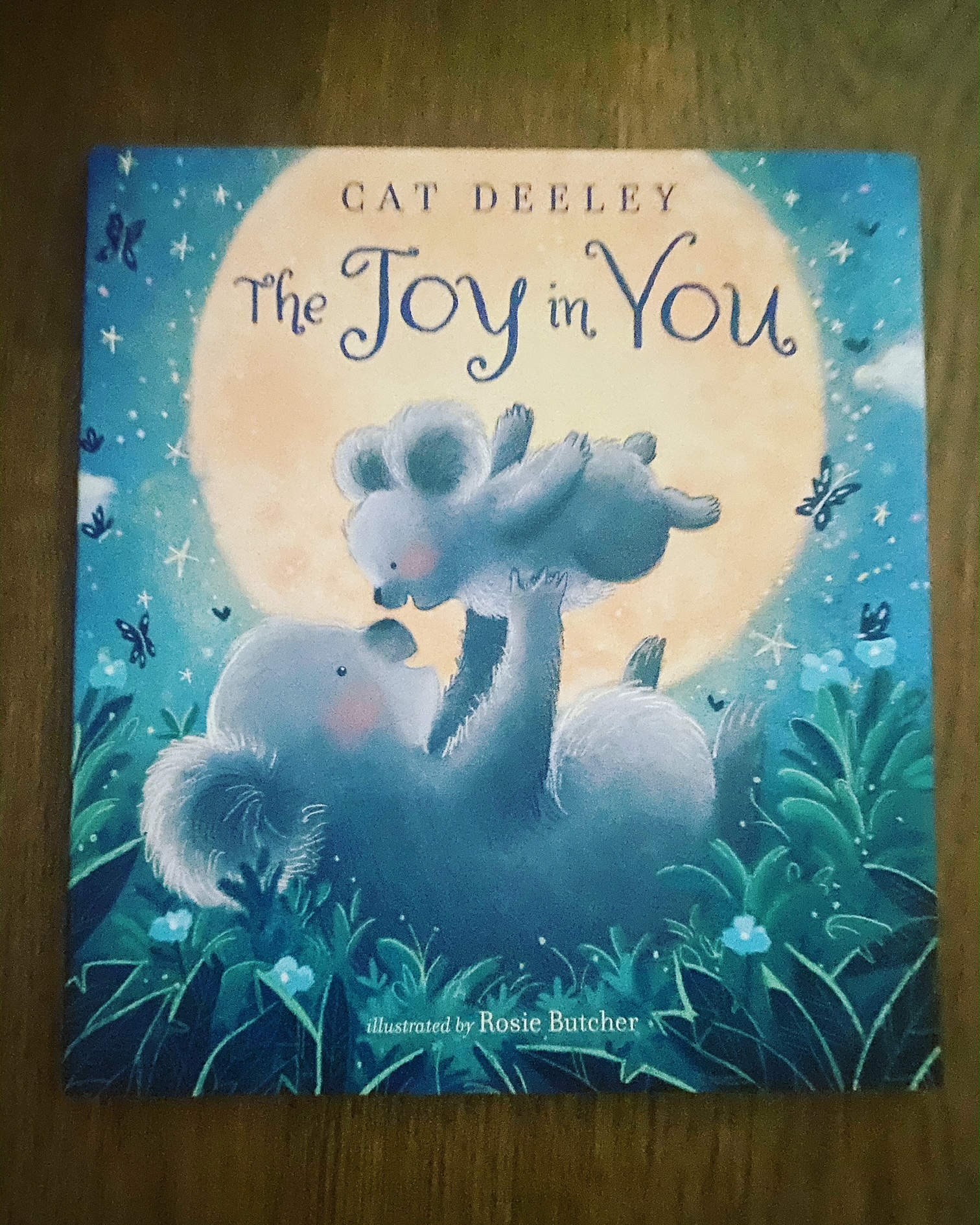


The Joy in You by Cat Deeley | Book Reviews.

The Joy in You, Cat Deeley, children's book, review, book

I really loved this book. It has beautiful illustrations which are matched with lovely, inspiring words to let children know that it is okay to be themselves, and also go after their dreams. A great book from TV presenter Cat Deeley. My children loved it. Inspiring and positively affirming.

Encourage kids to live out loud and be their truest selves with this picture book from media personality, national treasure and mum, Cat Deeley.

Dream big, as big as the night sky full of stars.
When you discover the things you love, you’ll find true joy.

Journey through a magical world, filled with a colourful cast of animals, where readers have endless opportunities to be themselves and find freedom in expression. They will delight in the silly humour and undeniable spirit of this rhythmic and beautifully illustrated picture book-and take to heart the message that they are enough exactly as they are!

Cat Deeley’s debut is an ideal bedtime book that you can read to your little one over and over again and is the perfect gift for birthdays and baby showers.

The Joy in You is available here.

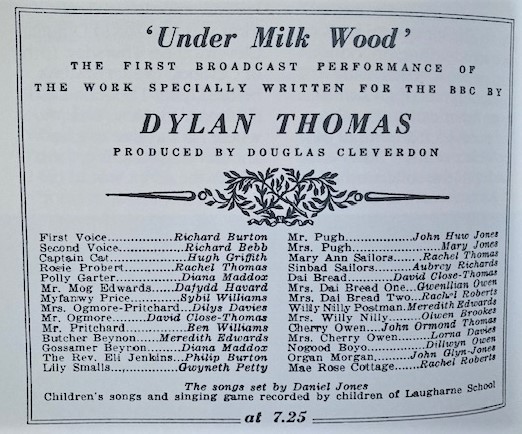
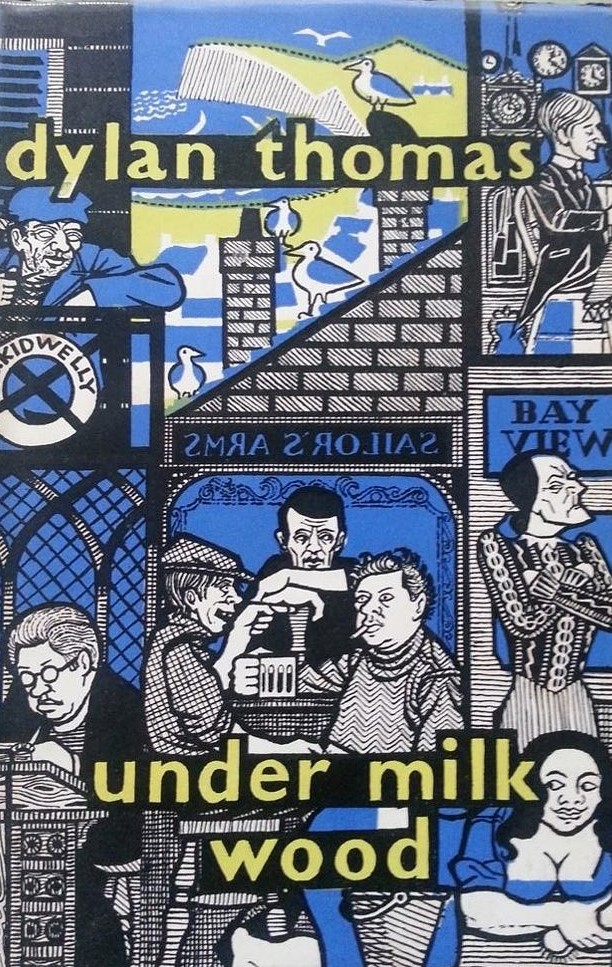
WELSH WRITING WEDNESDAYS: JAN BAYNHAM ON HER LOVE FOR UNDER MILK WOOD

Those of you who know me or read my posts on Jan Baynham Writer Facebook page will realise I’m a big fan of Dylan Thomas and his writing, from his wonderful poetry to his short stories and especially his famous play for voices, Under Milk Wood. My first encounter with the play was, in fact, not on the radio but a stage performance at the tiny but grandly named theatre, the Albert Hall, in my hometown of Llandrindod Wells. As a teenager, I can remember being mesmerised by the poetic language, his use of imagery, and the wide range of eclectic and eccentric people he’d created.

The characters live in a small fictional Welsh village by the sea, named Llareggub (read it backwards!) or Llaregyb (contrary to Thomas’s wishes) in some earlier versions of the play. A long time in its making, the play tells of the ‘dreams, fantasies and realities of the inhabitants’ of Llareggub ‘as they unfold across the cycle of one spring day’. The villagers are presented in a humorous, ribald way, created and exaggerated maybe from the poet’s observations of the oddities and the pieces of gossip of a small-town community that he lapped up every morning in Brown’s Hotel in Laugharne, Carmarthenshire.

The play opens at night and a narrator invites the audience to listen in on the dreams of the townspeople of Llareggub while they sleep, “from where you are”.

“To begin at the beginning:

It is spring, moonless night in the small town, starless and bible-black, the cobblestreets silent and the hunched’-and-rabbits’ wood limping invisible down the sloeblack, slow, black, crowblack, fishingboat-bobbing sea…”

We are taken straight there, invited to listen to the villagers’ innermost thoughts. They include Captain Cat, the blind sea captain, reliving his times at sea and his drowned ship mates and Mrs. Ogmore-Pritchard, relentlessly nagging her two dead husbands. Almost all the characters in the play are introduced as the audience witnesses a moment of their dreams until “…dawn inches up.”

Through the characters, more than sixty of them, we are given a glimpse of village life albeit through their eccentricities. The Reverend Eli Jenkins delivers a morning sermon about his love for the village. I love the choice of names – Gossamer Beynon, Willy Nilly, Evans the Death, Dai Bread, Nogood Boyo. Through their actions and what they say, the characters come alive. Taking up her morning tea, Mr. Pugh imagines poisoning his nagging wife and whispers:

“Here’s your arsenic, dear.
And your weedkiller biscuit…
Here’s your…
…nice tea, dear.”

At Mrs. Organ-Morgan’s general shop, women gossip about the townspeople. Children play in the schoolyard; Polly Garter scrubs floors and sings about her illicit lovers of the past. Later, Mrs. Organ-Morgan shares some of that gossip with her husband:

“I saw you talking to a saint this morning. Saint Polly Garter. She was martyred again last night…”

As night begins, Reverend Jenkins recites another poem. Cherry Owen heads to the Sailor’s Arms, where Sinbad still longs for Gossamer Beynon. The town prepares for the evening and the inhabitants of Llareggub return to their dreams again.

Since my first introduction to Under Milk Wood as a teen, I’ve heard it played many times with a variety of casts, seen stage performances and film versions. It never fails to intrigue me, and I find new snippets of language to marvel at each time. It has been called poetry but Dylan Thomas’s own description of it is ‘prose with blood-pressure’! If you are not familiar with the play, I can’t recommend it highly enough.


Worth

Frost fiction, short stories, poems, non fiction, fiction.

The woman flicked the notes carefully through her fingers, tapping the stack of cash against her desk and peering up over her horn-rimmed glasses.

“Not police?”

The man shook his head.  There was a note of threat to the question and he turned away, fixing his gaze through the doorway, his heart racing.

Silken bronze skin swept beneath long curls of onyx hair.  Asian eyes were lidded and docile.  The woman he desired tugged her skirt over a blackened bruise.

“You like?” the Madame slipped the money into a draw, her finger stroking a pistol.

“Yes.  Very much,…”

Note from the Author:  “This story is based on an event I witnessed personally many years ago, while in Soho for an audition. I didn’t catch much of the conversation – just a man and a woman trying to tempt him into a doorway. The words “Not Police” are forever etched in my mind. It made me so sad.”

Another in our series of 100-word short stories by Tim Austin. Whatever genre you love, there’s a story you’ll enjoy over at onewordonestory.org.

Come back on Tuesday for another. See you then!

Torn

Frost fiction, short stories, poems, non fiction, fiction.

Eddie’s mouth was hanging open.  He wasn’t entirely sure what had happened.

Around him people were staring, forks held comically close to mouths, awkward coughs and murmurs circling the room like sharks.  Behind him a door slammed closed.

“Can I get you a towel, sir?”

The Maître D remained professionally aloof but Eddie could see sympathy in his eyes.

“I,…. think I’ll have the bill, please.”

Eddie picked up the two halves of paper, her telephone number shredded.  They’d been talking about their blind date.  She’d asked what he enjoyed.

Somehow “Chilling to Netflix” was the wrong answer.


Another in our new series of 100-word short stories by Tim Austin at onewordonestory.org. Whatever genre you love, there’s a story you’ll enjoy.

Come back on Friday for another. See you then!

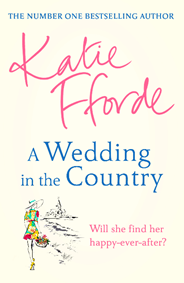
A Wedding in the Country By Katie Fforde Review

Katie Fforde a wedding in a country

Katie Fforde is a writer who needs no introduction, such is the weight of her talent and accomplishments. She is a national institution. Each one of her books is eagerly awaited and I cannot pretend I was not excited to receive this one. A Wedding in the Country is the perfect novel for these times. It is set in the 1960s which is a decade I have always loved (despite being born a few decades later). It is the perfect book to get lost in. The book has so much depth and I felt like I had been transported to another time. I loved the character of Lizzie and I could not wait to follow her journey. Get your hands on a copy of this dazzling book now. It is like a hot bath at the end of a tough day,  perfect up-lifting escapism.

This book is the most autobiographical for Katie Fforde. The book follows Lizzie who has arrived in London to do a cooking course, which Katie herself did, and Lizzie meets two other girls who become her best friends and moves into a run-down house in Belgravia. Her mother is determined she should have a nice wedding in the country to a Suitable Man chosen by her. But Lizzie wants to have some fun first.

Thank goodness for Katie Fforde. The perfect author to bring comfort in difficult times. She really is the queen of uplifting, feel good romance.’ A.J. Pearce

 Katie Fforde lives in the beautiful Cotswold countryside with her family, and is a true country girl at heart. Each of her books explores a different profession or background and her research has helped her bring these to life. She’s been a porter in an auction house, tried her hand at pottery, refurbished furniture, delved behind the scenes of a dating website, and she’s even been on a Ray Mears survival course. She particularly enjoys writing love stories. She believes falling in love is the best thing in the world, and she wants all her characters to experience it, and her readers to share their stories.

A Wedding in the Country is available here.


My Writing Process KL SLATER

After years of unsuccessfully trying to get my stories noticed from the slush pile, I went back to university to study for an MA in Creative Writing at the age of 40. Before graduation I’d secured both a literary agent and a book deal. I’m now a full-time writer and live in Nottingham. Sounds quick but it took a long time, if you count the ten long years of prior rejections.

What you have written, past and present.
I wrote four Young Adult books between 2014-2018, published by Macmillan Children’s Books. Then in 2016 I moved back to writing my first love: adult psychological crime fiction and that’s what I write exclusively today for Hachette’s Bookouture, a digital-first publisher. Audible publish my audiobooks and I’ve also written two Audible Originals exclusively for them. I’ve just written my fifteenth adult thriller.

What you are promoting now.
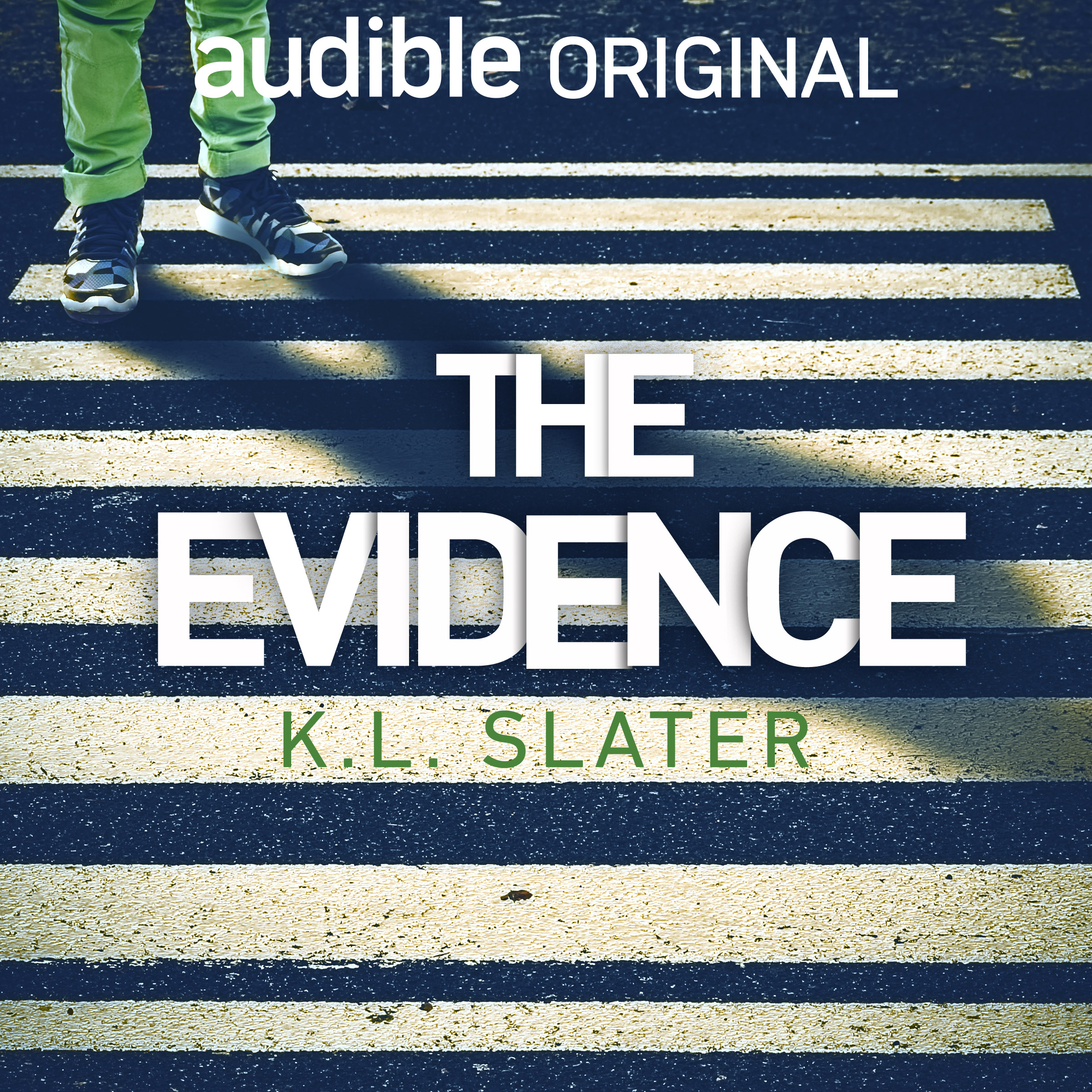
THE EVIDENCE, a psychological thriller I’ve written exclusively for Audible published 11th February 2021.

A bit about your process of writing.
I work best during the morning. This discipline is a throwback to working a full-time day job and writing between 6-8 am before I went out to work. Sometimes I write in bed immediately after waking and, on a good day, I can get a couple of thousand words down before I get up. But usually, after reading and surfing online for a while, I go downstairs to my office and start work between 8 and 9 am. In pre-lockdown days we’d go out somewhere in the afternoons. Remember that?

Do you plan or just write?
I used to just write a short blurb and that was the extent of my natural urge to plan. But writing commercial thrillers and a few a year, means I now have to plan the book more thoroughly … thoroughly for me, anyway. I’ll do a long outline which I agree with my editor and then add to it as I start writing. I don’t know a lot about the story at the beginning of the process, I just have my initial idea and a sense of how I want it to feel. It doesn’t mean the plot can’t differ from the outline – it nearly always does – but in order to provide the twists and turns the modern reader expects, there has to be some element of planning.

What about word count?
I write a few books a year so it’s essential I’m disciplined about achieving minimum daily word counts when I begin a first draft. I try and get a basic draft down in no more than a couple of months so I’m looking at 1-2k a day. I often add substantial word count during structural and line edits. Sometimes I like to use an app on my phone called Focus Keeper. The ticking timer drives some people crazy but it keeps me … well, focused.

How do you do your structure?
I tend to draft out my initial outline in the form of five acts to start writing to a recognisable shape. But I’m not a slave to a turning point at 10%, another at 25%, that kind of thing. I just find it a useful template to get me started.

What do you find hard about writing?
Stopping. I find it so hard to break off or have a whole day off so I have to force myself as there’s a real world out there and real people I care about and want to spend time with. I’ve found getting out of the house is key to breaking the spell. I’m constantly striving to achieve that illusive but tempting cliché: work-life balance.

What do you love about writing?
I love how the world and characters I’m writing seem so real. I love that I’m earning a great living doing something I would do – and for many years did do – for free. And I love writing digital-first; it’s incredible that 6-8 months after having a new idea, the book can be out there.

Advice for other writers.
Write. Sounds obvious but most writers I know, myself included, have a precarious state of mind that is prone to self-sabotage and procrastination. So many new writers – I used to be one of them – spend too much time striving for perfection instead of getting the book down and then using editing as a powerful tool to refine the story. It’s really hard to get something good the first time around. I like to think of the writing process as a kind of sculpting: starting with a lump of clay and through many stages and revisions, finally ending up with something good.

The Evidence by K.L. Slater is available exclusively on Audible now.

Faith

Frost fiction, short stories, poems, non fiction, fiction.

Jeanie held her arms out to each side.  The balls of her feet balanced against the edge of the stage: her heels hung in the air.

“That’s it, Jeanie: now fall back and the other girls will catch you,” the teacher cooed.

“Well of course they will,” Jeanie thought.

She knew them.  Jeanie knew they’d do exactly as they were told.  Jeanie had dunked the geeky one’s head in the toilet just last week.  The spotty one still had a bust lip.

She closed her eyes and fell backwards.

There was a giggle.

Promo Image by Charlie Foster via Unsplash.

The first in a new series of 100-word short stories by Tim Austin at onewordonestory.org. Whatever genre you love, there’s a story you’ll enjoy.

Come back on Friday for another. See you then.