Bookshop.org Generates £1 Million for Independent Bookshops in Just Four Months

bookshop

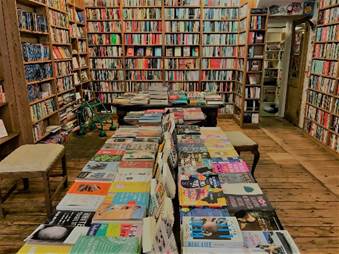
Chener Books (London)

200,000 customers flock to ethical ecommerce platform, as book buyers vote with their wallets to support the high street while shopping online

Independent booksellers report that Bookshop.org has helped them avoid putting staff on furlough, attract new customers, build an online presence, feel connected to their customer community and even open new stores

 Bookshop, the book buying site that empowers socially conscious shoppers to financially support independent bookshops when shopping online, has generated over £1million in profit for indie booksellers in just over four months of trading, with over 200k customers embracing the new platform to date.
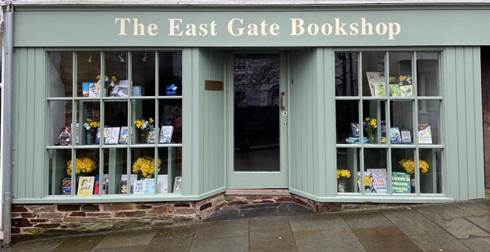
The East Gate Bookshop (Totnes);

At a time when the majority of the UK’s bookshops have been forced to close their physical stores due to lockdown restrictions, by choosing Bookshop.org book-buyers have generated over £1million in profit for the 410 independent bookshops using the platform.

 As of 4 February 2021, 82 per cent of sales on Bookshop were generated by titles selling four or less copies each, and 54 per cent from titles selling a single copy, demonstrating how the platform helps draw attention to books beyond bestseller lists and celebrates diversity within the publishing ecosystem.

Booksellers using the platform have reported the many ways in which Bookshop.org has been a financial lifeline in a particularly challenging time, with the additional income allowing many to avoid furloughing staff, pay out Christmas bonuses, strengthen their online presence to better compete online, and even open new stores.

Miranda Peake from Chener Books, London, who likewise hasn’t previously had the resource for online bookselling, reported new customers discovering her shop online: “I had no expectations when we joined Bookshop.org in November, but it was very successful for us right from the word go. I haven’t had the time or resources to set up an online shop, so having a well-managed, efficient and lovely looking website to direct customers to has been absolutely brilliant. It’s been so gratifying to see so many of our regular customers using the website, as well as lots of new customers, friends and contacts from further afield who are not able to visit the bookshop but want to support us. We are enormously grateful to be part of this initiative.”


Nigel and Claire Jones were able to open The East Gate Bookshop in Totnes in December. The co-founders said: “The positive impact of customers being able to buy from our shop has been immense. And it’s not just the revenue that Bookshop.org creates – which of course is essential. Having an online presence confirms to our customers that we are a ‘proper’ professional retailer; it’s what’s expected, but we’d never have the skills, time or the deep pockets to operate online at all without Bookshop.org. Bookshop.org arrived in the nick of time for us, I honestly don’t think we could have managed financially and emotionally without it.”


Bookshop.org offers an ethical online marketplace that ensures independent bookshops receive 30 per cent of the cover price from each sale they generate on the platform. Moreover, 10 per cent from any sale not attributed to a specific bookshop goes into the shared profit pool. In addition, a number of publishers – including Canongate, Atlantic, Murdoch, Profile, Serpent’s Tail, Faber, Pushkin Press, Scribe, Nosy Crow, Simon & Schuster, Pan Macmillan, PRH, Hachette, Usborne and Europa Editions – have chosen to forego their 10 per cent affiliate commission and opted for it to go into the shared profit pool, to be split equally by independent bookshops using the site.

A recent survey conducted by the Booksellers Association found that 80 per cent of booksellers had a “good” or “very good” experience of using Bookshop.org to date.

Meryl Halls, MD at the Booksellers Association, commented: “The £1m milestone for Bookshop.org is a remarkable moment for indie bookselling, and in the fight against Amazon’s dominance in the book market over the last 10 months.   For those booksellers using the platform, Bookshop.org has provided a lifeline, often, and an additional sales channel, to indie booksellers forced to close and otherwise struggling to provide an ecommerce offer to their loyal customers.  The team at Bookshop.org deserve huge credit for the speed of the launch, the empathy and openness they’ve shown to booksellers and the supportive community they’ve created for their users.    In our newly hybrid world, the need for online bookselling is not going to abate, and we are delighted that indies are now able to join the other high street booksellers, Waterstones, WHS, Foyles and Blackwells, in reaching book-buyers online – and we urge publishers and authors to link to specialist high street booksellers online, rather than lazily linking to Amazon, who certainly don’t need the money.”

 With over 6,000 affiliates – spanning publishers, authors, book bloggers and beyond – using the site to support bookshops, the early success of Bookshop.org has been welcomed by many publishers:


Stephen Page, Chief Executive at Faber, said: “A clear truth that has been emphasised this past year is that independent booksellers play a key role for readers in their discovery of a wide range of interesting books. The arrival of Bookshop.org ensures that independents now have a great partner whose service allows them to offer both a brilliant online and physical service to their customers.”


Bookshop was founded with the belief that independent bookshops are vital to our culture. As consumers are increasingly realising that where they spend their money matters, Bookshop.org offers an entirely new approach to online shopping, giving customers the power to support the local high street when they buy books online.


Highlighting recommendations from real booksellers, authors, publishers and beyond, Bookshop.org takes a human approach to book curation that avoids relying on algorithms, reflecting the unique browsing experience of a physical bookshop. Authors who have supported the platform by curating reading lists have often increased sales of the books featured, including: Elena Ferrante, Malorie Blackman, Marian Keyes, Nikesh Shukla, Julia Quinn, Edmund de Waal, and more.
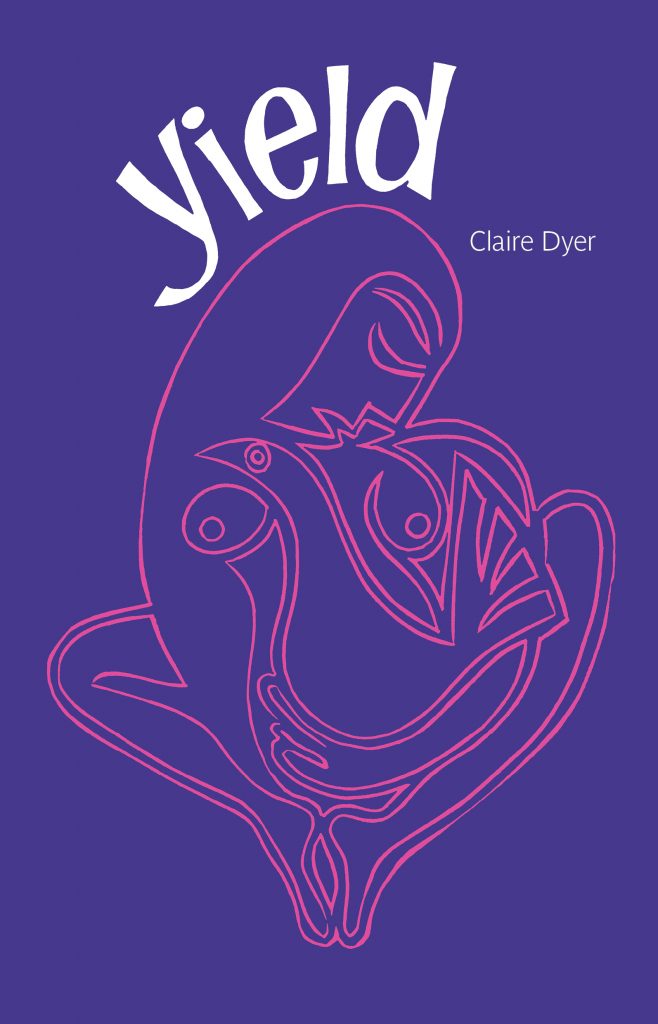


YIELD – CLAIRE DYER’S MOVING AND DEEPLY PERSONAL POETRY COLLECTION ABOUT HER CHILD’S TRANSITION FROM SON TO DAUGHTER

Reading Claire Dyer’s latest poetry collection, Yield, is to share an intimate journey told in a way very few people – if, indeed, anyone else – could tell it.

A collection of poems that tell a recognisable story is a rare and beautiful thing, but at times this story is not beautiful, although it does have a happy ending. As a mother, how do you feel when your son comes home and tells you that they are really your daughter? What does it mean to accompany them through their transition from one to the other?

The order of poems in any collection is key and Yield is punctuated by poems with the same name, but numbered; Yield, Clinic, Coming Out. They give the book unity and rhythm, and show the reader the key elements of the transition process, the ones that I guess everyone would go through.

Some readers find poetry difficult; I think because some poets consider their role is to obfuscate, but Claire Dyer’s style is very different. There is a clear communication of ideas, through a clever use of everyday language, for example the opening lines of Abroad:

“the waiters mistake us for sisters.
No, we say, laughing.

We know they know we’re not,
but we’re more than

who we seem.”

In this poem and in others there is a real sense of storytelling; vignettes from mother and child’s life before, during and after the transition process. Fireflies is about a sleepless winter night; the stunning Doing Cartwheels at the Ritz speaks for itself; Wardrobe the heartache of a mother clearing boyhood clothes – which has a truly joyful counterpoint in Shopping:

Let us go then, you and I, to Primark, Zara, Reiss.
The sky’ll be brilliant and,

around us, shoppers will burst into song,
dance on the up escalators and the down

as we load our arms with gorgeousness,
lacework brushing our shins.”

I do wonder if one of the reasons I love this poem so much is because I know Claire to be an expert shopper; so elegant in her own dress, and generous in her time to help those less  ‘expert’, like me. I remember once we spent hours in Reading as she guided my choice of the perfect handbag, which I would point out that was no mean feat as I detest shopping and had multiple – and not always compatible – criteria, for even this simple requirement.

There are other moments depicted in Yield that, having been alongside Claire for at least some of this journey, I recognise. To have listened as Claire talked about her son becoming her daughter, inch by painstaking inch, was a privilege and I was proud to be confided in, but not being a mother myself there was so much I could not understand.

Not least was that for a long time we called Lucy ‘L’. Having read one short poem, I now get it completely. And that is what great poetry does; it increases our understanding.

I wrote your names

                 with a knife on my heart and voiced them
in black ink and blue ink   I typed texted

and dreamt the names you were meant to pass on
that you’ve passed on now you have names

I can’t say because try as they might they’re not in my chest like
the rest that are still holding fast to the bones

in my back and my neck and my mouth is full
of dry grasses rivers and trees”


Yield is Claire Dyer’s third poetry collection and is published by Two Rivers Press.


WELSH WRITING WEDNESDAYS: EVONNE WAREHAM ON WALES AS A SETTING FOR FICTION

You’ve probably noticed that many romance novels and some crime stories are set in picturesque locations in the British Isles – Scotland and Cornwall are particular favourites.You don’t get books set in Wales quite so often, although dramas like The Pembrokeshire Murders are putting Welsh settings on the screen.

I’m a Welsh writer, living on the South Wales coast, who once worked for the National Parks. That’s a lot of baggage. I’ve set books in Wales in the past and am ambitious to do more. I write in the genre romantic suspense, which is better known in the USA, less so on this side of the Atlantic. If you’ve read books by Nora Roberts, Karen Rose or Karen Robards you’ll have an idea of what I am talking about. Those books are set in places like Sacramento, Washington and New Orleans, or sometimes in the American farmlands or backwoods.

It’s not so much the Welsh urban settings that appeal to me – although I’m sure that Cardiff and Llandudno can be interesting locations, if not sounding quite as glamorous as New York or Los Angeles. The attraction of Wales for me is the potential of the rural and coastal landscape, and the way that it can be turned in two directions. Wales is blessed with mountains, big skies for cloud watching and star gazing, and a beautiful and dramatic coastline, accessible from a coastal path that circles the entire country.

Is there anything more romantic than a deserted beach at sunset on a warm summer evening? A place for lovers to discover each other. But give the story a twist – the same beach in winter, or at night, with a storm blowing, and you have the backdrop for mayhem. A seaside or country cottage can be an idyllic bolt hole from the world or a deserted and lonely trap, with a heroine on the run. Writers think about these things. I’m often told that taking a walk with an author who is sizing up the surroundings for a good place to bury a body is a disconcerting experience. You get the picture.

The historic legacy of Wales, from castles to folklore, is another attraction. Welsh castles range from Castell Coch, a quirky Victorian Gothic Revival built on thirteenth century foundations, to massive medieval fortifications like Caerphilly, which were anything but quirky. The myths and legends of Wales are rich in magic and the supernatural. Traditional customs, like the Mari Lwyd, a poetic wassailing party featuring a horse’s skull, have plenty to tingle the spine.

There is also the attraction of the natural world. One of the perks of being an author is the ability to make your own weather, and Wales has plenty of that to choose from. If you need a fierce storm to strand your hero and heroine together, you’ve got it. Two of the things I like to play with as a writer are the impact of silence and writing against expectation of the setting. The silence of a lonely location can be peaceful or sinister, or even better, progress from one to the other.  A setting can echo a character’s mood – like a wet day reflecting bad news, but it can be very effective when bad things happen in good places. Being surrounded by beauty and sunshine can make a threat even more devastating.

Those are the things I get from setting a book in my home country. For me the landscape has romantic beauty and a wild and potentially sinister edge. As a Welsh writer, I want to be able to share that with readers.


CARIADS’ CHOICE: FEBRUARY BOOK REVIEWS

Jill Barry The House Sitter, reviewed by Jessie Cahalin

Characters’ actions are measured with precision in this gripping psychological thriller. The house sitter, Ruth Morgan, is complex and plans to be an integral part of the Deacons’ lives.

‘A fledgling idea trembles in the dark recesses of Ruth’s imagination… Up went the hand to stroke her throat.’

Shadows of the past haunts Ruth. Lost in the tension at the midpoint of this novel, I fell into the abyss with Ruth and worried that I felt empathy for this dangerous character.

Bethan is Ruth’s counterfoil, and her investigation orchestrates intrigue. Love is in the air for Bethan and this adds a hopeful dimension in this thrilling narrative.

Clues and tension are skilfully woven into the characters’ viewpoints. Clever writing with an intricate narrative that will chill you to the bone.


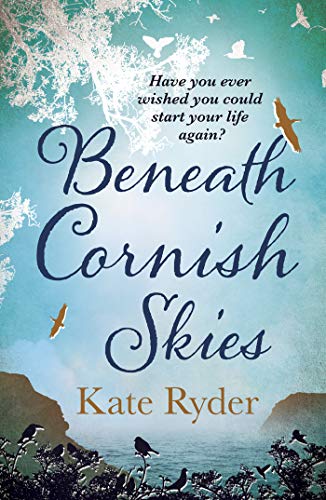
Kate Ryder Beneath Cornish Skies, reviewed by Jane Cable

Beneath Cornish Skies tells the story of Cassandra Shaw, who leaves behind her outwardly perfect but soulless life in Sussex to work for a chaotic Cornish family. The contrasts between the two settings are sharp, but united by the author’s love of horses, nature, and the lore attaching to the natural world.

This book blends romance with new beginnings and a ghostly past. Don’t be put off by the fact it’s described as ‘book 3 of 3’ on Amazon, it is in fact a standalone novel and has achieved a bestseller flag in paranormal ghost romance.


Naomi Miller Imperfect Alchemist reviewed by Kitty Wilson

I adored this well-written tale of two women at opposite ends of the social spectrum in the sixteenth century coming together and working in tandem in herbalism and alchemy. Their story covers a myriad of themes from both lives, including the suspicion and misogyny behind witchcraft trials in the villages and their impact alongside the high arts represented by Mary Sidney’s renowned Wilton Circle. Although a fictional account of The Countess of Pembroke’s life, the author’s knowledge of history and the literature alongside her skill at writing makes this a novel that pulls you in utterly, making me as a reader willing to believe this is how it was. It certainly is a fitting tribute to a woman who was at the forefront of new thinking and intellectual debate in a time women were overlooked in every arena. I loved it and shall be looking for more books from this author.


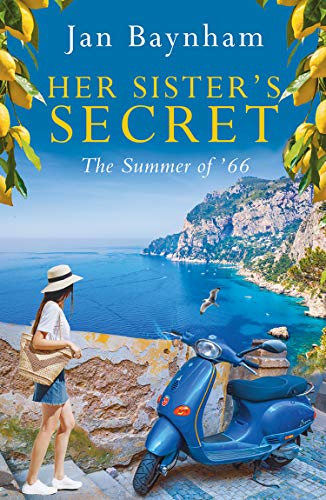
Jan Baynham Her Sister’s Secret, reviewed by Imogen Martin

Jan Baynham’s second novel slips seamlessly between Rose in the 1940s and Jennifer in the 1960s. It opens in a mid-Wales village where Rose works at the Big House whilst Mam tries to keep the peace at home. When Rose meets Italian prisoner-of-war Marco, the sparks fly. I was fascinated, as I have a friend whose Italian father and Welsh mother met in exactly this way. Unlike my friend, there’s no happy ending for Rose when her domineering father finds out about the relationship.

In the 1960s, the family secret comes tumbling out after a chance discovery by Jennifer. Will she have the courage to travel to Sicily to find out the truth?

Jan Baynham captures the excitement of standing on the cusp of a new life in Cardiff, the big city, in contrast to the vivid portrayal of small Welsh village life.

Her Sister’s Secret is a cracking read with passion, hurt and wisdom intertwined.  Whilst it has parallels with Jan’s debut novel Her Mother’s Secret, this is a stand-alone saga.


SLOW AND STEADY WINS THE RACE – JANE CABLE ON HER NEW PUBLISHING CONTRACT

I have never particularly seen myself as a tortoise, but boy oh boy, has this been a long time coming. Today it was announced that I will be writing emotional women’s fiction for One More Chapter, a digital first division of Harper Collins, under the name of Eva Glyn.

I think all writers have an idea of where they want to be, and for me, no doubt influenced by Harper Collins being the sponsor of The Alan Titchmarsh Show’s People’s Novelist competition in which I was a finalist, they were the publishing house at the top of my wish list.

Having failed to win the competition and so any short cut to publication, I might have guessed I was in for the long haul, but at that stage I didn’t realise quite how long it would actually be. But fairly early on in my career I had a near miss when after a one-to-one at Winchester Writers’ Conference a young editor called Charlotte Ledger requested the full manuscript of The Faerie Tree.

Nothing came of it, and the book became my second indie novel. And as my career progressed I was aware of Charlotte’s rapid rise through the ranks of Harper Collins’ digital imprints and wondered if perhaps at some stage it would be worth submitting to her again.

In the meantime I had the opportunity to work with Amy Durant and when she set up Sapere Books was happy to follow her there. And while I am happy to stay with Sapere too, I still hankered after what a bigger publisher could offer in terms of multiple platforms and international clout.

By the time the Romantic Novelists’ Association conference came around in 2019 I had a new manuscript in my locker that I knew wasn’t a Sapere Book. I saw Charlotte Ledger was offering one-to-ones and I was lucky enough to grab one. We met again. And again she asked for the full manuscript, but this time to be sent to her personal email. I felt I was one step closer.

In the end Charlotte didn’t take that book, but the door was kept open. Last March I had a fifth anniversary blog tour for The Faerie Tree and the response was so overwhelmingly positive I brought the title up to date, gave it a little polish, and after much encouragement from Susanna Bavin, sent it off to Charlotte.

She asked me to do some rewrites and they were so in line with my own thinking for the book that I did. The next thing I knew we were talking about author brand and slowly it dawned on me she was offering me a contract. And the author brand she was suggesting was exactly where I wanted to be – emotional women’s fiction.

There would be no ghostliness, no looking back at the past, so these would be different to my books for Sapere, so we decided they would be published under another name. I chose Eva Glyn – Eva for my father’s mother, and Glyn for Glyn Jones, the Welsh author who was a great friend of my parents.

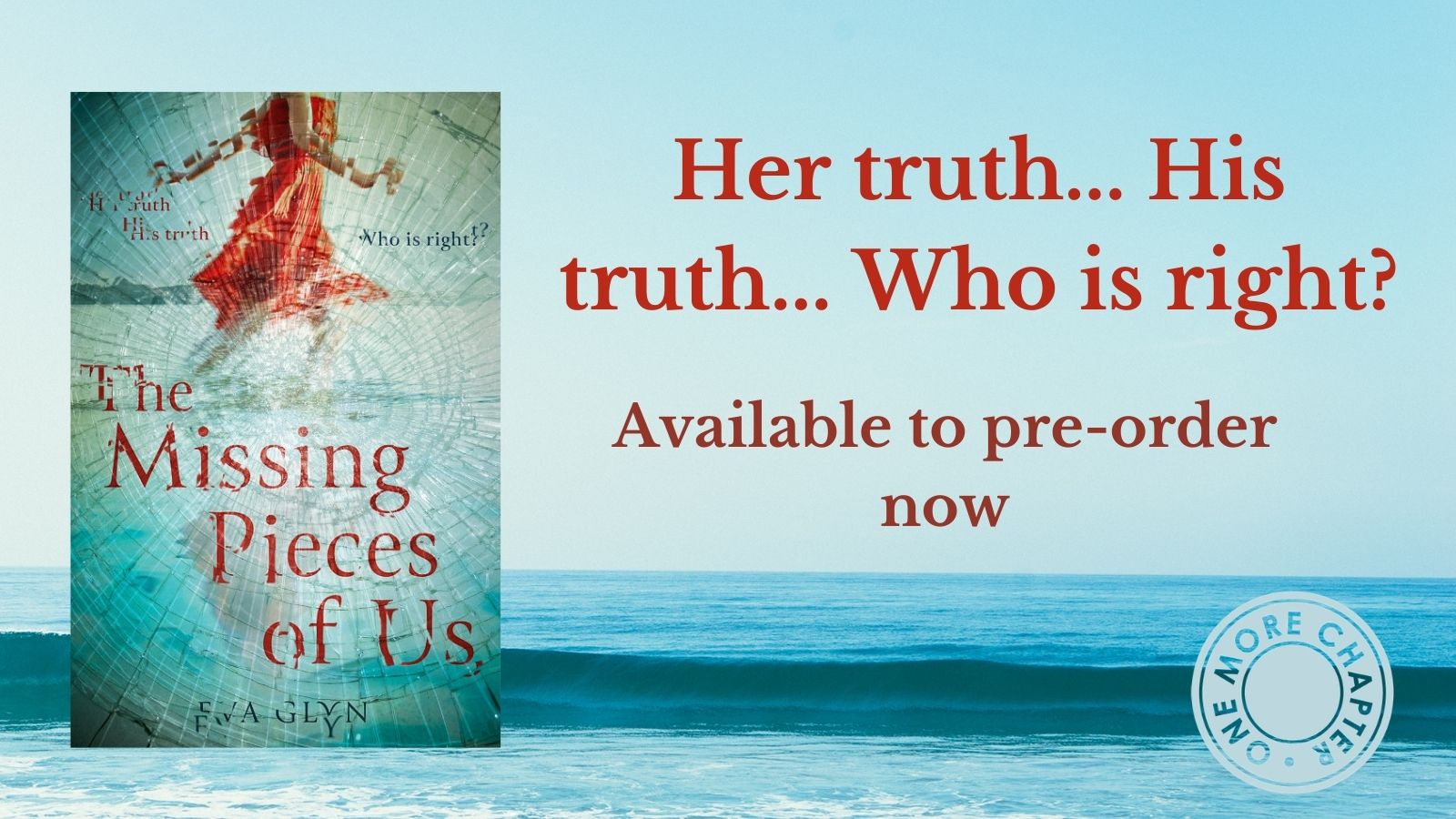
Today is a proud day because for the first time I can talk about the deal as the cover for The Missing Pieces of Us has been revealed and the book is available for pre-order. And it’s only taken me nine years…


Marian Keyes Shares Her Ultimate Comfort Reads for Hard Times.

International best-selling novelist Marian Keyes (Watermelon, Rachel’s Holiday and The Break) has today revealed her Ultimate Comfort Reads for challenging times, with a curated list shared on Bookshop in support of indie bookshops, and to mark the paperback publication of her globally acclaimed Sunday Times No.1 novel, Grown Ups (Penguin Michael Joseph, £8.99).

Marien Keyes, comfort books, Marien Keyes, comfort books,

Confessing she’s “personally … desperate for a holiday from reality and from my head”, Marian’s recommended reads will offer readers some much-needed solace and escapism into a world of bookish pleasure during lockdown, and beyond.

Marien Keyes, comfort books,

From Booker-nominated debut novels to fiercely funny memoirs, and from heart-warming stories turned into much-loved TV series to feminist retellings of traditional fairy tales, Marian’s curated list aims to inspire, engage and entertain, as an antidote to the difficult times we’re living in.

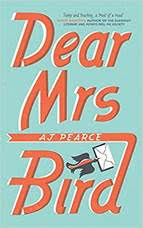
Marian’s list includes: Stella Gibbons’s Cold Comfort Farm, a classic comedy novel named one of BBC ‘100 Novels That Shaped Our World’; The Surface Breaks by Louise O’Neill, a feminist reimagining of The Little Mermaid; My Sister, The Serial Killer by Oyinkan Braithwaite, the sensational debut novel nominated for the Booker Prize in 2019; Love, Nina by Nina Stibbe, a laugh-out-lout memoir adapted into a popular BBC series by Nick Hornby; Eligible by Curtis Sittenfeld, a Pride and Prejudice catapulted into our modern world; Dear Mrs Bird by AJ Pearce, the Sunday Times best-seller chosen as a Richard & Judy Book Club Pick; the WWII romance The Morning Gift by Eva Ibbotson, based on the author’s own experience as a refugee.

The list has been released by Bookshop.org – the alternative to Amazon for shoppers wanting to support independent bookshops when they shop online. Celebrated by critics, readers and booksellers, Marian is known for her untiring support of independent bookshops. She was one of the first authors to take part in “At Home with Four Indies”, the virtual series of events launched in lockdown by independent booksellers from Linghams (Heswall), Booka (Oswestery), Book-ish (Crickhowell) and Forum Books (Corbridge).

Marian Keyes, author of Grown Ups, said: “Life is very challenging at the moment and personally, I’m desperate for a holiday from reality and from my head. Reading has always been a huge pleasure for me but because so much fear is circulating, there are lots of subjects I’m currently not able for. I’ve put together a collection of titles that I’ve found engaging, uplifting, distracting and entertaining. I hope that some of them give you enjoyment and respite. I am thrilled to share this list on a platform that supports the vital work of independent bookshops.

One of the most successful novelists of all time, Keyes’ books have sold over 30 million copies in 33 languages, and her writing has received several accolades, including the British Book Awards, the Irish Book Awards and the inaugural Melissa Nathan Prize for Comedy Romance. In the last year, Marian has been chair of judges for the Comedy Women in Print prize, and the second series of her instant hit, Between Ourselves, will air on BBC Radio 4 on 18 February 2021.

Marian joins a growing number of authors to share a curated reading list on Bookshop.org, such as: Elena Ferrante, Malorie Blackman, Nikesh ShuklaEmma Gannon and more. Author reading lists on Bookshop.org have proven to have a tangible impact on sales figures for the books they feature, shining a light on many lesser known works beyond bestseller lists.

Marian Keyes’ Ultimate Comfort Reads:

  • The Secret Countess by Eva Ibbotson (Pan MacMillan)
  • Oh My God, What A Complete Aisling by Emer McLysaght and Sarah Breen (PRH)
  • I Never Said I Loved You by Rhik Samadder (Hachette)
  • Gravity is the Thing by Jacqueline Moriarty (Atlantic)
  • Standard Deviation by Katherine Heiny (Harper Collins)
  • Love, Nina by Nina Stibbe (PRH)
  • Professor Chandra Follows His Bliss by Ranjeev Balasubramanyam (PRH)
  • Writers and Lovers by Lily King (Pan MacMillan)
  • The Surface Breaks by Louise O’Neill (Scholastic)
  • The Loveliest Chocolate Shop in Paris by Jenny Colgan (Little, Brown)
  • Cold Comfort Farm by Stella Gibbons (PRH)
  • Filter This by Sophie White (Hachette)
  • The Diary of a Provincial Lady by E.M. Delafield (PRH)
  • My Sister, The Serial Killer by Oyinkan Braithwaite (Atlantic)
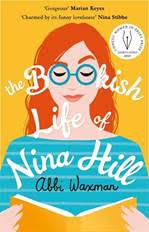
  • The Bookish Life of Nina Hill by Abi Waxman (Hachette)
  • If I Never Met You by Mhairi McFarlane (Harper Collins)
  • Odd One Out by Lissa Evans (Simon & Schuster)
  • Such A Fun Age by Kiley Reid (Bloomsbury)
  • The Switch by Beth O’Leary (Hachette)
  • The Cazalet Chronicles by Elizabeth Jane Howard (Pan MacMillan)
  • Dear Mrs Bird by AJ Pearce (Pan MacMillan)
  • Brother of The More Famous Jack by Barbara Trapido (Bloomsbury)
  • The Morning Gift by Eva Ibbotson (PanMacMillan)
  • Eligible by Curtis Sittenfeld (Harper Collins)


What would you add?

www.Bookshop.org

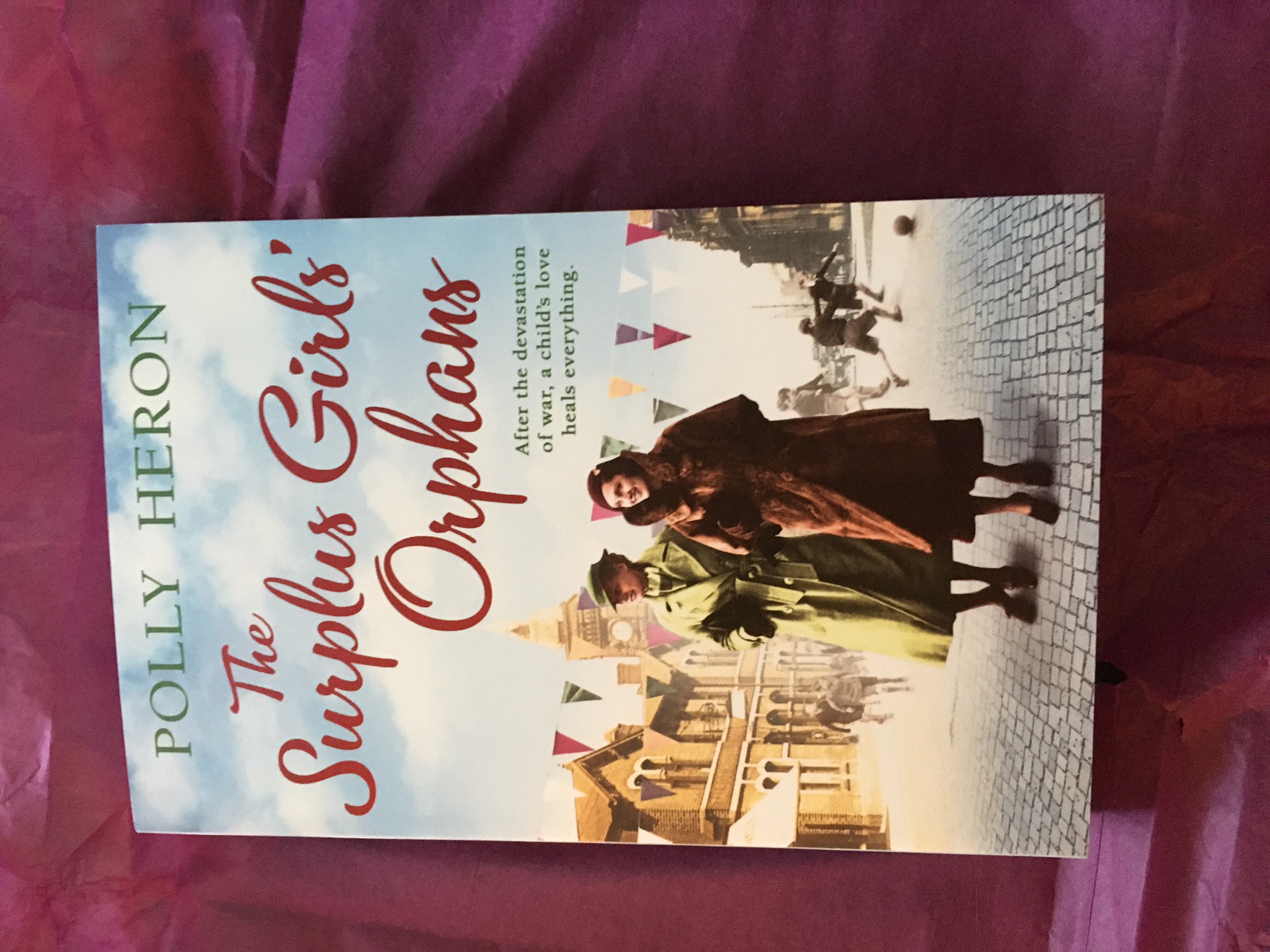
THE SURPLUS GIRLS’ ORPHANS – POLLY HERON’S EXCEPTIONAL NEW SAGA

Much as I enjoyed Polly Heron’s The Surplus Girls, I can honestly say that The Surplus Girls’ Orphans is the best saga I have read. The restricted lives of women in the inter-war period is captured perfectly, but with a fresh eye and brilliant story-telling that avoids the ‘grit and grim’ which I find makes some sagas less than a pleasure to read.

I know, as a writer, that the essential structure of a saga is to pour increasingly huge problems onto the heroine, twisting and turning the plot until she (apparently) has no way out. But of course, as a reader, you know she will find one. While all the time I find myself wondering how much more of the unremitting misery I can take.

Polly Heron’s books are not like that. There is joy and beauty in small things; in the orphans playing pirates on a wet evening, in the barley-sugar legs of a washstand, in children dancing around a maypole. And the plots and subplots are so beautifully drawn together than even when life is incredibly tough – which was, after all the reality of the time – as a reader you are led from one storyline to another without ever having time to get depressed. Angry, frightened, heart-warmed, amused… but never down right miserable.

Drawing on some of the characters in The Surplus Girls, and still wound into the story of the Miss Hesketh’s business school, The Surplus Girls’ Orphans is a standalone novel in its own right, although readers will get more out of the story having read the first book. As well as the Hesketh family, two of the Layton children feature, also as Mrs Atwood, and of course the backdrop is still the Chorlton area of Manchester.

However there is an entirely new main character in the form of Molly Watson, who is suffering perhaps the longest engagement ever, to a penny-pinching, controlling man. Deciding she would rather be a surplus girl, to the horror and shame of her family she breaks free to find work in an office, and then the orphanage, where she looks to change the lives of those around her and not just her own.

Her relationship with Aaron Abrams unfolds beautifully; the initial misunderstandings never overdone, the attraction between them perfectly paced. Nothing is sugar-coated and although the ending is perhaps inevitable (as it has to be to satisfy the genre) their journey feels unforced in a way all the best fictional romances do.

The subplots work perfectly too, in symmetry with the main story. A single thread connects Molly and the Hesketh household as secrets are revealed, with certainly some big surprises along the way. And Jacob Layton’s bullying at the hands of the inescapable thug Shirl brings an at times terrifying tension to the book.

Polly Heron has tremendous skill as a story-teller, but on top of that the quality of her writing shines through. She has a knack of wasting not a word on description, but of weaving detail into the action so the reader had a perfect mental image of a place and time as the story unfolds around them.

Overall, this is a brilliant book. I smiled when I read the acknowledgments, seeing that some of it had been written while we were on a retreat in Bath. I clearly remember Polly at the kitchen table, writing in longhand in a large notebook, and it is gratifying to think that as well as friendships, such a fabulous novel was forged at that time.

WELSH WRITING WEDNESDAYS: SALLY SPEDDING ON LIVING OTHER LIVES

‘Write what you know’ is a common enough diktat for the newbie writer, but how about the more subtle ‘write what you sense’ which carries far more possibilities. Material delivered by mysterious inner forces, as opposed to merely outer observations. Why? Because I’m a believer in the transmigration of souls, whereby a departing spirit finds the first empty womb to inhabit, as espoused by the hounded, tortured Cathars particularly from that beautiful, historic Ariège region of France during 1294 – 1324.

To visit it, having read the historian, Emmanuel Le Roy Ladurie’s moving account of their lives in the hamlet ‘Montaillou’ and its seemingly still mediaeval surroundings, is to experience, like the shepherd Pierre Maury, mysterious timeslips. When interrogated under torture, as to where he’d been on a particular day, he replied, ‘out looking to find my shoe.’
‘What shoe?’ asked his interrogator.
‘One that I cast when I was a horse.’ Sealing his fate.

To read of these Cathars’ cruel deaths in Pamiers, Foix, and in Carcassonne’s ‘Tower of Justice’ during the early fourteenth century, is chilling, yet these gentle people who posed such a threat to the Catholic Church, will never be forgotten, and whenever I start new work, whether a poem, short story or novel, conflict between good and evil begins.

Having reluctantly moved from our cottage near the River Sawdde in Llangadog, to urban Northampton, because of my now late artist husband Jeffrey’s new post at its university, I felt bereft, so, using a ruler to find the nearest coast, found where the River Nene, dividing Norfolk and Lincolnshire, meets the North Sea. Even now, that sense of death lurking in its silence, still lingers. I soon began ‘digging’ then writing the first few chapters of a part-contemporary/part-historical novel provisionally entitled, ‘Snare.’

Imagine my surprise having discovered Hilaire Belloc’s vivid collection of essays, ‘Hills and the Sea,’ in which he describes how once a newly-cleaned footbridge was re-opened in Sutton  Bridge, those who’d been waiting then walked across it ‘into the Wringland.’ This name intrigued me, but learning it had evolved from ‘wrungo’ the old High German for ‘snare’ added to the weirdness. I met several people living on the Fens who wouldn’t allow their children to go out after dusk because of ‘evil spirits.’

‘Wringland’ was the first in a two-book deal with PanMacmillan in 2001. Here, the ghost of Martha Robinson – one of the last to be publicly executed in 1862 – tells a fragment of her story before each chapter, in which young, keen Abbie Parker, a saleswoman in a new housing development, arrives at its Show Home to find the door already unlocked, the alarm disabled, and a strange, black-clad woman sitting by her desk demanding Plot 2 be reserved for her. Someone badly wronged, seeking justice. But at what price for Abbie, with her new career?

While looking for a holiday home in France, we’d stopped by the Grotte de Lombrives near Tarascon, where I immediately began shivering with fear and begging Jeffrey to drive on. Only afterwards did I learn from my Dutch aunt how Frenkel – my middle name – evolved from those Franco-Raphaelite Jews, purged by the Spanish Inquisition. Many of whom were walled up alive in that very same grotto. This might explain my claustrophobia. I still can’t use the Underground, lifts or aeroplanes. Meanwhile, France with its relatively few cremations, although harbouring so much dark history, continues to inspire my later books.


http://www.sallyspedding.com