When I Was Young By Mary Fitzgerald Book Review

When I Was Young By Mary Fitzgerald Book ReviewWhen I Was Young quickly becomes gripping. It is hard to put the book down as you just want to know what is going to happen next. It is not immediately obvious and you wonder what secrets this family has. The characters draw you in with their mysteriousness and you wonder what it would be like to live in a post-world war world. With all of the scars and memories; the trauma and loss. Secrets can be toxic and so can lies. Nowhere it this most clear than in 1950s postwar France.

Eleanor is only 16 when she goes to the Loire Valley on a French Exchange. But her maturity and intelligence is beyond her years. Her arrival in France is only welcome by some of the family she is to stay with, and initially she cannot help feeling that it is her fault. At home her mother works the farm as her father sustained serious mental and physical injuries whilst he was a prisoner of war in a Japanese camp. Throughout the story Eleanor becomes even stronger, she becomes a women.

Eleanor falls in love in France, but love is always complicated. I do not want to give away too much of what happens- always hard in a book review- but the book is wonderful at capturing emotion and the fact that home can be anywhere, and when you find it, that’s it.

This is a wonderful book that you will want to read all the way through to the end without stopping. Highly enjoyable.

Published by Arrow and out on the 27th March 2013. Also available as an eBook.


On the backcover:

‘When I was young the war started. When I was young my father was a soldier. When I was young I moved to the country. When I was young I went to France and fell in love’


1950

Eleanor is sixteen when she goes to the Loire Valley on a French Exchange. But the beauty of her surroundings are at odds with the family who live there. It is a family torn apart by the memories of the German occupation, and buckling under the burden of the dark secrets they keep.


Etienne, the dark and brooding owner is friendly, but his wife Mathilde’s malicious behaviour overshadows Eleanor’s days.


As the secrets reveal themselves one by one, Eleanor begins to understand the terrible legacy of war, and when death comes to the vineyard, she learns the redemptive power of love.

When I Was Young

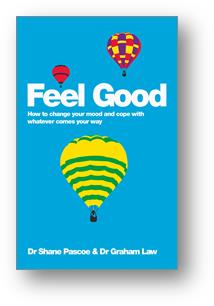
Feel Good: How To Change Your Mood And Cope With Whatever Comes Your Way

feel good

By Dr Shane Pascoe & Dr Graham Law

Published by Capstone, February 2014

Paperback, £10.99


If you are feeling down, overwhelmed, stressed or depressed then this book takes two of the ‘it’ therapies of the moment- Mindfulness and Cognitive Behavioural Therapy- and combines them to get you back on your feet and keep you there.

It is easy to read and apply thanks to its invaluable post-it technique and lay out. It also has an entire chapter on relaxing and the stuff on confirmation bias is very interesting. The book is like you are being talked to and supported by a friendly, intelligent and concise friend.

The book is actually fun and enjoyable to read, surprising considering its subject matter. It has a unique combination of science and psychology which really works. It also has exercises and is practical and accessible.

A very good and helpful book.

Feel Good: How to Change Your Mood and Cope with Whatever Comes Your Way

Mood can affect every aspect of life, from performance at work to personal relationships. Being able to take control of moods, rather than have moods control them, is something all the most successful people have in common.

In their new book, authors Dr Shane Pascoe and Dr Graham Law combine techniques from two powerful, complementary therapeutic approaches – Cognitive Behavioural Therapy and Mindfulness – to help readers keep their spirits and confidence high and instil a more upbeat, positive, can-do attitude, come what may.

Packed with practical information on how to start feeling happier and more positive about life, and optimise how you deal with people and situations in life and at work, this expert guide to beating stress and anxiety is designed for quick reference, letting readers access practical information relevant to how they are feeling at that moment.

Individual chapters cover areas including anger, self-efficacy, distress, unhappiness, well-being and happiness, self-esteem, leading a balanced lifestyle and relaxation techniques. The book finishes by discussing “Where to go from here?”.


For those that are feeling overwhelmed, overstressed, or just plain down about life, Feel Good is a practical, inspirational guide to help manage moods, improve outlook and beat stress and anxiety.


Feel Good: How to Change Your Mood and Cope with Whatever Comes Your Way

New York Times Bestselling Author Elizabeth Buchan | Writer Interviews

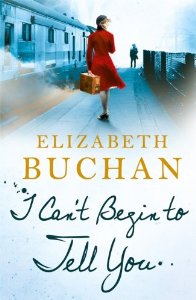
Elizabth Buchan I Can't Begin to Tell YouWhat is the key to writing a good romance novel?

Good question and I think the answer is the same as it would be if you asked: what is the key to writing a good novel…? The answer must be absolute commitment to get the material down onto the page in a way which is truthful, resonant and as gripping as you can make it. That includes the love story and the emotional roller coaster of it, the thriller, the war drama and delicious social comedy. I would like to point out that these aims sound very simple and easy to achieve … but, in my experience, they are anything but.

Do you have a favourite book that you have written?

No, they are all my children… having said that some were easier to produce than others. Revenge of the Middle Aged Woman tripped off the pen. So did Daughters and I Can’t Begin to Tell You

What is your writing routine?

Breakfast with newspaper (and cats). I cannot go without any of those. Then, out for power walk around Clapham Common (can’t go without that either). I usually settle into the office about 9.30 where I write until lunch time and then again through the afternoon. If I am on the final stages of a book, I will be work until quite late.


How do you come up with your ideas?

I wish I could tell you. I just pick up something – from a book, the paper, a conversation and, suddenly, I seem to have a subject. But I have to wait for that coup de foudre to happen. It is useless to try and force yourself to write about a subject with which you haven’t fallen in love.


Do you ever get writers block?
Yes. The trick is to do something deeply boring – such as the ironing. Exercise is another way of letting the brain solve a problem without you being aware of it consciously. Also… ahem… I find a little light retail therapy works as well.


How long does it take you to write a book?

Anything from about eighteen months to two years


Advice for wannabe writers?

Do it. Don’t talk about it. Don’t dream about it. Don’t put it off.
Do it. Try and isolate a part of the day in which you function best (are you a night owl or a lark?) and set yourself a realistic target a day. Half a page. A page. It is amazing how it grows and observing it grow encourages you onward.


Best piece of advice you have ever been given?

Was it Bernard Shaw who said: ‘If you fail, pick yourself up and fail again better’. (I am sure someone will know the quotation).

Favourite authors/books?

Charlotte Bronte’s Jane Eyre, Ian McEwan’s Atonement, Anne Tyler’s Breathing Lessons Richard Holmes’ Footsteps, Kingsley Amis’ Lucky Jim, William Boyd’s Any Human Heart and Robert Harris’ Enigma. I have many more.

You are a judge for the Costa awards. Is it hard choosing a winner?

Extremely.

You review for The Sunday Times, how do you write a good book review?

Reviewing is a different animal from judging. It acts as a form of introduction to the reader. In effect you, the reviewer are saying: this is the book, this is what it is, this is how well I think it works and, now, it is up to you. If you can relay over the flavour and substance, offer acute reflection and perceive it fairly you are doing a good job. You are not really there to entertain. Having said that, reviewers who write brilliantly deservedly have a following.


What’s next for you?

I am writing the next novel, Aftermath, which is set in South London just after the Second World War. In it, I will have a fractured family who show how difficult it was to pick up the pieces having experienced violence, disruption and hatred of an enemy. There is also a death. Is it suspicious or not?

Elizabeth Buchan’s latest novel, I Can’t Begin to Tell You, is published in Penguin.