Words for the Wounded: Review of the Third Place Entry

Words for the Wounded Independent Author Book Award 2016

The Secret of Skara Vhore, by Jennifer M Calder by Margaret Graham

(published by Matador) 
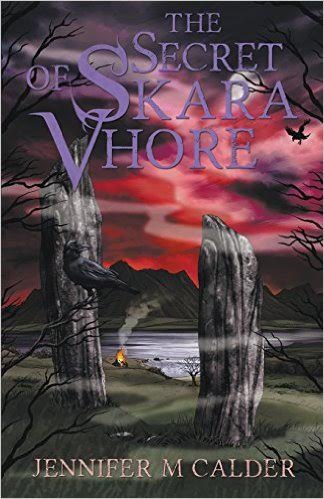
skara vhore

‘A great setting and good tension between a real and fantasy world… the loneliness of an unwanted teenager discovering a world where good and evil battles… great concept and world building…’ Felicity Trew. (Caroline Sheldon Literary Agency) 


Katie is a lost and troubled teenager who is claimed by distant, unknown relatives and is dispatched to a remote Scottish island. Distrustful of the world, she slowly accepts the friendship of perceptive Morag, mischievous Robbie and the reticent Kirig, a strange boy who lives in the hills. But sinister and ghostly events threaten them as past time spills into the present. Katie struggles to uncover her forgotten history but then is asked to risk the lives of those she loves in order to battle against the forces of chaos and fulfil her destiny. Set in the highlands of Scotland, The Secret of Skara details the battle between good and evil, as well as the loyalty among friends. 


Judge’s comments: This Young Adult novel (the first of a trilogy) has a perfect setting – the loneliness of an unwanted teenager discovering a world where good and evil battle. It opens with an anonymous boy stumbling through a moorland landscape with no clue to its time or place. The next chapter gives us an unnamed girl in an all-too-real  – and  equally desolate – contemporary England town. The origins of these two children, their coming together and its consequences, form a great setting and tension between a real world and fantasy world.


Katie is a troubled teenager with a buried past and Kirig is a strange and almost silent boy. Together with two other children, perceptive Morag and impish Robbie, they must find their way through the confusion of past and present to a new understanding of who they are.


Calder creates both the wilderness of a Scottish island and the equally bleak desert of a run-down English town with a confident use of detail and it is so nearly ‘there’.  However, with an eye to any forthcoming novels in the series: sometimes the writing can be quite dialogue heavy which unravels the pace and sometimes the Young Adult voice doesn’t grab and pull in the reader, (essential in this genre). Maybe change the title – it must speak to the audience.


An interesting novel, a great concept and world building. A worthy 3rd place.
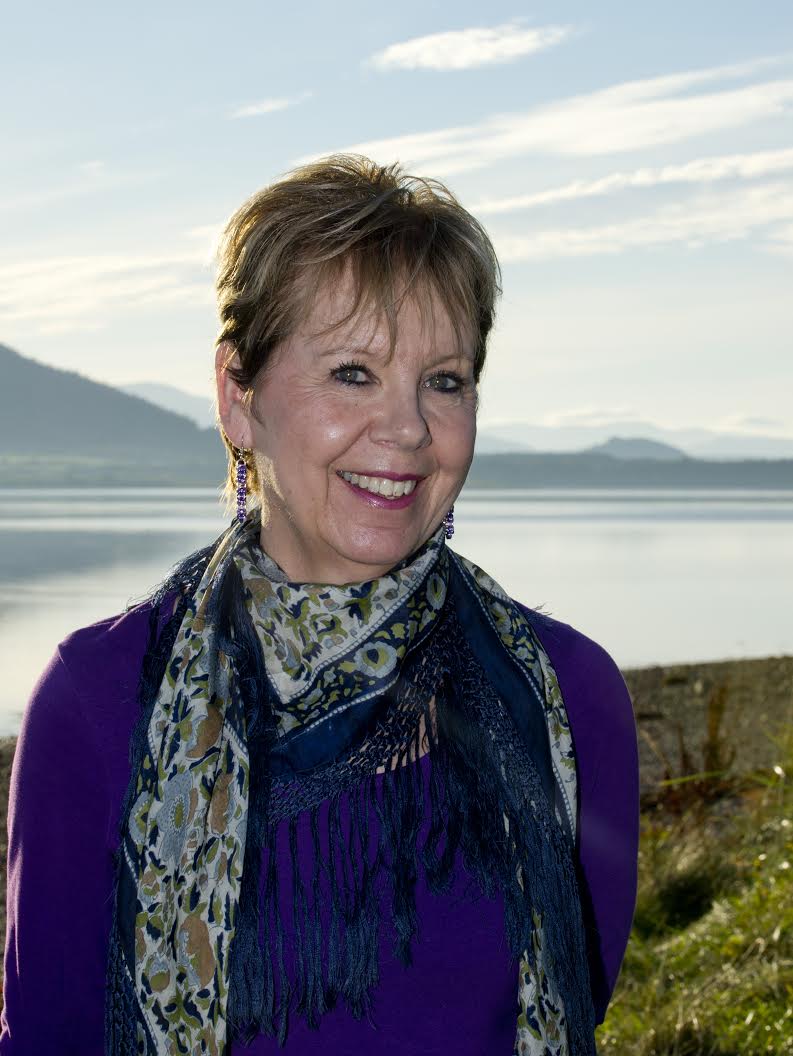
About Jennifer M Calder:
jennifercalder

Jennifer studied English Language and Literature at Edinburgh University. From childhood she has had a fascination with words and story-writing and during her time as a full-time mother she wrote for her own children.

On returning to the classroom Jennifer taught in inner-city schools in England, where her expertise lay in the field of children’s literacy. Later came a career-change into another area of ‘word work’: copy-editing and proofreading for academic publishers.

But when Jennifer returned to her home in the Scottish highlands – coming back to the sea,  heather and hills of the magnificent landscape that inspired The Secret of Skara Vhore – she made the decision that she would concentrate on her own writing.

While teaching Jennifer had met many pupils with chaotic lives who deserved to be rescued from their situations. At least in fiction she could make it happen for one troubled girl.

Happily, the novel has been very well received by reviewers and readers. Although officially aimed at the  teenage market the novel is being enjoyed by anyone who is into the dark supernatural.

The Secret of Skara Vhore is Jennifer’s debut novel.  She is now working on the second novel in this trilogy.


Words for the Wounded: Review of 2nd Place Winner

Words for the Wounded Independent Author Book Award 2016

Words for the Wounded: review of  2nd Place winner.

alisonclink

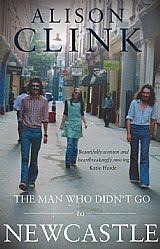
The Man Who Didn’t Go To Newcastle by Alison Clink

(published by Matador)


‘Lovely pace and voice… It’s a really moving exploration of siblings across their lives and most importantly, mortality.’

Felicity Trew (Caroline Sheldon Literary Agency)


‘In June 2007 whilst out walking my dog, I opened a text from my brother saying: Am in St Georges – Rodney Smith Ward. Ring me. A.’  Alison’s brother Adrian had been admitted to St. George’s Hospital in Tooting with a cut hand and low blood pressure. Tests had led to more serious concerns and he was calling on Alison to be with him when the consultant brought results of a biopsy on his lung. Alison heeded his call and took the train up to London the next day, only to find that the results weren’t available. She then went back to Somerset, with no idea of what the next few months would hold for them both. Whilst juggling her home life – at a time when her four children still lived at home – with long-distance hospital visiting, Alison tried her best to cope and make plans when Adrian eventually told her that, following the results, he’d been given a year to live. She had no idea then that he wasn’t being entirely truthful…

Judge’s comments: In The Man Who Didn’t go to Newcastle Alison Clink charts her care of her terminally ill slightly older brother, Adrian, with a lovely pace and voice and creates a really moving exploration of siblings across their lives and most importantly, mortality.  This is a situation which unearths not only memories of the past they have shared, but an awareness of their separate adult lives, especially as friends of his arrive to cheer him on. With each visitor it seems, another puzzle piece is put in place. Throughout this memoir Clink weaves the present and past together with a honesty which reveals the difficulties of caring for someone who is no more perfect than the rest of us.  There is not only sadness but humour, and implicit tension but it was felt that the diary structure was a little constricting. A more complex play with point of view rather than the date and time of the diary might have made it stand-out more.

It is interesting to consider how Clink’s undoubted and empathetic writing skills would be translated into fiction. She already writes short stories so let’s hope we don’t have to wait too long for an Alison Clink novel. Bravo. A worthy 2nd place.

alison-clink5

About Alison Clink:


Alison Clink
 is a writer and creative writing teacher living in Somerset.

Over fifty of her short stories have been published both in the UK and abroad. Several of her stories have been broadcast on Radio 4 and two short plays have been performed in Frome and Bristol.

Alison runs a drop-in creative writing group at Babington House near Mells, Somerset on Wednesday mornings 10am – 12.  This is for members of Babington House, guests of the house and my guests.

She also write critiques for aspiring writers, and gives talks to writing groups.

Her memoir, The Man Who Didn’t Go To Newcastle, is now published by Troubador and her first novel, Two Blackberry Lane is close to completion.  You can find her on facebook and twitter.
Alison says:


‘I am delighted to be supporting the ‘words for the wounded’ charity.’


www.alisonclink.co.uk


Words for the Wounded: Review of the First Place Entry

Words for the Wounded Independent Author Book Award 2016

1st place


Words for the Wounded- review of the First Place entry.


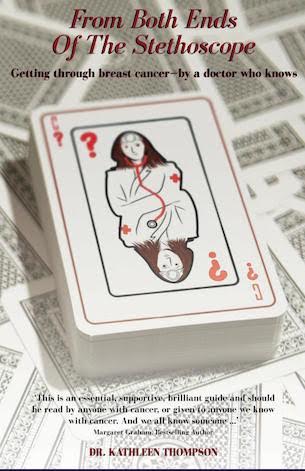
From both ends of the stethoscope:  getting through breast cancer by a doctor who knows. By Dr Kathleen Thompson.

(published by Faito Books)


‘Such a wonderful idea to bring doctor and patient together – like making a connection between the two worlds of Alice’s looking glass….  It is both accessible, well written and honest.’  Felicity Trew. (Caroline Sheldon Literary Agency)


Getting through breast cancer – by a doctor who knows


We forget, perhaps, that doctors can also become patients. Dr Kathleen Thompson suspected something was wrong. She hesitated – surely not her? Finally, and reluctantly, she sought a diagnosis. It was indeed breast cancer.


Kathleen looks back on her cancer with honesty, humour and compassion, and with the benefit of her medical understanding and knowledge of the system. She uses her experience to guide the reader through diagnosis and treatment, both when things go smoothly, and when they don’t.


She explains medical research and how to assess the credibility of the numerous treatment claims, and what we can all do to protect ourselves from cancer.


Judge’s comments: If you know anyone who has breast cancer, if you yourself are suffering, or if you just want to know more about the commonest UK cancer, then this could be the book you didn’t know you were looking for. It will give you the comfort of knowledge, of good advice, of reassurance that cancer is not an inevitable death sentence. It will also empower you to take control of your condition.

It is such a wonderful idea to bring doctor and patient together – like making a connection between the two words of Alice’s looking glass. As a doctor, Kathleen Thompson knows how to interpret medical information, how to challenge another doctor for answers and how to interpret what her body is telling her. Or so you would think. What made this book immediately appealing was the sheer humanity of her first reaction to discovering something ‘not quite right’ with one of her breasts. She ignored it. After that it was an easy step to  join her as she adjusted to being on the wrong side of the doctor’s desk and most people would want her to be with them in the consulting room at critical moments. Failing that, just take a friend and this book.

The book does not tell you what you should do or how you should feel. It offers strategies, explains what you can expect and what you can ask for – and what you should not tolerate. It clarifies jargon and gives you choices. It tells you what you can do to help yourself in terms of diet and exercise and rest, but does not make claims that any one thing will ‘cure’ you. It’s all right to be tired, and frightened and angry. It’s not all right for doctors to tell you ‘not to worry’.  And most breast cancer sufferers survive.

From Both Ends of the Stethoscope is both accessible, well written and honest. For someone who’s enduring the after-effects of chemo- or radio-therapy, it makes life a precious fraction of a degree easier.


All of which makes this book an unassailable 1st place winner.


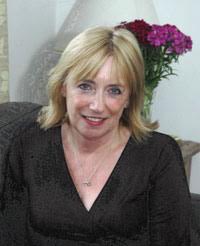
About Dr Kathleen Thompson:

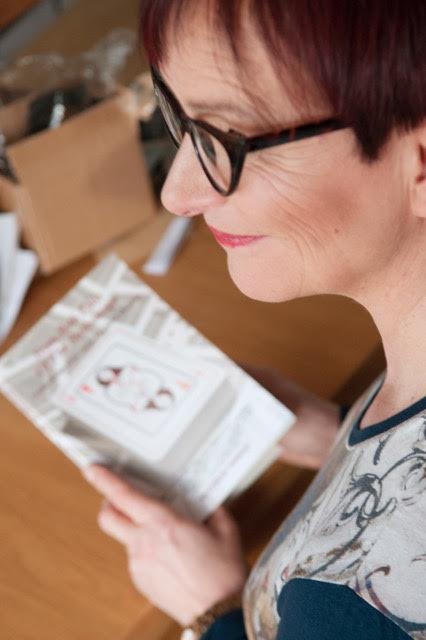
Words for the Wounded- review of the First Place entry.kathleen

Kathleen is not only a writer but a physician, specialising in pharmaceutical drug research.

A few years ago her life changed completely, when she was diagnosed with breast cancer. This became the inspiration for her book, ‘From Both Ends of the Stethoscope’.

She has a passion for sharing her medical expertise and writes regular medical features for Frost e-Magazine. She has also written guest features for Fabafterfifty e-Magazine and a guest blog for Breast Cancer Care.

She learned a great deal from having cancer herself, and is keen to provide this insight to her readers.

She adores ballroom dancing and enjoys adventures. She has climbed Mount Kilimanjaro, walked the 500 mile Camino de Santiago and cycled through rural Rajasthan and in the mountains of Kerala.  During some of these activities she raised funds for Women v Cancer –which provides funding for three cancer charities, including Breast Cancer Care.

She has two long-suffering children, who tolerate their mother’s crazy projects, and regularly rescue her from IT catastrophes.

Kathleen is delighted to support Words for the Wounded which does such fabulous work.


Words for the Wounded Independent Author Book Award 2016 results

Words for the Wounded Independent Author Book Award 2016

Words for the Wounded Independent Author Book Award 2016 results:

This year’s competition has been an amazing experience. We received cookery books, self-help books, memoirs, young adult fiction, crime, romance – you name it, we enjoyed it. Remember that every penny of the entry fee goes to the wounded, because as you all know by now, the administrators personally absorb all costs.

Our judge, Felicity Trew of the Caroline Sheldon Literary Agency also had a high old time reading your work. Finally, after much thought and discussion the top three emerged.
Why were these chosen?

Perhaps what any judge is groping for is to find an author writing with a confidence born of practise, endless practise. This practise was evident in the winners. Surely each book had been written, then re-written, and then again,with the authors twisting and turning the words, and the images they were trying to create, until they achieved balance. Balance? Well, between pace, rhythm, tension, show not tell, and closely edited text.

In our winner, especially, there was a surety, and a ‘voice’, and that undefinable difference that makes a book, whether a non-fiction, a cookery book, a memoir, or a novel unputdownable.
It’s always a tough call, but one that has to be made. Bravo to the winners.

Over the next three days we will be publishing more about the winning authors and their novels, and the judge’s remarks. Tomorrow we will be concentrating on our 1st Place winner, the next day 2nd place, and then 3rd place. Tune in and have a look.


Results.


1st place


From both ends of the stethoscope: getting through breast cancer by a doctor who knows. By Dr Kathleen Thompson.


2nd place


The Man Who Didn’t Go To Newcastle by Alison Clink


3rd place


The Secret of Skara Vhore, by Jennifer M Calder


Highly Commended


Food for Thought David Croft

We’ve come to take you Home Susan Gandar

1066 What Fates Impose EK Holloway

The Spirit of London Rob Keeley

Buckinghamshire Spies and Subversives D.J. Kelly

Dead Man’s Legacy Marion Leigh

Requiem for Private Hughes Chip Tolson

Do Not Forget me Quite Richard Pike

Le-Jog-ed Robin Richards


Commended


Traditional Kurdish Food Ala Barzinji

Arnie Jenks and the House of Strangers Tim Bradley

Transform Your Communication Skills Steve Bridger

The Pomegranate Ring Simon Brian Cartlidge

The Father’s House Larche Davies

The Politician’s Daughter Marion Leigh

Little Hoglet’s Christmas Richard Middleton

Blackberry Promises Jan Moran Neil


We will be featuring the judge’s reviews of the top three, and tell you more about the authors over the next few days.


An interesting concept comes to London in July


Duncan Graham’s CUT has already taken the 2015 Adelaide Fringe by storm, and the good news is that CUT’s  London premiere will take place at The Vaults in July.

Where? Yes, that’s right, The Vaults – under the Waterloo Railway arches.  Set against a black backdrop with unsettling moments of complete darkness, a small audience is sealed in an atmospheric Vault under the Waterloo railway arches.

A woman prepares for work. Pursued by a man, she is hunter and hunted. CUT is a total work of art. A Lynchian dream that transports an audience deep into the heart of 21st century fears – the psychological equivalent of extreme turbulence. Part installation, part theatre poem, part noir thriller, prepare to be sealed into this intimate and unforgettable experience.

Part installation, part theatre poem, part noir thriller, this promises to be an interesting experience.

The fragmented storylines, technical wizardry and first class performance manifest into a theatrical trip you will find fascinating.

Writer Duncan Graham, comments: The idea for CUT was conceived in London, as I flew into the city, moved around on its trains, through its parks. Having had a season in Sydney at Belvoir, it’s so great to be presenting the work in what I consider to be its home. Hannah Norris is startling in the role, and she’ll haunt The Vaults with her breed of pure vengeance.

‘Hannah Norris’s ability to flicker from victim to predator in the blink of an eye truly sends shivers down the spine… If you enjoy taking a step into the darkness, then this award winning show certainly delivers the chill factor’ (Edinburgh Evening news).

When: Tuesday 5th – Sunday 31st July 2016 Tuesday-Friday, 7.45pm
Weekend, 5pm and 8pm

Where: The Vaults, Launcelot Street, London SE1 7AD

The Vaults are located underneath Waterloo station (on the Northern, Bakerloo and Jubilee lines). Leave Waterloo Station via Exit 1 and they are a short walk away.

Tickets are available from £12.50 from http://www.thevaults.london/#!cut/c1e1t.


The Golden Mount & Baan Bat by Alex Bannard | Bangkok Correspondent

The Golden Mount & Baan Bat1alI was delighted, soon after arriving in Bangkok, to meet a fabulous and inspiring neighbour who is a practicing Buddhist. This is a philosophy I have enormous respect for and a fascinated interest in, but she was also planning on starting a meditation course which had been on my Bangkok bucket list from the start.


Being a huge fan of yoga and mindfulness I was intrigued to learn the spiritual art of real life Buddhist meditation. As our guru has the most enchanting French accent, I felt that if it all proved a bit much, her voice would be like a meditation on its own.


She suggested we visit the area where the monks’ alms bowls are made. I am a traveller at heart and have backpacked clutching my Lonely Planet many times. I was all in.


We took the water taxi for Bang Sapi pier near our Moobaan. This is an adventure in itself. For 20bht we went all the way from Bang Sapi up to the temple at the Golden Mount, Wat Saket, changing only once. I love the people watching opportunities this kind of adventure affords.

The boat was packed, yet at every stop as people disembarked, yet more people embarked. The only person wearing a lift jacket, predictably was the girl taking the money and dispensing the tickets – you must protect the assets after all. The sights of local people living their lives alongside the river were extraordinary and the smells were…well it’s Bangkok I don’t need to elaborate. I loved it.

The Golden Mount & Baan Bat4al

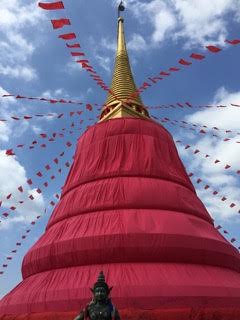
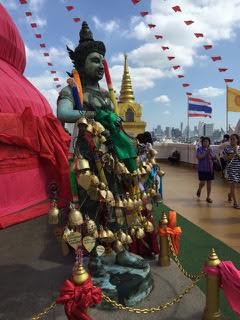
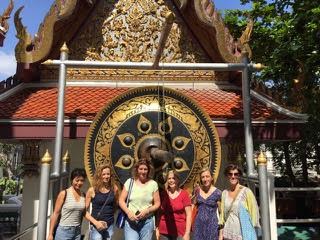
When we got to Wat Saket as it was Loi Krathong week, there was a fun fair and collection of stalls. This happens every year and there is a wonderful carnival energy surrounding the streets. The temple sits on a small man made hill up 300 steps which circle the mount, revealing fabulous views of the city.

The Golden Mount & Baan Bat5al

The Mount itself during Loi Krathong is shrouded in red cloth and is a popular pilgrimage for local people who write on the cloth. I wrote a message for a friend who badly needed better karma…I hope it worked.

The Golden Mount & Baan Bat8al

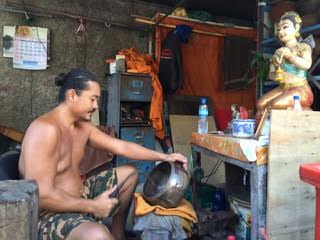
After some time at the top soaking in the atmosphere and appreciating seeing the city from above, we headed off to Baan Bat. Almost all Buddhist monks have alms bowls and begin the day collecting offerings from the local community, a custom that dates back 2,500 years. Nowadays almost all the bowls are manufactured but there remains in the alleys surrounding The Golden Mount, one last soi dedicated to the ancient art of alms bowl making.

The Golden Mount & Baan Bat9al

The bowls are hand made by battering steel into shape and decorating it and the community remains and functions in exactly the same place, albeit in a slightly different fashion (I did see a surprising number of tablets of the electronic variety keeping the children entertained) and in much smaller numbers.


Over the years a thriving industry has been reduced leaving just one family making the traditional bowls although the surrounding area still functions in some way to support the monks with various temple supply shops. The whole area is worth exploring and like everywhere in Thailand the people are welcoming and friendly.


Before long it was time to return to the water taxi and head home for pick up, alms bowl under arm after some nifty bargaining. I should donate it to the faithful monks but I like it too much.


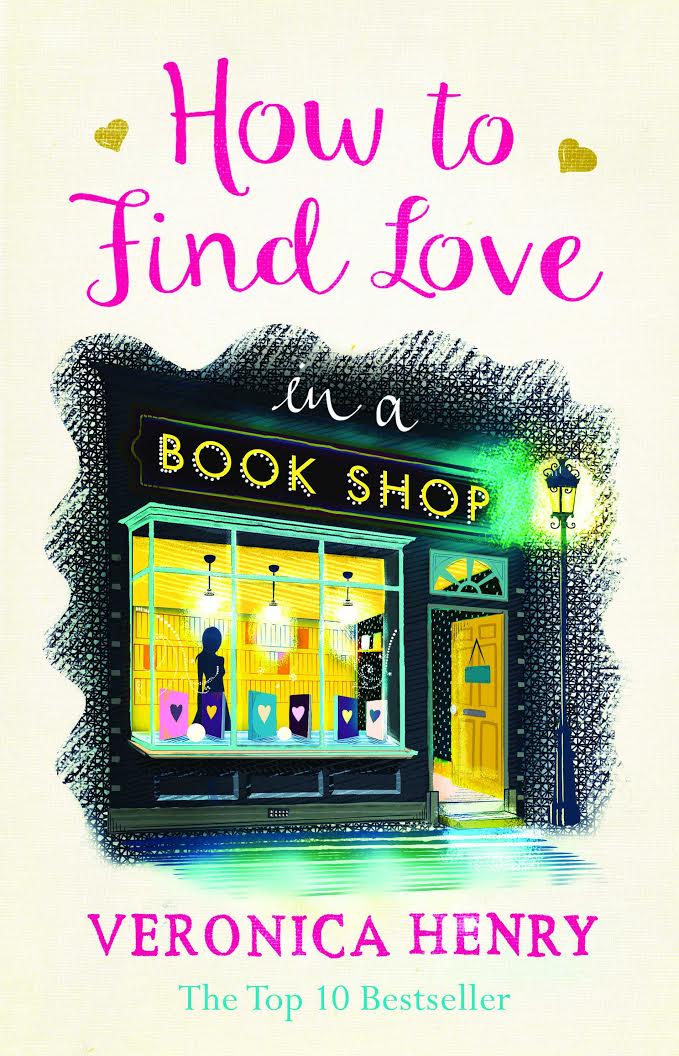
How to Find Love in a Bookshop by Veronica Henry Review by Frances Colville

How to Find Love in a Bookshop by Veronica HenryVeronica Henry’s new novel How to Find Love in a Bookshop is a feel-good, happy-ever-after story, perfect for reading if you’re in need of a bit of escapism or light relief.   It’s a quick, undemanding and engaging read and thoroughly enjoyable.


The central character Emilia Nightingale inherits a book shop in the idyllic Cotswold town of Peasebrook and initially struggles both emotionally and financially with the idea of keeping it going.  But the local community rallies round, there are plenty of lovely characters ready to pitch in and help out and of course lots of budding relationships and love stories.  All centred on a wonderfully atmospheric bookshop and interwoven with lists of book titles relevant to the content of the chapters.  Having worked in a small independent bookstore myself, I was hooked the moment I read the title – and I wasn’t disappointed.


But I would like to know more about what happened to everyone. Is there going to be a sequel?  I hope so.


How to Find Love in a Bookshop by Veronica Henry is published by Orion Books and available in hardback priced £12.99 from 16th June 2016.  Also available in ebook and audio.


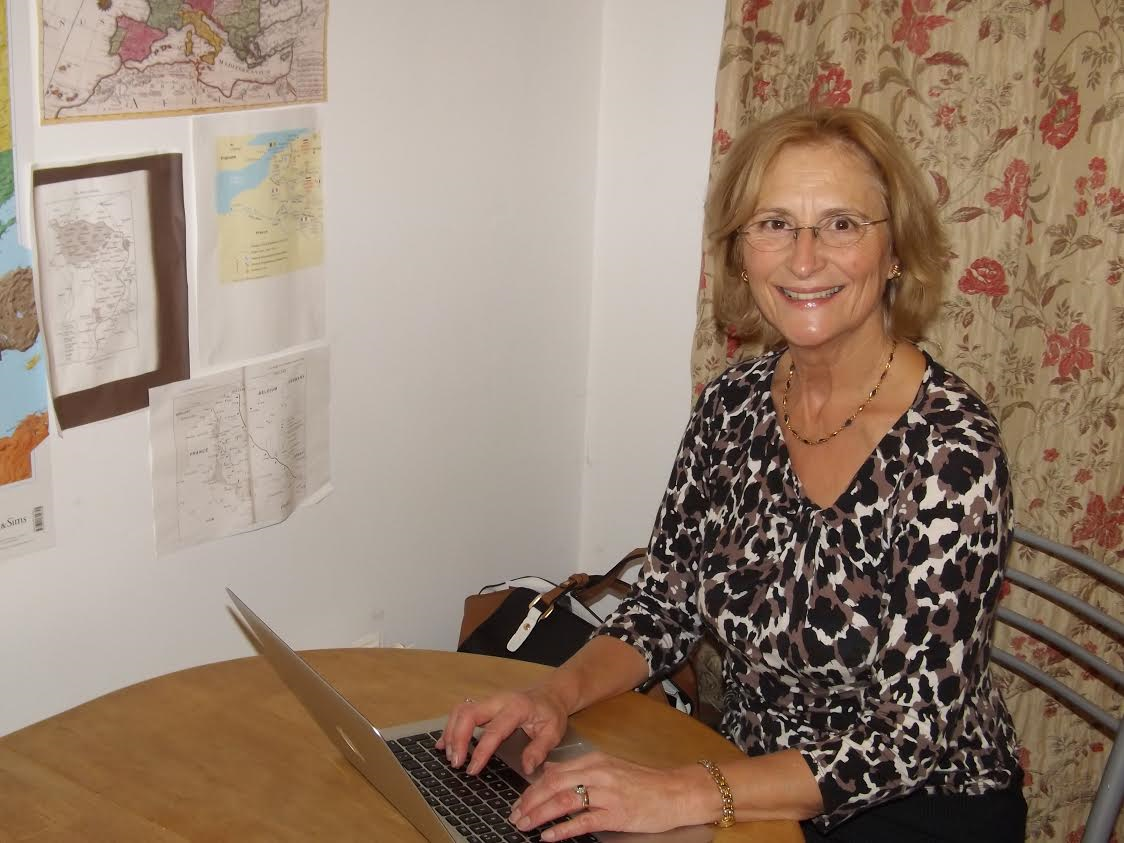
Interview With Bestselling Author Margaret Graham

housedivided

What made you get into writing?

Having a 4th child. She was lovely but seldom slept and mithered a great deal. I needed to ‘get away’ even if only for half an hour. So I started writing a book about my mother’s rather interesting life growing up in the North East just after the 1st World War. Halfway down the first page I realised I didn’t really know my mum in that way, only anecdotes. So it became fiction, but based on her life. It’s called After the Storm.

margaretgraham

Did You find becoming a published writer easy?

Not at all. Having embarked on the novel I joined a writing class. I do wish more would these days, or at least learn the basics of structure, and how to edit one’s work. The class was not only crucial but also supportive, because I was working alongside like minded people, and it helped me enjoy the process. Mark you, my writing class had an excellent tutor, and you need to check this out. There are a lot of charlatans out there, selling their services when they know diddly-squat – and charge a lot. If you have the time, try ARVON and other residential courses. Also the weekend Winchester Writing Festival. That’s fantastic.

Then, of course, you reach the stage where you have a manuscript, finished. What next? How to get that publishing contract?

Try and find an agent. But how do you get the interest of an agent. I entered a competition and was one of the Best Entries. This helped when circulating the manuscript. I was finally taken by an agent who knew that Catherine Cookson, who wrote about the North East had just left Heinemann. Mine was a novel about the North East, and the publishers were immediately interested. Mark you, I then had to double it in length, put in a secondary character and sub plot, and do it all in 6 months. I was on my way.

So it is very much about what the publisher needs at a particular time. However, as you can see, the author does need to be flexible, and listen to the experts, and do as they want. Basically we are providing a product, which they have to need in the first instance. Then it has to be tweaked to be the best product you can create. They are invariably right. As a writer, you need patience. Learning to write well took me 4 years. Over those years I was serving an apprenticeship really, lhoning my skills, so that when the time came, I could do as they advised.

What else would you have liked to do?

Be a star. I feel the world has been deprived of a great talent!

What is your writing process?

Find that germ of an idea. Then think, think and think again, to see if it it will run as a novel. I work out the normal world, point of change, the tension, motivation, and totally getting to be the main and secondary characters. Alongside this, because I am invariably writing out of my time and place, I need to research, make notes, become so familiar with the context so that I can swim amongst the period, or situation, without overloading it with show-off details. Therefore I do a lot of reading, and that old chestnut – thinking again. Then, when I have a thorough plan, and by this I mean a chapter by chapter plan I get my head down and write hard for about 8 weeks. Because I’ve been doing it so long I have the experience to get it more or less right, and to create a sound structure. There is only one structure, you know. And it must be followed. It is the author’s ‘voice’ that makes a novel ‘different’. That’s the first draft, then I go through and alter, tweak, edit. So the second I usually sent into my publisher. Writers need to designate writing time. It’s a job, even if you already have a day job, so discipline yourself to create your writing time. You will find you do much of your thinking whilst traveling, driving, working, and at the end of the day you’re a bit further on.

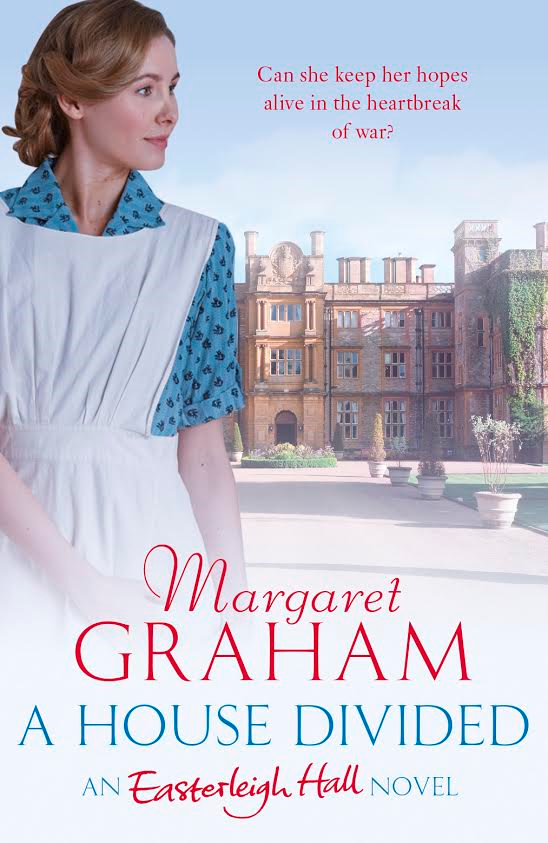
A House Divided is the third Easterleigh Hall novel. How hard is it doing a series?

Hard in a way. You have to remember all the characters inside and out. What are their ages? Appearance, little ways, and then when you start the novel you have to try and make the novel stand alone, though it must also bring previous readers of the series up to date. I think that first chapter is the most difficult.

When can we expect another EH novel?

In a year.

Have you become close to the characters? Oh yes, I become all the characters really. You have to or it doesn’t work.

Can you tell us where the series is going next?

I would imagine into the 2nd world war. Perhaps Tim will go into the secret side of the war, but not quite sure about anyone else yet. It will come to me.

Lizy, me and Matt

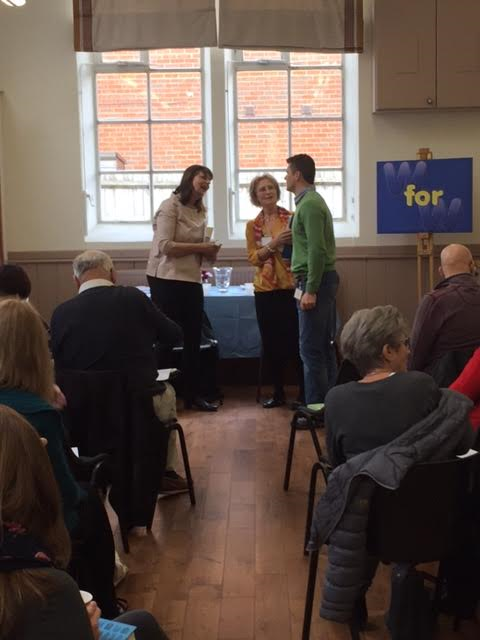
What do you like to do when you are not writing? I run my charity, Words for the Wounded, which raises money for the wounded through writing events. We have an annual Independent Author Book Award, and we also run workshops and an annual LitFest. We’ve helped a few writers along in this way. Last year’s winner was picked up by an editor, and others have found that the publicity of being placed has helped their sales. I love working with Frost, and reviewing books, and I do like to play truant and just have a good time.

Any tips for aspiring writers.

Work hard, go to writing classes, and literary festivals, listen to authors talking, and listen to a publishers’ or agents’ advice. READ books, learn how to write short stories, because publication in womens’ magazines promotes sales of your books. Most of all, don’t rush. Do several drafts, edit carefully, and enjoy it. Life’s too short not to.