An Interview With Emma Kavanagh – Author of Hidden

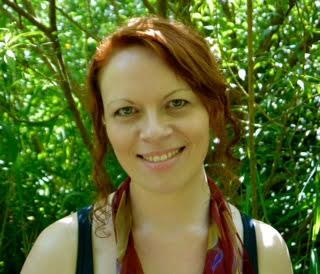
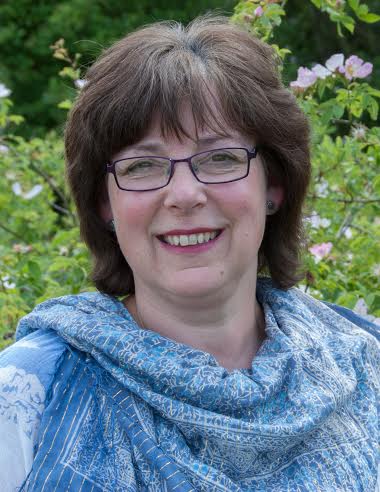
An interview with Emma Kavanagh - author of Hiddenauthorpic

An interview with Emma Kavanagh – author of Hidden

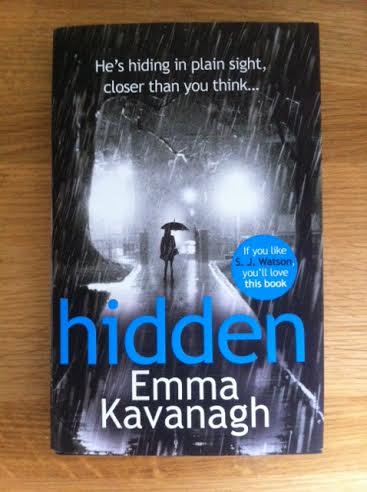
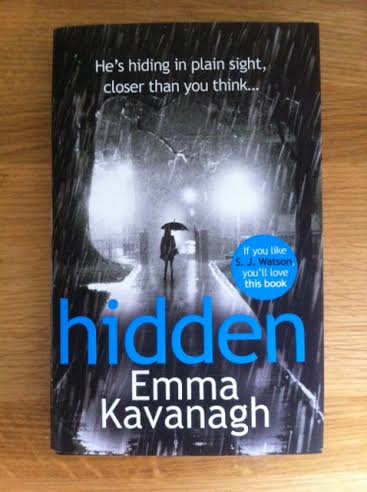
hidden Emma Kavanagh

Do you plan your books in great detail, or just go with the germ of an idea, and where does that idea come from?

I am a huge planner. I even have spreadsheets! I tend to come up with a general idea of where I want my story to take the reader, and then let that marinate for a while. I’ve had book four cooking on low for the past three months whilst I complete book three, The Missing Hours. Once I’m ready to start work on it, I begin with research, research, research, finding out as much as I can about the area I am going to be writing about. Then begins the planning. This will change as the story develops – which is why spreadsheets are so useful – but I always find it easier to have an idea of where I am heading. As to where my ideas come from, I am fascinated by psychology and true crime, which is an absolute gold mine for book ideas.

An interview with Emma Kavanagh - author of Hidden1

How do you actually work? In silence in a study, at the kitchen table?

Oh, I would love a study…no, my study is now a nursery for my youngest son. I write in the living room on a big cozy chair that has become known as “Mummy’s work chair”. When I’m planning or researching, I can’t cope with silence. It’s too intense. I tend to have documentaries running in the background, which I half-watch to distract me from the pressure. When I’m actually writing though, it has to be in silence. I’m not one of those authors who can work in a coffee shop. Who can concentrate with all that cake?
Did you have a writing background before you began writing novels?

I’ve written short stories since I was a kid, and was a passionate writer throughout school and college. But once I started my own business (I ran a consultancy practice specialising in training police and military personnel in the psychology of critical incidents) I let the writing drop away. I was working hard and my focus was elsewhere. Then one day a story idea came knocking and simply wouldn’t leave. In the end I decided that it had to be worth a shot…

An interview with Emma Kavanagh - author of Hidden2
Who has inspired you in the literary world?

So many people. I adore Kate Atkinson, especially for her willingness to push herself beyond genre boundaries and try something entirely different. Another must-read I have is Barbara Kingsolver. Her use of language is just exquisite. And I can’t not mention Agatha Christie. No one plots like she does.

 Do you read while you’re writing? I know a lot of authors don’t.

I always read. I read whilst I was in labour with my first child, whilst I was in recovery from a c-section with my second. I am always reading!! I know a lot of authors can’t read anything in the genre they write as they find it interferes too much with their creativity, but I’ve never found that to be an issue. In fact, it inspires me, to read beautiful language, clever plotting, awesome characterisation. I want to be that good!

An interview with Emma Kavanagh - author of Hidden3
Your favourite book as a child?

I can’t just pick one!!! The Folk of the Faraway Tree by Enid Blyton. Matilda by Roald Dahl. Heidi by Joanna Spyri. The Wolves of Willoughby Chase by Joan Aiken. Um…how long do we have here?

What would comprise your perfect day if you had a magic wand?

Being with my husband and our boys (aged 1 and almost 4). A scrumptious breakfast which absolutely must include bacon. Going somewhere fun where we can all play. My kids are little so the dream trip has to be Disneyworld. And it is totally not because I am a complete child. Then, an early night for my boys, a nice dinner for myself and my husband, somewhere overlooking the ocean, a glass of wine, and then a comfy sofa so I can read my book.

Hobbies?

Reading (d’uh!). I love to swim and these days try to get to the pool as often as I can. And, although I rarely have time for this nowadays, I also love to sketch and paint.
Have you always wanted to write novels?

Yes. It was one of those things that I deep down always knew I would have to do. And now that I have started, the idea of stopping is like the idea of no longer breathing.
Ambitions/dreams.

My ambitions…I want to keep doing what I am doing. I want to be respected for my ability to tell a story and create characters that take on a life of their own. I want to be able to give my children the opportunity to travel and experience the world, and to teach them that they can achieve anything they set their mind to.

If you could choose one person to read your books, who would it be? 

I’ve seen this happen to a number of my author friends – a celebrity or big name author reads their book and then starts shouting about how wonderful it is. So it got me thinking, who would I want to shout about mine? Well, George Clooney would be nice (Hi, George!). But my hands down, would-immediately-pass-out-with-excitement person would be JK Rowling. I really don’t need to explain this one, do I? She knows Harry Potter, people!!!


Hidden by Emma Kavanagh Book Review

Hidden by Emma Kavanagh Book Review

Hidden follows on the heels of Emma Kavanagh’s debut psychological thriller novel, Falling. A second novel is a tricky beast – can the author do it again? Can they build on the success of the first? Can it follow in the same genre without being too much the same?

Kavanagh has succeeded with Hidden when other authors haven’t. Similarly to some series on television, the novel starts with the crime and then takes the reader back a stage, to the start of the action. Rather than peeling away the layers to get at ‘who dun it,’ Kavanagh builds up the layers, so that we get to the ‘why’ he ‘dun it’. And who actually did it. Clever stuff, with multiple viewpoints.

In Hidden, a gunman is stalking the wards of a local hospital. He’s unidentified and dangerous, and has to be located. Urgently.

Police Firearms Officer Aden McCarthy is tasked with tracking him down. Still troubled by the shooting of a schoolboy, Aden is determined to make amends by finding the gunman – before it is too late. To psychologist Imogen, hospital should be a place of healing and safety – both for her, and for her young niece who’s recently been admitted. She’s heard about the gunman, but he has little to do with her. Or has he?

Kavanagh uses her years of experience training police forces and military units on the psychology of life threatening incidents, to give credence to her work. The tension builds, and never lets up.

Hidden – Emma Kavanagh Published in paperback by Arrow   £6.99


Heritage & Conflict: Syria’s Battle to Protect its Past

THE INAUGURAL EVENT IN A NEW SERIES OF WORLD MONUMENTS FUND TALKS- THE PAST, TODAY Heritage & Conflict- Syria’s Battle to Protect its Past

THE INAUGURAL EVENT IN A NEW SERIES OF WORLD MONUMENTS FUND TALKS: THE PAST, TODAY Heritage & Conflict: Syria’s Battle to Protect its Past

Royal Geographical Society, 1 Kensington Gore, London SW7 2AR Thursday 12th November 2015, 7pm (doors open at 6.30pm)

Syria’s Monuments Man to give first ever talk to a London audience on what it’s like to be “the world’s saddest Director of Antiquities

We’ve all seen the images that convey not only the human tragedy but also the grievous destruction of ancient and irreplaceable monuments such as Palmyra.

To launch an important new World Monuments Fund Britain programme of issue-based events, Professor Maamoun Abdulkarim, Director-General of Antiquities and Museums for Syria, and James Davis, Programme Manager for the Google Cultural Institute, will tell the human story behind the global headlines and report on the latest international efforts to document cultural heritage. The evening will be introduced by Lisa Ackerman, Executive Vice-President of World Monuments Fund.

With the loss of cultural heritage dominating the media, in his first visit to the UK, Professor Maamoun Abdulkarim will talk about Syria’s frontline efforts to protect its irreplaceable heritage from insurgent forces. The structures, whether caught in the crossfire, deliberately destroyed to gain the media spotlight or looted to fund extremist activity, are symbolic of a treasured cultural legacy and are simply irreplaceable. What if anything can be done to protect what remains?

This event is generously supported by American Express.
This series of events will continue in March, April and June 2016.

Photograph: © iStock RPMGas

Heritage & Conflict: Syria’s Battle to Protect its Past Thursday 12th November 2015, 7pm (doors open at 6.30pm)

Royal Geographical Society, 1 Kensington Gore, London SW7 2AR. Twitter @WorldMonuments, @JohnD_WMFB, #HeritageConflict

Box Office Tickets are available for £15 (£10 for WMF members) from www.wmf.org.uk/activities or 020 7251 8142


Hidden by Emma Kavanagh Book Review

hidden Emma Kavanagh

Hidden follows on the heels of Emma Kavanagh’s debut psychological thriller novel Falling.

A second novel is a tricky beast – can the author do it again? Can they build on the success of the first? Can it follow in the same genre without being too much the same?

Kavanagh has succeeded with Hidden when other authors have failed. Similarly to some series on television, the novel starts with the crime and then takes the reader back a stage, to the start of the action. Rather than peeling away the layers to get at ‘who dun it,’ Kavanagh builds up the layers, so that we get to the ‘why’ of ‘who dun it’. Clever stuff, with multiple viewpoints.

In Hidden, a gunman is stalking the wards of a local hospital. He’s unidentified and dangerous, and has to be located. Urgently.

Police Firearms Officer Aden McCarthy is tasked with tracking him down. Still troubled by the shooting of a schoolboy, Aden is determined to make amends by finding the gunman – before it is too late. To psychologist Imogen, hospital should be a place of healing and safety – both for her, and for her young niece who’s recently been admitted. She’s heard about the gunman, but he has little to do with her. Or has he?

Kavanagh uses her years of experience training police forces and military units on the psychology of life threatening incidents, to give credence to her work. The tension builds, and never lets up.

Let’s hope there’s another Kavanagh gem soon. Bravo.

Hidden – Emma Kavanagh. Published in paperback by Arrow   £6.99


Every Writing Day is ‘Suesday’ By Sue Nicholls

Every writing day is ‘Suesday’ By Sue Nicholls1

Sue Nicholls, Buckinghamshire author 

Every writing day is ‘Suesday’.

Sue Nicholls

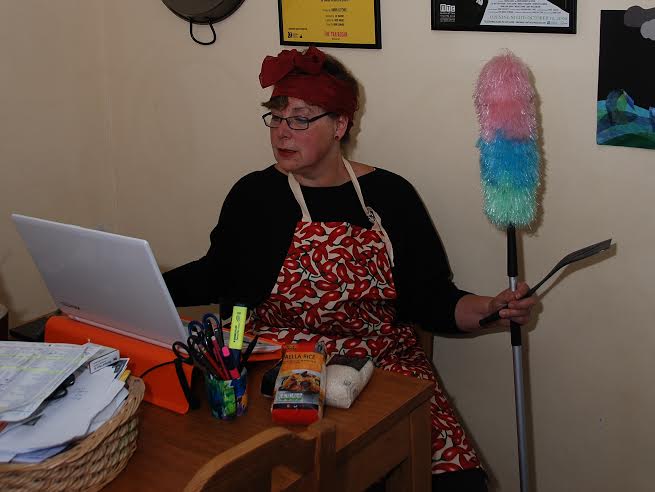
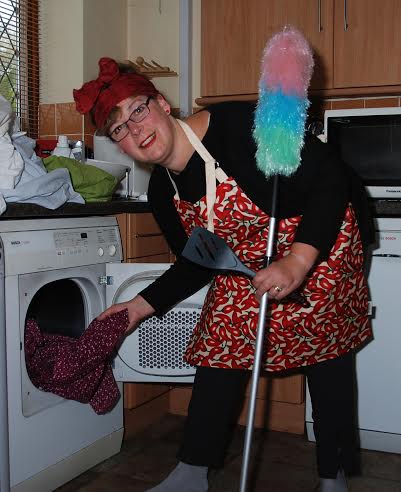
Unless they are Joanna Trollope or J.K. Rowling, most writers need a ‘day job’ or in my case, several. I am lucky to have one job that gives me the school holidays off. Sadly I still seem to fill my time with other things. Here is a typical ‘Suesday’:

6.00. Persistent trilling from my phone alarm invades my dreams. I grope on bedside table and swipe screen. Hubby turns over and resumes snoring.

6.15. Pull trousers over pyjama bottoms. Don bra under top to avoid blinding B&B guests. Perform minimal ablutions.

6.30. Cover attire with apron. Plan day while drinking tea. Will definitely work on sequel, and promote Be Careful What You Wish For.

7.00. During breakfast I plan more: Change beds, polish, hoover, clean bathroom, walk dog, run teenager into town, promote novel on FB. Must work on sequel.

7.30. Guests gone for day. Husband appears requiring tea. He heads to bathroom while kettle boils. I clear kitchen, run upstairs to strip beds and return to the kitchen to deal with laundryHubby disappears into home-office with tea, to do technical stuff.

7.40. I sweep, mop floors and plot. I have an idea, rush to the laptop and add a new ‘item’ to cork board in Scrivener – new toy.

Every writing day is ‘Suesday’ By Sue Nicholls2

Now, what was I going to write? 

8.00. ALT-tab to Facebook….

10.00. Wonder what time it is. Have I promoted novel? No.

10.30. Flip to Twitter and repeat as above.

11.30. Make long task list that includes making soup with stock that has been in the slow cooker for days, and ‘Hopefully, get to novel’.

12.00. Teenager appears demanding breakfast. Direct her ‘politely’ to fridge. Teen makes Bombay Bad Boy. I check emails: 52 spam and one from boy needing help with his novel. Start to look at his work. Teenager takes Pot noodle into living room to watch back episodes of Big Bang Theory, leaving evidence of her activity on worktop.

Every writing day is ‘Suesday’ By Sue Nicholls3

Multitasking, but where is my pen?

13.00. Return novice-author’s work with comments. De-blob kitchen. Teenager disappears to prepare for trip to Odeon. Will we make it in time?

13.30. Rush back from cinema for forgotten meeting at local pub. It seems they can’t afford to pay their chef, and seek community help to run kitchen. I really want to do this so I begin to plan and scheme. Husband looks worried. Realise I am still in jimjams.

15.30. Walk dog. So distracted by thoughts that I drive past dog field. Turn round and drive past again. Curse, U-turn, and park. Soon I have a plan. Thoughts return to novel. I should work on it.

16.30. Sit at computer. Failing to focus, I decide to make background notes.

17.30. Guests return and chat.

17.40. Prepare dinner. Husband collects teenager, who has missed bus.

18.30. Eat. Drink. Clear up.

19.00. Stuff sheets from washer to dryer. Feed drooling dog.

20.00 Fall asleep in chair and miss Pointless.

23.00. Last Facebook check in bed.

23.30 pm. Will definitely work on sequel tomorrow.

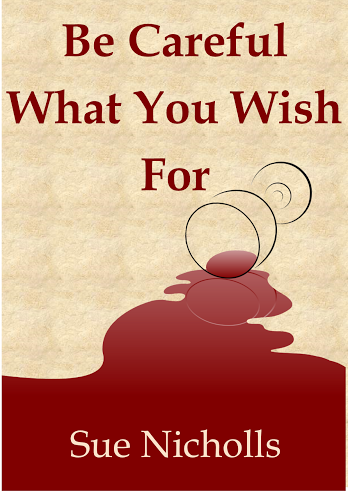
Be Careful What You Wish For, is published on Kindle by Mardibooks and can be purchased by clicking on the book, below.

Every writing day is ‘Suesday’ By Sue Nicholls4http://j.mp/SNBeCareful

Her blog can be found at www.suenicholls.com

Follow her on Twitter @SuetheScribe

Find her on Facebook Sue Nicholls – Be Careful What You Wish For

If you fancy visiting her bed and breakfast then you can book through Airbnb.

Every writing day is ‘Suesday’ By Sue Nicholls5


Tolkien- An Illustrated Atlas by David Day Reviewed by Frances Colville

TOLKIEN - AN ILLUSTRATED ATLAS by David Day Frances Colville

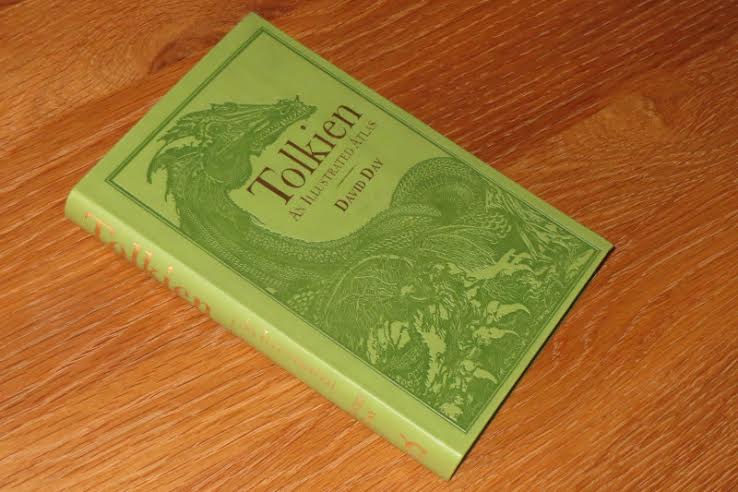
If you have a Lord of the Rings or Hobbit fan amongst your friends or family members, this little book could just be the perfect Christmas present.  It looks fantastic (in both senses of the word) and it’s reasonably priced.  The sort of book you could read right through and examine in great detail – or simply dip into when you have a spare half hour.

Designed as a companion to Tolkien’s books from The Hobbit through to the Silmarillion, there is a satisfying mix of illustrations, genealogies, chronologies and maps.  An unofficial book, not authorised by the Tolkien estate, it was never intended to be a substitute for reading the original books and you won’t find any complete stories.  But you will find a wealth of information which will make following the books themselves more straightforward and arguably even more compelling than they already are.  Be careful though if you already possess the Tolkien Encyclopedia or World of Tolkien or the Tolkien Bestiary as some of the information included in those books is repeated in this new one.

Even if you are, like me, not someone who knows your orks from your ents and doesn’t particularly care about the exact time-line of the development of Middle Earth, you will find much to like in the artwork, the varied fonts and the colour and feel of the pages on which this book is printed.  The faux leather cover is a work of art in its own right – much more interesting than it sounds.  And as far as I can tell, not being an expert on the subject myself, the author David Day knows his stuff.

Tolkien-An Illustrated Atlas is published by Cassell and is available in bookshops now.


NEVER GIVE UP: Jane Cable On Organising a Charity Litfest

NEVER GIVE UP- Jane Cable On Organising a Charity LitfestAuthor and Frost contributor Jane Cable writes her final blog about organising a charity litfest in aid of Words for the Wounded. The big weekend finally arrived… but was it a success?

I am sitting on the floor of my study counting the money. For the second time. My husband, a chartered accountant, has already done it once but I don’t really believe he’s got it right.

In front of me is £793 in cash. We’ve raised £100 from the auction, which leaves us just short of £900. Bugger. But then I remember one of our Chindi Authors giving a cheque directly to Words for the Wounded founder Margaret Graham so I’m claiming that too. What a spectacular result.

Especially as less than a week ago I was wondering if we should cancel the lunch. Was it really worth asking Elizabeth Buchan to travel down from London to speak to twenty people? Could we even ask Woodies to close their doors on a Saturday lunchtime for so few?

Naturally my marvellous Chindi Authors’ partner in crime Christopher Joyce talked me around because within a few days we had bookings for 34 and I had no qualms about making the final arrangements. Books to sell were collected together, Mason & Mason Wines dispatched an appropriate number of bottles and final directions were sent to our guest speakers. We were on our way.

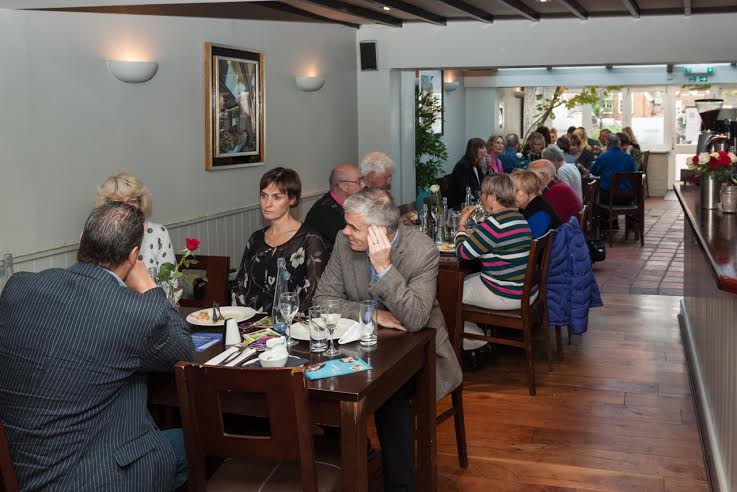
Of course things never do run entirely smoothly and Matt from Woodies Brasserie was left to cope alone when his waitress phoned in sick. He made coffees and teas, set out the wonderful buffet, poured wine and collected dirty plates and bowls; just one of the people who finished the weekend deserving a medal.NEVER GIVE UP- Jane Cable On Organising a Charity Litfest lunch

Another was Elizabeth Buchan who spoke with such passion about the history and characters behind ‘I Can’t Begin to Tell You’ that we sold every copy within minutes of her sitting down. And then there was W4W trustee Jan Speedie, a quiet yet reassuring presence throughout Saturday. Not to forget various burly rugby types in the Park Tavern on Saturday night who pushed notes rather than coins into our collecting buckets. Or the waitress at breakfast in Carluccios on Sunday morning who looked after us so well and took her tip in books left on the swap table.

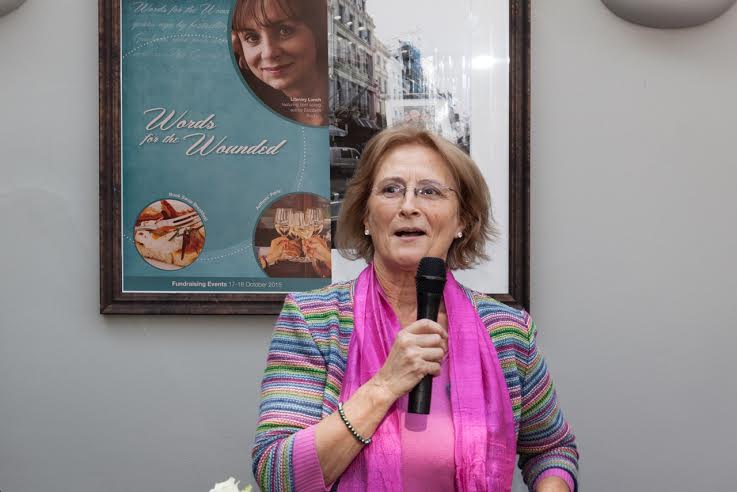
The main reason we raised so much money though, was Margaret Graham. Both at Woodies and the Park Tavern she spoke eloquently about how the money raised by W4W is used. We felt we came to know the family of the tetraplegic who now has a dog to increase his independence. We understood the importance of providing a garden for the mother of a soldier who was brutally murdered by extremists. It hit home how lucky we are, our lives having been unaffected by massive injuries capable of stripping away every hope and dream. Or at the very least forcing a radical rethink.

NEVER GIVE UP- Jane Cable On Organising a Charity Litfest room

For these wounded service personnel giving up isn’t an option. However hard it felt at the time, what we did to raise funds to help them was tiny compared to the mountains they will have to climb every day for the rest of their lives. I think that’s the biggest lesson I’ve learnt from organising a charity event: start it because you can; finish it because you have to.

Learn more about the work of and how you can support…
Words for the Wounded: www.wordsforthewounded.co.uk


A Lesson from Auschwitz Theatre Review

A lesson from Auschwitz review‘Vermin’, ‘parasite’, a ‘flea’ that needs to be exterminated. Those are the vile words that are shouted at the Jew who weeps and repents his actions on the stage.

For we the audience of A Lesson from Auschwitz at Churchill Theatre in Bromley are the next generation of Nazi SS soldiers being brainwashed to treat the victims of the holocaust as worthless sub-beings.

An intimate production by Brother Wolf, the play consists of just two actors: the intimidating Rudolf Höss, played by Eric Colvin as the Nazi soldier, and Abraham Könisberg, portrayed by James Hyland, who barely manages to stand on his feet.

He wears a chalkboard around his neck, etched with ‘Ich Bin Zurük’, meaning he’s an escapee.

Unfortunately, he is now to be punished and made an example of in-front of the roomful of trainee Hitlerites.

It makes for uncomfortable viewing, as the lesson from Auschwitz is actually 25 lashings against the prisoner’s blistering back.

And with each rise and fall of the whip, we’re told that showing sympathy towards the prisoners is a sign of weakness, how no Jew is spared – women and children won’t leave the camp alive and how a ‘genius’ has developed a deadly gas substance which can kill more than 2,000 people per day.

Even better, the healthy Jews will build the contraptions ie the showers, which will ultimately kill their own kind – it’s ‘political hygiene’ at its finest.

The rest, as they say, is history.

It’s hard to find anything enjoyable about this play given the bleak subject matter, and in all honesty, I was relieved it was over after just an hour.

But Hyland, the SS soldier, was convincing as the dominatrix and Colvin pulled on all the right emotions.

We’ve all heard the tales of horror and survival from the camps, but what was different about A Lesson from Auschwitz was how it flipped the norm so it was told from the side of the Germans.

However the tales of death and destruction in Nazi-occupied Poland are retold, the lessons from Auschwitz must live on today so that history never repeats itself.

In commemoration of the 70th anniversary since the liberation of Auschwitz, the play’s dedicated to all the victims – those who were murdered and those who survived.